
You've left the clinic with a treated tattoo that feels warm, looks red, and may already be swelling. You're wondering whether to cover it, shower normally, go to work, or leave it completely alone. Those decisions matter, because the skin needs time to rebuild its protective barrier after laser energy has disrupted tattoo pigment.
Table of Contents
- Introduction to Tattoo Removal Aftercare and Healing
- Immediate Aftercare in the First 48 Hours
- Your Day by Day Healing Timeline and Daily Care
- Managing Blisters Scabs and Common Healing Concerns
- Activity Sun Exposure and Product Guidance Between Sessions
- Follow Up Appointments and When to Contact the Clinic
Introduction to Tattoo Removal Aftercare and Healing
Laser tattoo removal is a controlled process, not an instant way to erase ink. The laser breaks tattoo pigment into smaller fragments, then your body clears those fragments gradually between appointments. Fading can continue after each session, so how you look after the area affects comfort, skin recovery, and the risk of preventable complications.
Good tattoo removal aftercare reduces the chance of infection, scarring, prolonged irritation, and unwanted pigment changes. The mistakes seen most often are simple: scratching an itchy scab, rubbing the area after washing, returning to a sweaty gym session too soon, or assuming winter clothing prevents all irritation and sunlight exposure.
Redness, warmth, tenderness, mild swelling, blistering, and scabbing can occur during normal healing. These reactions still need careful handling. A blister should be protected rather than burst, and a scab usually needs time to detach naturally. Increasing pain, spreading redness, or persistent changes need a different response and should be discussed with the clinic.
Previous marks can make it harder to judge what is normal. If you are concerned about a mark left by treatment or want more context about laser tattoo removal scars, review the difference between expected inflammation and changes that become more painful, widespread, or persistent.
A calm approach produces better decisions
At 3D Aesthetics Leamington Spa, aftercare forms part of the treatment plan, not an instruction sheet to ignore once you leave. Skin tone, tattoo position, ink density, clothing, work, exercise, and sunlight exposure all affect how the treated area should be managed.
Your routine may need adjusting around work or activity. Loose clothing can reduce rubbing, while exercise and swimming may need to wait until the surface has settled. The right timing depends on the skin response, so follow the specific advice given after your session rather than copying someone else's routine.
Darker skin tones and skin that tans easily need particular protection from ultraviolet exposure because hyperpigmentation is identified as a common risk in UK hospital guidance. It may settle over weeks, but can rarely become permanent. Preventing unnecessary UV exposure and arranging an early review is more sensible than trying to correct a pigment change later. Cosmetic tattoos also require careful assessment because rare reactions can occur when iron-containing pigment is present.
Immediate Aftercare in the First 48 Hours
The first two days set the tone for healing. Treated skin can feel like a mild burn or sunburn, even when the area looks relatively calm. Keep care simple: clean handling, low friction, and restraint. Strong creams, exfoliation, repeated washing, and heavy moisturising can delay recovery.
What to do when you get home
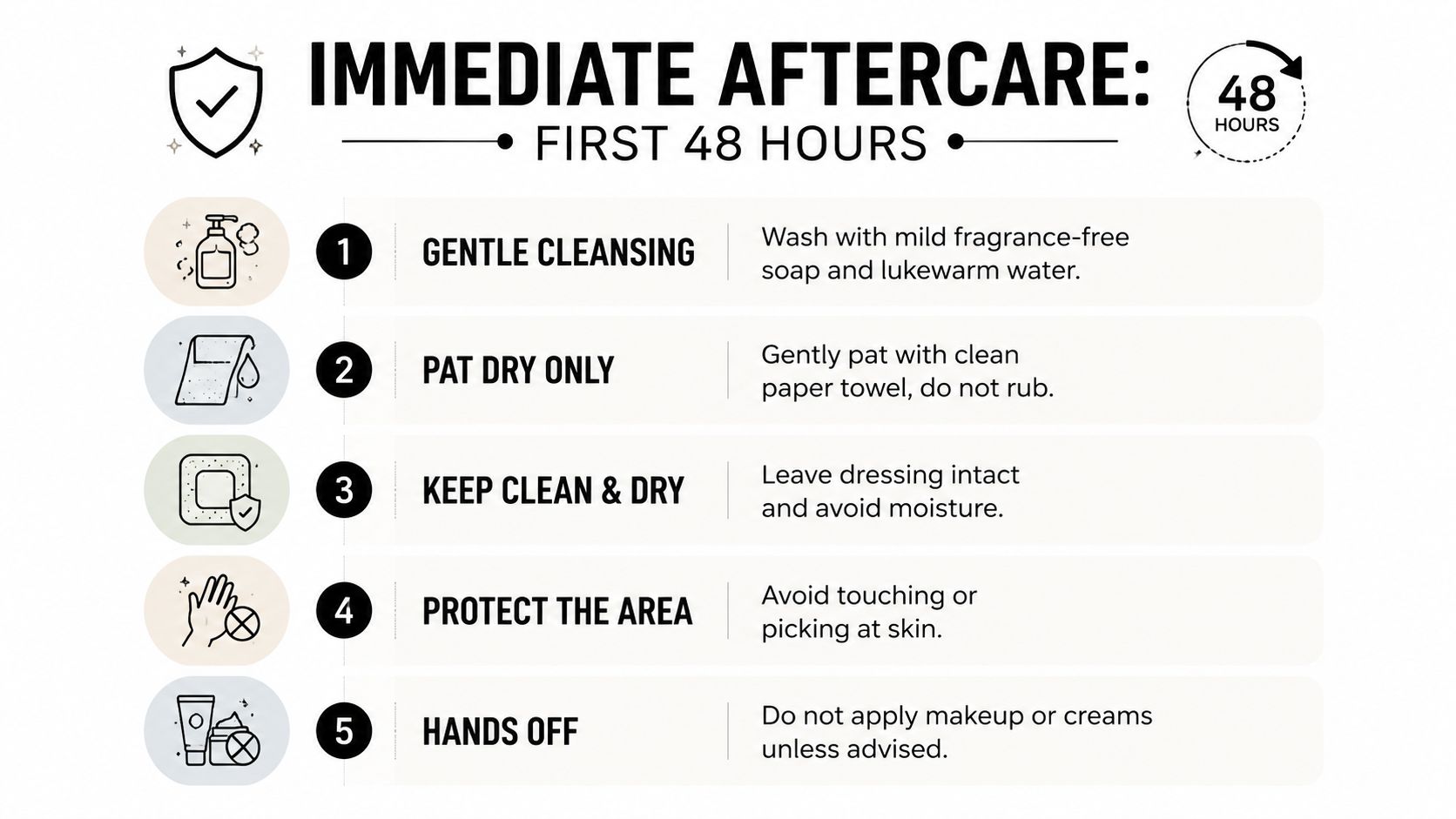
Wash gently. Use lukewarm water and mild, fragrance-free soap if cleansing is needed. Let water flow over the area rather than aiming a strong jet at sensitive skin.
Pat dry. Press lightly with clean paper towel or a freshly washed soft towel. Rubbing can disturb fragile skin, developing blisters, or early crusting.
Follow dressing instructions. Keep any covering in place for the period advised by your therapist. If it becomes wet, dirty, loose, or uncomfortable, contact the clinic instead of lifting it repeatedly to inspect the area.
Keep your hands away. Touching transfers bacteria and can lead to unnoticed scratching. Leave frosting, scabs, dry skin, and blisters alone.
Use only approved products. Unless your practitioner advises otherwise, avoid makeup, perfumed creams, exfoliants, acids, retinoids, and thick ointment layers.
If you need an over-the-counter option, a non-adherent dressing for minor wounds, such as an iodine-impregnated sheet, can protect the area without sticking to healing skin.
Comfort without over-treating
A cool compress wrapped in clean fabric can ease heat or swelling. Never place ice directly on treated skin, and stop if compression causes discomfort. Loose clothing often provides better protection than an elaborate dressing routine, especially around waistbands, bra straps, cuffs, and sportswear that may catch the site.
Avoid perfumed soap and exfoliating products for 48 hours, while the surface remains vulnerable. A gentle routine is safer than constant checking, scrubbing, or layering products in the hope of accelerating healing. Follow the written instructions from 3D Aesthetics Leamington Spa if they differ because the treated area and your skin response determine the most suitable care.
If a light-based treatment is being considered for comfort or another skin concern, review the information on Dermalux LED therapy first. Do not add another treatment to freshly lasered skin unless your practitioner has approved it.
Your Day by Day Healing Timeline and Daily Care
Healing varies with the tattoo and its location. A small, lightly inked area may settle differently from dense ink near a joint, waistband, shoe, or other high-friction site. Use the timeline as a guide, then let the condition of your skin determine what you do next.
Days one to three
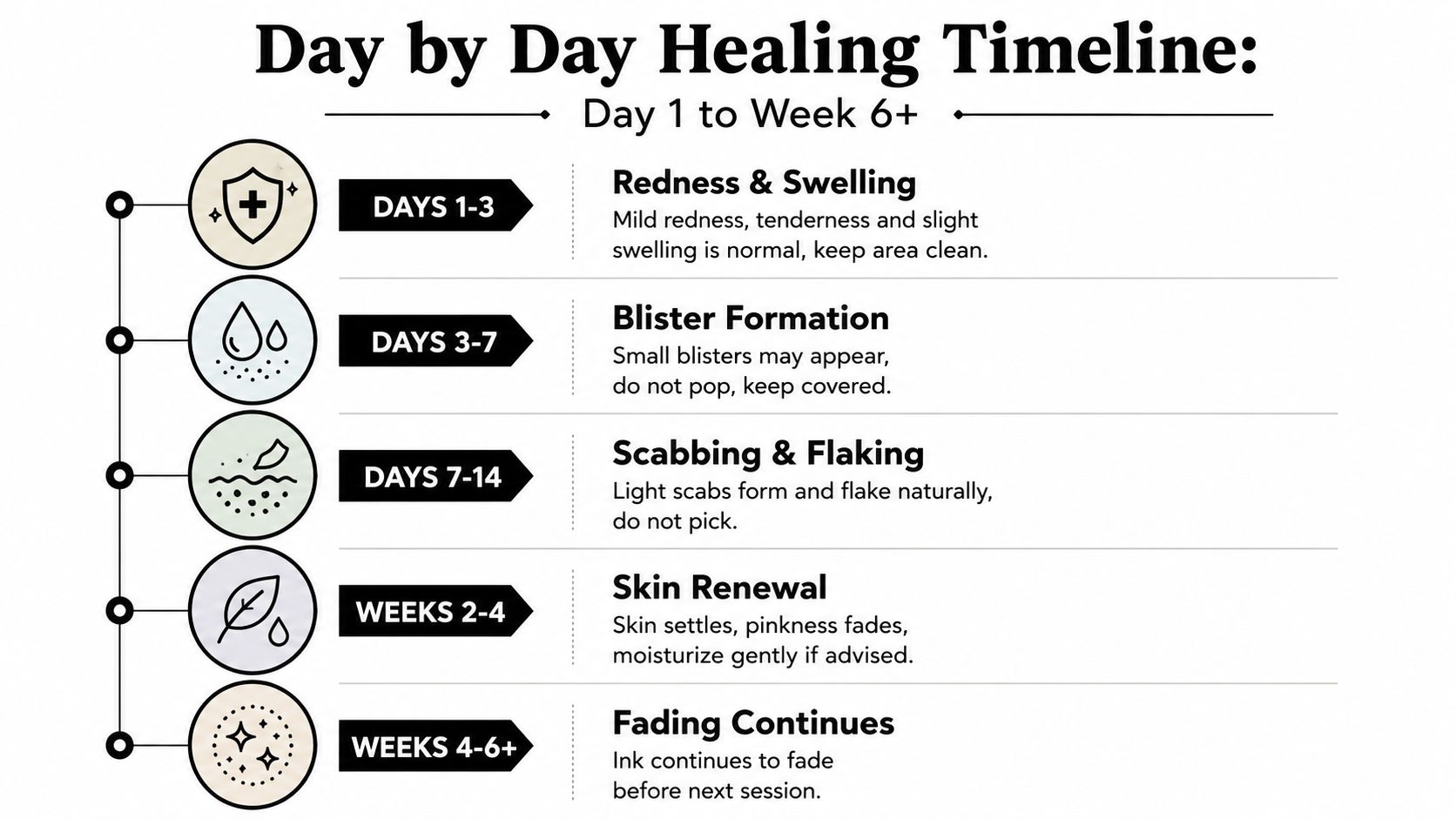
Redness, warmth, tenderness, and mild swelling are common early responses. Clean the area gently, protect it from friction, and follow the dressing or ointment instructions provided after treatment. Shower rather than soak, and pat the skin dry instead of rubbing it.
The tattoo may look unchanged, temporarily darker, uneven, or partly hidden by surface changes. Early inflammation shows that the skin has responded to treatment. It does not predict how much pigment will eventually fade, so avoid judging the result in the first few days.
Days three to seven
Small blisters can appear during this stage. Leave them intact, keep the site clean, and reduce pressure from tight clothing or equipment. If one opens on its own, leave the remaining skin in place. An appropriate non-adherent dressing may protect the area, but ask the clinic if you are unsure what to use.
Itching often develops as the skin dries and repairs itself. Use a cool compress briefly rather than scratching, and check with the clinic before applying a soothing product. Thick layers can trap moisture, transfer onto clothing, and make the area harder to keep clean.
Days seven to fourteen
Scabs often detach naturally after 7 to 14 days, although the timing varies between treatment sites and individual healing responses. Treat that period as a planning guide, not an invitation to peel. Removing an attached scab can disturb fragile skin and increase the risk of scarring or infection.
Patience protects the result: if a scab is still attached, the skin underneath is not ready for you to remove it.
Continue gentle cleansing while the surface repairs. Avoid swimming, hot tubs, saunas, and activities that create rubbing or excessive moisture until the area has healed. A shower is suitable, but prolonged soaking is not.
Weeks two to four
The skin may remain pink, dry, lighter, darker, or uneven as it settles. Once the surface is closed, use a simple fragrance-free moisturiser only if your practitioner has advised it. Do not exfoliate flaking skin. It will shed naturally.
Weeks four to six and beyond
Fading continues between sessions as the body clears fragmented pigment. Book the next treatment only when the skin has recovered sufficiently and the clinic has confirmed that it is ready. Treating recently irritated skin can delay recovery without making removal safer.
The embedded guidance shows how treated skin can change through the recovery stages.
Managing Blisters Scabs and Common Healing Concerns
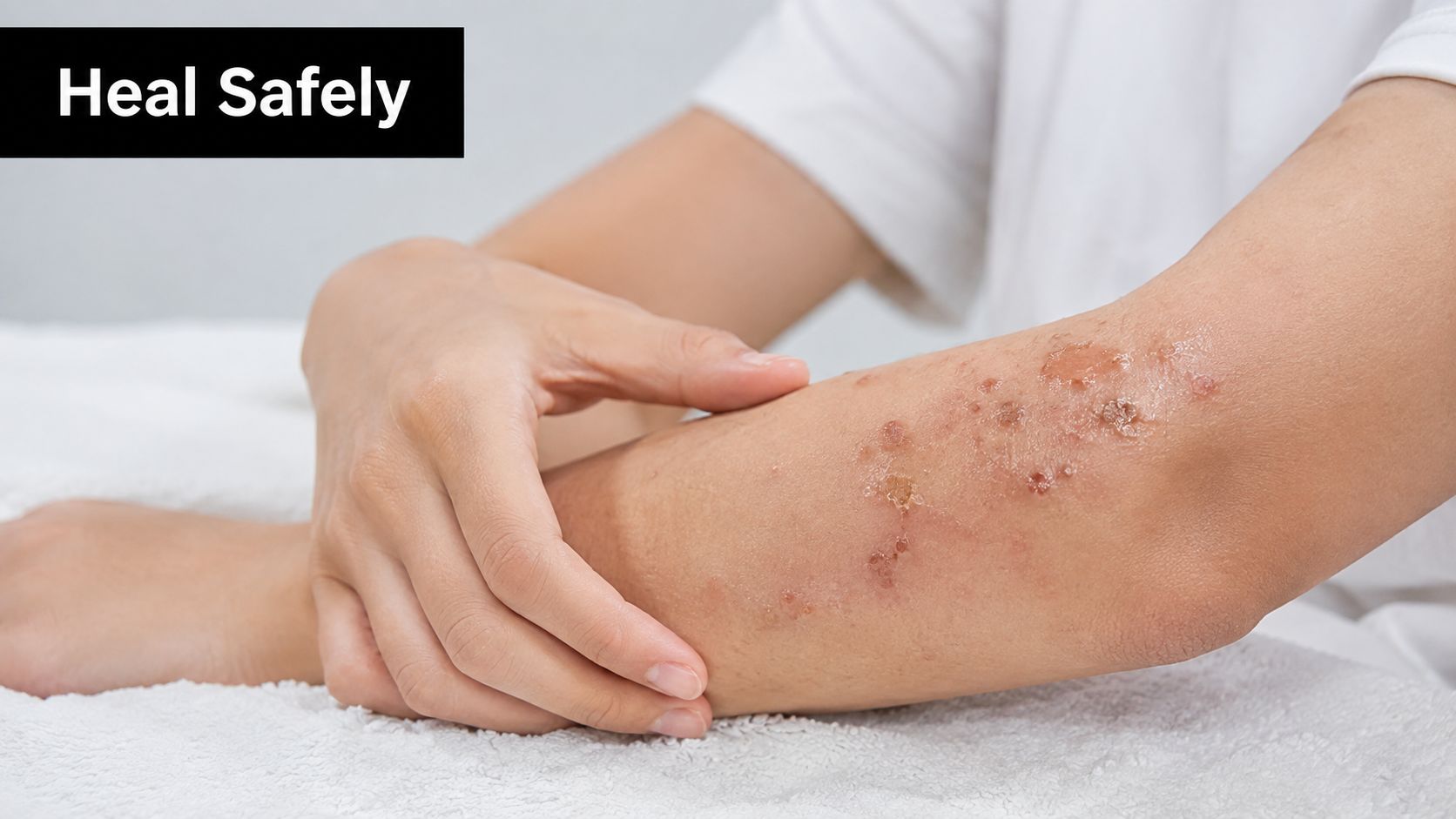
A treatment area may look more dramatic before it looks calmer. A small blister, pinpoint bleeding, mild swelling, or light scab can occur during normal healing. The useful test is whether discomfort and inflammation are gradually settling. Increasing pain, spreading redness, worsening swelling, pus, or fever needs professional advice.
Expected changes compared with warning signs
| Usually compatible with healing | Contact the clinic for review |
|---|---|
| Redness that gradually settles | Redness that spreads or intensifies |
| Mild warmth or tenderness | Pain that increases rather than improves |
| A small intact blister | Persistent, enlarging, or repeatedly traumatised blistering |
| A dry scab that remains attached | Pus, worsening drainage, or an unpleasant odour |
| Itching as the skin dries | Fever or feeling systemically unwell |
| Temporary colour change | Pigment darkening that concerns you or continues to worsen |
This table supports observation, not diagnosis. The response varies with treatment settings, location, tattoo composition, and individual healing. If the area appears to be deteriorating, send 3D Aesthetics Leamington Spa a clear photograph and state when the change began.
Protecting a blister or scab
Do not pick, scratch, rub, or burst a blister. Its surface helps protect new skin. Friction can remove that protection too early, while soaking, swimming, and heavy sweating make the area harder to keep clean. Loose clothing can reduce repeated contact.
Clean gently with mild soap when advised, then pat dry. If the area weeps or catches on clothing, ask whether a non-adherent dressing is suitable. Keep adhesive away from fragile skin unless the clinic has instructed you to use it, and avoid repeatedly removing dressings to inspect the area.
A cool compress and reduced pressure may ease mild swelling. Avoid applying extra creams to increasing heat, tenderness, or persistent weeping without advice. Those changes need assessment rather than another product.
Telling pigment lift from bruising or inflammation
Laser-treated pigment can look temporarily darker, grey, or uneven as particles break up and the skin settles. Bruising-like colour is usually flat and gradually fades, while a raised, hot, increasingly painful, or spreading area is more concerning. Photograph the site in consistent lighting so you can compare changes rather than judging it repeatedly at close range.
Darkening that develops after redness has settled may indicate post-inflammatory hyperpigmentation, particularly if it follows irritation or sun exposure. It should be discussed before another session. Your practitioner may recommend a patch test, gentler settings, or a longer interval between treatments when the reaction suggests that the skin needs more recovery time.
Pause plans for another appointment until the surface has healed and the clinic has reviewed any persistent redness or colour change. Do not try to correct it by exfoliating, tanning, or changing products repeatedly. (UK hospital laser tattoo removal guidance)
Activity Sun Exposure and Product Guidance Between Sessions
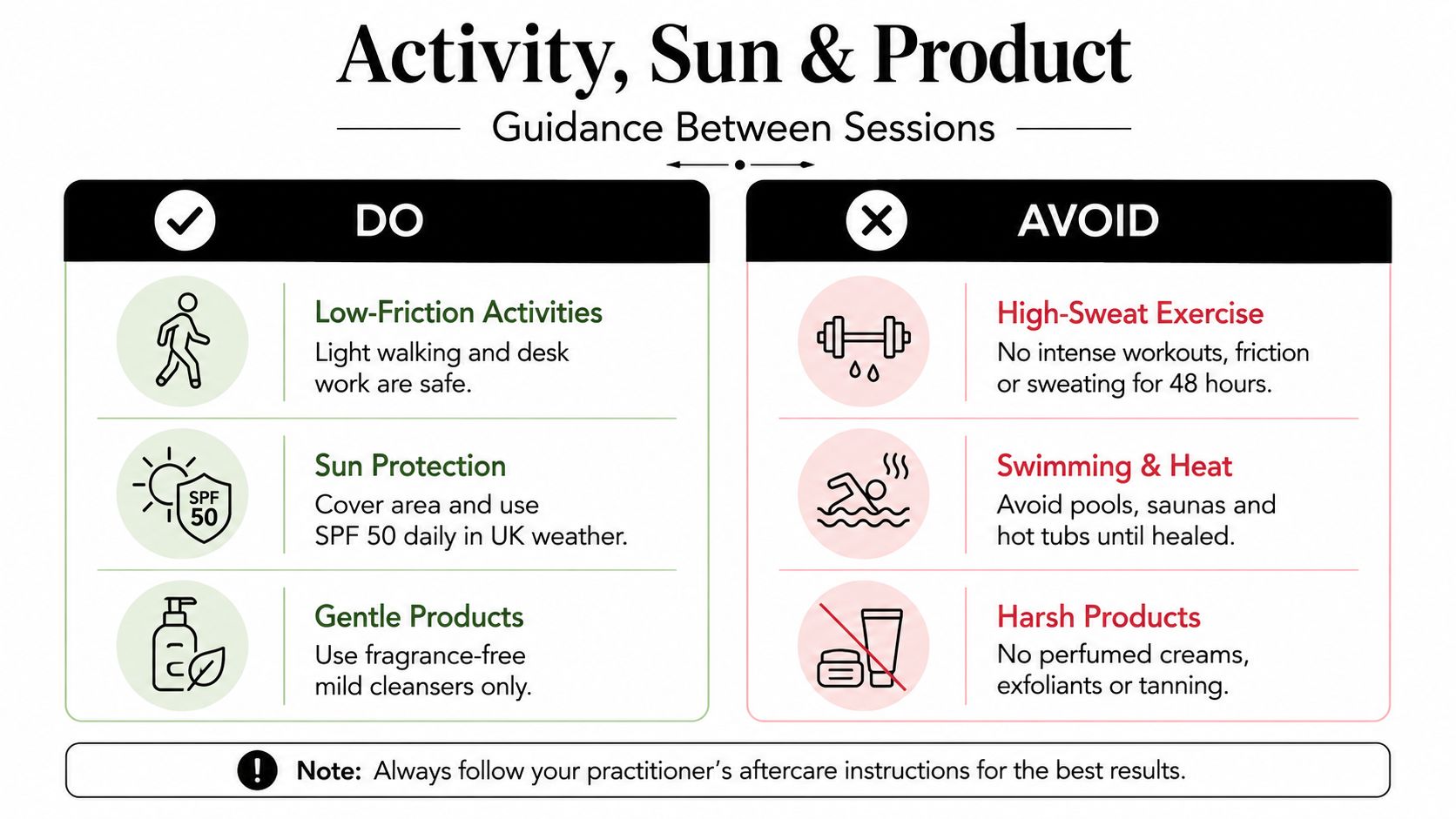
Aftercare has to work around real life. Desk work and gentle walking generally create less mechanical stress than running, contact sport, manual handling, or a gym session that leaves clothing soaked with sweat. The decision should be based on friction, heat, moisture, and sun exposure, not whether an activity feels manageable.
Use friction as your first test
A gentle commute may be reasonable if the treated area is covered without rubbing. A backpack strap over a fresh treatment site, tight workwear over a blister, or repeated bending across a joint is a different situation. Adjust clothing, straps, and duties where possible rather than assuming a dressing can absorb constant pressure.
Avoid swimming pools, hot tubs, saunas, and long soaks until the area has healed. High-sweat exercise also deserves caution during the early period. UK-facing guidance commonly advises avoiding intense exercise and excessive sweating for 48 hours, while more conservative advice may continue until scabs have fallen away. (UK aftercare guidance)
Practical rule: low friction is not the same as no downtime. If the skin is blistered, scabbed, wet, or sore, choose protection and rest over a timetable.
Summer outdoor sport creates a direct UV problem, even when the tattoo is covered for part of the day. In winter, heavy jumpers, coat cuffs, thermal layers, and damp fabric can create rubbing and trapped moisture. Cover the area with clean, loose clothing and use a broad-spectrum SPF once the skin is sufficiently closed and your practitioner has advised that sunscreen is appropriate.
Sun protection is a long-term task
UK NHS aftercare guidance advises protecting treated skin from sunlight and ultraviolet light with clothing and SPF 30+ between sessions and for 6 months after the final treatment. (NHS laser tattoo removal aftercare guidance) This isn't limited to hot days. UV exposure can occur during everyday outdoor time, including walking, driving, gardening, and commuting.
Use a gentle, fragrance-free cleanser and avoid tanning products, perfumed creams, and exfoliating acids while the skin is recovering. Don't use a product because it worked on another area of your body. If you're considering another skin treatment, such as microneedling aftercare, tell the practitioner about recent laser tattoo removal so the timing can be assessed safely.
Follow Up Appointments and When to Contact the Clinic
The best long-term results come from allowing the skin to recover and the body to clear pigment before another session. A follow-up appointment gives the practitioner an opportunity to assess the surface, review fading, discuss any pigment response, and decide whether the area is ready for further treatment. Don't treat a pre-booked date as more important than the condition of your skin.
Bring useful information to the review. Note when redness, blistering, scabbing, itching, or colour change began. Take photographs in consistent lighting if the clinic has asked you to monitor the area, and mention tanning, outdoor exposure, new skincare products, medical changes, or any previous history of post-inflammatory hyperpigmentation.
Contact 3D Aesthetics Leamington Spa promptly if you notice:
- Spreading redness or increasing heat, especially when the area is becoming more painful.
- Pus, worsening drainage, or an unpleasant smell, which may indicate infection.
- Fever or feeling unwell, rather than local skin discomfort alone.
- Prolonged blistering or delayed healing, particularly when the surface isn't steadily improving.
- Pigment darkening or persistent redness, especially if you have darker skin, tan easily, or have reacted with hyperpigmentation before.
- An unexpected reaction in a cosmetic tattoo, particularly where iron-containing pigment may be present.
Hyperpigmentation is often temporary, but it still needs monitoring. Early advice can help distinguish a normal colour shift from a response that needs a revised plan. Clear, accessible communication also matters when a concern appears outside appointment hours, which is why clinics increasingly consider tools such as conversational AI for patient communication alongside direct clinical review. Such tools should support communication, not replace assessment by a qualified practitioner.
3D Aesthetics Leamington Spa provides a complimentary consultation and full 3D body scan to support personalised treatment planning and progress assessment. For your next step, keep the area clean, avoid picking, protect it from UV, record any changes, and contact the clinic before changing products or booking another treatment if healing doesn't look settled.
Book a complimentary consultation with 3D Aesthetics Leamington Spa to discuss your tattoo removal plan, skin type, treatment area, and aftercare requirements. The team can review healing between sessions and give practical guidance for exercise, clothing, sun exposure, and any unexpected skin response.
← Back to Home