
You've tried pharmacy creams, filed down the thick skin, and perhaps frozen the lesion, yet the wart is still there. A plantar wart can make every step uncomfortable, while a hand wart may become a constant source of frustration or embarrassment. It's understandable that wart removal laser treatment starts to sound appealing when simpler options haven't worked.
Laser treatment can be useful, but it isn't a guaranteed one-visit cure or the automatic best choice for every wart. The right approach depends on the diagnosis, location, thickness, duration, previous treatments, skin type and general health. UK guidance also places laser in a selective, often later-line role rather than recommending it universally.
This guide explains the process in plain English, from how focused light interacts with wart tissue to the differences between pulsed-dye, carbon dioxide and diode lasers. It also covers preparation, healing, recurrence, safety, UK access and the questions worth asking before committing to treatment. The aim is balanced information, so you can approach a consultation with realistic expectations rather than hoping for a miracle.
Table of Contents
- Introduction to Wart Removal Laser Treatment
- What Warts Are and How Laser Treatment Targets Them
- Types of Lasers Used for Wart Removal and When Each Is Suitable
- What to Expect at the Clinic Before During and After Treatment
- How Laser Compares with Cryotherapy Salicylic Acid and Electrosurgery
- Effectiveness Sessions Needed Risks Costs and UK Access
- Making Your Decision and Next Steps with 3D Aesthetics Leamington Spa
Introduction to Wart Removal Laser Treatment
A wart that refuses to clear can feel like a small problem that has taken over your routine. You may have covered it with plasters, avoided swimming or changed the way you walk because pressure on the area hurts. If it's on a finger, you may also worry about spreading it to nearby skin or other people.
Laser treatment enters the conversation when a wart remains stubborn after more straightforward care. A clinician may consider it for a thick plantar wart, a recurrent hand wart or a lesion that has resisted approaches such as salicylic acid and cryotherapy. That doesn't mean laser should replace those treatments at the first appointment. It means the treatment plan needs to match the problem.
The NHS confirms that wart and verruca treatment can include surgery using a scalpel or laser, although the GP should check whether the NHS funds that treatment locally. The NHS guidance on warts and verrucas therefore establishes two important points: laser is a recognised clinical option in the UK, but access through the NHS isn't automatic.
The Royal Free London also describes carbon dioxide laser treatment for wart removal within NHS plastic surgery services. That supports the view that laser has a place in UK practice, while local commissioning decisions still affect whether patients receive it publicly or seek private care.
A realistic expectation: laser may help a persistent wart, but your clinician should explain the likely number of sessions, healing requirements and possibility of recurrence before treatment begins.
At a consultation-led clinic such as 3D Aesthetics Leamington Spa, the most useful first step is a careful assessment rather than an immediate procedure. The clinician needs to confirm that the lesion is a wart, decide whether laser is appropriate and discuss alternatives. This guide will help you understand that conversation, including what laser can do, where its limitations lie and how to plan safely.
What Warts Are and How Laser Treatment Targets Them
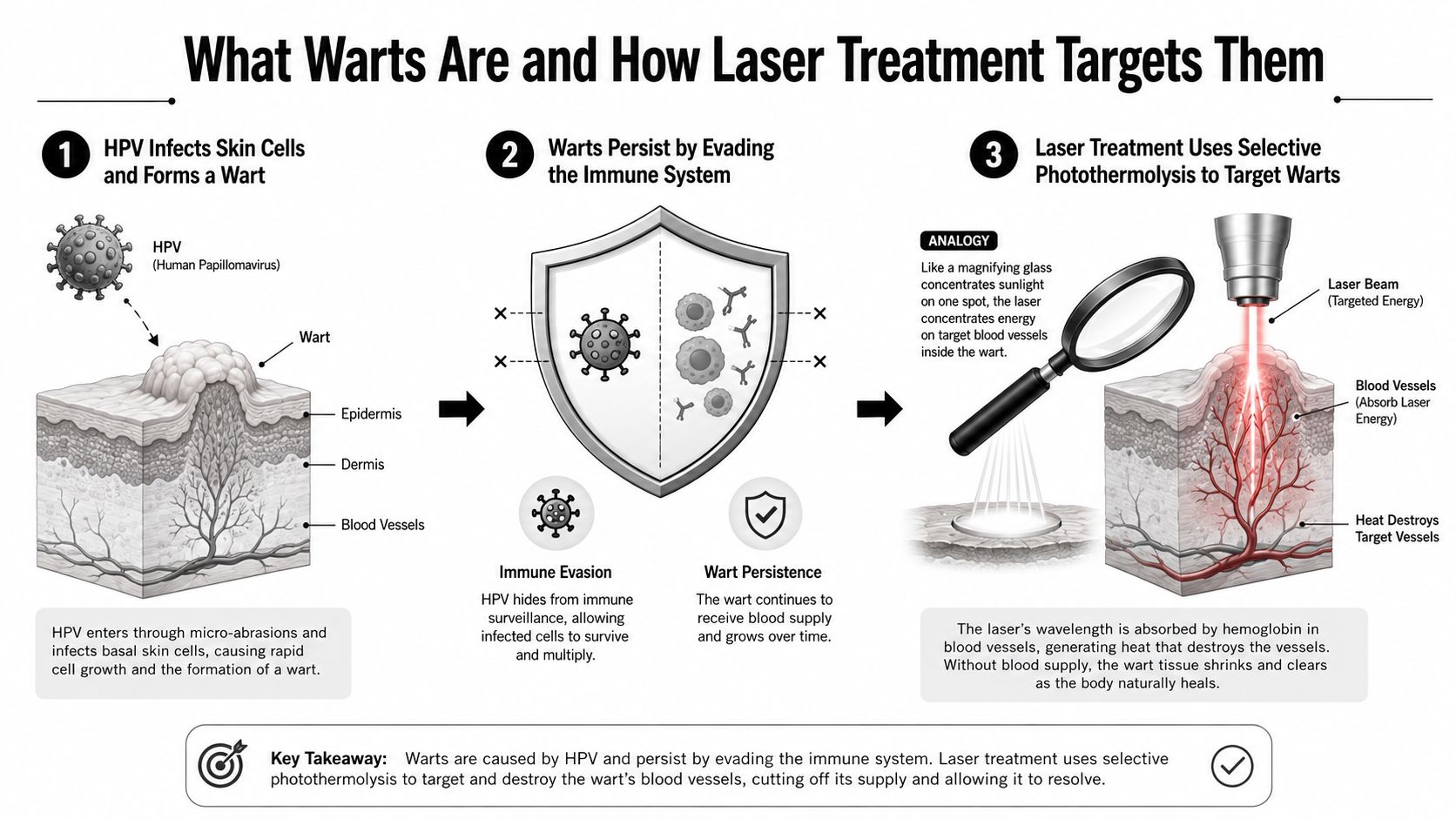
Warts develop when human papillomavirus, commonly called HPV, enters the outer skin through a small break or vulnerable area. The virus alters the behaviour of nearby skin cells, encouraging a thicker, roughened growth. On the sole of the foot, pressure from standing and walking can push the lesion inward beneath hard skin, which is why a verruca may feel like a painful spot under a callus.
The immune system doesn't always clear the infected cells quickly. A wart can therefore remain while the surrounding skin continues to thicken. Pharmacy treatments often work by gradually softening and removing that thickened tissue, but a deep or long-standing lesion may still need a different strategy.
The treatment target
A laser doesn't “burn the wart” in one undifferentiated action. The clinician selects a wavelength and pulse pattern that interacts with a particular target, such as wart tissue or the small blood vessels supporting it. This is often described through the principle of selective photothermolysis.
The phrase sounds complex, but the idea is similar to using a magnifying glass to focus sunlight on a chosen point. The clinician delivers concentrated light to a target that absorbs that light more readily than nearby tissue. Heat then damages the selected structure while careful settings aim to limit unnecessary injury around it.
With pulsed-dye laser, the target is primarily the wart's microvasculature. The energy thermally injures those vessels, reducing the lesion's support and allowing the body to clear damaged tissue. With an ablative carbon dioxide laser, the device removes or vaporises wart tissue in controlled layers. The distinction matters because the two approaches create different surface effects and have different suitability considerations.
Before treatment, a clinician may pare or thin hard skin over a plantar or thick wart. That preparation is like removing a layer of insulation so the chosen treatment can reach the intended area more effectively. UK dermatology guidance places pulsed-dye laser after paring and/or salicylic-acid pretreatment for some hand warts, rather than presenting it as a universal first step.
The surrounding skin still matters. A clinician must account for the wart's depth, location, pigment risk and proximity to delicate structures. That's why laser settings should be selected by a trained professional after examination, not copied from a generic online guide or treated as interchangeable between devices.
Types of Lasers Used for Wart Removal and When Each Is Suitable
Laser choice should follow the wart's structure, position and treatment history. Each system delivers energy differently, so the relevant questions are what it targets, how much surface injury it causes and whether that balance suits the lesion.
Pulsed-dye laser
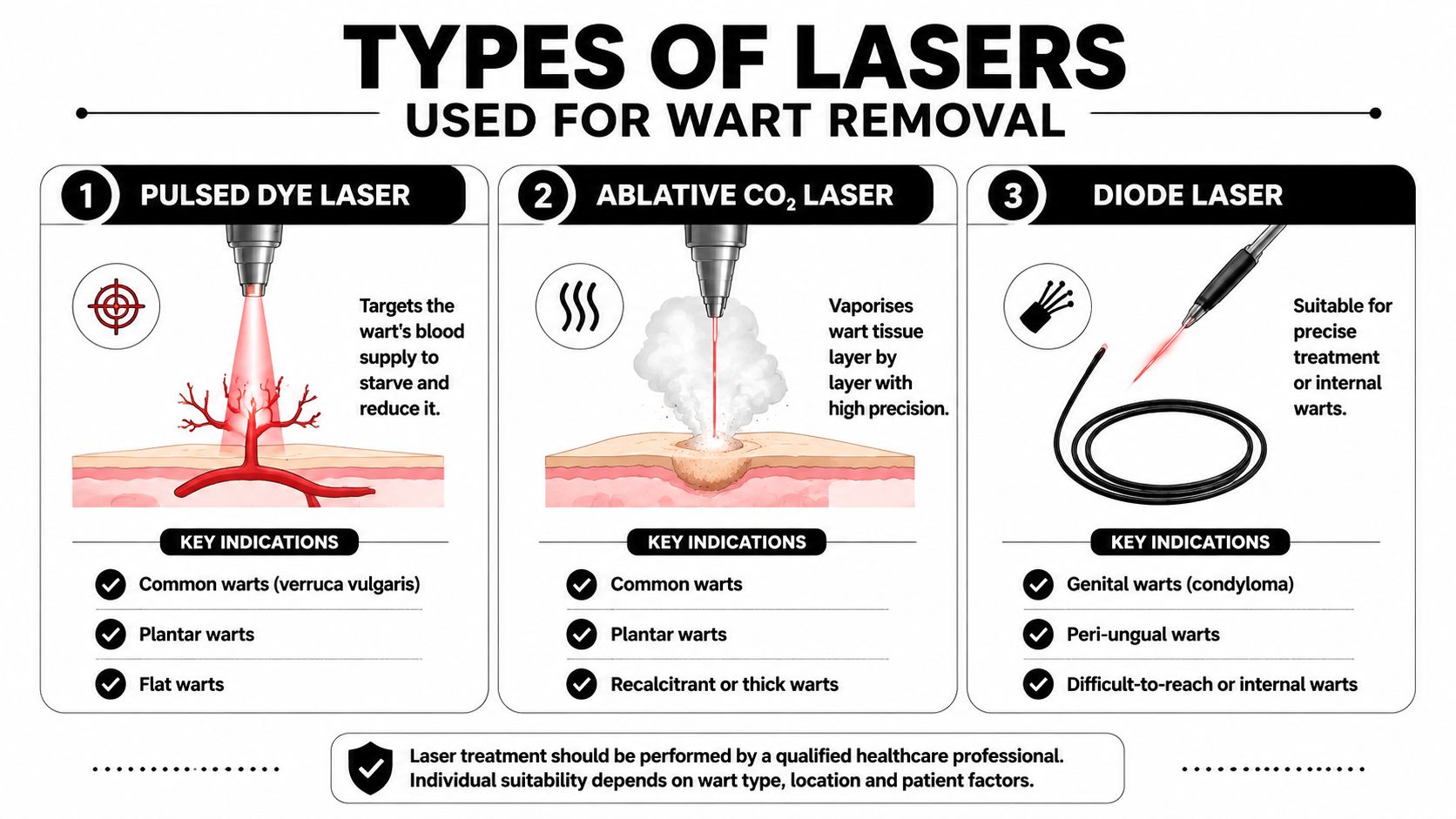
Pulsed-dye laser, or PDL, directs light towards blood vessels inside the wart. Blood-related targets absorb the energy, creating controlled heat injury in the microvasculature. With less vascular support, the body can clear the damaged lesion. PDL may suit persistent warts, particularly after paring or salicylic-acid pretreatment.
The British Association of Dermatologists guideline reports PDL clearance rates of 32% to 75% across cohort studies, as summarised in this UK wart-removal evidence summary. A separate case series involving 142 patients with more than 700 warts reported 93% clearance of treated warts after an average of 2.5 treatments. That result describes one group and cannot predict an individual outcome.
The same guidance states that two to four laser treatments at 7 to 10 J/cm² are usually needed. These figures describe a calibrated treatment approach, not a universal prescription. The clinician must adjust energy to target the wart while limiting the surrounding skin's response.
Carbon dioxide laser
A carbon dioxide laser is ablative. It vaporises wart tissue in controlled layers, rather like removing a thick material one layer at a time. This can suit a bulky, extensive or difficult lesion. UK guidance for refractory anogenital warts describes CO2 laser as particularly suitable for large-volume disease and challenging sites such as the urethral meatus or anal canal.
Because it removes tissue at the surface, healing may be more noticeable than after a vascular laser. Anaesthesia, dressings and aftercare should therefore be discussed before consent. CO2 devices are also used for procedures such as scar improvement, but the settings and plan are different. Information about a clinic's CO2 laser scar removal service is not a recommendation to use scar-treatment settings for a wart.
Diode laser
Diode lasers may be used for selected lesions, including internal anogenital disease in some clinical pathways. UK guidance lists carbon dioxide or diode laser as options for internal anogenital lesions, while carbon dioxide laser is commonly used for external lesions.
Suitability depends on access, anatomy, lesion volume and the clinician's experience with that device. A small hand wart and a large lesion in a sensitive anatomical area require different planning. Laser is therefore a selective later-line option, not a universal first choice.
The following video illustrates the general clinical role of laser devices. Your examination should determine whether a particular system is appropriate.
What to Expect at the Clinic Before During and After Treatment
A wart appointment should begin with certainty about the diagnosis, not with a laser setting. The clinician needs to understand the lesion, check factors that could affect healing and explain the likely benefits, limits and aftercare before you consent.
Before treatment
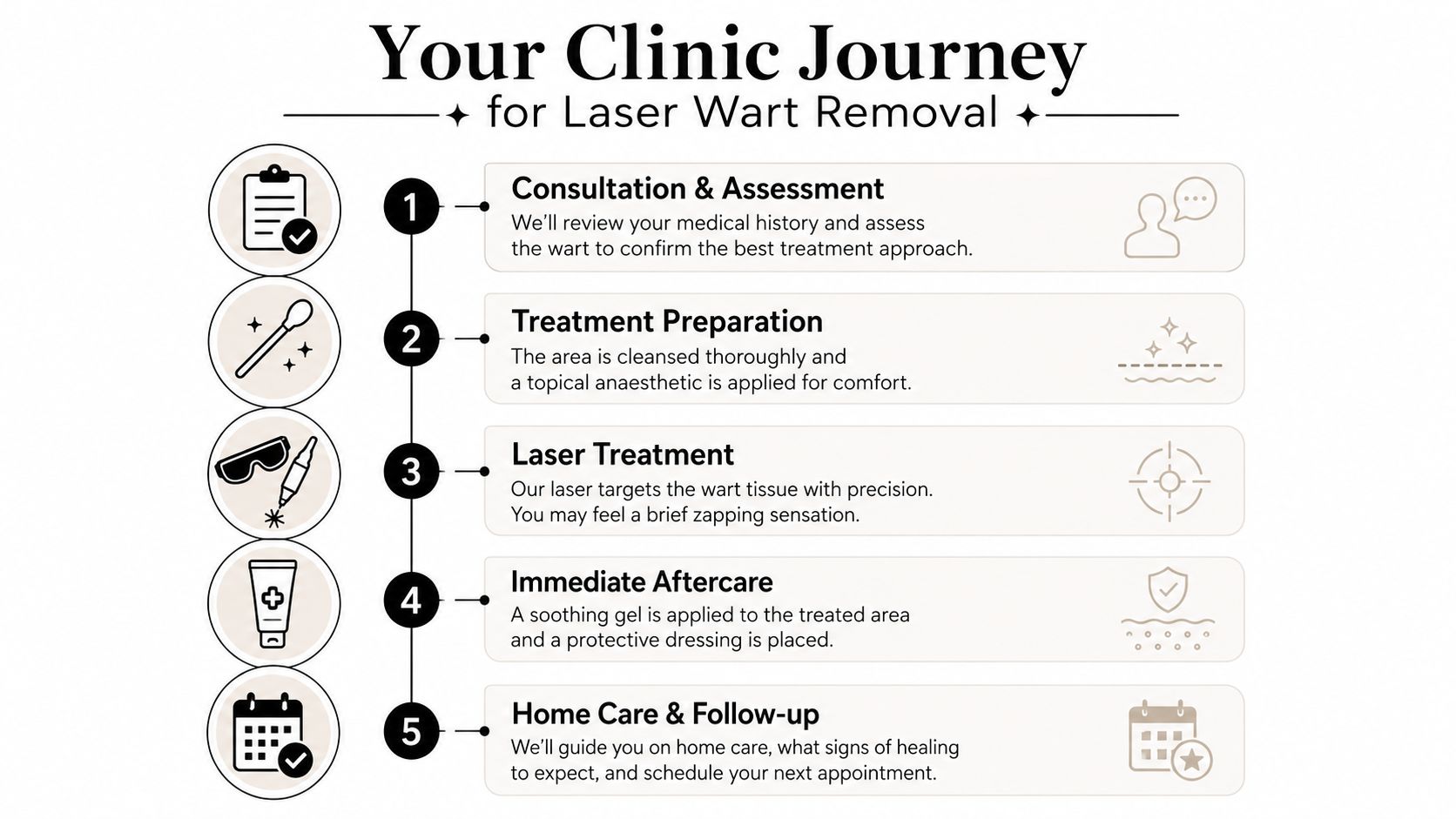
The consultation usually covers how long the wart has been present, earlier treatments, pain, bleeding, changes in appearance and any medical conditions or medicines that may affect healing. The clinician examines the area and may pare away thick surface skin so its depth and borders are easier to assess.
Diagnosis matters because corns, calluses and other lesions can look like warts. A lesion that is changing, bleeding, unusual or uncertain needs appropriate medical assessment rather than cosmetic treatment. The Primary Care Dermatology Society guidance on warts stresses diagnostic certainty and notes that laser and curettage can still be followed by recurrence.
Preparation varies with the lesion and device. It may involve paring or a period of salicylic-acid softening. Do not add extra products or continue a prescribed preparation unless the clinic advises you to. Irritated skin can increase discomfort and make the examination less clear.
The clinician should also explain why laser has been selected, particularly if simpler options remain suitable. Questions about the expected number of sessions, likely wound care and the possibility of recurrence belong before consent.
During the appointment
The treatment area is cleaned, and the clinician explains eye protection, positioning and the sensations you may notice. Laser pulses can feel like brief snaps, heat or stinging. A deeper ablative treatment may need local anaesthetic, especially for a thick wart or a sensitive site.
The device is applied methodically, with the approach adjusted to the wart's size, depth and response. Depending on the laser, the area may be covered with a dressing or protective ointment. Before you leave, you should receive written instructions explaining how to clean the site and which symptoms require help.
Comfort and safety come first: ask what anaesthetic is available, what the laser is targeting and how the clinic manages smoke or plume before treatment starts.
Plume and healing precautions
A laser that vaporises tissue can create plume containing particles, including HPV-related material. For anogenital wart procedures, UK clinical guidance places emphasis on suitable room ventilation and protective equipment. Ask how the clinic controls plume, since extraction and protective measures form part of safe practice.
Redness, swelling, sensitivity, a scab or a treated surface can occur after treatment. The exact appearance depends on the laser and the depth of treatment. Keep the area clean as instructed, avoid picking and reduce friction while it heals. For a foot wart, ask how to manage pressure from shoes and walking.
Contact the clinic if pain becomes stronger instead of settling, redness spreads, discharge appears or you feel unwell. The clinician can advise when to restart exercise, swimming or topical wart products. Follow-up matters because the first session may reduce the visible lesion without clearing every infected cell.
How Laser Compares with Cryotherapy Salicylic Acid and Electrosurgery
Laser is not automatically superior to familiar wart treatments. The right choice depends on the wart's location, thickness, number, previous treatment response and the amount of wound care you can manage.
Salicylic acid gradually softens and removes thickened wart tissue. It can suit many accessible common or plantar warts, either at home or with professional guidance, but improvement depends on consistent application over time.
Cryotherapy freezes the lesion and triggers a local healing response. It offers an in-clinic alternative without an ablative laser wound, although tenderness, blistering and repeat appointments are possible. People considering a non-laser freezing option can use the 3D CryoFreeze treatment page as a starting point for discussion. It does not replace diagnosis, especially if the lesion is painful, changing or uncertain.
Electrosurgery uses heat-generated electrical energy to destroy or remove tissue. It may suit selected persistent lesions, but it creates a treated wound, so anaesthesia, wound care and scarring need discussion.
| Treatment Option | How It Works | Best For | Sessions and Downtime |
|---|---|---|---|
| Salicylic acid | Softens and removes wart tissue gradually | Many accessible common or plantar warts | Repeated application, with progress developing gradually |
| Cryotherapy | Freezes the treated tissue and triggers a local healing response | Selected external warts suitable for in-clinic freezing | Repeat appointments may be needed, with tenderness or blistering possible |
| Laser | Targets blood supply or removes tissue in controlled layers | Recalcitrant, thick or anatomically difficult lesions | Often planned as a course, with downtime depending on the device |
| Electrosurgery | Uses heat to destroy or remove the lesion | Selected persistent lesions when tissue removal is appropriate | Wound care and healing are required |
Laser can be useful when a wart is thick, difficult to reach or has resisted simpler options. Its selective action may target blood vessels or remove tissue in layers, but it can cost more privately and does not prevent recurrence.
The practical trade-off is straightforward. Salicylic acid is less invasive but requires patience. Cryotherapy is convenient but may blister. Electrosurgery removes visible tissue directly but still requires healing. Laser is a selective later-line option, not a universal first choice.
Effectiveness Sessions Needed Risks Costs and UK Access
Laser results depend on the wart's location, thickness, age and previous treatment. A lesion on the hand may respond differently from one beneath the heel, where pressure and thickened skin can make access and healing more difficult. A newer wart may also behave differently from one that has persisted through several treatments.
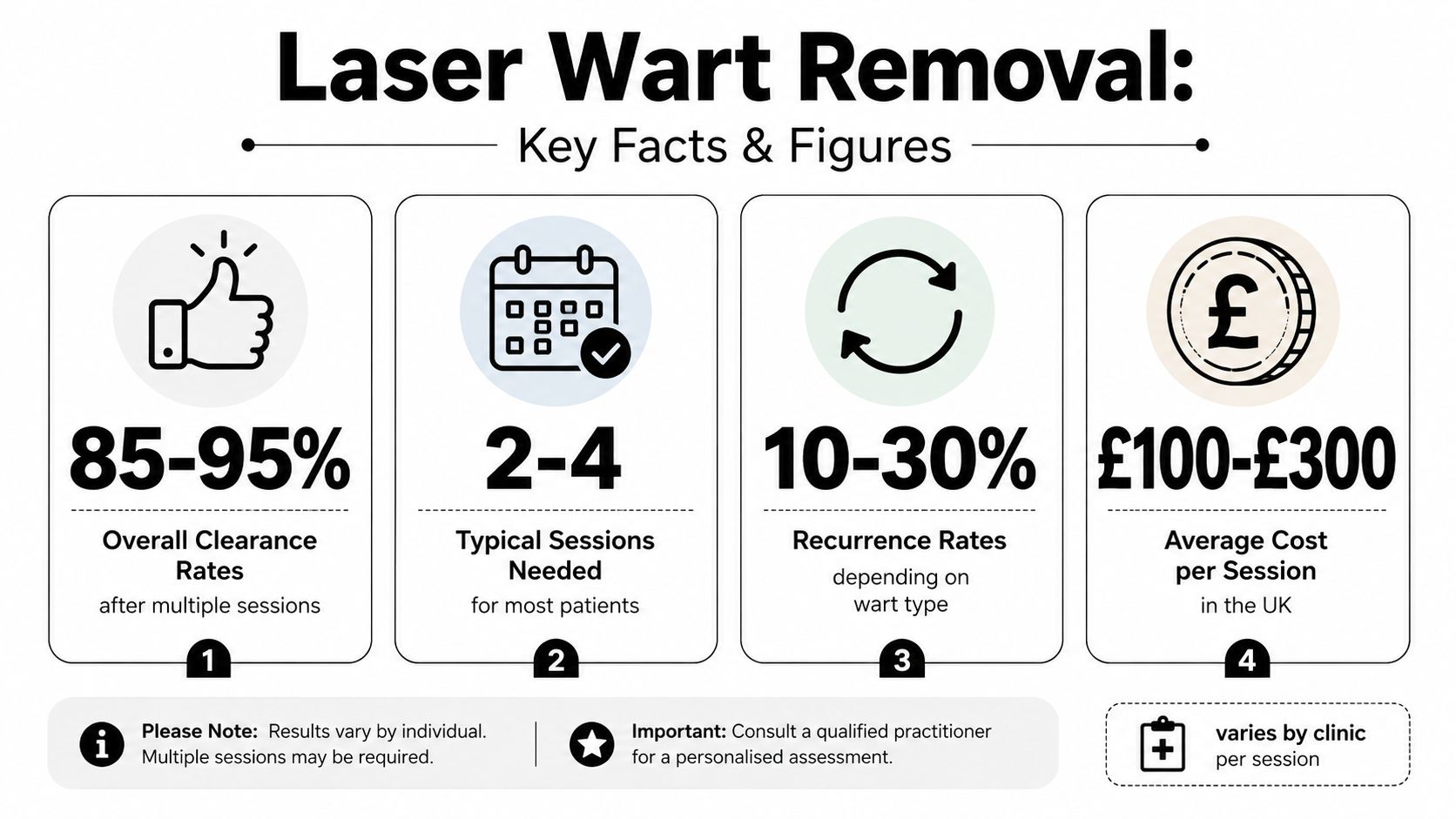
Published UK evidence shows a wide range of outcomes. Earlier dermatology evidence reported PDL clearance from 32% to 75%, while one case series reported 93% clearance of treated warts after an average of 2.5 treatments. A St James's Hospital audit found 64% complete clearance across treated areas, 36% recurrence and 79% patient satisfaction. These figures describe variation, not a guaranteed result.
Treatment planning often involves two to four sessions at 7 to 10 J/cm², although the clinician may adjust the schedule or technique to the lesion and device. Ask how progress will be assessed between appointments, and what the plan is if visible wart tissue remains.
Risks and infection control
Pain, blistering, scabbing, pigment changes and scarring are possible. Recurrence remains a significant limitation. The Primary Care Dermatology Society reports that laser and curettage have recurrence rates likely to be at least 30%, so claims about a one-off cure should be examined carefully.
Laser also creates a practical infection-control issue. Vaporised tissue can form a plume, so the clinic should use suitable plume extraction, ventilation, eye protection and personal protective equipment. These precautions matter because the procedure removes or heats tissue in a controlled area, while smoke and debris still need to be managed safely.
Carbon dioxide laser has a specific role for refractory anogenital warts in UK guidance, particularly where disease is extensive or anatomically difficult. A UK systematic review used in NHS decision-making found ablative techniques more effective than topical treatments for complete end-of-treatment clearance. It modelled carbon dioxide laser as the most effective therapy with a 97.1% probability of complete clearance, and podophyllotoxin followed by carbon dioxide laser as the most cost-effective pathway at a willingness-to-pay threshold of £20,000 to £30,000 per QALY, as described in the BASHH anogenital warts guidance.
Private fees vary with lesion number, size, location, device, anaesthesia, clinician expertise and follow-up. A clinic should give a quotation after assessment. NHS access also varies because local funding decisions determine whether laser is commissioned in a particular area.
Making Your Decision and Next Steps with 3D Aesthetics Leamington Spa
Laser may be worth discussing if your wart is painful, persistent, recurrent, thick or located where everyday pressure makes other approaches difficult. It may be less sensible if the lesion is new, uncomplicated or has not yet had a reasonable trial of simpler treatment. The consultation should explain why laser is being considered, not assume that a laser is automatically the strongest answer.
Ask these questions before agreeing:
- Diagnosis: How confident are you that this is a wart rather than a corn, callus or another lesion?
- Device: Which laser will you use, and will it target blood vessels or remove tissue?
- Course: How many sessions might be needed, and what happens if the wart remains?
- Recovery: How should I clean and cover the area, and when can I return to normal activities?
- Recurrence: What signs suggest the wart is returning, and what follow-up is included?
- Safety: How do you manage eye protection, plume extraction, ventilation and PPE?
3D Aesthetics Leamington Spa offers complimentary, in-depth consultations that include a 3D body scan for personalised planning and monitoring. Its trained therapists provide non-surgical skin and laser services, including vascular treatment and CO2-based skin procedures, with safety and comfort discussed as part of the consultation. That doesn't make wart laser treatment suitable by default, so confirm the clinic's current scope, practitioner qualifications and whether your specific lesion should be managed through a GP or dermatology service.
If you're ready to discuss the lesion rather than guess at the right treatment, book a free consultation with 3D Aesthetics Leamington Spa. Bring details of previous treatments and any relevant medical history, and ask for a written plan covering suitability, alternatives, expected sessions, aftercare and total costs.
3D Aesthetics Leamington Spa can discuss whether a laser-based approach is appropriate for your wart and explain when medical referral or another treatment would be safer. Visit 3D Aesthetics Leamington Spa to arrange a consultation, review your options and receive a plan based on your skin, lesion and treatment history.
← Back to Home