

You notice them while applying foundation: fine red lines beside your nose, a small branching mark on your cheek, or a patch of redness that never seems to settle. You may call them broken capillaries, but that everyday label can describe several different vascular changes, and that distinction matters more than the device's brand name when you're considering laser treatment.
A suitable treatment can reduce visible vessels, but it won't prevent every new vessel from appearing. The safest plan starts by identifying what is causing the redness, how deep the vessel sits, and whether the treatment settings suit your skin.
Table of Contents
- What Broken Capillaries Are and Why Laser Helps
- How Laser Treatment Actually Works
- Comparing the Main Laser Options
- Candidacy, Consultation, and the Treatment Itself
- Sessions, Intervals, and When Results Show
- Realistic Results, Recurrence, and Long-Term Value
- Risks, Downtime, and Aftercare Essentials
- Choosing 3D Aesthetics Leamington Spa for 3D Vasculase
What Broken Capillaries Are and Why Laser Helps
A person examining new red lines in the mirror may assume every mark is the same problem. It might be telangiectasia, meaning persistently widened tiny vessels, or a spider naevus, which has a central vessel with fine branches spreading outwards. A small bright-red raised spot may instead be a cherry angioma, while blue or red lines lower on the face or legs can represent small reticular veins.
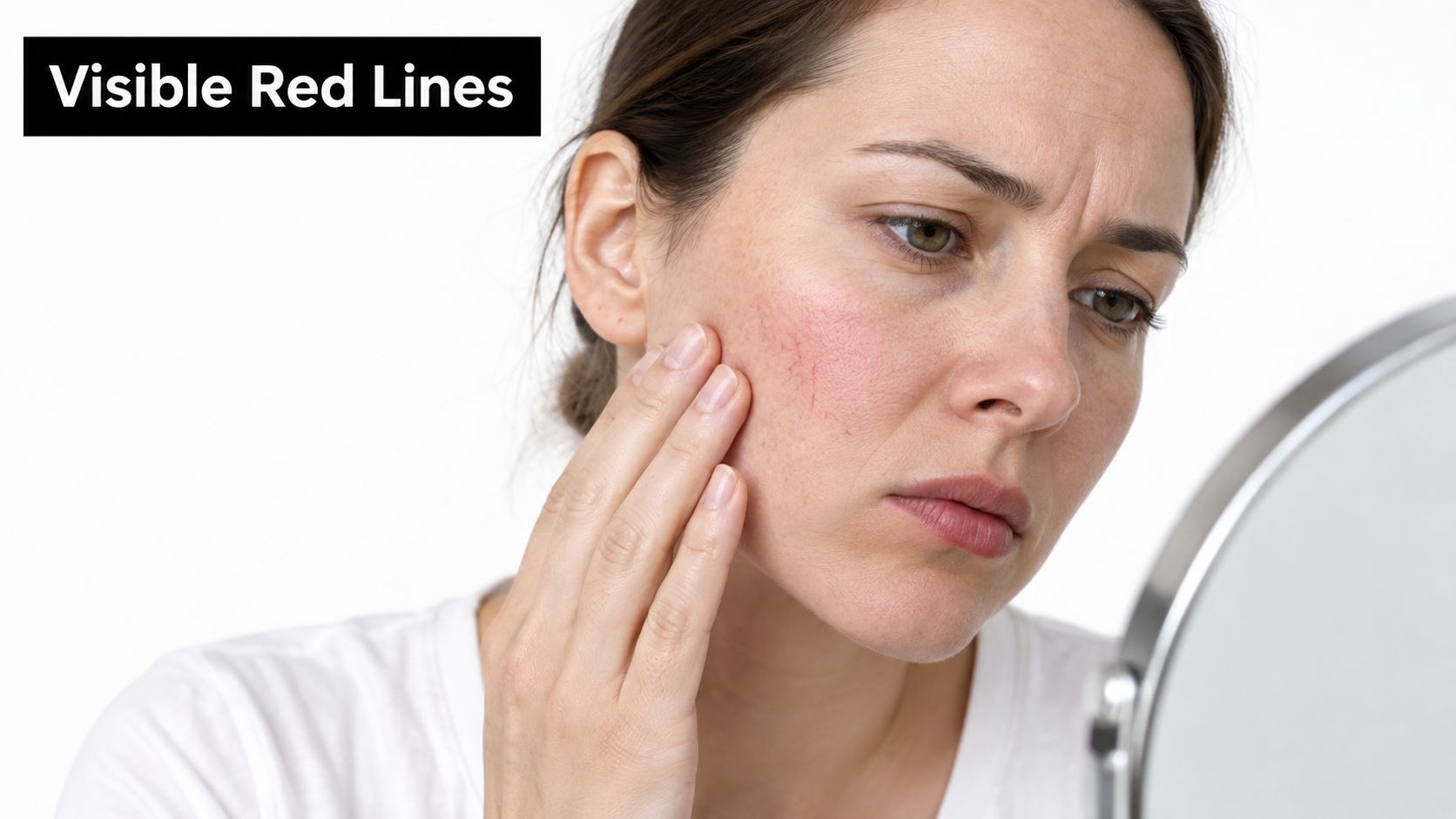
These conditions are often harmless, but they don't all respond in the same way. Rosacea flushing is another source of facial redness. Laser may help persistent vessels associated with rosacea, but it doesn't remove the underlying tendency to flush, so redness management may need more than a vessel-targeting procedure. You can read a plain-language overview of vascular lesions and their treatment before booking an assessment.
Why vessels become visible
Several influences can make surface vessels easier to see:
- Sun exposure: ultraviolet damage can weaken supporting skin structures and make vascular changes more noticeable.
- Temperature changes: repeated exposure to heat or cold can provoke flushing and vascular dilation.
- Alcohol and heat: these can intensify redness in people who are already prone to flushing.
- Genetics and ageing: some people inherit fragile or prominent vessels, while thinning skin can reveal them more clearly.
- Hormonal change and trauma: hormonal shifts, rubbing, picking, or skin procedures can contribute to persistent redness.
Laser is therefore a targeted removal tool, not a cure for vascular fragility. It can heat and collapse a visible vessel, but it can't guarantee that another vessel won't develop nearby. Deeper feeder vessels may also need a different setting or a combined treatment strategy.
Practical rule: Don't choose a laser because its name sounds advanced. Choose it because the practitioner can explain why its wavelength, pulse and settings match your vessel.
How Laser Treatment Actually Works
Laser treatment relies on selective photothermolysis, a technical phrase with a simple principle. Light is absorbed more strongly by particular colours, much as a dark shirt absorbs sunlight more readily than a pale one. In vascular treatment, the intended colour target is haemoglobin inside the blood vessel.
The process usually follows three linked stages:
- Light absorption: a selected wavelength reaches the vessel and is absorbed by oxyhaemoglobin.
- Controlled heating: the absorbed optical energy becomes heat, damaging the vessel wall and causing it to close.
- Natural clearance: the body gradually removes the treated material through normal lymphatic and immune processes.

That third stage explains why your skin may look different before it looks better. The vessel can be sealed during the appointment, but the visible change develops as the body clears the coagulated contents. UK clinical guidance describes swelling and redness after vascular laser treatment as commonly lasting 3–5 days, while pulsed dye laser can produce dark purple purpura lasting 10–14 days (Leeds Teaching Hospitals guidance via Chiltern Medical).
Pulse duration also matters. Fine superficial vessels need a different delivery pattern from thicker or deeper vessels, because the practitioner must heat the target without spreading excessive heat into surrounding skin. A clinician also has to adjust energy carefully for skin tone. Melanin absorbs light too, so poorly selected settings can increase the risk of unwanted heating and pigment changes, particularly in more melanised skin.
The treatment doesn't repair every reason vessels became visible. It addresses the existing target, while sun protection, rosacea care and trigger management may help reduce future vascular changes.
For a visual explanation of the process, this short video shows the basic treatment concept:
Comparing the Main Laser Options
There isn't one universal broken capillaries laser. Practitioners select a device according to vessel depth, diameter, colour, distribution and your skin type. A device that works well for fine cheek telangiectasia may be inappropriate for a deeper facial or leg vessel.
| Laser Type | Wavelength | Best For | Downtime |
|---|---|---|---|
| Pulsed dye laser | Yellow-spectrum wavelengths, commonly around 577 nm in UK vascular systems | Fine, superficial facial vessels and vascular redness | Redness is common, and purpura can occur |
| Nd:YAG | Longer wavelength, commonly used for deeper targets | Deeper or larger vessels | Depends on depth, energy and skin response |
| IPL | Broad-spectrum light, not a single laser wavelength | Diffuse redness and wider areas of uneven tone | Often limited, but varies by settings |
| 3D Vasculase | 980 nm diode system | Selected visible thread veins and vascular lesions | UK clinic guidance describes minimal downtime |
UK-facing clinical material reports that 577 nm systems are used for superficial facial capillaries because oxyhaemoglobin absorbs strongly in the yellow spectrum. Nd:YAG platforms reach further into tissue and can be considered for deeper or larger vessels, while treatment time is often about 30–60 minutes, with improvement appearing over weeks rather than immediately (Pro Meds vascular laser guidance).
How the options differ
Pulsed dye laser is often considered when the vessels are fine and close to the surface. Its main practical trade-off is possible purple bruising, which can be inconvenient if you have work or social plans.
Nd:YAG can suit deeper vessels because its longer wavelength penetrates further. It demands careful assessment, especially where the target is close to important structures or where skin contains more melanin.
IPL isn't technically a laser. It delivers a broad range of light, so it can be useful for widespread redness, but it may be less precise for one clearly defined vessel.
3D Vasculase uses a 980 nm diode approach for selected visible thread veins. It may be relevant when a clinic has assessed the lesion and believes this wavelength and delivery method fit its depth and size. More detail on treatment for facial spider veins can help you prepare questions for consultation.
Ask which vessel type is being treated, why the proposed wavelength suits it, what skin-safety precautions will be used, and whether the expected result is clearance, softening or management of diffuse redness.
Candidacy, Consultation, and the Treatment Itself
A good candidate usually has a clearly identified vascular target, realistic expectations and skin that can be treated safely with the proposed settings. Fine facial thread veins, spider angiomas, cherry angiomas and some telangiectasia associated with rosacea may all be assessed, but the diagnosis still determines the plan.
Treatment may need to pause if you're pregnant or breastfeeding, have recently used isotretinoin, have a fresh tan or sunburn, or have an active cold sore or skin infection. A recent peel, filler or other procedure in the target area can also affect timing. Tell the practitioner about every medicine and supplement that could affect healing or photosensitivity.
What a careful consultation includes
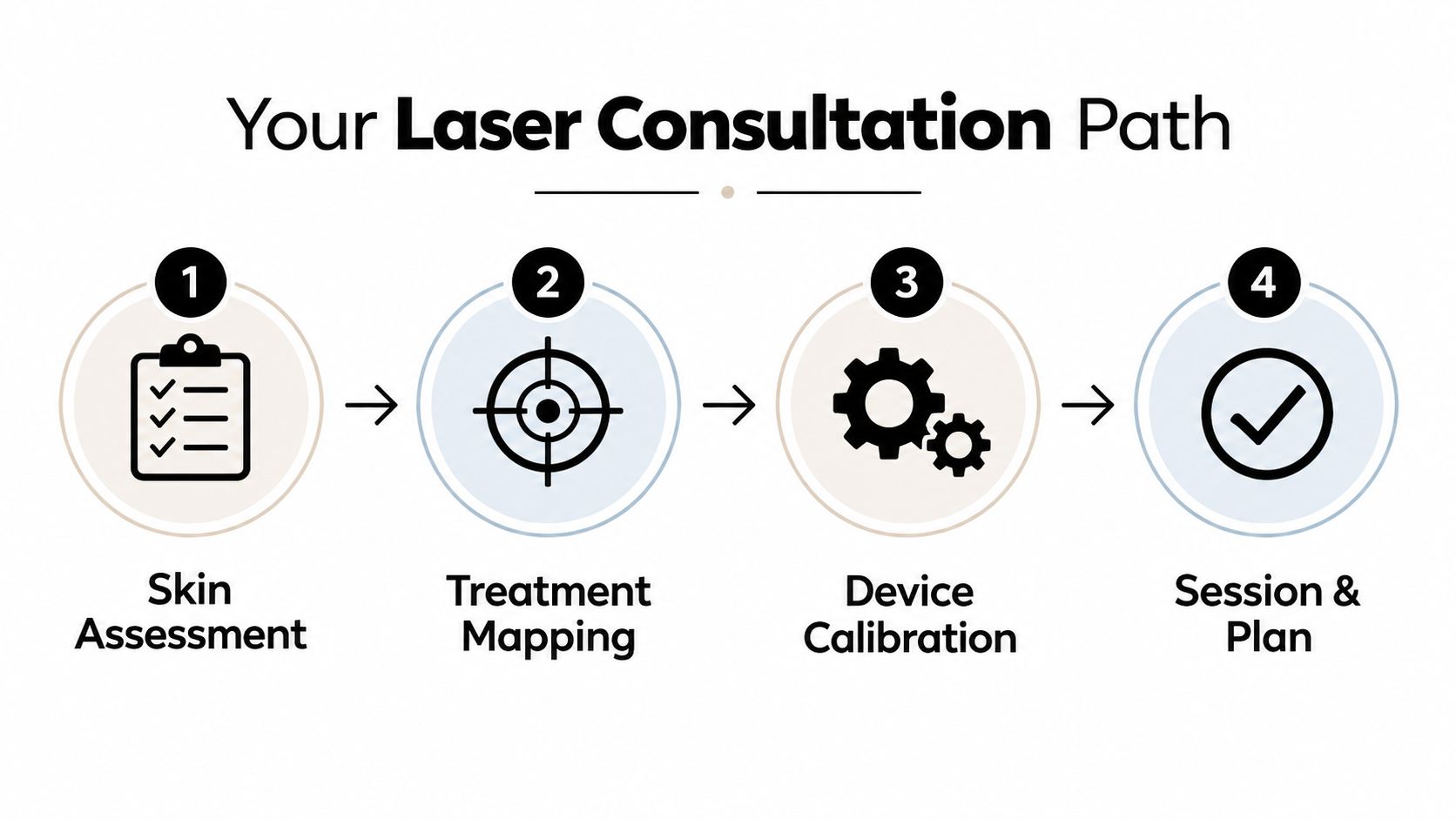
A practitioner should examine the redness rather than accept the phrase “broken capillaries” at face value. The consultation may include:
- Medical history: medicines, skin conditions, previous reactions and relevant procedures.
- Skin typing: often using the Fitzpatrick scale to guide safe energy selection.
- Vessel mapping: examining the distribution, colour and apparent depth of the vessels.
- Photography: creating a baseline so later changes aren't judged from memory.
- Patch testing: particularly useful when the skin type or treatment risk calls for extra caution.
On treatment day, the skin is cleansed and you receive protective eyewear. The clinician may use cold air or another cooling method while pulses are delivered. Many people describe the sensation as a quick hot elastic-band snap, followed by cooling. Facial treatment can be relatively brief, but duration depends on the area and number of vessels.
Afterwards, the skin is usually cooled again. You should leave knowing what reaction is expected, which products to avoid, when to contact the clinic and how long the practitioner wants you to wait before reassessment.
Sessions, Intervals, and When Results Show
A small red line may clear differently from a deeper, thicker vessel. Session planning therefore depends on vessel type, depth, skin type and response, not only on the size of the treatment area. The term “broken capillaries” covers several patterns, so matching the laser to the vessel matters more than choosing a device by brand name.
Treatment intervals allow the skin to settle and the body to clear the treated vessel. UK guidance commonly places vascular treatments 6–8 weeks apart, with repeat sessions often part of the plan (Chiltern Medical vascular lesion guidance). A UK-facing treatment guide describes facial broken capillaries as often needing 2–4 sessions, spaced 4–8 weeks apart (Laser Clinics UK capillary reduction).
| Vessel Type | Typical Sessions | Interval Between Sessions | Visible Results Appear |
|---|---|---|---|
| Fine facial telangiectasia | Often 1–2 sessions | Commonly 4–6 weeks | Fading over 2–6 weeks as treated vessels clear |
| Larger or deeper facial vessels | May require further assessment and repeat treatment | Commonly 6–8 weeks | Over the weeks following treatment |
| Dense or mixed vascular patterns | Varies with vessel depth and response | Planned around healing and reassessment | Progressive rather than immediate |
Independent UK guidance reports a range of 2 to 12 or more treatments per lesion, again commonly using 6–8 week intervals, showing why a fixed promise at consultation is unreliable (UK Dermatologist treatment timeline guidance).
Visible fading can lag behind the appointment because the body must reabsorb treated vessel contents. Older or deeper vessels, cautious settings for higher Fitzpatrick skin types, previous sun exposure and an incomplete diagnosis can all affect the number of sessions required.
Realistic Results, Recurrence, and Long-Term Value
The “one-and-done” idea is attractive, but it doesn't describe how vascular skin behaves. Laser can reduce the vessels that are present on treatment day, while rosacea, sun exposure, heat, alcohol, hormonal shifts and inherited vessel fragility can continue to influence the skin.
A UK clinic notes that some patients need 1–6 sessions, with occasional top-ups around every 9 months, because new veins can develop (Skin Horizon redness and vascular treatment guidance). That isn't a guarantee about your result. It illustrates why a treatment plan should include maintenance expectations rather than presenting clearance as permanent.
What affects durability
- Underlying rosacea: treating visible vessels doesn't remove the condition's tendency to flush.
- Sun exposure: repeated ultraviolet exposure can make new vascular changes more likely.
- Heat and alcohol: personal triggers may keep provoking redness.
- Genetic tendency: some people will continue to form prominent surface vessels.
- Vessel selection: a deeper feeder may remain if only the fine surface branch is treated.
The most useful question isn't “Will it last?” Ask instead, “Which vessels are you treating, what might remain, and what could cause new ones?” The answer helps you compare the value of a course of treatment with ongoing camouflage, repeated skincare purchases and the frustration of unpredictable redness.
Public commissioning guidance in the UK also describes the evidence for laser or IPL in erythematotelangiectatic rosacea and persistent telangiectasia as limited or low to moderate quality, and such treatment isn't routinely commissioned by NHS Humber and North Yorkshire ICB. That makes a clear private consultation especially important, because you should understand the limits of the evidence as well as the possible cosmetic benefit.
Risks, Downtime, and Aftercare Essentials
A treated vessel can look worse before it looks better. The reaction depends on the vessel's depth and size, the wavelength and energy used, and your skin type. As covered earlier, redness and swelling usually settle within days, while purpura can remain visible for up to two weeks. Plan treatment around important events and ask how your chosen settings may affect the visible recovery period.
Warmth, tenderness, swelling and redness can be normal early responses. A larger vessel may crust or darken as it breaks down. Leave these areas alone. Picking, scrubbing or rubbing can delay healing and increase the risk of marks.
Contact the clinic promptly if pain worsens instead of easing, redness spreads, the skin becomes increasingly hot, or you notice blistering, pus, foul odour or other possible signs of infection. Arrange review if a reaction does not follow the recovery pattern explained at your consultation.

Protect the treated skin
For the first part of recovery:
- Use gentle products: cleanse softly, then apply a simple, fragrance-free moisturiser.
- Protect from ultraviolet exposure: use broad-spectrum high-SPF sunscreen daily and follow advice about direct sun.
- Reduce heat and exertion: avoid saunas, very hot showers and strenuous exercise during the early recovery period.
- Pause irritants: wait before restarting retinoids, exfoliating acids or abrasive scrubs.
- Avoid manipulation: do not pick, rub or place unsuitable products over broken skin.
Makeup may be possible once the surface is closed and comfortable, but follow the clinic's specific advice, particularly if crusting or broken skin is present. Choose clean, gentle products and remove them without friction.
An active infection, pregnancy, recent isotretinoin use or photosensitising medicine may mean postponement or make treatment unsuitable. Your clinician should check these factors before treatment.
Aftercare priority: Sun protection matters because laser targets selected visible vessels, not the skin's tendency to develop future vascular change.
Choosing 3D Aesthetics Leamington Spa for 3D Vasculase
Choosing a clinic should involve more than comparing a device name or promotional photograph. Check the practitioner's training, the suitability of the device for your vessel, patch-testing policy, pricing clarity, treatment records and follow-up arrangements.
3D Vasculase is a 980 nm diode-based vascular system used by some clinics for selected thread veins, broken capillaries and other visible vascular lesions. At 3D Aesthetics Leamington Spa, the consultation should be the point where the practitioner reviews your medical history, assesses the skin, maps the vessels and explains whether this approach fits the depth, size and appearance of the target. You can review the clinic's 3D Vasculase treatment information before speaking with the team.
Questions to take to your appointment
Ask:
- What exactly is being treated? Is it a discrete telangiectasia, spider naevus, rosacea-related redness or another vascular lesion?
- Why this device? What makes the proposed wavelength appropriate for the vessel's depth and diameter?
- What will recovery look like? Could you have purpura, swelling or temporary darkening?
- How will safety be checked? Ask about skin typing, patch testing and protective eyewear.
- What happens if the vessel doesn't clear? A responsible plan should include reassessment rather than an automatic promise.
Local access can also make practical aftercare easier. Travelling straight home after treatment may be preferable to prolonged heat exposure, direct sun or a hot car journey, especially when the skin is already flushed.
Patient questions
How long is a first visit? The timing depends on consultation, assessment and treatment area, so ask the clinic what your appointment includes.
Is it painful? People commonly describe vascular laser pulses as a brief snapping or stinging sensation. Cooling can make the experience more comfortable.
When will I see change? Some vessels may look different quickly, but visible improvement often develops over weeks as the body clears the treated material.
How do I book? Start with an assessment rather than selecting a treatment package. That gives the practitioner an opportunity to confirm whether laser is appropriate for the redness you're seeing.
3D Aesthetics Leamington Spa offers consultation-led vascular treatment using 3D Vasculase for selected thread veins and broken capillaries, with attention to vessel characteristics and skin response. If you want to understand whether this approach suits your redness, visit 3D Aesthetics Leamington Spa to arrange an initial assessment.
← Back to Home