
Ultrasound cavitation is not a traditional weight-loss treatment for dropping scale weight. It's a body-contouring treatment for inch loss, and a clinical course of four sessions over eight weeks has been shown to produce significant improvements in body measurements.
If you're reading this, there's a good chance you're doing many of the right things already. You eat reasonably well, you try to stay active, but there's still one area that seems to ignore your efforts. Lower tummy, flanks, outer thighs, bra line. That's usually where the conversation about weight loss cavitation starts.
The confusing part is the name. People often search for “weight loss cavitation”, but what they usually mean is localised fat reduction and a slimmer measurement in a specific area. In clinic, we talk about inch loss far more than weight loss, because that's the more honest description of what ultrasonic cavitation is designed to do.
For many clients in Leamington Spa, the actual goal isn't “I want to lose loads of weight overnight.” It's “I want this area to look smoother, neater, and more defined in clothes.” That's a very different goal, and it needs the right treatment, the right plan, and realistic expectations.
Table of Contents
- What Is Ultrasonic Cavitation and How Does It Work
- The Ideal Candidate for Cavitation Treatment
- Cavitation vs Other Body Contouring Treatments
- Your Cavitation Journey at 3D Aesthetics Leamington Spa
- What Results Can I Expect and How Long Do They Last
- Is Ultrasonic Cavitation Safe and Are There Side Effects
- Frequently Asked Questions About Cavitation
What Is Ultrasonic Cavitation and How Does It Work
The simple version
You come in wanting your waist or lower tummy to look smoother in clothes, but you do not want surgery or downtime. That is the kind of conversation ultrasonic cavitation is built for.
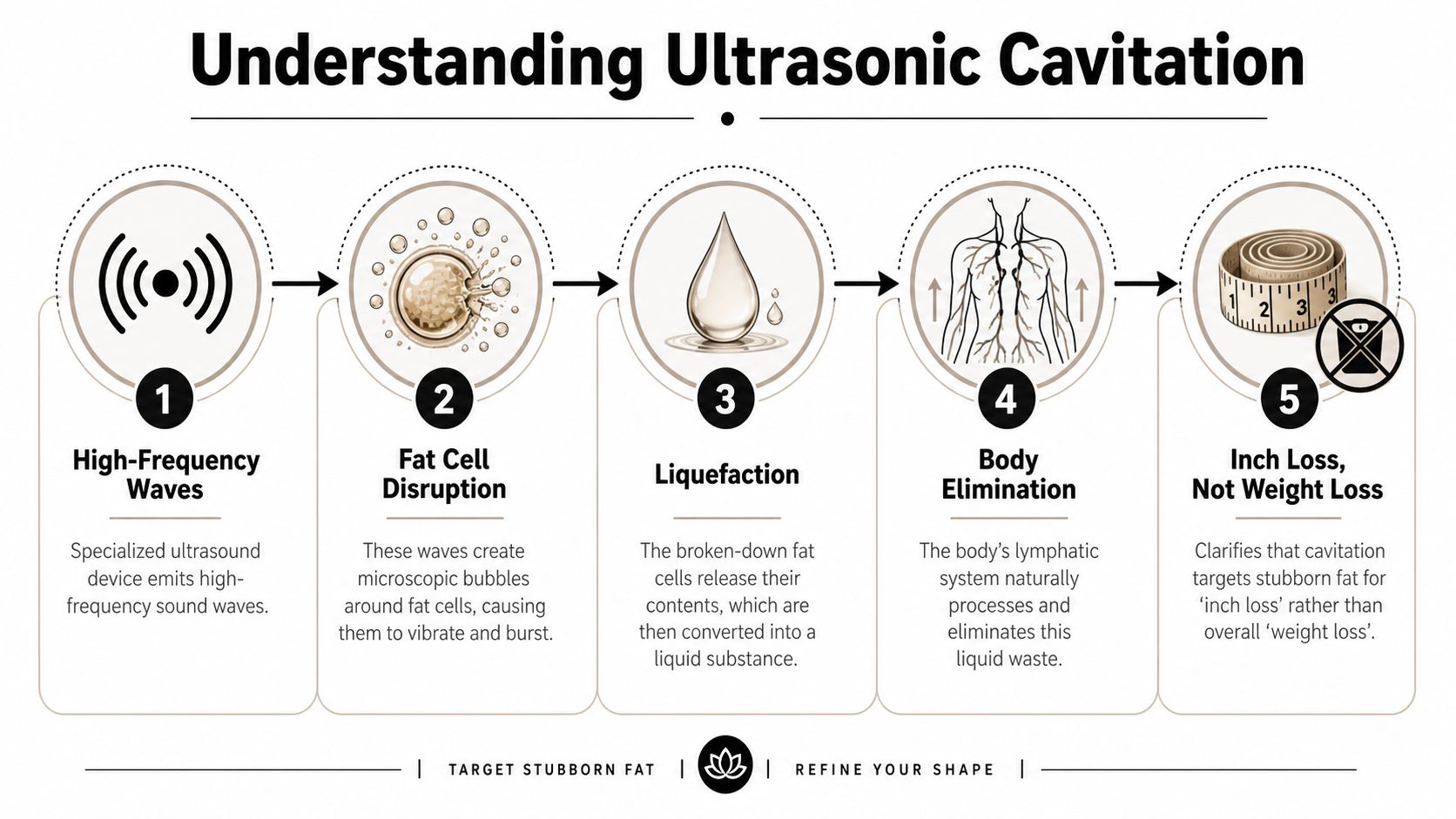
Ultrasonic cavitation is a non-surgical body contouring treatment that uses low-frequency ultrasound to act on fat in a small, targeted area. According to this clinical overview of ultrasonic cavitation, it is used for stubborn pockets of fat rather than large-scale weight reduction, and changes are usually seen over a course of sessions rather than after one appointment.
At 3D Aesthetics Leamington Spa, this matters because the treatment is approached as part of a shaping plan, not as a promise to change your whole body. The question is usually, “Which area are we trying to refine?” rather than “How much weight can this make me lose?”
A simple way to understand the mechanism is to picture sound energy being focused into the fatty layer beneath the skin. That energy creates pressure changes around fat cells. The treatment is designed to disrupt those cells in a localised area, while leaving the surrounding skin surface intact.
What happens to the fat afterwards
This is the part clients ask about most. If the fat cell is broken down, what happens next?
The short answer is that your body processes and clears the released contents through its normal waste-handling systems over time. That is why aftercare matters. Hydration, activity, and spacing sessions properly are part of the process, because your body still has work to do after the machine has done its part.
It also helps to separate two goals that often get blurred together. Body contouring is about shape. Weight loss is about reducing overall body mass. If you want a clear explanation of that difference, it helps to learn about healthy fat loss.
A good comparison is tailoring. Cavitation can help adjust the fit in one area, such as the abdomen, flanks, or thighs, so your silhouette looks more balanced.
A realistic expectation looks like this:
- Look at measurements and fit: Changes in body measurements and how clothes sit often tell the story better than the scales.
- Expect a course of treatment: One session is rarely the full answer. Results build over repeated appointments.
- Focus on stubborn areas: Cavitation is most useful for localised fullness that has not shifted with sensible diet and exercise.
At 3D Aesthetics Leamington Spa, this is one reason combination planning is often discussed early. Cavitation can play a strong role, but it usually works best when the treatment plan is matched to your body shape, your goals, and what your 3D body scan shows at the start.
The Ideal Candidate for Cavitation Treatment
Who tends to do well
The clients who usually get the most from cavitation are the ones who are already fairly close to where they want to be, but can't shift a localised area. They're often bothered by a lower tummy shelf, love handles, outer thighs, or fullness around the bra line.
In plain terms, the ideal candidate is someone saying, “I don't need to lose loads of weight. I want this one area to look less bulky.” That mindset fits cavitation much better than “I want one treatment to solve general weight gain.”
If you're still trying to work out the difference between slimming down overall and reducing body fat in a specific area, it helps to learn about healthy fat loss. That distinction makes consultations much easier because your treatment goal becomes clearer.
A strong cavitation candidate usually wants contouring, not a different number on the scale.
Who should look at other options first
If someone wants treatment for obesity, major weight reduction, or a large whole-body change, cavitation usually isn't the first answer. It's the wrong tool for that job.
That doesn't mean there are no options. It means a therapist should be honest. You may need to start with lifestyle support, medical guidance, or a different body-contouring approach that better suits the amount and type of tissue being treated.
A quick self-check can help:
- You may be a good fit if you have one or two stubborn areas that don't respond well to exercise.
- You may need a different plan if your main goal is broad weight loss across the whole body.
- You should pause and ask first if you have health conditions that could affect suitability.
This is why good consultations matter. A responsible therapist won't force cavitation into every situation. They'll match the treatment to the goal.
Cavitation vs Other Body Contouring Treatments
A lot of clients ask this in consultation after they have read about several machines online. Cavitation, fat freezing, HIFU, and radio frequency can sound as if they all do the same job with different labels. In practice, they solve different shape concerns.
The simplest way to sort them is to look at what is bothering you most when you stand in front of the mirror. Is it a soft area that makes clothing fit unevenly? A firmer, pinchable bulge? Skin that feels less taut than it used to? The answer usually points toward the right treatment more clearly than the machine name does.
Cavitation is commonly chosen for localised inch loss and a smoother outline. Cryolipolysis is often discussed for a clearly defined bulge that suits a cooling applicator. Body HIFU is usually considered where deeper fat layers are part of the plan. Radio frequency is the option people ask about when skin firmness, texture, or cellulite appearance matter as much as the fat itself.
At 3D Aesthetics Leamington Spa, that decision is usually made as part of a wider treatment plan rather than in isolation. If you want a clearer overview of the clinic's fat reduction treatment options, it helps to compare the goal first and the technology second.
Body Contouring Technology Comparison
| Technology | Primary Goal | Mechanism | Best For |
|---|---|---|---|
| Ultrasonic cavitation | Inch loss and contouring | Low-frequency ultrasound disrupts fat cells | Small, stubborn areas where measurements matter more than scale weight |
| Cryolipolysis | Reducing a defined bulge | Controlled cooling targets fat cells | Clients with a distinct pocket of pinchable fat |
| Body HIFU | Deeper fat reduction and shaping | Focused ultrasound energy targets deeper tissue | Areas needing a more intensive contouring approach |
| Radio Frequency | Tightening and texture improvement | Heat-based energy supports skin firmness | Loose-feeling skin, cellulite appearance, post-fat-reduction finishing |
Here is a practical way to read that table.
If the main goal is to slim a specific area and improve the outline, cavitation often makes sense. If the area feels more like a compact bulge with a clear edge, cryolipolysis may be the more suitable match. If the concern sits deeper, HIFU may enter the conversation. If the shape is improving but the skin finish still needs attention, radio frequency can be useful.
This is why experienced clinics often combine treatments carefully instead of assuming one machine should do everything. A body contouring result is not just about reducing volume. It is also about how smooth the area looks, how the skin sits afterwards, and whether the change fits the rest of your shape.
Combination planning still needs restraint. As noted earlier, pairing treatments does not automatically produce better measurement changes. At 3D Aesthetics Leamington Spa, the aim is to choose the treatment, or combination, that matches the tissue and the outcome you want, rather than adding extra steps that do not clearly improve the result.
The strongest treatment plan usually comes from matching the method to the area being treated, the skin quality, and the finish you want to see in clothing and in the mirror.
Your Cavitation Journey at 3D Aesthetics Leamington Spa
Starting with the 3D body scan
The first appointment usually isn't about jumping straight onto a machine. It's about assessment. That matters more than generally understood, because body contouring works best when you know exactly what you're treating.
At 3D Aesthetics Leamington Spa, the consultation includes a full 3D body scan. That gives a baseline for shape, measurements, and treatment planning, which is far more useful than relying on memory or how your jeans felt on one random morning.
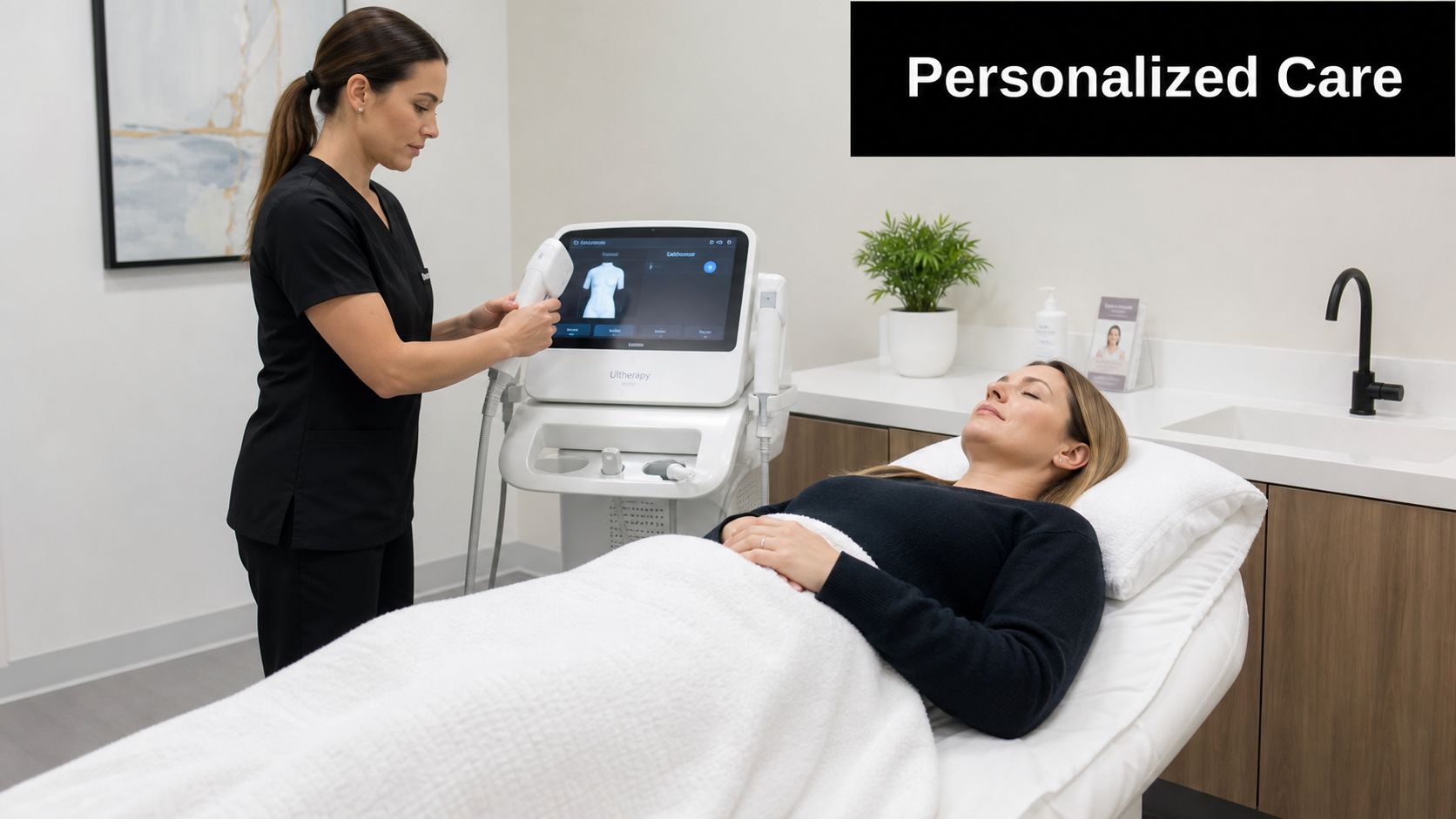
The scan also helps with expectation-setting. Sometimes a client comes in focused on one area, but the scan and consultation show that a different treatment combination would make more sense. That's not upselling. It's planning properly.
Why combination plans are often recommended
Body contouring rarely looks its best when you only think about fat volume. Shape, skin tone, and texture all affect the final result.
Evidence supports this. A peer-reviewed study found that ultracavitation plus radiofrequency reduced localised adiposity more effectively than ultracavitation alone, with the radiofrequency adding a thermal lipolytic effect and potentially improving connective-tissue tone and flaccidity in this research on ultracavitation combined with RF.
That's why combination plans often make practical sense. If you reduce fullness but ignore tissue quality, the area may look flatter but not necessarily better finished.
A combination recommendation often follows this logic:
- Cavitation for circumference: Used when the main aim is inch loss in a localised area.
- RF for tightening: Added when skin support and surface texture need attention too.
- Course planning instead of one-off sessions: Chosen because visible change usually builds over multiple visits.
What a treatment appointment feels like
During treatment, patients generally find cavitation straightforward. You'll usually be lying comfortably while the therapist works over the selected area with the handpiece. It's commonly described as comfortable, with some people noticing warmth or a light internal buzzing sensation.
A short explainer can help if you want to see the treatment style in context.
Aftercare is usually simple. Clients are commonly advised to keep hydration up, stay active, and follow the treatment schedule that was set during consultation. The reason is simple. Body-contouring results tend to reward consistency.
What Results Can I Expect and How Long Do They Last
You've had your consultation, your area has been mapped, and you want a clear answer. What changes are realistic?
The result clients usually notice is a change in shape in the treated area. Waistbands may feel looser. A lower tummy can look less full. A bra-line bulge may sit more smoothly under clothing. The scales may not say very much, because cavitation is used for body contouring rather than general weight reduction.
At 3D Aesthetics Leamington Spa, this is why progress is tracked as a journey, not a single moment. Your 3D body scan gives us a more useful picture than guesswork alone. It helps show whether the area is reducing over time, even if day-to-day weight shifts would otherwise muddy the picture. That can be reassuring, especially for clients who do the right things but feel unsure whether anything is changing.
A course of treatment usually works better than expecting one appointment to do all the heavy lifting. As noted earlier, published research has shown improvement in body measurements across a short treatment course, including protocols built around four sessions over eight weeks. In real clinic life, the exact pace varies from person to person. Your starting body composition, the area treated, and how closely you follow aftercare all affect what you see.
Good signs of progress often include:
- Clothes fitting differently: Trousers, skirts, and fitted tops often feel easier around the treated area first.
- A cleaner outline: The area can appear less rounded or less prominent in the mirror.
- Better symmetry: One stubborn pocket may stop drawing the eye as much.
- A more polished look: The body line can look neater, especially when cavitation is part of a combination plan.
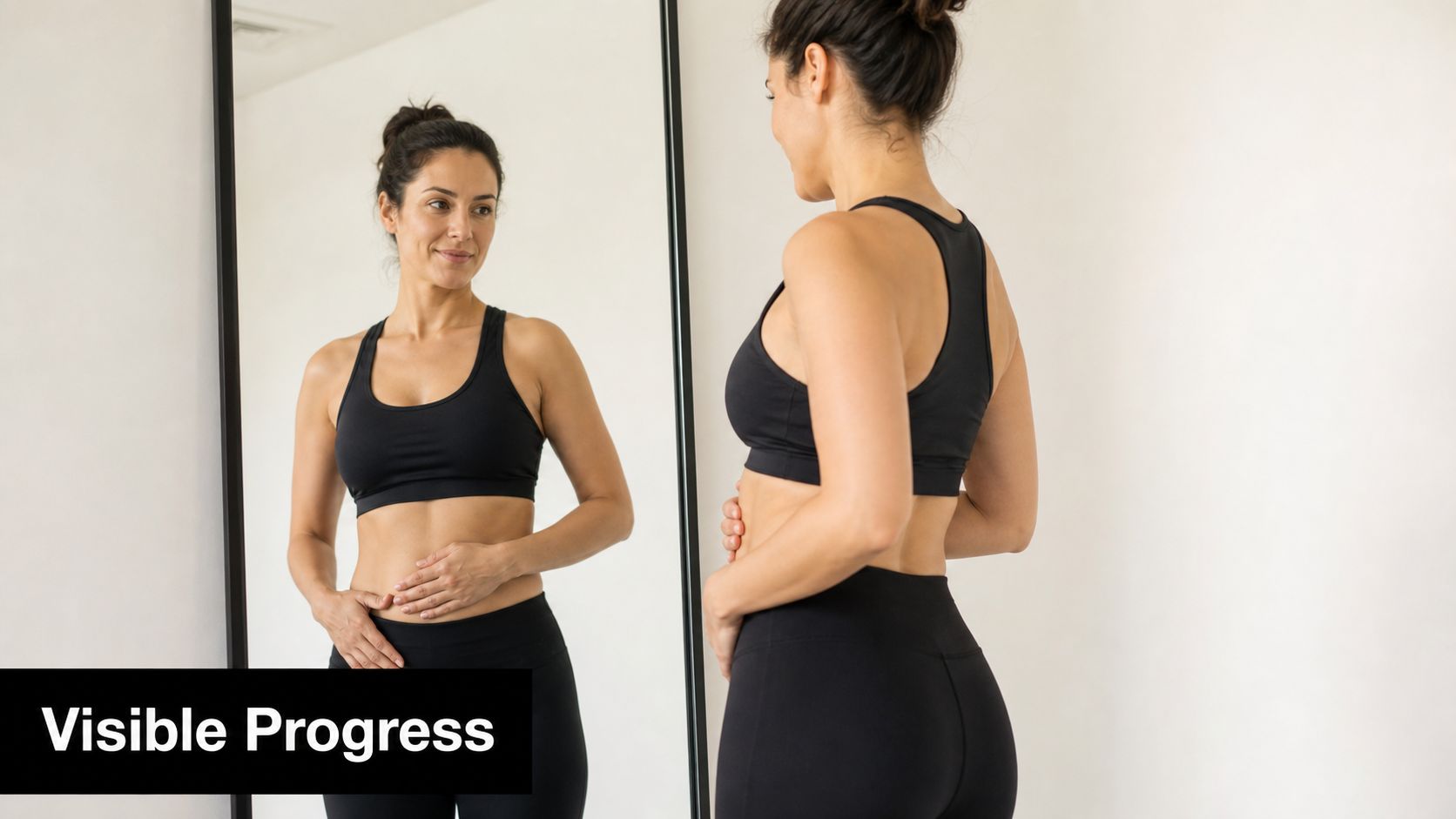
If you want a realistic visual reference, have a look at these before and after treatment examples. They are useful for understanding the type of contour change this treatment is designed to produce, not for measuring yourself against somebody else's result.
How long results last depends less on the machine and more on what happens after your course. A simple way to picture it is this. Cavitation can help tidy up a stubborn area, but your everyday routine is what keeps that outline steady. If weight stays fairly stable, results often hold well. If body fat increases again over time, the area can gradually change again too.
That is why maintenance matters. Some clients benefit from occasional review sessions, especially if we are also working on skin tightening or a wider body plan. Lifestyle still plays a central role, and understanding calorie deficits can help make sense of why long-term habits affect long-term shape.
The practical expectation is improvement, not perfection. The best result is usually a body area that looks more balanced, feels easier to dress, and stays that way with sensible maintenance.
Is Ultrasonic Cavitation Safe and Are There Side Effects
What most people experience
Ultrasonic cavitation is popular partly because it's non-surgical and non-invasive. There are no incisions, and people generally return to normal activity straight away.
Most side effects, when they happen, are mild and temporary. Some people notice a little redness in the area after treatment. Others report feeling thirsty afterward, which fits with the usual advice to keep hydration up. Some also notice a temporary internal buzzing or ringing sensation during the session because of how sound energy is perceived.
If you're comparing non-surgical options and want a broader sense of what temporary treatment reactions can look like in fat reduction, this guide on real fat freezing side effects is useful context.
When cavitation may not be suitable
Safety starts with suitability. A treatment can be gentle and still be the wrong choice for some people.
Common reasons to avoid or postpone cavitation include:
- Pregnancy or breastfeeding
- Pacemakers or certain implanted devices
- Serious liver or kidney disease
- Significant circulatory or cardiac concerns
- Active infection or inflammation in the treatment area
This is one reason honest consultations matter so much. A good therapist doesn't just ask what result you want. They also check whether the treatment is appropriate for you in the first place.
Frequently Asked Questions About Cavitation
Does it hurt
It is generally not described as painful. It's usually experienced as comfortable, with warmth and sometimes a light buzzing sensation.
How should I prepare
Arrive well hydrated and follow any pre-appointment advice your therapist gives you. It also helps to eat sensibly and avoid treating the appointment like a free pass for a heavy weekend.
How many sessions will I need
That depends on the area, the amount of localised fullness, and whether cavitation is being used alone or as part of a combination plan. In practice, therapists normally recommend a course rather than a one-off session, because body contouring results build over time.
Can I go straight back to normal activities
Usually, yes. Cavitation is a non-invasive treatment, so people generally go back to work, errands, or normal daily plans straight after the appointment.
A few final practical points are worth keeping in mind:
- Ask for an honest assessment: Not every area or every goal is ideal for cavitation.
- Track the right outcome: Measurements, fit, and shape matter more than scale fluctuations.
- Stick with the plan: Repeated sessions and sensible aftercare usually make the difference between average and noticeable results.
If you've been searching for weight loss cavitation, the most useful correction is this: you're probably looking for inch loss cavitation. Once that idea clicks, the treatment makes much more sense.
If you want to find out whether cavitation fits your goals, the next step is a proper consultation with 3D Aesthetics Leamington Spa. A good consultation can tell you whether cavitation suits your body, whether another contouring treatment would make more sense, and how a personalised plan could be built around your measurements rather than guesswork.
← Back to Home