
If you're reading this, there's a good chance you've already tried the obvious fixes. More push-ups. A few weeks of eating “clean”. Maybe extra cardio. Yet the chest still looks softer, fuller, or less defined than the rest of your body.
That frustration is common. It also usually comes from solving the wrong problem. In most cases, chest fat isn't a chest problem. It's a body-composition problem. In some men, it isn't fat at all and needs a different pathway entirely.
This guide breaks that down clearly. First, work out what you're dealing with. Then use a realistic fat-loss plan that supports muscle. If the area stays firm or out of proportion despite real progress, that's the point to look at medical or clinical options.
Table of Contents
- Understanding and Assessing Your Chest Fat
- Your Strategic Nutrition Plan for Fat Loss
- The Right Exercises to Build a Firmer Chest
- When Diet and Exercise Are Not Enough
- Modern Non-Surgical Solutions for Stubborn Chest Fat
- What to Expect from a Professional Consultation
Understanding and Assessing Your Chest Fat
Chest fullness can affect confidence quickly. Men often notice it in fitted T-shirts, changing rooms, or when photos catch an angle they don't like. The first useful step isn't doing more chest exercises. It's working out whether the tissue is mostly fat, potentially glandular, or a mix of both.
Why chest fat rarely responds to chest exercises alone
The biggest misconception is spot reduction. You can strengthen the chest, but you can't force the body to burn fat from that one area just by training it. That's why endless push-ups often leave men with stronger pecs under the same layer of softness.
This is also why the issue is so widespread. The Health Survey for England reported that 64% of adults were overweight or living with obesity in 2022 (reference). In practice, chest fat often tracks with broader fat gain around the waist and torso.
Practical rule: If your waist is increasing, your chest appearance is often part of the same pattern.
If you want a more objective starting point than photos alone, a 3D body scan can help track chest and body-shape changes over time. That matters because day-to-day mirror checks are notoriously unreliable.
Self-check guide at home
A home self-check isn't a diagnosis, but it can point you in the right direction. Stand in good light, relax your shoulders, and feel the tissue across the chest with flat fingers rather than pinching aggressively.
Look for these differences:
| Characteristic | Likely Fatty Tissue (Pseudogynecomastia) | Potentially Glandular Tissue (Gynecomastia) |
|---|---|---|
| Feel | Soft, loose, more compressible | Firmer, denser, sometimes rubbery |
| Location | Spread across the chest area | More concentrated behind or under the nipple |
| Tenderness | Usually not tender | May feel sensitive or sore |
| Response to weight loss | Usually improves as body fat drops | May remain despite weight loss |
| Shape | More diffuse fullness | More distinct mound or persistent projection |
Two things matter here. First, soft tissue that changes with body weight usually behaves like body fat. Second, firm tissue under the nipple, especially if it feels tender or stays disproportionately enlarged, deserves proper assessment.
A lot of men sit in the middle. They have some body fat plus some glandular tissue. That's exactly why results can feel inconsistent. One part responds to dieting. The other may not.
Your Strategic Nutrition Plan for Fat Loss
If you want to know how to reduce chest fat, food intake is where results usually move or stall. Training helps. Nutrition decides whether fat loss happens.
Build a deficit you can actually sustain
A practical protocol is a daily energy deficit of about 300 to 500 kcal, paired with resistance and cardio training (reference). That's enough to move body fat down without turning every day into a white-knuckle grind.
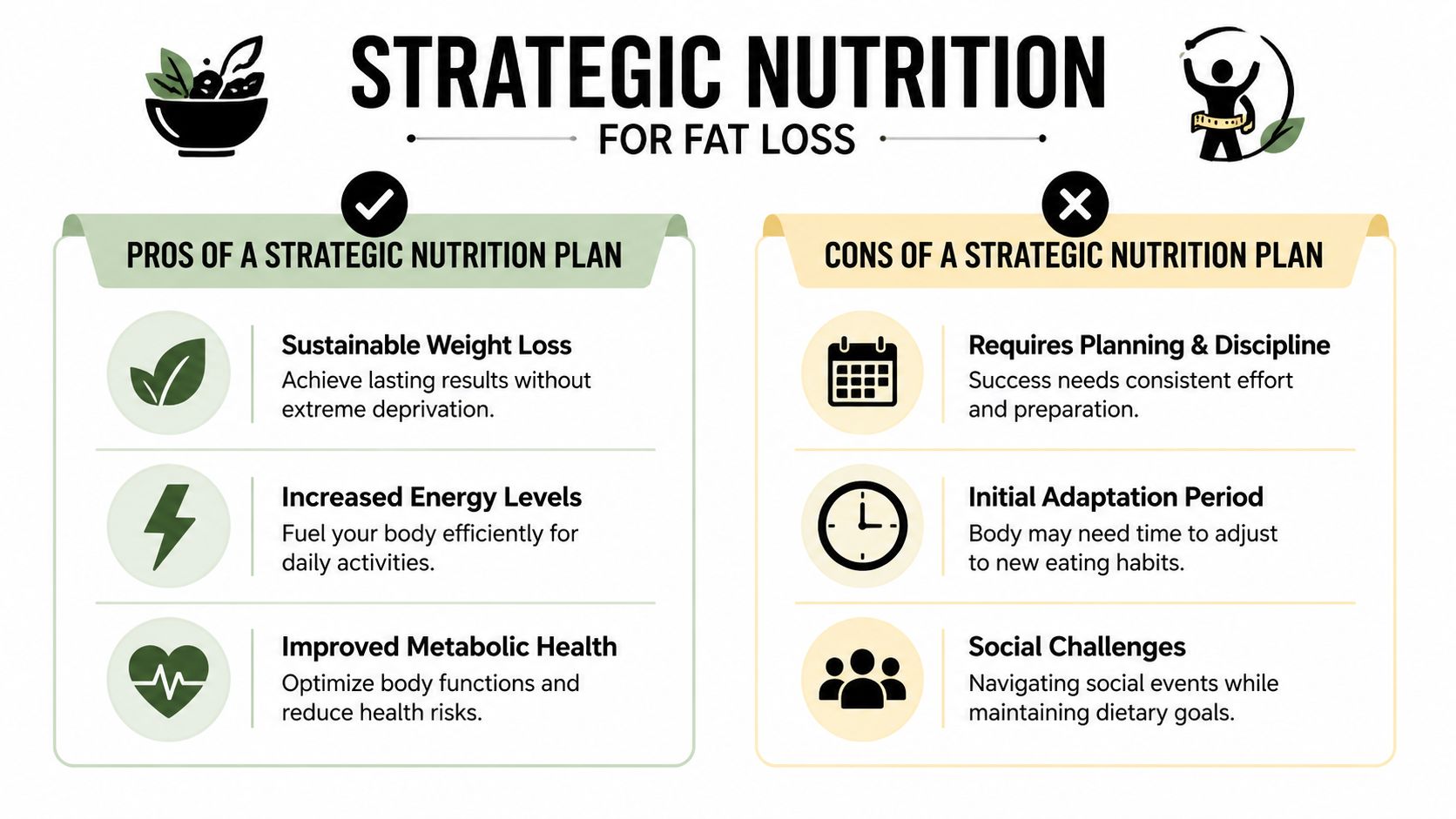
The main trade-off is simple. A small, controlled deficit is slower, but people can stick to it. An aggressive cut can look impressive on paper, yet it often leads to low energy, poor training, and rebound eating.
Use a food tracking app for a while, even if you dislike the idea. Estimating portions tends to drift. Tracking gives you a measurable deficit instead of a guessed one.
The men who make steady visual changes usually aren't doing anything dramatic. They're just accurate for long enough.
How to eat during fat loss without making it miserable
You don't need a perfect meal plan. You need a structure that lowers calories while keeping hunger and muscle loss under control.
A useful approach looks like this:
- Build meals around protein: Protein helps preserve muscle while dieting and usually makes meals more filling.
- Choose higher-fibre foods often: Vegetables, fruit, pulses, and whole-food carbohydrate sources help with fullness.
- Keep liquid calories in check: Alcohol, sugary coffees, and casual snacking drinks can erase a deficit quickly.
- Repeat simple meals: If breakfast and lunch are consistent, the day is easier to manage.
- Hydrate properly: Appetite signals, training quality, and recovery all suffer when hydration is poor. If this is a weak point, this practical guide on drinking more water is worth reading.
For readers who want more detail on balancing protein, carbohydrates, and fats without turning every meal into guesswork, read Gym Snack's macro guide. It's a useful companion if your current eating plan feels too vague.
A few common mistakes show up repeatedly in practice:
- Cutting too hard: Hunger climbs, training quality drops, and weekends undo the week.
- Saving calories all day: This often ends in overeating at night.
- “Healthy” overeating: Nuts, smoothies, granola, and takeaway salads can still be calorie-dense.
- Using exercise to justify food: It's common to overestimate what's burned and underestimate what's eaten.
The best nutrition plan is the one you can repeat when work is busy, sleep is off, and motivation is average. That's the standard to judge it by.
The Right Exercises to Build a Firmer Chest
Exercise won't selectively strip fat from the chest, but it does change how the chest looks as body fat comes down. Better pectoral development gives the area more structure, especially through the upper and mid chest.
Use training for shape, not spot reduction
England's Chief Medical Officer recommends adults get at least 150 minutes of moderate-intensity activity per week, plus strength work on 2 or more days (reference). That baseline makes sense for chest-fat reduction because it supports calorie expenditure while helping you keep or build muscle.
The mistake is treating chest training like punishment. Hundreds of sloppy reps won't do much except irritate your shoulders and reinforce bad form. Controlled resistance training works better.
Focus on movements such as:
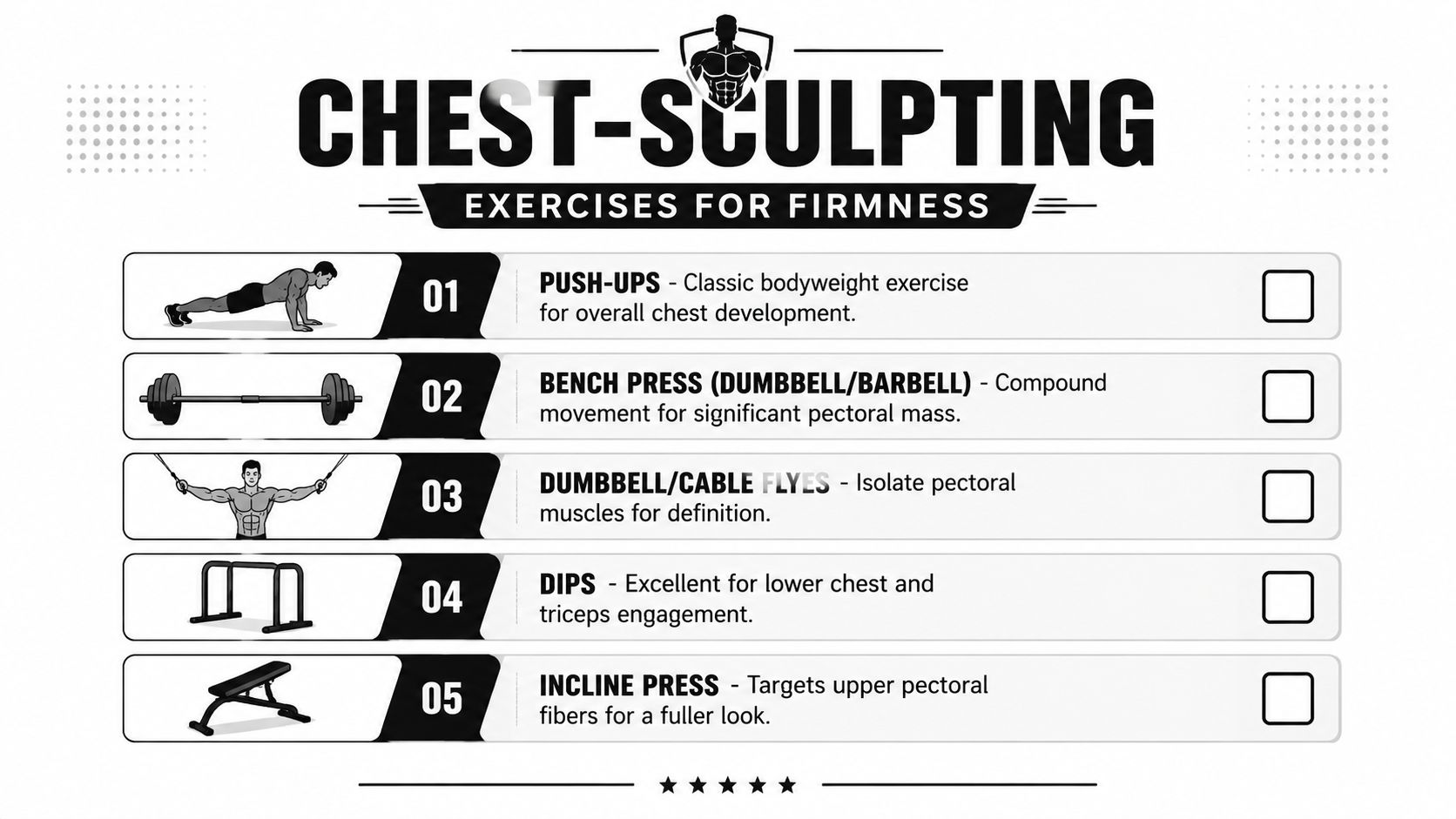
- Push-ups: A strong home option. Perform incline push-ups if standard reps are too hard. Add load or tempo if they're too easy.
- Bench press: Dumbbell or barbell versions let you overload the chest progressively.
- Cable or dumbbell flyes: Useful for controlled stretch and contraction, not for ego lifting.
- Dips: Effective if your shoulders tolerate them well.
- Incline pressing: Good for building upper-chest fullness.
If you train at home and need ideas that fit limited equipment, the MONFIT guide for home lifters is a practical resource.
A practical weekly structure
You don't need a “chest day” marathon. A more realistic setup is to train the chest more than once each week inside a balanced programme.
Try this pattern:
- Resistance sessions: Aim for 3 to 6 resistance-training sessions per week as part of an overall fat-loss protocol, not just chest-only workouts.
- Cardio sessions: Add 3 to 5 cardio sessions per week to support energy expenditure and conditioning.
- Progressive overload: Make lifts slightly harder over time by increasing load, reps, or control.
- Recovery: If your shoulders, elbows, or sternum ache, volume is probably too high or technique needs attention.
What works best is consistency with enough intensity to stimulate muscle, not random circuits that leave you sweaty but don't build much. For many men, two properly structured chest exposures a week outperform daily “burnout” sessions.
A firmer chest comes from two things happening together. Fat comes down across the body, and the pectoral muscle underneath gets stronger.
When Diet and Exercise Are Not Enough
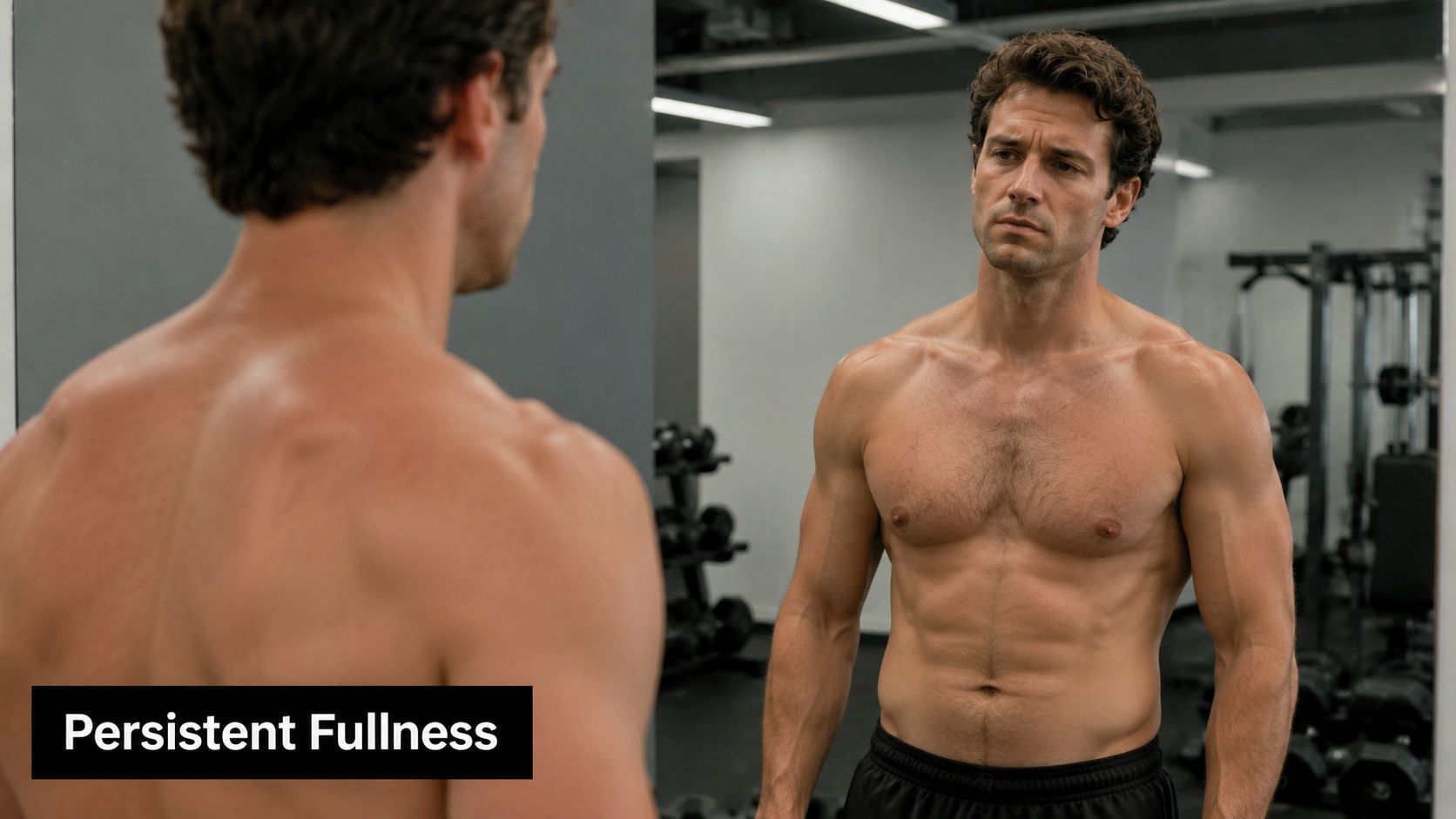
Some men do everything reasonably well. They lose body fat, look leaner through the waist, arms, and face, yet the chest still seems puffy or oddly projected. That's the point where persistence stops being the answer and assessment becomes the smarter move.
What makes gynecomastia different
A key step is distinguishing fatty tissue from true gynecomastia. If the chest remains firm or disproportionately enlarged after weight loss, medical assessment is needed. NHS guidance notes that while many cases resolve on their own, persistent gynecomastia requires investigation for underlying hormonal or medical causes (reference).
Gynecomastia involves glandular tissue, not just adipose tissue. That's why diet and exercise alone won't remove it. In clinic conversations, this is one of the biggest sources of frustration. The person assumes they've failed at fat loss, when the issue may not be a fat-loss problem anymore.
Signs that deserve more caution include:
- Firmness under the nipple
- Tenderness or sensitivity
- Persistent asymmetry
- Disproportionate fullness after body-fat reduction
A brief explainer can help if you want to understand the distinction visually and conceptually before speaking to a clinician.
When to stop guessing and get checked
A sensible workflow is straightforward. Reduce overall body fat with a proper deficit and training plan. Reassess after several weeks. If the chest still feels firm, tender, or out of proportion, book a medical review.
This matters for two reasons. First, persistent chest enlargement can be linked to hormonal shifts, medication effects, or other health issues. Second, repeatedly attacking the problem with more dieting and more chest work can waste months without changing the actual cause.
If the tissue feels dense and centred behind the nipple, treat that as a reason to get clarity, not a reason to train harder.
For men who feel embarrassed raising the subject, it helps to remember that chest changes are a routine clinical concern. A GP is there to separate a common fat-distribution issue from a condition that needs investigation.
Modern Non-Surgical Solutions for Stubborn Chest Fat
Once glandular causes have been ruled out and the issue is confirmed to be stubborn fat, non-surgical contouring can make sense. This is not a replacement for fat loss. It's a refinement tool for localised areas that don't respond in proportion to the rest of the body.
Who these treatments are actually for
Many high-ranking articles miss an important point. If “chest fat” is gynecomastia, exercise and diet won't remove glandular tissue. For men whose concern is confirmed to be fat, but it's stubborn, targeted clinical treatments may help where lifestyle changes alone do not (reference).
That makes the ideal candidate fairly clear:
- Close to target weight: These treatments are better for shaping than for general weight loss.
- Stable habits: Results are easier to maintain when food intake and activity are already under control.
- Localised fullness: The chest is one of several areas where fat can remain out of proportion.
- Realistic expectations: Contouring can improve shape, not replace training, nutrition, or diagnosis.
How non-surgical body contouring fits into the plan
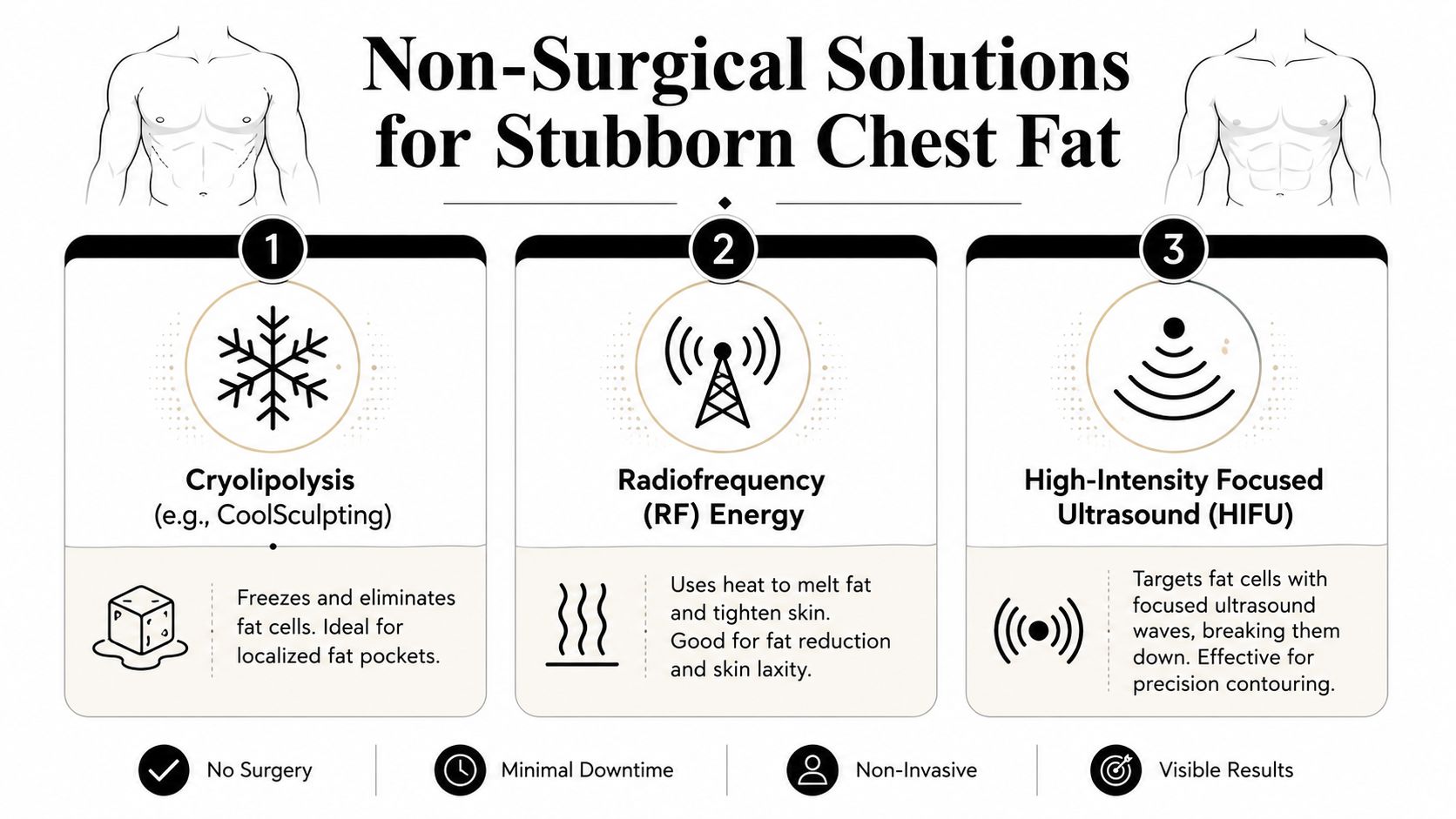
Different technologies do different jobs. Cryolipolysis is used to cool and target fat cells in localised areas. Ultrasound cavitation is commonly used for inch-loss focused contouring. Radio frequency and body HIFU are often considered when tightening and contour definition matter alongside fat reduction.
At 3D Aesthetics Leamington Spa's fat reduction treatment page, you can see examples of the types of non-surgical body-contouring options used for stubborn areas, including the male chest where suitable. The important point is matching the treatment to the tissue and the goal.
What doesn't work well is treating these procedures like a shortcut after inconsistent habits. If weight is still fluctuating, if food intake isn't under control, or if the tissue is likely glandular, treatment selection becomes muddled.
There's also a lot of confusion around adjunctive tools. For example, if you're curious about where light-based wellness methods fit and where they don't, Solawave on red light effectiveness gives useful context. It helps separate supportive modalities from treatments designed specifically for fat reduction.
A good clinician should be honest about this. Non-surgical contouring works best as the last phase of the plan, not the first.
What to Expect from a Professional Consultation
A professional consultation should feel clarifying, not intimidating. You're not turning up to be judged on your body or your routine. You're there to establish what the tissue likely is, what can change with lifestyle, and whether a clinical treatment is appropriate.
What gets assessed in person
A useful consultation starts with history and observation. When did the chest fullness appear. Has it changed with weight. Is there tenderness, asymmetry, firmness behind the nipple, or a history that suggests you should speak with a GP first.
Physical assessment matters because chest concerns aren't all the same. One person has diffuse chest fat with a higher overall body-fat level. Another has fairly lean body composition but a stubborn lower-chest pocket. Another may show features that don't fit a cosmetic route at all.
A proper appointment should also include objective measurement. That's one reason body scanning is valuable. It gives repeatable baseline information so progress isn't reduced to “I think it looks a bit better”.
What a personalised plan should include
The plan should match the cause.
If the issue looks like overall body fat, the answer is a realistic deficit and training structure. If the concern appears localised and stubborn, non-surgical contouring may be discussed. If the tissue looks potentially glandular, the right next step is medical evaluation rather than aesthetic treatment.
You should also expect clear discussion of trade-offs:
- Lifestyle route: Slower, but essential and sustainable.
- Clinical contouring: More targeted, but only suitable for the right tissue type.
- Medical pathway: Necessary when symptoms suggest gynecomastia or another underlying cause.
That kind of clarity saves time. It also protects you from spending months on the wrong solution.
If you want clear guidance on how to reduce chest fat and whether your concern is likely fat, localised fullness, or something that needs medical review, 3D Aesthetics Leamington Spa offers complimentary consultations with full 3D body scanning and personalised treatment planning. It's a practical next step if you want objective assessment rather than more guesswork.
← Back to Home