

Most patients need 1 to 3 fat freezing sessions per area, spaced 6 to 8 weeks apart, but your exact number depends on fat thickness, the size of the target area, and whether you want subtle contouring or visible reshaping. Some people are satisfied after one session, while others need a staged plan to refine the result.
You may be asking this after noticing a stubborn pocket of fat that hasn't changed despite a stable routine. Perhaps it's beneath your chin, around your abdomen, or at the flanks. During a consultation, “How many sessions will I need?” is usually followed by a more useful question: What change are you hoping to see?
Fat freezing, also called cryolipolysis, is designed for localised body contouring rather than general weight loss. The treatment plan should therefore match the area being treated and the degree of change you want, rather than following a standard package.
Table of Contents
- What Does Clinical Guidance Say About Typical Session Counts?
- Why Fat Freezing Works in Stages Rather Than One Visit
- Factors That Change Your Session Count
- What to Expect Week by Week After Each Session
- What the Clinical Evidence Shows About Repeat Treatments
- Planning Maintenance and Long-Term Results
- Common Misconceptions About Fat Freezing Sessions
What Does Clinical Guidance Say About Typical Session Counts?
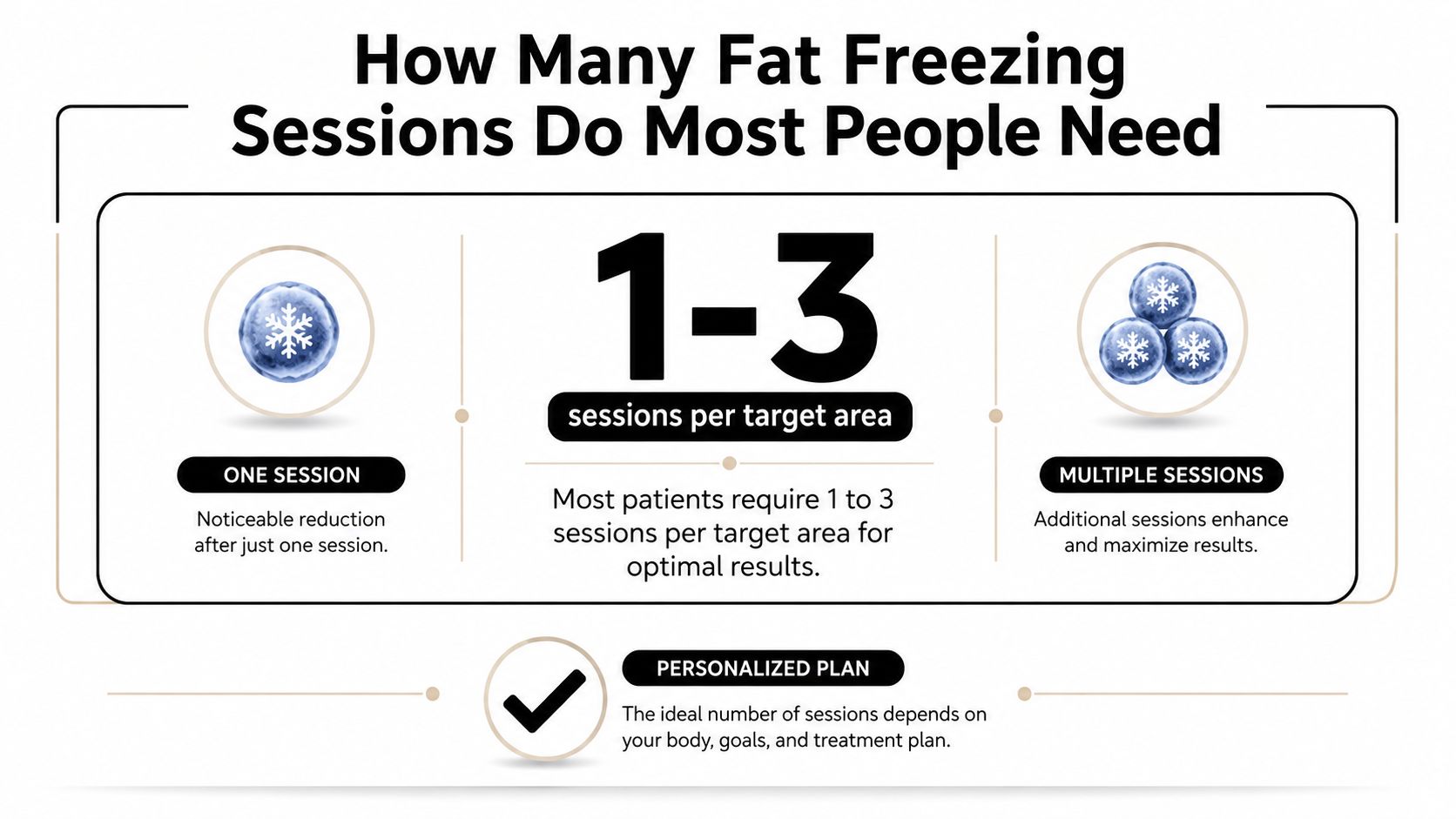
A patient may arrive expecting a fixed answer, such as one appointment or three. In practice, the number depends on the intended change, the area being treated, and how that area responds. UK-facing clinical guidance indicates 1 to 3 sessions per target area, with 6 to 8 weeks between visits, as outlined in Harley Academy's fat-freezing training guidance.
The treatment plan usually starts with three questions:
- How thick is the fat layer? A small, pinchable pocket may show enough improvement after one cycle, while a thicker deposit may need another treatment.
- How large is the treatment area? A compact area is assessed differently from a broad abdomen or flank region.
- What result do you want? Subtle definition requires less change than visible reshaping or stronger contour adjustment.
A single session can produce roughly 15% to 28% fat reduction in the treated pocket, based on the UK clinical source above. That level of change may suit someone seeking gentle refinement in one localised area. A person aiming for a more noticeable difference in symmetry, contour, or projection may choose a staged plan.
Practical rule: A session number should follow an assessment, not lead it.
During consultation, the clinician examines the fat pocket, checks which applicator can contact it properly, and discusses the amount of change likely to look balanced on your body. Further information is available in this guide to fat freezing and cryolipolysis.
For one patient, the first appointment may complete the course because the goal is gentle definition. Another may return after the review period because the initial treatment improved the area but did not create the desired shape. That does not necessarily mean the first session failed. It may show that visible reshaping is better approached in stages.
Why Fat Freezing Works in Stages Rather Than One Visit
Cryolipolysis works by applying controlled cooling to a localised fat layer. The cooling can injure susceptible fat cells while surrounding tissue is protected, and the body then gradually clears the affected cells through an inflammatory and immune response.
The response isn't immediate. After cooling, macrophages help process cellular debris, and the treated fat layer changes gradually over several weeks. Clinical reviews commonly assess outcomes around 6 to 12 weeks after treatment, as described in this peer-reviewed review of cryolipolysis mechanisms and outcomes.
The four stages of the response
- Controlled cooling targets the selected fat pocket.
- Adipocyte injury begins after the fat cells are exposed to the cooling process.
- Clearance takes place as the body processes the affected cells.
- Contour refinement becomes easier to judge once the delayed response has developed.
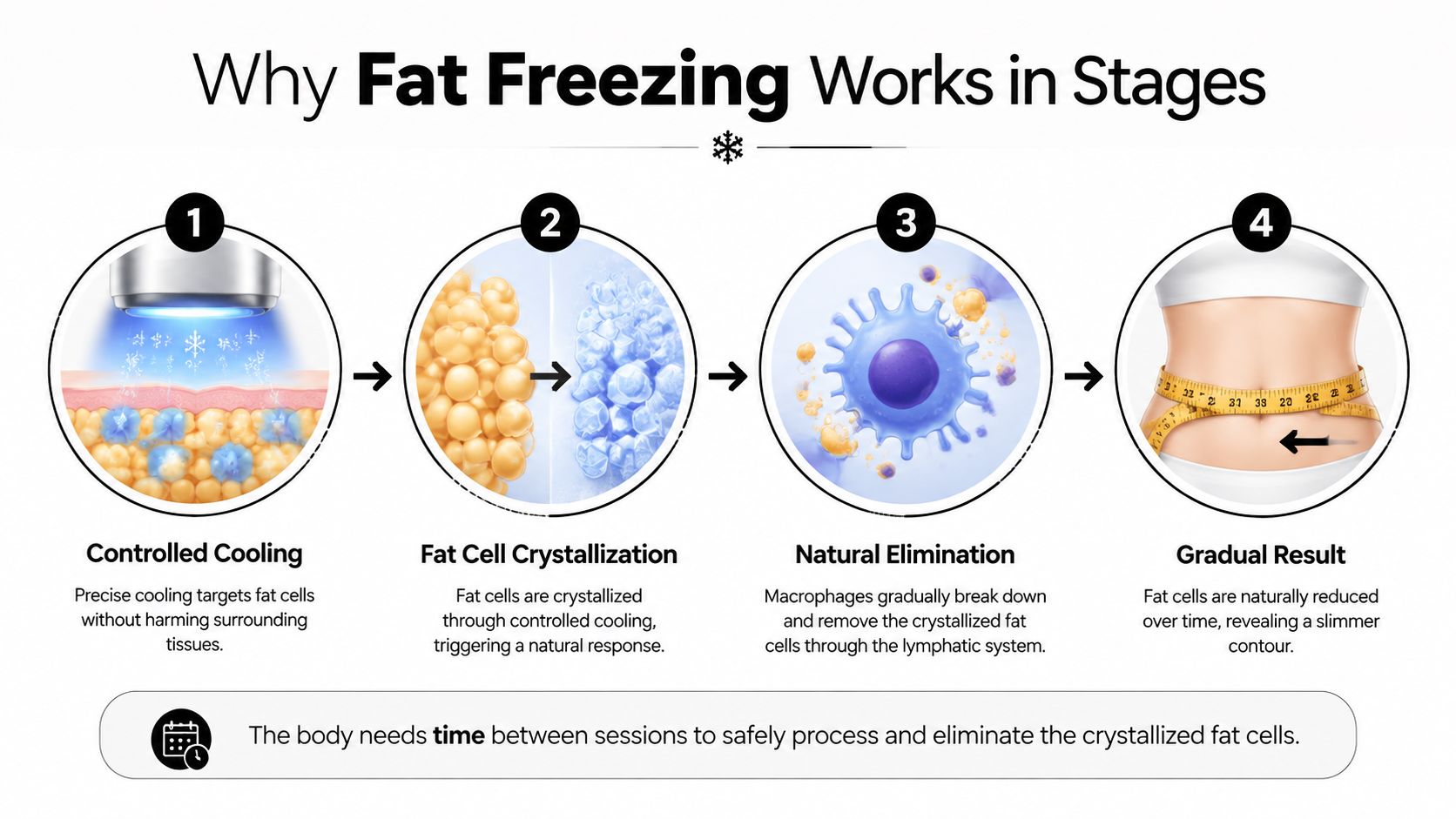
The waiting period between treatments isn't just an administrative preference. It gives the practitioner time to see how much the first cycle changed the fat layer before deciding whether another cycle is worthwhile. A second treatment can then target the remaining pocket with a clearer understanding of the first response.
The evidence also shows why clinicians assess rather than rush. One prospective study permitted up to 24 treatment cycles over 2 sessions, with the sessions scheduled 8 weeks apart and each cycle lasting up to 45 minutes, as reported in the American Society of Plastic Surgeons journal study. That protocol demonstrates staged planning, but it doesn't mean every patient needs the same number of cycles.
Some temporary firmness, swelling, tenderness, tingling, or altered sensation can occur after treatment. Your practitioner should explain what to expect and what would require follow-up. More cooling or more frequent visits aren't automatically better, because treatment intensity must be balanced with safe contact, appropriate applicator placement, and the body's gradual response.
Factors That Change Your Session Count
Two people can request treatment for the same body region and still receive different recommendations. The table below shows how practitioners usually think about the main variables.
| Factor | Fewer Sessions (1-2) | More Sessions (2-3+) |
|---|---|---|
| Fat layer thickness | A smaller, clearly defined pocket may show enough change after an initial cycle. | A thicker pocket may need staged refinement to create a more visible contour. |
| Area size | A compact region, such as beneath the chin, may be easier to assess and refine. | A broad abdomen or flank area may involve more than one treatment position or cycle. |
| Desired result | Subtle definition may be achieved with one treatment and a review. | Visible reshaping, improved symmetry, or a stronger contour change may call for additional treatment. |
| Applicator fit | A suitable handpiece can contact the pocket evenly and precisely. | An area that is difficult to position or requires several placements may need more planning. |
| Response after review | Clear improvement with limited residual fat may mean no further session is useful. | A remaining pocket that is still suitable for treatment may justify another cycle. |
Start with the goal, not the package
If your aim is to soften a small bulge, one session may be a reasonable starting point. If you want a flatter-looking abdomen or more pronounced flank definition, the practitioner may discuss a second session after the first result has settled.
Area size also changes the conversation. A small under-chin pocket may require precise positioning, whereas the abdomen can contain several sections that don't respond identically. The applicator's shape and size matter because treatment depends on making appropriate contact with the fat pocket.
Allow for individual response
People don't all clear treated fat at the same pace. The local inflammatory response, baseline tissue characteristics, and the way your body processes cellular debris can affect how quickly the result becomes visible. That doesn't make the outcome unpredictable, but it does make a review appointment more useful than promising a fixed number in advance.
A responsible plan should identify what will be measured or observed before another treatment is recommended. That may include photographs, the appearance of the contour, the thickness of the pinchable fat pocket, or other clinic assessment methods. If the remaining tissue is minimal, another session may add little. If a distinct pocket remains, a further cycle may be appropriate.
What to Expect Week by Week After Each Session
The first review shouldn't be based on how the area looks the next morning. Fat freezing produces a delayed change, so early sensations and later contour results need to be judged separately.
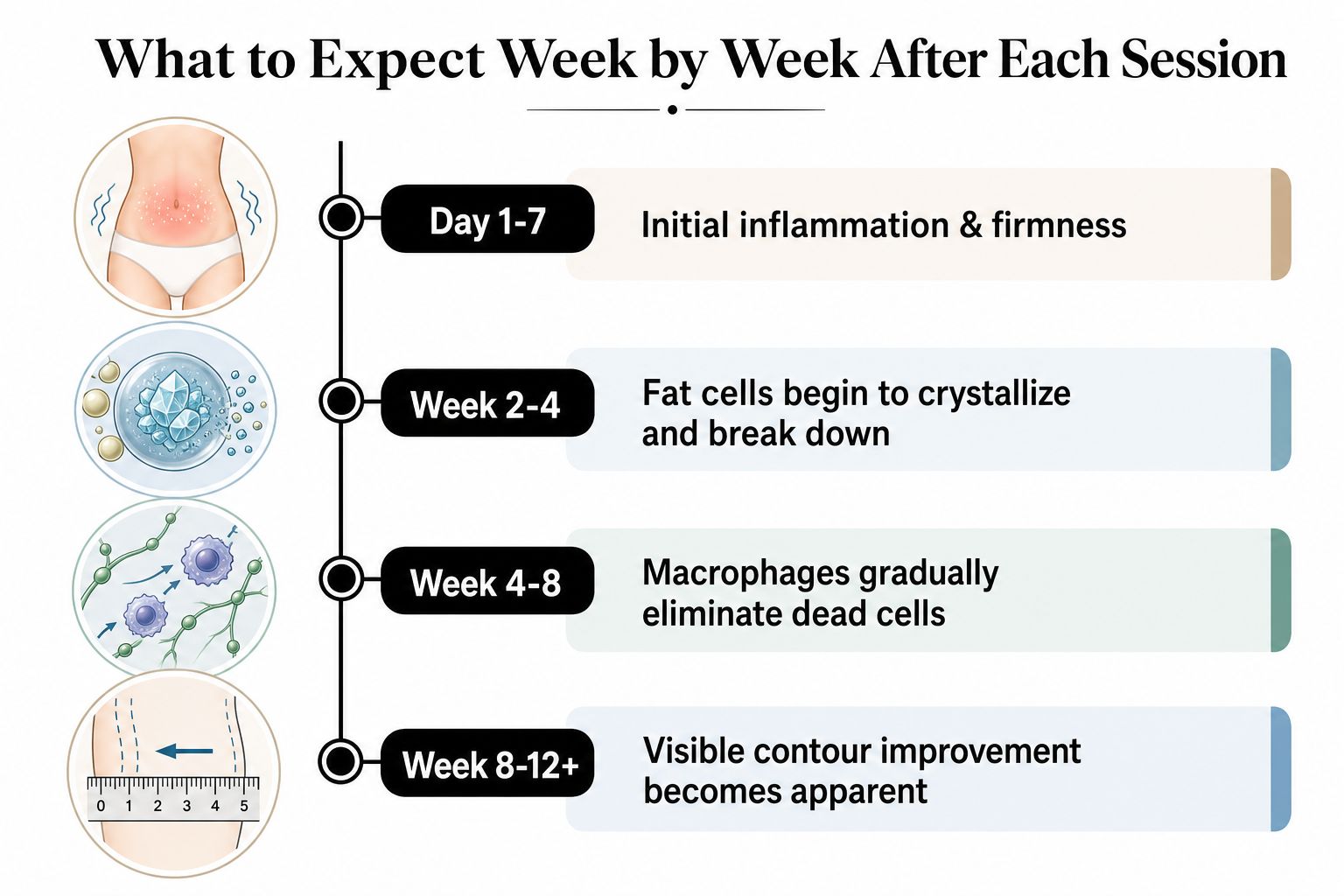
Days 1 to 7
The treated area may feel firm, numb, tender, swollen, or unusually sensitive. These sensations can make the region look or feel different before any visible reduction appears. Follow the aftercare instructions from your practitioner, and contact the clinic if your symptoms are severe, worsening, or outside the advice you were given.
Weeks 2 to 4
The immediate treatment sensations generally become less prominent, while the body continues its clearance response. Some people notice that the pocket feels softer or less full, but others won't see a clear change yet. Clothing fit can be a useful observation, provided you compare similar garments rather than relying on day-to-day fluctuations.
Weeks 4 to 8
This is often when contour changes become easier to identify. Use photographs taken from the same angles, in similar lighting and clothing, rather than comparing a posed image with a casual one.
A clinic may also reassess the pinchable fat layer and the shape of the area. UK-relevant guidance commonly recommends waiting 6 to 8 weeks between sessions, as outlined in the prospective cryolipolysis treatment study. That interval helps the practitioner judge the first response before planning another cycle.
Weeks 8 to 12 and beyond
The result can continue refining as the delayed biological process develops. Evidence summaries describe final assessment around 12 weeks after treatment, with reported single-cycle reductions varying according to the measurement method, as discussed in this UK review of fat-freezing outcomes.
Keep a simple record of how your clothes fit, how the contour looks in consistent photographs, and how the treated pocket feels. If you want a more organised approach, body measurement tracking can help you compare progress without relying on memory alone.
The review isn't a test you pass or fail. It helps answer a practical question: has the area reached the shape you wanted, or would another treatment create meaningful refinement?
What the Clinical Evidence Shows About Repeat Treatments
Clinical findings support tailoring the number of sessions to the patient's goal. Someone seeking subtle definition may be satisfied after one treatment, while someone aiming for clearer reshaping may choose a further session if a residual pocket remains. A large real-world analysis of 3,262 patients reported a mean of 1.9 treatment sessions per patient and a median of 1 session, showing how individual plans can differ, as reported in this real-world cryolipolysis analysis.
Reviews describe local fat-thickness reductions in the broad region of 15% to 28% per cycle, with results varying according to the study and measurement method. These figures apply to the treated pocket, not total body weight, and they cannot predict the exact cosmetic change for one person. A clinical evidence review provides context for interpreting these results.
| Sessions | Average fat reduction | Visible improvement | Patient satisfaction |
|---|---|---|---|
| One | Often measurable in the treated pocket. | May suit subtle contouring. | Depends on whether the initial change matches the patient's goal. |
| Two | Can build on the first response when residual fat remains. | More suitable for staged reshaping or refinement. | Usually relates more closely to the visible contour than to a measurement alone. |
| Three or more | Requires careful individual assessment. | May be considered for selected residual pockets rather than assumed routinely. | Should be reviewed against realistic goals and the value of further change. |
Why measurements matter
A practitioner may compare baseline and follow-up photographs, calliper findings, ultrasound results, or direct examination. These checks help separate a genuine contour change from differences in lighting, posture, clothing, or memory. They also help determine whether another session is likely to make a visible difference.
Repeated treatment does not guarantee proportionally greater improvement. Once a pocket has reduced, the remaining tissue may create less opportunity for noticeable reshaping, especially if the area is already close to the patient's preferred contour. Further sessions therefore need a clear purpose, such as refining an uneven edge or addressing a remaining concentration of fat.
A consultation should explain what is still treatable, what degree of change is realistic, and whether the likely benefit justifies another session. For broader context, this guide to non-surgical fat removal in the UK can help compare body-contouring approaches. The useful question is not how many sessions are available, but whether the next session matches the target area and the amount of change you want.
Planning Maintenance and Long-Term Results
Fat freezing targets fat cells in a selected pocket, but it doesn't prevent the remaining cells from enlarging if your weight changes substantially. The shape can therefore remain long-lasting while still being influenced by future weight gain, ageing, hormonal changes, or fat redistribution elsewhere on the body.
Once your planned course is complete, ask the clinic to compare your result with the original photographs and measurements. A review around 3 to 4 months after the final session can give the body time to show the established contour before you decide whether any residual pocket deserves attention.
A practical long-term routine
- Record the baseline: Keep the photographs and measurements taken before treatment.
- Review the final result: Compare the area under consistent conditions rather than judging it from memory.
- Watch for new goals: A new pocket may appear in a different region even when the original area remains improved.
- Protect your result: Stable eating, regular movement, and a consistent routine support the contour you achieved.
A touch-up shouldn't be booked because you feel impatient during the early recovery period. The evidence-based treatment course described by UK sources uses reassessment after the body has had time to respond, and decisions about further treatment should follow that review.
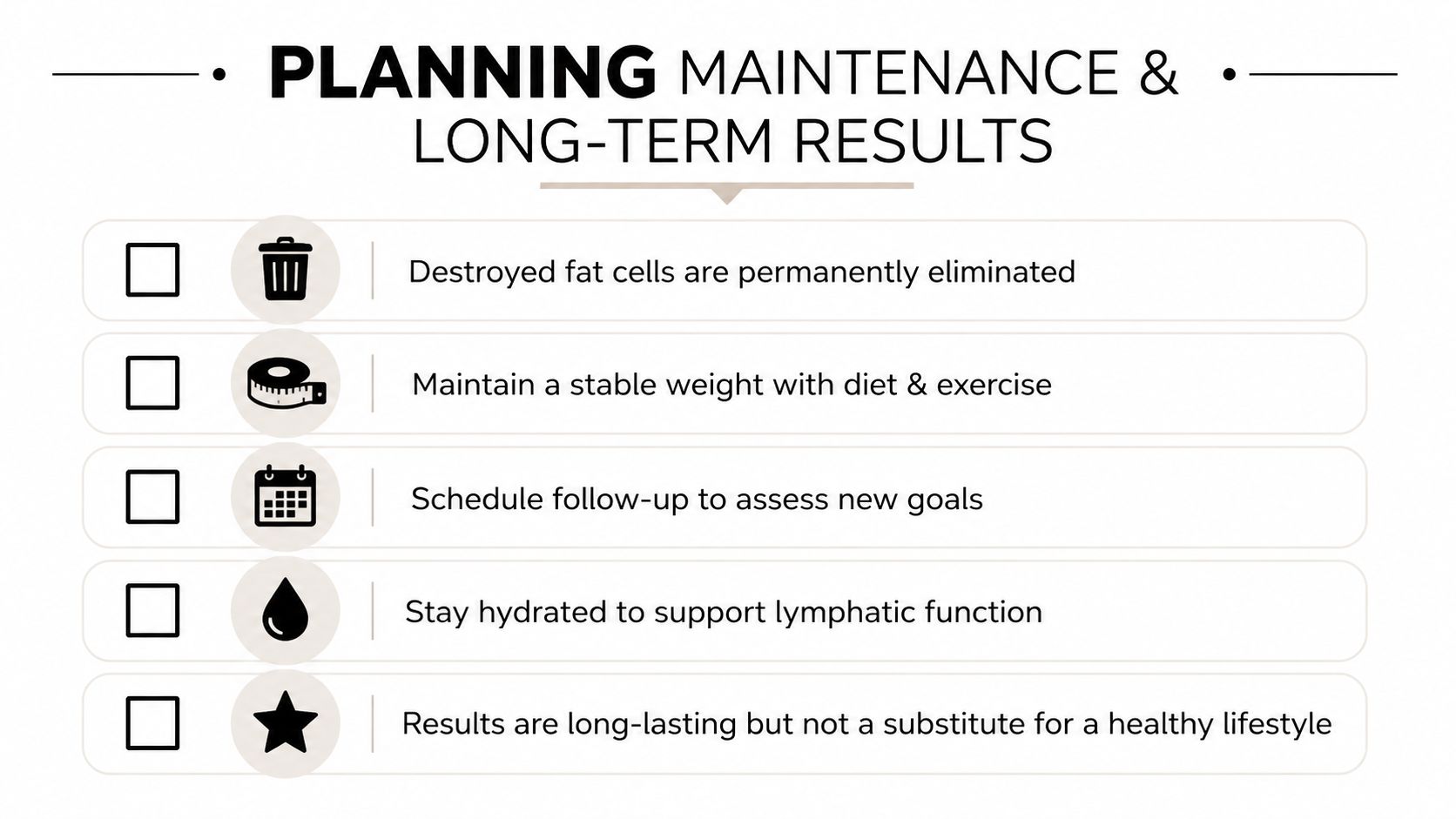
The most helpful maintenance plan is personal. It should focus on whether the treated area still meets your original goal, not on automatically repeating sessions at a fixed interval.
Common Misconceptions About Fat Freezing Sessions
Misconception one, one session always creates a dramatic transformation. One treatment can create a visible improvement, particularly when the target is a small, localised pocket. The typical per-cycle reduction is more modest, and the expected result should be discussed as contour refinement rather than liposuction-like reshaping. The UK evidence summary reports a commonly cited range of 15% to 28% per cycle, depending on the source and assessment method, in this clinical review of fat freezing.
Misconception two, closer appointments produce faster results. The body needs time to process the delayed response, so arranging sessions too close together can make it harder to judge what the first treatment achieved. A spacing of 6 to 8 weeks is commonly used in UK-facing guidance, while some clinical protocols use 8 weeks between sessions, as described earlier.
A follow-up appointment isn't automatically an upsell. It should answer whether more treatment is likely to create worthwhile change.
Misconception three, fat freezing is a weight-loss treatment. Cryolipolysis is intended to contour a localised area. Evidence summaries describe local fat reduction without a significant change in overall body weight, so endless sessions won't substitute for weight-management support.
Misconception four, a clinic can know your exact session count without examining you. A broad estimate may be useful for initial planning, but the final recommendation should reflect your fat layer, area, applicator fit, response, and desired outcome. Be cautious if a clinic insists on a large package before discussing how progress will be assessed. A more measured approach sets a review point and explains what would justify another session.
3D Aesthetics Leamington Spa offers fat freezing consultations with personalised treatment planning and 3D body scanning to assess concerns and track results over time. If you're unsure whether you need one session or a staged course, visit 3D Aesthetics Leamington Spa to discuss your target area, desired degree of contouring, and appropriate review plan.
← Back to Home