
You've been careful with your food, you've shown up for treatments or workouts, and you feel different in your clothes. Then you step on the scale and nothing seems to have changed. That's the moment many people start doubting themselves, when often, the reason is much simpler. They're using the wrong tool to judge the result.
In clinic, this comes up all the time with body contouring and shape-change goals. A person may hold onto water, gain muscle tone, or shift where they carry fullness, and the scale won't explain any of that. Body measurement tracking gives you a more useful picture because it looks at shape, not just total weight.
The tricky part is accuracy. While taking a tape measure around one's waist is straightforward, far fewer know whether a small change is genuine progress or just noise from timing, posture, hydration, or inconsistent tape placement. That's where good tracking stops being guesswork and starts becoming reliable.
Table of Contents
- Why the Scale Lies and Measurements Tell the Truth
- Your Body Measurement Toolkit From Tape to Tech
- How to Take Accurate Measurements Every Time
- Logging and Interpreting Your Results
- Common Mistakes and Pro Tips for Better Tracking
- When to Choose a Professional 3D Body Scan
Why the Scale Lies and Measurements Tell the Truth
A common pattern goes like this. Someone starts eating better, walking more, maybe having a course of non-surgical body treatments. After a few weeks, their waistband feels looser, their lower abdomen looks flatter, and tops sit better across the back. But the scale barely moves.
That doesn't mean nothing is happening. It usually means weight and shape are not changing in the same way at the same time. If your goal is to reduce visible fullness, improve proportions, or track inch loss, circumference measurements often tell the story far better than scale weight alone.
In the UK, this way of assessing the body isn't new. Body measurement tracking has a long basis in anthropometry, where body size has been used as an indicator of nutritional status and living conditions over time. That's one reason clinics and researchers still treat measurements like height, weight, and circumference as meaningful health markers rather than purely cosmetic numbers, as outlined in this overview of historical anthropometrics in the UK context.
Practical rule: If your goal is body shape change, don't let one scale reading overrule what your measurements, clothing fit, and photos are showing you.
This matters especially when you're not trying to become solely “lighter”. Many clients want a smaller waistline, better definition through the midsection, or less bulk around a specific area. That's why home tracking systems that combine measurements, photos, and habits are often more motivating than chasing a single number. If you want a straightforward companion resource for that side of the process, these Pretty Progress tips for tracking goals are useful because they focus on consistency rather than obsession.
For people considering aesthetic treatment, measurements also help separate vague impressions from real change. A flatter front view might not show the full picture if the change is mostly at the flank, upper waist, or under the bra line. Looking at body shape over time is also central when reviewing options like non-surgical inch loss and body contouring, because the result people care about is usually silhouette, not scale weight.
Your Body Measurement Toolkit From Tape to Tech
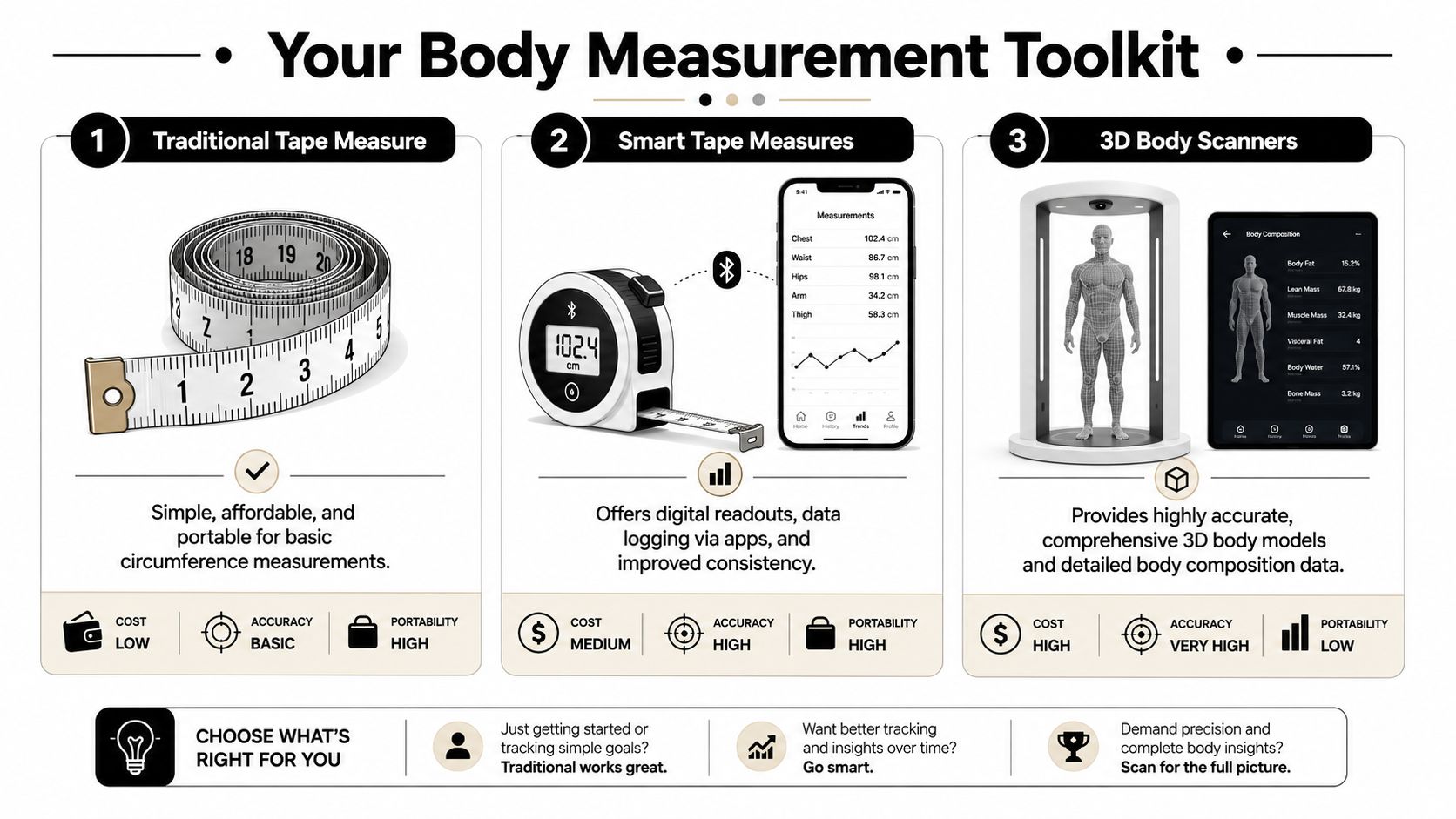
The right tool depends on what you need to know. If you only want a basic check on waist or hips, a simple tape can do the job. If you want to compare shape changes across multiple areas, you need a more organised setup. If you want the closest thing to a clinic-style baseline, scanning technology becomes useful.
Traditional tape measure
A flexible, non-stretch tape measure is still the starting point. It's affordable, portable, and easy to use at home. For routine body measurement tracking, it's enough to monitor key areas such as waist, hips, chest, arms, thighs, and calves.
Its weakness is user error. The tape can sit slightly higher one week, be pulled tighter the next, or drift off level at the back without you noticing. The tape itself isn't the problem. The inconsistency is.
Smart tape measures and apps
A smart tape measure or a logging app doesn't automatically make the measurement more accurate, but it can make the process more repeatable. Digital readouts reduce the chance of writing down the wrong figure, and an app can keep your dates, notes, and photos in one place.
These tools are helpful if you struggle with routine. They're less helpful if your actual measuring technique is inconsistent. A digital mistake is still a mistake.
Professional multi-point scanning
The biggest shift in clinical tracking has been away from one-off, single-site measuring and towards serial, multi-site measurement. Modern systems can capture 13 separate circumference measurements, which makes them much more useful than relying on waist alone, as described in this summary of the move towards multi-point digital scanning.
That's why scans are so useful in non-surgical aesthetics. They create a baseline, then let you compare later results across the same body map rather than guessing whether you measured “roughly the same place” again.
| Tool | Best for | Main strength | Main limitation |
|---|---|---|---|
| Fabric tape | Home tracking | Low cost, simple, quick | Easy to misuse |
| Smart tape or app | Staying organised | Better logging, easier comparisons | Doesn't fix poor technique |
| 3D scan | Detailed progress review | Multi-site, repeatable, visual body map | Usually needs a clinic visit |
A tape measure is excellent for routine monitoring. A scan is better when you need a cleaner baseline, a fuller body map, or reassurance that subtle shape changes are real.
One clinic-based option in this category is the Fit3D scanning service offered through 3D Aesthetics Leamington Spa, which is used to create a full body visual record over time. That sort of setup is especially useful when someone wants to compare changes after a treatment plan rather than rely on home readings alone.
How to Take Accurate Measurements Every Time
The difference between useful data and misleading data usually comes down to routine. If you measure under different conditions every time, you won't know whether the number changed because your body changed or because your method did.
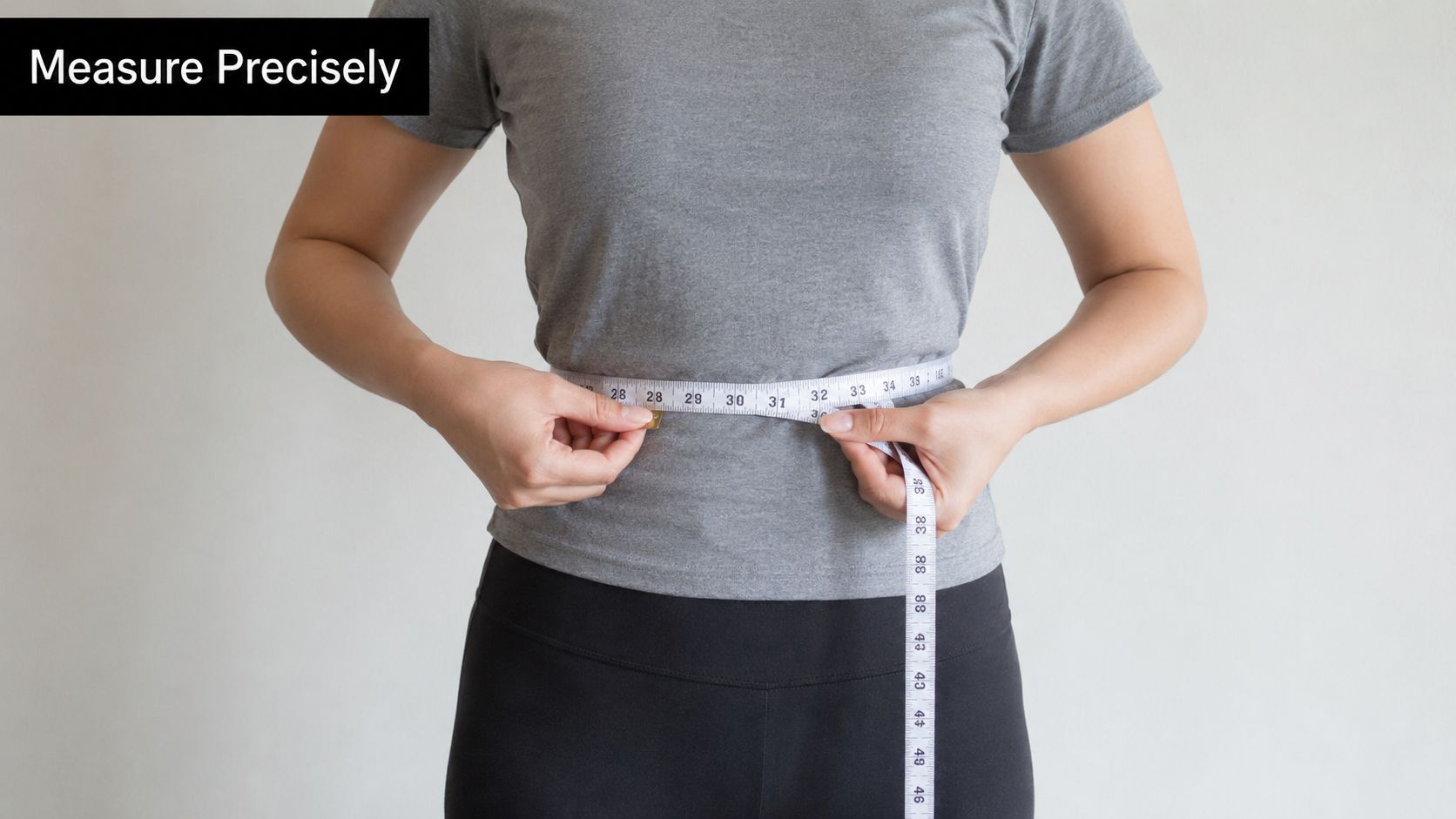
Reliable body measurement tracking depends on standardising time of day, hydration status, and anatomical landmarks. A solid workflow is to take a baseline, recheck body mass on a weekly or bi-weekly rhythm, and review circumferences monthly, while using matching photos to support what the tape is showing, as explained in this guide to standardised progress measurement methods.
Set your rules before you start
Pick one repeatable set of conditions and stick to it.
- Measure at the same time of day so daily fluid shifts don't confuse the result.
- Keep hydration conditions similar rather than measuring one week after a salty meal and the next week first thing after waking.
- Use the same posture each time. Stand tall, feet in a natural position, abdomen relaxed.
- Keep the tape snug, not tight. It should sit against the skin without digging in.
- Mark the exact site mentally or physically if you struggle to find the same point again.
If you measure whenever it occurs to you, the data becomes noisy very quickly.
How to measure the main areas
Use a mirror if possible. Better still, have the same person help each time.
Waist
Measure at the same waist landmark every session. Don't suck in. Don't push the tape down into softer tissue. Keep it level all the way round.
Hips
Take the tape around the fullest part of the hips and buttocks. Check the back in the mirror because the tape often rides up there.
Chest or bust
Measure around the fullest area of the chest while keeping shoulders relaxed. If you're tracking body contouring rather than bra fitting, consistency matters more than choosing a “perfect” textbook location once and then changing it later.
Upper arm
Measure at the same point on the upper arm each time, ideally with the arm relaxed rather than tensed.
Thigh
Choose one fixed point on the upper thigh and repeat that exact site. Thigh readings vary easily if the tape slides even slightly.
Calf
Measure around the fullest part of the calf, standing normally rather than shifting weight from one side to the other.
The best measurement point is the one you can find again reliably. Precision beats guesswork.
A quick visual guide can help if you're more confident learning by demonstration.
Use photos and timing properly
Tape measurements don't capture everything. Two people can show the same waist reading and still look different in posture, distribution, or side profile. That's why front, side, and back photos are so valuable.
Keep the setup identical:
- Use the same lighting
- Wear the same or similar fitted clothing
- Stand in the same position
- Take photos from the same distance
Photos shouldn't replace measurements. They should confirm or challenge what the numbers suggest.
A sensible rhythm works better than constant checking. Weekly weighing can be useful if you want weight data. Circumference checks usually make more sense on a longer interval. If you measure too often, you'll start reacting to noise rather than progress.
Logging and Interpreting Your Results
Many individuals err in their approach. They take a measurement, compare it to last week, and assume any difference must mean success or failure. In reality, a single reading can be affected by normal fluctuation, tape placement, posture, swelling after exercise, or simple recording error.
That's the core of the signal versus noise problem. The signal is the genuine body change. The noise is everything else that can make the number move.
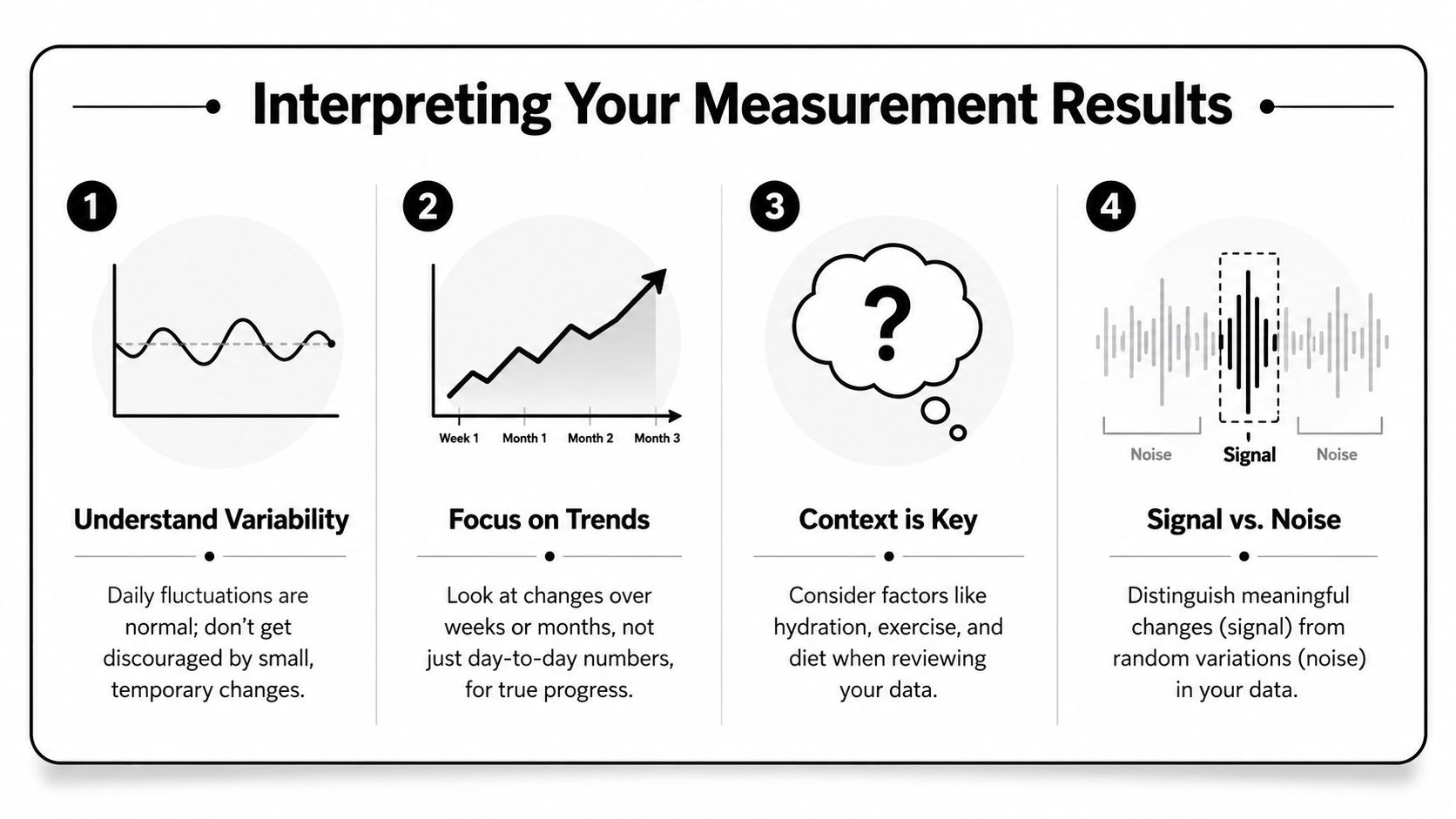
Guidance aimed at consumers often doesn't explain this clearly enough. Even where waist circumference is treated as clinically important, there's still a gap around repeatability and how to judge whether a small change is real or just normal measurement noise, which is discussed in this piece on measurement consistency and meaningful change in body tracking.
What counts as noise
Noise includes anything that changes the reading without reflecting meaningful body change.
Common examples include:
- Different tape placement from one session to the next
- Different tape tension, especially when measuring softer areas
- Post-workout swelling in thighs, glutes, or arms
- Water retention from food, hormones, or travel
- Poor posture that changes the waist or abdominal reading
- Rushed measuring without checking level or landmarks
If a result surprises you, don't panic and don't celebrate too quickly. First ask whether the method was identical.
How to spot a real trend
One isolated reading is weak evidence. A repeated pattern under the same conditions is much stronger.
Use this approach:
Start with a baseline
Record your first full set carefully. That's your reference point.Compare like with like
Only compare measurements taken under the same routine.Look across several check-ins
If the same area is trending in one direction across multiple sessions, that's more trustworthy than a one-off drop or rise.Check the body as a whole
A waist change backed up by better-fitting clothes and similar photo changes is far more convincing than a tape number alone.
If the tape says one thing but your photos, clothing fit, and treatment timeline say another, pause before drawing a conclusion. Context matters.
For clients reviewing aesthetic procedures, this is especially important. A tiny shift in one area may mean very little on its own. A consistent change across waist, lower abdomen, silhouette, and progress photos is a much better sign that the treatment is having the intended effect. If you're exploring options in that category, it helps to understand how non-surgical fat reduction treatments are usually monitored over time rather than judged from one isolated reading.
A simple tracking log that works
Keep your log plain. Complex systems are the ones people stop using.
| Date | Time | Waist | Hips | Thigh | Notes |
|---|---|---|---|---|---|
| Baseline | Morning | Hydration, cycle, training, treatment timing | |||
| Check-in | Morning | Same clothing and conditions | |||
| Check-in | Morning | Add photo comparison note |
The notes column matters more than people expect. If you trained legs hard the day before, felt bloated, or measured later than usual, write it down. Those details often explain apparent contradictions.
Common Mistakes and Pro Tips for Better Tracking
The most misleading assumption in body measurement tracking is that every body changes in a neat, linear way. It doesn't. Shape change can be uneven, delayed, or masked by perfectly normal life events.
That's why the “I'll just measure my waist every few days” approach often backfires. It sounds disciplined, but it usually creates more anxiety than clarity.
Mistakes that distort your results
Some errors are obvious once you know them. Others are so common that people repeat them for months.
- Pulling the tape too tight makes you think you've lost more than you have.
- Holding your stomach in creates a false waist reading and makes later comparisons useless.
- Measuring after food, exercise, or a long day increases the chance of fluid-related fluctuation.
- Changing landmarks turns one body area into another without realising it.
- Using only one metric ignores the fact that the body can change shape without obvious change in weight.
A practical fix is to reduce the number of things you're trying to “improve” on paper. Track a small set of reliable points and do them well.
When normal life changes the picture
Some people need a more nuanced reading of their data. Women around menopause may notice shape shifts without a dramatic weight change. Older adults may care more about preserving muscle and reducing central fullness than becoming smaller. Post-pregnancy clients often want to track shape recovery without expecting their body to behave exactly as it did before.
Body measurement tracking should adapt to people whose shape changes for reasons other than straightforward fat loss. Water retention, hormonal shifts, muscle gain, and age-related body composition changes can all mask progress if you interpret the tape too strictly, as discussed in this article on accurate body measurements at home and interpreting change.
Don't treat every temporary increase as regression. Sometimes your body is changing, but the timing of the measurement is hiding it.
A few pro tips make a big difference:
- Match tracking to your goal. If your priority is waist reduction, don't obsess over arm readings.
- Use longer intervals when hormones or recovery affect shape. This often gives cleaner trend data.
- Pair measurements with how clothes fit. Trousers and fitted dresses often reveal progress before numbers settle.
- Keep wearable data in perspective. Step counts and routines can support consistency, and if you use a tracker it's reasonable to want it to feel good too. Small things like choosing accessories that elevate your Fitbit Luxe look can make daily wear more realistic, but the device still doesn't replace careful measuring technique.
When to Choose a Professional 3D Body Scan
A tape measure is enough for many people. It's practical, accessible, and perfectly capable of showing useful trends when the method is consistent. But there are points where home tracking reaches its limit.
Choose a professional scan when you want a cleaner answer to one of these questions:
- Have I changed shape, or am I just measuring inconsistently?
- Where is the change happening across my whole body, not just one site?
- Do I need a proper baseline before starting treatment?
- Has progress slowed, or am I missing subtle improvement?
A 3D scan is especially useful when the visual change is hard to capture with a tape alone. It can help with flank reduction, posture-related shape changes, asymmetry, and areas where you're not confident placing the tape consistently. It also removes much of the human error that creeps into home tracking.
For many clients, the smartest approach isn't choosing between tape and scan. It's using both. Keep the tape for routine monitoring at home. Use a professional scan at the start, at key milestones, or when the numbers aren't matching what you see in the mirror.
If you want a more detailed visual baseline and structured follow-up, a professional body scanning appointment can give you a clearer comparison point than home measurements alone.
If you want body measurement tracking that feels clear rather than confusing, 3D Aesthetics Leamington Spa offers consultations with detailed body assessment and 3D scan support, so you can see changes over time with less guesswork and more confidence.
← Back to Home