
You've finished a shockwave therapy session for cellulite or body contouring, and now you're noticing pink skin, warmth, tenderness, or a few tiny bruises. The natural question is whether your body is reacting normally or whether something has gone wrong. In a UK aesthetics clinic, shockwave therapy side effects are usually local and short-lived, but you should still understand what's expected, what needs a call to your practitioner, and what requires urgent medical attention.
The treatment is non-invasive, yet it deliberately delivers mechanical energy into the tissues. That means a temporary response is possible. NHS patient information lists pain, redness, swelling, bruising, numbness or altered sensation, and skin damage among the possible effects, while also explaining that many settle before the next appointment. Bradford Hospitals NHS information provides practical patient guidance on these reactions.
Table of Contents
- What Shockwave Therapy Actually Feels Like
- How Acoustic Waves Interact With Skin and Tissue
- Common Reactions After a Body-Contouring Session
- Less Common Reactions and Realistic Risk
- Who Should Avoid Shockwave Therapy
- Looking After the Treated Area in the First Week
- Warning Signs That Need Prompt Medical Attention
- Balancing the Risks Against the Benefits
What Shockwave Therapy Actually Feels Like
The session starts with clean gel on the treatment area and the handpiece resting against your skin. When the pulses begin, you'll usually hear a rapid pneumatic rattle and feel a repeated tapping beneath the applicator. It isn't the sensation of an electrical current. Most clients describe it as firm, rhythmic percussion, sometimes similar to a concentrated massage.
The practitioner normally begins at a conservative intensity and adjusts it according to the area, your tissue sensitivity, and your comfort. Softer areas can feel more noticeable than well-padded areas, while bony edges may need careful positioning. A competent practitioner won't select the highest setting and continue regardless of your response.
During the appointment
As the handpiece moves, the tapping may feel sharper over tighter or more fibrous tissue. You might notice a gentle build-up of warmth as local circulation increases. The treatment gel can have a faint clinical or metallic smell, but it shouldn't burn, sting, or create a sensation like hot energy on the skin.
For body-contouring work, the appointment is generally focused on a defined treatment zone rather than the whole body. Your practitioner should keep checking the skin and asking how the pressure feels. Discomfort can be part of treatment, but severe or escalating pain isn't something you're expected to tolerate.
Immediately afterwards, the skin may look pink or mildly flushed. It can feel warm and appear slightly raised in isolated areas, particularly where the applicator has worked more intensively. That appearance usually settles as the local tissue response calms.
The first two days
Once you're dressed, the treated area may feel tender when clothing presses against it. Some people notice a dull ache later that day, while others only become aware of sensitivity when showering or touching the area. Mild bruising or small pinpoint marks can appear after you leave the clinic rather than during the appointment.
Practical rule: Your symptoms should gradually settle, not become steadily more intense.
For the next forty-eight hours, plan gentle clothing, ordinary movement, and simple skincare. The purpose of the aftercare routine isn't to eliminate every reaction. It's to avoid adding unnecessary heat, friction, or irritation while the skin returns to its usual state.
How Acoustic Waves Interact With Skin and Tissue
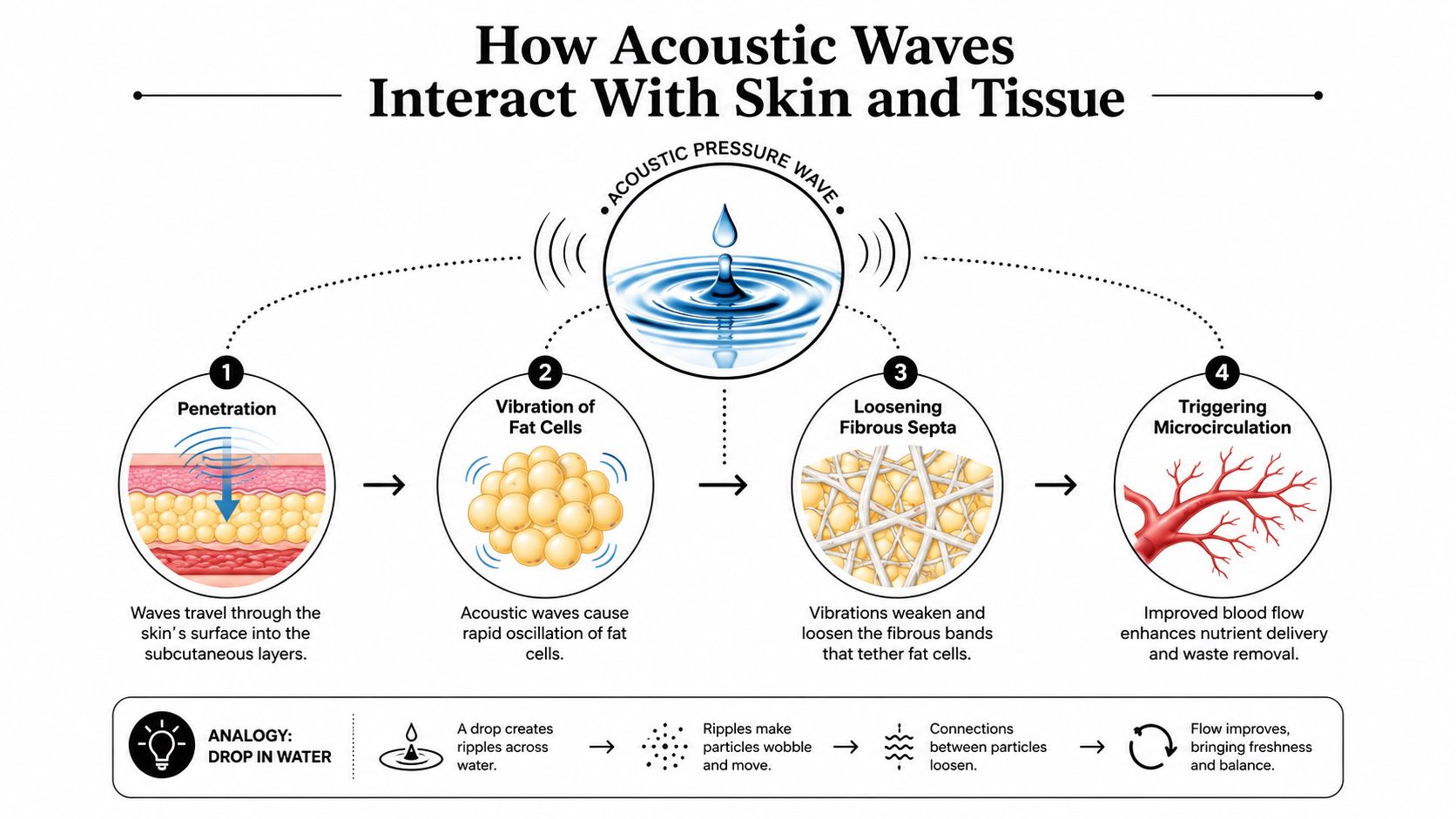
Think of the treatment as rain falling onto a pond. Each drop creates a pressure ripple, and the applicator delivers controlled acoustic ripples into the skin and underlying soft tissue. The waves pass through the surface and create a mechanical stimulus that the body interprets as a local tissue event.
In body-contouring treatments, devices commonly use radial pressure waves, which spread outwards from the applicator and are suited to more superficial tissue. Focused waves used in orthopaedic settings concentrate energy deeper at a selected point. The two approaches are related, but they aren't interchangeable, so your practitioner should explain which type is being used and why it suits your treatment area.
Three overlapping effects
The first effect is mechanical. Pressure waves move through the tissue and create vibration around fat cells and connective-tissue structures. In some treatment explanations, this is described using cavitation, meaning the formation and movement of tiny gas pockets under pressure. The exact biological response depends on the device, energy, tissue depth, and treatment protocol, so marketing language shouldn't promise that every fat cell will be destroyed.
The second effect is thermal. Repeated mechanical movement can create a small local warming response. That helps explain why the treated area may feel warmer during or immediately after treatment, although it shouldn't feel painfully hot.
The third effect is biological. The mechanical stimulus can encourage a local inflammatory and circulatory response, with connective-tissue cells such as fibroblasts involved in tissue remodelling. Practitioners use this response when treating the appearance of cellulite, where the visual concern involves the relationship between skin, fat, and fibrous connective tissue.
What matters clinically: The same local response that may support smoother-looking skin can also produce temporary redness, soreness, swelling, or bruising.
If your main concern is cellulite rather than weight loss, you can read more about the wider range of shockwave therapy for cellulite. The treatment should be presented as a body-contouring option, not as a replacement for medical care or a promise of dramatic fat reduction.
Common Reactions After a Body-Contouring Session
The most familiar reactions are pinkness, warmth, tenderness, mild swelling, bruising, and temporary altered sensation. NHS guidance describes these effects as local and self-limiting, with several trusts stating that they generally settle within a few days or within the week before the next session. The exact experience varies with skin sensitivity, treatment intensity, the area treated, and whether you bruise easily.
NICE's safety summary gives the clearest UK figures, although its evidence largely concerns extracorporeal shockwave therapy in clinical rather than aesthetic populations. In a systematic review involving 2,281 patients, an adverse event was reported by 26% of shockwave patients, 41 of 156, compared with 7% in the placebo group, 10 of 139, across five trials. The relative risk was 3.61, with a 95% confidence interval of 2.00 to 6.52. These figures cover reported adverse events, not necessarily serious complications, and the reported reactions were predominantly minor tissue responses. NICE's safety summary sets out the evidence.
What each reaction feels like
Pinkness or erythema can look like a flush over the treatment zone. The area may feel warmer than surrounding skin, but it shouldn't feel burning or increasingly painful. NICE reported skin reddening in 12% of ESWT patients, 16 of 135, compared with 4% receiving sham treatment, 5 of 136, in one RCT. The same summary recorded local swelling in 2% of ESWT patients, 3 of 135.
Tenderness and soreness usually feel like a bruise, deep massage, or post-exercise ache. NICE also reported a trial in which 26% of patients, 33 of 125, had device-related adverse events, almost all involving pain or discomfort during treatment. The events were brief and didn't require local anaesthetic. NICE's evidence details provide further context.
Bruising may appear as small pinpoint marks or a more familiar patch of discolouration. It's more likely when superficial capillaries are fragile or the area has received stronger mechanical stimulation. Numbness or tingling can feel like pins and needles or a slightly dulled patch, and should fade rather than spread.
| Reaction | How it feels | Typical duration | Approx. frequency | Normal management |
|---|---|---|---|---|
| Pinkness or redness | Warm, flushed skin | Hours to a few days | Reported in 12%, 16 of 135, in one NICE RCT | Leave the area cool, use gentle skincare, and avoid heat |
| Local swelling | Mild fullness or puffiness | Usually short-lived | 2%, 3 of 135, in one NICE RCT | Loose clothing and ordinary gentle movement |
| Tenderness or soreness | Bruise-like ache or sensitivity | A few days, sometimes up to a week | Device-related events occurred in 26%, 33 of 125, in one NICE trial, mostly pain during treatment | Rest from strenuous activity and follow clinic advice |
| Small bruises | Pinpoint marks or superficial discolouration | Several days, occasionally longer | Frequency varies by protocol and patient | Don't massage forcefully or exfoliate the area |
| Numbness or tingling | Altered sensation or pins and needles | Usually temporary | Frequency isn't consistently reported in the cited NICE data | Monitor it and contact the clinic if it persists or spreads |
If you're also researching the broader question of what can we do about cellulite, look for advice that separates texture improvement from weight loss claims. Shockwave can create a temporary inflammatory response without making every client experience the same visible result.
Less Common Reactions and Realistic Risk
A reaction becomes more concerning when it moves beyond mild, local discomfort or fails to follow a settling pattern. Skin that remains intact but bruised and tender is different from skin that blisters, breaks, or begins to ooze. Persistent deep aching also deserves a review, particularly if it interferes with sleep or becomes stronger after the initial response.
NHS leaflets list skin breaks and, in some treatment contexts, tendon or fascia rupture as possible effects. They also state that these reactions should usually resolve before the next session when they occur, but that wording shouldn't be used to dismiss a symptom that is worsening. NICE's shoulder calcific tendinopathy safety review found no serious adverse events in the cited systematic review of 2,281 patients, which supports the view that major harm is uncommon in the clinical evidence, while still leaving room for sensible screening and follow-up. The NHS patient leaflet lists the range of possible reactions.
What can increase concern
Technique matters. Excessive intensity, repeated passes over one small area, treatment across sunburn or recently waxed skin, and poor positioning can make the local response more pronounced. Blood-thinning medication can also make bruising more significant, which is why the consultation must include medication history rather than focusing only on the cosmetic goal.
| Reaction | Approximate incidence | Typical duration |
|---|---|---|
| Skin break or superficial skin damage | No reliable aesthetic percentage is established in the provided UK evidence | Should be assessed promptly rather than monitored casually |
| Blistering | No reliable aesthetic percentage is established in the provided UK evidence | Requires clinical review, especially if it opens |
| Persistent deep aching | No reliable aesthetic percentage is established in the provided UK evidence | Should steadily improve, not intensify |
| Temporary nerve irritation | No reliable aesthetic percentage is established in the provided UK evidence | Altered sensation should resolve rather than spread |
| Tendon or fascia irritation | No reliable aesthetic percentage is established in the provided UK evidence | Seek advice if pain is deep, focal, or worsening |
That table is deliberately cautious. The available verified evidence doesn't support assigning a precise aesthetic incidence to these reactions, so a clinic shouldn't present made-up percentages as reassurance. A low-risk treatment still requires correct settings, intact skin, appropriate patient selection, and a practitioner who knows when to stop.
Who Should Avoid Shockwave Therapy
Shockwave therapy doesn't involve an incision, but non-invasive doesn't mean suitable for every person or every body area. The pressure waves create a deliberate mechanical stimulus, so treatment can be inappropriate when the skin, blood vessels, nerves, or underlying structures are already compromised.
Before booking, disclose your full medical history, current medication, recent procedures, and any ongoing investigations. A safe consultation should consider the treatment zone as well as your general health.
Situations that need exclusion or medical clearance
- Pregnancy or breastfeeding: Body-contouring shockwave should generally be avoided during pregnancy, and breastfeeding clients should discuss suitability with a qualified clinician.
- Active cancer or recent malignancy treatment: Don't treat over an active tumour or an area affected by recent cancer treatment without medical clearance.
- Clotting problems or anticoagulants: Mechanical stimulation may increase bruising or bleeding risk, so disclose anticoagulant medication and diagnosed clotting disorders.
- Open wounds, infection, or active inflammation: Broken or infected skin can't be expected to tolerate additional mechanical irritation.
- Pacemakers or implanted defibrillators: The device and treatment field require specific assessment. Don't assume an implanted device is irrelevant because the treatment is performed on the skin.
- Metal plates, joint replacements, or hardware near the area: The practitioner must determine whether the location and device make treatment appropriate.
- Recent surgery: A healing incision or recently treated tissue may be vulnerable to pressure and inflammation.
- Certain neurological conditions, including epilepsy: Explain your diagnosis so the practitioner can assess whether treatment is appropriate.
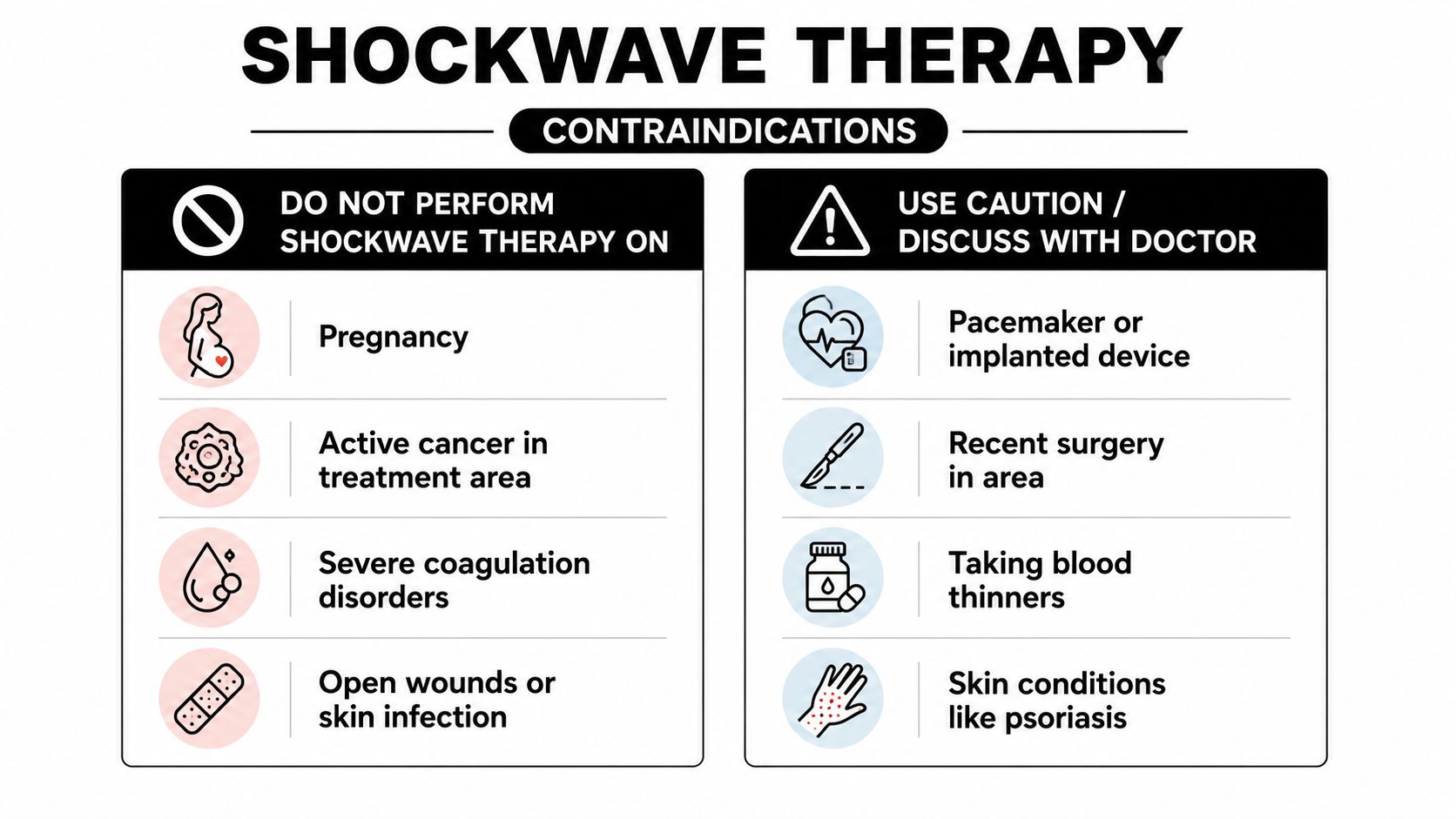
A practitioner may recommend postponing treatment, seeking GP advice, or choosing a different body-contouring method. That isn't a sales obstacle. It's evidence that the clinic is treating your health history as part of the treatment plan.
If you have questions about the sensation, screening, or aftercare, ask them before the handpiece touches your skin.
Looking After the Treated Area in the First Week
Good aftercare won't guarantee a particular cosmetic result, but it can make the settling period more comfortable and reduce avoidable irritation. Your clinic's instructions take priority, especially if your skin reacts more strongly than expected.
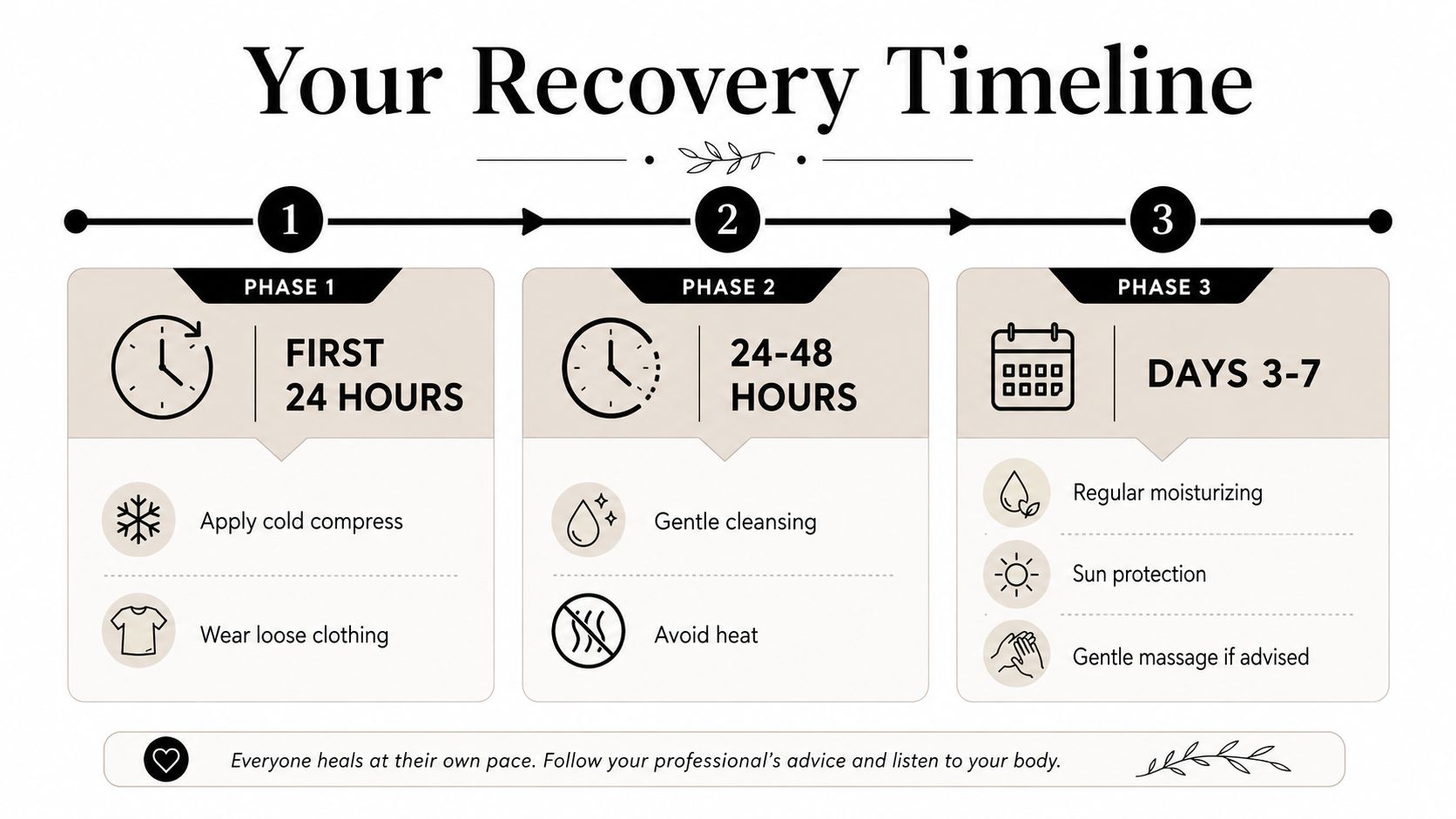
The first forty-eight hours
Keep the area clean with a gentle, fragrance-free product. Wear loose, breathable clothing so seams and tight waistbands don't rub against pink or tender skin. If the area feels warm or puffy, a cool compress wrapped in fabric can be more comfortable than direct ice.
For the initial two days, avoid hot baths, saunas, steam rooms, sunbeds, alcohol, and intense exercise. These activities can add heat, friction, dehydration, or increased circulation to an area that is already responding to treatment. Drink water regularly, but don't treat forced hydration as a way to flush away side effects instantly.
Comfort first: Cooling, clean skin and low friction are more useful than aggressive massage or strong products.
Days three to seven
As the skin feels normal, light activity can usually resume according to your practitioner's advice. If your clinic has specifically recommended gentle massage, follow its technique and timing. Don't start deep massage, body brushing, waxing, strong exfoliation, or active cosmetic products on your own while bruising or sensitivity remains.
Moisturiser can support comfort when the skin is dry, but choose a plain, fragrance-free formula. Apply sun protection to exposed areas and avoid tanning until the skin has fully settled. Photographing the area on the day of treatment and again during recovery can help you and your practitioner judge whether colour and swelling are improving.
For more general guidance on caring for skin after non-surgical treatments, see this clinic resource on post-treatment care. Keep the advice specific to the procedure you received, because aftercare for shockwave isn't identical to care after laser, microneedling, or injectables.
Warning Signs That Need Prompt Medical Attention
Mild pinkness, tenderness, warmth, and small bruises can be expected. The concern is the pattern, especially when symptoms spread, intensify, or change character instead of gradually settling.
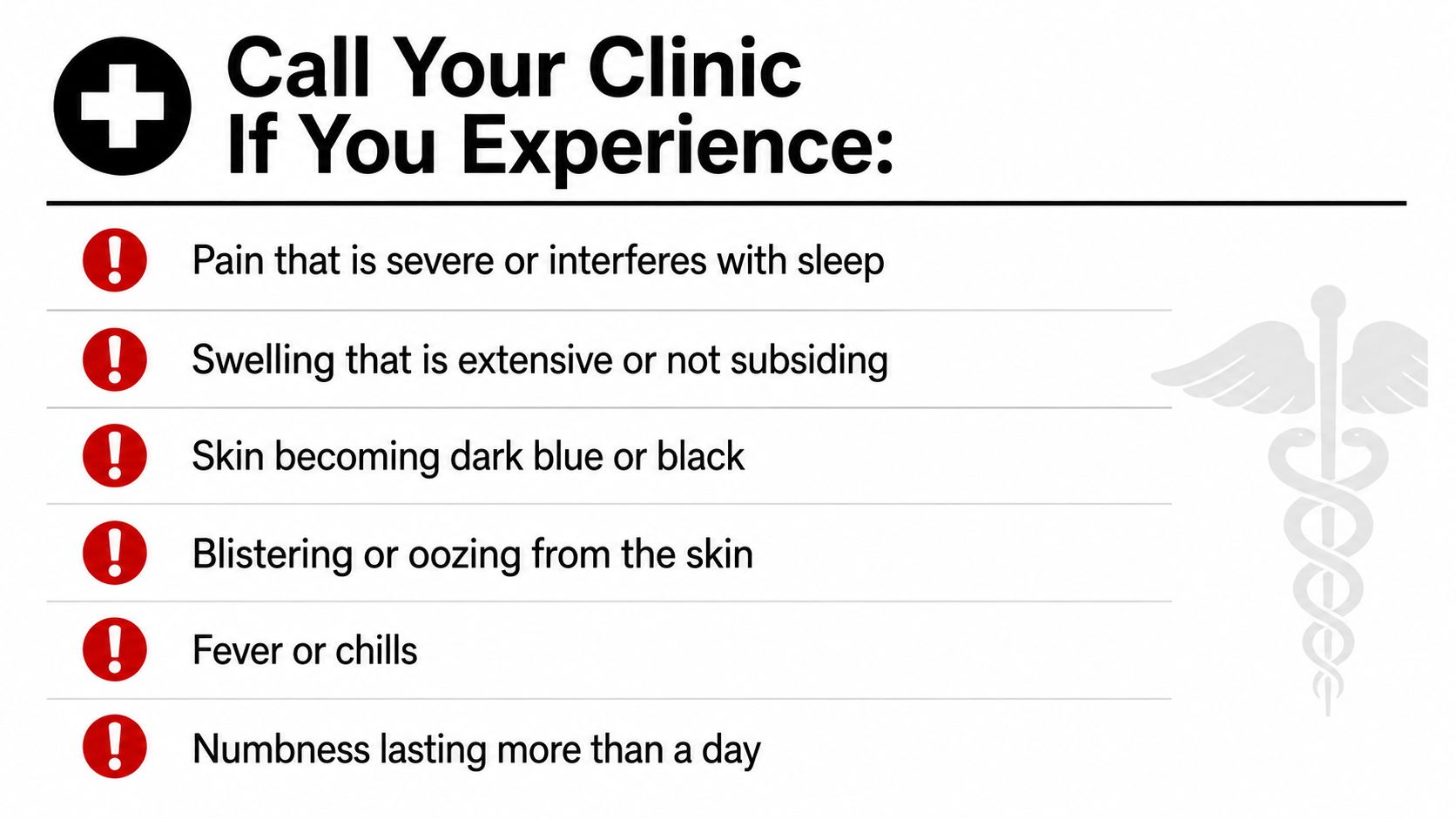
Contact the clinic or GP promptly if
- Pain intensifies after the early recovery period: Increasing pain, deep aching, or discomfort that affects sleep needs assessment.
- The skin becomes hot and increasingly red: Shiny skin, red streaks, fever, chills, or worsening tenderness can suggest infection.
- Blisters or broken skin appear: Don't puncture a blister, apply harsh products, or continue treatment over the area.
- Swelling becomes firm or spreads: Expanding swelling beyond the treatment zone isn't a routine cosmetic response.
- Numbness or tingling persists: Altered sensation that doesn't resolve within the expected recovery period, or that spreads, should be reported.
- A widespread rash develops: Hives, facial swelling, or breathing difficulty may indicate an allergic reaction and requires urgent medical help.
Take clear photographs in good light and send them to the clinic if requested. Images can help the practitioner decide whether you need an in-person review, but they shouldn't delay urgent care when symptoms are severe.
Skin that looks blistered, darkened, broken, or unusually painful should be treated seriously. Guidance on when to arrange a doctor visit for deep burn injuries can help explain why damaged skin deserves medical assessment rather than home experimentation.
Know the emergency symptoms
Sudden calf pain, swelling in one leg, chest pain, or breathlessness may indicate a blood clot or another emergency. Don't wait for the aesthetics clinic to respond. Call emergency services or attend A&E immediately.
Balancing the Risks Against the Benefits
For a healthy, appropriately screened client, the usual trade-off is temporary local discomfort in exchange for the possibility of gradual improvement in skin texture and the appearance of cellulite. The evidence-backed adverse events are generally minor tissue reactions, while serious events are not reported in the cited NICE systematic review of 2,281 patients. That doesn't make the treatment risk-free, and it doesn't mean every client will see the same result.
Shockwave is also not a weight-loss treatment. It may be considered alongside stable weight, hydration, regular light activity, and realistic expectations about skin texture. Body contouring should focus on the specific concern being treated, such as visible dimpling or lax-looking skin, rather than promising a complete change in body shape.
Questions to ask before booking
A responsible consultation should cover:
- Your medical history: Tell the practitioner about pregnancy, cancer history, implanted devices, surgery, clotting conditions, medication, epilepsy, skin disease, and current symptoms.
- The treatment objective: Ask whether the plan targets cellulite appearance, tissue texture, or another concern, and what the device is designed to do.
- The expected response: Find out how soreness, bruising, redness, and altered sensation will be managed if they occur.
- The follow-up process: Confirm who you contact if symptoms worsen and whether the clinic will review photographs or arrange an appointment.
- The financial commitment: Multiple appointments may be needed, so ask for the full course cost and cancellation terms before starting.
Clients comparing non-invasive approaches may also wish to read about new options for joint pain, although body-contouring shockwave and joint-pain treatment involve different goals and clinical considerations.
A good clinic won't rush your consultation or dismiss questions as anxiety. It should examine the skin, discuss recent sun exposure or waxing, check the treatment zone, explain intensity and aftercare, and record your consent. At 3D Aesthetics Leamington Spa, a consultation can include a full 3D body scan to assess concerns and help personalise a plan. The clinic offers shockwave among its non-surgical body treatments, alongside options such as cryolipolysis, ultrasound cavitation, body HIFU, and radio frequency. You can also compare approaches through its information on non-surgical fat removal in the UK.
The sensible decision is neither to dismiss all side effects nor to fear every mark on the skin. Ask what is normal for your treatment area, how the practitioner will adjust the device, and exactly when you should contact the clinic. That information lets you decide whether the likely discomfort and cost fit your goals.
3D Aesthetics Leamington Spa offers shockwave therapy for cellulite and other non-surgical body-contouring plans, supported by an in-depth consultation and 3D body scan. To discuss your skin concerns, medical history, expected side effects, and suitable aftercare, visit 3D Aesthetics Leamington Spa and arrange a consultation.
← Back to Home