
Single non-surgical body contouring sessions in the UK start around £150, but a realistic total treatment plan typically ranges from £1,000 to £3,500, depending on the number of cycles and modalities required. A fat-freezing course, RF tightening programme or combined plan can cost considerably more than the low “from” price shown in an advert.
The popular advice is to compare the cheapest session price. That's the wrong calculation. A proper budget should account for the treated area, number of cycles, consultation, follow-up appointments and whether more than one technology is needed. Body contouring isn't one standard treatment, and a clinic that quotes less per appointment may still cost more by the time you complete an effective course.
Table of Contents
- The Truth About Headline Pricing
- Per-Treatment Price Ranges and Packages
- Surgical Versus Non-Surgical Cost Comparisons
- The Shift Toward Multi-Modality Treatment Plans
- Key Factors That Influence Your Final Quote
- The Value of a 3D Scan and Consultation
- Financing Options and Common Buyer Questions
The Truth About Headline Pricing
A “from” price usually describes the smallest possible purchase, not the treatment plan most clients need. It may cover one appointment, one applicator, one small area or a promotional first visit. That figure can be useful as an entry point, but it shouldn't be treated as the answer to how much is body contouring.
Non-surgical contouring works gradually. Cryolipolysis, ultrasound cavitation and related technologies are designed for localised refinement rather than dramatic weight loss. RF focuses primarily on skin tightening, while other devices may target muscle definition or the appearance of cellulite. If your concern involves both fat volume and loose skin, repeating one treatment won't necessarily address the whole problem.
Practical rule: Ask for the estimated cost of the complete plan, not just the cost of the next appointment.
Independent UK pricing guidance places non-surgical body sculpting at roughly £150 to £600 per session, with a complete plan ranging from £1,000 to £3,000 or more depending on the technology and treatment requirements (Doctor Nyla's UK body sculpting cost guide). That broader figure is more useful because it reflects how clinics deliver treatment, through repeated sessions or cycles.
Why one session rarely answers the question
A single session may begin the process, but it rarely represents the final treatment outcome. Fat-freezing may require more than one cycle on a stubborn area, and tightening programmes depend on gradual tissue change. A clinic should explain what it expects one appointment to achieve and what would require additional treatment.
The cheapest plan is therefore not automatically the best value. If it only targets fat while your main concern is laxity, you could spend money on repeated appointments without dealing with the visible issue that bothers you most.
Budget for the finished result
Start by defining the objective:
- Fat reduction: Consider whether cryolipolysis or ultrasound cavitation is appropriate for a localised pocket.
- Skin laxity: Ask whether RF or another tightening approach should form part of the plan.
- Cellulite: Expect a different protocol from one designed solely for inch loss.
- Muscle definition: Discuss whether muscle-sculpting technology is relevant to your goal.
My advice is straightforward. Treat any single-session price as a consultation starting point, then request a written plan showing the expected number of sessions, areas, review appointments and total cost.
Per-Treatment Price Ranges and Packages
The modality determines the commercial structure. Cryolipolysis is commonly priced by treated area or cycle, whereas RF and ultrasound programmes are often sold as a series of appointments. A quote that looks expensive per session may still be more economical if it requires fewer visits, while a low session price can become costly when the course is extended.
The figures below combine the verified UK ranges available for non-surgical contouring. They're planning benchmarks, not guaranteed clinic tariffs.
Average UK Non-Surgical Contouring Costs
| Treatment Modality | Per-Session Range | Typical Course Cost |
|---|---|---|
| Non-surgical body sculpting | £150–£600 | £1,000–£3,000+ |
| Fat freezing | £159 for one area | £867 for a three-session, four-area course |
| Ultrasound cavitation | Varies by clinic and area | Usually priced as a repeated course |
| RF skin tightening | Varies by clinic and area | Usually priced as a repeated course |
| Combined contouring programme | Varies by treatment mix | £1,500–£3,500 |
The fat-freezing examples show why package details matter. A course may cover several areas and sessions, but the number of applicator placements and cycles still affects the final quote. The UK package examples reported by Spa Black's body sculpting prices are useful for seeing how providers present treatment combinations, although you should compare inclusions rather than copying a headline tariff.
What you're paying for
Cryolipolysis, or fat freezing, is aimed at stubborn fat pockets and is typically sold per area or cycle. The verified UK pricing range runs from £159 for one area to £867 for a three-session, four-area course (Colaz fat-freezing pricing information). A plan may need additional cycles if the treated area has more volume or if the first result doesn't meet the agreed goal.
Ultrasound cavitation is generally positioned as an inch-loss or localised fat-reduction treatment. It often carries a lower appointment price than surgery, but the relevant comparison is the total number of visits. RF tightening follows a similar logic, except the target is skin laxity rather than fat volume.
Muscle-sculpting technologies belong in a separate conversation. They may be appropriate when definition is the priority, but they won't automatically replace a fat-reduction or tightening protocol. A combined quote should state which concern each modality addresses.
For a local pricing reference, you can also review the 3D Aesthetics Leamington Spa treatment prices and ask the clinic to explain how its listed services would apply to your body area and objective.
Surgical Versus Non-Surgical Cost Comparisons
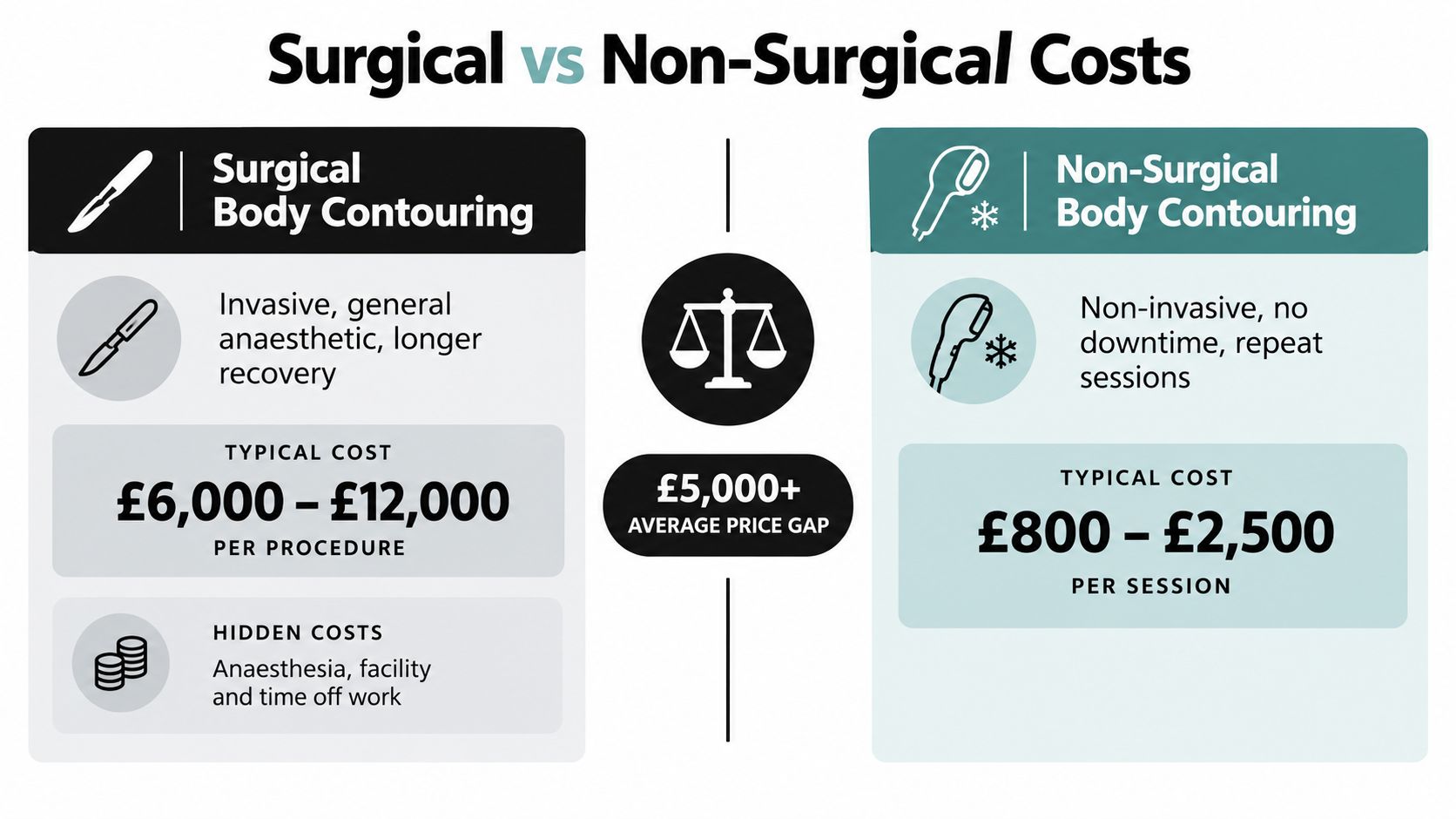
The cheapest headline price can produce the most expensive plan. Surgery and non-surgical contouring address different problems, so compare the expected result, treatment scope and full pathway, not one appointment. Liposuction removes fat surgically, while abdominoplasty can address excess skin and abdominal shape. Device-based treatments avoid an operation but usually require repeat appointments, and they cannot remove substantial excess skin.
Private UK liposuction prices can begin at roughly £3,000 for a single area (UK body contouring commissioning information). Multi-area surgery costs substantially more. Non-surgical treatment may start lower, yet combining fat reduction, tightening and definition can create a larger total plan than the first “from” price suggests. Review a non-surgical fat-removal approach only after confirming which concern the proposed treatment addresses.
The NHS position
In the UK, body contouring is generally cosmetic care rather than routine NHS treatment. Regional NHS policies typically do not fund liposuction, tummy tucks, arm lifts or thigh lifts for appearance alone. Funding may be considered where a clear medical need exists, such as severe functional problems after major weight loss. The NHS carried out 752 abdominoplasties in 2016/17, a historical figure showing how selective publicly funded access has been (Birmingham and Solihull body contouring policy). Do not base a private treatment decision on expected NHS funding.
Which route makes financial sense
Surgery has the higher upfront cost, but one main procedure may replace a prolonged course. Include consultation, anaesthetic, facility, aftercare and recovery in the comparison. Non-surgical care avoids an operation, while the cumulative cost rises when several areas or goals require different modalities.
For post-weight-loss concerns, Chernoff Cosmetic Surgery's patient guide can help distinguish excess skin from a small fat pocket. Ask every clinic for the complete plan, including treatment areas, expected appointments and what happens if the initial result falls short. A 3D scan can also clarify whether the proposed budget matches the tissue concerns being treated.
The Shift Toward Multi-Modality Treatment Plans
Body contouring isn't just a fat-loss purchase. Clients increasingly ask about skin tightening, cellulite reduction, inch loss and muscle definition, and those goals don't respond identically to one device. A sensible plan matches the technology to the tissue concern instead of repeatedly selling the same appointment.
A typical combined programme might use fat freezing for a localised fat pocket, RF for lax skin and shockwave therapy for cellulite appearance. That combination changes the budget because each modality has a different purpose, appointment pattern and measurement method. The total price may reach £1,500 to £3,500 for combined contouring packages in the UK (Consulting Room's non-surgical treatment overview).
Match the treatment to the complaint
Ask yourself what you want to improve:
- A fold that remains despite stable weight may call for a fat-reduction discussion.
- Crepey or loose skin may need tightening rather than more fat-focused treatment.
- Dimpling and uneven texture may require a cellulite-focused protocol.
- Limited definition may be better assessed through muscle-sculpting options and overall body composition.
This distinction prevents a common mistake, paying for a cheap treatment that addresses the wrong issue. Someone seeking a flatter abdomen may need a different plan from someone seeking firmer skin on the arms, even if both search for body contouring.
Why combined plans cost more
A multi-modality programme isn't automatically better. It should be recommended only when each treatment has a defined role. The clinic should explain the order of treatments, spacing between appointments, expected changes and the point at which progress will be reviewed.
You should also ask whether the package includes all modalities or whether the advertised price covers only the initial device. A transparent quote separates treatment areas, sessions, cycles and add-ons. Guidance on choosing a contouring provider from Dr Connie Hiers can help you assess the provider, consultation process and suitability questions before committing.
My view is that a smaller, properly targeted combination is better value than an oversized package built around every available machine. Pay for the plan your assessment supports, not for technology by the metre.
Key Factors That Influence Your Final Quote
Two clinics can quote different prices for apparently similar contouring because they may be treating different areas with different equipment and different protocols. The number alone tells you very little. You need to understand what sits behind it.
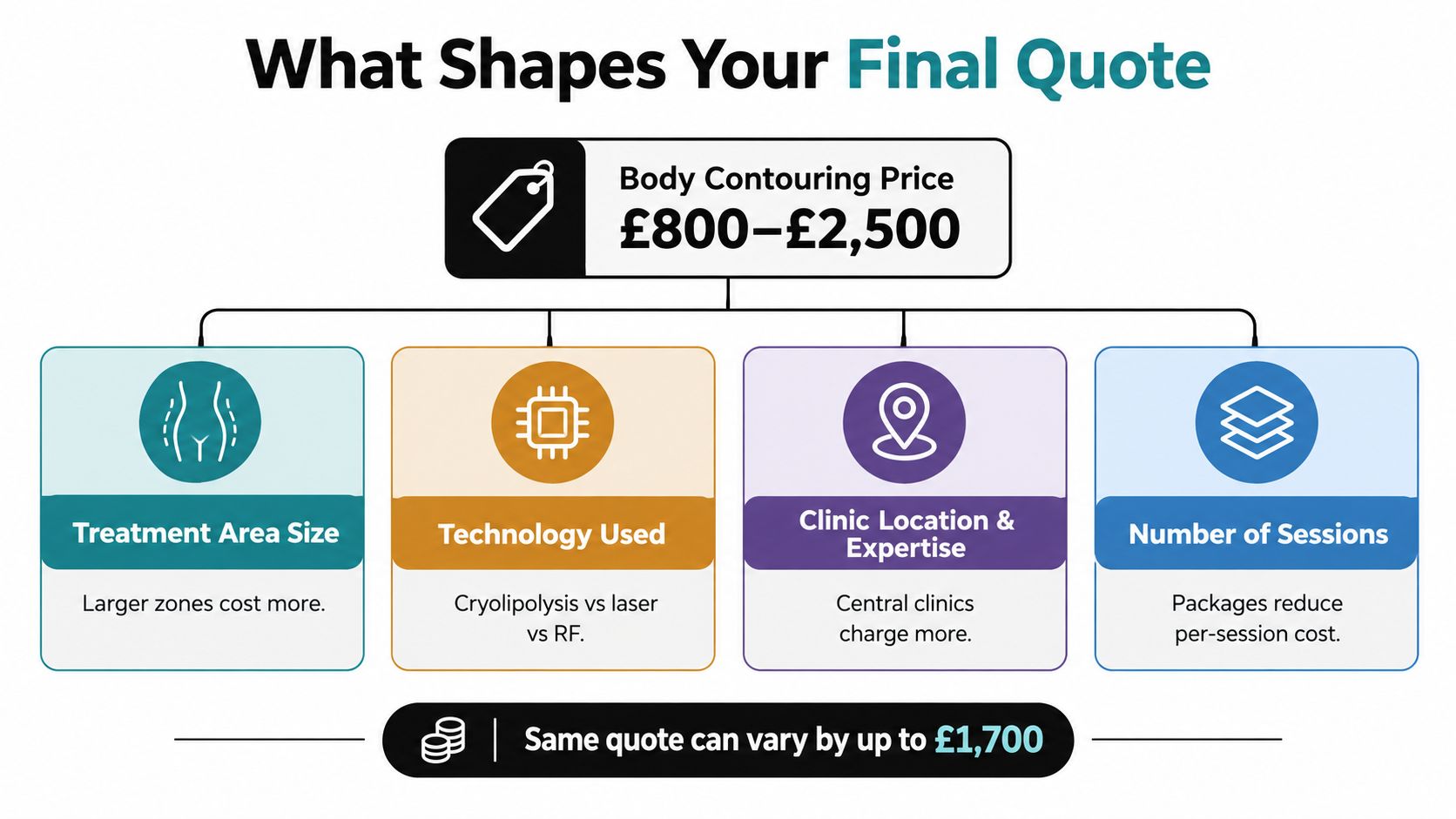
Four quote variables
Treatment area size
A small lower-abdominal pocket uses a different amount of time and equipment from a larger abdomen, back or thigh area. Ask whether the clinic prices by zone, applicator, cycle or appointment.Technology used
Cryolipolysis, ultrasound, RF and muscle-sculpting devices don't target the same problem. A quote should name the technology and explain why it's suitable for your goal, rather than using “body contouring” as a catch-all label.Clinic location and expertise
A central clinic or an experienced practitioner may charge more because the overheads, assessment process and clinical input differ. Lower cost isn't a problem if the service remains safe, appropriate and properly supervised. A very low quote deserves questions about what has been excluded.Number of sessions
A package can reduce the effective session cost, but only if you need the entire package. Don't accept a large course just because the per-visit figure looks attractive.
The verified UK guidance places many complete non-surgical plans between £1,000 and £3,000 or more, while combined programmes can reach £1,500 to £3,500 (Doctor Nyla's cost guide). Use those ranges to frame a conversation, not to judge a quote without seeing its contents.
Questions that expose the real cost
Ask for the price of the full proposed course, whether consultation and reviews are included, how many areas are covered, and what happens if the response is weaker than expected. The clinic should also explain maintenance, exclusions and cancellation terms before taking payment.
A 3D scan can make the quote more precise by showing the area being assessed and establishing a baseline for future comparisons. It won't guarantee a result, but it can reduce guesswork and discourage a generic package recommendation.
The Value of a 3D Scan and Consultation
A consultation shouldn't be a sales conversation followed by a standard package. It should answer three practical questions: what is the concern, which treatment can address it, and how much treatment is realistically required?
A full 3D body scan gives the clinician a structured baseline. The assessment can help distinguish localised fat from skin laxity, identify whether several concerns overlap and record the starting appearance before treatment. That matters financially because the wrong modality can leave you paying for appointments that were never well matched to your objective.
Why the scan protects your budget
Suppose your main concern is loose skin, but the plan focuses only on fat reduction. You may see a change in volume without achieving the firmer appearance you wanted. Conversely, a tightening protocol won't deliver the same purpose as a fat-focused treatment when the primary issue is a stubborn pocket.
A scan doesn't replace clinical judgement. It supports a more specific discussion about areas, priorities and measurement. Ask whether the clinic will repeat the assessment, how it will track progress and whether that service is included in the consultation or package.
The cheapest consultation is the one that stops you buying the wrong course.
What to ask at the appointment
Bring a clear description of what you want to change, how long the concern has remained stable and whether your priority is fat, shape, skin texture or firmness. Request a written recommendation that separates each treatment from its purpose and cost.
You can review how a dedicated 3D body scanning consultation is structured, then use the same questions with any provider. I favour clinics that measure before recommending because a quote should be tied to an observed concern, not an automatic upsell.
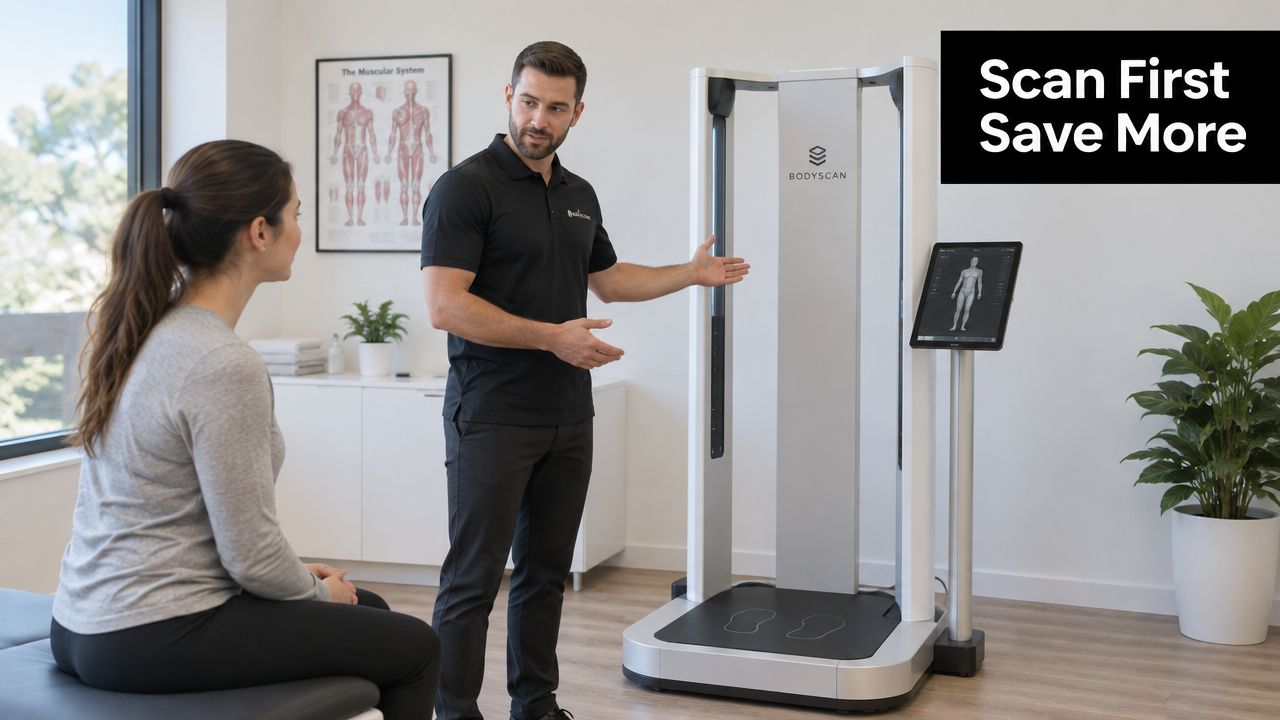
If a clinic offers a complimentary consultation and 3D scan, treat that as an opportunity to test its transparency. You should leave knowing what the proposed plan is, what it won't do and what you'll pay if you proceed.
Financing Options and Common Buyer Questions
A low monthly payment can hide an expensive treatment plan. Ask for the full cost before agreeing to finance, especially when your plan combines several modalities or requires repeat appointments. Clinics may offer staged payments, deposits or third-party finance. Compare the total repayable amount, interest, cancellation rights and the point at which treatment begins.
Can I pay for a course in stages?
Often, clinics arrange payment around individual appointments instead of requesting the entire course upfront. That can make cash flow easier, but it does not reduce the price. Compare the full cash cost with the full financed cost. The written quote should list every session, review, scan and add-on.
Is there downtime?
Non-surgical contouring avoids the recovery associated with an operation, but it is not always symptom-free. Depending on the modality, you may experience temporary sensitivity, redness, tenderness or swelling. Your provider should explain the likely effects of the specific device and how long they may affect you.
Ask practical questions. Can you return to work, exercise and normal clothing immediately? Will swelling change how an outfit fits? A credible clinic will describe these short-term effects instead of selling the treatment as having “no downtime”.
When will I see results?
Results usually develop gradually. Your provider should state when the area will be reviewed and what degree of change is realistic. Judge the plan by its measurement process and stated outcome, not by dramatic promises or a single photograph. This matters even more when your goal includes both reduced volume and improved skin quality.
Will the NHS pay?
Usually not for cosmetic body contouring. NHS commissioning policies generally reserve funding for a clear medical need, such as severe functional problems after major weight loss, rather than appearance alone. Treat private funding as the default assumption and check eligibility before building your budget around NHS support.
Before booking, request a written quote and treatment rationale. 3D Aesthetics Leamington Spa offers complimentary consultations with full 3D body scanning and non-surgical options including fat freezing, ultrasound cavitation, RF, shockwave and 3D Powersculpt, so clients can discuss a plan based on their specific concern rather than a generic session.
If you want a realistic estimate for your body area, visit 3D Aesthetics Leamington Spa for a complimentary consultation and 3D scan. Ask the team to connect your goals with suitable modalities, the expected number of sessions and the complete treatment budget before you commit.
← Back to Home