
You catch it in ordinary light first. A thin red line beside the nose. A small web on the cheek. It doesn't disappear after your skincare, and makeup only softens it rather than hiding it.
That's usually the moment people start searching for broken capillaries treatment. They want to know what it is, whether it can be removed, and if laser treatment is worth it. The short answer is yes, visible facial capillaries can often be treated very effectively, but the right plan depends on the type of vessel, the cause behind it, and how well the skin is prepared before and after treatment.
Table of Contents
- Understanding Facial Redness and Thread Veins
- What Causes Broken Capillaries on the Face
- A Comparison of Professional Treatment Options
- How Modern Laser Treatments Remove Red Veins
- Are You a Good Candidate for Laser Treatment
- The 3D Aesthetics Approach with 3D Vasculase
- Aftercare and Preventing Future Broken Capillaries
Understanding Facial Redness and Thread Veins
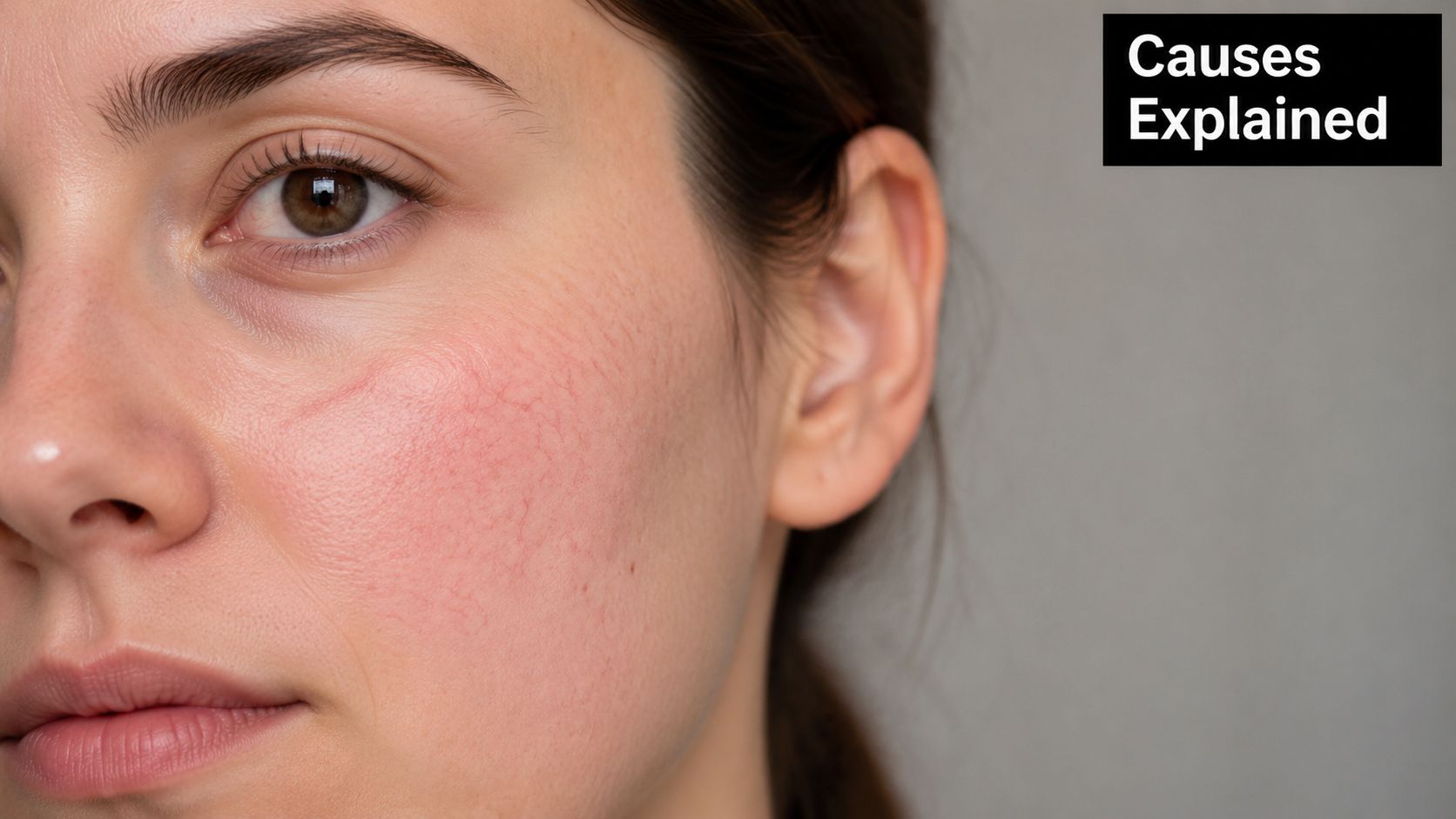
Broken capillaries are tiny blood vessels that have become permanently dilated near the skin's surface. You may also hear them called thread veins, spider veins, or telangiectasia. On the face, they commonly show up around the nose, across the cheeks, and sometimes on the chin.
They don't usually mean anything dangerous. Their appearance is often the primary concern. They can make skin appear flushed, uneven, or more reactive than it really is.
What they actually are
A lot of clients assume the vessel has “burst”. In many cases, that isn't the most useful way to think about it. The vessel has often stretched and stayed visible, which is why creams rarely make it disappear once it's established.
That's the key difference between temporary redness and a visible capillary. Temporary redness comes and goes. A thread vein tends to stay put.
Practical rule: If a red line keeps appearing in the exact same place and never fully fades, it usually needs a vessel-targeting treatment rather than more skincare.
What helps and what doesn't
Topical products can still have a role. They may calm irritation, support the skin barrier, and reduce background redness. For people who also deal with sensitivity or rosacea-prone skin, ingredients such as azelaic acid can be useful for overall redness management. If you're trying to understand where that fits into a routine, this expert guide to azelaic acid gives helpful context.
But topical care and vessel removal are not the same thing. Once a capillary is clearly visible, the most reliable non-surgical options are usually laser treatment or IPL, chosen according to the vessel pattern and the skin itself.
What Causes Broken Capillaries on the Face
Think of a healthy capillary like a new garden hose. It's flexible. It expands when needed, then settles back down. A visible broken capillary behaves more like an older hose that's been overstretched. It doesn't spring back properly, so it stays noticeable through the skin.
That matters because treatment isn't only about removing what you can see today. It's also about reducing the triggers that caused those vessels to stay open in the first place.
The most common triggers
Sun exposure is one of the biggest drivers. Repeated UV exposure affects the skin and the small vessels within it, especially on high-exposure areas such as the cheeks and nose.
Rosacea and frequent flushing also matter. Skin that's repeatedly inflamed or reactive tends to show more visible vessels over time.
Ageing skin changes how much support those tiny vessels have. As skin becomes thinner and less resilient, thread veins become easier to see.
Genetics and local trauma
Some people are more prone to them. If your skin flushes easily or visible veins run in the family, you may notice them earlier and more often.
Local trauma can add to the problem as well. That includes rubbing, harsh exfoliation, squeezing spots aggressively, or repeated friction around the same area. The face doesn't need major injury for delicate vessels to become more obvious.
Why the cause affects the treatment plan
Expectations need to be realistic. If someone has a few isolated facial thread veins, treatment is often straightforward. If someone also has strong flushing triggers, active rosacea, or ongoing sun damage, the plan has to be broader.
A practitioner should look at things like:
- Pattern of redness: Is it a single vessel, a small cluster, or diffuse redness with visible veins?
- Trigger history: Does the skin flare with heat, exercise, alcohol, sun, or certain skincare?
- Skin behaviour: Is the barrier calm, or is the skin already irritated before treatment starts?
A laser can treat the vessel you see. It can't stop daily habits or underlying triggers from creating new ones later.
That's why the best broken capillaries treatment plan isn't just a machine setting. It's vessel removal plus trigger control.
A Comparison of Professional Treatment Options
A typical consultation often starts with a simple question: “Do I need laser, or is there another way to treat this?” The answer depends on what the redness is. A single thread vein beside the nose needs a different approach from general cheek redness or flushing that comes and goes.
Professional treatment has become more selective over time. Older surface-heating methods were used more often in the past, but most facial vascular work now centres on light-based treatment because it can target visible vessels with more control and less disruption to the surrounding skin.
For clients, the useful comparison is not which option sounds strongest. It is which option matches the pattern of redness, the skin type, and the likelihood of needing repeat sessions.
Laser treatment
Laser is usually the strongest option for well-defined facial thread veins. If the concern is a visible red line, a small cluster around the nose, or localised broken capillaries on the cheeks, laser gives the practitioner a more specific target.
Different systems are used in clinic, including pulsed-dye and Nd:YAG-type devices. In practice, the machine matters, but settings, vessel depth, skin tone, and the practitioner's judgement matter just as much. A good treatment plan is based on the vessel in front of you, not on a one-size-fits-all protocol.
Strengths
- Precise treatment for individual vessels
- Often a better fit for distinct red lines and clusters
- Settings can be adjusted for different vessel sizes and depths
Trade-offs
- Repeat sessions are common
- Temporary redness or slight swelling can happen afterwards
- Poor settings or poor candidate selection can limit results
IPL
IPL, or intense pulsed light, is broader in how it works. It is not one laser wavelength. It uses filtered light across a range, which can make it useful for diffuse redness, mild flushing, and redness that covers a larger area rather than one clearly defined vessel.
This can suit the client whose main concern is overall facial redness with some scattered capillaries mixed in. It is usually less exact than a dedicated vascular laser, so I would not usually pick IPL first for one stubborn thread vein that needs direct targeting.
Strengths
- Can treat wider areas of redness
- May help when redness and pigment overlap
- Useful for milder, more general vascular change
Trade-offs
- Less specific than vascular laser for isolated vessels
- Results vary more if the redness is not well assessed first
- May not give enough change for sharper, established thread veins
Older methods and why they are used less often
Electrocautery and similar surface-based methods still exist, but they have a smaller role in modern facial vascular treatment. The main limitation is selectivity. Facial skin benefits from treatments that can focus on the vessel while sparing as much surrounding tissue as possible.
That is why many clinics now favour vascular laser platforms over older heat-based approaches.
Professional Broken Capillary Treatments Compared
| Treatment | How It Works | Best For | Typical Sessions | Downtime |
|---|---|---|---|---|
| Vascular laser | Targets haemoglobin in visible vessels with focused light energy | Defined facial thread veins and localised capillaries | Usually delivered as a course, based on vessel response | Usually mild and short-lived, depending on vessel and settings |
| IPL | Uses filtered broad-spectrum light to reduce redness and vascular visibility | Diffuse redness and broader facial flushing patterns | Usually delivered as a course, based on response | Usually mild, but varies with skin sensitivity |
| Older cautery-based methods | Uses heat directly at the surface | More limited modern role for facial thread veins | Varies | Can be less selective on facial skin |
Clinics using newer vascular platforms can often tailor treatment more precisely. For example, vascular laser treatment for thread veins and spider veins gives a useful picture of how modern device-led treatment is applied in practice.
The best treatment is the one that fits the vessel pattern, the skin behaviour, and the longer-term plan to prevent new redness from forming.
How Modern Laser Treatments Remove Red Veins
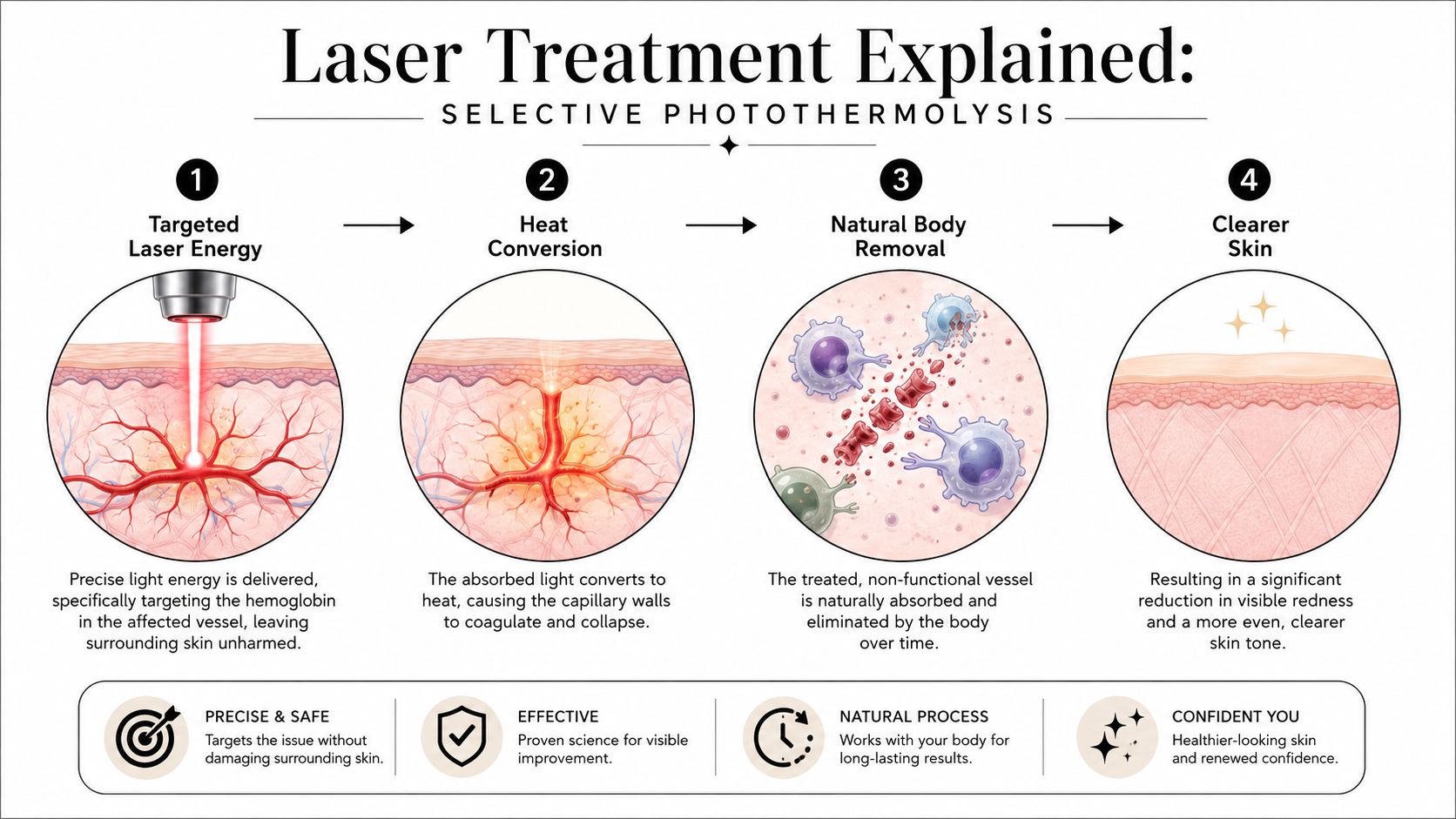
Modern laser treatment works because blood vessels absorb specific light energy differently from the surrounding skin. In simple terms, the device is looking for the red target.
Selective photothermolysis in plain English
The technical term is selective photothermolysis. It sounds complicated, but the principle is straightforward. The light is chosen to target haemoglobin, which is the pigment inside the vessel. The vessel absorbs that energy, heats up, and the wall of the capillary collapses. The body then clears the treated vessel over time.
That's why laser treatment doesn't “wipe” a capillary away on the spot. It starts a controlled process inside the vessel, and the visible change develops as the skin settles and the body removes what's no longer functional.
For a close look at how vascular laser options are used in practice on thread veins and spider veins, this laser treatment for spider veins page is a useful reference point.
Why laser became the modern standard
In UK practice, one important historical milestone was the rollout of the NHS Cosmetic Treatments Research Group in 1990, created to assess and standardise evidence for cosmetic procedures, including vascular laser use for superficial facial vessels. Over time, dermatology practice moved from older cautery-based methods toward laser treatment, and modern vascular lasers became widely used because they can target tiny blood vessels with less damage to surrounding skin. A 2023 peer-reviewed study on 532 nm vascular laser therapy also reported a significant reduction in red areas and VISIA scores across both women and men, with efficacy not significantly affected by age, phototype, or number of sessions, supporting broad clinical utility of this light-based approach (peer-reviewed vascular laser evidence and UK treatment context).
Here's a short video overview if you prefer to see the concept visually.
What clients usually notice
The sensation is described as quick heat or a light snapping feeling. After treatment, the vessel may look darker, lighter, or more obvious for a short period before it fades.
That temporary change worries some clients, but it's often part of the normal response. What matters is careful settings, proper spacing, and not over-treating skin that's already inflamed.
Are You a Good Candidate for Laser Treatment
Not every red mark is a broken capillary, and not every broken capillary should be treated the same way. A proper consultation matters because safe laser work depends on identifying the vessel correctly, checking the skin's baseline sensitivity, and ruling out anything that could increase the risk of irritation or pigmentation issues.
What a practitioner assesses
Skin type affects settings. Darker or more reactive skin can still be treated in some cases, but the approach needs more caution than it would on very fair, calm skin.
Vessel type also matters. Fine facial thread veins often behave differently from larger, deeper, or more diffuse redness patterns. A single line on the side of the nose is a very different job from flushing across the whole cheek.
Underlying skin conditions have to be considered too. If redness is tied to rosacea, barrier damage, or active inflammation, treatment may still be possible, but the plan should account for that rather than ignore it.
When treatment may need to wait
A responsible consultation includes reasons to postpone, not just reasons to book.
Common examples include:
- Pregnancy: many clinics prefer to delay elective vascular treatment
- Photosensitising medication: some antibiotics and other medicines can raise sensitivity to light
- Active skin infection or irritation: treating over inflamed or infected skin isn't sensible
- Recent sun exposure: skin that's recently tanned or sun-irritated may need time to settle
Good laser treatment starts with saying no to the wrong timing.
Questions worth asking at consultation
If you're considering broken capillaries treatment, ask practical questions:
- What exactly are you treating? A visible capillary, diffuse redness, or both?
- Which device is being used and why? The explanation should be specific.
- What will the skin look like afterwards? You need a realistic picture of the recovery period.
- What could make my results less predictable? This often reveals whether triggers such as flushing or sun exposure are being taken seriously.
The right candidate isn't just someone with visible veins. It's someone whose skin, medical background, and treatment goals line up with a safe plan.
The 3D Aesthetics Approach with 3D Vasculase
A good clinic journey feels structured from the start. The consultation should confirm that the visible redness is vascular, check whether there are rosacea triggers or lifestyle factors affecting recurrence, and decide whether the vessels are suitable for a targeted laser approach.

What the treatment journey should look like
The most sensible process is usually:
Consultation first
The skin is assessed in good light, with attention to vessel size, distribution, skin tone, and likely triggers.Device selection
The practitioner decides whether a vascular laser is appropriate for the area being treated.Course planning
Expectations are set around a series of treatments rather than a one-visit promise.Review between sessions
The skin response is checked before repeating or adjusting treatment.
That approach reflects wider clinical guidance. UK hospital laser guidance for vascular lesions states that patients usually need multiple sessions, commonly spaced about 6 to 8 weeks apart, because vessels are gradually damaged and then cleared by the body over time. It also supports the best practice of planning serial reviews rather than making a single-session “erase” claim (UK guidance on vascular lesion treatment spacing).
Where 3D Vasculase fits
One clinic-based option for facial thread veins is 3D Vasculase treatment, which is used for unwanted vascular lesions such as broken capillaries and thread veins. In practical terms, the appeal of this type of system is precision. A practitioner can work directly on the visible vessel rather than treating the whole area broadly when a localised approach is more suitable.
For clients, that usually means the process feels more predictable. You know what area is being targeted, why a course is recommended, and why review appointments matter.
What matters more than the machine name
Technology is important, but it isn't everything. Results depend on:
- Correct diagnosis: not every red mark is a treatable capillary
- Appropriate settings: facial vessels need careful handling
- Timing between sessions: the skin needs time to respond
- Honest expectation setting: some vessels clear quickly, others take patience
That combination is what makes a treatment plan feel professional rather than rushed.
Aftercare and Preventing Future Broken Capillaries
The treatment itself is only one half of the result. The other half is how you look after the skin afterwards, and how well you reduce the triggers that helped create the vessels in the first place.
The first few days after treatment
The treated area may feel warm or look pink for a short time. That doesn't automatically mean anything is wrong. What matters is keeping the skin calm.
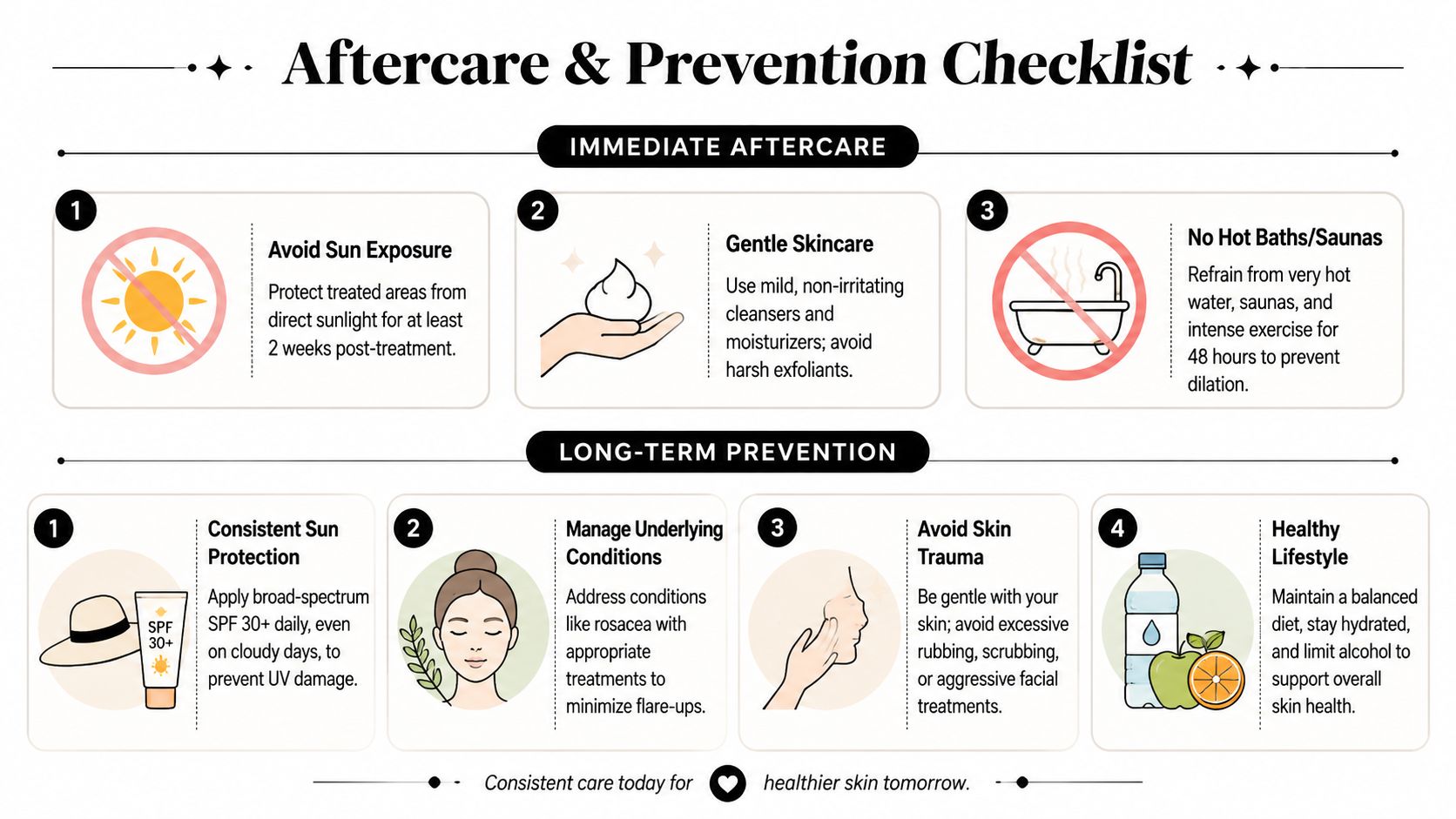
A simple aftercare checklist works best:
- Avoid heat: skip hot baths, saunas, steam rooms, and heavy exercise immediately after treatment
- Protect from sun: fresh UV exposure is one of the quickest ways to aggravate redness
- Keep skincare bland: use gentle cleanser, moisturiser, and avoid strong acids or aggressive exfoliation during the recovery window
- Leave the area alone: don't scrub, pick, or over-apply products because you're impatient to see fading
If your skin is already reactive on the body as well as the face, it's often worth reviewing the wash products you use every day. A gentler cleanser can reduce unnecessary irritation, and this guide to the best sodium lauryl sulfate free body wash is a practical place to start.
Prevention matters as much as removal
UK patient guidance emphasises that cause control is part of treatment efficacy. Common triggers include sun exposure, skin ageing, topical steroid use, rosacea, and repeated local trauma. Removing those triggers helps reduce recurrence even after successful light-based treatment, and lower background redness can improve vessel clearance because less competing erythema is present in the skin (UK guidance on broken capillary causes and treatment).
That's why long-term maintenance usually includes:
- Daily broad-spectrum SPF: not just on sunny holidays, but routinely
- Rosacea management: if flushing is active, it needs ongoing control
- Gentle handling: no harsh rubbing, over-exfoliation, or repeated trauma
- Consistent skin support: calm skin tends to hold results better than inflamed skin
Clearer skin lasts longer when the trigger is managed, not ignored.
Supporting recovery between appointments
Some clients also benefit from supportive treatments that help calm visible redness after procedures. One option used in broader skin recovery plans is Dermalux LED therapy, particularly where the aim is to soothe skin rather than target vessels directly.
That distinction matters. Supportive care can help the skin recover well, but it doesn't replace vascular treatment when an actual thread vein needs to be removed.
If you're dealing with persistent facial redness or visible thread veins and want a clearer idea of what's treatable, a consultation with 3D Aesthetics Leamington Spa can help you assess the vessels properly, understand whether laser is suitable, and plan a realistic course of treatment with prevention in mind.
← Back to Home