

You catch them in the changing-room mirror, under lighting that seems designed to reveal every uneven patch of skin. The older white lines across your abdomen, hips, thighs or breasts haven't disappeared with time, creams or changes in weight. Then you search for CO2 laser stretch marks and find a mixture of confident promises and very little explanation of what the treatment can change.
Fractional CO2 laser is a genuine resurfacing treatment, but it isn't a magical eraser. It creates controlled microscopic injuries so the deeper skin can remodel itself, which may soften the texture, width and contrast of stretch marks over time. The important questions are more personal: how mature are your marks, what does your skin type make safer, and is the possible improvement worth the recovery and pigment risk?
Table of Contents
- The Mirror Moment That Brings People to CO2 Laser
- How Fractional CO2 Works on Stretch Marks
- Which Types of Stretch Marks Respond Best
- How Many Sessions You Will Need and What Happens at Each One
- How CO2 Compares to Microneedling and Other Lasers
- Downtime and the Risks Worth Taking Seriously
- Looking After Your Skin Between Sessions
- Is Fractional CO2 the Right Choice for You
The Mirror Moment That Brings People to CO2 Laser
The reader who searches for CO2 laser stretch marks often isn't looking for a lecture on dermatology. They want to know whether the lines that have stayed visible for years can become less obvious when they wear a swimsuit, change clothes or look at their body in bright light.
That desire is reasonable. Stretch marks, medically called striae, are changes in the deeper skin rather than simple surface colour. A cream may moisturise the area, but it can't recreate the original arrangement of collagen once the mark has formed. Fractional CO2 approaches the problem differently by encouraging the skin to rebuild part of its supporting structure.
The promise is improvement, not removal. UK clinical summaries commonly describe about 40–70% improvement in width, texture and discolouration after a properly spaced course of 3–4 sessions, rather than complete disappearance, as outlined in this UK clinical summary of fractional CO2 for stretch marks. That range isn't a guarantee for an individual. The response depends on the age and depth of the marks, the treatment settings, healing, sun exposure and your natural tendency towards pigmentation.
The useful question isn't “Will CO2 erase my stretch marks?” It's “What part of these marks can this treatment realistically improve for me?”
This distinction matters because older white marks may need a different strategy from newer red or purple ones. Fractional CO2 may be a sensible option for some mature, indented marks, while microneedling or another laser can offer a more balanced choice for someone concerned about downtime or post-inflammatory hyperpigmentation. A proper consultation should assess suitability before anyone discusses a package of sessions.
How Fractional CO2 Works on Stretch Marks
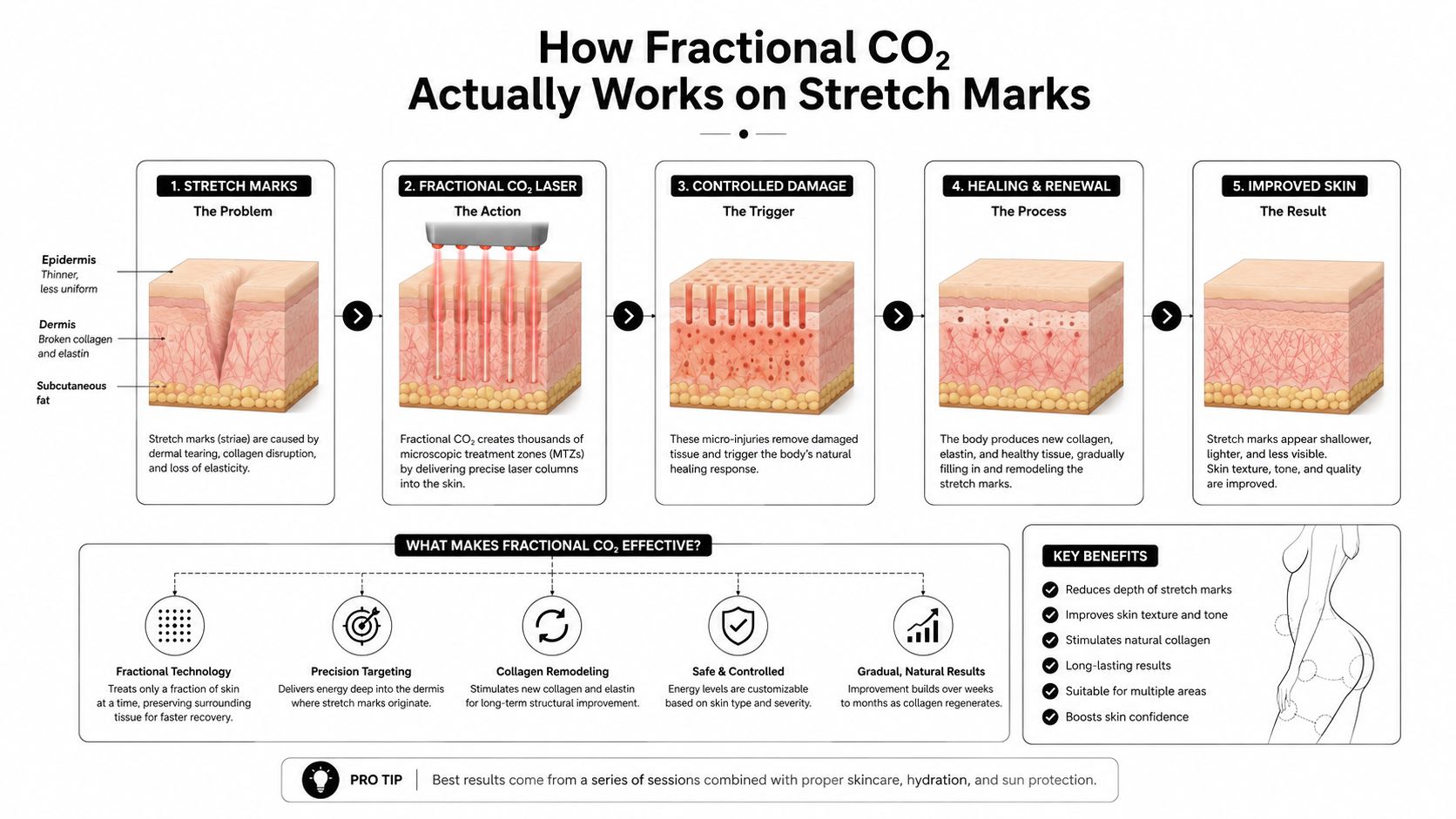
A stretch mark is not only a change in colour. Its supporting structure has been stretched and altered within the dermis, so treatment needs to reach beyond the visible surface. Fractional CO2 uses controlled columns of laser energy to create microscopic treatment zones in that deeper layer.
Picture a compacted lawn being aerated. Small openings disturb selected areas while the surrounding grass remains intact. Fractional treatment follows a similar pattern: the handpiece treats tiny columns of skin and leaves untreated tissue between them. That preserved skin helps the area repair more efficiently than fully ablative resurfacing, which removes the surface throughout the treatment zone.
Fractional does not mean superficial
The word fractional describes the treatment pattern, not a mild or surface-only procedure. The laser still produces a meaningful response in the dermis, where much of the structural change in a stretch mark sits. Because it does not treat every microscopic area at the same time, the skin can heal between the treated columns. This is why fractional CO2 can be performed as an outpatient procedure rather than creating the broader wound associated with fully ablative resurfacing.
The controlled micro-injury starts a wound-healing response. Fibroblasts and other repair cells reorganise the affected tissue, while the skin gradually forms and remodels collagen. Over time, this may make an atrophic mark feel less thin or indented and help its edges blend more smoothly with nearby skin.
The NHS patient information on fractional CO2 scar treatment describes this same wound-healing principle in hospital dermatology care.
Results develop gradually. The laser does not fill a line during one appointment or restore skin to its untouched state. Redness and flaking may settle before the deeper remodelling is complete, so recovery time and skin response remain part of the treatment decision. Information about fractional CO2 laser scar removal should therefore be considered alongside your skin type, the maturity of the marks, and the risk of pigmentation changes.
Which Types of Stretch Marks Respond Best
Stretch marks aren't one uniform condition. Their colour and maturity tell you what has happened since they first appeared, and that affects the treatment target.
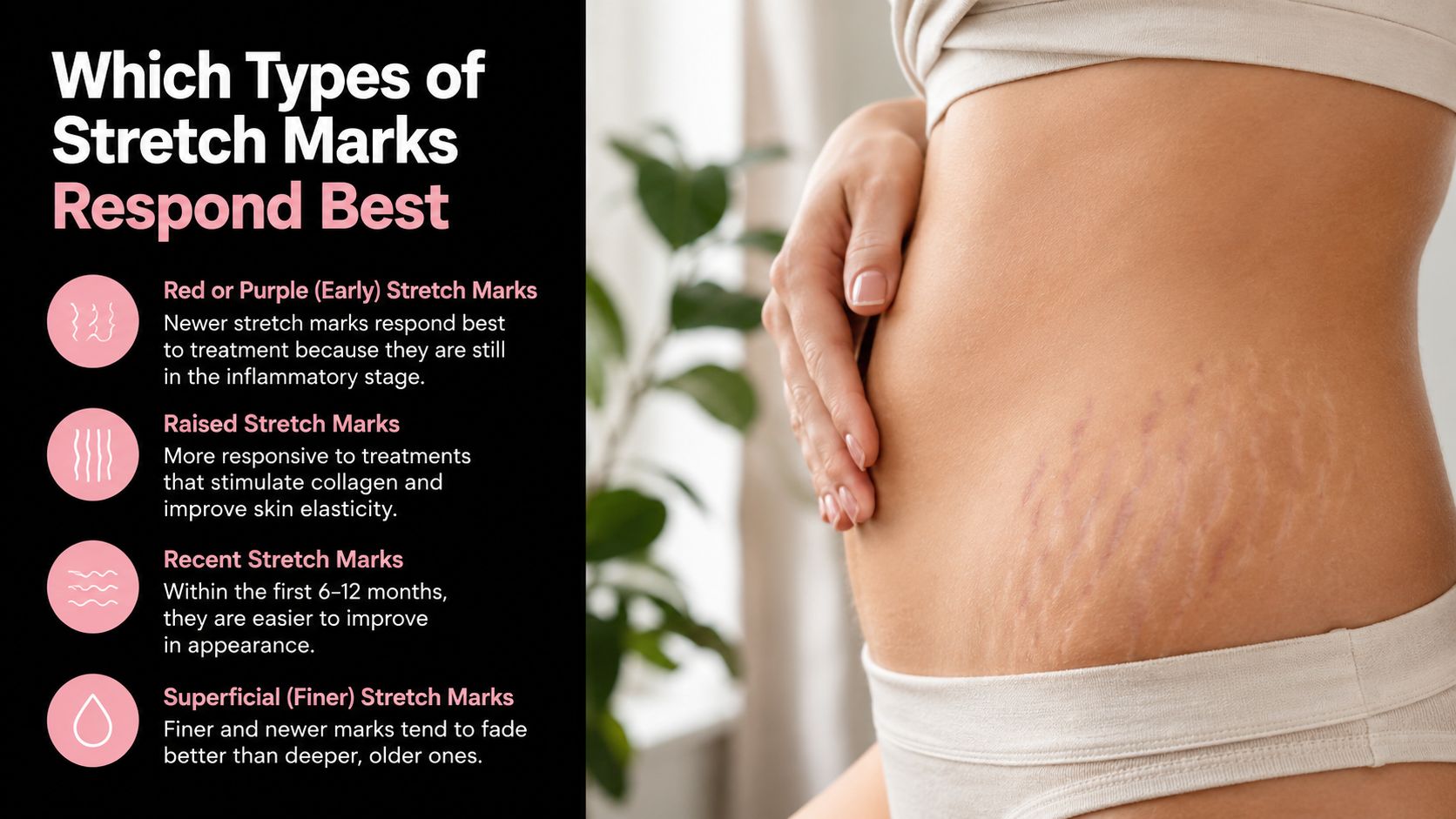
Newer marks may look red, pink, purple or darker than the surrounding skin. These are often called striae rubrae. Their visible colour reflects an earlier phase of change, when vascular activity and inflammation are more relevant. Older marks usually fade to white, silver or pale skin tones and may become flatter, wider or slightly depressed. These are known as striae alba, and their main problem is often altered dermal structure rather than redness.
Fractional CO2 is generally most relevant when the mark is mature and atrophic. Its controlled injury stimulates collagen remodelling and can help address thinness and uneven texture. That doesn't mean every white stretch mark will respond strongly. Depth, width, body location and the contrast with surrounding skin still matter.
Why CO2 isn't automatically first choice
A comparative study found that fractional CO2 improved lesions and texture, but long-pulsed Nd:YAG outperformed it for striae alba in some measures, according to the comparative evidence on fractional CO2 and stretch marks. That is an important correction to the idea that the most aggressive resurfacing treatment must be the best treatment.
Red or purple marks may need a vascular approach because colour is the dominant concern. A pulsed dye laser can be considered in appropriate cases, while CO2 may be more useful later if a mature mark has a persistent indentation or crepey surface. Some people need a combination plan, but combining treatments should follow assessment rather than a desire to intensify everything at once.
Look at the mark, not just the treatment name. A white indentation and a red streak are different clinical targets.
Your own mirror assessment can provide a starting point, but it can't replace examination. A clinician should check whether marks are stable, whether the surrounding skin is tanned or irritated, and whether your pigmentation risk makes a gentler modality more sensible.
How Many Sessions You Will Need and What Happens at Each One
Fractional CO2 for stretch marks is a course of treatment, not a single event. At the first appointment, the clinician should examine the marks, discuss your medical history and skin response, record your goals and take baseline photographs. Good photographs matter because improvement is gradual and small changes are difficult to judge from memory.
A typical session follows a clear sequence:
- Assessment and preparation: The area is cleansed, marked if needed and protected from avoidable heat or friction. A topical numbing cream is commonly applied before treatment, with the exact timing set by the clinic.
- Laser delivery: The practitioner passes the fractional CO2 handpiece over the affected skin. You may feel heat, prickling or a snapping sensation, followed by warmth similar to sunburn.
- Immediate care: The treated area is cooled and covered with the product recommended by the clinic. Redness, heat and swelling are common immediately afterwards.
- Healing period: The surface gradually darkens or flakes while the deeper collagen response continues. The visible surface settles before the structural remodelling is complete.
The treatment area determines how long the laser pass takes. Smaller areas may be quicker than larger body zones, so a clinic should give you a personalised estimate rather than treating a generic session length as a promise.
Building a sensible treatment calendar
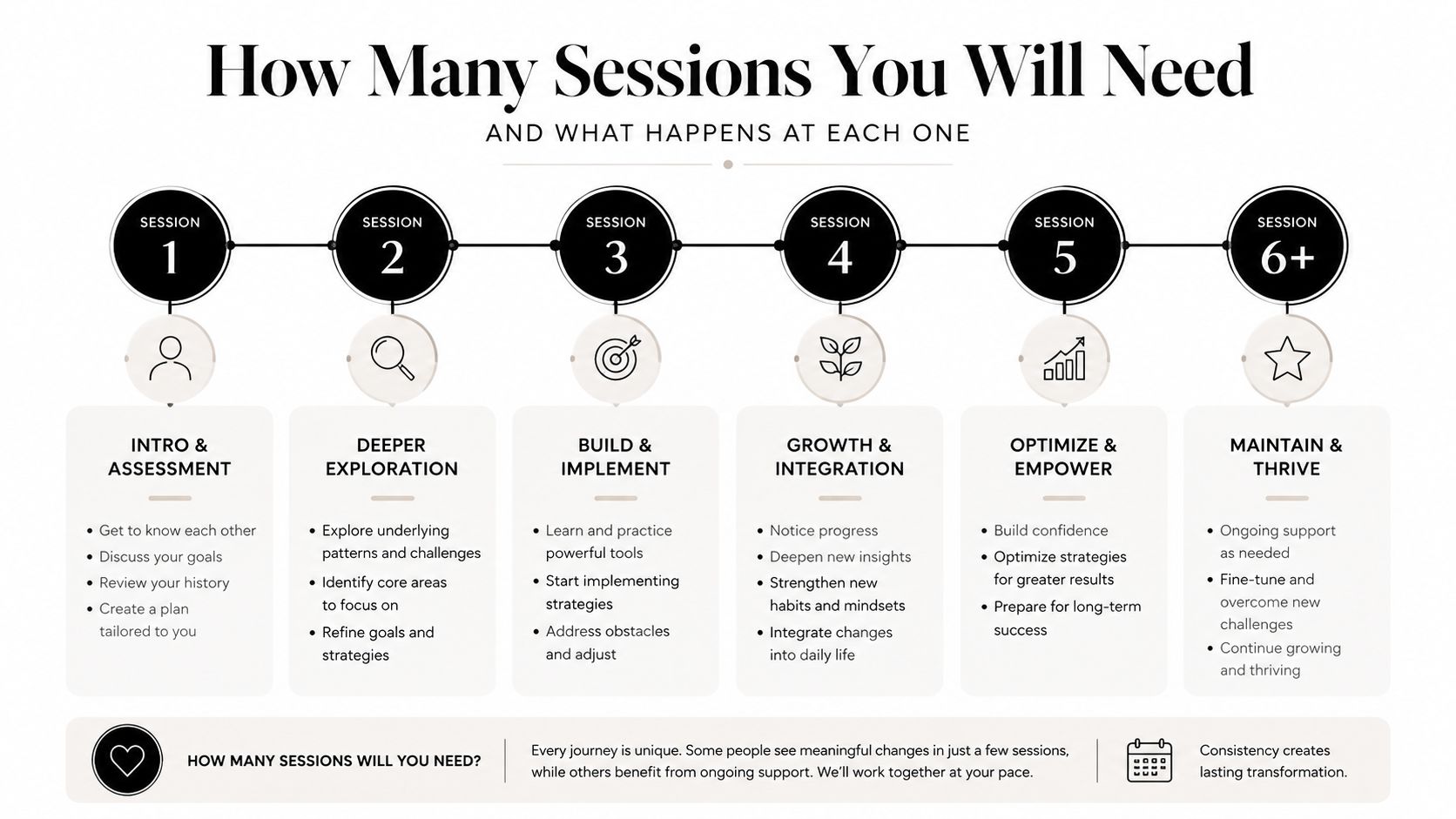
UK NHS-aligned protocols commonly translate into 2–3 sessions for stretch marks, often spaced months apart, as reflected in the NHS fractional CO2 scar guidance. The spacing gives the skin time to recover and remodel before another pass adds further controlled injury.
A 2022 randomised controlled trial used 3 fractional CO2 sessions and reported 51–75% clinical improvement in 70% of patients, providing one of the clearest quantitative benchmarks for this modality, as reported in the evidence summary of the trial. UK-facing clinics often frame 3–4 sessions as a realistic course, although your clinician may recommend fewer or more depending on the response and risk profile.
Plan around recovery, not just appointments. If your marks cover an area affected by clothing, work, exercise or holidays, ask how the proposed interval fits your routine. A course also means repeated aftercare, and the final result may continue developing after the last session.
How CO2 Compares to Microneedling and Other Lasers
Choosing a treatment depends on suitability, not a universal ranking. Fractional CO2 may produce stronger resurfacing, but that advantage must be weighed against downtime and pigment risk.
A recent meta-analysis found that fractional CO2 and microneedling both improved the appearance of striae distensae in over 70% of patients, with no significant difference in overall improvement or satisfaction. It also reported a higher risk of post-inflammatory hyperpigmentation with CO2, with a relative risk of 8.37, as detailed in the PubMed meta-analysis. If your skin pigments easily, microneedling may therefore be the more sensible starting point.
| Treatment | Best for | Realistic improvement | Downtime | Key risk |
|---|---|---|---|---|
| Fractional CO2 | Selected mature, atrophic marks with texture change | Softening of width, texture and contrast, not removal | Noticeable redness, swelling and surface shedding | Post-inflammatory hyperpigmentation and prolonged irritation |
| Microneedling | People seeking collagen stimulation with a less resurfacing-heavy approach | Appearance can improve, with overall results not significantly different from CO2 in the cited meta-analysis | Usually less intensive than ablative resurfacing | Pigment change, infection or scarring if technique and aftercare are poor |
| Pulsed dye laser | Red, pink or purple marks where colour dominates | Reduction in visible redness | Often limited surface recovery | Temporary swelling, bruising or colour change |
| Long-pulsed Nd:YAG | A potential option for mature white marks | Texture and visibility may improve | Depends on settings and treatment area | Burns or pigment alteration if poorly selected |
| Radiofrequency or other collagen treatments | People prioritising lower surface disruption | Gradual textural support | Often limited, but device-specific | Uneven heating or under-treatment |
CO2 suits some mature, indented marks with noticeable texture change. It does not erase stretch marks, restore completely normal skin, or guarantee a better result than microneedling. Skin tone, tanning, a history of hyperpigmentation, available recovery time and the clinician's experience should shape the decision.
For darker UK skin types, Fitzpatrick IV–V is not an automatic exclusion, but pigment risk deserves specific discussion. Conservative settings, careful candidate selection and reliable ultraviolet protection may affect whether the stronger resurfacing response is worth accepting.
Other lasers address different features. Pulsed dye laser is more relevant when redness dominates, while long-pulsed Nd:YAG may be considered for mature white marks. Radiofrequency treatments create less surface disruption but may offer more gradual textural support. The choice should match the mark, not the device label.
A separate procedure, such as laser wart removal treatment, treats a different condition and cannot show that the same laser is suitable for stretch marks.
Downtime and the Risks Worth Taking Seriously
The first week after fractional CO2 is easier to manage when you treat it as a visible healing phase rather than a minor facial treatment. The area can look red and swollen, feel hot or tender, then develop a bronzed or darker surface as treated cells dry and shed.
A practical recovery pattern may look like this:
- The first 24–48 hours: Redness, warmth and swelling can be prominent. Cool compresses and the clinic's recommended barrier product may make the area more comfortable.
- The following 3–5 days: Bronzing, roughness and flaking may appear as the microscopic treatment zones renew.
- After the surface settles: Pinkness can remain for a week or longer, depending on treatment intensity and individual healing. Your clinician should advise when mineral makeup or other products are appropriate.
The deeper risk discussion matters more than the inconvenience. Post-inflammatory hyperpigmentation, or PIH, occurs when healing skin produces excess pigment after inflammation. The meta-analysis cited earlier found a relative risk of 8.37 for PIH with CO2 compared with microneedling, so darker skin types deserve a direct conversation rather than a vague assurance that the treatment is safe for everyone.
What darker skin changes
Fitzpatrick IV–V skin isn't automatically excluded. It does require careful candidate selection, conservative settings and strict protection from ultraviolet exposure. A clinician should ask about previous pigment problems, recent tanning, active inflammation and how your skin healed after injuries or cosmetic procedures.
Over-aggressive treatment can also cause prolonged redness, infection or, rarely, scarring. Contact the clinic if pain worsens rather than improves, redness spreads, swelling becomes severe, blisters develop, or the area produces concerning discharge. Don't wait for a routine follow-up if the healing pattern seems abnormal.
A reputable consultation should explain the pigment risk in terms you can use, not hide it behind a promise of “minimal downtime”.
Looking After Your Skin Between Sessions
Aftercare protects the temporary injury created by fractional CO2 while the deeper collagen response develops. Treat the area like a surface with its protective roof partly removed: gentle handling gives the barrier time to rebuild.
Your first five days
Day one: Place cool compresses over the skin without applying pressure. Use plain petroleum jelly or the healing balm prescribed by your clinic. This occlusive layer helps limit water loss and shields the fragile surface.
Days two and three: Cleanse with lukewarm water and a bland cleanser. Avoid exercise, saunas, hot baths, friction and direct sunlight while the area remains reactive. Heat and sweat can worsen irritation, while ultraviolet exposure can encourage unwanted pigment.
Days four and five: Allow flaking to happen naturally. Scrubbing, pulling or picking at peeling skin can prolong inflammation and raise the risk of uneven colour or scarring.
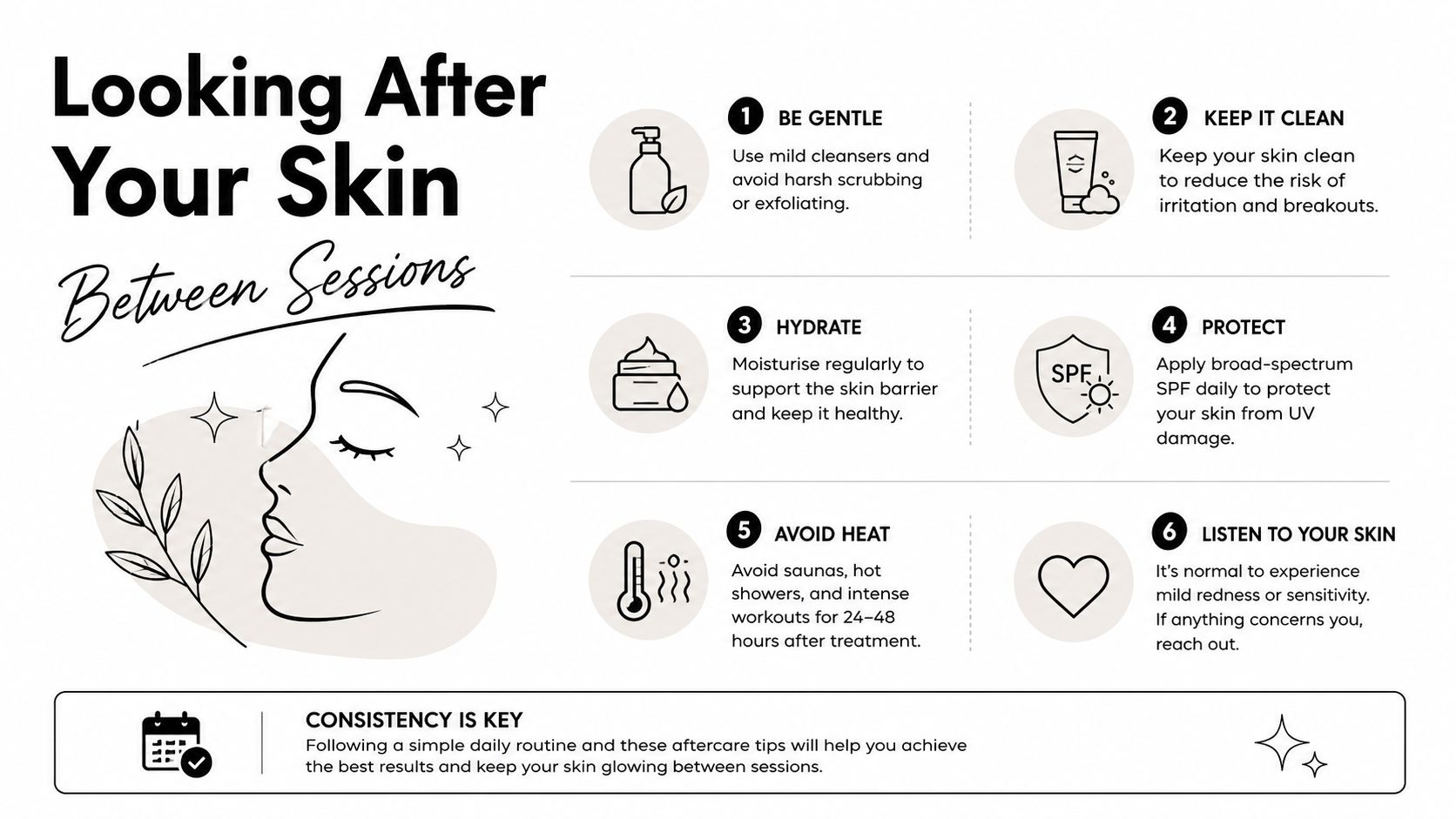
Once the initial phase has passed, use broad-spectrum SPF 50 and physical protection for several months. Newly healed skin and developing collagen remain sensitive to ultraviolet exposure, which can make colour differences harder to settle.
Wait for your clinician's approval before restarting retinoids, exfoliating acids or fragranced products. Some clinics may discuss supportive options such as Dermalux LED light therapy, but timing matters. Additional treatment should fit the healing process, not interrupt it. Follow the clinic's specific instructions if they differ from this general guide.
Is Fractional CO2 the Right Choice for You
The right choice depends on the mark, your skin and the commitment required. Fractional CO2 makes the strongest case when the main concern is mature, white, atrophic texture, and the aim is visible softening rather than complete removal.
A suitable candidate may have:
- Mature striae alba with indentation, thinning or a crepey surface.
- Fair-to-medium skin, or darker skin assessed by a clinician experienced in pigment-sensitive treatment.
- Stable marks and realistic expectations of 40–70% improvement after 3–4 sessions, based on UK clinical summaries rather than a guaranteed result, as described in this UK evidence-based treatment overview.
- The ability to follow aftercare and protect the area from ultraviolet exposure.
- Enough flexibility for repeated appointments and recovery periods over several months.
Consider other options if the marks remain red or purple. A vascular laser may target their dominant colour more directly. Treatment should also be postponed, or medically cleared, during pregnancy, with an active infection or inflammatory skin condition in the area, or after recent isotretinoin use. Your medical history matters more than a standard clinic package.
Questions to take to consultation
Ask the clinician to explain the recommendation and how it fits your skin.
- Which device and energy settings will you use, and why are they suitable for my skin tone and mark type?
- How much experience do you have treating stretch marks specifically, rather than acne scars or facial resurfacing alone?
- Can I see before-and-after photographs of people with similar skin colour, body area and stretch-mark maturity?
Ask what happens if redness or pigmentation lasts longer than expected, who provides follow-up, and whether the course can be reviewed after the first response. A careful provider should also discuss microneedling, Nd:YAG or vascular treatment when those choices offer a better balance, particularly for darker UK skin types where pigment changes deserve serious consideration.
If you are local, 3D Aesthetics Leamington Spa lists fractional CO2 through its 3D Vjuve service for body concerns including stretch marks. Its description refers to collagen remodelling to improve colour, depth and overall appearance. Include it in a comparison, not as a substitute for an independent suitability assessment.
The decision is about trade-offs. CO2 may improve texture meaningfully in the right mature mark, while microneedling may provide comparable overall improvement with a lower pigment-risk profile in the cited evidence. Other lasers may suit a different colour or skin profile. A good consultation should leave you clear about the possible gain, recovery demands and reasons to choose another treatment.
If you're local, 3D Aesthetics Leamington Spa offers a complimentary consultation to discuss your skin type, mark maturity and options. The clinic can assess your concerns with its 3D body scan and explain how its 3D Vjuve fractional CO2 service may fit a personalised plan.
← Back to Home