
Are you hoping ultrasonic cavitation will make the scales drop, when the result you want is a smaller waist or a smoother outline? That distinction explains much of the confusion around this treatment. Online before-and-after images often make local contouring look like general fat loss, while a tape measure, clothing fit and body composition can tell a different story from body weight.
So, does ultrasonic cavitation work? The most accurate answer is yes, it can support measurable, localised inch loss, but it isn't a treatment for obesity or substantial overall weight reduction. A peer-reviewed study involving researchers at Brighton and Sussex Medical School found that a four-week protocol combining ultrasound cavitation with cryolipolysis produced statistically significant reductions in body fat mass, weight, BMI and abdominal circumference compared with a control group. However, the combination wasn't better than cryolipolysis alone, which is an important limit when interpreting the result. The study is available through PubMed.
That makes cavitation more like tailoring a garment than changing your entire wardrobe. It may refine a stubborn area of subcutaneous fat, particularly when you're already close to a stable target weight, but it won't replace nutrition, movement or a clinically appropriate weight-management plan.
The question behind the question
Most first-time clients want to know three things:
- Will I lose inches? Evidence supports the possibility of local circumference improvement, although results vary and are usually modest.
- Will I lose weight? That isn't the right primary measure. One randomised trial found no statistically significant difference in body weight or BMI between cavitation, cryolipolysis and diet-only groups after two months, although the cavitation group improved waist circumference and suprailiac skinfold more than diet alone. The trial is indexed by Wiley Online Library.
- Will the change last? The evidence is less settled here. Long-term UK data on maintenance, ideal spacing and combined protocols remains limited, so a responsible clinic shouldn't promise permanent results from a single visit.
The most useful way to assess progress is to track progress beyond the scale. This guide separates temporary circumference changes from deeper tissue changes, explains what the research measured, and compares cavitation with cryolipolysis, HIFU and radiofrequency. The aim is straightforward: help you decide whether ultrasonic cavitation is a sensible first step for your goal or a niche contouring option with limited value.
Table of Contents
- The question behind the question
- How Ultrasonic Cavitation Works Inside Your Body
- What Clinical Evidence Says About Real Results
- What a Typical Treatment Course Looks Like
- How Cavitation Compares to Cryolipolysis HIFU and RF
- Who Is a Good Candidate and Safety to Consider
- Your Next Steps to Lasting Inch Loss Results
How Ultrasonic Cavitation Works Inside Your Body
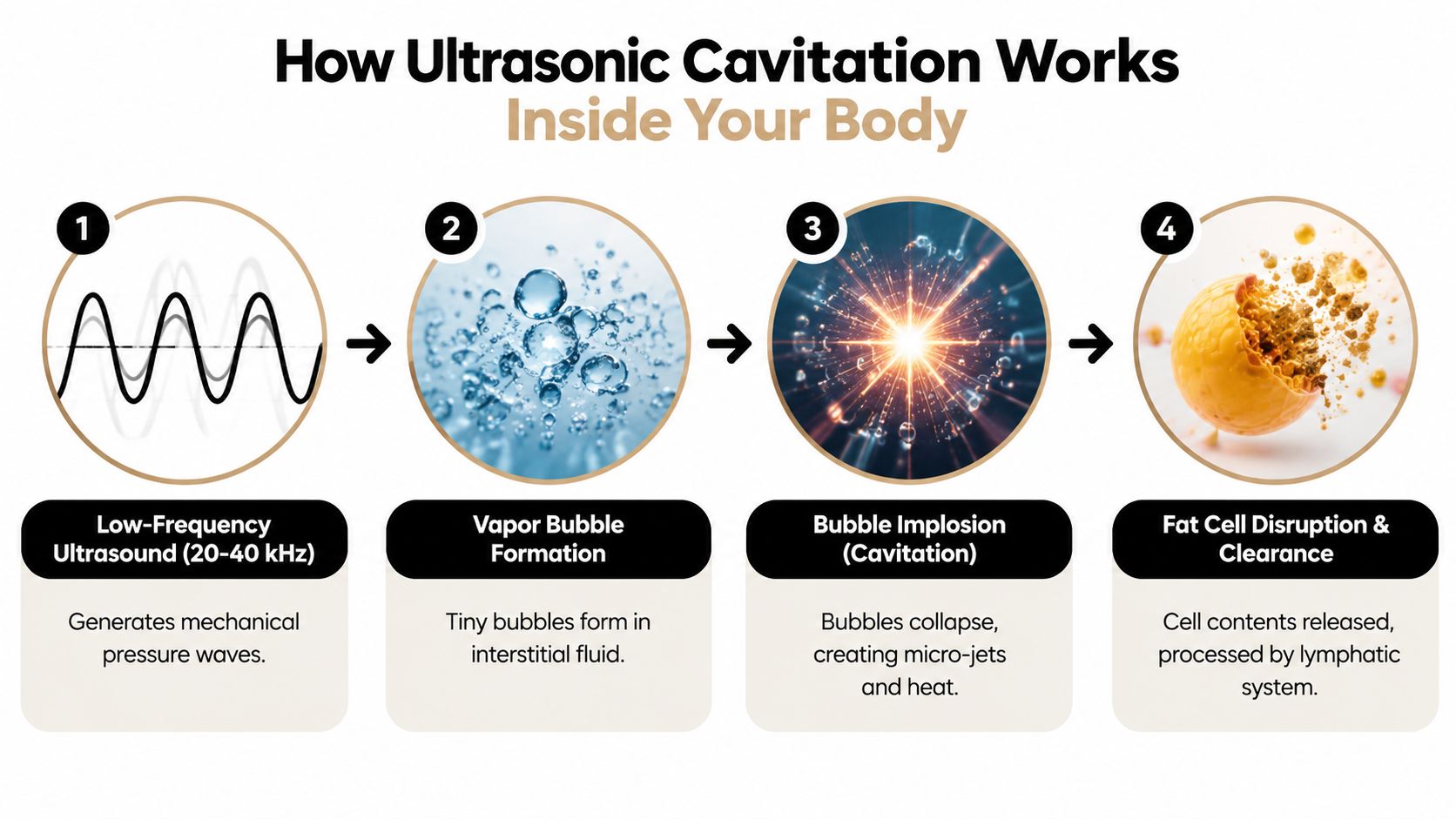
Ultrasonic cavitation uses low-frequency ultrasound delivered through a handpiece placed against the skin. The waves create mechanical pressure in the fluid surrounding fat cells. At the right settings, small bubbles form, expand and collapse. The process is called cavitation because the effect comes from those rapidly changing bubbles, not from a blade, needle or surgical instrument.
A simple analogy is a cluster of tiny balloons repeatedly squeezed by sound waves. When the pressure changes quickly enough, some balloons collapse forcefully. Around a fat cell, that mechanical stress can disrupt the cell membrane and release some of its contents into the surrounding tissue.
From sound wave to treated fat layer
The process is easier to understand as a sequence:
- The device sends pressure waves into the subcutaneous layer. This is the pinchable fat beneath the skin, not the deeper visceral fat surrounding internal organs.
- Bubbles form in the interstitial fluid. Their size and behaviour depend on the equipment, frequency, power and tissue conditions.
- The bubbles collapse. Their implosion creates local mechanical forces that may stress adipocyte membranes.
- The cell releases stored contents. Triglycerides and other cellular material move into the surrounding tissue, where the body processes them through normal metabolic and lymphatic pathways.
The practical distinction: cavitation targets a local fat layer for contouring. It doesn't provide whole-body fat loss, and it can't directly treat visceral fat.
A 2013 histological and ultrastructural study reported a significant reduction in abdominal fat and a marked reduction in subcutaneous fat-cell size after ultrasound-induced cavitation. The authors concluded that the treatment could substantially reduce subcutaneous fat and adipose cell size, while the tissue-level findings also explain why changes tend to develop gradually rather than appearing as dramatic weight loss after one appointment. Read the full study in the National Library of Medicine.
Why the body needs time
Once the membrane is disrupted, the body still has to handle the released material. That clearance isn't an instant “flush”, and the speed of response varies between people. Hydration and gentle movement are commonly included in aftercare because they support normal circulation and lymphatic activity, but they shouldn't be presented as a guarantee of faster fat removal.
The treatment also doesn't remove every fat cell in an area. Remaining cells can enlarge if body weight rises, which is why lifestyle stability matters. In practical terms, cavitation can alter the shape of a local area, but it doesn't make future weight gain impossible.
What Clinical Evidence Says About Real Results
Does ultrasonic cavitation create lasting fat loss, or only a temporary change in measurements? Clinical research offers a clearer answer than promotional photographs because it separates what changed from what did not. Studies may assess body weight, BMI, circumference, skinfold thickness or body fat mass, and these measures can tell different stories.
A smaller treated area can appear before a noticeable change in overall body weight. The tape measure records one region, while the scales combine every part of the body. This makes circumference a useful outcome for contouring, but it does not make cavitation a whole-body weight-loss treatment.
What the studies found
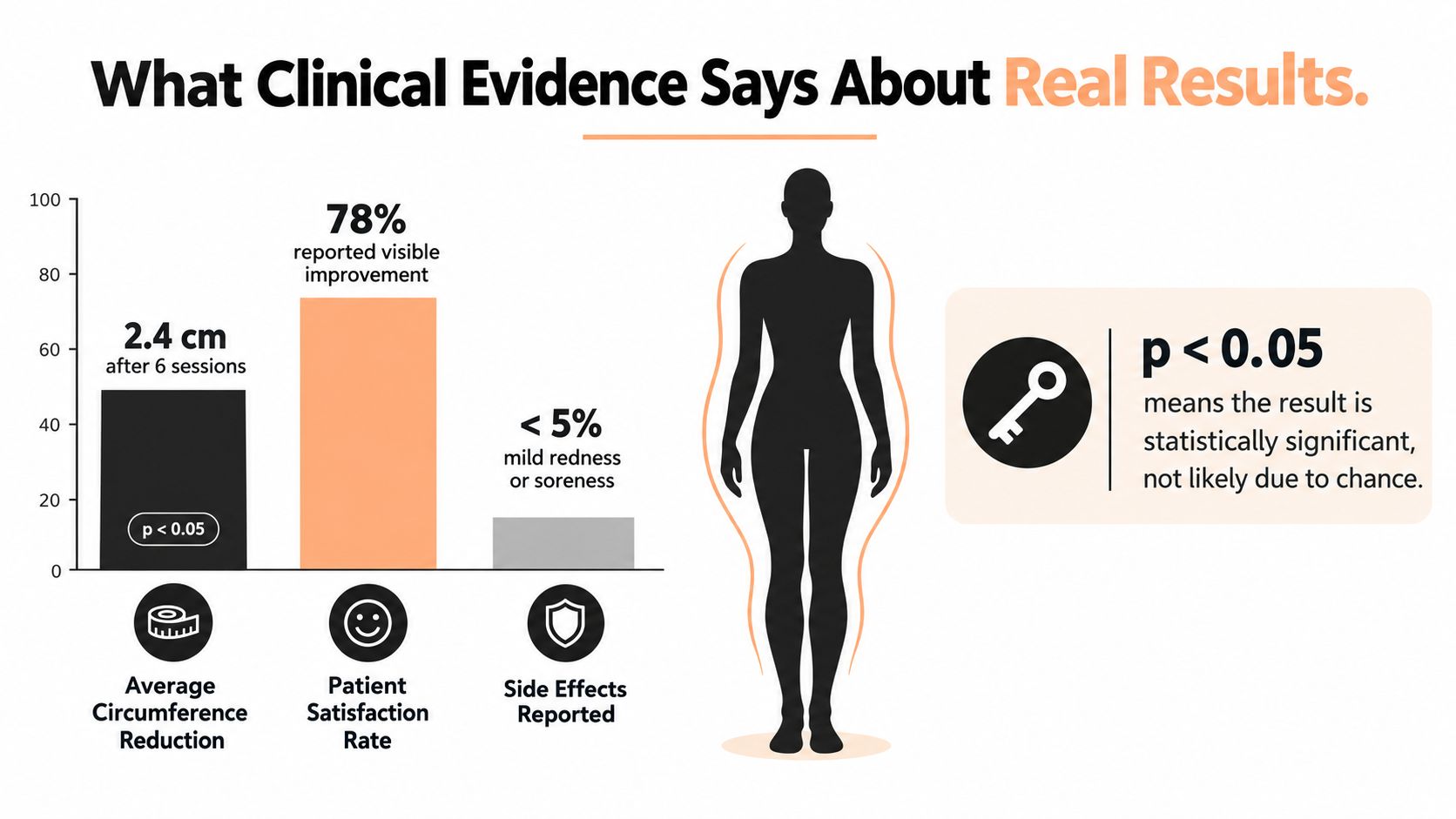
The Brighton and Sussex Medical School study followed a four-week protocol involving ultrasound cavitation and cryolipolysis. Compared with a control group, the combination produced statistically significant reductions in body fat mass, weight, BMI and abdominal circumference, with all reported probability values below 0.01. The measured differences were unlikely to be explained by random variation alone. PubMed provides the study details.
The result still has limits. The combination treatment didn't outperform cryolipolysis alone, so it does not prove that adding cavitation creates a superior outcome. It supports cavitation as one part of a contouring protocol, while showing that combining technologies is not automatically better.
A separate randomised controlled trial compared ultrasound cavitation plus diet, cryolipolysis plus diet and diet alone in adults with a BMI over 30. After two months, body weight and BMI showed no statistically significant difference between the groups. The cavitation group did show greater improvement in waist circumference and suprailiac skinfold than diet alone. The trial record is available through Wiley Online Library.
How to interpret “significant”
“Statistically significant” describes the study result, not a guaranteed visible transformation. It means the observed difference met the researchers' statistical threshold. A finding can be statistically reliable while remaining modest in everyday terms, and a p-value does not predict how many centimetres one individual will lose.
The measurement method matters too. Photos can be affected by lighting, posture, camera angle and clothing. Consistent tape measurements, skinfold readings or a 3D scan provide a more controlled way to assess change across a treatment course.
The evidence supports a focused conclusion: cavitation may assist local contouring and circumference reduction, particularly alongside suitable lifestyle support. It does not establish cavitation as a primary treatment for obesity, and it does not show that every combined protocol improves on a supported standalone option. Review this guide to ultrasound cavitation results before deciding whether a consultation fits your goals.
What a Typical Treatment Course Looks Like
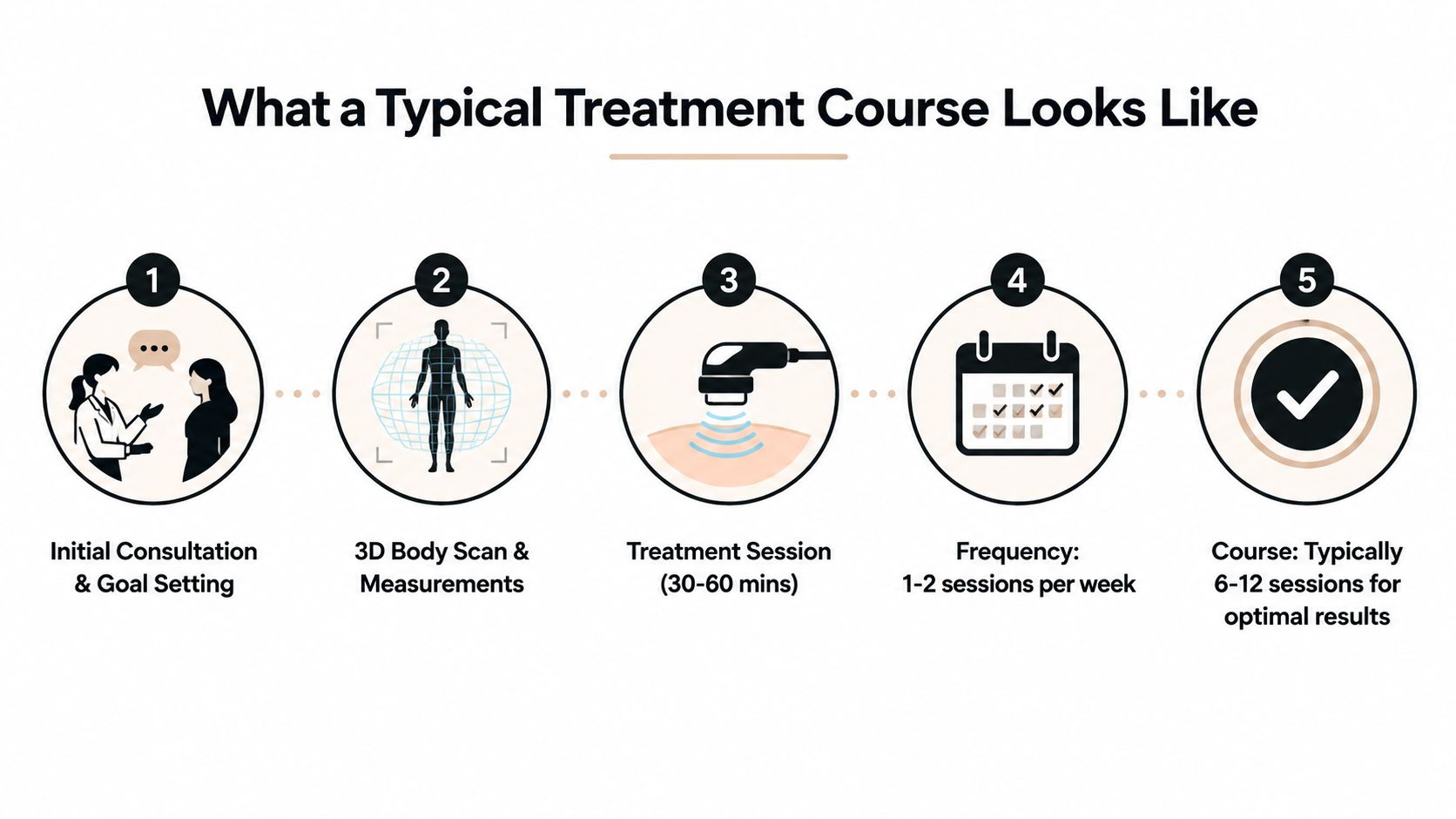
A realistic course begins with assessment rather than a promise. A practitioner should discuss the area bothering you, your weight stability, medical history and the kind of change you want. If your goal is substantial weight loss, the conversation should redirect towards appropriate medical or lifestyle support instead of presenting cavitation as a shortcut.
At 3D Aesthetics Leamington Spa, a consultation can include a 3D body scan to record the starting shape and create a reference for later measurements. A scan won't make the treatment work, but it can reduce reliance on memory and mirror impressions, particularly when changes develop slowly.
What happens during appointments
The therapist normally identifies the agreed treatment zone, applies suitable contact medium and moves the applicator across the skin. Clients may notice warmth, pressure or an audible buzzing sensation. Because the treatment is non-surgical, there are no incisions or anaesthetic injections, although the exact sensation depends on the equipment and individual sensitivity.
Session frequency should be set by the practitioner, not copied from an online package. Published protocols use repeated appointments, while UK clinic guidance commonly frames cavitation as a course rather than a single treatment. The reason is biological: the body needs time to process the tissue changes between appointments, and the final appearance may continue to settle after the last session.
A useful progress record includes:
- The same measurement points: Marking the waist or thigh differently each time can create misleading results.
- Consistent photographs: Similar lighting, posture and clothing make comparisons more useful.
- The treated area: A local response doesn't imply a whole-body change.
- Your weight trend: Not as the only measure, but as context for interpreting circumference changes.
- Your comfort and skin response: Report unusual or persistent symptoms promptly.
Supporting the result
Aftercare should be simple and realistic. Drink normally, follow the clinic's specific guidance, keep moving gently if you feel comfortable and continue the eating pattern that supports your wider health goals. Avoid treating hydration as a detox promise. Water supports normal body function, but it can't guarantee a particular amount of fat loss.
The most honest timeline is gradual. Early changes may reflect normal variation, tissue response or temporary fluid shifts, while later measurements provide a better indication of local contouring. Because high-quality UK evidence on long-term retention and maintenance spacing remains limited, ask whether the provider recommends review appointments and what evidence supports any proposed top-up plan.
How Cavitation Compares to Cryolipolysis HIFU and RF
Which concern are you trying to change: a pinchable fat pocket, loose skin, or uneven texture? These goals can overlap visually, but each treatment targets tissue differently. The right comparison is less about finding a universal winner and more about matching the tool to the job.
Cavitation uses low-frequency sound-wave energy to create mechanical pressure around localised subcutaneous fat. Cryolipolysis uses controlled cooling to target a defined fat deposit. Body HIFU delivers focused ultrasound into selected tissue depths, with the intended effect depending on the device and protocol. Radiofrequency, or RF, heats tissue and is more commonly chosen for skin laxity, texture or cellulite-related concerns than as a direct fat-reduction treatment.
| Treatment | How It Works | Best For | Downtime |
|---|---|---|---|
| Ultrasonic cavitation | Uses low-frequency ultrasound to create mechanical pressure around localised subcutaneous fat | People seeking non-surgical contouring of a pinchable fat pocket | Usually little or no planned downtime, subject to practitioner advice |
| Cryolipolysis | Uses controlled cooling to target a local fat deposit | A defined pocket where a longer, gradual response is acceptable | Usually limited, though temporary local sensations can occur |
| Body HIFU | Delivers focused ultrasound energy into selected tissue depths | Carefully assessed contouring or tissue-tightening goals, depending on the device | Often limited, but protocol and treatment area matter |
| Radiofrequency | Uses electromagnetic energy to heat tissue | Skin laxity, texture and cellulite-related concerns | Usually limited, with treatment-specific precautions |
The treatment course also differs. Cavitation is commonly planned as a series of appointments, while cryolipolysis may focus on a smaller number of treated areas followed by a slower response. HIFU and RF schedules depend heavily on the device, treatment depth and whether the aim is contouring or skin tightening. Ask for the proposed number of sessions, the expected review point and the full course cost rather than comparing a single appointment price.
Cavitation may suit someone seeking a modest circumference change without surgical recovery. That early change should not automatically be read as permanent fat-cell reduction. A lasting result depends on what the treatment changes, how the body responds and whether measurements remain stable after the course.
As covered in the evidence section, the combination trial showed no advantage over cryolipolysis alone. Adding technologies does not automatically produce a better contour, so each part of a plan should have a clear purpose.
RF may be more relevant when loose skin or surface texture dominates. HIFU can be considered when focused energy or tissue tightening is the stated goal, but the device and protocol need careful explanation. For a broader overview of non-surgical fat removal options in the UK, compare the intended target, sensation, session plan and follow-up before choosing.
Who Is a Good Candidate and Safety to Consider
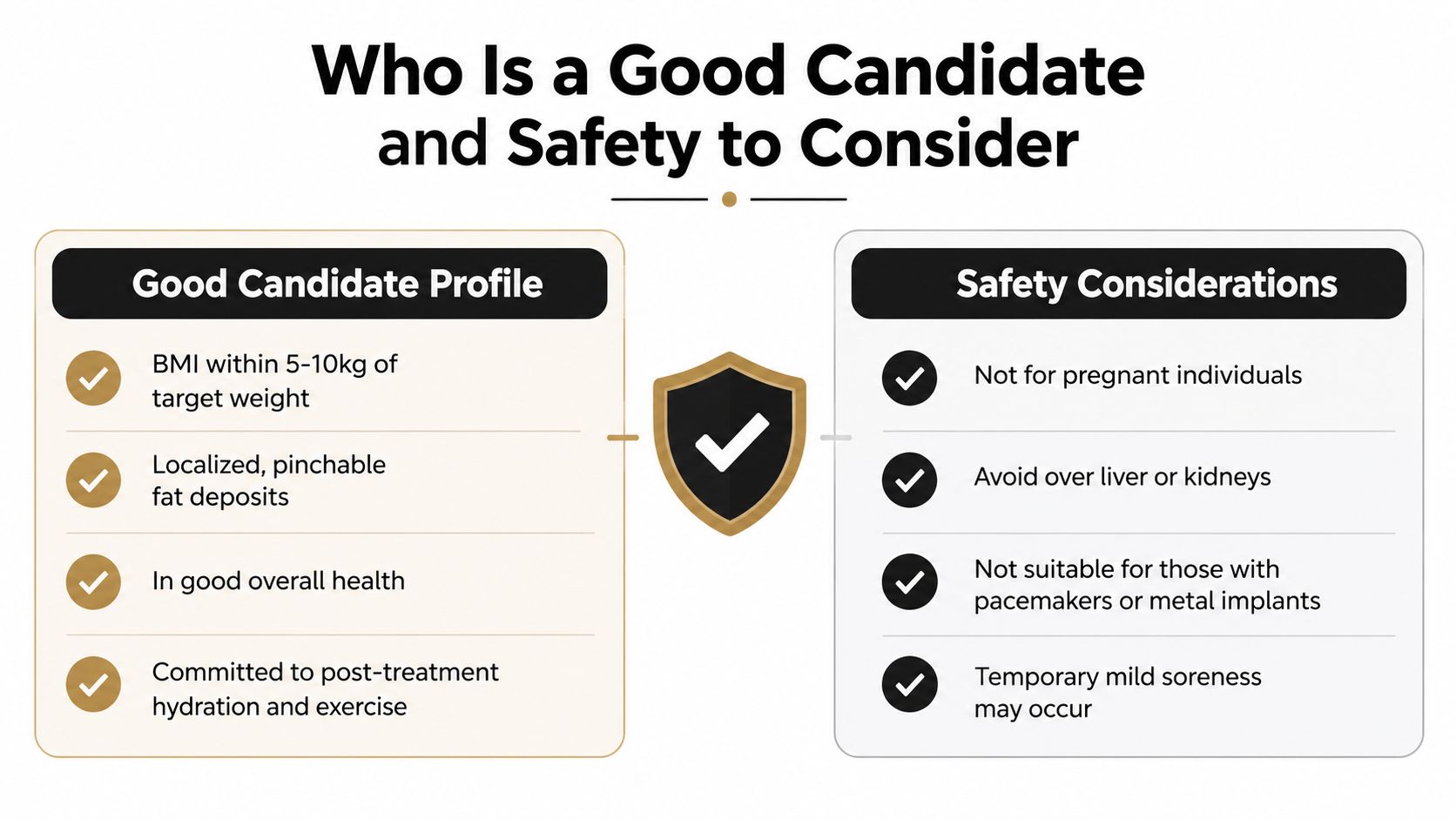
A good candidate usually wants local refinement, not a major change on the scales. The target area should contain pinchable subcutaneous fat, and your weight should be reasonably stable. If your abdomen is changing because of significant overall weight loss, pregnancy, swelling or another medical issue, a clinician should assess the cause before any cosmetic treatment.
Cavitation is less suitable when the main concern is visceral fat, which sits deeper inside the abdomen and can't be reached as a simple surface contouring target. It's also a poor fit for anyone expecting a visible transformation after one appointment or hoping to use the treatment instead of evidence-based weight-management care.
A practical suitability check
Before booking, ask yourself:
- Is the concern localised? Can you identify a specific, pinchable area rather than a general wish to lose weight?
- Is your weight stable? Large ongoing changes can make it difficult to judge a contouring result.
- Are you medically well enough for treatment? A full history matters even when a procedure is non-invasive.
- Can you accept gradual, modest change? The studies support measurable local outcomes, not a guaranteed dramatic transformation.
- Will you maintain the result? Remaining fat cells can enlarge with weight gain, so treatment doesn't remove the need for healthy habits.
Medical screening matters
Don't book without disclosing pregnancy or breastfeeding, implanted electronic devices, metal implants, liver or kidney conditions, active infection, significant inflammation or any prescribed medication that may affect treatment suitability. The exact contraindications depend on the device and your circumstances, so a qualified practitioner must make the final decision.
Possible short-term responses can include warmth, redness, tingling, tenderness or mild soreness. These effects should be discussed before treatment, including what is considered normal and when to contact the clinic. Seek medical advice for severe, worsening or unexpected symptoms rather than assuming they're part of the process.
Questions worth asking
A responsible consultation should answer:
- What tissue is this device intended to target?
- How will you measure change beyond photographs?
- What result is realistic for my area and starting point?
- Why do you recommend this course length and spacing?
- What evidence supports any combination with RF, HIFU or cryolipolysis?
- What happens if measurements don't change?
- Is maintenance advised, and what is known about long-term durability?
The last question deserves particular attention. Existing evidence leaves gaps around repeated sessions, maintenance schedules and long-term UK outcomes. A transparent practitioner will acknowledge uncertainty rather than turn it into a guarantee.
Your Next Steps to Lasting Inch Loss Results
Ultrasonic cavitation can be a reasonable option if you want modest, localised contouring and understand that the result is measured in the treated area, not by a dramatic fall in body weight. The strongest case is a stable client with a specific subcutaneous fat pocket, realistic expectations and a willingness to support the result through everyday habits.
Start with an assessment, not a package. Ask for a clear explanation of the target tissue, the proposed course, the measurement method and the alternatives. A 3D scan or consistent tape measurements can help you compare like with like, and body measurement tracking is more useful than relying on a single mirror check.
Maintenance should be discussed openly because long-term evidence remains limited. If your weight changes, the treated area's appearance may change too, and a provider shouldn't describe cavitation as protection against future fat gain.
If you're based near Warwickshire, 3D Aesthetics Leamington Spa offers consultations with 3D body scanning and non-surgical options including ultrasound cavitation, cryolipolysis, body HIFU and radiofrequency. Visit 3D Aesthetics Leamington Spa to arrange a consultation, compare the options for your specific concern and decide whether cavitation fits your goals.
← Back to Home