
Shockwave therapy in the UK typically costs £60 to £250 per session, with common courses of 3 to 6 sessions, so a realistic budget for a full course sits between £240 and £1,500 before any consultation fee.
That's the figure many people want when they start comparing clinics. They've searched for shockwave therapy, opened two price lists, and found that one clinic charges a modest session fee while another appears to charge several times more. The natural question is, “Which one is overcharging?”
Usually, that's the wrong first question. Shockwave therapy is a package purchase, not a per-session commodity. The final bill depends on the assessment, the machine used, the treatment area, the number of appointments recommended, and what the clinic includes after each session.
Table of Contents
- Why Shockwave Therapy Pricing Feels Confusing at First
- What Shockwave Therapy Actually Is and Why the Device Matters
- The Five Factors That Move Your Final Bill
- Real-World Pricing Scenarios You Can Compare Against
- What Results to Expect and Whether the Cost Justifies Them
- Smart Questions to Ask Before You Book a Course
- Getting a Clear Answer on Shockwave Therapy Value
Why Shockwave Therapy Pricing Feels Confusing at First
You might find one clinic advertising a session for £75 and another listing treatment at £180. Both may use the words “shockwave therapy”, yet their quotes can describe very different services.
The cheaper price might cover only the treatment time. The higher price might include a more detailed assessment, a different device, a longer appointment, a more experienced practitioner, or a review plan. Until you compare those details, the two prices aren't like-for-like.
UK pricing varies widely. A clinic-level review places typical private treatment across the UK between £60 and £250 per session, while private healthcare in London can sit between £120 and £180 per session, depending on the condition, machine type, and practitioner experience. The same review lists common course totals of £240 for 3 sessions and £420 for 6 sessions. You can review those pricing examples in this UK shockwave therapy cost guide.
Compare the course, not the headline
Suppose a clinic quotes a low single-session fee but recommends several visits and charges separately for the first assessment. Another clinic may look more expensive per appointment but include assessment and follow-up in a defined package.
The second option can be better value, even before you consider convenience. You're paying for a treatment pathway rather than buying isolated appointments with no clear endpoint.
Ask every clinic to put these details in writing:
- Assessment: Is the first consultation included, or charged separately?
- Treatment plan: How many sessions does the practitioner expect you to need?
- Device: Will the clinic use focused or radial shockwave?
- Appointment length: Does the advertised price cover the full planned treatment?
- Aftercare: Are reviews, advice, or additional products included?
Practical rule: Don't accept a session price as a complete quote. Ask for the estimated cost from assessment through to the final review.
That approach also makes it easier to identify a clinic that communicates clearly. A transparent provider should be able to explain why its price differs from another clinic's without hiding behind vague claims or a limited-time offer.
What Shockwave Therapy Actually Is and Why the Device Matters
Shockwave therapy uses acoustic energy pulses delivered into tissue. A trained practitioner applies the treatment to a targeted area, with the intention of stimulating a local response in the tissue. Clinics use it in musculoskeletal care and also market it for concerns such as cellulite and body contouring.
The word “shockwave” doesn't identify one single machine. The two broad categories you're most likely to encounter are focused shockwave therapy, often abbreviated as fESWT, and radial shockwave therapy, or rESWT.
Focused and radial devices work differently
Focused shockwave directs energy towards a deeper, more specific point. It's commonly associated with orthopaedic and physiotherapy treatment, where the practitioner needs to target tissue beneath the surface.
Radial shockwave spreads energy outwards from the applicator and acts more superficially. Clinics often use it for broader treatment areas, including aesthetic applications and body-contouring protocols. That doesn't make radial treatment automatically inferior. It means the device and treatment method need to match the concern being assessed.
| Feature | Focused Shockwave Therapy (fESWT) | Radial Shockwave Therapy (rESWT) |
|---|---|---|
| Energy delivery | Concentrated towards a selected depth | Spreads outwards from the applicator |
| Typical use | Targeted musculoskeletal treatment | More superficial or broader treatment areas |
| Treatment planning | Requires careful targeting | Often suited to wider surface areas |
| Pricing impact | Can command a higher fee because of the equipment and targeting | May be offered at a lower session price |
| What to ask | Why is focused treatment appropriate for your condition? | Is radial treatment suitable for the result you want? |
A lower price isn't proof that a clinic uses a weaker service, and a higher price isn't proof that the treatment will work better. The important question is whether the practitioner has selected the right technology and protocol for your specific goal.
For clinic owners and practice managers, the same clarity should appear in patient-facing pages and booking journeys. Resources such as playbooks for physiotherapy practices can help practices communicate services and expectations more effectively.
The assessment is part of the value
A reputable clinic should assess the area before recommending a course. Some providers charge a separate assessment fee, while others include it in the first treatment. UK examples show an initial assessment can add £50 to £100 before treatment begins, meaning a course that appears to cost £240 could reach £310 once the consultation is included. Those figures are reflected in the provider pricing examples from Practice Plus Group.
For cosmetic concerns, ask how the clinic will measure progress. A consultation-led approach, such as the assessment process described for shockwave therapy for cellulite, gives you a clearer basis for deciding whether the proposed course is proportionate to the result you want.
The Five Factors That Move Your Final Bill
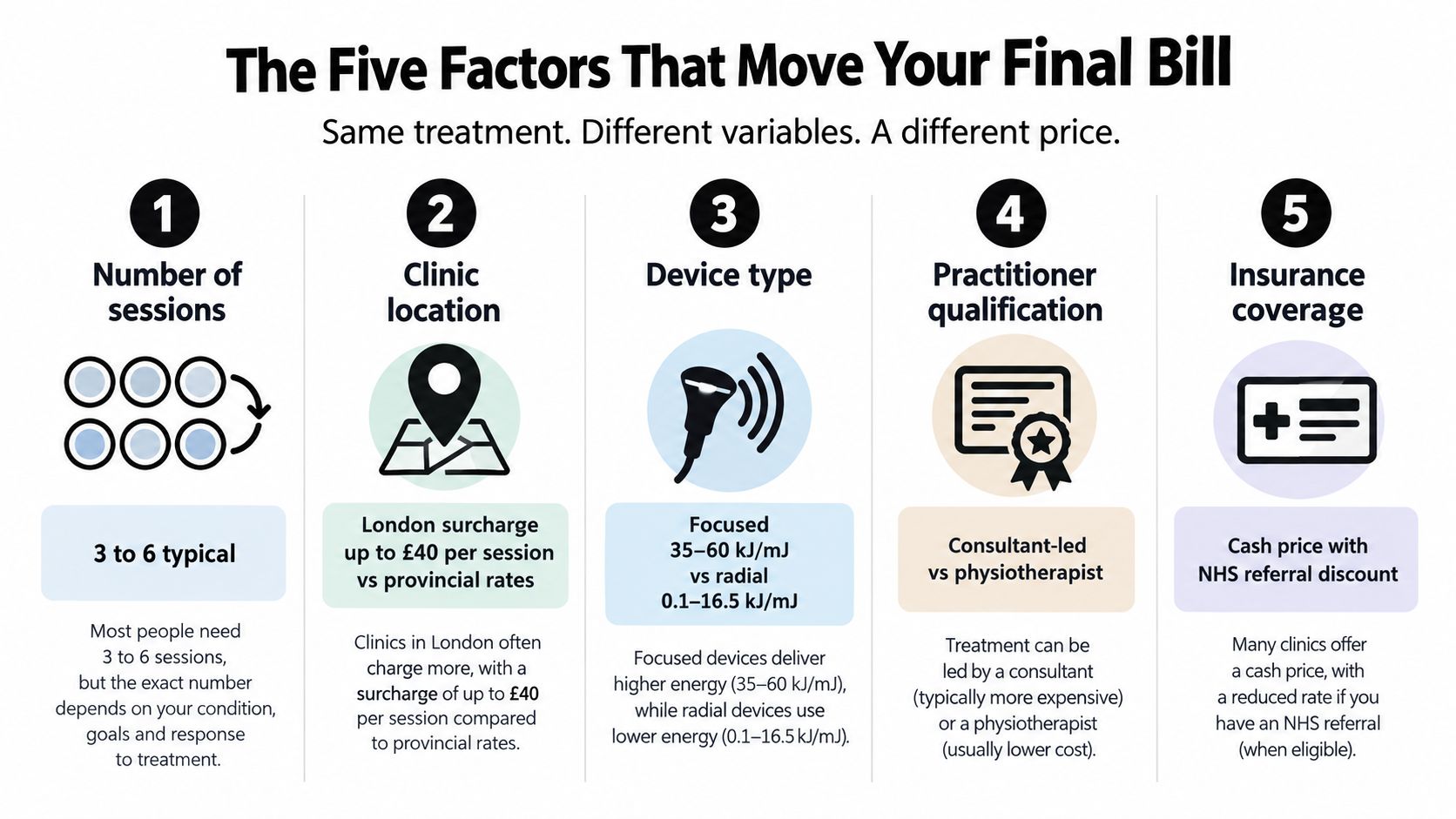
The final shockwave therapy cost comes from several decisions made before the first appointment. The session fee is only one of them.
1. Number of sessions
The treatment plan matters more than the advertised entry price. A lower fee repeated across a longer course can cost more than a higher fee attached to a shorter, clinically justified plan.
Don't let a clinic promise an indefinite series of sessions. Ask what the practitioner expects to assess at each review and what would justify continuing.
2. Treatment area
A small, clearly defined area usually takes less appointment time than a broad body-contouring treatment. Clinics may price according to the area, the time required, or the number of zones treated.
That's why two people can receive different quotes from the same provider. The difference may have nothing to do with a different base fee. It may reflect the surface area, the preparation required, and the time needed to apply the device consistently.
3. Location and practitioner experience
Location affects overheads, and practitioner experience affects how the appointment is assessed and delivered. London private treatment can sit at the upper end of UK pricing, while regional clinics may publish lower fees.
You should care less about whether a clinic is in a city centre and more about who will assess you, who will operate the device, and whether that person can explain the treatment plan in plain English.
4. Package pricing
Package billing can make the total easier to understand, provided the clinic defines what's included. One London hospital lists shockwave therapy at £140 per session or £395 for a 3-session package, giving the patient a clear comparison between individual and bundled pricing. The published shockwave therapy pricing from HJE illustrates why you should request both figures.
A package should never pressure you into buying more treatment than the practitioner has recommended. You should know the cancellation policy, expiry terms, and refund position before paying upfront.
5. Add-ons and aftercare
The invoice may include assessment, follow-up reviews, topical products, garments, or other aftercare. Some items may be useful, but they shouldn't appear as surprises after you've committed to treatment.
Request a written quote with separate lines for treatment, assessment, reviews, and optional products. That format lets you remove extras you don't need without losing sight of the core course price.
Real-World Pricing Scenarios You Can Compare Against
A low session fee can hide an expensive course. Compare the complete package, including assessment, device type, follow-up, and optional aftercare, before deciding which quote offers better value.
Two six-session examples show how the totals differ. A regional private centre lists £90 per session, while a London hospital lists £140 per session. These figures provide comparison points, not fixed prices for every clinic.
| Line item | Regional private clinic example | London specialist clinic example |
|---|---|---|
| Six treatment sessions | £540 | £840 |
| Assessment | May be separate | May be separate |
| Package option | Ask the clinic for its course price | Published 3-session package available |
| Follow-up review | Confirm before booking | Confirm before booking |
| Optional products or aftercare | Confirm before booking | Confirm before booking |
| Estimated core treatment spend | £540 before any separate fee | £840 before any separate fee |
The regional quote may suit someone seeking a targeted private pathway at a lower core treatment cost. The London quote may suit someone who values a specialist setting, a central location, or a particular practitioner. The higher price does not prove better treatment, and neither quote confirms that shockwave therapy is appropriate before assessment.
Read the invoice line by line
Treat shockwave therapy as a package purchase, not a commodity sold by the session. A clear quote should show the assessment, treatment sessions, device used, follow-up reviews, and any optional products as separate lines.
Practice Plus Group lists an assessment at £65 to £100 in its provider pricing information, while the regional private centre example lists a shockwave session at £90. Those figures explain why a seemingly cheap course can cost more once diagnosis and planning are included.
Ask whether the review carries a separate charge, whether products are optional, and what happens if the practitioner changes the recommended course after assessment. Do not accept a vague package price that leaves these items unclear.
Local reputation also matters. Read shockwave therapy reviews for practical clues about communication, punctuality, treatment explanations, and whether clients understood what they were buying.
Choose the comparison that matches your treatment area, device, assessment, and aftercare. The cheapest number in a search result is useful only if the package behind it is comparable.
What Results to Expect and Whether the Cost Justifies Them
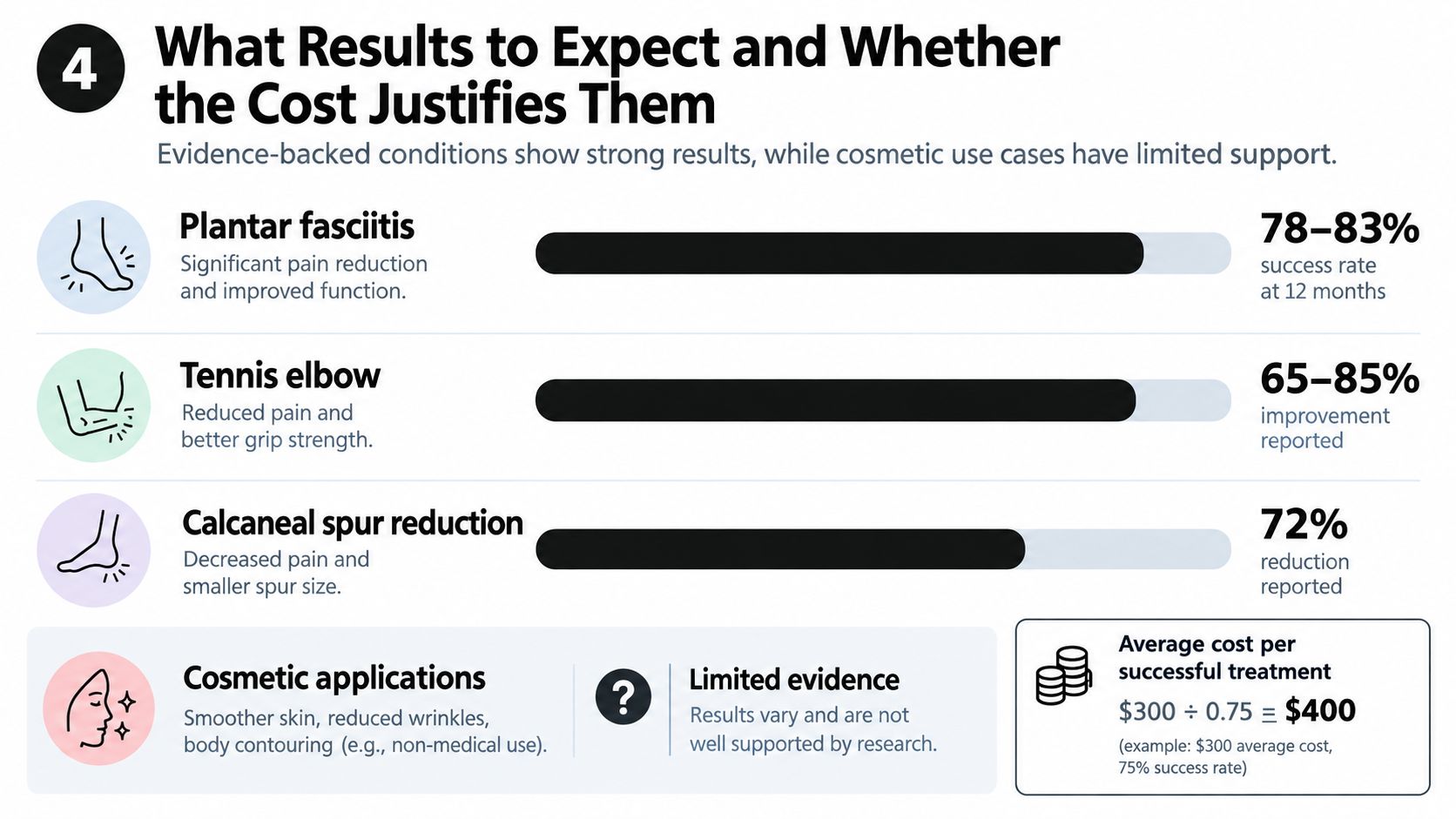
Value depends on the problem you're trying to solve. Shockwave therapy for a defined musculoskeletal concern has a different value calculation from shockwave marketed for cellulite or body contouring.
For pain-related treatment, start with a measurable baseline. Record what movement hurts, which activities you avoid, and how often symptoms interfere with daily life. After the course, compare the same measures. “It feels better” matters, but a clear change in walking, training, sleep, or ordinary movement gives you a stronger basis for judging the spend.
Cosmetic treatment needs a different standard. Body contouring and cellulite concerns can be highly individual, and the visible result may be softer or less predictable than a patient expects from promotional photographs. A responsible clinic should explain the likely ceiling of improvement rather than presenting shockwave as a guaranteed transformation.
Use three tests before deciding
- Did the original concern change? Assess pain, movement, texture, or appearance against the baseline you recorded.
- Did the result last? A short-lived change may not justify repeating the same course without a revised plan.
- What was the alternative? Compare the course with the time, inconvenience, discomfort, or cost of other appropriate options.
The treatment is worth considering when the clinic can define the intended outcome and explain how it will measure progress. It's poor value when the provider can't tell you what success means, how many sessions are proposed, or what happens if the result stalls.
Don't judge the treatment solely by the price of the appointment. Judge the cost per useful outcome. A course that reduces a persistent problem and helps you return to normal activity may represent good value. A cosmetic course that produces only a subtle change may still be acceptable, but only if you understood that possibility before paying.
Smart Questions to Ask Before You Book a Course
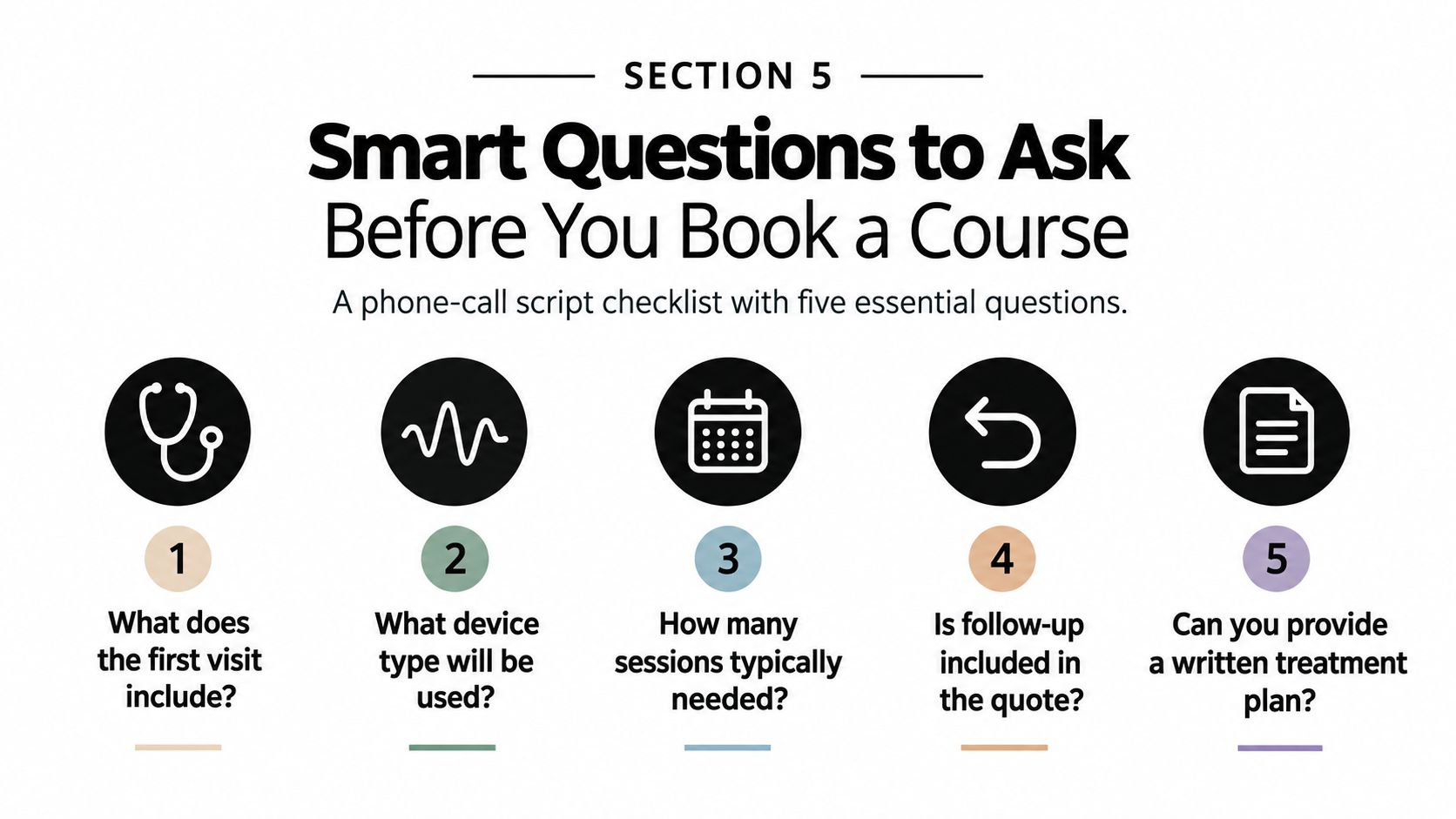
A short phone call can reveal more than an hour spent scanning clinic websites. Ask the first question before discussing discounts:
What does the first visit include, and is the assessment fee deducted from treatment?
That answer tells you whether the clinic sees assessment as a clinical step or treats it as an optional extra. Then work through the rest of the checklist.
Use this phone script
- Which device will you use? Ask whether the practitioner plans to use focused or radial shockwave, and why that choice suits your concern.
- Who will assess and deliver the treatment? Ask about the practitioner's role, experience, and whether the same person will review your progress.
- How many sessions do you expect for my specific concern? Request a course estimate rather than accepting an open-ended recommendation.
- What happens if progress stalls? Find out whether the practitioner reassesses the diagnosis, changes the protocol, or recommends stopping.
- What is included in the written quote? Confirm assessment, treatment, reviews, aftercare, optional products, and any package conditions.
Check the terms before paying
Ask about the cancellation window and whether a prepaid package can be refunded if the practitioner decides treatment isn't suitable. Also check whether review appointments are included or charged separately.
For cosmetic treatment, ask how the clinic will photograph or measure the area. A clinic that offers a consultation-led plan, such as the approach described in this guide to shockwave therapy side effects, should also explain what sensations, temporary reactions, and aftercare you might experience.
The best response isn't the one with the lowest price. It's the one that gives you a clear treatment plan without rushing you into payment.
Getting a Clear Answer on Shockwave Therapy Value
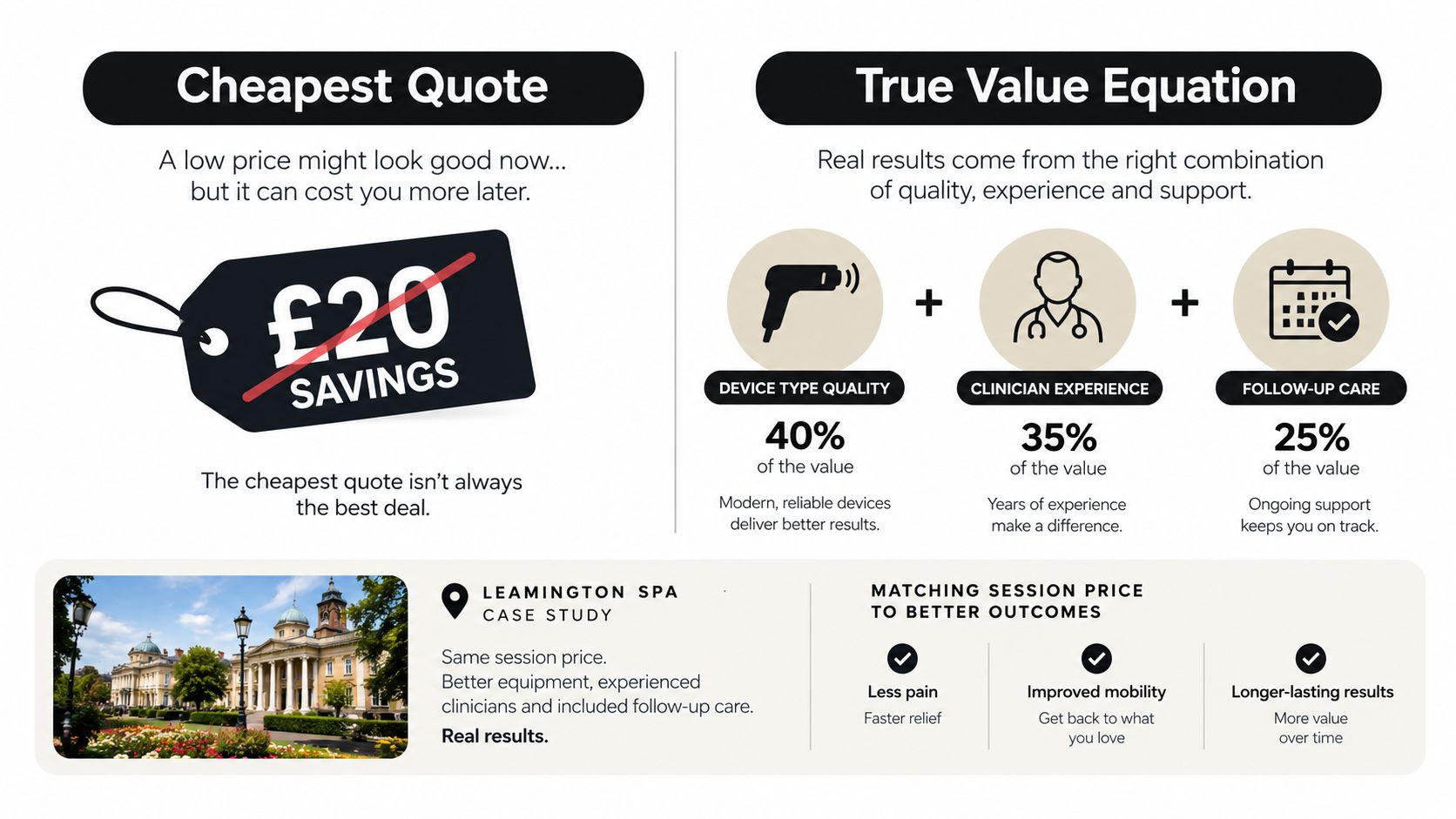
The cheapest quote doesn't automatically win. Saving money on one appointment can be pointless if the clinic hasn't assessed the problem properly, uses an unsuitable device, or leaves you paying for unplanned follow-up visits.
Avoid three common pricing traps
The incomplete headline price shows a session fee but hides the assessment. You only discover the extra charge after booking.
The unlimited-session offer sounds reassuring but may give you no defined endpoint. Ask what the practitioner is trying to achieve and when they'll review the decision to continue.
The discount-led clinic focuses on a cheap package without showing who will assess you, which device will be used, or how the provider will respond if the plan isn't working.
A sensible decision this week is straightforward:
- Request two written quotes for the same treatment area.
- Ask each clinic to identify the device type and treatment approach.
- Confirm whether assessment and review appointments are included.
- Compare the full course price, not just the first visit.
- Decide whether the expected durability of the result justifies the spend.
The right price is the one attached to a clear plan, appropriate equipment, competent delivery, and honest follow-up.
A credible local clinic with mid-range pricing can offer better value than the cheapest bid when the quote includes proper assessment and progress monitoring. You're not buying minutes with a machine. You're paying for a clinically reasoned course that should have a defined purpose.
For people in and around Leamington Spa, 3D Aesthetics Leamington Spa offers consultation-led shockwave therapy for cellulite and body contouring, with treatment plans supported by an in-depth consultation and 3D body scan. Visit 3D Aesthetics Leamington Spa to discuss your goals, confirm the full course cost, and decide whether the proposed treatment represents fair value for you.
← Back to Home