

You catch yourself avoiding the mirror, or pulling trousers down a little longer than usual because the little red or blue lines on your face or legs keep drawing your eye. Thread veins can feel minor to everyone else and huge to you, especially when they sit in a visible place and seem to get more noticeable under bright light. Thread vein laser removal gives you a practical way to treat them without surgery, and at 3D Aesthetics Leamington Spa, that process is guided by consultation, careful vein selection, and 3D Vasculase technology designed for vascular lesions and broken capillaries.
Table of Contents
- Reclaiming Clear Skin from Unwanted Thread Veins
- Understanding Thread Veins and Their Causes
- How 3D Vasculase Laser Removal Works
- Your Treatment Journey at 3D Aesthetics Leamington Spa
- Recovery Aftercare and Realistic Results
- Comparing Treatments and Understanding Costs
- Your Questions Answered and How to Get Started
Reclaiming Clear Skin from Unwanted Thread Veins
A client often arrives expecting a quick fix for one stubborn facial vein, or a cluster on the lower leg that has become part of their daily routine to hide. That frustration is normal. At 3D Aesthetics Leamington Spa, the first job is to work out whether thread vein laser removal is the right match for the area you want to treat, because facial veins and leg veins do not always respond in the same way.
The good news is that this treatment is a well-established outpatient option. Results usually build over a course of sessions rather than in one dramatic appointment, and the body then clears the treated vessels gradually. That slower process is one reason a proper consultation matters, especially if you are planning treatment around an event or you want a realistic view of how facial redness and fine veins may improve.
At our clinic, the consultation is where the treatment plan becomes specific. We look at the vein pattern, the skin around it, and whether the area is likely to suit laser or another approach. For facial redness linked with thread veins or rosacea, our team may also discuss whether rosacea laser treatment is a better fit for the overall pattern you are seeing.
The point is clarity before you start. If a clinic cannot explain the likely course of treatment, the spacing between sessions, and the normal recovery pattern in plain English, you do not yet have enough information to make a confident decision.
Practical rule: if the plan is vague before treatment begins, the outcome is usually vague too.
When the vein type and the treatment area are matched properly, laser can be a reassuring option. The aim is steady visible improvement with minimal disruption to work, family life, and the skin barrier, while staying honest about the fact that some veins need more than one session and some legs need a different treatment route altogether.
Understanding Thread Veins and Their Causes
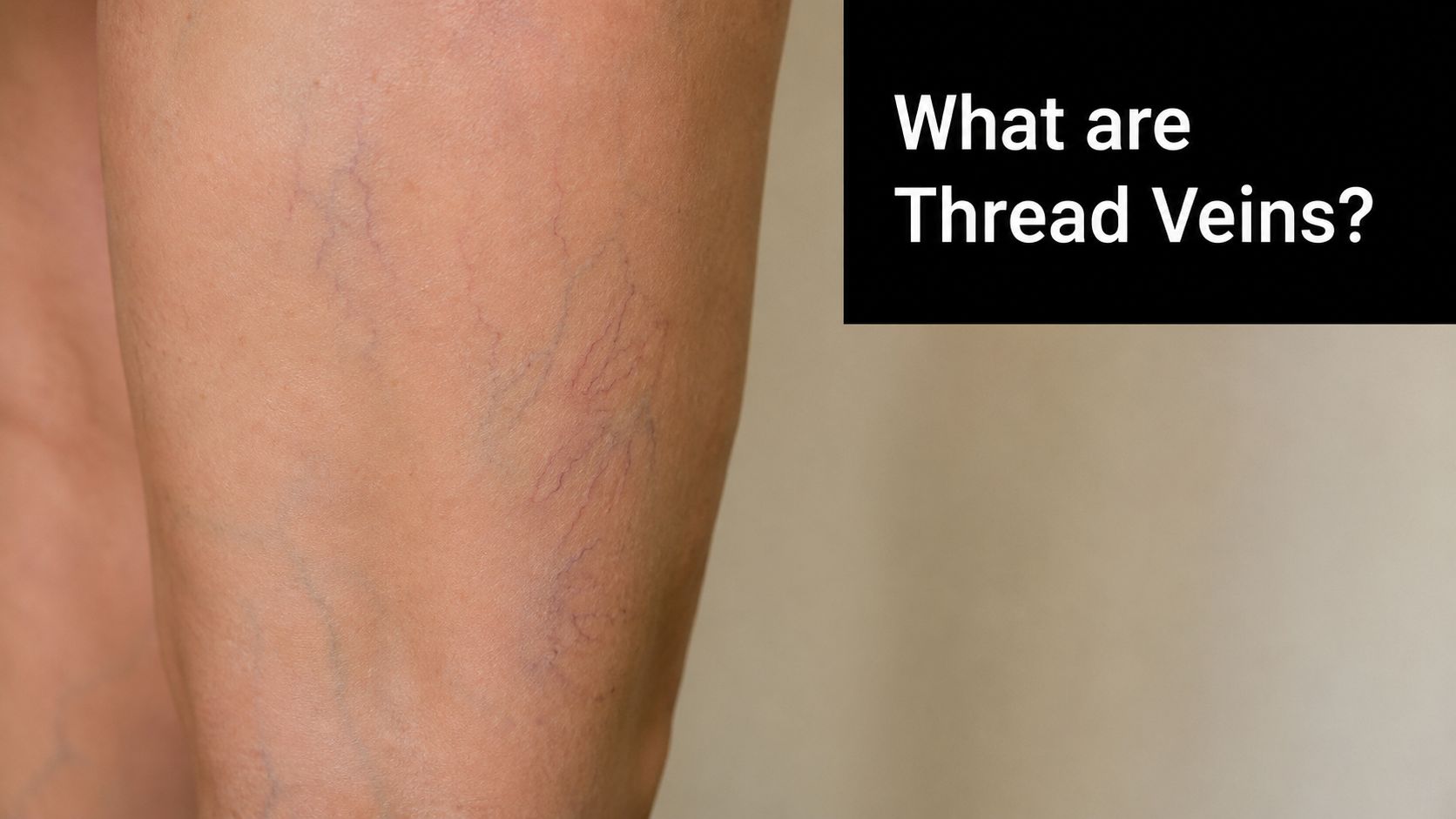
Thread veins, also called spider veins or telangiectasias, are tiny dilated blood vessels that sit close to the skin's surface. They're not the same as varicose veins, and they don't mean the skin is unhealthy on its own. They're more like a network of overfilled little channels that have become visible through the skin.
A useful way to think about them is a weakened garden hose. When the wall loses tone, the vessel widens and shows through more easily, especially in areas where the skin is thin. That can happen for different reasons, and it often happens gradually.
Why they show up
Several common triggers can make thread veins more visible. Some people notice them after years of sun exposure on the face, while others see them appear with hormonal shifts or because they've inherited a tendency for delicate vessels. Lifestyle also matters, particularly in the legs, where standing for long periods can make veins more obvious.
The important point is that the visible vein is usually the surface sign, not the whole story. On the face, the concern is often cosmetic and localised. On the legs, visible veins can be part of a larger venous pattern, which is why a simple label like “thread veins” doesn't always tell you which treatment is right.
If you're comparing facial redness or rosacea-like flushing with small vessels around the cheeks and nose, the skin picture can overlap. For that reason, some people benefit from reading about laser options used for rosacea-type concerns before they book a vein appointment, because the conversation often starts with how the vessels behave, not just how they look.
Thread veins are common, but that doesn't mean they should be treated casually. The right assessment looks at location, vessel depth, and whether the veins are isolated or part of a bigger circulation issue.
How 3D Vasculase Laser Removal Works
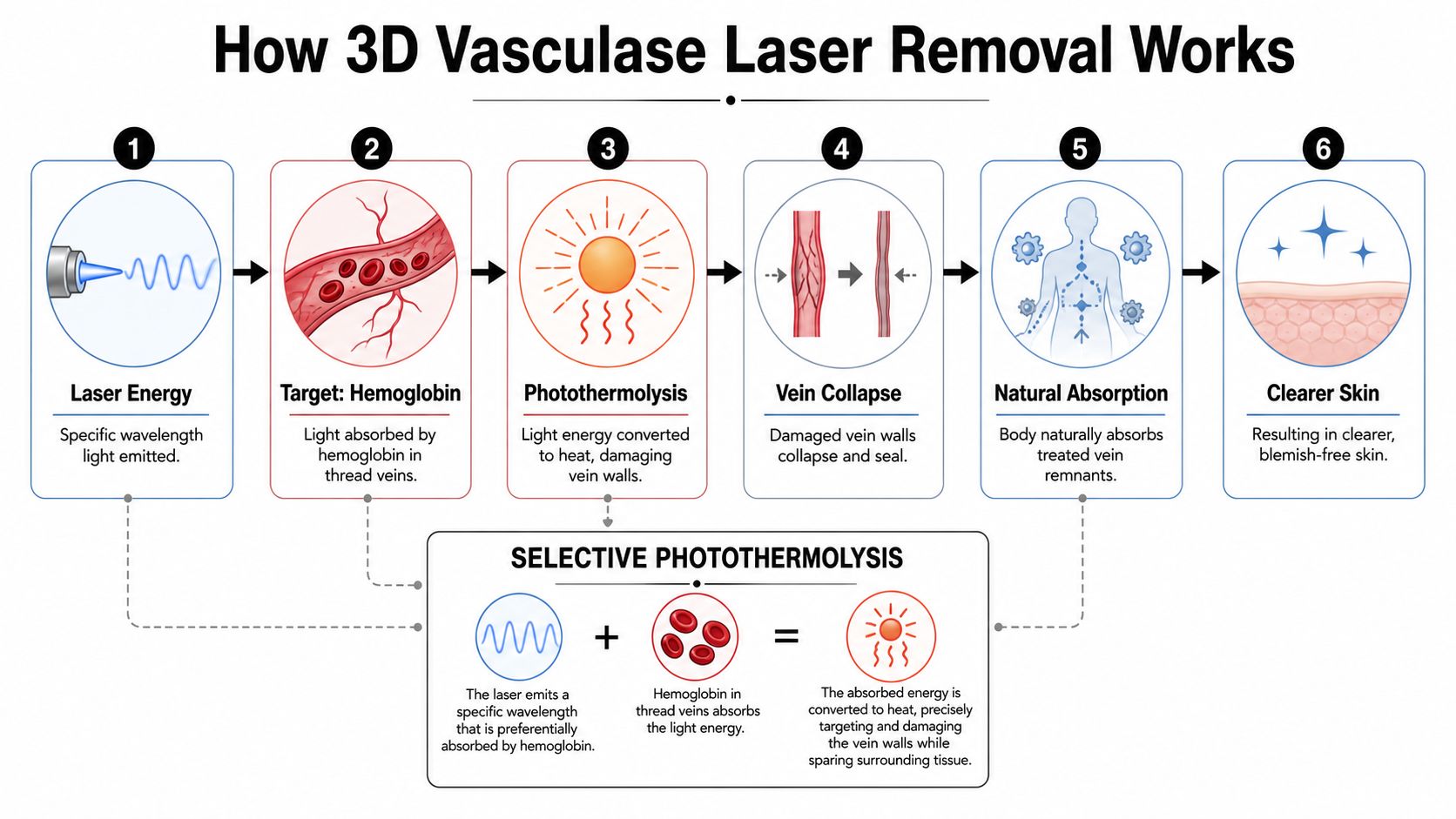
At 3D Aesthetics Leamington Spa, the starting point is not the laser itself, it is whether the vessel is suitable for it. 3D Vasculase works by directing light energy into the thread vein, where the blood absorbs that energy and heat builds in the vessel wall until it collapses and seals. The process is called photothermolysis, and it lets us target superficial veins with precision while limiting heat spread to the surrounding skin.
Why wavelength matters
For vein work, the 1064 nm Nd:YAG wavelength is particularly useful because the longer wavelength penetrates further and is less absorbed by epidermal melanin. That reduces the risk of surface overheating while still allowing the energy to heat haemoglobin enough to coagulate and close dilated vessels. In practice, it gives us better access to the vein while being kinder to the skin above it.
Preparation still matters. Skin should not be tanned before treatment, because extra pigment can affect how the laser is absorbed. Anaesthetic cream is also avoided in one protocol because it can constrict the vessels and make them harder to treat. Good results start with a clean assessment before the handpiece is used.
What the body does after the pulse
Once the vessel wall has been treated, the body gradually clears the damaged vessel tissue over time. That is why results are not instant. Small vessels may respond well in one session, while larger or deeper veins often need more than one pass, and the outcome depends on vessel calibre and depth rather than a single universal setting.
The laser closes the vessel so your body can clear it naturally.
That is the more accurate way to understand the treatment. It is controlled heating, not brute force, and the safety profile depends on matching the wavelength, energy, and vessel type to the area being treated.
If you want to see how the clinic presents its vascular platform, the treatment overview for 3D Vasculase gives useful context on the technology used for vascular lesions and broken capillaries. The same principle still applies, target the vessel and protect the skin around it.
A useful way to keep treatment discussions clear is to use understanding testimonial design principles, because precise feedback makes it easier to compare what changed, where it changed, and how the vessel responded.
Your Treatment Journey at 3D Aesthetics Leamington Spa
A thread vein appointment at 3D Aesthetics Leamington Spa begins with a complimentary consultation, because the vein pattern has to be assessed before any light is used. The therapist looks closely at the area, asks which veins are causing the most concern, and decides whether laser is the right option or whether a different approach should be discussed first. That assessment matters, especially if the veins are on the legs rather than the face, because leg veins often behave differently and are not always treated in the same way as finer facial vessels.
The consultation also gives you a clear starting point. It records what is being treated, why it has been selected, and what the treatment is expected to do. Clear feedback is easier to review when the discussion is structured, which is why understanding testimonial design principles is surprisingly relevant here. Specific notes make it simpler to compare changes from one visit to the next and to judge how the vessel has responded.
What the session feels like
The treatment room is prepared for eye protection, clean skin, and focused work. The laser is then applied in short pulses to the target area, and most clients describe the sensation as a quick ping or a flick of an elastic band. It is usually brief, and in practice the more important question is whether the vessel is suitable for treatment that day.
There is no fixed reaction from every vein. Some respond quickly, while others are slower to clear or need a different plan because they are deeper, larger, or more resistant. A sensible course is usually spaced over time so the skin and the vessel can settle between visits, rather than being retreated too soon.
What happens between visits
Follow-up is used to review change and decide whether another session is needed. Some thread veins fade noticeably after the first treatment, while others need a further pass because they have not fully collapsed yet. That does not mean the treatment has failed. It usually means the vessel needs a slower, more measured response.
Clinical takeaway: if the vein is the right type, patience usually beats force.
At 3D Aesthetics Leamington Spa, the process is designed to stay calm and manageable from the first discussion through the review stage. Clients often feel more settled once they understand that visible change builds in stages, not all at once, and that the consultation is there to judge whether laser is the safer choice for the area being treated.
Recovery Aftercare and Realistic Results
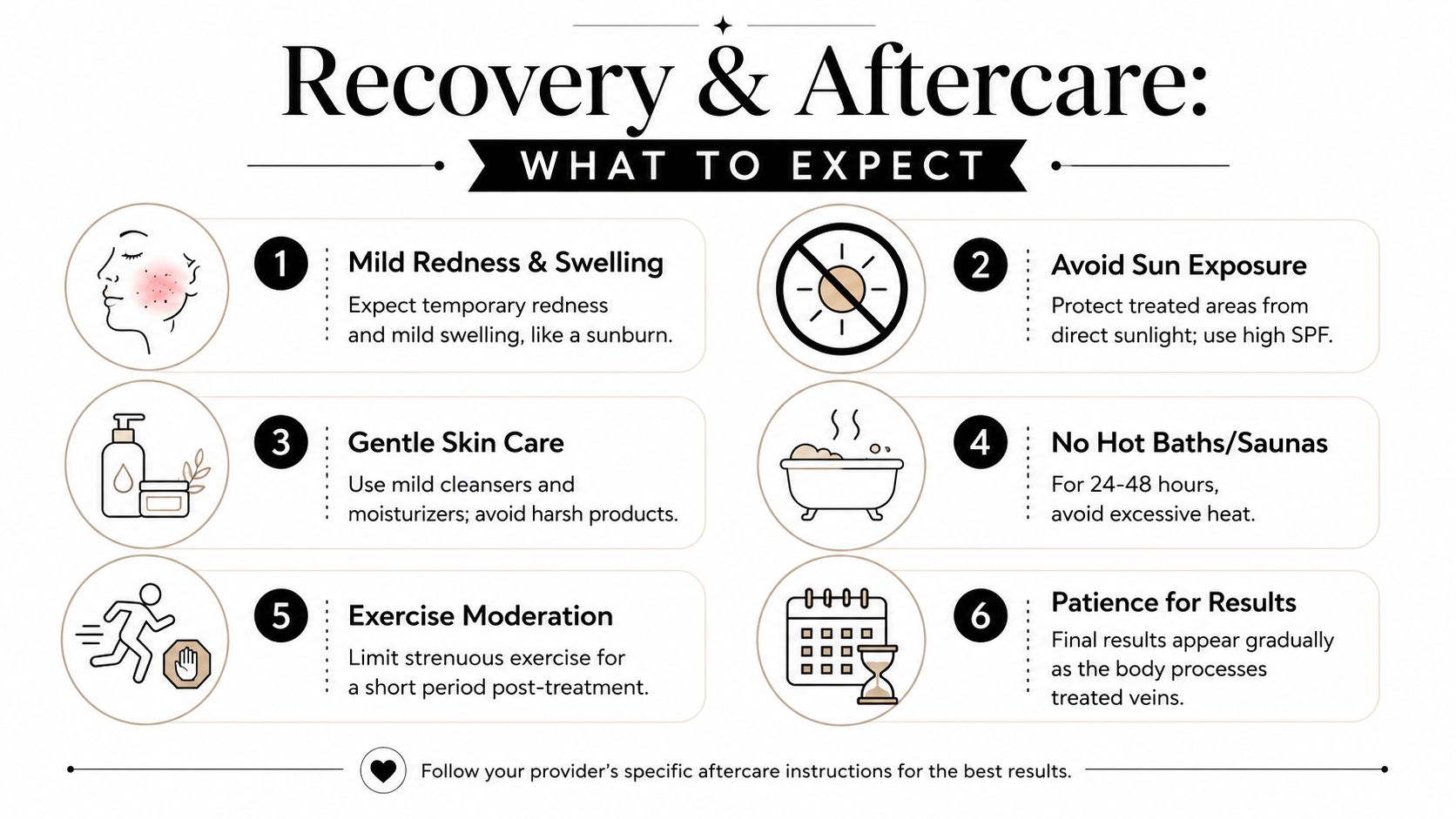
The skin after thread vein laser removal often looks reactive before it looks better. Redness, mild swelling, or a sunburn-like sensation are common, and they usually settle quickly as the area calms down. At our clinic, we explain this up front so clients know the response is part of the process, not a sign that the vessel treatment has gone wrong.
The aftercare that actually helps
Aftercare should reduce irritation, not add to it. Keep the treated skin out of sun exposure, avoid hot baths and saunas, and hold off on strenuous exercise for a short period so the skin is not dealing with extra heat or flushing while it is recovering. Use gentle skincare, and do not introduce exfoliants or strong actives unless your therapist has checked they are suitable.
A few simple habits usually make the biggest difference:
- Protect the area from sun: UV exposure can aggravate post-laser inflammation, so keep the skin covered or use high-SPF protection where appropriate.
- Skip heat for a short period: hot baths and saunas increase blood flow to the area, which can prolong redness.
- Go easy on exercise: intense workouts raise skin temperature and can keep the area looking pink for longer.
- Keep skincare simple: mild cleansing and moisturising help the barrier settle without unnecessary irritation.
The same principle appears in preventing errors in burn recovery, where the priority is to avoid heat, friction, and over-treatment while tissue is still settling. The situations are different, but the recovery logic is similar.
What results look like over time
Laser treatment for thread veins tends to work best on very fine vessels, typically under 2.5 mm in diameter. That is one reason facial spider veins often respond more predictably than some leg veins. At 3D Aesthetics Leamington Spa, we use that distinction during consultation, and our laser treatment for spider veins is always discussed in the context of where the vessel sits and how it behaves.
The treated vein may look darker before it fades. That can be unsettling if you are expecting an immediate cosmetic change, but it is often part of the normal clearing process as the body breaks the vessel down. Results usually build gradually, especially where the veins are fine, isolated, and suitable for laser in the first place.
That is why realistic expectations matter. Some thread veins clear well, some need more time, and some are better assessed for a different approach, especially on the legs where vein size and underlying venous behaviour can change the plan. A careful consultation gives you a clearer sense of whether 3D Vasculase is the right fit for facial vessels, leg veins, or a mix of both.
Comparing Treatments and Understanding Costs
A practical consultation starts with a simple question, which vessel are we treating, and where is it sitting? Facial thread veins and leg veins do not behave in the same way, so laser is often a strong option for delicate facial vessels, while another approach is often a better fit for some vessels in the lower extremities, especially where vein size or underlying venous behaviour changes the treatment plan. For clients who want a more focused overview of how laser is used on visible facial veins, our laser treatment for spider veins page explains the treatment in that context.
| Feature | Laser Vein Removal, e.g. 3D Vasculase | Sclerotherapy |
|---|---|---|
| Best for | Finer facial thread veins and broken capillaries | Many leg spider veins and some larger surface veins |
| Main method | Light energy heats and closes the vessel | A solution is injected to close the vein |
| Suitability | Strong fit when vessels are superficial and small | Often preferred when leg veins need a different approach |
| Recovery profile | Usually light, with brief redness or swelling | Often paired with compression and a different aftercare plan |
| Assessment need | Needs careful selection by area and vessel type | Also needs specialist assessment, especially for leg veins |
That difference matters more than the treatment name on its own. Some leg veins are poor laser candidates, and visible veins can sometimes point to a broader venous issue that needs assessment rather than cosmetic treatment alone. A careful consultation avoids treating the wrong problem and helps set realistic expectations before any device is used.
Pricing in the UK varies by area size and practitioner level. Published figures start around £150 per session for a single facial thread vein, while a package can be £400 for 3 at one London clinic, and other providers list higher fees such as £395 for a small facial area, £625 for a full face, and £495 for a 15-minute leg session with a consultant dermatologist (Centre for Surgery). That spread shows why no honest clinic should quote one flat price before seeing the area, the vessel type, and the treatment goal.
Cost should be weighed against suitability. A facial vein that responds well to laser may be a straightforward treatment decision, while a leg vein may need a different plan altogether, depending on its depth, size, and appearance. At 3D Aesthetics Leamington Spa, that conversation is part of the consultation, because the right choice is the one that matches the vessel rather than the most convenient option.
Your Questions Answered and How to Get Started
A thread vein consultation often starts with practical questions: will it hurt, will the vein come back, and is laser the right choice for the area you want treated. Those are the right questions to ask before you book, because the answer depends on the vessel, the skin around it, and whether the vein is on the face or the legs.
Is it painful? The sensation is commonly described as a quick sting or a brief burst of heat rather than ongoing pain. Smaller, more superficial veins are usually easier to treat, and the session is often short enough that discomfort remains manageable.
Are the results permanent? The treated vein should not reopen, but that does not stop new veins from appearing later if you are prone to them. Maintenance advice and realistic expectations matter, especially if your skin tends to show thread veins again over time.
Is it suitable for all skin tones? Suitability depends on the vessel, your skin type, and the settings used on the device. The 1064 nm Nd:YAG wavelength is used because it penetrates further and is less absorbed by melanin, which helps reduce surface overheating, but tanned skin is still not a good treatment target.
Will it work on every thread vein? No, and that is the honest answer. Facial spider veins are often a better laser target, while some leg veins, or veins linked to a wider venous issue, may need a different approach such as sclerotherapy or specialist assessment first. That distinction matters in clinic, because the right answer is based on the vein in front of you, not on the treatment name alone.
At 3D Aesthetics Leamington Spa, the consultation is where those decisions are made properly. We look at the area, talk through the likely number of sessions, and explain whether 3D Vasculase is the right fit for facial veins, leg veins, or neither. If you are unsure, bring the areas that worry you most and ask for a clear plan before you commit to treatment.
A CTA for 3D Aesthetics Leamington Spa.