

You've probably taken a common first step. You notice your skin doesn't bounce back the way it used to, old acne marks still catch the light, or the jawline looks a little softer in photos. Then you start searching and suddenly you're choosing between microneedling, RF, HIFU, lasers, facials, skin tightening, resurfacing, collagen induction, and a long list of devices that all sound promising.
That's where the confusion starts. Some treatments improve surface texture. Some work deeper. Some are better for lifting, some for scarring, and some ask for more recovery than you'd like. If you want a treatment that sits between a simple facial and a more aggressive resurfacing procedure, RF microneedling is often the one people keep coming back to.
If you've been asking, what is RF microneedling, the short answer is this. It's a minimally invasive treatment that combines tiny needles with radiofrequency heat to create controlled injury in the skin and encourage collagen remodelling. Used well, it can help with facial lines, acne scars, stretch marks, texture concerns, and skin firmness, as described in a 2024 clinical review of RF microneedling in PMC.
Table of Contents
- The Next Generation of Skin Rejuvenation
- How RF Microneedling Stimulates Natural Renewal
- What Can RF Microneedling Improve?
- Your RF Microneedling Journey Explained
- Choosing the Right Treatment for Your Skin
- Is RF Microneedling Safe for You?
- Begin Your Transformation at 3D Aesthetics Leamington Spa
The Next Generation of Skin Rejuvenation
A common story goes like this. Someone tries good skincare, keeps up with SPF, maybe books the occasional facial, but still feels their skin looks tired, uneven, or less firm than it used to. They don't want surgery. They also don't want to hide away for a long recovery after treatment.
That's where RF microneedling tends to make sense. It sits in a very useful middle ground. It's more advanced than surface-level treatments, but it's still minimally invasive, which is one reason it has become such a recognised option in aesthetic practice.
What makes it different is that it doesn't just polish the top of the skin. It works by creating controlled change below the surface, where collagen remodelling happens. That matters if your concern isn't only dullness, but structure. Things like acne scarring, crepey texture, early sagging, roughness, and fine lines often need more than a brightening facial or a stronger serum.
Why many clients look at it now
People usually start considering RF microneedling when they want improvement that looks natural rather than obvious. They're not asking for a different face. They want skin that feels tighter, smoother, and more refined.
The treatment is also versatile. A 2024 review reports that RF microneedling is currently used for aging facial lines, acne scars, cellulite, striae, rosacea, alopecia, and axillary hyperhidrosis in clinical settings, which gives you a sense of how broad its use has become in modern practice.
Practical rule: If your goal is better skin quality, not just a temporary glow, it makes sense to ask about treatments that work beneath the surface.
Why it feels less overwhelming once you understand it
Many treatments sound similar until you know what layer they target. That's usually the missing piece. RF microneedling is often chosen when someone wants help with:
- Texture concerns such as roughness or enlarged-looking pores
- Visible marks including acne scarring or stretch marks
- Mild to moderate laxity where skin doesn't feel as springy
- Fine lines that make skin look more tired than it feels
Once you know that, the treatment stops sounding mysterious. It becomes a practical option with a clear job.
How RF Microneedling Stimulates Natural Renewal
A lot of clients understand the “microneedling” part and then pause at the letters RF. That hesitation is normal. Once you know what each part is doing, the treatment makes much more sense.
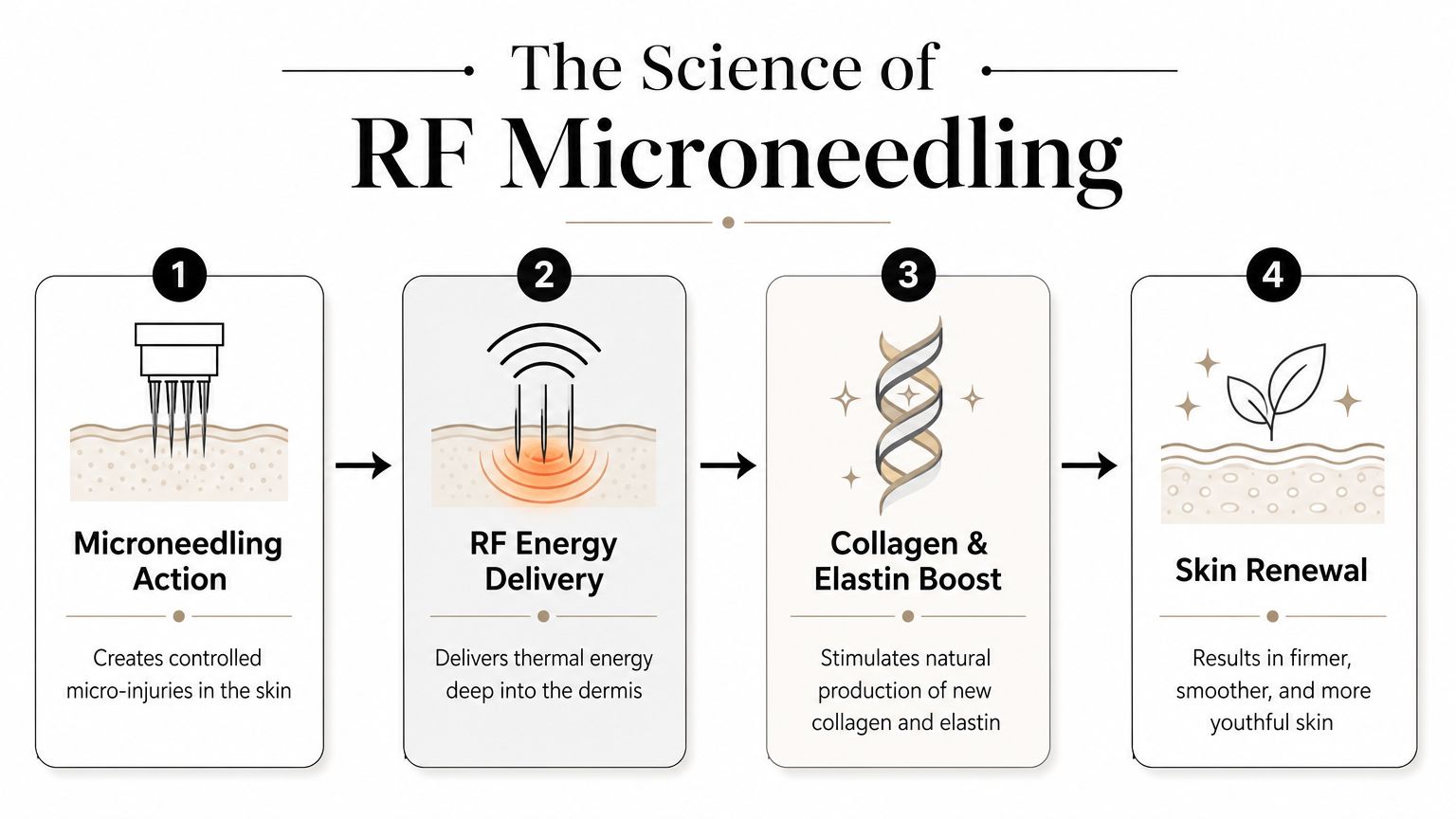
RF microneedling combines two controlled actions in one session. Fine needles create tiny channels in the skin. At the same time, radiofrequency energy delivers heat below the surface. The goal is to trigger repair in the layers that give skin its firmness and smoothness, rather than only polishing the top.
Regular microneedling mainly works through the skin's response to those micro-injuries. RF microneedling adds a second signal. That added heat reaches the dermis, where collagen and elastin sit, so the repair process can be more targeted for concerns linked to texture and mild laxity.
A simple way to picture it is garden care. The needles work like aerating the soil. The RF energy warms the layer underneath so the ground is in better condition to rebuild. Skin is more complex than a lawn, of course, but the comparison helps explain why this treatment is often chosen by patients who want both resurfacing and a firmer feel over time.
That timeline matters. You may notice some early improvement in skin texture once the initial healing settles, but the more meaningful changes usually develop gradually as the skin remodels itself. This is one reason RF microneedling appeals to patients who want natural-looking change rather than one dramatic overnight shift. If you have been researching ways to improve skin texture with treatments that go beyond facials and skincare, that deeper remodeling process is usually what sets RF microneedling apart.
The RF part also gets confused with laser treatment, so it helps to separate them clearly. Lasers use light. RF uses electrical energy to create heat inside the tissue. HIFU also uses heat, but it targets deeper structural layers and is usually chosen more for lifting than surface refinement. RF microneedling sits in a useful middle ground for many patients because it can address texture and early tightening together.
Safety comes from precision. Different areas need different needle depths and energy settings because the skin around the eyes does not behave like the skin on the cheeks, neck, or body. A careful practitioner adjusts the treatment plan to the area, the concern, and your skin tolerance instead of using one setting everywhere.
Better results usually come from the right depth and energy, not simply more intensity.
Lifestyle habits still matter, especially if you are trying to boost collagen production naturally. Good nutrition, sun protection, and consistent skincare support skin health. They do not replace an in-clinic treatment designed to create a focused repair response.
In real practice, devices such as 3D Dermaforce are used to deliver this combined microneedling and RF treatment in a controlled way. The device plays a role. The assessment, settings, and technique usually matter even more.
What Can RF Microneedling Improve?
Clients don't typically book RF microneedling because they want “collagen remodelling”. They book it because they want a smoother cheek, a softer acne scar, a firmer jawline, or skin that looks less crumpled under makeup. That's the practical lens that matters.
Concerns it's commonly used for
A 2024 review describes RF microneedling as being used for several concerns, including ageing facial lines, acne scars, cellulite, striae, rosacea, alopecia, and axillary hyperhidrosis in clinical practice. For most aesthetic patients, the most relevant improvements tend to fall into a few clear groups:
Lines and early laxity
Skin looks less firm, especially around areas that start to soften with time. People often notice this around the lower face, neck, or eye area.Acne scarring and uneven texture
RF microneedling is often considered when the skin surface looks irregular in certain lighting, or makeup sits unevenly.Pore appearance and roughness
It can help skin look more refined, which is why many people researching how to improve skin texture end up asking whether RF microneedling is the next step beyond facials and skincare.Stretch marks and selected body concerns
The treatment isn't only for the face. Some people explore it for areas where the skin's texture and elasticity have changed.
How results look in real life
The best way to think about outcomes is not “perfect skin” but better quality skin. That often means:
- smoother-looking texture in daylight
- a more even feel when you wash your face
- softened edges around old marks
- skin that reflects light more evenly
- gradual firmness rather than a frozen or overdone look
What it won't do is replace every other technology. If someone has significant skin laxity, heavy pigmentation, or a concern sitting deeper or more superficially than RF microneedling is designed for, another treatment may be more suitable.
The right question isn't “Can RF microneedling do everything?” It's “Is this the treatment that matches my main concern best?”
That's where a proper consultation becomes useful. The same person can have texture, redness, laxity, and volume loss all at once, but one of those issues is usually the main reason they're unhappy with their skin.
Your RF Microneedling Journey Explained
Most anxiety about RF microneedling comes from not knowing what the day looks like. Once clients understand the sequence, the treatment usually feels much more manageable.
Before and during your appointment
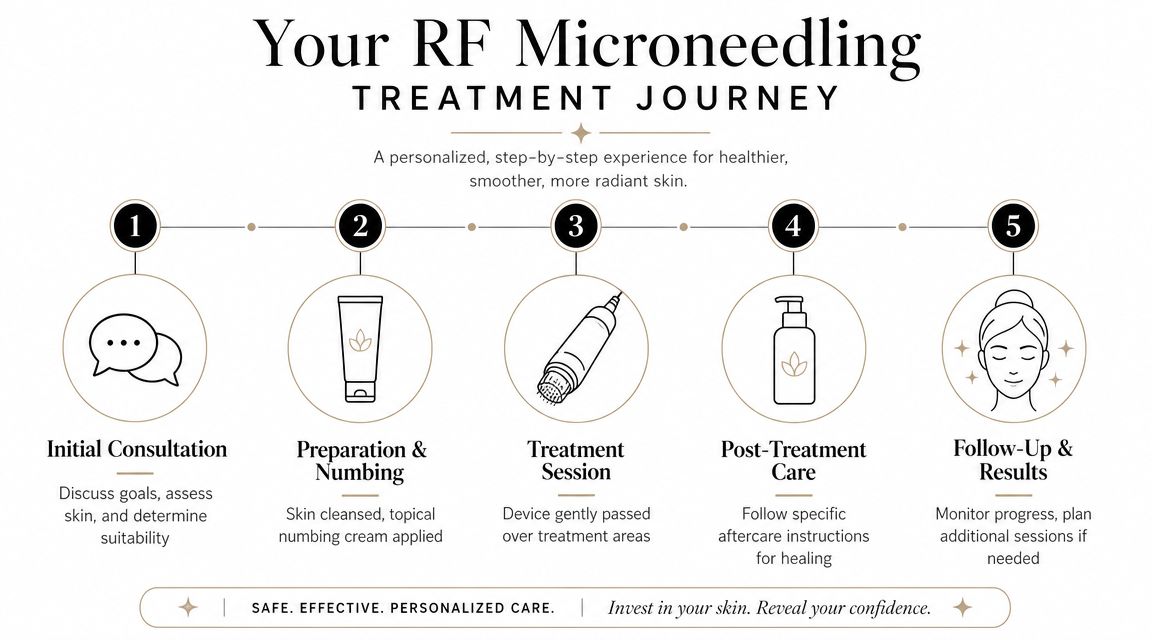
It starts with a consultation. Your practitioner looks at the concern you want to treat, checks your skin, asks about medical history, and decides whether RF microneedling is appropriate, as not every redness issue, scar type, or laxity concern should be treated the same way.
On treatment day, the skin is cleansed and a topical numbing product is usually applied to improve comfort. During the procedure, the handpiece is passed methodically over the chosen area. The sensation is often described as warmth with a light prickling or stamping feeling rather than sharp pain.
This short video gives a helpful visual sense of treatment in practice.
After treatment, the skin may look red and feel warm, a bit like a mild sun-exposed flush. Some people also notice temporary sensitivity or a faint grid pattern, depending on the device and settings used.
For patients comparing options, some clinics also offer related skin-tightening treatments such as 3D Face & Eye RF, which target different concerns and depths than RF microneedling.
Healing and when results usually show
Here's the part many people don't expect. RF microneedling is not mainly about instant results. You may see an early freshness, but the more meaningful change comes later as the skin remodels.
According to the Cleveland Clinic, most patients receive 2–4 treatments to reach their desired outcome, and the best and most significant results typically appear 3–6 months after the final session as collagen continues to build, as outlined in the Cleveland Clinic guide to RF microneedling.
That timeline is important because it changes how you judge the treatment. If you're expecting one appointment to do everything by next week, you'll probably be disappointed. If you understand that collagen takes time, the journey makes much more sense.
A realistic pattern often looks like this:
Early phase
The skin settles after redness and may look a little fresher.Building phase
Over the following weeks, texture and firmness may start to improve gradually.Peak phase
The most meaningful tightening and smoothing often become clearer later, once collagen remodelling has had time to develop.
Patience is part of the treatment. The immediate glow is not the full result.
Choosing the Right Treatment for Your Skin
RF microneedling is popular because it fills a useful gap, but it isn't the answer to every skin complaint. The better way to choose is by looking at what layer needs treatment, what result you want most, and how much downtime fits your life.
RF microneedling compared with other options
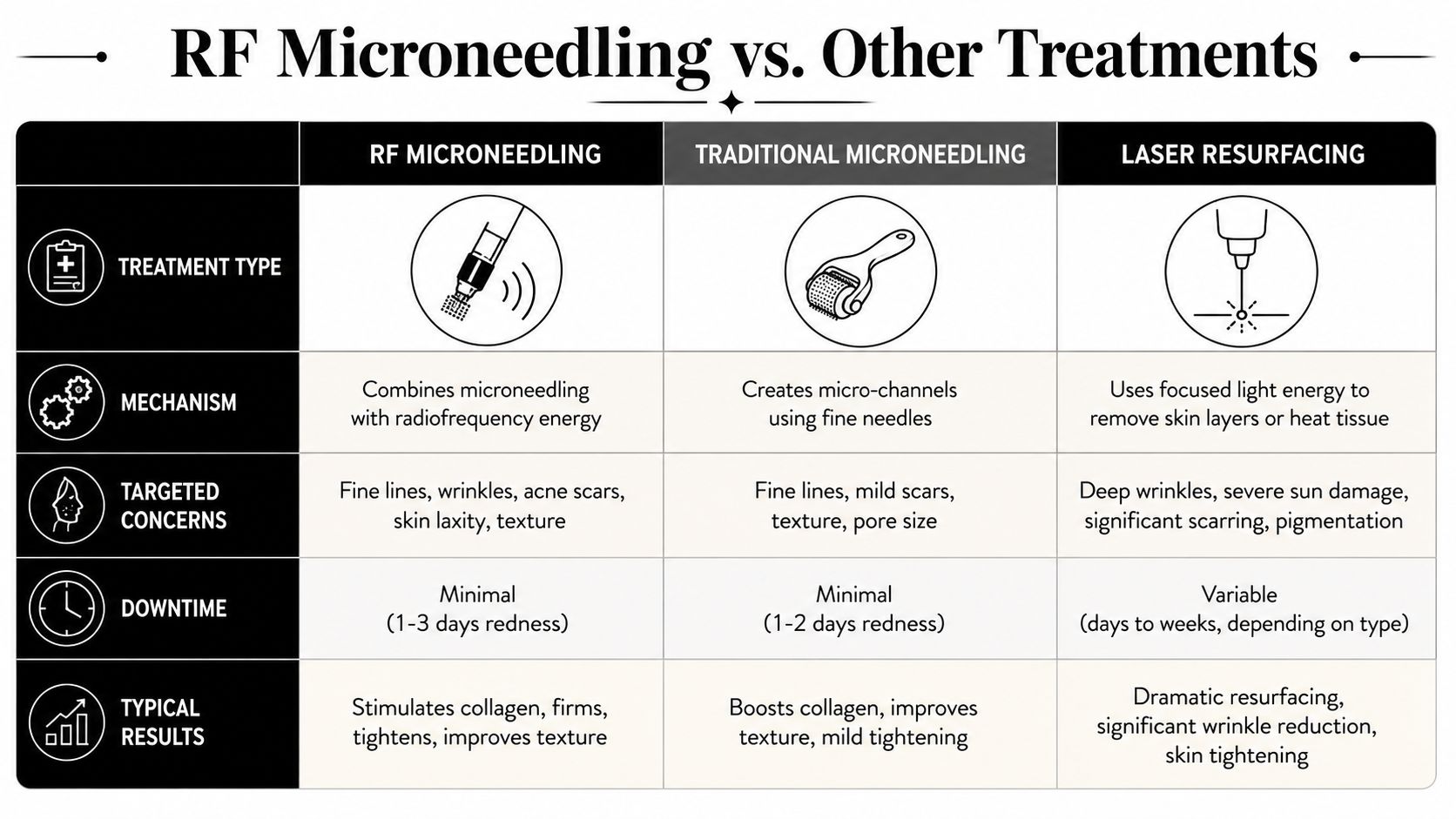
Traditional microneedling is usually the simpler cousin. It creates controlled micro-injury but doesn't add radiofrequency heat. That can make it a reasonable option for people focused mainly on gentle collagen stimulation and surface refinement. If the goal includes more noticeable tightening, RF microneedling is often the treatment that comes into the conversation because it works on texture and thermal remodelling at the same time. If you want to compare the non-RF option directly, 3D microneedling treatment details show where standard microneedling sits among available treatments.
HIFU works differently again. It targets deeper structural layers and is often discussed when lifting is the priority. If a patient says, “I'm less bothered by pores and more bothered by sagging,” HIFU may be the stronger discussion point. If they say, “My acne scars, rough texture, and early looseness all bother me,” RF microneedling may fit more naturally.
Lasers, including fractional resurfacing approaches, are another category entirely. Lasers use light and can be very effective for resurfacing and certain pigmentation or scar concerns, but they come with a different mechanism, recovery profile, and suitability discussion. For some patients, especially those wanting a route that doesn't rely on light-based resurfacing, RF microneedling feels like a more comfortable middle ground.
Choose by target, not trend. A treatment can be excellent and still be the wrong one for your main concern.
Treatment Comparison at a Glance
| Treatment | Primary Target | Best For | Typical Downtime | Results Timeline |
|---|---|---|---|---|
| RF Microneedling | Texture plus dermal remodelling | Acne scars, fine lines, mild laxity, enlarged-looking pores, stretch marks | Usually some redness and recovery time, often lighter than more aggressive resurfacing | Gradual. Best results build over months |
| Traditional Microneedling | Surface-led collagen stimulation | Mild texture concerns, early fine lines, general skin refresh | Usually mild and short | Gradual, often subtle |
| HIFU | Deeper structural support | Lifting-focused concerns, especially when surface texture is not the main issue | Varies by person and area treated | Builds over time |
| Laser Resurfacing | Surface resurfacing or targeted heating depending on laser type | Pigment issues, significant resurfacing goals, some scar concerns | Can range from light to more noticeable downtime | Depends on laser type and treatment intensity |
A quick way to narrow it down is to ask yourself these three questions:
What bothers me most when I look in the mirror?
If it's texture, acne scars, and pores, RF microneedling often deserves a closer look.Am I mainly trying to lift or mainly trying to refine?
Lift-focused concerns often push the conversation toward HIFU. Refinement plus tightening often points back to RF microneedling.How much recovery can I realistically handle?
If extended downtime feels unrealistic, that may shape the decision away from more intensive resurfacing.
The best treatment isn't the most talked about one. It's the one that matches the problem you want to solve.
Is RF Microneedling Safe for You?
RF microneedling can be a very useful treatment, but it's not something to treat casually. Safety depends on candidacy, device quality, and practitioner judgement.
Why practitioner skill matters
This is one of the clearest facts patients should know. The U.S. FDA classifies RF microneedling devices as Class II medical devices, and the agency has issued safety communications warning of serious complications when devices are used improperly, including burns, scarring, fat loss, disfigurement, and nerve damage, as explained in the FDA safety communication on certain uses of RF microneedling.
That doesn't mean the treatment is unsafe on its own. It means technique matters. The device must be used properly, by someone trained to choose the right depth, energy, and treatment pattern.
The same safety guidance reflected in clinical practice also supports careful adjustment of settings for different areas. The eye area needs a more conservative approach than the neck or body. That's one of the biggest reasons not to choose a clinic based on marketing alone.
Who should pause and ask more questions
A good candidate is often someone in good general health who wants help with texture, scars, pores, fine lines, or mild skin laxity. The treatment may be less suitable, or need postponing, if you have factors such as:
- Active skin infection in the area to be treated
- Pregnancy, depending on clinic policy and medical guidance
- Implanted electrical devices such as a pacemaker, where RF-based treatments may need special caution
- Poor timing if your skin barrier is currently very irritated or compromised
Expected short-term effects are different from complications. Redness, warmth, mild swelling, and temporary grid marks can happen after treatment. Those are usually part of the normal response that should be explained clearly before you book.
Safety in aesthetics rarely comes from the device alone. It comes from the person holding it, the settings they choose, and the judgement to say no when a treatment isn't appropriate.
Begin Your Transformation at 3D Aesthetics Leamington Spa
By now, the big picture should feel clearer. RF microneedling is a minimally invasive treatment designed to improve skin quality by combining micro-injury with radiofrequency heat. In practical terms, that means it can be a strong option for people who want smoother texture, softer scarring, and gradual firmness without moving straight to more aggressive procedures.
It also helps to be realistic. Results usually build rather than arrive instantly. A course of treatment is typically needed rather than a single appointment, and the safest outcomes come from thoughtful settings, not overly aggressive treatment.
For anyone exploring treatment in the local area, 3D Aesthetics Leamington Spa offers 3D Dermaforce microneedling radiofrequency as part of its non-surgical skin treatment range. The clinic's consultation process includes a complimentary assessment and a full 3D body scan, which can help shape a treatment plan around your actual concern rather than a generic package.
That's the right way to approach this kind of treatment. Start with the problem. Match the technology to the tissue. Build a plan that respects both your goals and your skin.
If you're still asking, “Is RF microneedling right for me?”, that's usually a sign you need a proper face-to-face assessment, not more guesswork.
If you'd like personalised advice on whether RF microneedling, HIFU, laser resurfacing, or another option is the right fit for your skin goals, book a consultation with 3D Aesthetics Leamington Spa. An individualized assessment can help you choose the safest and most sensible next step.
← Back to Home