

You're usually not starting from zero. You've already bought the exfoliant, tried the “glow” serum, maybe added a retinol, and you're still looking in the mirror at skin that feels rough, looks dull, catches foundation around pores, or shows old acne marks that makeup can't blur.
That frustration usually comes from one mistake. Treating all texture as the same problem. It isn't. Dry, tight skin behaves differently from congested pores. Acne scarring needs a different plan from sun roughness. Barrier damage needs a very different approach from age-related loss of firmness. If you want to know how to improve skin texture, the first job is diagnosis. The second is choosing the least aggressive treatment that can work.
Table of Contents
- Understanding the Causes of Uneven Skin Texture
- Building Your Foundational Skincare Routine for Smoother Skin
- Lifestyle Habits That Refine and Renew Your Complexion
- When At-Home Care Is Not Enough
- A Guide to Advanced In-Clinic Skin Resurfacing Treatments
- Your Personalised Journey to Smoother Skin
Understanding the Causes of Uneven Skin Texture
Skin texture becomes noticeable in ordinary moments. Foundation separates across the cheeks. Light catches tiny bumps on the forehead. Your skin feels rough after cleansing even though it doesn't look obviously dry. Those details matter because they point to different causes.
What texture actually looks like
The word texture gets used too loosely. In clinic, I separate it into a few broad patterns:
- Surface roughness caused by dead skin build-up, dehydration, or a disrupted barrier
- Congested texture where pores look enlarged or feel bumpy because oil and debris collect more easily
- Post-acne textural change including marks, unevenness, and lingering rough areas after inflammation
- Atrophic scarring such as shallow dents or deeper pitted scars left behind by acne
- Sun-related roughness where chronic UV exposure contributes to fine lines, uneven tone, and a less smooth surface
If you're trying to tighten skin and blur texture, it helps to separate pore visibility from scarring and from dehydration, because those aren't solved in the same way.
Why diagnosis matters before treatment
Many people over-treat the surface and under-treat the cause. They scrub, peel, layer acids, then wonder why the skin feels more reactive and looks worse. That's common when the issue is barrier irritation, active acne, or old scar tissue rather than “dull skin”.
A useful first question is this. Is the texture sitting on top of the skin, or is it built into the skin? Surface roughness often improves with a better routine. Scar-related texture usually doesn't.
Smooth-looking skin often comes from doing less, but doing the right less.
If roughness developed after sun exposure, it also makes sense to look at treatments that address photodamage rather than just exfoliating harder. For this reason, understanding options for sun damage skin treatment becomes relevant.
Building Your Foundational Skincare Routine for Smoother Skin
Most texture routines fail because they're too busy. A stronger routine is usually a calmer routine with better sequencing.
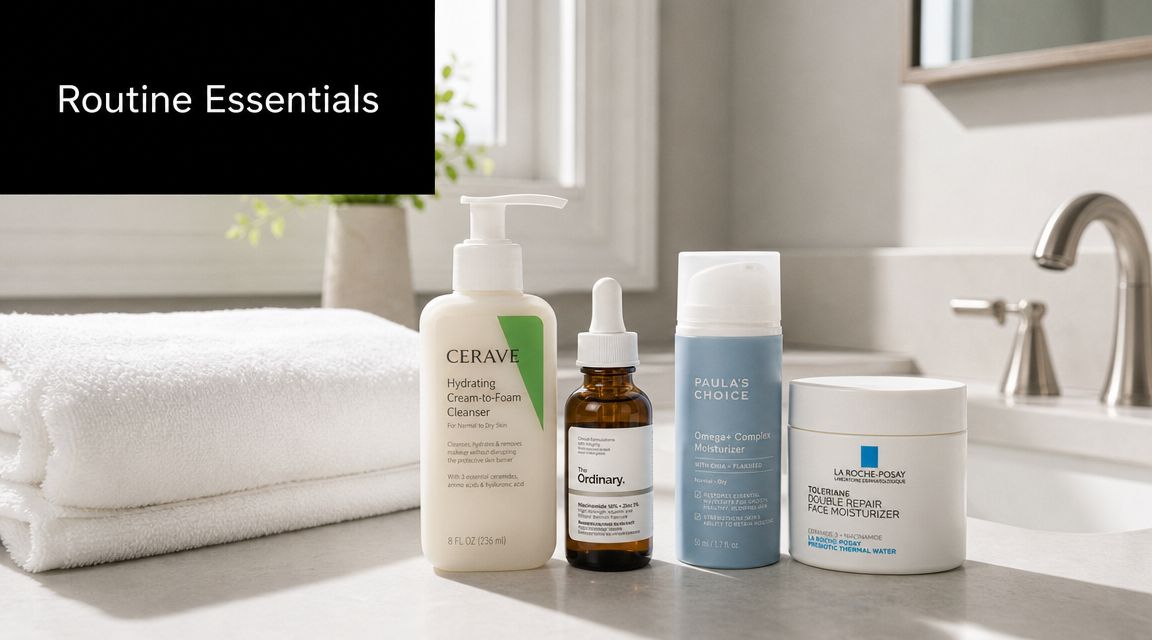
Cleanse and protect the barrier first
Start with a cleanser that removes sunscreen, makeup, and excess oil without leaving the skin tight. If your face feels squeaky after washing, the cleanser is probably too harsh for a texture-improvement plan.
Then add a moisturiser that supports the barrier. Look for ceramides, humectants, and simple, non-irritating formulas. Rough skin is often partly dehydrated skin, and dehydration exaggerates lines, flaking, and pore visibility.
A practical home methodology for texture is:
- Gentle cleanse to avoid stripping the skin
- One active category only at first, either an acid or a retinoid
- Barrier support with humectants and ceramides
- Daily broad-spectrum sunscreen
If you want a broader explanation of why sequencing matters, this guide on why a skincare routine is so important is useful background.
Choose one texture active at a time
If the problem is surface roughness, an AHA can help lift dead cells and smooth the top layer. If the issue is clogged pores or oilier congestion, a BHA is usually the more logical starting point. What doesn't work well is adding both immediately, then layering a retinoid on top.
Retinoids sit in a different category because they target cell turnover and support longer-term texture improvement. They're often the most valuable at-home treatment when the skin can tolerate them, but they need a sensible introduction. Start slowly. Watch for irritation. Don't combine them with every other active just because the packaging suggests “radiance”.
Clinical reality: over-exfoliation is one of the fastest ways to make skin feel rougher, look redder, and recover more slowly.
Nutrition also influences how well skin copes with active skincare. If you're reviewing your routine from the inside out as well, this overview of key vitamins for skin health is a practical companion read.
Make SPF non-negotiable
For people in the UK, sunscreen is one of the most evidence-based foundations for improving skin texture. The NHS advises using at least SPF 30 with broad-spectrum protection daily, as consistent use helps prevent the cumulative UV damage that contributes to fine lines, roughness, and pigment irregularity, as summarised in this skin care overview from Mayo Clinic.
That matters for two reasons. First, UV exposure keeps pushing the skin in the wrong direction even if the rest of your routine is good. Second, many texture-focused ingredients and procedures make skin less forgiving of sun exposure.
A simple rhythm works well for most adults:
- Morning: cleanse if needed, moisturiser, SPF
- Evening: cleanse, treatment step, moisturiser
- Weekly adjustment: increase or decrease the active depending on how your skin behaves, not how ambitious the routine sounds
If you're trying to figure out how to improve skin texture, build this routine first and keep it consistent before chasing stronger interventions.
Lifestyle Habits That Refine and Renew Your Complexion
Products matter. Habits decide how well those products can work.
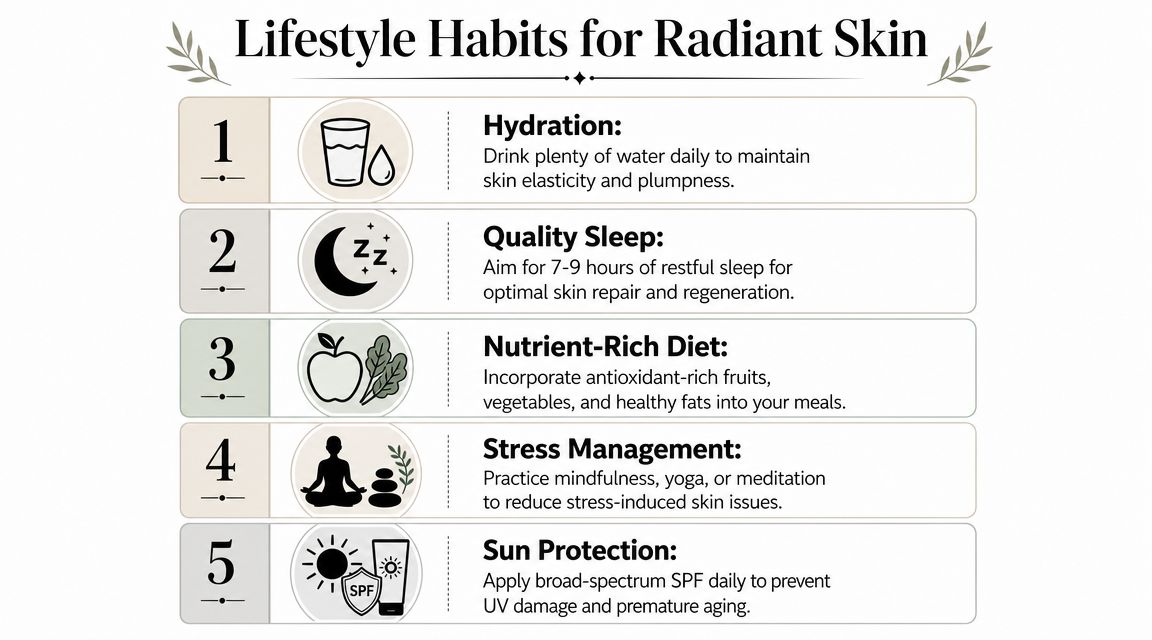
The habits that quietly affect texture
UK dermatology advice consistently treats smoking, poor sleep, dehydration, and chronic stress as part of the texture picture, not as optional wellness extras. Skin repairs itself more effectively when the body has the resources to do that work.
That shows up in practical ways. A tired, dehydrated, stressed client often complains that their skin looks rougher, flatter, and more reactive even when they haven't changed products. The routine gets blamed first. The recovery capacity is often the underlying issue.
A few habits deserve more respect than they get:
- Hydration: dry, under-hydrated skin can look more lined and feel less smooth
- Sleep: poor sleep leaves the skin looking duller and less resilient
- Diet quality: a balanced intake supports normal repair processes
- Stress control: chronic stress often shows up as inflammation, picking, or poor routine consistency
- Sun avoidance habits: hats, shade, and regular SPF use support any texture plan
Sleep is especially underestimated. If your rest is inconsistent, practical advice like the SleepHabits guide to optimal sleep can be more relevant to skin than another serum purchase.
A quick visual summary helps if you're trying to reset the basics:
What to stop doing
Improving texture is partly about adding useful things. It's also about stopping the habits that keep creating inflammation.
The most common mistakes are:
- Picking and squeezing: this turns minor congestion into marks and textural change
- Harsh scrubs: these often leave skin more inflamed, not smoother
- Too many actives at once: skin can't benefit from ingredients it's busy reacting to
- Routine hopping: changing products every week makes it hard to identify what's helping or harming
- Ignoring lifestyle triggers: no topical product cancels out repeated sleep loss or smoking
Good skin texture is often a repair story, not just an exfoliation story.
Cancer Research UK reports that around 1 in 5 skin cancers in the UK are linked to sunburn exposure in the past year, and that same UV exposure also contributes to photoageing changes that make roughness and pores more noticeable, as discussed in this overview on improving skin texture.
That's why lifestyle advice isn't cosmetic fluff. It's part of the treatment plan.
When At-Home Care Is Not Enough
A better serum can improve mild roughness. It won't flatten scar tissue, reverse deeper pitting, or solve every kind of persistent textural problem.
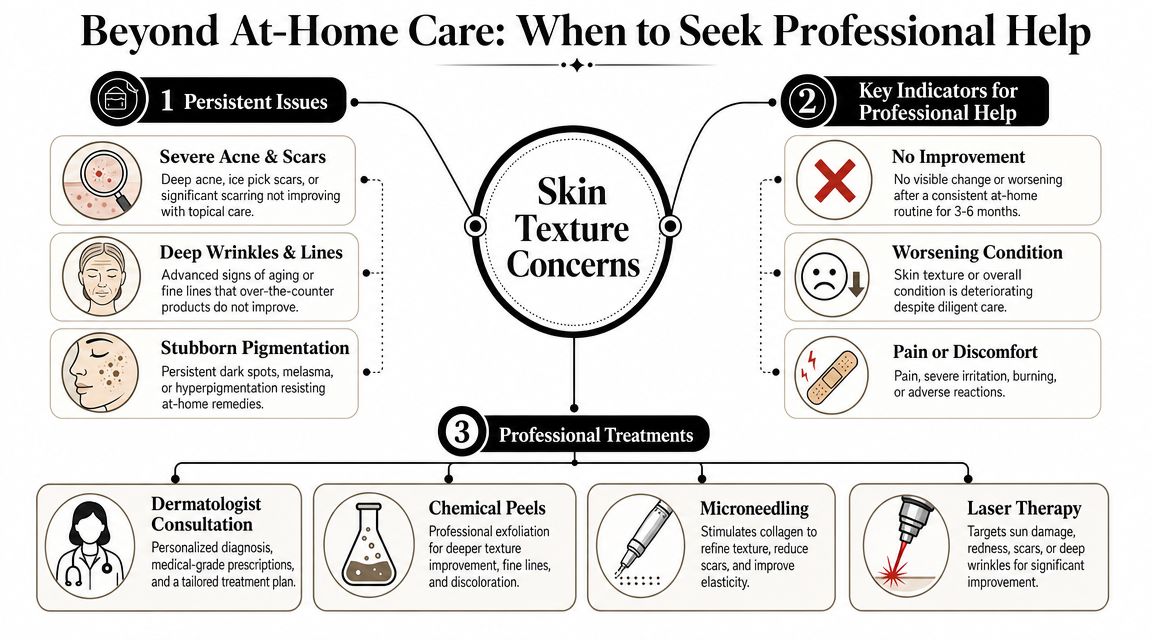
The diagnostic checklist
Before buying another product, ask yourself these questions:
- Is the skin rough or indented? Rough suggests surface issues. Indented suggests scarring.
- Is acne still active? If it is, treat the inflammation first. Resurfacing comes later.
- Does the skin sting easily? That may point to barrier damage rather than a need for stronger exfoliation.
- Has texture changed after breakouts? Established scars often need procedural treatment.
- Is pigment part of the issue? Dark marks can make texture look worse even when the surface isn't very uneven.
A major gap in most advice is that people need to identify the cause first. Texture can mean acne scarring, barrier damage, or eczema, and early treatment of acne matters because long-term textural marks become harder to manage once scarring is established, as noted in this guide to uneven skin texture.
Red flags that justify escalation
Professional assessment becomes sensible when one or more of these apply:
- Pitted or tethered acne scars
- Persistent unevenness despite a consistent routine
- Texture that worsens with every active
- Signs of significant sun-related change
- Recurrent inflammation followed by lingering marks
- Roughness combined with redness, discomfort, or irritation
This is also where targeted treatments such as microneedling for facial rejuvenation enter the conversation. Not because everyone needs them, but because some kinds of texture sit too deep for topical care to meaningfully change.
If your routine keeps making the skin angrier, the answer usually isn't a stronger routine.
A Guide to Advanced In-Clinic Skin Resurfacing Treatments
Once scar tissue, long-standing roughness, or photoageing becomes the main issue, a home routine shifts into a supporting role. It still matters, but it won't do the heavy lifting on its own.
What resurfacing treatments are designed to do
A 2021 review of skin-quality treatments describes modern options including chemical peels, microneedling, laser procedures, dermabrasion, and injectable approaches, and notes that these methods are associated with improvements in texture, hydration, elasticity, and pliability, while also stressing that larger controlled studies are still needed for some modalities. That review is available through the peer-reviewed article on skin quality and treatment options.
In practical clinic terms, resurfacing treatments work by either removing damaged surface layers, stimulating collagen remodelling underneath, or doing both. The question isn't “Which treatment is best?” A better question is, best for what kind of texture?
For textured skin related to acne scarring, UK practice usually follows a stepwise pathway. Control active acne first. Then use a series of microneedling or fractional resurfacing treatments. Maintain with retinoids and SPF. That approach reflects a simple truth. Once scar tissue has formed, topical skincare alone is usually insufficient, as outlined in this overview of skin texture treatment pathways.
Comparing Professional Skin Texture Treatments
| Treatment | Best For | Typical Downtime | Sessions Needed |
|---|---|---|---|
| Chemical peels | Surface roughness, dullness, mild unevenness | Varies by peel depth | Usually a course rather than one treatment |
| Microneedling | Mild to moderate texture change, enlarged pores, post-acne unevenness | Usually lower downtime than ablative resurfacing | Usually repeated sessions |
| Fractional CO2 laser | More significant scarring, deeper textural change, photoageing | Higher downtime | Often staged according to severity |
| Radiofrequency microneedling | Texture with some laxity or pore concerns | Usually moderate downtime | Usually repeated sessions |
| LED light therapy | Supportive treatment for inflammation and recovery | Minimal | Best used as part of a wider plan |
| Hydrating facial technologies such as 3D-HydrO2 | Dehydrated, dull, superficially rough skin | Minimal | Maintenance-focused rather than scar correction |
| HIFU and RF skin tightening | Laxity-related textural softening rather than surface roughness | Minimal to moderate | Often a planned course |
How each treatment fits a real texture concern
Chemical peels are useful when texture is largely superficial. They can help with dead cell build-up, mild uneven tone, and that coarse feeling that sits on the top layer of skin. They're less useful for true pitted scars.
Microneedling creates controlled micro-injury that prompts collagen renewal. This makes it a reasonable option for post-acne textural change, enlarged pores, and general skin refinement. If someone has active acne, though, that needs controlling first.
Fractional CO2 laser sits further up the ladder. It's better suited to deeper scars and more established surface irregularity because it combines resurfacing with stronger collagen remodelling. The trade-off is more downtime, stricter aftercare, and a greater need for careful patient selection.
Radiofrequency microneedling adds heat energy to collagen induction. That can make sense where texture and mild laxity overlap. One example is 3D Dermaforce, which combines microneedling and RF to target irregular skin texture through collagen and elastin stimulation. It's one option among several for clients who need more than skincare but don't necessarily need an ablative laser.
The stronger the resurfacing treatment, the more important the aftercare becomes.
Dermalux LED therapy doesn't replace resurfacing, but it can support healing, calm inflammation, and fit well around a broader skin plan.
3D-HydrO2 facials work best for skin that is dull, congested, or dehydrated rather than scarred. They improve the way the skin looks and feels, but they're not a substitute for collagen-remodelling procedures when the concern is structural.
RF and HIFU can be useful when the skin looks less smooth partly because it has become less firm. They help more with support and tightening than with deep scar correction.
Trade-offs that matter in practice
People often focus on the name of the treatment. Ultimately, decisions usually come down to these trade-offs:
Downtime versus intensity
Fractional laser usually asks more of you after treatment than a peel or microneedling session.Surface improvement versus structural remodelling
Peels mainly address the upper layers. Microneedling and lasers do more for collagen-driven change.Short-term glow versus long-term repair
Hydration facials can make skin look fresher quickly. Scar revision usually takes a course of treatment and patience.Risk tolerance and pigment behaviour
After resurfacing, sun protection matters even more, particularly because post-inflammatory pigment change is a real concern in darker skin tones.
The biggest mistake is choosing by trend. The second biggest is expecting one treatment to correct a problem that needs a series and a maintenance plan.
Your Personalised Journey to Smoother Skin
The most useful way to think about texture improvement is as a ladder. You start at the lowest rung that has a real chance of working. You only climb when the skin needs more.
Start with the right level of treatment
If your texture is mainly dryness, congestion, or mild roughness, fix the basics first. Keep the routine simple. Use one active. Protect the barrier. Stay consistent. That alone can make the skin look and feel more even.
If the issue is scar-related, persistent, or linked to more visible photoageing, escalation is usually the more efficient route. That doesn't mean jumping to the strongest treatment immediately. It means choosing the right category of treatment instead of repeating products that were never designed for the problem.
Consistency matters more than intensity
Most worthwhile texture changes happen over weeks to months, not days. That's true whether you're using a retinoid correctly or having a course of collagen-stimulating procedures. Skin responds to repeated, well-tolerated inputs better than to dramatic bursts of irritation.
A personalised plan usually includes:
- A clear diagnosis of what kind of texture you have
- A stable home routine that supports rather than disrupts
- Escalation only when indicated by scars, persistent unevenness, or structural change
- Maintenance so results don't fade as soon as treatment ends
If you're trying to work out how to improve skin texture, don't ask what everyone else is using. Ask what your skin is showing you. Roughness, congestion, scarring, and sun damage are different problems. Smooth skin usually comes from respecting that difference.
If you want a personalized plan rather than more trial and error, 3D Aesthetics Leamington Spa offers consultations that assess your skin concerns in detail and help match home care, microneedling, resurfacing, or skin-rejuvenation treatments to the kind of texture you have.