
You catch it in ordinary light first.
Not after a holiday. Not after a dramatic sunburn. Just on a normal morning, when you tilt your face towards the mirror and notice the changes that weren't there before. A patch of uneven colour on one cheek. Tiny lines around the eyes that look more etched than expressive. Skin that feels a bit rougher, less springy, less clear.
If you've reached this stage, you might be feeling slightly overwhelmed. You've tried brightening serums, richer moisturisers, perhaps a peel pad or two, and the results have been modest at best. That's usually the point where sun damage skin treatment starts to feel confusing. Should you choose a peel, laser, microneedling, LED, resurfacing, or all of the above?
The answer is usually not “pick one and hope for the best”. It's “work out what your skin is showing, what sits underneath it, and what order makes sense”.
That's how we think about it in clinic. We don't look at sun damage as one flat problem. We look at pigment, texture, collagen loss, visible vessels, sensitivity, healing capacity, and how much downtime someone can realistically manage. That sequence matters just as much as the treatment itself.
If you're also curious about gentle support treatments that can sit around more active procedures, Dermalux LED light therapy is one example people often explore as part of a broader skin plan.
Table of Contents
- Your Guide to Reversing Sun Damage Begins Here
- What Sun Damage Really Means for Your Skin
- Your Guide to Evidence-Based Sun Damage Treatments
- The 3D Aesthetics Assessment Your First Step to Clarity
- Building Your Personalised Treatment Plan
- Setting Realistic Expectations and Long-Term Results
- Essential Aftercare and Protecting Your Investment
Your Guide to Reversing Sun Damage Begins Here
A new client usually describes sun damage in everyday terms, not medical ones. They'll say their skin looks “weathered”, “patchy”, “dull”, or “older than it used to”. Often, they're not chasing perfection. They just want their skin to look fresher, smoother, and more even again.
That's a very sensible place to start, because visible sun damage rarely comes from one single issue. One person may have mainly brown marks and redness. Another may have roughness, enlarged pores, and fine lines. Someone else may have all three, plus a history of heavy sun exposure that makes proper assessment more important than a cosmetic guess.
Why one cream rarely fixes everything
High-street skincare can help support the skin, especially if you're consistent. But if UV exposure has already affected pigment, texture, and the deeper support structure of the skin, moisturiser alone usually won't do the full job. That's why professional treatment plans often combine surface correction with collagen-focused work.
A simple way to think about it is this. If a wall has faded paint, cracks, and damp underneath, repainting alone won't fully restore it. Skin works in a similar way. The surface tells you something, but an effective plan depends on what's happening underneath.
Good sun damage skin treatment isn't just about choosing a machine. It's about choosing the right sequence for your skin.
The clinic mindset
When we assess sun damage properly, we're really answering a few practical questions:
- What is most visible now. Pigment, lines, roughness, redness, or loose skin.
- What is driving it underneath. Surface build-up, collagen breakdown, chronic inflammation, or deeper photodamage.
- What can your skin tolerate. Some people want minimal downtime. Others are happy to take a stronger approach if it means more visible resurfacing.
- What needs medical attention first. Any lesion that looks irregular, persistent, or suspicious should be checked appropriately before cosmetic treatment.
That's why a good plan feels calm and methodical. You're not buying a trend. You're building a pathway.
What Sun Damage Really Means for Your Skin
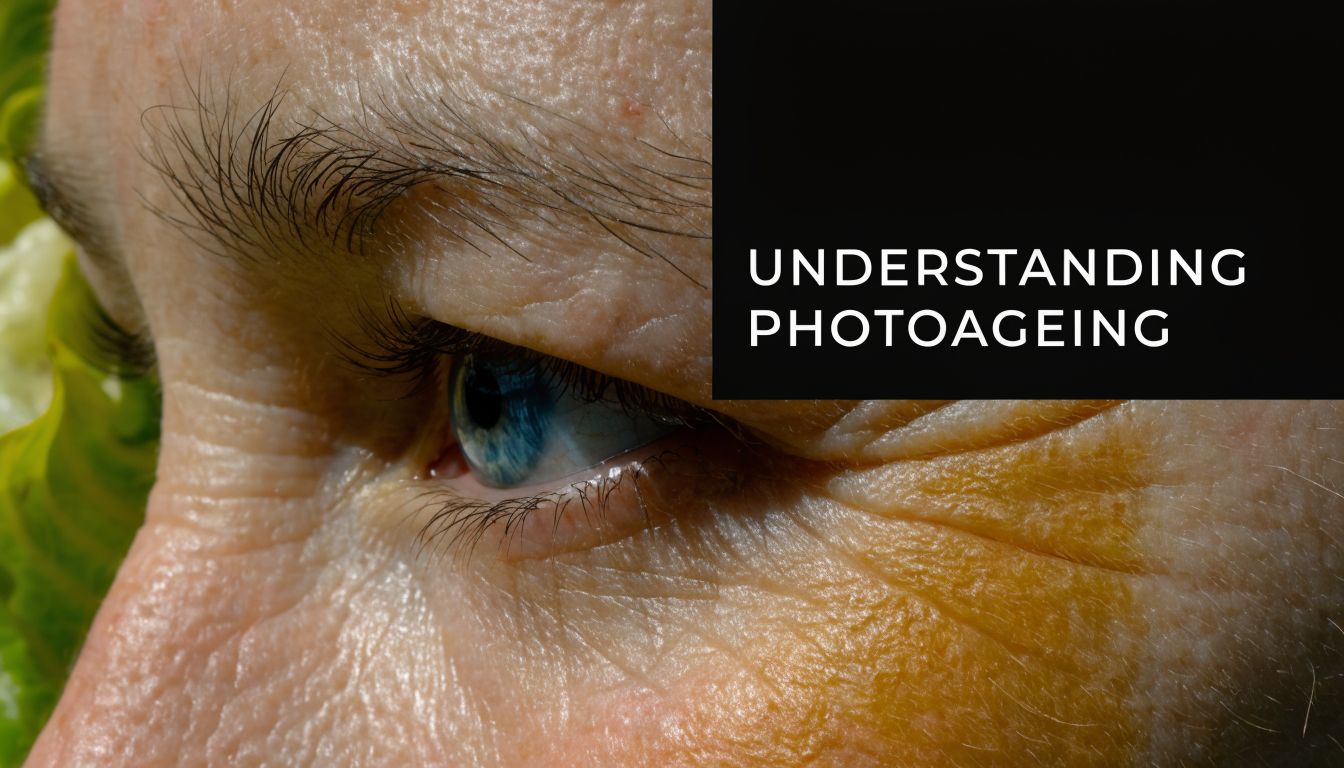
Sun damage is often described as “premature ageing”, but that phrase can sound cosmetic and a bit vague. In reality, photoageing means repeated UV exposure has changed how the skin behaves, both on the surface and in the deeper layers that give it strength and bounce.
Think about fabric left in a sunny window for years. The colour fades first. Then the fibres weaken. The material becomes drier, flatter, and more fragile. Skin behaves in much the same way.
What changes first and what changes deeper down
Some signs sit mainly at the surface. These include:
- Uneven pigment. Brown spots or patchy colour can appear when skin produces pigment unevenly after repeated UV exposure.
- Dullness. Dead skin can build up, making the complexion look tired or flat.
- Rough texture. The skin may no longer feel smooth when you wash or apply makeup.
Other changes happen deeper down:
- Fine lines and etched wrinkles. These often reflect breakdown in collagen and elastin.
- Loss of elasticity. Skin doesn't spring back as easily.
- A crepey or thinned look. This can happen when the dermal support structure becomes less firm over time.
The reason treatment varies so much is simple. A peel can help with superficial unevenness. It won't tighten looser tissue in the way a more collagen-focused treatment might. In the same way, a tightening treatment won't necessarily target brown pigment directly.
Why prevention sits at the centre of treatment
In the UK, clinicians treat UV-related skin ageing as a prevention-first issue because cumulative photodamage is tied to a higher UV burden and a real skin-cancer concern. The British Association of Dermatologists notes that around 100,000 people in the UK are diagnosed with skin cancer each year, which is why proper assessment matters and why suspicious lesions shouldn't be brushed off as “just sun damage” (clinical overview of sun damage and prevention).
That same clinical picture also explains why simple hydration isn't enough. When sun damage is established, treatment planning often combines year-round broad-spectrum SPF 30+ use, visible-light and UV avoidance, and lesion-directed treatment where needed. If actinic keratoses or wider field damage are present, options such as cryotherapy, photodynamic therapy, or field treatment may be considered in a medical setting rather than relying on cosmetic skincare alone.
Practical rule: If a patch is scaly, persistent, sore, changing, or doesn't behave like the rest of your pigmentation, it needs professional review before any aesthetic treatment plan starts.
Your Guide to Evidence-Based Sun Damage Treatments
No single treatment covers every form of sun damage. Some options target pigment. Others focus on texture, collagen remodelling, or recovery support. The right choice depends on what's most obvious in your skin and what sits beneath it.
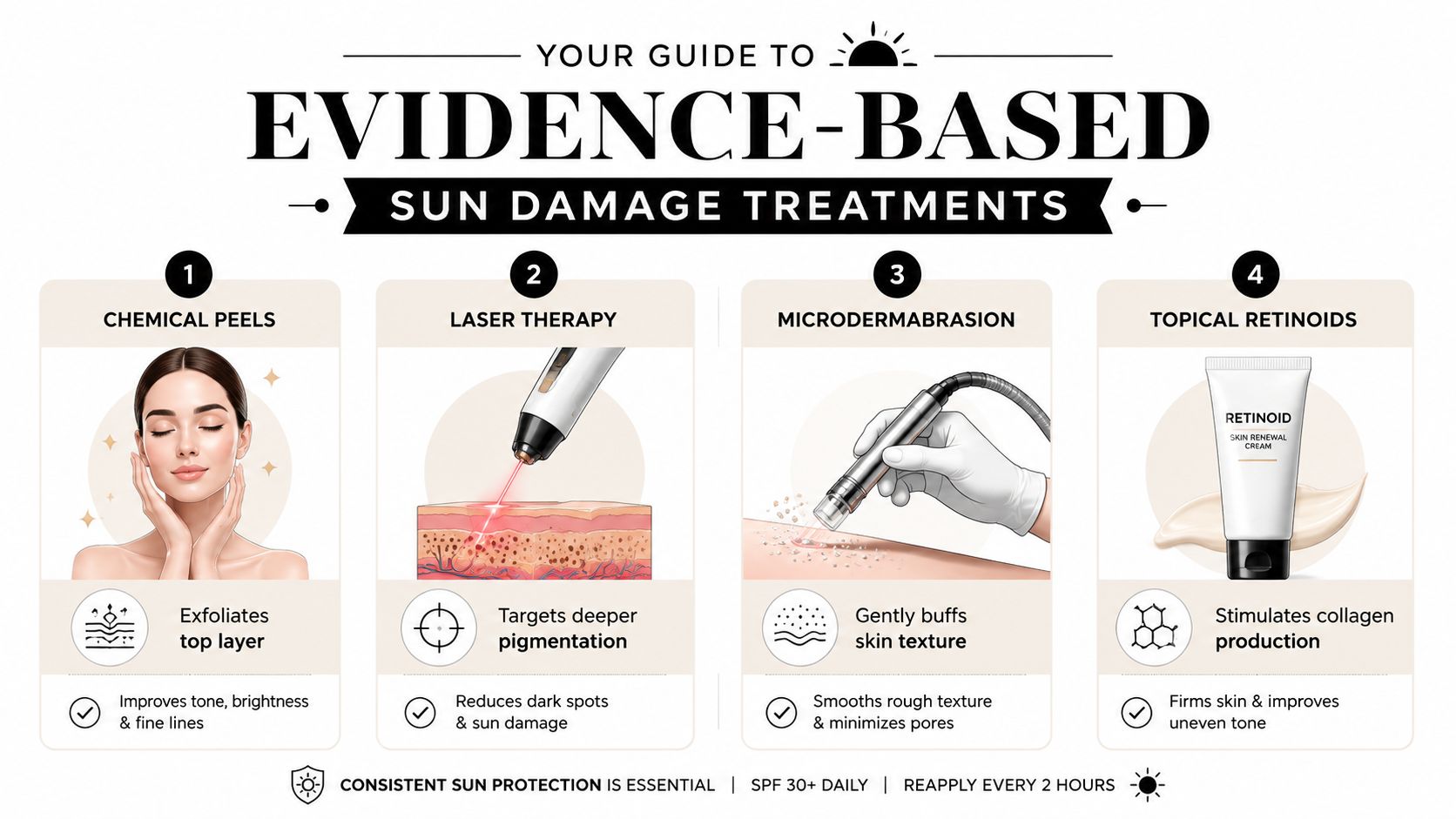
This visual gives a simple overview before we break things down in plain English.
When pigment is the main issue
If your first complaint is brown spots, patchiness, or uneven tone, treatment usually starts with therapies that target pigment more directly.
One clinic option for this is 3D Nanosure pigmentation removal, which is designed for pigmentation concerns rather than deeper resurfacing. In practical terms, this kind of treatment is usually more relevant when the skin's biggest issue is discolouration rather than loose texture or etched lines.
Chemical peels can also sit in this part of the plan. They work by exfoliating damaged surface layers so fresher skin can come through. Superficial peels often suit mild unevenness and dullness. Stronger peels may be considered when pigment is more stubborn and the skin is suitable.
Microdermabrasion can help some clients with roughness and surface brightness, but it's usually a gentler polishing step rather than the answer for more established photodamage.
Here's a practical comparison.
| Treatment | Primary Target | Best For | Typical Downtime |
|---|---|---|---|
| Chemical peels | Surface pigment and roughness | Mild to moderate uneven tone, dullness, superficial texture | Varies by depth, from light flaking to more visible peeling |
| Pigment-focused laser | Brown marks and uneven colour | Localised pigmentation and sun spots | Usually depends on intensity and skin response |
| Microdermabrasion | Surface smoothing | Mild roughness and freshening the skin's appearance | Minimal |
| Topical retinoids | Cell turnover and early renewal | Early photoageing and maintenance support | Often includes an adjustment phase with dryness or irritation |
For readers comparing home support and clinic options, this guide to treating sun-damaged skin with light therapy gives a helpful overview of where light-based support may fit alongside broader treatment planning.
A short treatment video can also make the category less abstract.
When texture and lines need more than skincare
Once sun damage has moved beyond simple pigment and into rough texture, fine lines, etched wrinkles, or laxity, the treatment logic changes. Evidence-led care uses escalation. Prescription retinoids often come first, but for deeper textural change, laser resurfacing and fractional CO2 systems are preferred because they ablate damaged epidermis and stimulate neocollagenesis, actively remodelling the skin's structure (review of photoageing treatment approaches).
That sounds technical, so here's the plain version. If the skin's “scaffolding” has weakened, you usually need a treatment that prompts rebuilding, not just brightening.
A few common choices include:
- Fractional CO2 resurfacing. Better suited to more advanced textural sun damage, etched lines, and stronger resurfacing goals. Downtime is more noticeable, so this is often chosen when visible change matters more than a quick return to normal.
- Microneedling such as 3D Dermaforce. Useful when you want collagen stimulation, smoother texture, and a more gradual approach. It often fits clients who want improvement without the intensity of ablative resurfacing.
- Radiofrequency or ultrasound-based tightening. More relevant where laxity is part of the picture and the goal is firmer support rather than pigment correction.
If pigment is the stain on the wall, resurfacing is the sanding. Tightening is the structural repair.
Where supportive treatments fit in
Supportive treatments don't replace resurfacing when deeper repair is needed, but they can make a treatment plan more complete.
LED therapy is a good example. It's often used around stronger procedures to calm the skin, support healing, and reduce the “angry” post-treatment feeling many clients worry about. That makes it useful in a sequence, even if it isn't the main corrective step.
Advanced facials can help with hydration, comfort, and maintenance. They're rarely the hero treatment for significant sun damage, but they can help keep skin functioning well between more active stages.
The key is to match the treatment to the job. Brightening options for pigment. Remodelling options for deeper change. Supportive options for healing and maintenance.
The 3D Aesthetics Assessment Your First Step to Clarity
Most treatment mistakes happen before any device is switched on. They happen when someone labels all uneven skin as “sun damage”, books the first treatment that sounds familiar, and only later realises the issue was more complex.
Brown patches can be very different from one another. Redness can sit alongside pigment. Rough sun-exposed skin can sometimes include areas that need medical review rather than cosmetic treatment. That's why assessment matters more than enthusiasm.

Why online self-diagnosis often goes wrong
The internet is very good at showing before-and-after photos. It's much less good at telling you why one person was suitable for a peel while another needed resurfacing, or why one patch should never have been treated cosmetically without a prior check.
Clients often come in saying things like:
- “I think I just need a peel.” Sometimes yes. Sometimes the bigger issue is collagen loss.
- “It's only pigmentation.” Not always. There may be texture change, sensitivity, redness, or deeper UV damage sitting behind it.
- “I want the strongest option.” Stronger isn't automatically smarter if your skin barrier is fragile or your schedule won't allow proper recovery.
A professional consultation slows the whole process down in a good way. It stops you solving the wrong problem.
What a proper consultation should uncover
A thoughtful assessment usually covers more than your face on that one day. It looks at pattern, history, skin behaviour, and practical life factors.
That means discussing things like:
- Sun exposure history. Outdoor work, holidays, previous tanning, and how consistently you've used SPF.
- Your main frustration. Spots, texture, fine lines, visible capillaries, or a general “aged” look.
- Healing and sensitivity. Whether your skin tends to react, peel, flare, or mark easily.
- Downtime tolerance. Some people can manage a few pink days. Others need lunch-break treatments only.
- Anything suspicious. If a lesion looks outside the usual cosmetic pattern, it should be addressed appropriately first.
A good consultation should leave you with fewer treatment options than you found online, not more.
When the assessment is done properly, the treatment plan starts to feel clearer. You can separate what needs pigment correction, what needs collagen stimulation, what should be supported gently, and what should be referred if it doesn't belong in an aesthetic pathway.
Building Your Personalised Treatment Plan
The most useful shift a client can make is moving from “What's the best treatment?” to “What's the best order for my skin?”
That change matters because sun damage usually sits in layers. Surface pigment, rough texture, reduced firmness, and a stressed skin barrier don't always respond well if you tackle everything at once. Sequencing lets each stage do its job properly.
A sample treatment sequence
Take a fairly common example. A client notices scattered brown marks across the cheeks, a rough feel around the sides of the face, and fine lines beginning to settle around the eyes and upper cheeks.
A sensible plan might look like this:
- Start by calming and preparing the skin. If the barrier is reactive or dehydrated, treatment tends to be less predictable. This stage might include skincare adjustments and a gentler support session.
- Target pigment first. If brown marks are the most obvious concern, a pigment-focused treatment can help reduce visual patchiness before deeper remodelling begins.
- Move into collagen stimulation. Once the skin is more even, microneedling or resurfacing may be introduced to improve texture and fine lines.
- Use support sessions between active treatments. LED-based recovery support can help settle inflammation and keep the skin comfortable while it repairs.
- Review, don't rush. Some clients then need maintenance. Others benefit from a stronger resurfacing step later.
This is why combination plans often outperform one-off thinking. You're treating the skin more like a system and less like a single symptom.
Why timing matters as much as treatment choice
If you do the right treatment at the wrong time, results can still disappoint. For example, jumping straight into an aggressive resurfacing treatment when the skin is irritated, freshly tanned, or poorly protected from UV can increase the chance of setbacks.
Timing also matters between treatments. The skin needs space to respond. Pigment-focused work may reveal that texture is the next priority. Microneedling may improve the skin enough that a stronger treatment is no longer necessary. Or the reverse may happen, where a gentle start shows that a deeper resurfacing approach is warranted later.
A good plan is organised, not rigid. It responds to how your skin behaves, not just to what looked good on a menu.
Setting Realistic Expectations and Long-Term Results
Years of UV exposure don't disappear in a weekend. Even when treatment is effective, results usually arrive in stages.
That's a good sign. It means the skin is repairing and remodelling rather than being masked.
What improvement usually looks like
Most clients notice changes in layers. Surface brightness may improve first. Pigment can start to look more broken up or less obvious. Texture often smooths gradually. Collagen-led improvements, such as better firmness or softer fine lines, tend to feel slower and more cumulative.
The healthiest expectation is visible improvement, not “skin exactly as it was before sun exposure”. Good treatment can make skin look clearer, fresher, smoother, and better supported. It can't turn back every year or erase every line.
A few useful mindset checks:
- Think in months, not days. Especially for collagen-focused treatments.
- Judge the whole face, not one mark. Overall improvement matters more than obsessing over a single spot.
- Expect maintenance. Sun-damaged skin usually needs ongoing care, not a one-time fix.
The goal isn't teenage skin. It's healthier-looking skin that behaves better and ages more gracefully from this point onward.
The health question people often miss
Sun damage treatment isn't always only cosmetic. Recent evidence suggests some procedures may have a broader role. For example, fractional non-ablative laser has been discussed as not only softening photodamage but, in at least one trial, reducing actinic keratoses and future non-melanoma skin cancers in the treated area (specialist discussion of preventive potential in photodamage treatment).
That doesn't mean every aesthetic treatment is preventive medicine, and it doesn't replace proper dermatology care where lesions are suspicious. But it does widen the conversation. In some clients, especially those with chronic sun-exposed skin, treatment may support both appearance and longer-term skin health.
Essential Aftercare and Protecting Your Investment
The treatment itself is only half the job. Aftercare protects the progress your skin has just worked hard to make.
This is the point many people underestimate. They'll commit to peels, microneedling, laser, or resurfacing, then loosen up on sun protection once the skin starts looking better. That's exactly how fresh gains get undermined.

Your non-negotiables after treatment
After any meaningful sun damage skin treatment, these rules matter:
- Use broad-spectrum SPF every day. Not only on sunny days, and not only on holiday.
- Avoid deliberate sun exposure while healing. Freshly treated skin is more vulnerable.
- Follow the skincare plan you're given. Randomly adding acids, scrubs, or active ingredients too soon can irritate skin and muddy results.
- Let the skin heal undisturbed. Don't pick, peel, rub, or over-cleanse.
- Report anything unusual. Unexpected prolonged redness, discomfort, or changes should be reviewed.
For many clients, home care becomes much easier once it's simplified. A consistent routine is far more useful than a crowded shelf. If you want a practical overview of why maintenance matters, this guide on why a skincare routine is so important is a useful starting point.
How to keep results going
Think of aftercare like protecting a fresh decorating job in your home. If you repaint and then leave the windows open in the rain, the finish won't last. Skin is no different.
Your maintenance plan may include regular SPF, a retinoid if appropriate, supportive hydration, periodic review appointments, and occasional top-up treatments depending on how your skin behaves over time. Some people need very little once they've corrected the main issue. Others do best with light maintenance built into the year.
What matters most is consistency. The people who hold their results best usually aren't the ones with the longest routines. They're the ones who stick to the basics faithfully.
If you're looking for a clearer answer to what sequence of treatments makes sense for your skin, 3D Aesthetics Leamington Spa offers consultation-led planning that can help separate pigment concerns, texture changes, and collagen loss into a more realistic next step.
Built with Outrank app