
You've been eating well, moving more, and trying to be patient. Your clothes fit better in some places, but there's still that one area that annoys you every time you get dressed. It might be the lower tummy that stays soft no matter how many planks you do, the flanks that sit over your waistband, or the outer thighs that haven't changed even though the scale has.
That's usually the point where people start looking into non surgical fat removal. Not because they want a shortcut to weight loss, but because they want help with a localised area that doesn't seem to respond the same way as the rest of the body. That distinction matters. These treatments are about shape, not total body weight.
In clinic, this is one of the most common frustrations clients describe. They often say some version of the same thing. “I'm not trying to become a different person. I just want this one area to look more in proportion.” That's a realistic and sensible reason to explore body contouring.
Modern technology gives therapists several ways to target stubborn fat without surgery, while keeping downtime low and treatment plans flexible. The key is understanding what each option does, what it doesn't do, and how a proper consultation helps match the right method to the right concern.
Table of Contents
- Tired of Stubborn Fat That Just Wont Budge
- How Non-Surgical Fat Removal Actually Works
- The Main Technologies Explained
- Are You a Good Candidate for These Treatments
- What to Realistically Expect Results Timeline and Longevity
- Your Journey at 3D Aesthetics Leamington Spa
- Frequently Asked Questions
Tired of Stubborn Fat That Just Wont Budge
A familiar example is someone who has already made good progress on their own. They've changed how they eat, they walk more, maybe they do strength training a few times a week, and they feel fitter. Yet when they look in the mirror, the same little bulges are still there. The body has changed overall, but not evenly.
That can feel confusing. People assume that if they work harder, that exact spot will eventually catch up. Sometimes it does. Sometimes it doesn't.
Why this feels so frustrating
Fat doesn't always reduce in the neat, balanced way people expect. You can lose weight generally and still hold on to localised pockets around the abdomen, thighs, upper arms, bra line, or under the chin. Those areas often become more noticeable because the surrounding areas have improved.
Non-surgical body contouring makes the most sense when your goal is refinement, not reinvention.
Non-surgical fat removal then becomes a practical option. Instead of trying to shrink the whole body further just to improve one area, you look at a targeted treatment for a targeted concern.
What people are usually hoping for
Most new clients aren't asking for dramatic change. They want small but visible improvements such as:
- A smoother waistline so clothes sit better
- Less fullness at the lower abdomen after weight loss or pregnancy
- More balance through the thighs or flanks
- A cleaner outline under the chin or around the bra area
That's an important mindset. These treatments suit people who are already making a decent effort and want help with the last awkward bit.
If that sounds like you, the next question isn't “does it work like surgery?” It doesn't. The better question is whether it can create a gradual, natural-looking contour change in the exact area bothering you. For many people, that's the appeal.
How Non-Surgical Fat Removal Actually Works
A useful way to understand non surgical fat removal is to picture what happens at a good consultation. At 3D Aesthetics Leamington Spa, the first question is not “how much weight will I lose?” It is “what exactly is bothering you, and what tissue are we looking at?” That matters because these treatments are designed to reshape a specific area, not reduce body weight across the board.
The treatment targets fat cells, then your body handles the rest
Liposuction removes fat directly. Non surgical body contouring works differently. A device applies controlled cold, heat, or sound energy to a chosen area with the aim of disrupting fat cells more than the surrounding tissue.
After that, your body does the clearing. A good comparison is bruising after a bump. You do not watch the body repair it in real time, but over days and weeks it clears what it no longer needs. Fat reduction treatments follow that same gradual logic. The treated cells are affected first, then processed naturally over time.
That is why treatment day is only the start of the process.
Why a 3D body scan helps
This is also where a high tech consultation becomes useful rather than gimmicky. A 3D body scan can help map shape, volume, and symmetry before treatment begins. Instead of relying only on mirror checks or tape measurements, your therapist can assess the area more objectively and explain whether the concern looks like a localised fat pocket, loose skin, bloating, posture, or a mix of several factors.
For a new client, that often clears up a lot of confusion. Someone may point to “fat” at the lower abdomen, for example, when the full picture includes skin laxity and muscle separation as well. Choosing the right fat reduction treatment options in Leamington Spa depends on that distinction.
Why results are gradual
A common misunderstanding is expecting an immediate visual change, as if the treatment melts inches away there and then. The visible shift usually comes later because the body needs time to respond and clear the affected cells.
This slower pace is often a benefit. Changes tend to appear progressively, so the area looks more naturally refined rather than suddenly different. Clothes may fit better before the mirror tells the full story, which is why comparison photos and body scan records can be more helpful than day to day checking.
What these treatments are actually designed to do
The aim is contour improvement. In simple terms, that means reducing the prominence of a stubborn bulge so the surrounding shape looks smoother or more balanced.
A few practical points keep expectations realistic:
- One area at a time. Treatment is aimed at a defined pocket, not whole body weight loss.
- No cutting or suctioning. The body processes the change gradually after the session.
- Different technologies suit different tissue types. Pinchable fat, firmer areas, and mixed concerns may need different approaches.
- Routine is usually affected very little. Many clients go back to normal activities quickly.
If you want a clearer idea of how one of the best known methods is selected and used, this guide offers strategic fat freezing advice.
Practical rule: These treatments make the most sense for shaping a specific area that has not responded as well as the rest of you.
That is the foundation of a sensible treatment plan. You identify the tissue correctly, choose the right technology for that area, and allow time for the body to do its part.
The Main Technologies Explained
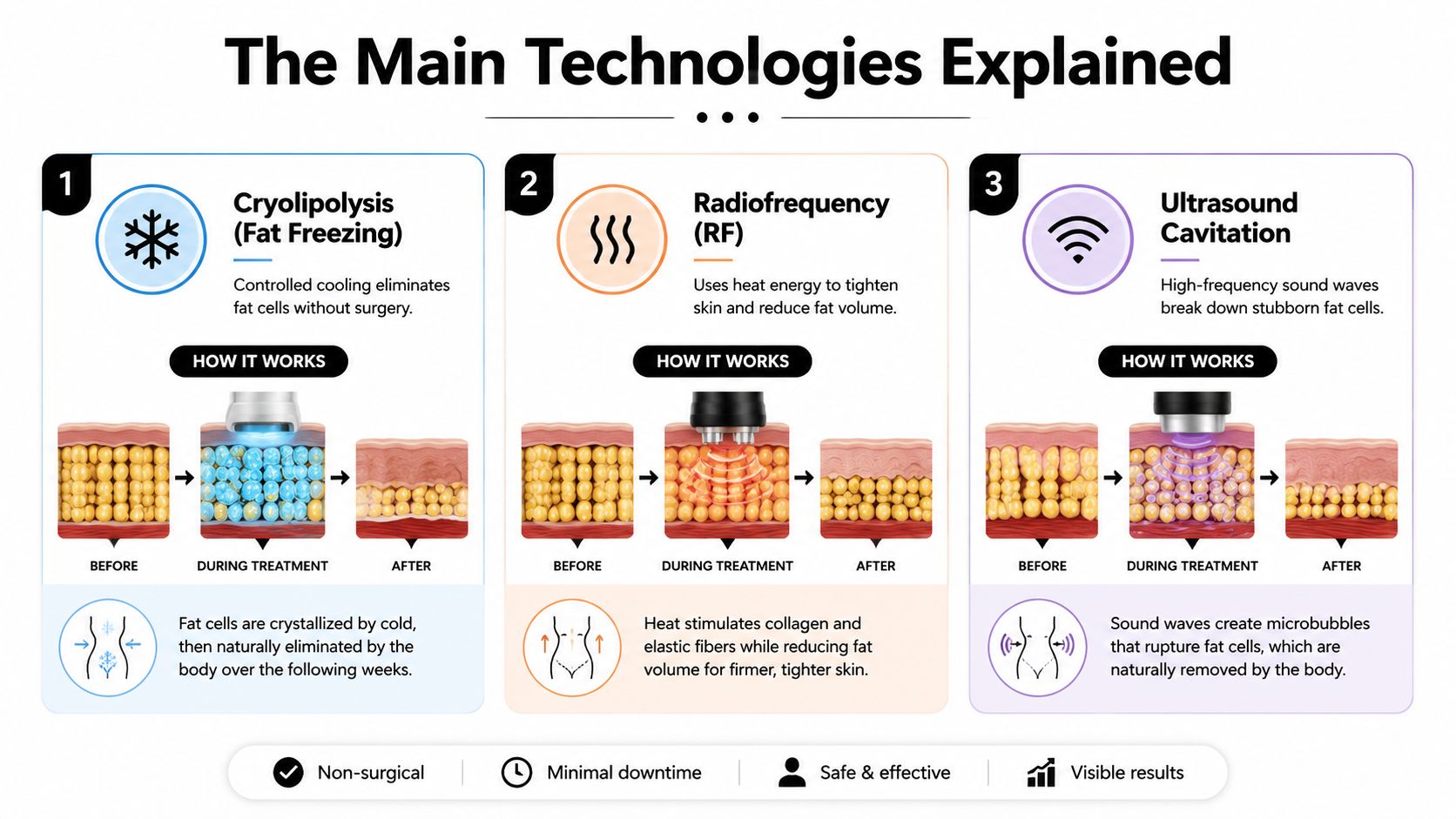
Different machines can all sit under the broad label of non surgical fat removal, but they don't all behave the same way. Some rely on cold, some on heat, and some on sound waves. That matters because the right choice depends on what you want to improve.
A simple visual comparison helps before getting into the detail.
Fat Freezing Or Cryolipolysis
Fat freezing, often called cryolipolysis, uses controlled cooling to target a localised fat pocket. It's usually chosen for pinchable areas where there's enough tissue for the applicator to grip well, such as the abdomen, flanks, inner thighs, or under the chin depending on the device.
During treatment, people commonly describe a strong cold sensation at the start, then numbness as the area settles. Afterward, the area can feel firm, tender, or oddly numb for a while. That doesn't mean something has gone wrong. It's part of why a therapist talks you through aftercare and expectations in advance.
This option often appeals to clients who want a focused approach to a distinct bulge rather than an all-over tightening treatment. If you want a broader overview of what good planning looks like before booking, this guide to strategic fat freezing advice is useful because it focuses on treatment fit, not hype.
A local clinic may also combine cryotherapy with other modalities rather than treating fat freezing as a stand-alone answer. One example is the range of focused fat reduction treatment options used in body contouring plans that are designed for the area being treated.
Ultrasound Cavitation
Ultrasound cavitation uses sound waves. The American Society of Plastic Surgeons explains that ultrasound methods disrupt fat-cell membranes without incisions, which is why they're often discussed in relation to localised inch-loss style outcomes rather than general slimming in the ASPS guide to nonsurgical fat reduction.
What does it feel like? The experience is often quite manageable. Treatment is often described as warm with a vibrating or buzzing sensation. Some hear a faint internal ringing sound because of how the sound waves travel, which can feel strange if you're not expecting it but isn't usually painful.
Ultrasound is a sensible conversation to have when the goal is a stubborn patch of soft fat and the client wants a non-invasive option with a straightforward session feel.
Radiofrequency Or RF
Radiofrequency, often shortened to RF, works differently. It uses radio waves to heat and reduce fat, and that makes it especially interesting when someone also wants some mild skin tightening.
That dual effect matters in real life. Some clients don't just dislike the fullness of an area. They also dislike that the skin there looks a bit loose, crepey, or less firm than it used to. In those cases, RF can be a better match than a treatment chosen only for fat disruption.
A session usually feels warm, sometimes very warm, but in a controlled and monitored way. Many clients prefer this sensation because it feels active but comfortable.
Shockwave As A Support Treatment
Shockwave is worth mentioning because people often lump it together with fat treatments. It's better thought of as a support treatment, especially when cellulite appearance is part of the concern.
The same ASPS guidance notes that shock-wave style devices mainly improve cellulite by reducing interstitial fluid and altering skin appearance, rather than directly removing fat tissue. So if someone says, “I want less dimpling on the backs of my thighs,” shockwave may be relevant. If they say, “I want to remove a fat bulge,” it's usually not the main tool.
Here's a quick side-by-side view.
| Technology | How It Works | Best For | Typical Sensation |
|---|---|---|---|
| Cryolipolysis | Controlled cooling targets localised fat cells | Pinchable stubborn fat bulges | Intense cold at first, then numbness |
| Radiofrequency | Radio waves heat tissue to reduce fat and support mild tightening | Areas where fat reduction and firmer skin are both goals | Deep warmth |
| Ultrasound Cavitation | Sound waves disrupt fat-cell membranes | Localised inch-loss style contouring | Warm buzzing or vibration |
| Shockwave | Mechanical energy improves cellulite appearance rather than directly removing fat | Dimpling and skin-texture concerns | Rapid tapping or pulsing |
For a closer look at treatment footage and how body contouring devices are used in practice, this short video is a helpful reference.
Are You a Good Candidate for These Treatments
Being a good candidate has less to do with how much you dislike the area and more to do with whether the treatment matches the problem. That's why honest consultations matter.
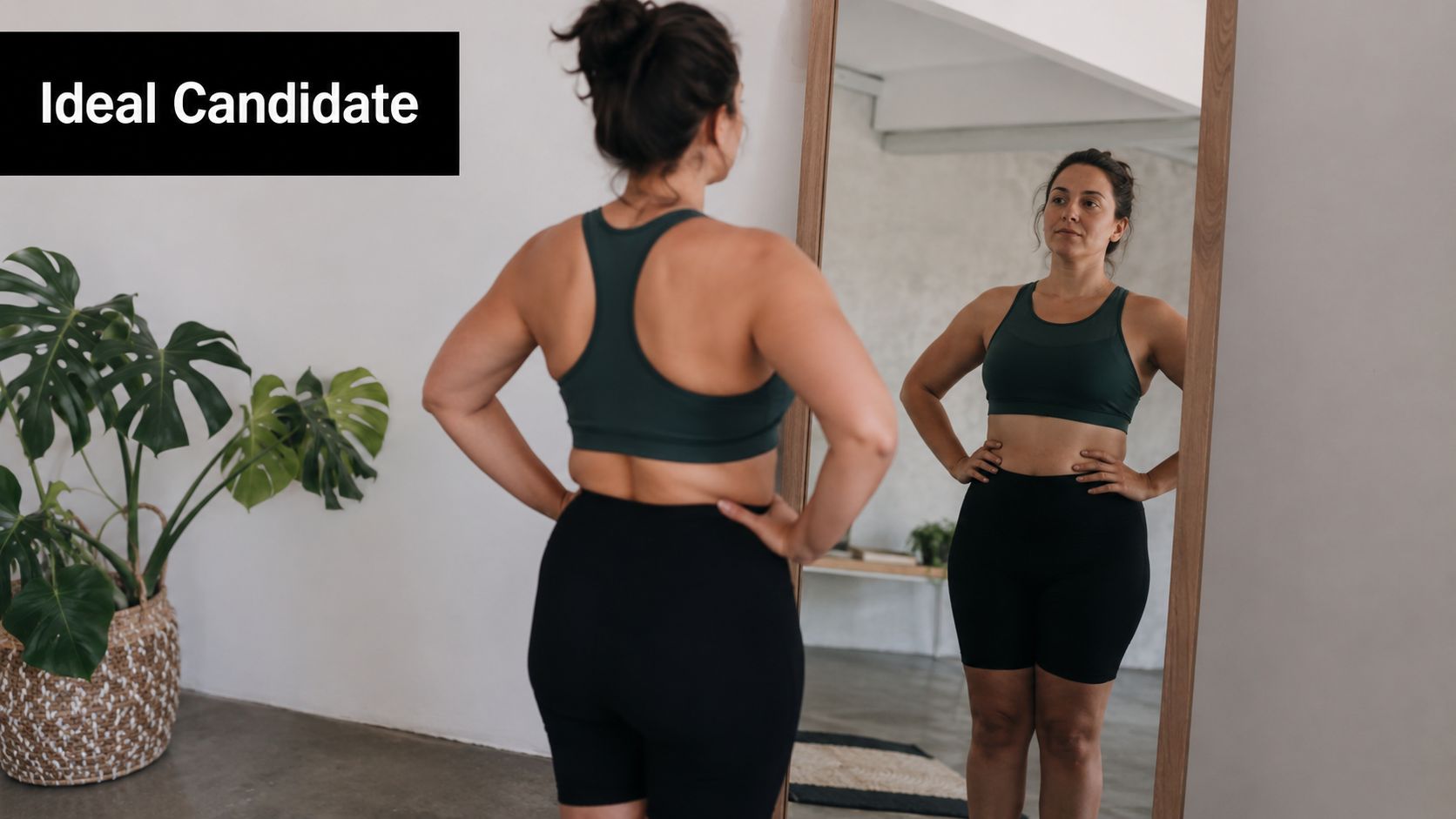
In the UK, demand sits inside a much bigger body-weight picture. The NHS reported that in 2022 to 2023, around 64% of adults in England were overweight or living with obesity, including 26% living with obesity, and about 1 in 5 children aged 10 to 11 were living with obesity. At the same time, non-surgical fat removal is generally sought for localised stubborn fat rather than primary weight loss, and commentary on cryolipolysis commonly places treated-area reduction at roughly 20% to 25% rather than dramatic volume change, as discussed in this overview of body contouring options and UK demand context.
Signs Youre Likely Suitable
You're usually in the right territory for treatment if the following sounds familiar:
- Your weight is fairly stable and you're not looking for a major drop on the scale
- The issue is localised such as the lower abdomen, flanks, thighs, arms, or under-chin area
- The fat is pinchable rather than very firm or mostly loose skin
- You can accept gradual change instead of instant transformation
People often do especially well when they already have healthy routines but want help with proportion and shape.
A good candidate usually says, “I like my overall progress. I just want this area to catch up.”
When To Pause And Get Proper Advice First
These treatments aren't right for everyone. They're not designed to manage obesity, and they're not a replacement for medical weight support when weight itself is the central issue.
You also need proper screening if you have a condition that could affect treatment safety or tolerance. For example, cold-based treatments aren't suitable for some people with cold-related disorders. That's one reason it's useful to read through practical safety information on fat freezing side effects and suitability before committing to a plan.
A few signs that you need a more careful assessment are:
- You want whole-body weight loss, not local contouring
- The area is mostly loose skin, not fat
- You have a relevant medical condition that could affect suitability
- You expect surgery-level change from a non-invasive treatment
The best consultations are often the ones where a therapist tells a client to wait, choose a different technology, or focus on another goal first.
What to Realistically Expect Results Timeline and Longevity
A common first reaction after treatment is, “When will I see it?” That is the right question to ask, because body contouring changes usually arrive in stages rather than all at once.
For suitable clients, the goal is a visible improvement in shape, not a dramatic overnight transformation. As noted earlier, a treated area can reduce gradually over the following weeks, and the change is often easiest to judge by comparing photos, measurements, how fitted clothes sit, and in-clinic review records rather than relying on the mirror from one day to the next.
When You May Notice Change
The timeline often feels a bit like watching swelling settle after exercise. You know something is happening under the surface before the final outline becomes clear.
A practical way to understand it is:
- Early stage. The area may feel different before it looks different. Some clients notice less fullness or a change in firmness.
- Developing stage. The outline starts to look neater. This is often when waistbands, bras, sleeves, or trouser fits begin to give the first useful clues.
- Clearer result stage. The shape change becomes easier to spot in side-by-side photos, tape measurements, or a follow-up assessment.
This gradual pattern is one reason clinics often recommend proper tracking. A good focused fat removal consultation and treatment plan usually includes a baseline so you can judge progress against something real rather than memory.
The first few weeks are usually processing time, not the final result.
How Long Results Can Last
Results can last well if your weight stays fairly steady. The treated fat cells have been reduced, but your body still has remaining fat cells in that area and elsewhere. If overall body fat increases later, those remaining cells can still enlarge.
That can sound confusing at first. A simple way to picture it is this. If a bookshelf has fewer books on one shelf after treatment, that shelf looks tidier. If you keep adding books back into the room, the space can start to feel crowded again, even though the original tidy-up still happened.
In real life, longevity usually comes down to ordinary habits rather than anything extreme:
- Keep your weight within a stable range
- Stay active in a way you can maintain
- Eat normally and consistently, rather than cycling through short restrictive phases
- Attend review appointments if advised, especially if your clinic uses photos or a 3D body scan to compare progress over time
Clients are usually happiest when they expect refinement, better proportion, and a more confident fit in clothing. That is a realistic and worthwhile result.
Your Journey at 3D Aesthetics Leamington Spa
A strong body contouring plan starts well before the first treatment. The consultation is where most of the important decisions are made, especially if more than one technology could help.
What Happens At The First Consultation
At 3D Aesthetics Leamington Spa, the consultation includes a discussion about the area bothering you, what you've already tried, and what kind of result would feel worthwhile to you. That sounds basic, but it matters. Two people can point to the same lower-abdomen area and need completely different treatment plans.
A therapist also looks at tissue quality. Is the issue mainly soft pinchable fat, some laxity in the skin, cellulite texture, or a combination? Choosing the wrong tool usually comes from skipping this part.
Why A 3D Body Scan Helps
The 3D body scan is especially useful. Rather than relying only on memory or mirror impressions, the scan creates a baseline view of your shape and measurements. That gives both you and the therapist something more objective to work from.
Clients often find this reassuring because progress can feel subtle when you see yourself every day. A scan helps answer practical questions such as:
- Has the circumference changed?
- Is the contour of one side different from the other?
- Is the area improving in the way we expected?
That kind of tracking is helpful whether your plan uses one treatment or a combination.
How A Personalised Plan Comes Together
The final plan depends on what the consultation shows. A person with a clear, pinchable fat pocket may be directed toward one approach. Someone with mild skin laxity and a softer contour may need a different sequence. Another client may benefit from adding cellulite-focused support rather than only chasing fat reduction.
This is often where real-world clinic practice differs from online marketing. Ads tend to present one machine as the answer to everything. Good consultations rarely do that.
The best treatment plan is the one that matches your tissue, your goal, and your tolerance for gradual change.
A calm, detailed consultation also gives you a chance to ask the questions people sometimes feel awkward raising. Will it fit around work? Will the area feel strange afterwards? What happens if your concern is skin rather than fat? Those are the conversations that make treatment feel informed rather than impulsive.
Frequently Asked Questions
Is there any downtime after treatment
That depends on the technology used and the area treated, but many people return to normal daily activity quickly. You may have temporary tenderness, numbness, warmth, redness, or swelling depending on the modality. It's sensible not to book treatment right before an event where you want the area to feel completely normal.
How should I prepare for my appointment
Come in hydrated, wear comfortable clothing, and be ready to talk openly about your goals. It also helps to think about what success would look like for you. “Smaller waist in jeans” is more useful than “I just want to look better.”
Can more than one area be treated
Sometimes yes, but suitability depends on the treatment type, the amount of tissue involved, and what's realistic in one visit. A proper consultation decides this, rather than guessing from a menu.
Will I lose weight from non surgical fat removal
Usually, people notice shape change more than scale change. These treatments are for contouring localised areas, not for broad weight reduction.
Is it painful
Most clients describe treatments as unusual rather than unbearable. Cold-based treatments can feel intensely cold at first. RF often feels warm. Ultrasound can feel buzzy or vibrational. A therapist should explain the sensation before starting so nothing takes you by surprise.
What if I'm not sure whether it's fat, loose skin, or cellulite
That's exactly the kind of uncertainty a consultation is for. Those three concerns can look similar in the mirror but respond to different treatments, so guessing at home often leads people in the wrong direction.
If you're thinking about non surgical fat removal and want clear, personalised guidance, booking a consultation with 3D Aesthetics Leamington Spa is a practical next step. You can discuss the area that's bothering you, explore suitable technologies, and use the clinic's 3D body scan process to build a treatment plan around realistic, measurable goals.
← Back to Home