
You might be reading this after trying every sensible thing first. A better cleanser. A stronger retinol. A brightening serum that sounded promising. Yet the acne marks still catch the light, the fine lines still sit where makeup settles, or the skin just feels rough no matter how carefully you exfoliate.
That's usually the point where people start looking into skin resurfacing treatment. Not because they want something extreme, but because they want a more meaningful reset. When skincare can maintain the surface but can't shift deeper texture or visible damage, professional resurfacing often becomes the next logical step.
Table of Contents
- Your Journey to Smoother Brighter Skin
- Understanding the Science of Skin Renewal
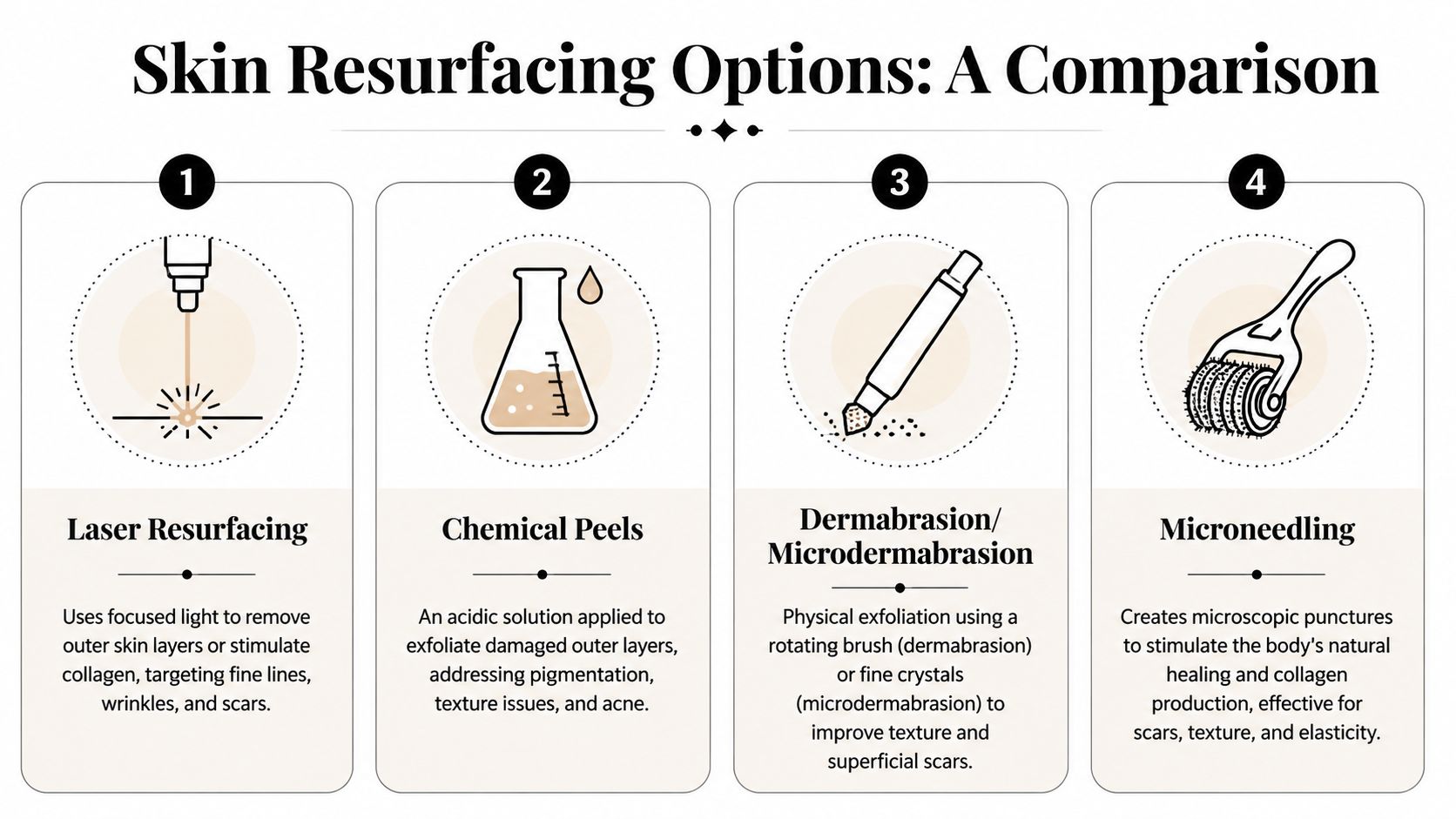
- Comparing Your Skin Resurfacing Options
- Determining If Skin Resurfacing Is Right for You
- What to Expect Before During and After Your Treatment
- Investing in Your Skin and Choosing the Right Clinic
- Frequently Asked Questions About Skin Resurfacing
Your Journey to Smoother Brighter Skin
A lot of new clients describe the same moment. They're standing in front of a mirror, turning their face slightly to one side, and noticing what flat bathroom lighting usually hides. Old acne scars. Fine lines around the mouth. Rough patches left by sun exposure. Skin that doesn't look unhealthy, but doesn't look as fresh as it used to either.
That frustration makes sense. Topical skincare can support the skin beautifully, but it has limits. If the issue is deeper texture, etched-in damage, or unevenness that has built up over time, creams alone often won't create the change you're hoping for. That's why people start searching for more targeted ways to improve skin texture.
Skin resurfacing treatment is really a family of treatments rather than one single procedure. Some options work closer to the surface with lighter recovery. Others go deeper and ask more of the skin, which usually means more downtime as well. The names can sound technical, but the idea is simple. Remove or disrupt damaged layers in a controlled way, and encourage healthier skin to replace them.
Why people often feel overwhelmed
The confusion usually starts with the menu of options. Laser resurfacing, RF microneedling, peels, microdermabrasion. They all promise renewal, but they don't work in the same way and they're not aimed at the same concerns.
Practical rule: Don't start with the machine name. Start with the problem you want to improve.
If your main concern is shallow dullness, your route may be very different from someone dealing with acne scarring or deeper wrinkles. The most useful way to approach resurfacing is as a personalised journey. First, understand what resurfacing does. Then match the method to your skin, your goals, and the amount of healing time you can realistically manage.
Understanding the Science of Skin Renewal
What resurfacing is really doing
Think of an old wooden table with scratches, dull patches, and a rough finish. If you want it to look smooth again, you don't rub polish over the damage and hope for the best. You sand away the worn surface in a controlled way, then allow a cleaner finish to appear.
Skin resurfacing works on a similar principle. A professional treatment removes, heats, or punctures targeted layers of skin in a very deliberate pattern. The method changes depending on the device, but the goal is the same. Encourage the skin to replace damaged tissue with fresher, more organised tissue.
That's why resurfacing sits in a different category from home exfoliation. A scrub, acid toner, or enzyme mask mainly works at the surface. A clinical resurfacing treatment reaches with more precision and triggers a proper repair response. That repair response is where much of the improvement comes from.
For a simple explanation of how healthy turnover supports brighter, smoother, even skin, it helps to think of skin renewal as an ongoing cycle that can be nudged more effectively in a clinical setting.
Why healing creates change
The phrase that often worries people is controlled injury. It sounds harsh, but in practice it means the therapist creates a measured amount of disruption so your body starts rebuilding. That rebuilding process is valuable because it encourages fresh collagen and elastin activity.
Collagen helps give skin structure. Elastin helps it stay supple. When skin has been marked by acne, sun exposure, or age-related change, those support structures often become less even or less strong. Resurfacing nudges the skin into a healing mode that can improve smoothness, firmness, and overall texture over time.
Why this looks different from a facial
A facial can leave skin looking clean, hydrated, and temporarily brighter. That can be wonderful, and many people benefit from regular facials. But resurfacing is usually chosen when the concern is structural rather than purely superficial.
- Surface exfoliation helps remove dead skin and improve immediate radiance.
- Clinical resurfacing aims to remodel the skin substantially.
- Regenerative change often unfolds gradually as the skin heals and renews itself.
Healing is part of the treatment, not an inconvenient side effect.
That's also why results rarely appear all at once. Some people notice an early freshness after the initial recovery, but the more meaningful improvements often continue to reveal themselves as the skin settles and rebuilds.
Comparing Your Skin Resurfacing Options
When clients ask, “Which resurfacing treatment is best?” the honest answer is that the right option depends on what you're treating. Scars, pores, pigmentation, fine lines, and loss of firmness don't always respond best to the same technology.
Fractional laser resurfacing
Fractional laser resurfacing treats the skin in tiny columns rather than removing the whole surface evenly in one pass. That matters because untouched skin between treated areas can support healing. In practical terms, it often offers a useful balance between visible correction and manageable recovery.
This type of treatment is often considered for textural scarring, wrinkles, uneven tone, and long-standing sun-related changes. A CO2 laser approach is one of the stronger resurfacing options, so it tends to suit people who want more significant correction and understand that the healing phase is part of the process. Within this category, devices such as 3D Aesthetics' CO2 laser are used for concerns like deeper scars and wrinkles.
What does it feel like? Heat, prickling, or a sharp warm sensation is felt during treatment. Comfort measures are usually used, and the skin often looks red and feels hot afterwards.
RF microneedling
RF microneedling combines two ideas in one treatment. Fine needles create controlled micro-injuries, and radiofrequency energy delivers heat below the surface. That combination can help remodel the skin from within rather than removing the upper layer.
This route is often chosen for enlarged pores, mild to moderate scarring, crepey texture, and early laxity. People who want rejuvenation but feel unsure about a more intensive laser often ask about RF microneedling first. In clinic settings, 3D Dermaforce is one example used to improve texture and firmness.
A common point of confusion is this. Microneedling on its own and RF microneedling are not the same experience. The added heat changes the depth of stimulation and the type of response you're aiming for.
Other resurfacing routes
Not every resurfacing journey starts with a device-led treatment.
- Chemical peels use active solutions to loosen and lift damaged surface layers. They can be useful for dullness, breakouts, and some pigment concerns.
- Dermabrasion or microdermabrasion relies on mechanical exfoliation. These options are more surface-focused and generally suited to milder texture issues.
- Pigmentation-focused laser options may be considered when discolouration is the main concern rather than textural scarring. If sun-related marks are what bother you most, this guide to sun-damaged skin treatment options can help clarify the difference.
For everyday maintenance around a treatment plan, a consistent skincare routine for luminous skin can help support the skin's surface while clinic procedures target deeper concerns.
Skin resurfacing treatment comparison
| Treatment Type | How It Works | Best For | Typical Downtime |
|---|---|---|---|
| Fractional laser resurfacing | Uses focused light in a fractional pattern to remove or heat targeted skin tissue | Acne scars, wrinkles, rough texture, visible sun damage | Usually more noticeable healing and aftercare |
| RF microneedling | Combines tiny needles with radiofrequency heat below the skin | Texture, pores, mild scarring, firmness concerns | Often moderate and shorter than stronger ablative laser options |
| Chemical peels | Applies a controlled solution to exfoliate damaged outer layers | Dullness, superficial pigmentation, uneven tone | Varies from light flaking to more visible peeling |
| Dermabrasion or microdermabrasion | Physically exfoliates the surface | Mild roughness and superficial irregularity | Usually lighter, depending on intensity |
The strongest treatment isn't automatically the right treatment. The right one is the one that matches both the concern and the recovery you can handle.
Determining If Skin Resurfacing Is Right for You
Some people are excellent candidates for resurfacing. Others may need a gentler approach, a different treatment entirely, or a bit of preparation first. A simple self-check can help you arrive at a consultation with better questions and clearer expectations.
Concerns that often respond well
Resurfacing is often considered when the issue is visible in the skin's texture or tone rather than only in temporary dryness or congestion.
You may be a good candidate if you're bothered by:
- Acne scarring: Especially indented scars that sit below the skin surface.
- Fine lines: Areas where the skin looks creased rather than dehydrated.
- Sun-related roughness: Skin that feels uneven and looks weathered.
- Pigmentation irregularity: Uneven patches or marks that make the complexion look less uniform.
- Enlarged pores: Particularly when they're linked to oiliness, scarring, or loss of firmness.
If your main goal is “I want my skin to look smoother when light hits it,” resurfacing may be relevant. If your concern is more about volume loss, sagging, or active breakouts, another treatment pathway may need to come first.
Skin tone healing and lifestyle
Skin tone matters because not every treatment is equally suitable for every person. Deeper skin tones can absolutely be treated, but the plan needs care. Some resurfacing methods carry a higher risk of post-inflammatory pigmentation if they're used too aggressively or without the right preparation.
Lifestyle matters too. Downtime sounds abstract until you picture your real week. Can you avoid direct sun? Are you comfortable with a few days where your skin may look red, dry, or flaky? Can you pause strong active skincare while healing?
A useful consultation note sheet can include Patient Talker's doctor questions, then adapt them for aesthetics. Ask how the treatment fits your skin type, what healing usually looks like, and what signs mean you should contact the clinic.
A quick personal checklist
- Your concern is clear: You can describe what bothers you without guessing at the treatment.
- Your skin is stable: Active irritation, infection, or a damaged barrier may need settling first.
- Your schedule is realistic: You've allowed room for healing, not just the appointment itself.
- Your expectations are grounded: You want improvement, not perfection.
- You're open to assessment: You understand that a professional evaluation may refine your plan.
No online guide can confirm suitability. That decision needs trained eyes, a proper skin history, and an honest conversation about risks, results, and recovery.
What to Expect Before During and After Your Treatment
Most nerves come from not knowing what the day will feel like, or what your skin will look like afterwards. Once people understand the sequence, the treatment usually feels much less mysterious.
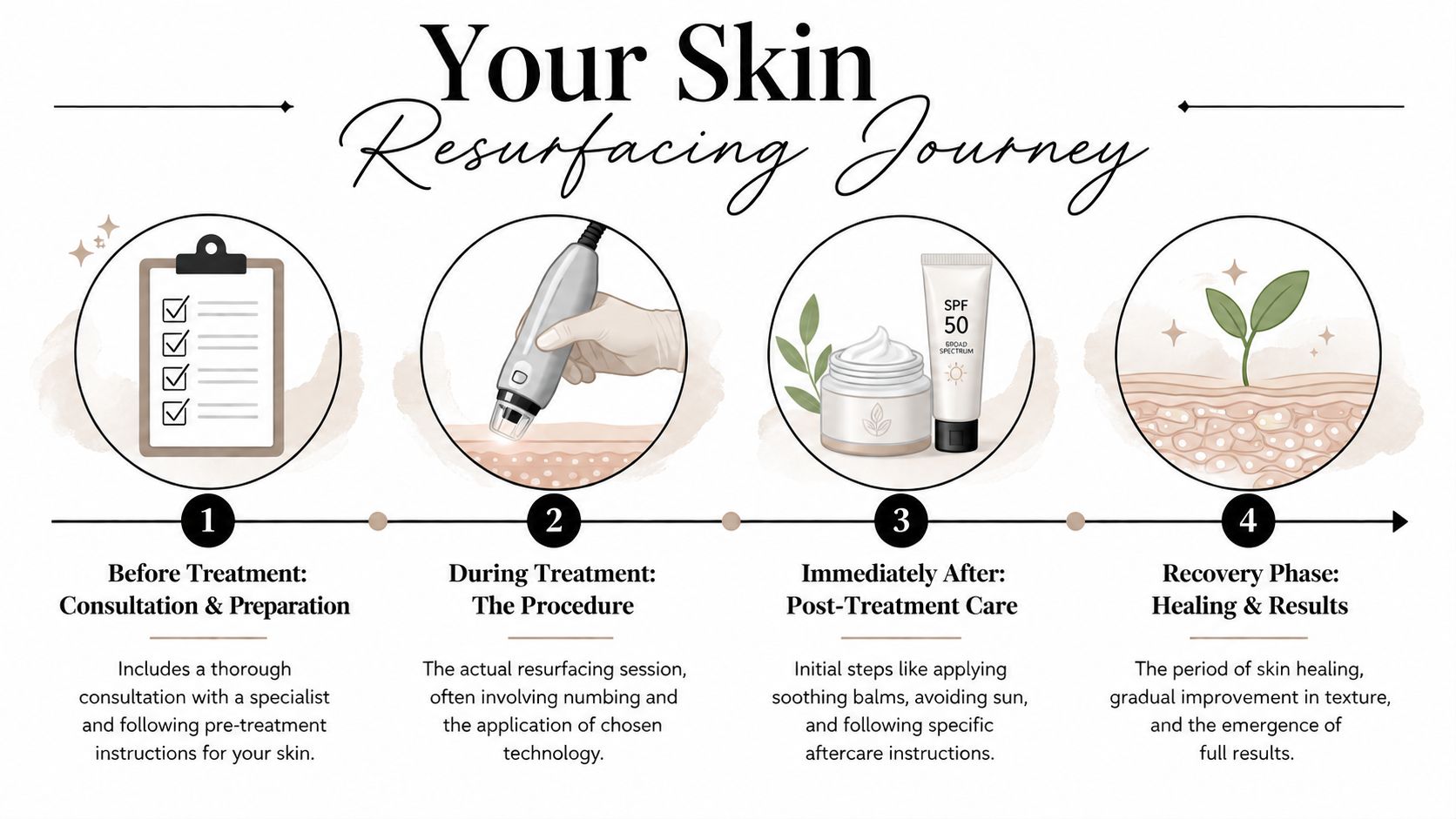
A visual timeline helps make the journey easier to picture.
Before treatment
The process begins with a consultation. Your therapist or clinician looks at your skin, asks about your concerns, reviews your medical background, and discusses whether your chosen treatment matches your skin type and goals. You may also be asked about recent sun exposure, active breakouts, or products such as retinoids and exfoliating acids.
Preparation instructions vary, but they're usually practical. Keep the skin calm. Avoid irritating products if advised. Arrive with clean skin. Follow any specific guidance instead of copying someone else's routine from social media.
During treatment
On the day, the area is cleansed and prepared. Many resurfacing procedures use a numbing product first, especially if the treatment reaches deeper layers. Once the session begins, sensations vary by technology. Some people feel heat, some feel prickling, and some describe a quick snapping or needling feeling.
This short video gives a helpful sense of the professional treatment setting and what a session can involve.
During recovery planning, some clinics may suggest supportive treatments such as Dermalux LED therapy to help calm the skin after more intensive procedures.
If you're unsure whether what you're feeling is normal, ask during the appointment. A good practitioner will talk you through each stage as it happens.
After treatment
Straight after the procedure, your skin may look pink to red and feel warm, tight, or sensitive. With stronger treatments, swelling, a rough texture, or bronzing can develop as healing progresses. With gentler options, the after-effects may be milder but still noticeable.
The first few days usually require restraint more than effort. Keep the skin comfortable. Use only the aftercare you've been given or approved to use. Avoid picking, scrubbing, or trying to speed the peeling process. Let the skin do its work.
Common early aftercare priorities
- Barrier protection: Use soothing, non-irritating products recommended by your provider.
- Hands off healing: Don't scratch flaky skin or force shedding.
- Sun avoidance: Freshly treated skin is more vulnerable, so protect it carefully.
- Product pause: Hold off on acids, retinoids, and other strong actives until you're told it's safe.
When results show
This is where expectations matter. The first visible change may be a fresher surface once the initial healing settles. The fuller payoff usually comes later, once the skin has had time to remodel.
Some clients worry when the improvement doesn't peak immediately after peeling ends. That's normal. Skin often keeps refining itself after the obvious recovery phase is over.
Protecting treated skin from sunlight isn't optional. It's part of preserving the result you've paid and healed for.
Investing in Your Skin and Choosing the Right Clinic
People often ask for a simple price, but resurfacing rarely works like buying a standard facial. Cost usually depends on the technology used, how intensive the treatment is, the area being treated, and whether you'll need a single session or a series.
What you are really paying for
A lower quote can look appealing until you ask what sits behind it. With skin resurfacing treatment, value usually comes from the assessment, the safety protocols, the calibre of the device, and the judgement of the practitioner using it.
You're not only paying for time in a treatment room. You're paying for someone to decide whether your skin should be treated at all, how far to go, and how to help it heal safely afterwards. That matters far more than finding the cheapest line on a price list.
How to judge a clinic well
When you compare providers, look beyond polished marketing. A trustworthy clinic should be able to explain the reasoning behind a recommendation in plain language.
Here's what to look for:
- Qualified hands: Ask who performs the treatment and what experience they have with your specific concern.
- Appropriate technology: The clinic should offer devices that suit different needs, not force every client into one solution.
- Clear consultation process: You should feel assessed, not rushed.
- Realistic guidance: Be cautious if someone promises flawless skin or glosses over downtime.
- Aftercare support: Healing instructions should be specific and easy to follow.
One local option is 3D Aesthetics Leamington Spa, which offers complimentary consultations and treatments such as fractional CO2 resurfacing and 3D Dermaforce microneedling as part of a broader non-surgical skin portfolio.
A good clinic should leave you feeling informed, not pressured. If you walk out understanding why a treatment was recommended, what recovery involves, and what result is realistic for your skin, that's usually a strong sign you're in capable hands.
Frequently Asked Questions About Skin Resurfacing
How many treatments will I need
That depends on the concern, the treatment chosen, and how your skin responds. Some people have one more intensive session. Others do better with a course of gentler treatments. Acne scarring, pigmentation, and texture concerns often need a plan rather than a single appointment.
Is skin resurfacing painful
The experience isn't typically described as unbearable, but it's not called a massage either. Sensations vary. You might feel heat, prickling, or a scratchy warmth. Many clinics use numbing measures to keep you comfortable, and the strength of the treatment affects what you feel.
Can I wear makeup afterwards
Not always straight away. It depends on how disrupted the skin surface is. With deeper resurfacing, you may need to wait until the skin has healed enough. Your provider should give you a clear answer based on your treatment.
Can skin resurfacing be combined with other treatments
Yes, sometimes. Combination plans can make sense when each treatment has a distinct job. For example, one treatment may target texture while another supports calming or recovery. Timing matters though, so don't layer treatments without professional guidance.
Will my skin look worse before it looks better
Often, yes. Redness, dryness, flaking, or bronzing can all be part of the normal healing phase depending on the treatment. That temporary stage doesn't mean something has gone wrong. It usually means your skin is moving through repair.
If you're ready to explore a personalised skin resurfacing plan, 3D Aesthetics Leamington Spa offers in-depth consultations to assess your skin concerns, talk through suitable options, and help you decide on the next step with clarity and confidence.