
You've probably found yourself in a familiar spot. You look in the mirror and notice acne marks that never quite faded, makeup sitting unevenly over texture, or fine lines that seem more obvious in bathroom lighting than they do anywhere else. You've also likely seen microneedling all over social media, where it's often presented as quick, easy, and almost interchangeable with a derma roller bought online.
That's where people get confused.
A microneedling facial treatment can be a very useful clinical option for skin renewal, but only when it's understood properly. In real practice, it's not a magic one-off appointment, and it's not the same thing as rolling tiny needles over your skin at home. It's a structured treatment designed to support collagen remodelling over time, with safety, skin suitability, and aftercare all playing a major part in the outcome.
For UK clients, that practical detail matters. You want to know what the treatment does, how professional treatment differs from DIY tools, what recovery is really like, and when results usually become visible. You also want honest guidance on who should wait, especially if breakouts are still active.
Table of Contents
- What Is Microneedling and How Does It Renew Your Skin
- Professional Treatments vs At-Home Microneedling Rollers
- Introducing 3D Dermaforce Advanced RF Microneedling
- Are You a Good Candidate for a Microneedling Facial
- Your Microneedling Journey From Consultation to Recovery
- The Timeline of Results and Essential Aftercare
- Frequently Asked Questions and Your Next Steps
What Is Microneedling and How Does It Renew Your Skin
You come in for a consultation because your skin feels rougher than it used to, makeup sits unevenly, or old acne marks still catch the light. Microneedling is one of the treatments we may discuss if the goal is to improve texture by encouraging the skin to repair itself in a controlled, clinical way.
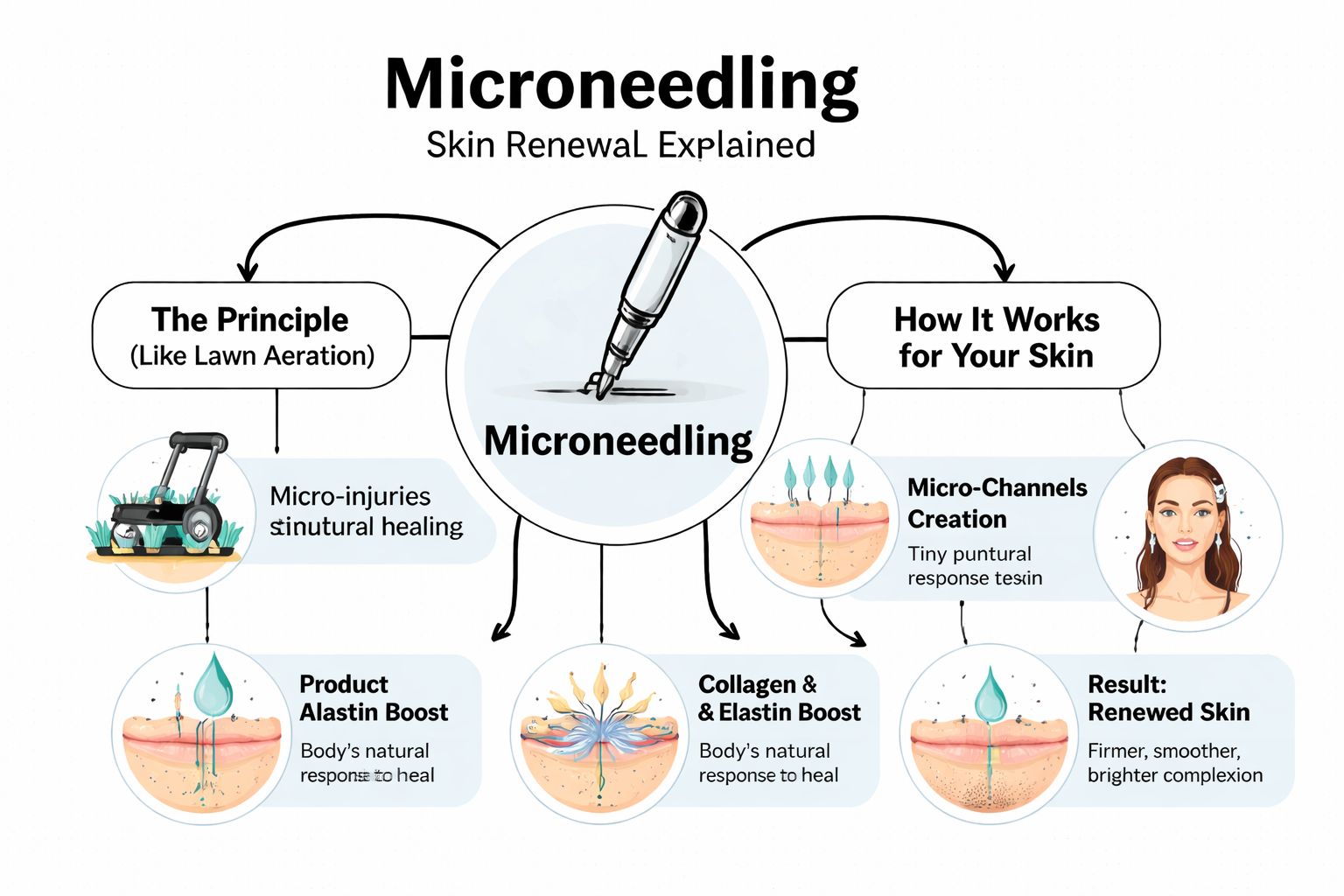
A professional microneedling facial treatment uses a pen-shaped device with very fine needles to create tiny, measured channels in the skin. Those controlled micro-injuries trigger the skin's natural wound-healing response, which encourages new collagen and elastin production. That is why microneedling is often referred to as collagen induction therapy, as described in this microneedling overview from Rodgers Dermatology.
A simple way to understand collagen induction
Collagen is the skin's support framework. Elastin helps it bounce back. As both become less organised over time, the skin can start to look less smooth and less even, with fine lines, shallow acne scarring, and a crepey or tired appearance.
Microneedling works by asking the skin to rebuild, not by stripping away the surface. That difference is important for setting expectations, especially in UK clinics where treatment plans are usually based on skin history, downtime tolerance, and realistic goals rather than quick fixes. In practice, you are starting a repair process that develops over time.
If you already use targeted skincare and want to understand how products support skin between appointments, this guide to US tea tree oil benefits shows how people approach home care for congestion and sensitivity. Home care supports skin health, but it does not replace the controlled depth, hygiene standards, or treatment planning used in clinic-based microneedling.
Practical rule: Microneedling encourages repair and remodelling. Results build gradually.
What changes in the weeks after treatment
Straight after treatment, the skin often looks pink or mildly flushed. That is the immediate response to treatment, not the final result.
Visible improvement usually develops in stages over the following weeks, then continues as collagen remodelling carries on over the next few months. This is why experienced practitioners in the UK will usually talk about a course of treatment and review points, not a one-off miracle session. For concerns such as uneven texture, superficial acne marks, and early fine lines, the aim is steady improvement that looks natural.
Typical changes people seek include:
- Smoother texture where the skin feels less rough or bumpy
- Softer fine lines where creasing is mild rather than deep
- Less visible textural acne scarring in suitable cases
- A more even, fresher appearance because light reflects more evenly from the skin
If you are comparing treatment options for roughness, pores, and uneven surface quality, this guide on how to improve skin texture helps place microneedling in the wider picture. Treatments such as RF microneedling can build on the same core principle, but with added technology and a more targeted clinical approach.
Professional Treatments vs At-Home Microneedling Rollers
You buy a roller online, use it twice, and wonder why your skin looks a bit pink but otherwise unchanged. That is a very common UK experience. The name sounds the same as a clinic treatment, but the process, depth, hygiene control, and results potential are not the same.
Professional microneedling is closer to a prescription than a gadget. The treatment is selected for your skin concern, your skin tone, the area being treated, and how your skin is likely to heal. A home roller is a one-size-fits-most tool, and skin rarely behaves in a one-size-fits-most way.
The difference in one glance
| Feature | Professional microneedling | At-home roller |
|---|---|---|
| Needle depth | Chosen by the practitioner for the concern and treatment area | Very shallow home-use depth |
| Precision | Depth and technique can be adjusted area by area | Pressure and angle depend on the user |
| Safety standard | Clinical hygiene, skin assessment, and treatment planning | Hygiene and technique vary at home |
| Goal | Skin remodelling with a structured treatment plan | Surface-level home use with limited change |
| Suitability | Planned with skin tone, sensitivity, and history in mind | Easier to misuse without proper assessment |
The main clinical difference is control. In clinic, the practitioner can treat the forehead differently from the cheeks, and the cheeks differently from acne-scarred areas. That matters because facial skin is not uniform. It is more like working on different fabrics in one garment. Thin areas need one approach, thicker or more textured areas may need another.
Home rollers cannot offer that level of precision. They also create a false comparison with professional treatment because they borrow the same word, "microneedling", without offering the same depth control or treatment planning. For many people, that leads to unrealistic expectations, then disappointment.
Why DIY often disappoints
Skin responds to the quality of the stimulus, not the marketing on the box.
A roller may increase product absorption for a short time or give a temporary fresh look, but that is not the same as a properly planned clinical course aimed at texture, mild scarring, or early lines. In UK practice, good microneedling is usually discussed as a series with review points, patch testing where appropriate, and clear aftercare, not as a quick DIY fix.
Safety is another dividing line. Even simple-looking tools can cause problems if they are used too often, pressed too hard, or not cleaned properly. The risk is not only irritation. You can also spread bacteria, prolong inflammation, or worsen pigmentation if your skin is reactive.
For clients comparing options, the more useful question is not, "Which is cheaper?" It is, "Which is appropriate for my skin goal, and which option gives me the safest route to that goal?"
Professional treatment also gives you room to step up in a controlled way if standard microneedling is not the best fit. For example, some clients need a more advanced device-based approach rather than a basic manual or cosmetic roller. You can see what that looks like with 3D Dermaforce RF microneedling treatment options.
Home needling tools are limited by design, while professional microneedling is assessed, controlled, and monitored. That difference is why clinic treatments are used for real skin concerns, and why DIY rollers should be viewed much more cautiously. For general background on how professional microneedling differs from home rollers, Cleveland Clinic explains that home devices are much shallower and not equivalent to in-clinic treatment (Cleveland Clinic microneedling guidance).
Introducing 3D Dermaforce Advanced RF Microneedling
A common clinic scenario in the UK is someone booking microneedling for acne marks, then realising during consultation that texture is only part of the picture. They may also be noticing mild skin looseness, creasing around the mouth, or a general loss of firmness. In that situation, standard microneedling and RF microneedling are not interchangeable. They work on the same broad repair pathway, but they do not act in the skin in the same way.
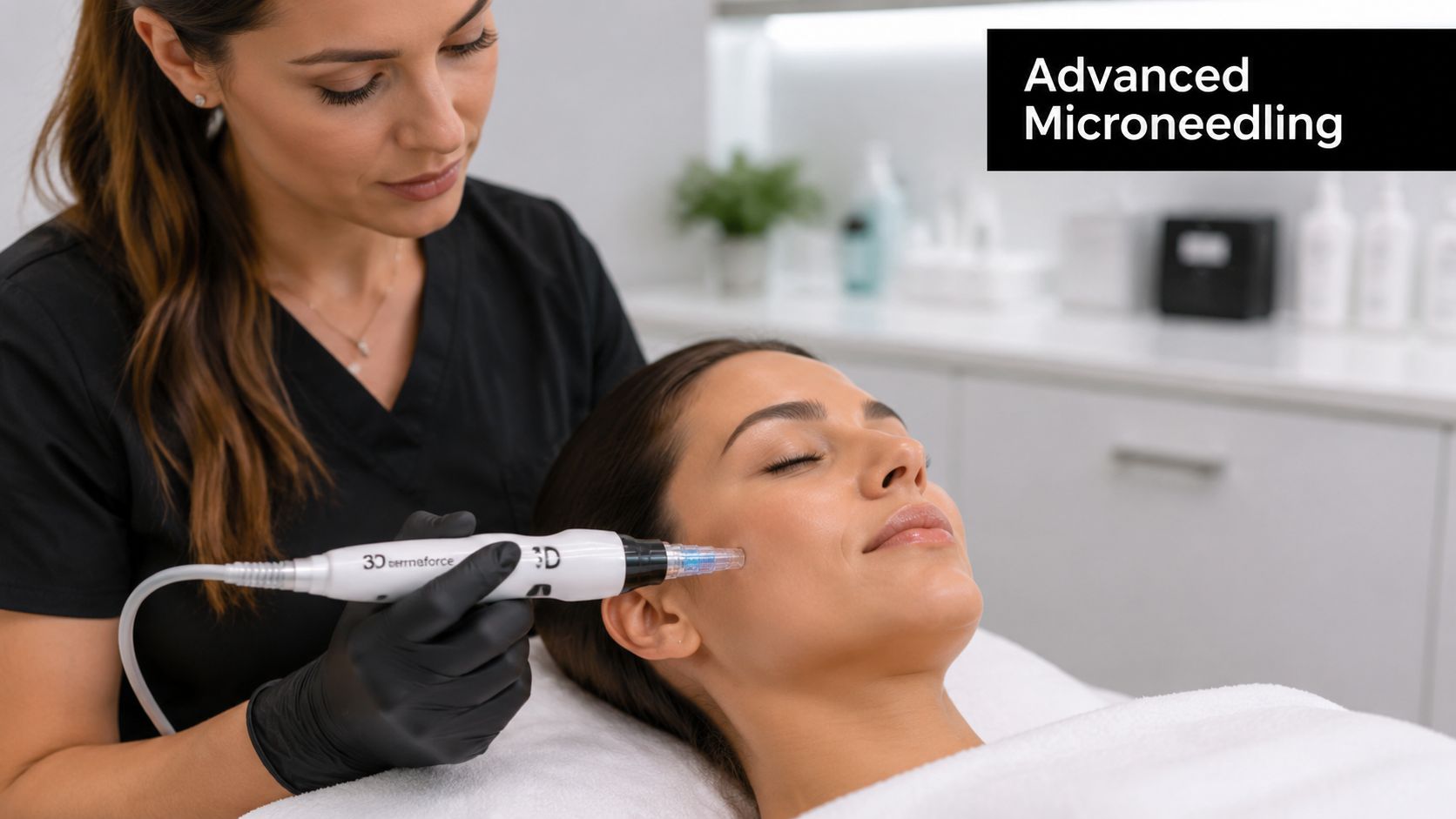
Standard microneedling creates controlled micro-channels to prompt repair. RF microneedling adds radiofrequency energy through the needles once they are in the skin. A simple way to picture it is this: the needles open the route, and the RF delivers heat at a chosen depth. That extra heat is why RF microneedling is often considered in clinic when the goal includes tightening and remodelling, not only surface refreshment.
What radiofrequency adds
Many clients understandably group all microneedling into one category. Clinically, that is too broad. The U.S. FDA notes that microneedling devices may be used with or without radiofrequency energy, and that RF microneedling carries its own risks and treatment considerations, as outlined in the FDA consumer guidance on microneedling devices.
That difference changes the treatment conversation.
- Traditional microneedling is usually chosen for collagen stimulation linked to texture-focused concerns
- RF microneedling combines needling with heat-based energy delivered below the surface
- Treatment choice depends on the main concern, the area being treated, skin sensitivity, and how much downtime is acceptable
Why technology changes the treatment plan
In UK practice, this is one reason a proper consultation matters. A device-led treatment can be adjusted far more precisely than a home roller, and that precision affects both safety and expectations. Needle depth, energy delivery, skin history, and post-treatment care all need to be matched to the person in front of you, especially if you are treating concerns such as acne scarring, early laxity, or uneven texture together rather than in isolation.
The FDA also recognises microneedling as a cleared option for improving the appearance of facial acne scars, facial wrinkles, and abdominal scars in adults aged 22 and over. It also notes that short-term after-effects such as redness, bruising, tightness, itching, and peeling can occur, and that improvement may require more than one treatment with maintenance over time. Those points are useful for setting realistic expectations in clinic, even though your treatment plan in the UK should always be based on an in-person assessment and appropriate aftercare.
If you want to compare a clinic-based RF option in more detail, 3D Dermaforce RF microneedling treatment options show how this type of treatment is used when both skin remodelling and tightening are part of the goal.
Are You a Good Candidate for a Microneedling Facial
Microneedling is popular because it can help with several common concerns at once. But “popular” doesn't mean “right for everyone today”. Timing matters just as much as suitability.
People who often benefit
In clinic, the strongest candidates are usually people who want gradual skin improvement rather than dramatic instant change. They often say things like, “My skin looks uneven,” or, “I can still see old acne marks even though my spots have gone.”
You may be a suitable candidate if your goals include:
- Textural acne scarring rather than raised scar types
- Fine lines and early wrinkling where skin quality is the main issue
- Enlarged pores and uneven surface texture
- General rejuvenation when the skin looks dull or less firm
A professional consultation also helps separate concerns that respond well from concerns that may need another treatment route. For example, someone asking for tighter skin may still be suitable, but the plan may shift toward RF microneedling rather than a standard needling-only approach.
When waiting is the safer choice
The biggest area of confusion is active acne.
Many people assume microneedling will help because they've heard it's good for acne scars. That part is true for scarring. It doesn't mean it's the right choice while inflammatory acne is still active. A 2024 study by the British Society for Dermatologic Surgery found that 32% of UK patients undergoing microneedling while having active acne developed severe post-inflammatory hyperpigmentation, whereas 8% of those with only scarring did. That's why waiting until active acne is controlled is such an important safety step.
If your skin still has inflamed spots, the better question isn't “Can I book microneedling now?” It's “What needs settling first so I get a better result later?”
It also makes sense to pause treatment if your skin is irritated, flaring, or struggling with barrier damage. Microneedling asks the skin to repair itself. Skin that is already inflamed often needs calming before it needs stimulation.
People are also often advised to defer treatment if they have:
- Active breakouts that are sore, inflamed, or widespread
- A rosacea flare where the skin is already reactive
- Eczema or psoriasis in the treatment area
- Recently irritated skin from strong actives or over-exfoliation
A careful therapist isn't being difficult by postponing treatment. They're protecting your result.
Your Microneedling Journey From Consultation to Recovery
For first-time clients, anxiety usually comes from not knowing what the appointment will feel like. Once you know the sequence, it tends to feel much more manageable.
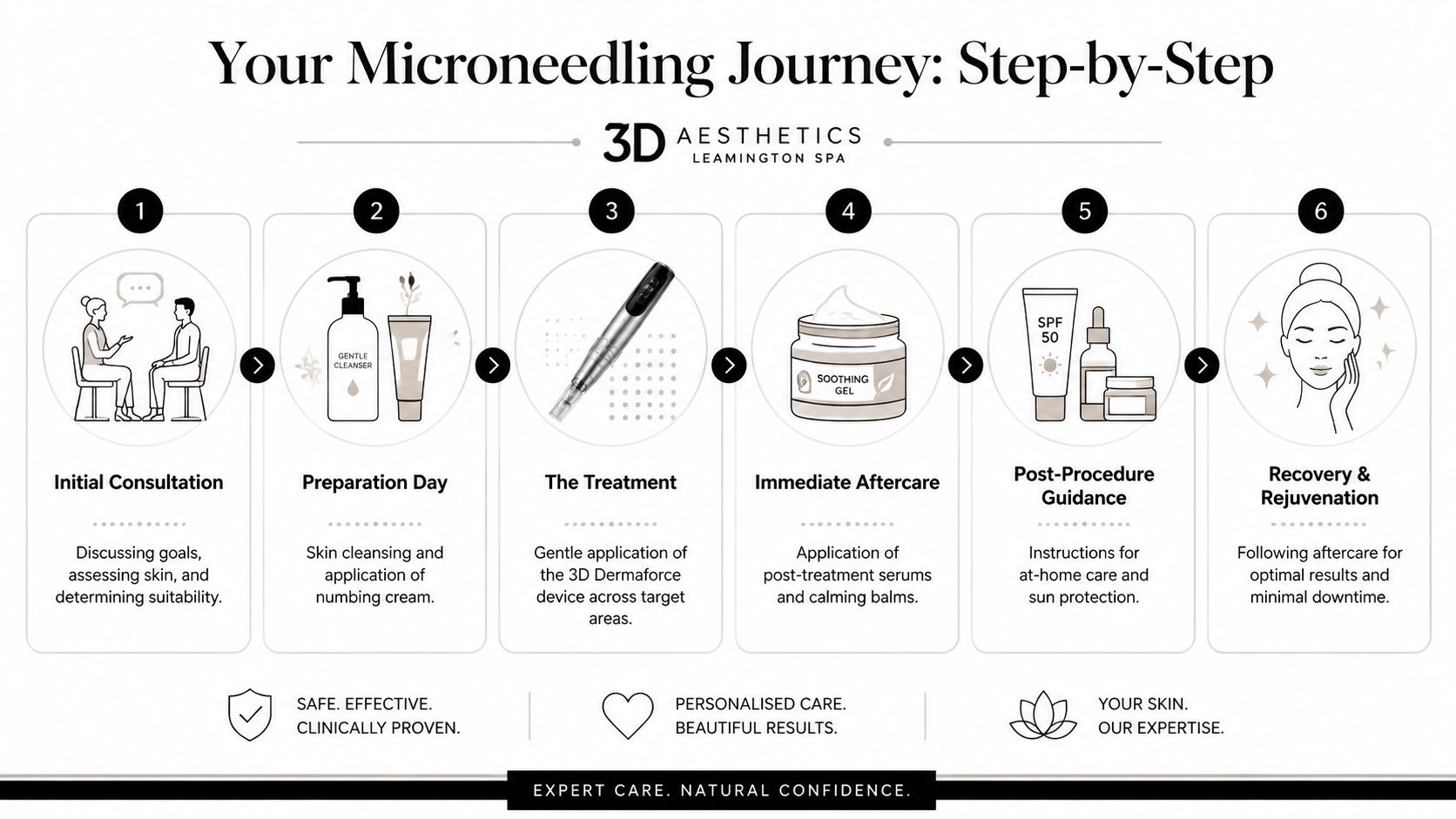
A proper consultation comes first. Your therapist looks at the concern you want to treat, checks whether your skin is calm enough to proceed, and discusses what kind of result is realistic. At some clinics, that may also include imaging or skin analysis so the plan is based on what's visible in the tissue rather than guesswork.
What happens on treatment day
Most appointments follow a calm, predictable rhythm.
- Your skin is cleansed so the treatment starts on a fresh surface.
- A numbing product may be applied if appropriate for the treatment intensity.
- The device is passed over the skin in a controlled pattern. Clients often describe the sensation as scratchy, buzzy, or strange rather than sharply painful.
- Soothing post-care products are applied once the treatment is complete.
- You go home with clear aftercare guidance so you know what to avoid and what to use.
This short demonstration gives a useful visual sense of how a clinical session looks:
Immediately afterwards, your skin may look pink to red and feel warm or tight. For many clients, it resembles mild windburn. That can feel alarming if you weren't expecting it, but it's a normal early response.
What your course of treatment usually looks like
The most helpful thing to know is that microneedling is usually planned as a course, not a one-off fix. A 2017 systematic review concluded that microneedling is a safe and effective option for scars and wrinkles, performs well alone or with topical products or radiofrequency, and often shows fewer side effects and less recovery time than alternative procedures. The same evidence base also supports treatment plans of 3 to 6 sessions, often spaced about 4 to 6 weeks apart, according to this systematic review summary on ScienceDirect.
That spacing gives the skin time to respond between appointments. It also helps your therapist judge whether the plan needs adjusting rather than pushing the skin too quickly.
Good microneedling plans are built like training plans. The skin needs stimulus, recovery, and review.
The Timeline of Results and Essential Aftercare
A common UK clinic scenario goes like this. Someone has their first microneedling appointment on Friday, checks the mirror on Monday, and worries because they do not yet see a dramatic change. That reaction is understandable, but it does not match how skin repair works.
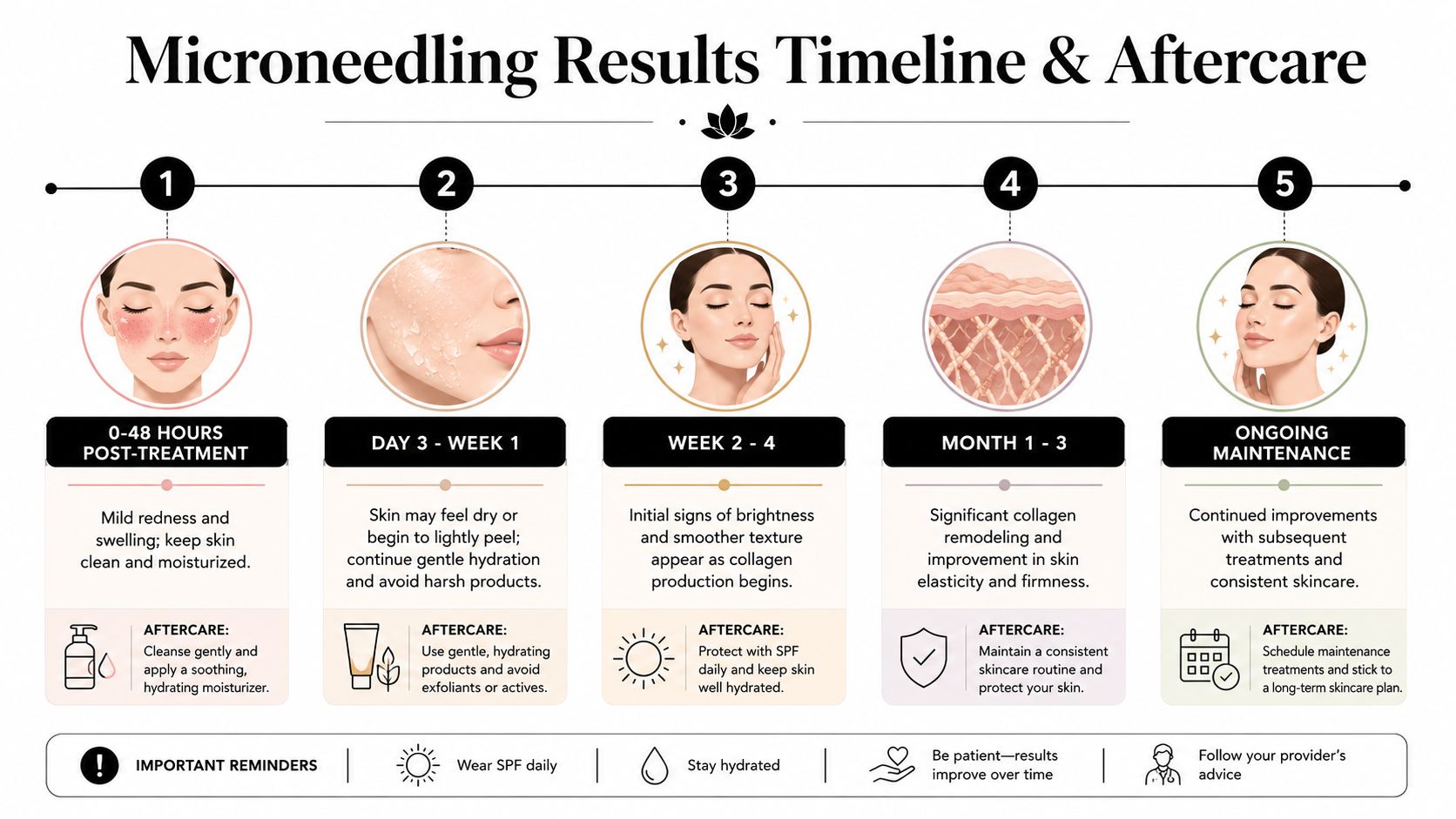
Microneedling creates controlled micro-injury so the skin can start rebuilding itself. Surface redness appears quickly. Collagen repair does not. The process is closer to laying new foundations than applying fresh paint. Early glow can appear first, while firmer texture and scar softening usually take longer.
When you'll usually see change
Most clients notice the timeline in stages rather than one single reveal.
First 24 to 72 hours
Your skin may look pink or red and feel warm, tight, or slightly rough. Some people describe it as mild windburn. With deeper professional treatment, including RF microneedling, that response can be a little more noticeable than with a light cosmetic roller used at home, which is one reason aftercare matters more with clinic-based treatment.
First 1 to 2 weeks
As the surface settles, the skin often starts to look fresher and more even. This is the stage where clients may notice a healthier glow or smoother makeup application. That does not always mean the deeper work is complete. It usually means the top layers are calming while the rebuilding process continues underneath.
Following weeks and later sessions
Changes in texture, fine lines, and acne scarring tend to develop more gradually. Older skin often responds more slowly because collagen production is less efficient than it was in younger years. In practice, this is why a UK treatment plan should be judged over a course and review period, not by the first few days after one appointment.
That slower timeline is also why home rollers are often misunderstood. They may give a temporary “my skin looks brighter” effect, but they do not offer the same depth control, sterility standards, or technology-driven results profile as a regulated professional treatment.
Aftercare that protects your result
Good aftercare is mainly about protecting a skin barrier that is temporarily more open and reactive.
For the first few days, keep skincare plain. Use a gentle cleanser, a simple hydrator, and daily SPF. Avoid retinoids, exfoliating acids, scrubs, fragranced products, and anything that stings. If a product burns, your skin is telling you it is too much too soon.
Sun exposure needs real caution in the UK as well, even when the weather looks mild. Freshly treated skin can still react to daylight, incidental exposure through windows, and bright spring or summer UV. A hat, shade, and consistent sunscreen use are practical, not excessive.
If you are unsure which barrier-supportive products feel sensible after treatment, this Finding Favourites skincare guide gives a useful comparison of texture and occlusiveness.
Some clinics may also suggest supportive recovery options such as Dermalux LED therapy for post-treatment skin calming. That is usually discussed as part of an overall treatment plan, not as a substitute for proper aftercare at home.
The main point is simple. Professional microneedling can do far more than DIY tools, but it also asks for better timing, better aftercare, and more realistic expectations.
Frequently Asked Questions and Your Next Steps
A common UK clinic conversation goes like this. Someone wants fresher, smoother skin, has seen microneedling rollers online, and wants to know what a professional treatment will feel like, how long results take, and whether it is worth the cost. Clear answers matter here, because microneedling works best when expectations are grounded in how skin repairs itself, not in quick social media promises.
Does microneedling hurt
Most clients describe professional microneedling as manageable rather than painful. The feeling is often compared to a rough vibration or a scratching sensation, with more sensitivity around the forehead, upper lip, and bony areas where the skin is naturally thinner.
Comfort depends on the device, needle depth, the treatment area, and whether you are having standard microneedling or RF microneedling. A well-run appointment should feel controlled from start to finish. Your practitioner should explain what each stage may feel like, adjust settings to the treatment plan, and check your comfort as they work.
How is it different from a chemical peel
A chemical peel works from the surface down. It uses acids to loosen and lift older skin cells so fresher skin can come through. Microneedling works more like creating very small, controlled channels in the skin so the repair process switches on beneath the surface.
That difference matters when choosing the right treatment. Microneedling is often discussed for acne scarring, uneven texture, and early signs of collagen loss. Peels are often chosen for dullness, superficial roughness, and some pigmentation concerns. In clinic practice across the UK, the best option depends less on trends and more on what problem you are trying to treat.
How many appointments might I need
There is no honest one-size-fits-all answer. Skin with mild textural change may respond in a shorter course. Older skin, deeper acne scarring, or concerns that have built up over years usually need more sessions and more patience.
Skin repair is a bit like renovating a wall with several layers of wear. A single pass can improve the surface, but deeper marks usually need repeated, well-spaced work. That is why a proper consultation matters more than a package headline. Your clinician should assess your skin in person and explain what is realistic for your starting point.
Is a microneedling facial treatment worth it
It can be a good investment if your goal matches the treatment. Professional microneedling, especially technology-led options such as RF microneedling, can improve texture, post-acne marks, and mild lines in a gradual, clinically sensible way.
It is less suitable if you want an instant transformation before an event next week, or if you have active inflamed acne that still needs to be settled first.
DIY tools often look cheaper at first glance, but they do not offer the same depth control, energy delivery, sterility standards, or treatment planning you get in a regulated clinic setting. For many UK patients, the actual value is not just the device. It is the combination of suitability checks, safer technique, and a realistic plan for results over time.
If you are still unsure, book a consultation before booking a course. Good aesthetic care starts with a clear diagnosis, a suitable device, and an honest timeline.
If you're considering a personalised microneedling facial treatment plan in Warwickshire, 3D Aesthetics Leamington Spa offers consultations to assess your skin concerns, discuss whether microneedling or RF microneedling is appropriate, and map out a realistic treatment course based on your goals.
← Back to Home