
If you're shaving your neck every other morning, still getting razor bumps by lunchtime, or asking someone else to tidy your back before a holiday, you're probably not looking for a beauty trend. You want less hassle. Most men who ask about laser treatment aren't trying to remove every hair on their body. They usually want something more practical: less density on the chest, a cleaner neckline, fewer ingrown hairs, or a back that doesn't need constant maintenance.
That's where laser hair removal for men is often misunderstood. It isn't always about going completely smooth, and it isn't judged properly if the only question is "is it permanent?" In clinic, the better questions are usually these: can it thin hair without making it look unnatural, can it calm beard-area irritation, and can it create a sharp line that you don't have to keep chasing with a razor?
Table of Contents
- Is Laser Hair Removal the Right Choice for You?
- How Laser Hair Removal Actually Works for Men
- Popular Male Treatment Areas and Expected Results
- Your Treatment Journey from Consultation to Completion
- Comparing Laser Hair Removal to Waxing and Electrolysis
- Understanding the Costs and Potential Side Effects
- Your Laser Hair Removal Questions Answered
Is Laser Hair Removal the Right Choice for You?
A lot of men are already removing body hair in some form, even if they don't talk about it. In the UK, 46% of British men remove hair from their bodies, yet only 0.4% had tried laser hair removal in one clinic survey, and 16.2% said they would find the idea embarrassing, according to UK male grooming figures discussed by Skin Perfection London. That gap tells you something important. The demand is there, but the information often isn't clear enough.
For some men, laser is the right choice because shaving causes a constant cycle of stubble, redness, and ingrown hairs. For others, it's right because waxing feels too aggressive and too repetitive. And for plenty of men, it's about making grooming easier, not more complicated.
What laser is good at
Laser hair removal for men works best when the goal is long-term reduction and control. That might mean:
- Reducing density so chest or stomach hair looks lighter and easier to manage
- Cleaning up edges around the beard or neckline
- Lowering irritation in areas that react badly to frequent shaving
- Treating awkward areas like the back and shoulders that are hard to maintain yourself
What it isn't good at
It isn't the right treatment if you're expecting every hair to disappear forever after one appointment. It also isn't ideal for every hair type and every objective. If your real target is a handful of isolated light or grey hairs, another method may suit you better.
Laser is usually most satisfying when the end goal is less work, less irritation, and a cleaner shape, not perfection.
If you're also reviewing the basics of your wider routine, a practical men's hair care guide can help you think about grooming as a system rather than a list of disconnected fixes.
How Laser Hair Removal Actually Works for Men
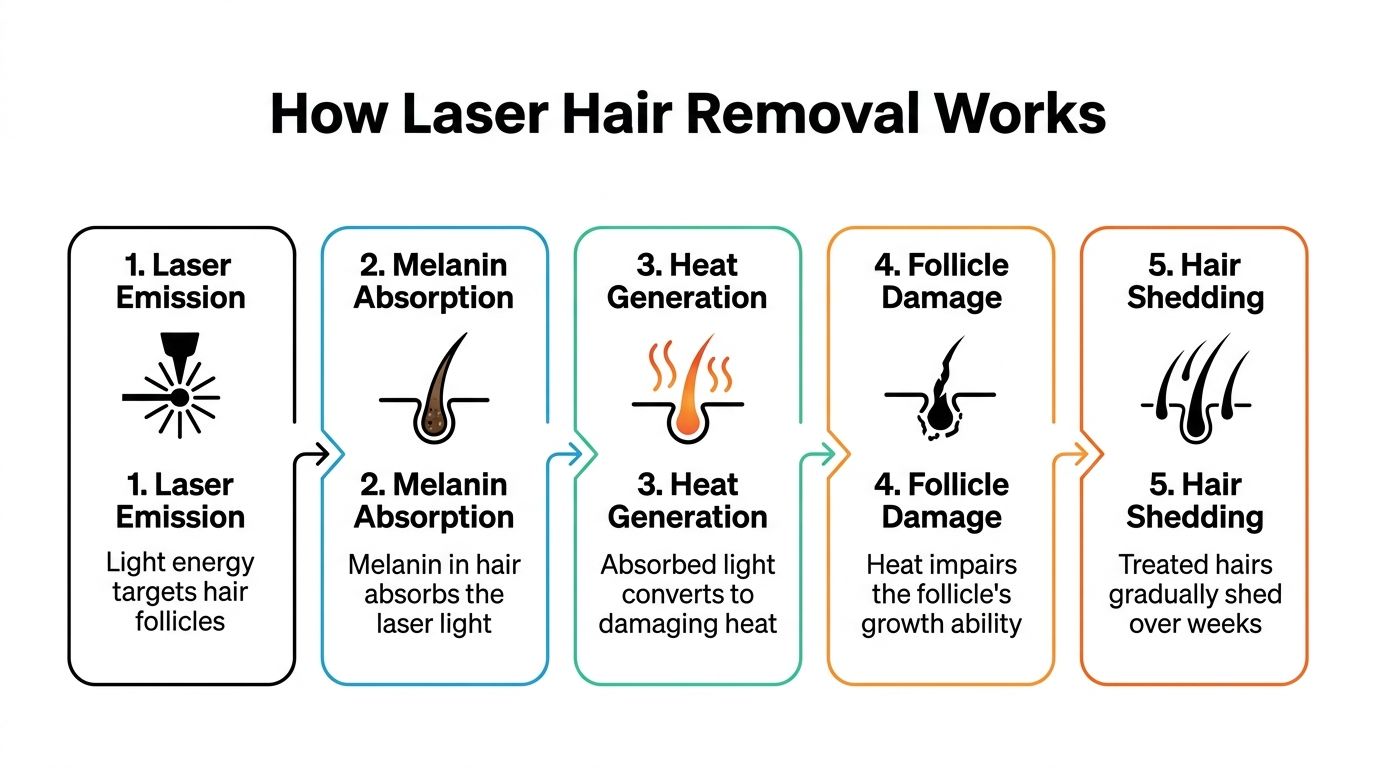
The science sounds more intimidating than it is. In simple terms, the laser looks for pigment in the hair, delivers heat into the follicle, and damages the part that produces future growth.
What the laser is targeting
The formal term is selective photothermolysis. Melanin in the hair follicle absorbs the laser energy, that energy converts to heat, and the follicle is damaged without the treatment aiming at the surrounding skin. That's the core mechanism described in the StatPearls medical overview of laser hair removal.
A simple way to think about it is this: the device isn't sweeping the skin looking for "hair" in a general sense. It's targeting pigment in the follicle with controlled heat. That's why darker, coarser hair often responds more clearly than very light hair.
Why you can't do it in one session
Hair grows in cycles, and the laser is only effective on follicles in the anagen, or active growth, phase. The same StatPearls reference notes that 4 to 6 initial sessions are typically required, because not all hairs are vulnerable at the same time.
That is why consistency matters more than intensity. One strong treatment doesn't replace a properly timed course. If a clinic suggests a single session will sort a large male treatment area, that's a warning sign.
For men who want a practical overview of treatment options at a clinic level, this guide to laser hair removal treatments shows the sort of areas and goals usually considered.
Which devices suit which clients
Different wavelengths suit different combinations of hair depth, skin tone, and treatment area.
- Alexandrite 755 nm is commonly used for lighter skin types.
- Diode 810 nm penetrates further and is often considered relatively safer for darker skin.
- Nd:YAG 1064 nm penetrates deepest and has lower melanin absorption in the epidermis.
Those differences matter. A beard line on coarse male facial hair isn't the same as finer shoulder hair, and neither should be treated with a one-setting-fits-all approach.
Practical rule: Good laser work is partly about the machine, but it's just as much about choosing the right wavelength and settings for the person in front of you.
Popular Male Treatment Areas and Expected Results
The most useful way to think about treatment areas isn't by body map. It's by outcome. Men usually come in wanting one of three things: less maintenance, less irritation, or a cleaner outline.

A useful point from SEV Laser's guidance for men is that male clients often care less about full removal and more about specific grooming goals such as reducing beard-area irritation, easing ingrown hairs, or creating defined beard lines.
Back and shoulders
This is one of the clearest use-cases. Back hair is hard to shave properly, grows back quickly, and often doesn't sit well once it's partly trimmed. Men treating this area usually want a cleaner look with less effort.
Expected result: not just fewer hairs, but less reliance on awkward maintenance. A full smooth finish is possible for some men, but many are happier with a strong reduction that keeps the area tidy.
Chest and stomach
This area is all about preference. Some men want near-complete reduction. Others want the hair to remain, but look lighter and less dense.
That second objective is where laser can be especially useful. You don't have to approach treatment as all or nothing. Thinning chest hair can produce a more natural result than repeated shaving, which often creates a blunt regrowth pattern that many men dislike.
Beard line and neck
This is the most nuanced area in male laser work. The right client isn't always asking for less beard. He may want a sharper lower cheek line, a cleaner upper neck, or fewer razor bumps where the collar sits.
The best beard-line treatments are conservative. Once a line is taken too high or too sharp, you're committed to maintaining that decision.
This short video gives a useful visual sense of how men often approach facial and body grooming treatments in practice.
Groin and intimate areas
Men usually choose this area for comfort, hygiene, sport, or aesthetics. The biggest benefit isn't glamour. It's convenience. Less bulk, less chafing from regrowth, and less need for frequent trimming.
This is also an area where privacy and therapist professionalism matter. If a clinic feels casual or vague during consultation, that's usually enough reason to keep looking.
Your Treatment Journey from Consultation to Completion
Most men do better with laser when they understand the rhythm of the process before they start. A typical course usually involves six to eight sessions, spaced six to eight weeks apart, and people may see 10% to 25% hair reduction after the first treatment, based on laser hair removal treatment statistics compiled by Lavish Beauty & Laser. That early change is encouraging, but it shouldn't be mistaken for the finished result.
Consultation and planning
A proper consultation should cover your skin type, hair colour, medical history, sun exposure, grooming habits, and the exact outcome you want. "Less hair" isn't enough. The clinician needs to know whether you want thinning, reshaping, or a more complete reduction.
At 3D Aesthetics Leamington Spa, consultations include a full 3D body scan that can be used to establish a baseline and track visible change over time. That kind of record is useful because men often notice improvements gradually and underestimate how much has changed from the start.
How to prepare properly
Preparation is usually straightforward, but the details matter.
- Shave the area as advised. The follicle needs to be present under the skin, but surface hair shouldn't be left long.
- Avoid recent sun exposure. Tanned skin can complicate treatment planning.
- Don't wax or pluck beforehand. If the follicle has been pulled out, the laser has less to target.
- Arrive with clean skin. Heavy products on the area can interfere with treatment comfort and assessment.
What happens on the day
You'll wear protective eyewear, the area will be checked, and the practitioner will work through the treatment zone with a handheld device. Sensation varies by body part. Most men describe it as heat plus a fast snapping feeling, with denser areas often feeling sharper than finer ones.
Large zones such as the back take longer than a neckline. Facial work demands precision. Intimate treatment needs clear communication and good positioning. None of that is unusual in clinic. It just needs to be handled matter-of-factly.
Good treatment days feel organised, not rushed. The client should know what area is being treated, what sensation is normal, and what to do afterwards.
Aftercare and what to expect between sessions
Mild redness and warmth can happen after treatment. The key is not to overreact and not to overdo things. Keep the area cool, avoid friction where possible, and follow the aftercare you were given.
Hair doesn't vanish the same day. Treated hairs often shed gradually, and patchiness between sessions is normal. That's one reason some men think "it's growing back unevenly" when it's responding exactly as expected.
Comparing Laser Hair Removal to Waxing and Electrolysis
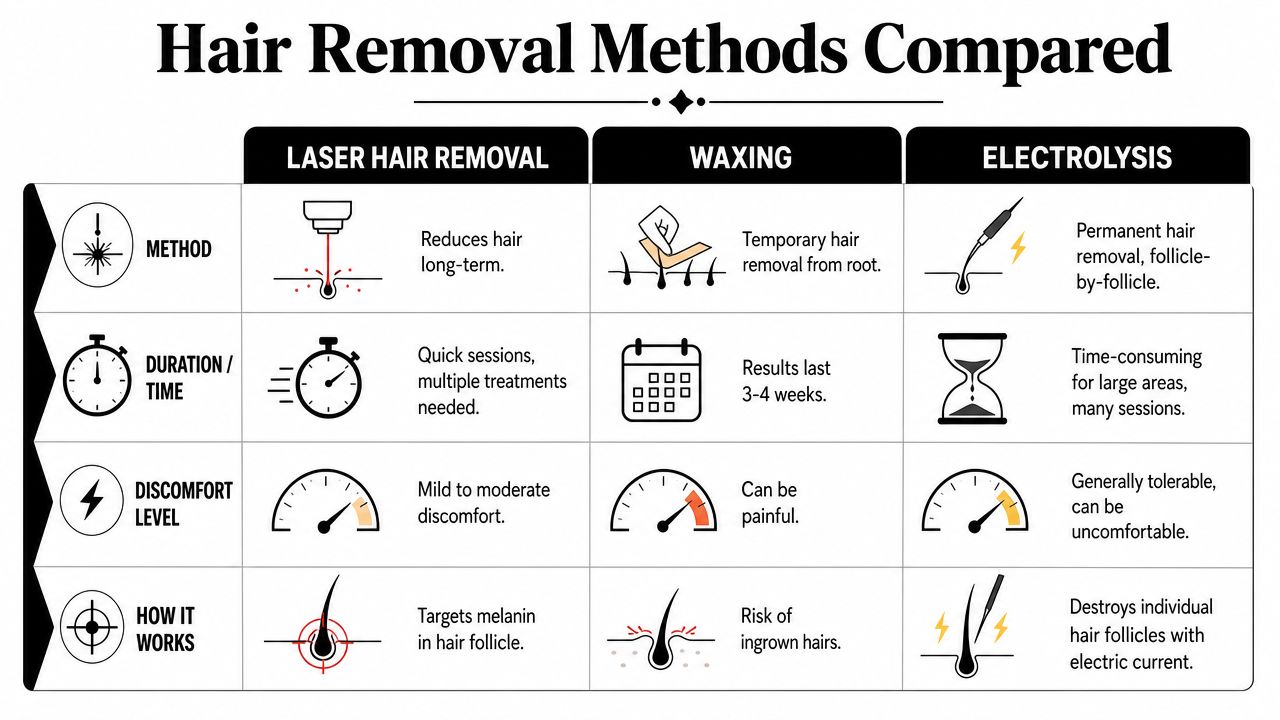
No single method wins for every man and every area. The right choice depends on your hair type, patience, budget, and whether you're treating a broad zone or a very specific detail.
Hair Removal Methods Compared
| Factor | Laser Hair Removal | Waxing | Electrolysis |
|---|---|---|---|
| Best use | Larger areas and long-term reduction | Short-term removal | Individual hairs and detail work |
| Time commitment | Quick sessions, repeated across a course | Repeated indefinitely | Slow for large areas |
| Comfort | Usually mild to moderate discomfort | Often more intense during removal | Generally tolerable but can feel tedious |
| Hair type fit | Best when pigment can be targeted | Works regardless of hair colour | Useful for hairs lasers can't target |
| Typical male goals | Back, shoulders, chest, neck, beard shaping | Holidays, temporary grooming | Stray facial hairs, small precise zones |
Where laser tends to win
Laser hair removal for men usually makes the most sense on larger areas and on areas where shaving creates regular irritation. It also gives more flexibility than many men expect. You can aim for reduction, not total clearance.
If you're deciding between these two clinical approaches specifically, this guide on laser hair removal vs electrolysis is a useful place to compare suitability by goal.
When waxing still makes sense
Waxing has one main advantage. It's immediate. If you want a temporary result for a short-term event and don't want to commit to a course, it's simple.
The downsides are familiar. You have to keep doing it. Regrowth has to reach enough length before the next session. Some men also find that the cycle of growing it out, waxing it off, and repeating the process is exactly what they're trying to escape.
Where electrolysis is the better fit
Electrolysis is often the better option when the target is small, precise, and unsuitable for laser, especially if the hairs are light, grey, or isolated. It can be excellent for tidying stubborn remnants after a laser course.
For a large male back, though, it usually isn't the practical first choice. That's where scale matters.
Understanding the Costs and Potential Side Effects
The two questions men usually ask last are often the ones they were thinking about first: how much is this going to cost, and what can go wrong?

How clinics usually price treatment
Clinics commonly charge either per session or as a course package. Broad male treatment areas often cost more than smaller ones because they take longer and require more passes. Some clinics also price beard shaping differently from full facial removal because precision work is a different type of appointment.
The most useful way to judge cost isn't by the cheapest single session. It's by asking:
- What area is included. "Back" can mean different boundaries at different clinics.
- Whether patch testing and consultation are separate
- If the course reflects your real goal. Thinning and sculpting may not need the same plan.
- How maintenance is handled later on
3D Aesthetics Leamington Spa publishes information on whether laser hair removal hurts, which is also a sensible place to assess how plainly a clinic talks about expectations rather than only price.
Common reactions and real risks
Most side effects are mild and short-lived when treatment is done properly. Redness, warmth, and slight swelling around follicles are common immediate responses. They don't automatically mean something has gone wrong.
The more serious problems tend to happen when the wrong settings are used, the skin has too much recent sun exposure, or the area hasn't been assessed properly for suitability.
If a clinic skips careful questioning about skin type, recent tanning, medications, or your exact grooming goal, safety isn't being treated seriously enough.
How to judge value properly
Cheap treatment that is badly planned usually costs more in the end. You either get weak results, avoidable irritation, or a shape you don't want. That matters most with male facial treatment, where over-treating a beard line can leave you managing a mistake rather than enjoying a result.
Value comes from three things working together:
- Accurate assessment
- Appropriate settings
- A realistic endpoint
If those are in place, the investment tends to make sense for men who are tired of constant upkeep.
Your Laser Hair Removal Questions Answered
Does it hurt more than a tattoo?
Usually, it's a different sort of discomfort. Tattoos tend to involve continuous irritation over the same area. Laser tends to feel like brief bursts of heat and snapping. Some areas are very manageable, while the neck, upper lip, and intimate zones can feel sharper.
Can you treat over tattoos?
No. Tattooed skin shouldn't be lasered for hair removal in the normal way because the pigment in the tattoo can attract the laser energy. That creates a safety issue and can damage the skin or affect the tattoo.
If I stop treatment, will the hair grow back thicker?
No. Hair doesn't come back thicker because you stopped. What usually happens is that you haven't completed enough sessions to reach the level of reduction you wanted. Any remaining growth may still need ongoing management, but stopping doesn't trigger stronger regrowth.
Can laser just thin my hair rather than remove it completely?
Yes. For many men, that's the most sensible goal. Chest, stomach, shoulders, and even some beard-adjacent areas can often be approached with reduction in mind rather than total removal.
What happens at a complimentary consultation?
You should expect a proper discussion, not a rushed sales chat. That means reviewing your skin and hair, discussing the area you want to treat, clarifying whether you want thinning or a sharper outline, and deciding whether laser is the right method at all. If a clinic uses imaging or scanning to create a baseline, that can make progress easier to judge over time.
If you're considering 3D Aesthetics Leamington Spa, the low-pressure next step is a consultation where your treatment area, hair pattern, and end goal can be assessed properly. For men, that matters because the best outcome often isn't "remove everything". It's building a plan that fits how you want to look and how much maintenance you want to keep.
← Back to Home