
You're probably here because you want the smooth-skin benefits of laser, but one question keeps stopping you from booking: does laser hair removal hurt?
That hesitation is completely normal. Those with concerns don't worry about the idea of laser as much as they worry about the unknown. They want to know what it feels like, whether certain areas are worse, whether modern machines are gentler, and whether there's anything they can do to make treatment easier.
The honest answer is reassuring but not fluffy. You'll usually feel a short, sharp sensation, not ongoing pain. Individuals typically find it's more about brief discomfort than something overwhelming. And your experience depends less on bravery than on the details: the body area, your hair and skin type, the device being used, and how well the treatment is adjusted.
If you also live with existing sensitivity, pain anxiety, or you like to understand how discomfort works in the body, these insights into chronic pain can help you think about pain in a broader, calmer way. It's often easier to cope with a sensation once you know what it is and why it happens.
Table of Contents
- Is Laser Hair Removal Painful? Setting Realistic Expectations
- Why You Feel a Sensation During Laser Hair Removal
- Comparing Discomfort Levels Across Treatment Areas
- How to Minimise Discomfort Before and During Treatment
- Your First Laser Session What to Really Expect
- Preparing for Your Consultation Key Questions to Ask
Is Laser Hair Removal Painful? Setting Realistic Expectations
You're lying on the treatment bed, trying to decide whether you're about to feel something mildly annoying or something you'll regret booking. That uncertainty is often the hardest part.
The honest answer is that laser hair removal can feel uncomfortable, but for many clients it is manageable and brief. The part that often gets lost is that comfort is not decided by one factor alone. It changes with the device being used, the area treated, your hair and skin characteristics, and how carefully the settings are adjusted to you.
That is why the old one-line descriptions can be unhelpful. They flatten a very personalised treatment into one stock phrase. A modern appointment should feel more precise than that. At 3D Aesthetics, we treat comfort as something to plan for, not something to hope for.
Why one person says “easy” and another says “ouch”
People use the word pain to describe very different experiences. For one client, it means a quick hot flick that fades straight away. For another, it means they felt tense, startled, or sensitive in a particular area that day.
A better way to frame it is this. Laser usually creates a short, controlled sensation rather than a lingering, building pain. It comes in small bursts. Then it stops. That pattern matters because the body usually copes better with brief signals than with constant discomfort.
Your comfort level can also shift from session to session. Coarser regrowth can feel more noticeable than finer regrowth. Hormonal areas may stay more sensitive. Stress, poor sleep, caffeine, and where you are in your menstrual cycle can all change how strongly you perceive the same treatment. Research on pain perception regularly shows that context and expectation shape what the nervous system notices, which is why reading insights into chronic pain can be useful for understanding how personal discomfort really is.
Modern technology changes the experience
Older systems often earned laser its intimidating reputation. Newer technology has improved comfort because treatment is faster, more targeted, and often paired with built-in cooling that protects the skin surface while the follicle is being treated.
That cooling matters more than many people realise. A useful comparison is holding an ice pack near a warm mug. The heat source still exists, but the surface you touch feels calmer and easier to tolerate. In practice, that means a well-chosen device and carefully selected settings can make the same treatment area feel far more manageable.
This is also why a proper consultation matters. A personalised plan is not just about results. It is about choosing settings that suit your skin tone, hair thickness, treatment area, and comfort threshold, then adjusting as your skin and hair respond over time.
Realistic expectations that actually help
It helps to go in expecting sensation, not drama.
- Short bursts: you notice each pulse, then it passes.
- Different areas feel different: underarms, bikini, and bony areas often feel sharper than lower legs or arms.
- Your plan affects comfort: cooling methods, pulse speed, and energy settings all change the experience.
- Feedback matters: a good practitioner checks in and adjusts, rather than pushing through discomfort unnecessarily.
So, does laser hair removal hurt? It can. But “hurt” is too blunt a word for what most clients experience. A more accurate expectation is brief, controlled discomfort that can often be reduced significantly with modern technology and a treatment plan customized for your skin, hair, and sensitivity level.
Why You Feel a Sensation During Laser Hair Removal
The feeling comes from heat, but not in the way many people imagine.
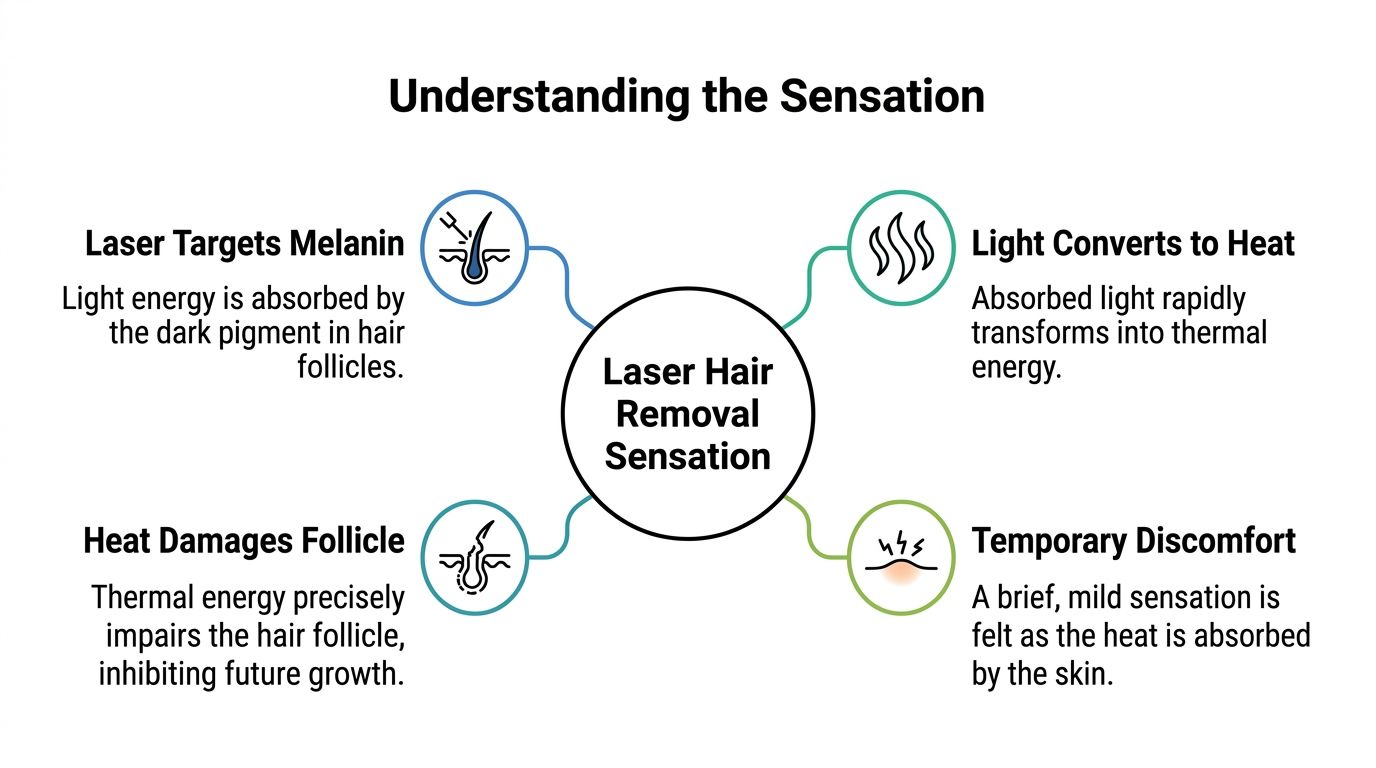
Laser hair removal works by sending light into the skin, where it targets melanin in the hair follicle. That light turns into thermal energy. The aim is to heat the follicle enough to disrupt the part responsible for growth. Some of that heat spreads slightly into the surrounding skin, and that's what creates the familiar quick sting or snap, as explained in Laserville's explanation of why laser hair removal feels the way it does.
A simple way to picture it
Think about standing in the sun wearing a black t-shirt versus a white one. The darker fabric absorbs more heat. Hair pigment behaves in a similar way. Darker, coarser hair absorbs more laser energy, which can make the treatment feel more noticeable.
That doesn't mean the skin is supposed to burn. It means the device is targeting pigment and creating a controlled thermal effect at follicle level.
Why the sensation is so brief
People sometimes expect one long wave of pain. That isn't usually what happens. The pulse is delivered quickly, so the sensation tends to be short, sharp, and over almost immediately.
This is why clients often say they can tolerate laser even if they were nervous before. Your brain has time to register, “yes, I felt that,” but the moment passes fast.
Practical rule: A brief snap is very different from an uncontrolled hot, lingering pain. Good treatment should feel controlled and monitored, not alarming.
Why some body parts feel worse than others
The same laser can feel very different depending on where it's used. Areas such as the upper lip and bikini line often feel more intense because the skin is thinner and the area is more sensitive. Legs and forearms usually feel easier by comparison.
Often, people get confused, assuming the machine is either “painful” or “not painful”. In reality, the body map matters just as much as the machine.
Why your own hair and skin affect comfort
Personalised settings matter because hair and skin aren't all the same. If you have coarser hair, there may be more pigment absorbing energy. If your skin is sensitive, you may notice the heat more. If your skin is darker or recently tanned, the treatment needs careful adjustment so that comfort and safety stay aligned.
That's why patch testing and a thoughtful plan matter so much. The aim isn't just hair reduction. It's delivering enough energy to treat the follicle while reducing unnecessary heat spread into the surrounding skin.
Comparing Discomfort Levels Across Treatment Areas
You might sail through lower legs, then tense up the moment we move to the upper lip. That change can feel confusing if you were expecting one simple answer to “does laser hair removal hurt?”
The clearer way to look at it is this. Comfort changes by area because each part of the body has its own mix of skin thickness, nerve sensitivity, hair density, and treatment speed. The laser is doing the same basic job, but the body does not experience every zone in the same way.
At 3D Aesthetics, we explain this like adjusting the heat under different pans on a hob. The goal stays the same, but the setting and pacing need to suit what is in front of you. A small facial area with fine, reactive skin is managed differently from a larger area with coarser hair, and that personalised plan often makes the biggest difference to comfort.
Typical discomfort levels by laser hair removal area
| Treatment Area | Typical Discomfort Level | Common Sensation |
|---|---|---|
| Upper lip | Higher end of the usual range | Fast, sharp pinches with a strong awareness of heat |
| Bikini line | Higher end of the usual range | Hotter pulses in a naturally sensitive area |
| Underarms | Moderate to moderately high | Concentrated snapping or stinging that passes quickly |
| Face cheeks and forehead | Lower to moderate | Light flicking, warmth, or tingling |
| Forearms | Lower | Repetitive light pulses that are usually easy to settle into |
| Shins | Lower to moderate | Noticeable zaps over bonier skin |
| Outer arms | Lower | Mild pulsing or prickling |
| Stomach | Lower to moderate | Brief warmth with occasional sharper pulses over denser hair |
| Chest | Moderate, but variable | Quick heat and snapping, often stronger with coarse growth |
These are patterns, not promises. A person with coarse dark hair on the chest may describe the session very differently from someone treating finer facial hair, even if both are using modern equipment.
Why one area feels sharper than another
The upper lip often gets talked about because it is a perfect storm of thin skin, lots of nerve endings, and close attention from your brain. Even a tiny pulse can feel vivid there.
Shins can also surprise people. The skin is not always highly sensitive, but the area is bony, so the sensation can feel more exposed. By contrast, forearms or outer arms often feel easier because the tissue is less reactive and the pulses blend into a more repetitive rhythm.
Hair matters too. Coarser, denser hair usually absorbs more energy, which can create a stronger feeling of heat for that session. That is one reason the first few appointments may feel different from later ones, and one reason a careful clinician adjusts settings instead of using the same approach everywhere.
Why modern treatment can feel very different from old horror stories
The old “rubber band snap” comparison only tells part of the story. It describes the speed of the pulse, but not the factors that shape how strong that pulse feels on your skin.
Modern devices can cool the skin, deliver energy more precisely, and allow the therapist to pace the session around sensitive spots rather than pushing through them. A good clinic also watches how your skin responds in real time. If an area is getting hotter or you are starting to brace, the treatment can be slowed, cooled, or broken into shorter passes.
That proactive management is often what separates a tolerable appointment from an unpleasant one.
If you are especially anxious about a small sensitive zone, some clients ask about topical numbing beforehand. This complete guide to lidocaine cream explains the basics, but always check with your treating practitioner before applying anything, because the wrong product or timing can affect skin response.
A better way to judge comfort before you book
Instead of asking whether laser is “painful” in general, ask four more useful questions:
- How sensitive is the skin in this area?
- Is the hair fine and sparse, or coarse and dense?
- Will the clinician adjust settings for this specific zone?
- What cooling and pacing methods are used if I find one area intense?
Those questions usually give a far more realistic picture.
For larger or denser treatment zones, especially male areas such as chest, shoulders, or back, this guide to laser hair removal for men gives a helpful overview of how body area, hair type, and session comfort often connect.
How to Minimise Discomfort Before and During Treatment
Comfort starts before the laser is switched on. The best results usually come from a combination of good preparation at home and good technique in clinic.
Modern systems have improved comfort significantly. Advances such as integrated cooling systems and shorter pulse delivery help reduce discomfort, and many clients notice the sensation drops by the third or fourth treatment as hair becomes finer and less dense, according to this explanation of comfort improvements in modern laser hair removal.
What you can do before your appointment
Small decisions make a real difference.
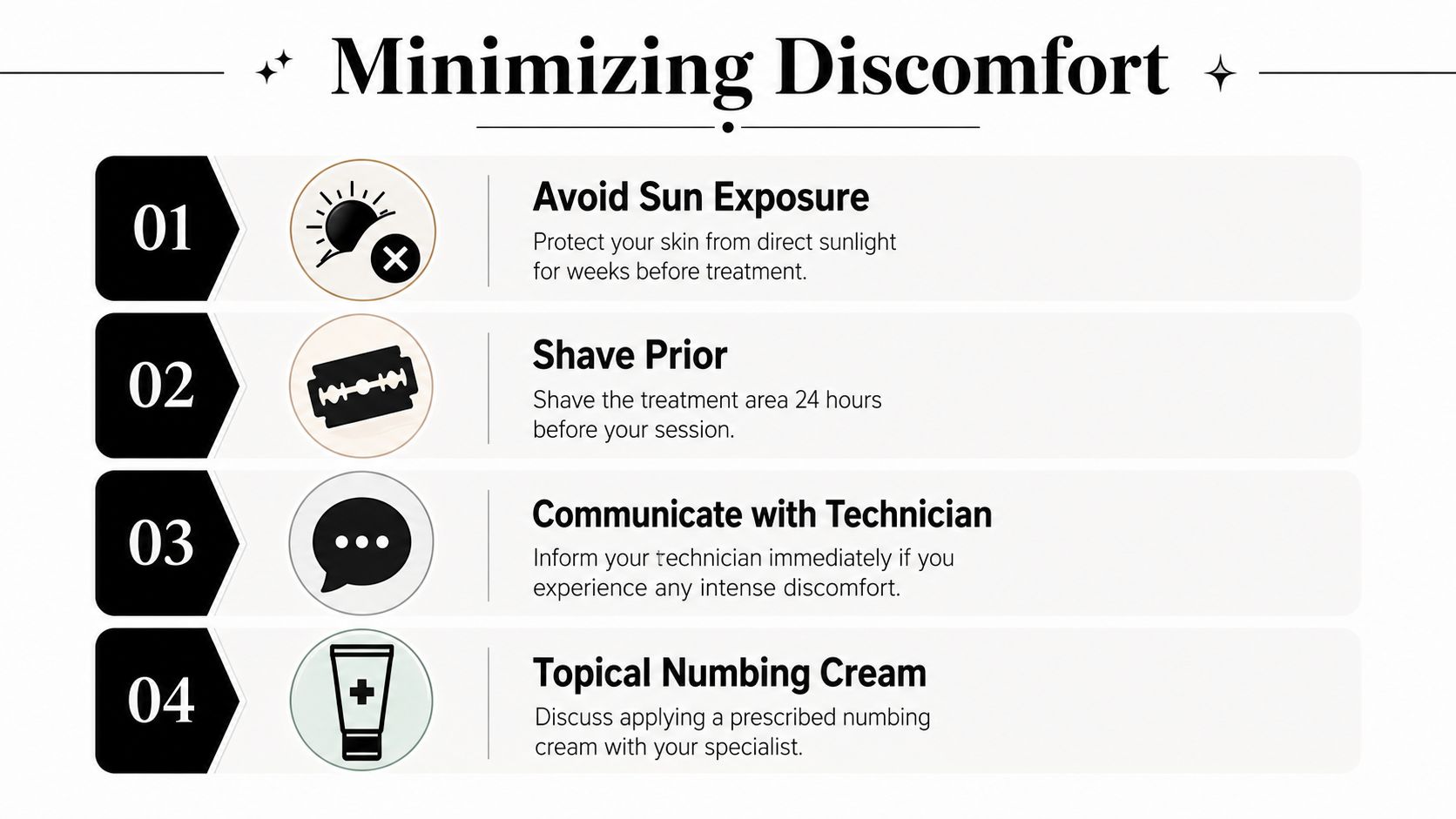
- Avoid recent sun exposure: Tanned or sun-reactive skin can be more vulnerable and may need more cautious settings.
- Shave as advised: Surface hair can increase unnecessary heat at skin level. A clean shave usually helps treatment stay focused on the follicle.
- Arrive with calm, clean skin: Skip irritating products if you've been told to do so, especially on facial areas.
- Speak up about sensitivity: If you're anxious, prone to skin reactivity, or worried about a specific zone, say so early.
Some clinics may discuss topical numbing options in selected cases. If you want to understand how these products work before asking about them, this complete guide to lidocaine cream gives useful general context.
What a clinic does to manage comfort proactively
A personalised treatment plan matters because comfort isn't only about pain tolerance. It's about matching the settings to the person in front of you.
That includes:
- Skin and hair assessment: darker, coarser hair may absorb more energy, so the therapist has to balance efficacy with comfort.
- Patch testing: this gives useful information before full treatment.
- Cooling technology: modern handpieces are designed to protect the surface of the skin while treatment energy reaches the follicle.
- Pacing and communication: some areas benefit from a steadier rhythm, short pauses, or extra reassurance.
3D Aesthetics Leamington Spa states that it offers laser hair removal using the 3D-Trilogyice device, with a consultation and patch test included and cooling technology intended to improve comfort.
Why newer technology changes the experience
People often hear the old rubber-band comparison and assume nothing has changed. In reality, newer systems are built around better control. Shorter pulse delivery means the energy can be delivered in a way that's easier to tolerate. Cooling means the top layer of skin is better protected while the follicle is being targeted.
That combination is why modern laser sessions often feel more manageable than people expect.
Your First Laser Session What to Really Expect
The first appointment usually feels easier once you know the sequence. Most of the anxiety comes from not knowing what happens minute by minute.
You'll typically arrive, talk through your medical history, discuss the area being treated, and go over any recent sun exposure or skin changes. This early conversation matters because the settings need to fit your skin and hair, not a generic template.
Private UK clinics commonly use a patch test and discuss comfort options before treatment. Many patients also report that later sessions feel easier, with the first session often being the most uncomfortable and a noticeable drop in sensation by the third or fourth treatment, as described in this guide to what patients often notice over a course of laser sessions.
During the treatment itself
Once the area is prepared, you'll usually feel a sequence of quick pulses. Some clients notice cooling first, then the snap of the laser. Others mainly notice a warm flicking sensation.
What surprises many people is how fast the treatment can feel once it starts. Waiting for the first pulse is often worse than the pulse itself.
If you feel something stronger than you expected, that doesn't mean you have to just tolerate it silently. Real-time feedback helps the practitioner adjust pace, positioning, or comfort strategy.
For a practical look at treatment options and the process, you can also review the clinic's laser hair removal service details.
Here's a short visual explainer that can make the experience feel more familiar before you attend:
Straight after your session
The skin may feel warm, slightly tender, or reactive for a while afterwards. This stage is often described as similar to mild post-treatment sensitivity rather than lingering pain.
The emotional shift is often the biggest surprise. People come in expecting something dramatic, then leave thinking, “That was much more manageable than I'd built up in my head.”
Preparing for Your Consultation Key Questions to Ask
The most comfortable laser treatment usually starts with a good consultation, not a high pain threshold.
In the UK, laser hair removal should be carried out by a trained practitioner, because incorrect settings can cause burns, blistering, and pigmentation changes, with particular care needed for darker or recently tanned skin, as noted in this discussion of laser safety, skin type, and comfort.
Questions worth asking before you start
You don't need to sound technical. Clear questions help you get a safer and more personalised plan.
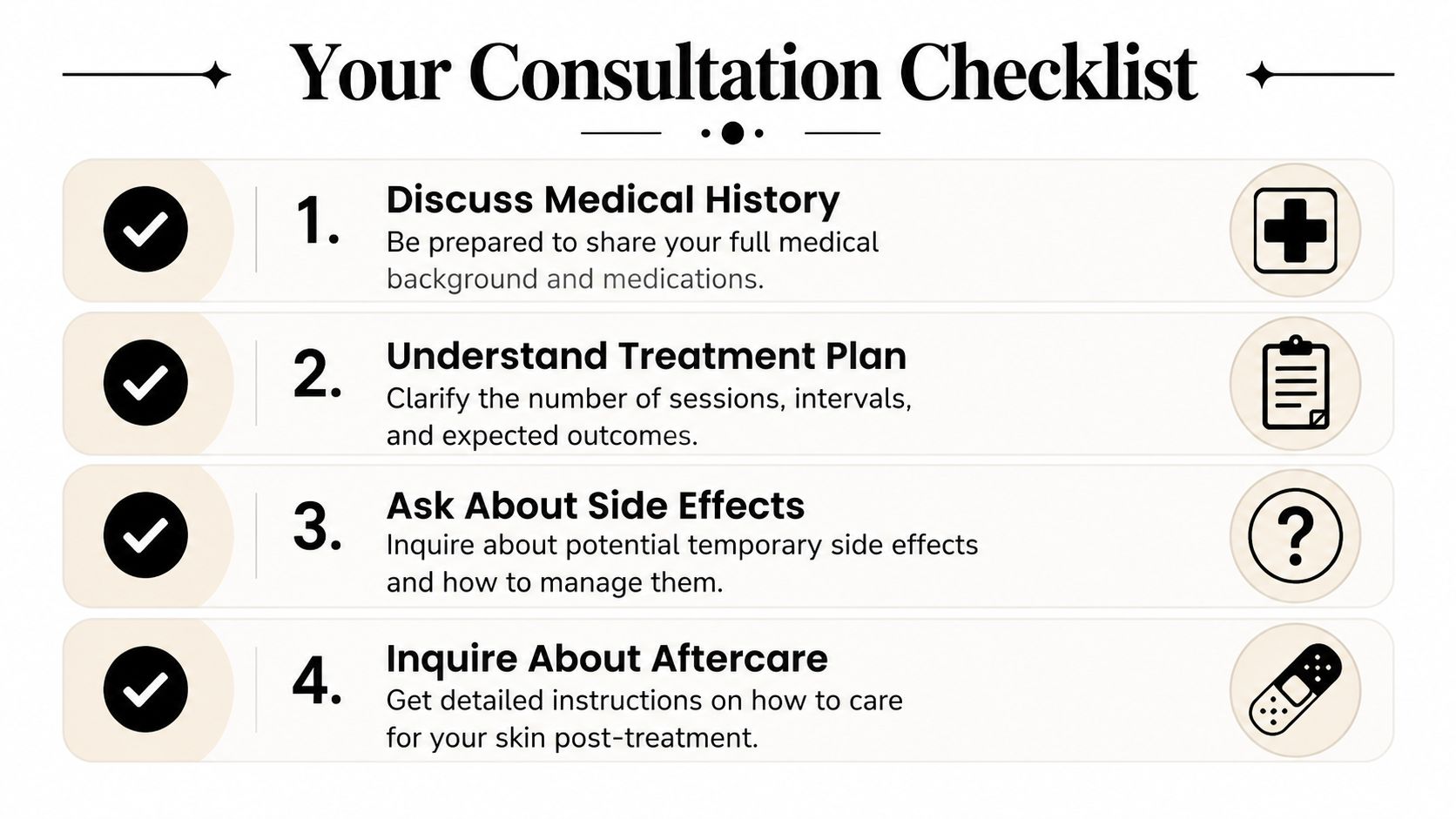
- What device will you use for my skin and hair type? This helps you understand whether the treatment is being properly customized.
- How do you manage comfort during treatment? Ask about cooling, pacing, and what happens if an area feels too intense.
- Can you perform a patch test first? This is especially useful if your skin is reactive, darker, or recently exposed to sun.
- What should I avoid before the appointment? Pre-treatment guidance affects both safety and comfort.
- What should normal after-effects feel like? You should know what's expected and what would be unusual.
Why this matters more for some clients
If you have darker skin, a recent tan, sensitive skin, or coarse hair in delicate areas, a one-size-fits-all approach isn't enough. The key consultation question is whether the device and settings can be matched to your skin phototype in a way that balances efficacy, comfort, and safety.
That's also why vague promises about “painless laser” can be unhelpful. Good care is more specific than that. It should include an honest conversation about what you may feel, where you may feel it more, and how the plan will be adjusted for you.
Ask how the clinic decides on settings for your skin rather than asking for a blanket reassurance. Personalisation is what usually makes treatment feel safer and calmer.
If you're still weighing up your options, this page on unwanted hair treatments can give you broader context before booking a consultation.
If you'd like a personalised answer to “does laser hair removal hurt” for your own skin, hair, and treatment area, book a consultation with 3D Aesthetics Leamington Spa. A proper assessment, patch test, and personalized treatment plan can make the experience much more predictable, comfortable, and safe.
Prepared with the Outrank app