
You've probably reached the point where shaving feels like admin, waxing feels like punishment, and neither feels worth the effort anymore. Hair grows back just as you get a few smooth days, and the routine gradually takes over your week. For some people it's underarms before work. For others it's facial hair that needs constant checking in the mirror, or legs and bikini line that make every holiday feel like preparation.
That's usually when people start searching laser hair removal vs electrolysis and run straight into a confusing wall of claims. One says “permanent”. Another says “reduction”. One sounds quick. The other sounds precise. And if you have lighter hair, darker skin, or a small hormonal area that never seems predictable, the advice can feel far too general.
As a senior aesthetic therapist, I'd explain it like this. Both methods can be excellent. They just solve the problem in different ways. The right choice depends on your hair colour, your skin tone, the size of the area, your timeline, and what result matters most to you.
Table of Contents
- The End of Shaving and Waxing A New Beginning
- How Each Method Works A Technical Breakdown
- The Core Comparison Speed Permanence and Sensation
- Suitability by Your Skin and Hair Type
- Cost and Investment A Realistic Look
- Your Personalised Pathway at 3D Aesthetics Leamington Spa
- Common Questions About Permanent Hair Removal
The End of Shaving and Waxing A New Beginning
Most clients don't begin by asking for a technical explanation. They begin because they're tired. Tired of shaving in a rush and missing patches. Tired of waxing appointments built around regrowth. Tired of planning around hair rather than getting on with life.
For some, the issue is practical. A man may be frustrated by dense back hair that's awkward to manage. A woman may be fed up with chin hairs that seem to appear overnight. Another client may be dealing with ingrowing hairs from repeated shaving and wants a calmer long-term plan instead of another temporary fix.

If you're still weighing up temporary methods, this guide on waxing vs shaving for estheticians gives helpful context on why those options feel so repetitive over time. That comparison often helps people realise the main question isn't “wax or shave?” anymore. It's whether they're ready for a longer-term approach.
That's where laser hair removal and electrolysis come in. They aren't just upgraded versions of your usual routine. They're two different clinical pathways designed to reduce the amount of ongoing maintenance you need.
Why people often hesitate
The hesitation is understandable:
- You don't want to choose wrong: If you've got blonde, grey, red, or patchy hair growth, generic advice often doesn't fit.
- You want realism: You're not looking for hype. You want to know what suits your area and hair pattern.
- You want safety as well as results: Skin sensitivity, medication, hormonal changes, and previous reactions all matter.
A good treatment plan should make life simpler, not leave you managing another cycle of appointments that doesn't match your goals.
If that's where you are, it helps to start with the broadest distinction. Laser is usually the high-speed option for larger areas. Electrolysis is the detail-focused option for individual hairs. If you want a broader overview of long-term options for unwanted hair treatments, that's the lens worth using from the start.
How Each Method Works A Technical Breakdown
The easiest way to understand laser hair removal vs electrolysis is to ask one question. What is each treatment targeting? Once that's clear, the rest of the comparison makes much more sense.
Laser targets pigment with light
Laser hair removal works by sending light energy into the skin. That light is absorbed by melanin, which is the pigment in the hair. The energy then converts to heat, and that heat damages the follicle's ability to keep producing strong regrowth.
A simple way to think about it is this. Laser looks for dark pigment and follows it downward. That's why laser tends to work best when there is a clear contrast between the hair and the surrounding skin. Dark coarse hair gives the device something obvious to target.

Laser also works across a treatment area in repeated pulses, so it can cover many follicles at once. That's why it became so popular for larger body areas. If you're researching treatment suitability in more detail, this overview of laser hair removal options gives a useful starting point for the kinds of areas commonly treated.
Electrolysis targets the follicle directly
Electrolysis takes a different route. Instead of using light to seek pigment, it uses a very fine probe placed into the individual follicle. An electrical current is delivered to destroy the growth cells inside that follicle.
Electrolysis does not depend on the hair being dark; it treats the follicle directly, one by one. This means if the hair is blonde, grey, red, or very light, electrolysis can still be an option in a way laser often isn't.
Clinical distinction: Laser scans for pigment across an area. Electrolysis treats each follicle as a separate task.
There's also a historical reason many professionals still describe electrolysis as the older permanence-focused method. In the UK, electrolysis has a much longer historical footprint than laser hair removal. The British Association of Beauty Therapy & Cosmetology identifies electrolysis as the oldest method of permanent hair removal, with origins in the 19th century. By contrast, modern medical laser hair removal became established later, after selective photothermolysis was understood. That difference matters clinically because electrolysis works follicle by follicle using an electric current, while laser treats many follicles at once using light, as outlined in this discussion of electrolysis and laser history and mechanism.
The Core Comparison Speed Permanence and Sensation
When clients compare laser hair removal vs electrolysis, they usually care about three things first. How long will this take, how lasting is the result, and what will it feel like? Those are the right questions.
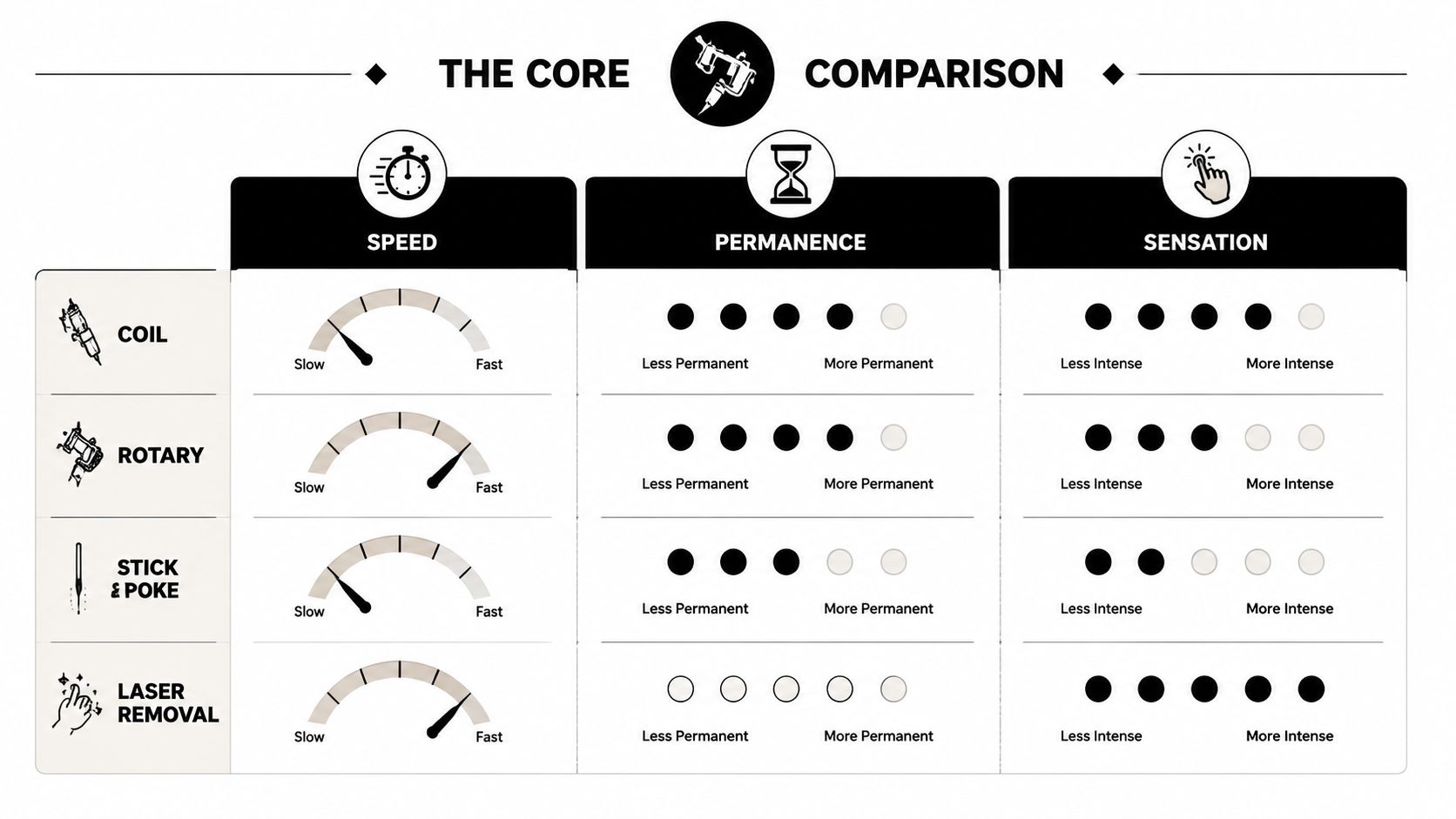
Laser Hair Removal vs. Electrolysis at a Glance
| Feature | Laser Hair Removal | Electrolysis |
|---|---|---|
| How it works | Uses light absorbed by melanin in the hair | Uses an electrical current inside each follicle |
| Best fit | Larger areas with darker hair | Small areas, precision work, lighter or grey hairs |
| Speed | Treats many follicles at once | Treats hairs one by one |
| Hair colours it can manage well | Best where there is clear pigment contrast | Can treat blonde, grey, red, and very light hairs |
| Typical role | Long-term reduction with strong efficiency on body areas | Permanence-focused treatment for individual follicles |
| Practical feel | Often chosen when time matters | Often chosen when universality and detail matter most |
What speed really means in clinic life
Speed isn't just about convenience. It affects whether a treatment is realistic for the area you want done. Legs, back, chest, shoulders, and underarms involve a lot of follicles spread over a large surface. Laser is generally more practical there because it treats many hairs per pulse.
Electrolysis is slower by design. The therapist must treat each follicle individually, which is why it's often reserved for areas like the upper lip, chin, brows, or isolated hairs that remain after other treatment.
A split-body study helps show that difference clearly. In a controlled study of 12 patients with underarm hair, long-pulse alexandrite laser achieved 74% average hair clearance versus 35% for electrolysis at 6 months, with 3 laser sessions at 4-week intervals compared with 4 electrolysis sessions at 3-week intervals. The study also reported that laser was about 60 times faster and less painful, as detailed in the PubMed study on alexandrite laser versus electrolysis.
For larger areas, “faster” doesn't just mean a shorter appointment. It often means the whole course feels manageable enough to finish.
Permanence versus reduction
This is one of the biggest areas of confusion. Electrolysis is widely described as the permanence-focused method because it destroys follicles individually. Laser is usually described as permanent hair reduction, meaning it can produce lasting reduction in growth, but some follicles may recover or produce finer regrowth over time.
Neither phrase should be read in a marketing way. The practical meaning is more useful than the label. If you have a larger area with dark hair, many clients prefer laser because a substantial reduction in density and regrowth changes daily life dramatically. If you have small stubborn hairs, especially lighter ones, electrolysis may be the method that can address them more directly.
What treatment feels like
Sensation is personal, but the treatment style does affect the experience. Laser usually feels like quick pulses of heat or a snap against the skin. Electrolysis tends to feel more like repeated pin-point treatment because each follicle is addressed individually.
Clients often find that the area matters as much as the method. Underarms feel different from lower legs. Upper lip feels different from back or chest. The important point is that treatment should be planned realistically. If someone has a large area and low patience for long appointments, that points the decision in one direction very quickly.
Suitability by Your Skin and Hair Type
The most accurate answer to laser hair removal vs electrolysis usually begins with a mirror, not a price list. What colour is the hair, and how does your skin respond to heat and inflammation? Those two details shape the safest and most effective starting point.

Hair colour often decides the starting point
If your hair is dark and coarse, laser usually makes immediate sense as a first-line option for larger zones. The pigment gives the device something to target, and the coarser the hair, the easier it often is to identify and treat effectively.
If your hair is blonde, grey, red, white, or very fine, the conversation changes. Laser relies on melanin, so those hairs may not respond reliably. Electrolysis becomes the more universal option because it doesn't need pigment to work.
This is why two people with the same treatment area may need completely different plans. One client's upper lip may be ideal for laser if the hair is dark enough. Another client with pale, wispy regrowth in the same area may get better value from electrolysis.
Skin tone changes the safety conversation
Skin tone matters because laser doesn't only “see” hair. It also interacts with pigment in the skin. That's why people with darker skin tones need a more careful assessment of device choice, settings, practitioner skill, and the risk of post-inflammatory pigment change.
A primary concern for UK patients with darker skin is the risk of pigment change. NHS guidance notes that laser hair removal can cause burns or skin discolouration and advises choosing a qualified practitioner. That matters especially for Fitzpatrick IV to VI skin, where a one-size-fits-all approach can miss the practical question of which laser is safer and when electrolysis may be the lower-risk option to avoid post-inflammatory hyperpigmentation, as discussed in this review of laser hair removal versus electrolysis for different skin tones.
Darker skin doesn't automatically rule out laser. It means the consultation needs to focus on safety, device suitability, and practitioner judgement.
A simple way to think about Fitzpatrick skin types is this:
- Lower Fitzpatrick types: Skin that burns more easily and often has less baseline pigment.
- Middle ranges: Skin that may tan and still needs careful laser selection.
- Higher Fitzpatrick types: Skin with more pigment, where the risk conversation becomes more important.
For men comparing body areas such as chest, shoulders, neck, or back, hair density and skin response can vary a lot across the same body. Guidance on hair removal for men can help you narrow down which areas are likely to benefit from faster bulk reduction and which may need a more targeted strategy.
Cost and Investment A Realistic Look
Clients often ask which treatment is cheaper. The better question is which treatment gives better value for your area, your hair type, and the total number of appointments you're likely to need.
Why the cheapest session isn't always the cheapest plan
Laser is often priced by treatment area or session package. Electrolysis is often priced by time, because the work is performed follicle by follicle. On paper, that can make direct comparison feel awkward. You're not always comparing like with like.
The total investment is shaped by how many appointments the area is likely to need. UK dermatology sources commonly cite around 6–10 laser sessions for significant reduction on many body areas, while a full course of electrolysis for the same area may extend over 12–18 months of more frequent sessions because of the slower per-follicle method, as explained in this overview of session counts for electrolysis and laser treatment.
That doesn't mean laser always costs less, or that electrolysis is poor value. It means the economics depend on the job.
- Large body areas: Laser often makes more financial sense because the coverage per visit is much greater.
- Small facial zones: Electrolysis can be a sensible investment when the target area is limited and precision matters more than speed.
- Mixed cases: Some people benefit from one method first and a different clean-up strategy later.
Questions worth asking before you commit
When you're comparing quotes, ask the clinic questions that reflect the whole pathway, not just the first appointment:
- What is the likely treatment goal for my hair type? Reduction and clearance are not the same thing.
- How large is the area in practical terms? An upper lip and a full lower face are very different commitments.
- How often will I need to attend? A plan that looks affordable per visit can still become inconvenient.
- What happens if some hairs remain that the first method doesn't suit? This matters particularly for mixed hair colours.
Practical rule: Don't judge value by the single-session price. Judge it by the total time, travel, maintenance, and realism of finishing the course.
Your Personalised Pathway at 3D Aesthetics Leamington Spa
You might be sitting at home comparing laser and electrolysis, feeling as if the answer should be simple. Then the actual questions start. Is your hair dark enough for laser to work well? Is the area small and fiddly, or broad and time-consuming? Are you aiming for major reduction, precise clearance, or a combination of both?
That is why a proper consultation matters. A chart can compare methods in general terms, but it cannot assess your actual hair pattern, skin response, medical history, or the result you want to live with day to day.
A good assessment should turn a vague question into a clear treatment plan. It should explain:
- What type of hair is present. Coarse terminal hairs and fine facial hairs do not behave the same way.
- What the actual goal is. Some areas are better approached with fast bulk reduction, while others need one-hair-at-a-time precision.
- Whether there are any caution points. Recent sun exposure, active skin sensitivity, medication, and previous reactions can all affect the safest route.
The simplest way to picture it is this. Choosing between laser and electrolysis without seeing the hair properly is a bit like choosing paint without checking the wall surface first. The finish depends on what you are working with, not just the label on the tin.
For local clients, 3D Aesthetics Leamington Spa builds that decision around an in-person assessment rather than a standard package. The complimentary consultation gives space to talk through the area bothering you, what you have already tried, and whether you want a faster route for larger zones or a more precise method for stubborn hairs. The 3D body scan also helps create a baseline, which is useful when hair removal concerns sit alongside broader face or body goals.
That wider view often changes the conversation. Someone may book for chin hair and then mention ingrown-related marks, uneven texture, or another area they have been shaving for years because they assumed nothing else would suit them. Once those details are visible, the recommendation becomes more personal and much more practical.
A clinic should leave you with a pathway you can picture clearly. What is likely to happen first, what result is realistic, how progress will be checked, and whether a combined approach may make sense later. That is the point where a comparison article becomes useful in real life.
If you are curious how clinics shape the way they explain treatments online, this article on how clients find medical spa digital marketing tips offers a helpful behind-the-scenes view. Clear education matters in aesthetics because suitability is individual, and the right choice is rarely made from a price list alone.
The best recommendation should feel specific, calm, and grounded in what your hair and skin are doing. That is what helps you choose with confidence.
Common Questions About Permanent Hair Removal
Can I use both methods
Yes, sometimes that's the most practical route. A client may use laser to reduce dense dark hair over a larger area, then use electrolysis for lighter leftovers or isolated hairs that don't respond as well. The exact order depends on the hair pattern and treatment goal.
Does permanent mean every single hair disappears forever
Not in the simplistic way many people hope. Hair growth is influenced by cycles, hormones, and biology. In practice, electrolysis is the permanence-focused method for individual follicles, while laser is chosen for lasting reduction over broader areas. The useful question is whether the result changes your daily life enough to remove the constant maintenance burden.
What should I expect straight after treatment
Some temporary skin reaction is normal. The treated area can feel warm, look a bit pink, or feel slightly irritated for a short period. The aftercare advice you receive matters. Keep the area protected, avoid unnecessary irritation, and follow the plan your practitioner gives you.
The best outcome usually comes from matching the method to the hair in front of you, rather than trying to force one treatment to do every job.
If you'd like a clear, personalised answer rather than another generic comparison, book a consultation with 3D Aesthetics Leamington Spa. You'll be able to discuss your hair type, skin tone, treatment area, and goals in detail, so the decision between laser hair removal and electrolysis is based on your situation, not guesswork.
Produced via the Outrank tool