

How much weight will you lose with ultrasound cavitation? That question sounds sensible, but it points to the wrong measuring tool. Ultrasound cavitation is designed to change the shape and circumference of a treated area, not to produce a dramatic drop on the bathroom scales. If your waist looks smoother, your clothes fit differently and your measurements reduce, the treatment may be working even when your weight barely changes.
The most useful way to judge ultrasound cavitation results is to combine consistent circumference measurements with photographs or, where available, a 3D body scan. This approach separates local contour change from normal fluctuations caused by meals, hydration, digestion and hormonal changes. The evidence also supports caution. A UK pilot study found measurable improvement across treatment groups, but adding cavitation to cryolipolysis didn't significantly outperform cryolipolysis alone, so no responsible practitioner should promise dramatic or guaranteed weight loss (the UK pilot study).
Table of Contents
- What Ultrasound Cavitation Results Actually Mean
- How Ultrasound Cavitation Works on Fat Cells
- Realistic Timelines From First Session to Final Result
- Factors That Shape Your Ultrasound Cavitation Results
- Before, Between, and After Sessions
- Cavitation Compared With Other Non-Surgical Options
- How 3D Aesthetics Leamington Spa Measures and Guarantees Results
- Common Questions About Ultrasound Cavitation Results
What Ultrasound Cavitation Results Actually Mean
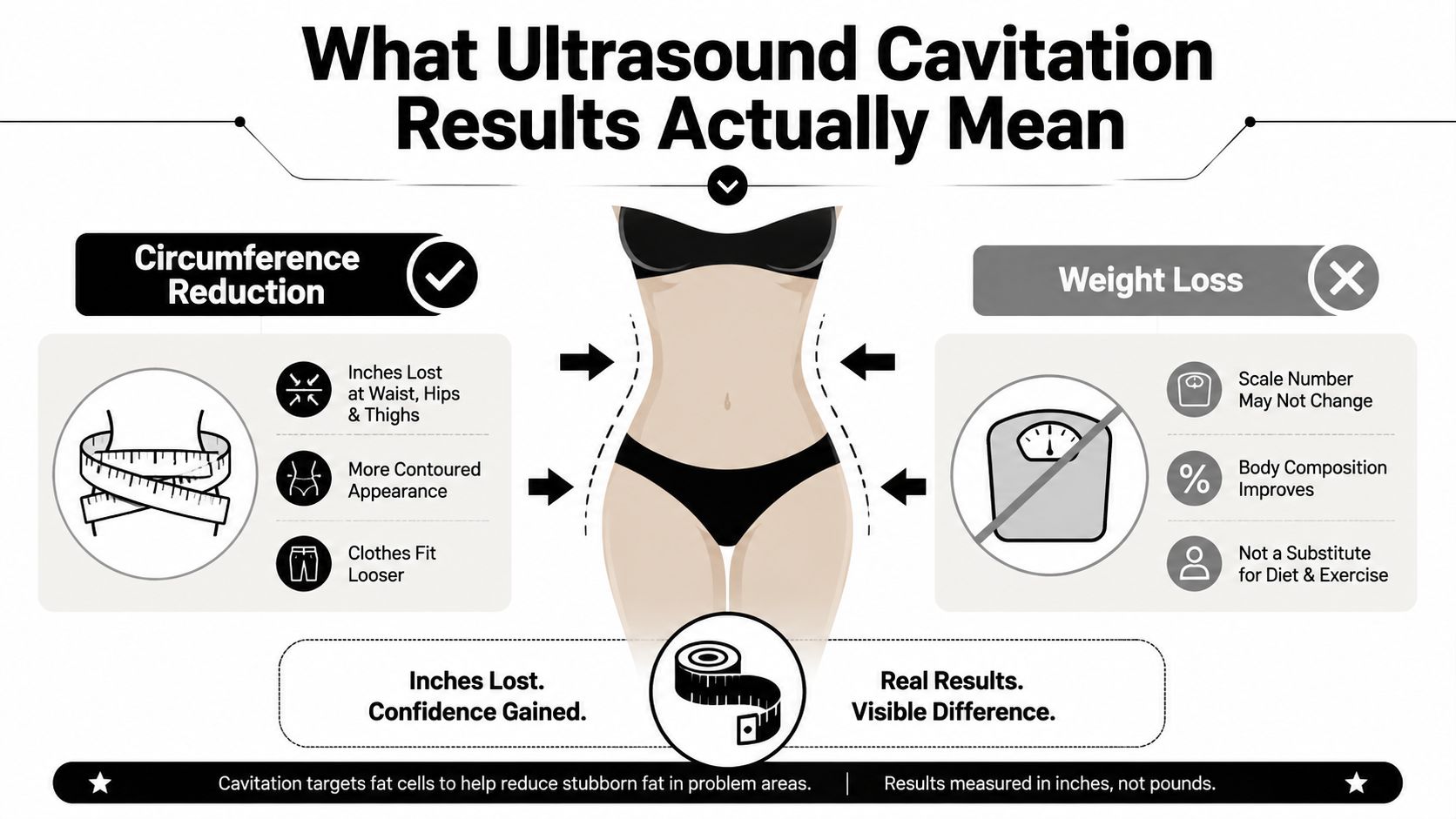
“How much weight will I lose?” is usually the first question clients ask. A better opening question is, “How much localised circumference change can we measure in the area I want treated?”
Ultrasound cavitation is a body-contouring treatment. It targets subcutaneous fat in areas such as the abdomen, thighs, flanks and upper arms, rather than reducing fat throughout the body in the same way as a general weight-loss programme. When fat-cell contents are disrupted, the body processes them gradually, so the result may show as a smaller measurement or a smoother bulge rather than immediate kilograms disappearing from the scale.
A useful result record includes:
- Tape measurements: Record the same points around the treated area each time, using the same posture and conditions.
- Photographs: Use consistent lighting, distance, clothing and body position.
- 3D scanning: A scan can show changes in circumference, shape and posture that a single scale reading can't capture.
- Clothing fit: A waistband sitting more comfortably is a practical sign, although it shouldn't replace objective measurements.
Practical rule: Treat the tape measure as your primary progress tool and the scales as supporting information.
Claims about an exact reduction per session should be treated carefully because outcomes depend on the device, treatment zone, tissue thickness and measurement method. A UK consumer summary of the clinical literature describes results as centimetre-level circumference reduction, with some studies reporting up to about 6.86 cm across a full course (Clinic Finder's review of ultrasonic cavitation). That isn't a promise for every client, and it doesn't mean the same change will occur at every appointment.
The clearest expectation is gradual, localised contour improvement. The next sections explain why the technology behaves this way, how results develop, and which habits help you assess them accurately.
How Ultrasound Cavitation Works on Fat Cells
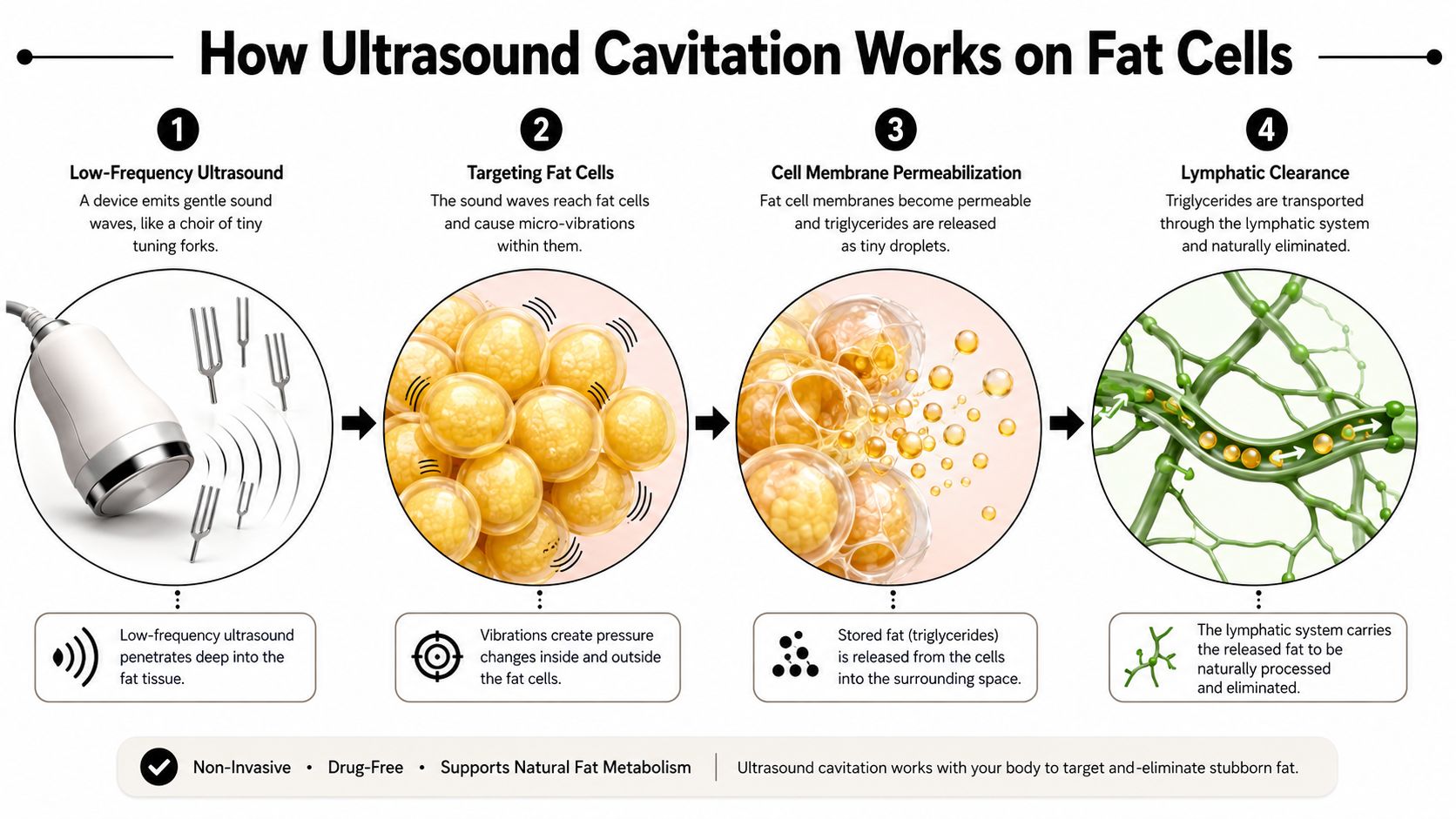
Think of the ultrasound handpiece as a group of tiny tuning forks working beneath the skin. The sound waves create mechanical movement in the fluid around fat cells. Under suitable conditions, that movement can form microscopic bubbles, and the behaviour of those bubbles can place stress on adipocyte membranes.
The important point is that cavitation isn't switched on or off. A National Physical Laboratory study of a 25 kHz ultrasound field measured an inertial cavitation threshold of 84 ± 13 kPa. At lower operating levels, cavitation was strongly concentrated along the vessel axis, while higher power spread activity to additional locations. The researchers mapped the activity using emission detection and hydrophone measurements, showing that cavitation can be measured rather than judged only by sensation (NPL's ultrasound cavitation study).
Why settings matter
Frequency alone doesn't determine what happens. A UK review discussing 1.06 MHz experiments in agar phantoms found cavitation thresholds ranging from 1.1 MPa to 4.6 MPa, depending on pulse structure. In plain language, pulse timing and exposure pattern influence cavitation probability, so two devices with the same nominal frequency may not produce identical conditions (the Journal of Ultrasound review).
When mechanical effects disrupt a fat cell, triglycerides can leak from the cell. Histological evidence from an ultrasound cavitation investigation reported reduced subcutaneous fat and smaller adipocytes after treatment, with triglyceride leakage and no appreciable damage to blood vessels, connective tissue or skin in the investigated conditions (the histological investigation).
That doesn't mean every consumer device or treatment technique produces the same effect. Applicator contact, pressure, coupling gel, treatment depth and operator control all matter. The released material still has to be processed by the body, which is why sensible hydration, normal movement and adequate spacing between appointments form part of the treatment plan rather than optional extras.
Realistic Timelines From First Session to Final Result
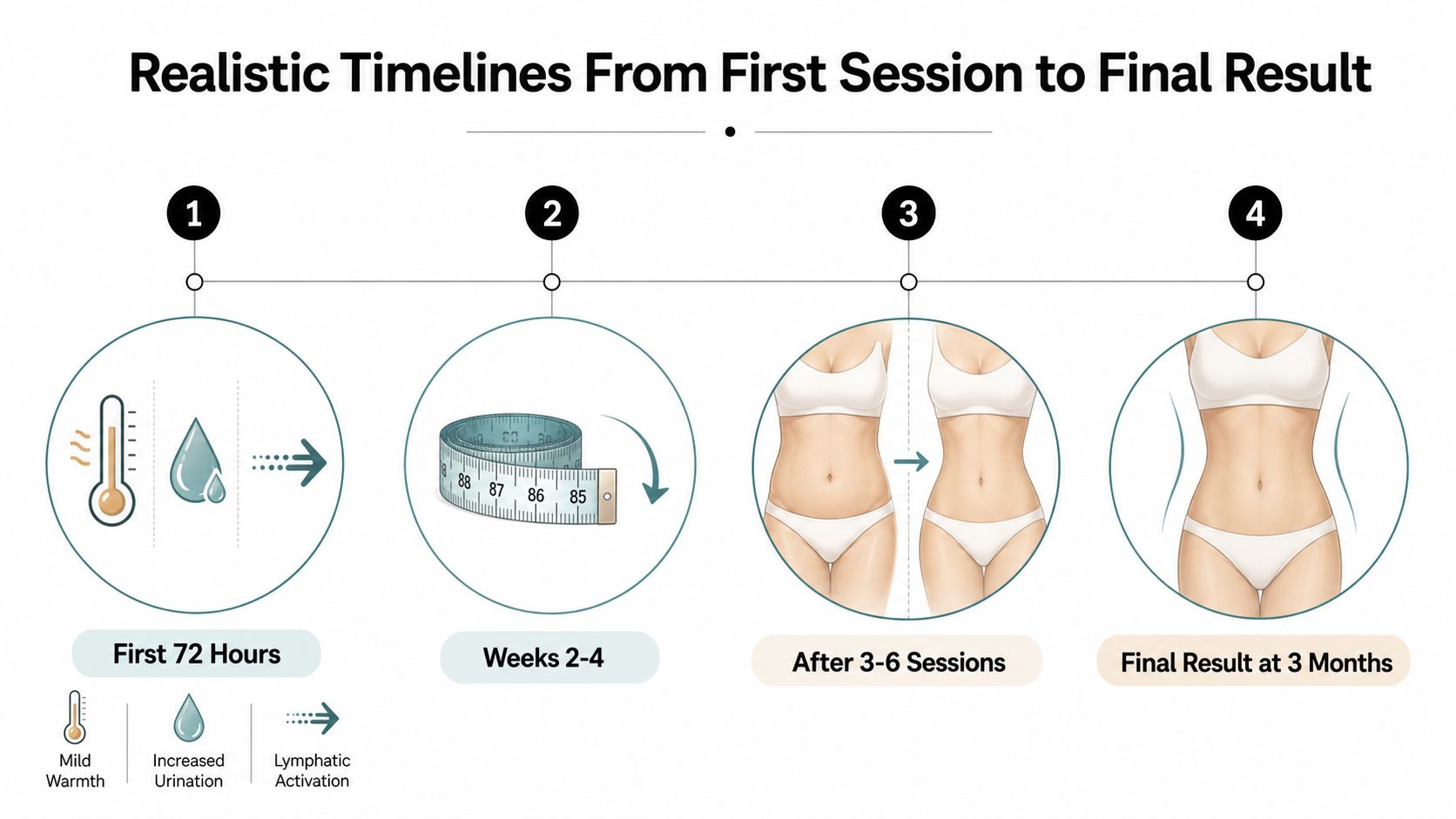
A good treatment plan gives your body time to respond instead of treating every appointment as a final reveal. You may notice warmth during treatment or a temporary feeling of lightness afterwards, but those sensations don't prove that a permanent contour change has occurred.
During the early period after an appointment, the body begins handling the disrupted cellular material. Some clients notice changes in how an area feels or how clothing sits before photographs show an obvious difference. That's one reason I prefer measurements taken under repeatable conditions rather than relying on a mirror immediately after treatment.
Reading progress across a course
A useful way to organise observations is:
- Early appointments: Look for tolerance, skin response and a reliable baseline. Small measurement differences can be difficult to interpret if the tape placement changes.
- Middle appointments: Compare the same zone in photographs and scans. Cumulative contour change is more meaningful than a single early reading.
- End-of-course review: Allow time for the treated area to settle before deciding whether the plan has met its target.
Treatment schedules vary between clinics and technologies. A practitioner should decide spacing after assessing the area, device and your health history, rather than copying a timetable from an advert. The UK pilot study involved an 8-week intervention and compared diet, cryolipolysis with diet, and a combination including ultrasound cavitation. All groups improved significantly, while adding cavitation to cryolipolysis didn't significantly exceed cryolipolysis alone (the published pilot study).
That finding supports a measured approach. A course may create useful abdominal contouring, but more treatments aren't automatically better, especially when another fat-reduction method is already part of the plan. Give your clinician enough time to review the trend, not just the latest number.
This video provides another visual explanation of the treatment process:
Factors That Shape Your Ultrasound Cavitation Results
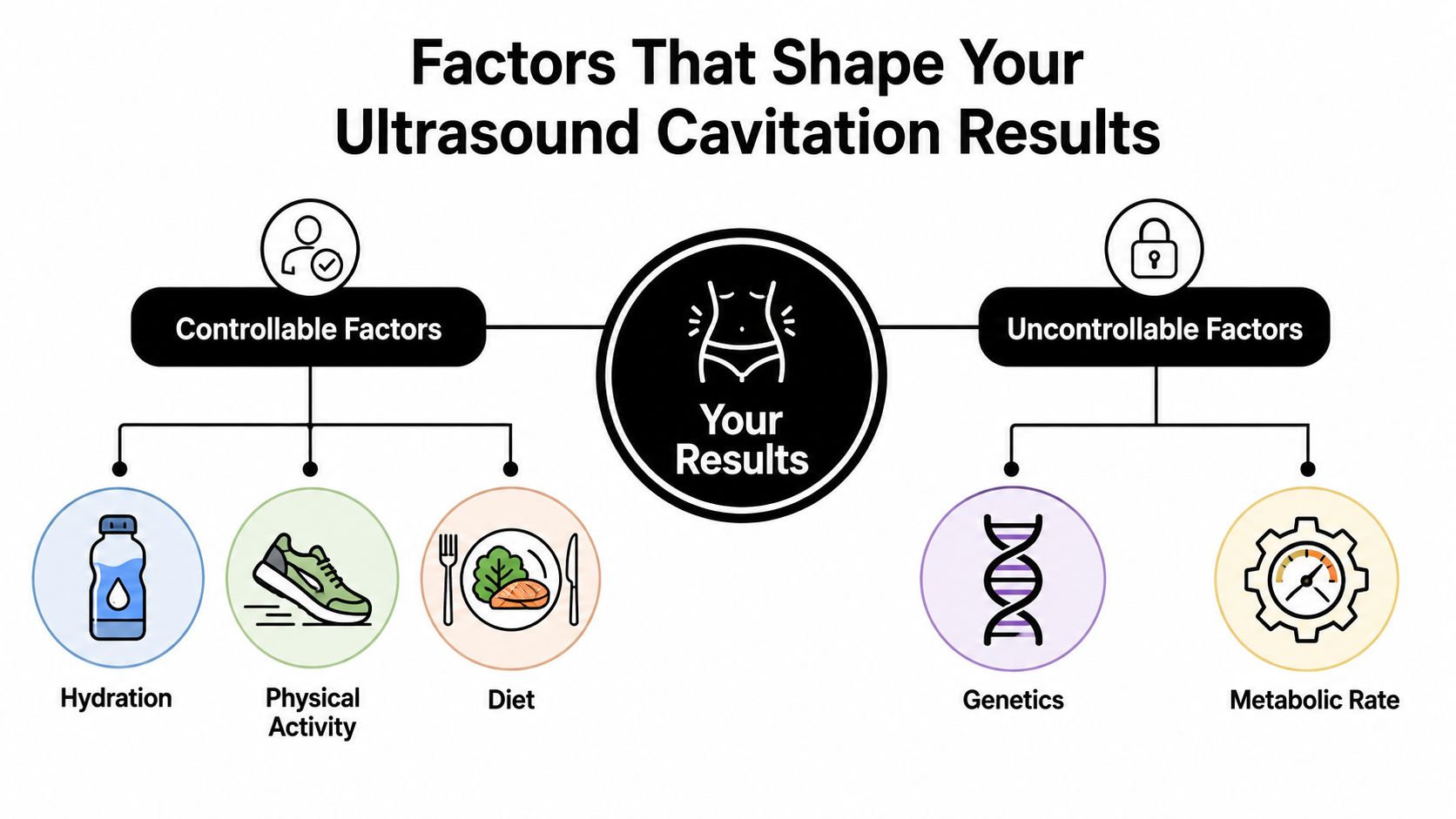
Your result isn't controlled by the handpiece alone. The final measurement reflects the interaction between the treatment protocol, the tissue being treated and what happens between appointments.
Hydration supports normal fluid transport, but it isn't a magic flushing switch. Arrive prepared according to your practitioner's guidance and keep your usual fluid intake consistent. Avoid comparing a well-hydrated measurement with one taken after dehydration, a heavy meal or intense exercise.
Movement may help you maintain normal lymphatic circulation and general metabolic activity. A gentle walk can be more realistic than promising that a particular workout will accelerate fat removal. The aim is consistency, not punishment.
Nutrition matters for a different reason. Cavitation doesn't prevent the remaining fat cells from enlarging if your overall energy intake regularly exceeds your needs. A balanced eating pattern helps protect the contour you're trying to create, while crash dieting can make the process harder to sustain.
What the therapist controls
The practitioner chooses the treatment area, checks whether there's enough pinchable tissue to target, and positions the applicator with consistent contact and overlap. Device variables such as frequency, acoustic intensity, pulse structure and applicator geometry influence the acoustic field. The NPL findings described earlier show why a nominal frequency can't tell you the whole story.
Health, age, hormonal changes and body-fat distribution also affect how quickly a change becomes visible. Menopause, thyroid conditions or medication changes may alter body composition and fluid balance, so disclose relevant medical information during consultation.
If your concern is specifically localised abdominal fullness, you can review this guide to abdominal fat reduction before discussing whether cavitation is appropriate.
Use this self-audit between appointments:
- Hydration: Am I following the clinic's fluid guidance consistently?
- Sleep: Am I giving my body a stable recovery routine?
- Movement: Am I staying gently active without overdoing it?
- Nutrition: Does my eating pattern support weight stability?
Before, Between, and After Sessions
Preparation should make measurements more reliable and the appointment more comfortable. Follow the provider's instructions first, especially if they differ from general advice.
Before treatment
Arrive normally hydrated and eat a light meal if that suits you. Avoid alcohol in the period advised by your clinic, and don't attend with irritated or broken skin in the treatment area. Clean, product-free skin can help the practitioner apply coupling gel and move the transducer evenly.
Ask what you should pause before treatment if you take medication or have a medical condition. A proper consultation should cover your medical history, target zones, expectations and any reason the treatment may not be suitable.
Between appointments
Keep your routine steady rather than trying to force a rapid result. Regular walking, balanced meals and adequate fluid intake are more useful than crash fasting or sudden extremes. Dry brushing may feel pleasant for some people, but it shouldn't be presented as essential or as a substitute for clinical assessment.
Track the treated area under the same conditions each time. Measure at the same point, preferably at a consistent time of day, and record whether you've recently eaten, exercised or experienced bloating.
After the course
A maintenance plan should be individual. Some clients may benefit from periodic review, while others may only need occasional scanning and lifestyle support. Don't set a rigid target for scale weight or promise that a particular weight window will preserve results, because bodies change and the evidence provided here is stronger for circumference than general weight loss.
Print or save this consultation checklist:
- Treatment zone: Which exact area will be measured?
- Baseline record: Will the clinic take photographs, tape measurements or a 3D scan?
- Protocol: What device and settings are being used, and why?
- Spacing: How much recovery time is recommended?
- Review point: When will the practitioner compare the measurements?
- Safety: Which symptoms should prompt a call to the clinic?
Cavitation Compared With Other Non-Surgical Options
No body-contouring technology suits every type of fat or every expectation. Cavitation generally targets superficial, pinchable tissue with acoustic energy. Cryolipolysis uses controlled cooling, radiofrequency uses heat to support skin tightening and HIFU uses focused ultrasound energy at selected depths.
The table below compares the practical differences without pretending that one modality has a universal session count, price or result. UK costs vary by clinic, applicator, treatment area and package, so ask for a written quote rather than relying on a generic figure.
| Criterion | Ultrasound Cavitation | Fat Freezing | Radiofrequency | HIFU Body |
|---|---|---|---|---|
| Primary mechanism | Acoustic energy and cavitation effects target subcutaneous fat | Controlled cooling targets selected fat pockets | Thermal energy supports tissue warming and skin tightening | Focused ultrasound targets deeper tissue planes |
| Best suited to | Soft, localised, pinchable superficial fat | Discrete bulges that tolerate cold | Lax skin or texture concerns alongside contouring | Clients assessed as suitable for deeper tissue treatment |
| Course pattern | Usually planned as a course, based on response | Often planned around the applicator and target pocket | Commonly delivered as a course | Course and spacing depend on depth and treatment goal |
| Downtime | Generally positioned as non-surgical, but the provider should explain expected reactions | Usually limited, with temporary sensory changes possible | Usually limited, with heat-related reactions possible | Reactions and recovery depend on settings and depth |
| Visible change | Develops as the body processes treated material and circumference is measured | Develops gradually after the cooling treatment | Skin appearance may change progressively | Deeper contour changes may take time to settle |
| Comfort | Often felt as warmth, pressure or device noise | Cold, pulling and numbness may occur | Warmth is common | Sensation varies with energy and tissue depth |
| Cost per area | Clinic-specific, usually quoted after assessment | Clinic-specific | Clinic-specific | Clinic-specific |
A combined plan can be sensible, but sequencing matters. For example, a practitioner might use a fat-reduction modality for a discrete pocket and consider radiofrequency later if skin laxity remains. That choice should follow an examination, not a desire to stack every available device.
For a wider overview of non-surgical options, see this guide to non-surgical fat removal. The right decision depends on whether your main concern is fat volume, skin laxity, tissue depth, comfort, downtime or the ability to track a small localised change.
How 3D Aesthetics Leamington Spa Measures and Guarantees Results
A scan turns “I think my waist looks smaller” into a repeatable record. At 3D Aesthetics Leamington Spa, the consultation process uses a full 3D body scan to assess the starting point, discuss target areas and plan how progress will be reviewed. That fits the central principle of this treatment, measure circumference and shape rather than expecting the scales to tell the whole story.
The scan can capture body measurements, body-composition information and posture metrics. Photographs taken with consistent lighting and positioning add a visual record, while the therapist records the target zone and relevant medical history. Repeating the measurements after a defined part of the course allows the team to see whether the contour is changing or whether technique and expectations need review.
Turning measurements into treatment decisions
A personalised plan may consider:
- Target zone: Whether the area contains suitable superficial, pinchable tissue.
- Treatment depth: Where the applicator should focus within the local tissue.
- Energy delivery: How settings should be selected for the device and client.
- Session spacing: Whether the body has had enough time before reassessment.
- Combination options: Whether radiofrequency or another modality addresses a separate skin concern.
Clients interested in the underlying measurement principle may also find this explanation of body composition ultrasound technology useful. It provides context for how ultrasound-based assessment can contribute to a broader picture, although an assessment tool and a treatment device aren't interchangeable.
For progress monitoring, the clinic describes measurements at the first, fourth and final treatments, alongside its Fit3D Body Scanner. That structure helps identify a trend instead of overinterpreting a single session. You can read more about body measurement tracking before your consultation.
Any guarantee should be read in writing. Ask what “measurable circumference reduction” means, how the clinic takes measurements, what happens if a target isn't reached and whether re-treatment has conditions or exclusions. A twelve-week maintenance scan may help confirm whether the contour remains stable, but no provider can guarantee that future weight changes won't alter your shape.
Common Questions About Ultrasound Cavitation Results
Are the results permanent?
The treated fat cells may be disrupted or reduced under the conditions studied, and histological evidence supports a direct effect on subcutaneous fat rather than only a temporary fluid shift (the ultrasound cavitation investigation). However, remaining fat cells can enlarge if body weight rises, so maintaining a stable routine still matters. Think of the treatment as changing a local baseline, not making your whole body resistant to future fat storage.
Is ultrasound cavitation safe?
Ultrasound is non-ionising, but “non-invasive” doesn't mean “risk-free for everyone”. A trained operator should check your medical history, inspect the treatment area and use equipment according to its intended parameters. Ask about contraindications, expected skin reactions and when to seek advice.
Can it be combined with other treatments?
It may be possible to combine cavitation with radiofrequency, fat freezing or HIFU, but the order and spacing need professional planning. Using several technologies together doesn't automatically create a better outcome, as the UK pilot study's comparison with cryolipolysis demonstrates (the clinical comparison).
Why doesn't the scale move?
A small localised contour change may not alter total body weight enough to notice. Measure the treated circumference, compare photographs and check clothing fit instead of treating the scale as the only verdict.
Is it for general weight loss?
No. Cavitation is better suited to stubborn, localised pockets than to managing overall weight. If you're seeking general weight reduction, discuss appropriate health and nutrition support separately.
What about exercise and alcohol?
Follow the specific aftercare instructions given by your practitioner. Gentle movement may be appropriate, while alcohol guidance varies according to the clinic's protocol and your health. Don't use exercise or alcohol as a test of whether the treatment worked. The result depends on the full course, suitable treatment delivery, normal clearance and realistic measurement.
3D Aesthetics Leamington Spa offers consultations with 3D body scanning, ultrasound cavitation for localised inch loss and progress reviews built around measurable changes. Visit 3D Aesthetics Leamington Spa to discuss your target area, candidacy, treatment options and a measurement plan that looks beyond the bathroom scales.
← Back to Home