
Are you choosing an LED light therapy facial because a clinic calls its device “professional”, or because the treatment uses the right wavelength, dose and schedule for your skin? That distinction matters. The light colour alone doesn't determine the result, and the most expensive mask won't automatically outperform a carefully assessed, consistently delivered protocol.
LED treatment is best understood as gradual photobiomodulation, not a dramatic resurfacing procedure. It may support acne management, calm visible inflammation and contribute to incremental improvements in texture, but outcomes vary with the device, exposure, skin behaviour and the concern being treated. A 2018 systematic review identified 31 original randomised controlled trials, including six studies on skin rejuvenation, showing that LED had moved beyond a purely cosmetic trend into a research-backed dermatology modality (systematic review of LED use in dermatology).
Table of Contents
- What an LED Light Therapy Facial Involves
- How Wavelengths Affect the Skin
- Benefits for Acne Inflammation and Collagen
- Clinic Treatment Compared with Home Masks
- What Happens at a 3D Aesthetics Appointment
- How Often to Have Treatment and When to Expect Results
- Safety Contraindications and Suitable Candidates
- Aftercare Results and Practical Questions
What an LED Light Therapy Facial Involves
You may first notice the treatment because your skin keeps looking flushed, congested or tired despite a sensible home routine. An LED light therapy facial uses a panel, mask or handheld device to expose cleansed skin to narrowband light. Unlike laser resurfacing, it's generally non-thermal and non-ablative, so it doesn't intentionally burn, peel or remove the surface of the skin.
A typical appointment begins with a consultation and gentle cleanse. The practitioner prepares the skin, provides eye protection and positions you beneath the device for a period of illumination, commonly around 10 to 20 minutes in aesthetic practice. The experience is usually quiet and comfortable, with little or no downtime, although the exact sensation depends on the equipment and selected programme.
The treatment is more than the device name
A clinic facial shouldn't be judged by branding alone. The useful questions are:
- Which wavelength is being used? Blue, red and near-infrared light have different intended roles.
- What dose reaches the skin? Irradiance, exposure time and distance affect the delivered energy.
- How often will you attend? A single session rarely tells you much about a cumulative treatment.
- Who has assessed your skin? Acne, redness, pigmentation and sensitivity need different decisions.
A split-face trial of a home-use device using 637 nm and 854 nm wavelengths reported higher skin elasticity than control at six and eight weeks, with image-based texture improvement by week eight and no recorded pain or adverse reactions (the split-face LED device trial). That result supports measured, repeated use, but it doesn't mean every mask or clinic protocol will produce the same response.
At 3D Aesthetics, the treatment sits within a broader facial menu. You can read about the clinic's Dermalux LED therapy alongside options such as resurfacing or microneedling, depending on your goals. The important principle remains consistent: assessment and delivery determine value more reliably than a label on the machine.
How Wavelengths Affect the Skin
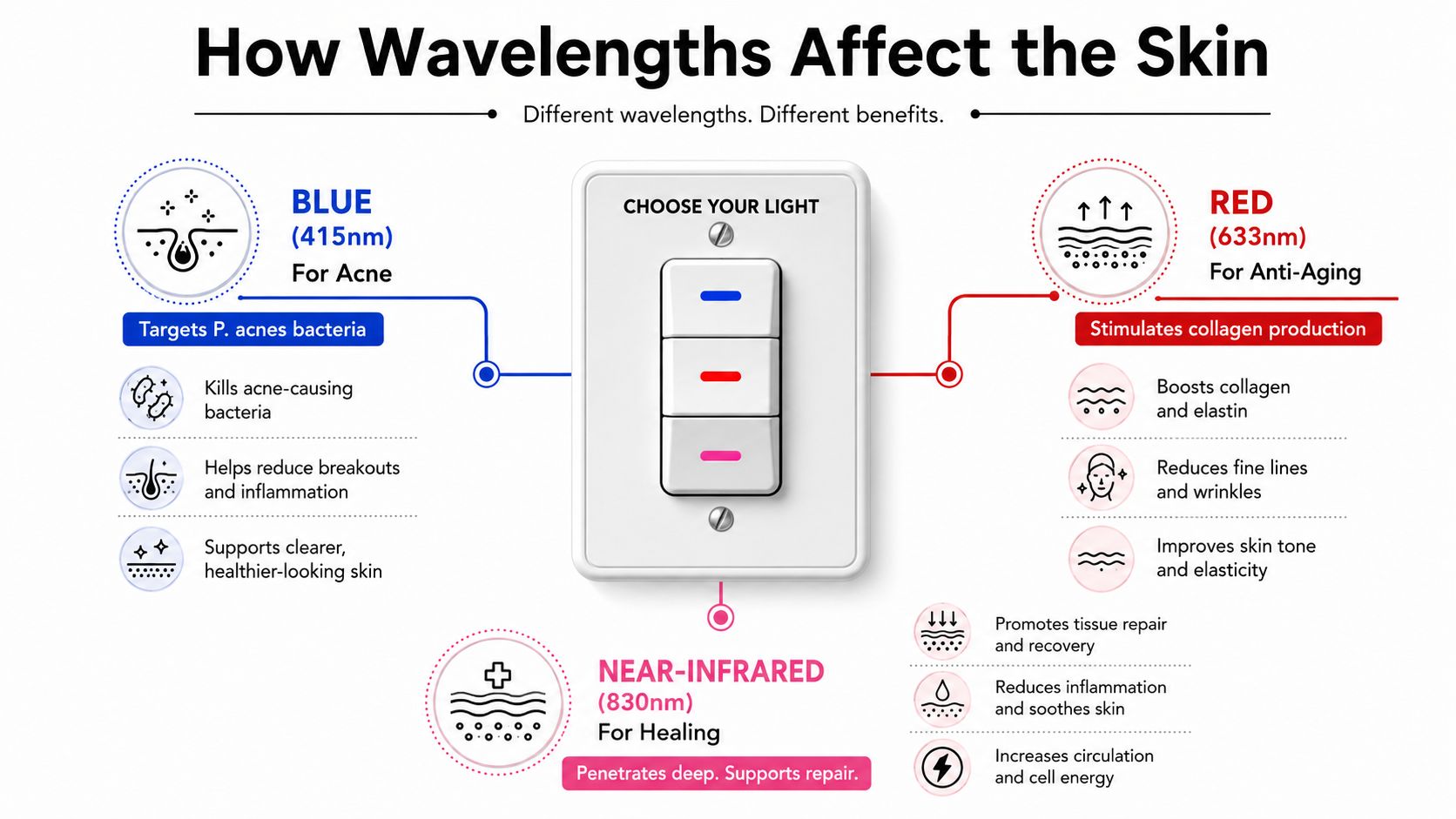
Think of LED wavelengths as settings on a light switch. Turning the switch on isn't enough information. You need to know which setting is active, because each band interacts with the skin differently and reaches a different depth.
Blue light for acne-focused protocols
Blue light is commonly discussed near 415 nanometres, where it acts primarily at the skin's surface. Practitioners may select it for acne-focused care because it can target acne-associated bacteria. It isn't a substitute for a complete acne plan, particularly when breakouts are painful, widespread or linked to a medical condition.
Blue light also doesn't address every part of acne biology. Oil production, blocked follicles, inflammation, hormones and picking behaviour may all influence the pattern, so a practitioner should treat the light as one tool within a wider approach.
Yellow and amber light for visible redness
Yellow or amber wavelengths are often discussed around 590 nanometres. In practice, they may be considered when the main concern is visible redness or reactive-looking skin. The outcome is usually framed as soothing or supportive rather than a guaranteed correction of a vascular or inflammatory disorder.
If your redness is persistent, painful, itchy or associated with flushing episodes, seek proper assessment rather than assuming a facial device can identify the cause.
Red and near-infrared for rejuvenation support
Red light commonly falls within the 620 to 700 nanometre range. It penetrates more than blue light and is used in rejuvenation protocols intended to support cellular activity, circulation and fibroblast function. Near-infrared light, often positioned around 700 to 850 nanometres, reaches deeper tissue layers and may be paired with red light where the aim is recovery or gradual photoageing support.
The evidence is promising but not uniform. A University of Manchester collaboration is testing a facial LED device in a 12-week study involving 20+ healthy adults, using 10-minute sessions five times per week and outcomes including elasticity, hydration and forearm epidermal thickness (University of Manchester LED study). The fixed schedule illustrates why dose and consistency matter when assessing a biological response.
For a straightforward explanation of the treatment category, see what LED light therapy means. Your practitioner should still explain the selected wavelength, intended goal and realistic limits for your skin.
Benefits for Acne Inflammation and Collagen
LED can be useful when you view it as a supportive treatment rather than a replacement for diagnosis or prescription care. Blue light is generally chosen for acne-associated bacterial activity, while red light is used to support calmer-looking skin and recovery around active inflammation. Red combined with near-infrared light is more closely associated with rejuvenation protocols, where fibroblast activity and collagen support may contribute to gradual changes in texture.
The word support matters. LED doesn't remove deep acne scarring in one appointment, tighten lax skin like surgery or guarantee that fine lines will disappear. Skin type, lesion severity, medication, age, sun exposure and consistency can all influence what you see.
A 2018 review found that acne trials formed the largest subgroup in the analysed literature, with eight studies, while red and blue protocols appeared across indications including acne, herpes simplex or zoster and rejuvenation (LED dermatology review). That breadth is encouraging, but different studies use different devices, wavelengths and schedules, so one study shouldn't be treated as proof that every LED facial works identically.
Match the concern to the treatment goal
| Skin Concern | Primary Wavelength | Secondary Wavelength | Realistic Expectation |
|---|---|---|---|
| Active, mild breakouts | Blue | Red | Support acne management and help calm associated inflammation |
| Post-inflammatory redness | Red | Yellow or amber | A more settled appearance may develop gradually |
| Dull texture | Red | Near-infrared | Incremental support for texture and overall skin quality |
| Early fine lines | Red | Near-infrared | Subtle rejuvenation support, not a resurfacing result |
| Reactive-looking skin | Yellow or amber | Red | Comfort-focused care with careful screening |
A split-face study using red and near-infrared light recorded measurable changes in elasticity and texture over repeated weeks, rather than after one visit (home-use LED clinical trial). That pattern is a useful reality check: LED rewards a well-matched routine more than a one-off appointment.
Clinic Treatment Compared with Home Masks
The clinic-versus-home question isn't only about professional branding. It's about wavelength accuracy, dose, coverage, consistency and assessment. A clinic device may allow a practitioner to control exposure more deliberately, while a home mask offers convenience that can make regular use easier.
Evidence remains limited by small studies, differing protocols and uncertainty around dose. A BBC explainer discussed the lack of large clinical trials proving that home masks deliver the same dose as clinic devices, while a 2025 review described improvements in acne lesions with at-home red and blue devices and generally mild side effects (UK coverage of clinic and home LED evidence).
| Factor | Clinic LED Facial | At-Home LED Mask |
|---|---|---|
| Wavelength choice | Selected around an assessed concern | Fixed by the product programme |
| Dose control | Practitioner can manage exposure and positioning | Depends on the mask's design and instructions |
| Coverage | Panel placement can treat a broad area | Fit varies between faces and products |
| Safety | Screening and eye protection are supervised | You must follow the manufacturer's guidance |
| Consistency | Appointments create structure | Convenient, but depends on your routine |
| Best fit | Targeted acne, inflammation or rejuvenation support | Maintenance and regular use between appointments |
A clinic facial may be justified when you want professional assessment, have several competing concerns or aren't confident that a home mask fits correctly. Home use may make sense when your clinician has confirmed suitability and you can follow the schedule consistently.
Practical rule: Choose the treatment plan you can use correctly and repeatedly, not the gadget with the most persuasive colour chart.
If your priority is facial tightening rather than light-based skin support, you may also want to compare LED with RF facial skincare, because radiofrequency and LED use different forms of energy and shouldn't be treated as interchangeable. Similarly, microneedling facial treatment may suit a different concern and requires its own assessment.
What Happens at a 3D Aesthetics Appointment
The appointment starts before the lights come on. You'll discuss your skin goals, medical history, current products and any medicines that could affect light sensitivity. That conversation helps the practitioner decide whether LED is appropriate and whether the session should focus on acne support, visible redness, recovery or rejuvenation.
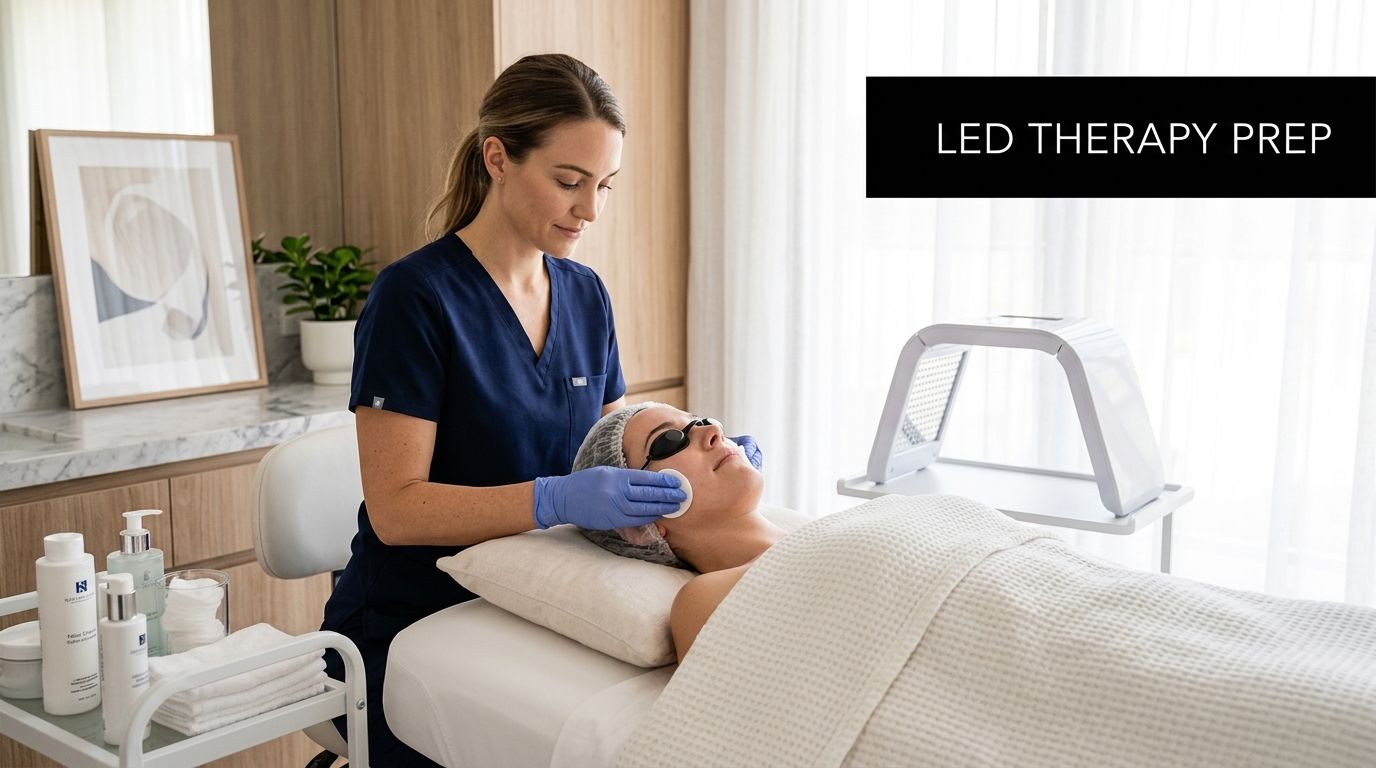
Your skin is then cleansed gently so that products, make-up and surface debris don't interfere with preparation. You'll receive appropriate eye protection before positioning beneath the LED panel. During the illumination period, you can relax while the selected programme delivers light to the face.
Personalisation happens in the small decisions
The practitioner may adjust the wavelength selection, session length or treatment pairing according to your response and objective. A calming protocol for easily flushed skin shouldn't be treated the same way as a rejuvenation-focused plan for dull texture, and active acne may require advice beyond a facial.
Compatible skincare may be used before or after the light, but the choice should follow the assessment rather than a generic product list. The appointment normally finishes with soothing skincare and daytime protection, followed by a conversation about your home routine and how progress will be reviewed.
A clinical light treatment can feel surprisingly understated. There's no dramatic peel or visible “before and after” moment, which is why photographs taken in consistent lighting and practitioner review are more useful than judging your face in a different bathroom mirror each morning.
Watch the treatment environment and positioning before booking, so you know what the session may feel like:
The best appointment leaves you knowing why a wavelength was chosen, what result is realistic and when your progress will be reviewed.
How Often to Have Treatment and When to Expect Results
LED works through repeated exposure, so frequency matters more than the excitement of a first appointment. A University of Manchester protocol is assessing repeated use over 12 weeks, with sessions scheduled five times per week, which demonstrates the kind of structured exposure used when researchers measure changes in photoaged skin (Manchester LED protocol).
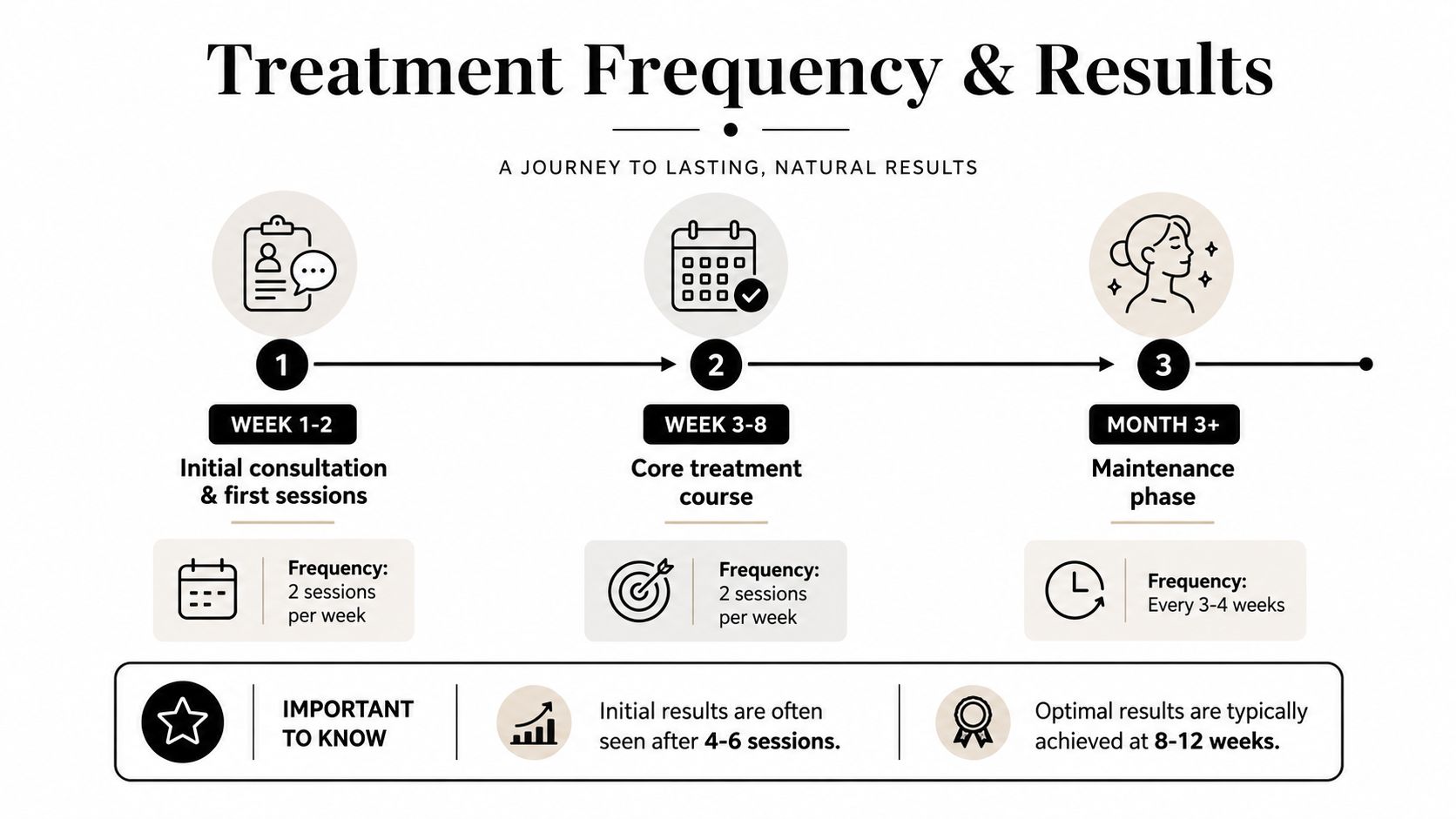
Your personal schedule may differ. Practitioners often begin with a regular course, then reduce visits once the skin has reached a stable point. The right pattern depends on the device, dose, concern and whether you're combining LED with other treatments.
Read the timeline correctly
Inflammatory concerns can appear calmer before texture changes become noticeable. Collagen-related improvements are slower because the skin needs time to remodel, so a meaningful review should happen after a planned course rather than after a single session.
The split-face trial mentioned earlier found elasticity differences at six and eight weeks, with texture improvement by week eight (published LED device trial). That doesn't promise the same timing for every person, but it supports a gradual expectation.
Keep a simple record:
- Use consistent photographs: Match lighting, distance and facial expression.
- Track behaviour: Note flare-ups, new products, sun exposure and missed sessions.
- Review with a practitioner: Compare progress at the agreed checkpoint, not day by day.
A sudden change after one facial may reflect hydration, reduced surface irritation or lighting. Cumulative improvement is the more credible goal.
Safety Contraindications and Suitable Candidates
LED isn't automatically suitable for everyone. A professional consultation should identify light-sensitive conditions, photosensitising medication, pregnancy, active skin infections, recent isotretinoin use, epilepsy, certain implants and suspicious or undiagnosed skin lesions before treatment begins.
Tell the practitioner about prescribed medicines, over-the-counter products and supplements rather than deciding for yourself that they're irrelevant. If you have a history of pigment changes or a condition that reacts to light, the clinician may recommend a different approach or ask for medical guidance.
What you may feel afterwards
Possible short-term effects include transient redness, mild warmth or temporary dryness. Eye irritation can occur if protection shifts or if the device is uncomfortable, so report this immediately rather than tolerating it.
Hospital light treatments show why screening matters. NHS information describes photodynamic therapy for conditions including Bowen's disease, superficial basal cell carcinoma and actinic keratosis, while patient guidance records possible effects such as burning, swelling, redness and persistent discoloration (NHS photodynamic therapy information). An aesthetic LED facial is generally lower intensity and non-invasive, but “gentle” doesn't remove the need for proper assessment.
Safety checkpoint: If you can't explain your medication and skin history to the practitioner, you aren't ready to start the light.
People with mild acne, visible inflammation, dullness or early signs of photoageing may be considered suitable after screening. People with unexplained lesions, active infection or relevant medical risks need assessment first. Asking questions isn't a barrier to treatment. It's how a responsible protocol begins.
Aftercare Results and Practical Questions
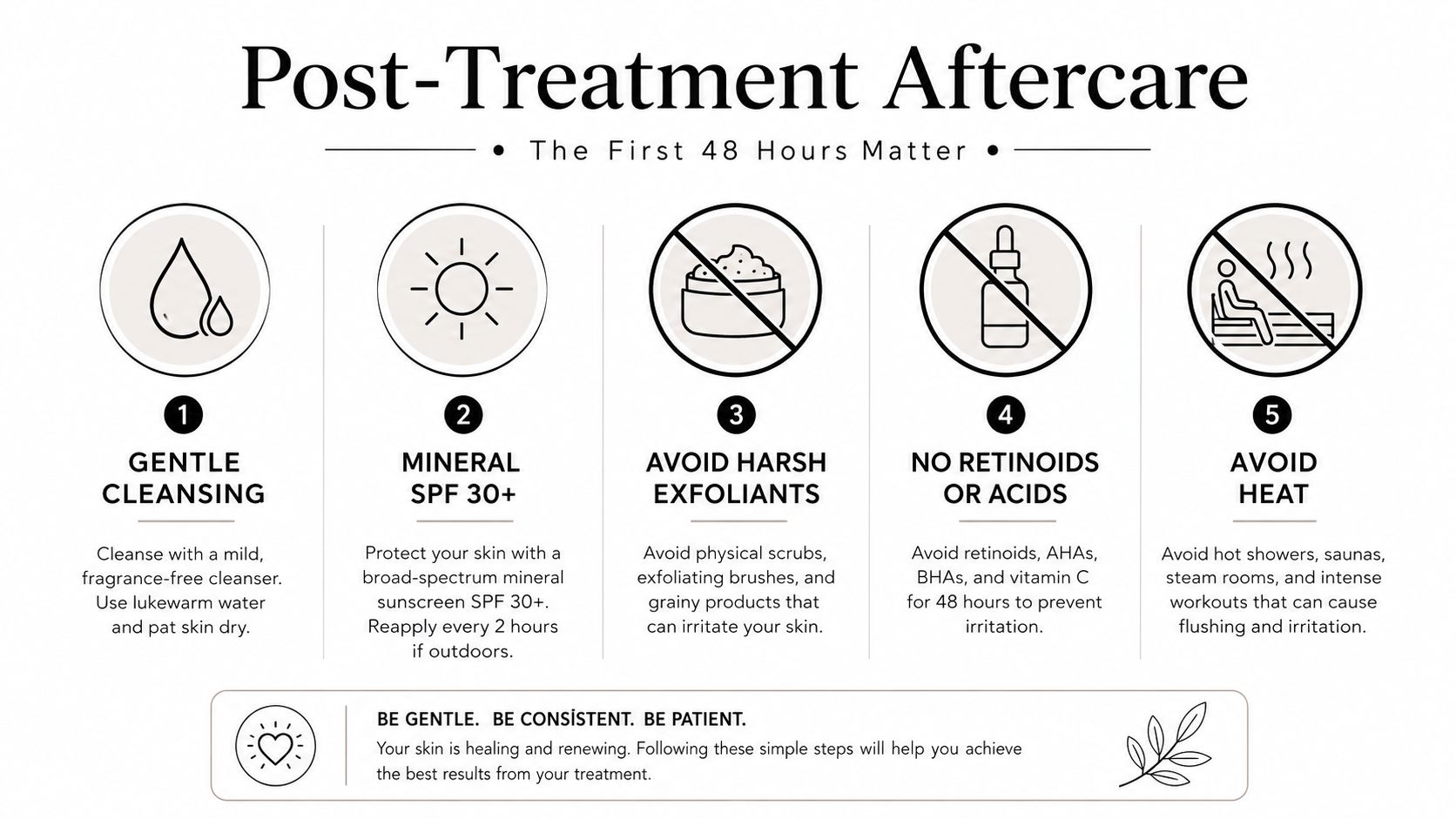
For the first 48 hours, treat your skin as recently cared for rather than invincible. Cleanse gently, apply mineral SPF, avoid harsh exfoliants and pause retinoids or acids if your practitioner advises it. Heat-based activities, including saunas and intense exercise, may also be restricted temporarily depending on the wider facial treatment.
Clinic LED shouldn't be confused with hospital photodynamic therapy. Photodynamic therapy uses a topical photosensitiser and formal medical pathways, whereas a standard aesthetic LED facial doesn't create the same daylight restrictions. Follow the instructions given for your actual treatment, especially if LED has been combined with another procedure.
Questions clients commonly ask
Does LED hurt? It is described as comfortable. You may notice brightness, mild warmth or temporary redness, but tell your practitioner if you feel discomfort.
Can I combine LED with another facial? Often, LED can complement selected treatments, but compatibility depends on what else has been performed and how reactive your skin is. The practitioner should decide the order and timing.
Can I wear make-up afterwards? Ask your practitioner, because the answer depends on the products applied and any treatment paired with LED. If the skin feels warm or sensitive, keeping the routine simple is sensible.
Is it suitable for sensitive skin? It may be, but sensitivity isn't a diagnosis. A consultation should consider redness patterns, medication, active irritation and your history before selecting a wavelength and dose.
How do I know whether it's working? Photograph your skin in consistent lighting and assess the original goal. Look for calmer flare-ups, more even texture or gradual changes over the agreed review period, rather than expecting an overnight transformation.
If you're unsure, begin with an assessment rather than buying a mask or booking a course blindly. A practitioner can explain whether LED fits your concern, whether another facial is more appropriate and how to monitor the response.
3D Aesthetics Leamington Spa offers Dermalux LED light therapy alongside other non-surgical facial treatments, with consultation-led planning for concerns such as acne, inflammation and skin rejuvenation. Visit 3D Aesthetics Leamington Spa to discuss your skin goals, suitability and a realistic LED treatment plan with the clinic team.
← Back to Home