

You catch your reflection in natural light and notice something has shifted. Your jawline looks a little softer. The skin around your mouth doesn't sit as neatly as it used to. Makeup still goes on, but it no longer glides over the same surface.
That's usually the point where people start searching for facial skin tightening and get buried in confusing terms. RF. HIFU. collagen stimulation. lifting. resurfacing. The tricky part is that these treatments don't all do the same job, even when they're grouped together under the same label.
Non-surgical tightening has become a meaningful part of modern aesthetics. In the U.S. alone, there are approximately 260,000 annual skin-tightening procedures, and the same energy-based technologies are widely used by UK clinics, with visible improvements commonly developing over 2 to 6 months as collagen and elastin remodel naturally, according to Cleveland Clinic's overview of RF skin tightening. That timeline matters because good results usually come from a planned biological response, not an instant fix.
If you're also trying to work out whether your concern is firmness, roughness, or dullness, it helps to look at ways to improve skin texture alongside tightening. And if you're interested in how people find reliable, concise answers online before booking a consultation, this explanation of capturing answer boxes is a useful read.
Table of Contents
- Your Guide to Firmer Youthful Skin
- Understanding Why Skin Loses Firmness
- Your Non-Surgical Treatment Options at a Glance
- How Facial Skin Tightening Treatments Work
- Your Journey From Consultation to Lasting Results
- Personalising Your Treatment at 3D Aesthetics
- Frequently Asked Questions
Your Guide to Firmer Youthful Skin
Facial skin tightening makes the most sense when you stop thinking of it as one treatment and start thinking of it as a category of tools. Some tighten the skin's surface support. Some work deeper. Some mainly improve texture, which can make skin look firmer even when the lift is modest.
That distinction is why two people with the same complaint, “my face is sagging”, may be advised to have very different treatments. One may have early collagen loss in the cheeks and under-eye area. Another may have deeper lower-face laxity. A third may be seeing rough texture, enlarged pores, and sun-related change rather than true looseness.
Practical rule: The best tightening plan starts with identifying what has changed anatomically, not with choosing the most talked-about device.
If you're new to this area, keep three ideas in mind:
- Collagen change: This affects firmness and resilience. When collagen support declines, the skin can look thinner, looser, and less springy.
- Deeper structural laxity: Some concerns sit below the superficial skin layers and need a treatment that reaches deeper support tissue.
- Surface quality: Fine lines, roughness, and crepey texture can exaggerate a sagging look, even when the main issue isn't a true “droop”.
A lot of disappointment in aesthetics comes from treating the wrong problem well. A technically good treatment can still feel underwhelming if it wasn't the right match for your anatomy.
That's why facial skin tightening should feel consultative, not sales-led. You should leave a consultation understanding what your therapist is aiming at, why that treatment fits your face, and what kind of result is realistic.
Understanding Why Skin Loses Firmness
When skin starts to feel less firm, "aging" is often blamed as if it's one single process. It isn't. Several layers and structures change over time, and each one affects the face differently.
The skin's support system
Think of your face like a building with different levels of support. Collagen is part of the structural scaffolding. It helps skin stay strong and compact. Elastin acts more like the spring in the system. It helps skin return to place after movement.
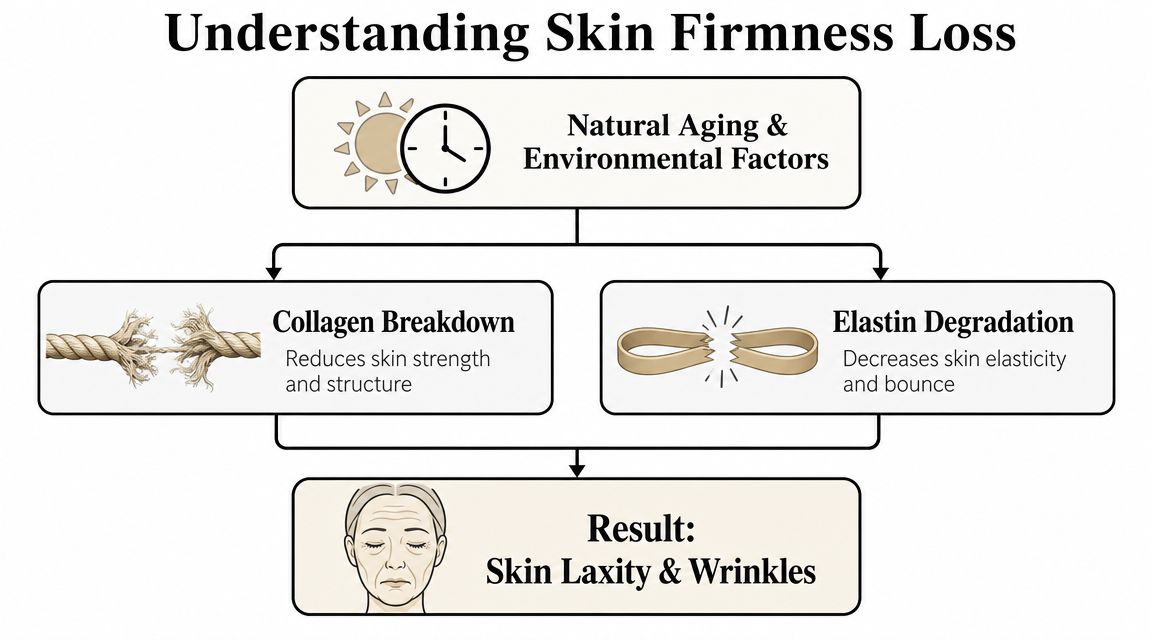
If collagen weakens, the “fabric” of the skin loses some of its firmness. If elastin degrades, the skin doesn't bounce back as well. Over time, that can show up as softening around the jawline, folds around the mouth, or a more tired look through the lower face.
Daily life adds to this picture. Sun exposure can worsen visible ageing changes, which is why many people addressing laxity are also dealing with pigmentation and roughness. If that sounds familiar, treatments for sun-damaged skin are often part of the wider conversation.
Loose skin or lost volume
Readers often get stuck when a face can look as if it needs tightening, but the main issue may be volume loss. Dermatology guidance stresses that non-surgical tightening works best for mild to moderate looseness and that it's important to separate true laxity from age-related facial deflation, as explained by the American Academy of Dermatology's guidance on firming sagging skin.
A simple way to think about it is this:
- Skin laxity is like loose fabric.
- Volume loss is like a cushion that has deflated.
- Surface texture change is when the fabric is still there, but it has become creased, thin, or rough.
If the cheeks have flattened, the mouth area looks heavier, and the face seems less supported overall, tightening alone may not fully answer the problem.
There's also a deeper structural layer to know about. The SMAS is part of the facial support system underneath the skin. It matters because some technologies are designed to reach deeper support layers, while others mainly work within the dermis.
That's the reason one person may benefit more from a lift-oriented treatment, while another sees better value in collagen stimulation or resurfacing. The treatment choice only makes sense once the cause is clear.
Your Non-Surgical Treatment Options at a Glance
Most facial skin tightening treatments fall into one of two practical groups. Some are chosen because of depth. Others are chosen because of surface effect. The decision often comes down to what layer needs help most.
Peer-reviewed dermatology literature notes that microfocused ultrasound, often called HIFU, is known for targeting the deeper SMAS layer and is associated with a more lifting-oriented effect. Radiofrequency, by contrast, primarily heats the dermis, which is more often used for texture improvement and mild-to-moderate laxity. The key point is that the technology should match the anatomy, as discussed in this review of ultrasound and RF skin tightening approaches.
If you'd like an example of a deeper, lift-focused facial option, 3D HIFU for the face is one treatment type built around that principle.
Facial Skin Tightening Treatment Comparison
| Treatment | Technology | Target Depth | Primary Goal | Best For |
|---|---|---|---|---|
| HIFU | Microfocused ultrasound | Deeper support layer, including SMAS-level targeting | Lift-oriented tightening | Lower face, jawline, chin area, neck laxity |
| RF facial treatments | Radiofrequency | Dermis | Collagen stimulation, mild tightening, texture support | Early laxity, crepey skin, fine lines |
| RF microneedling | Microneedling with radiofrequency energy | Surface plus dermal support | Firmness with texture refinement | Acne scarring, pores, uneven texture, mild laxity |
| Fractional CO2 | Fractional laser resurfacing | Primarily resurfacing-focused with remodelling effect | Texture, lines, skin quality renewal | Sun-damaged skin, etched lines, rough texture |
| Hydrating facial support treatments | Multi-step skin conditioning | Surface | Skin quality, glow, hydration support | Dull, dehydrated, tired-looking skin |
A few quick decision points can make this easier:
- If the concern is jowling or lower-face descent, deeper-targeting options usually make more sense.
- If the concern is crepey cheek or eye-area skin, dermal collagen stimulation is often more relevant.
- If the skin looks older mainly because of roughness, pores, or fine etched lines, resurfacing may give the more satisfying visual change.
- If the skin looks tired but not especially loose, a skin-quality treatment may be the right starting point rather than a tightening treatment.
This is why a table can help, but it can't replace a proper assessment. Treatments overlap. A single face can need more than one approach.
How Facial Skin Tightening Treatments Work
Different devices create different kinds of controlled injury or heating. That sounds dramatic, but the purpose is simple. The therapist creates a precise stimulus, and your skin responds by remodelling collagen over time.
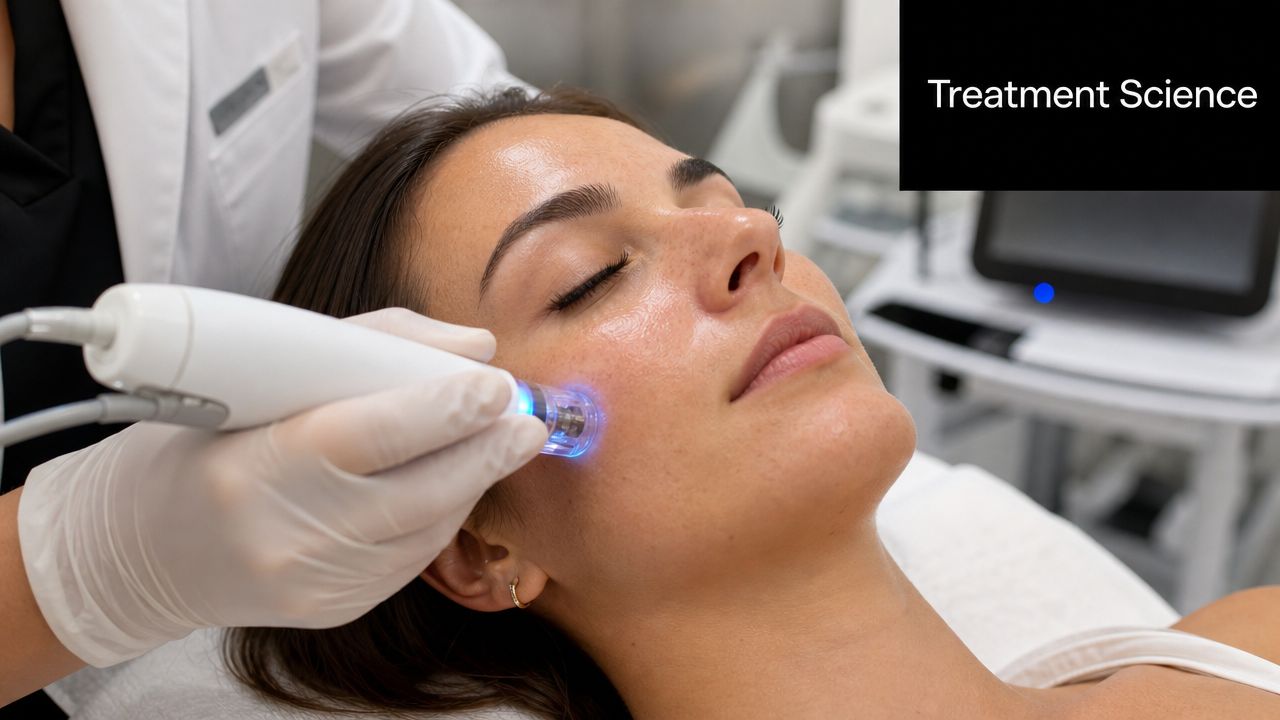
A strong example is radiofrequency. One clinical study on RF-based facial rejuvenation reported 35% to 40% improvement in skin tightening and 85% to 90% volunteer satisfaction, with significant increases in newly synthesised collagen and collagen types I and III. That matters because visible tightening depends on real tissue remodelling, not just temporary swelling or a short-lived “snug” feeling, as described in this clinical review of RF facial rejuvenation.
HIFU for deeper support
HIFU uses focused ultrasound energy to create tiny thermal points at specific depths below the skin surface. Its role is different from a standard surface facial. It's chosen when the therapist wants to reach deeper support layers associated with a lifting effect.
This tends to suit people who describe heaviness in the lower face, softening along the jawline, or a slight drop through the cheeks and neck. It isn't a surgical facelift alternative in outcome, but it can be a sensible option when the goal is non-surgical support rather than dramatic repositioning.
Pros and trade-offs:
- Useful for depth: It's often selected where dermal-only treatments may not be enough.
- Less focused on texture: It won't usually be the first choice for pores, roughness, or surface scarring.
- Expectation matters: The result is typically subtle and progressive rather than immediate.
3D Face & Eye RF for early laxity and crepey skin
RF treatments heat the dermis in a controlled way. That heat can contract existing collagen and trigger fresh collagen remodelling over time. In practical terms, this makes RF a common choice for early facial skin tightening, especially when the skin feels thinner, looser, or slightly creased rather than markedly sagging.
This approach often suits:
- Cheeks with mild laxity
- Fine lines around the eyes
- Crepey texture that makes the face look less firm
- People wanting a non-surgical treatment with little interruption to routine
RF is often the better conversation when someone says, “My skin feels less springy,” rather than, “My whole lower face has dropped.”
3D Dermaforce for firmness plus texture
RF microneedling combines two mechanisms. The needles create controlled micro-injury in the skin, while radiofrequency energy is delivered into targeted depths. That makes it a useful crossover treatment when firmness and texture need equal attention.
A good example is someone with mild laxity plus acne scarring or enlarged pores. Standard tightening alone may not address the skin's surface quality enough. Standard resurfacing alone may not give the support effect they're hoping for. A combination mechanism can bridge that gap.
This is often a strong option when the skin needs to look smoother as well as tighter.
A short treatment overview can help if you prefer to see techniques in action:
Fractional CO2 for resurfacing and remodelling
Fractional CO2 isn't usually chosen as a pure “lifting” treatment. Its strength is resurfacing. It creates controlled columns of injury in the skin to stimulate repair and improve texture, fine lines, and visible ageing change on the surface.
That can still make the face appear firmer. When skin is smoother, denser-looking, and less lined, people often perceive it as tighter. But it's important to understand the reason. The improvement comes largely from resurfacing and remodelling, not from deep lift.
This can be especially relevant for:
- Sun-damaged skin
- Etched lines around the mouth
- Rough or uneven texture
- Acne scarring
3D-HydrO2 for skin quality support
Not every client needs an energy-based tightening session immediately. Sometimes the skin is dehydrated, congested, or dull, and that poor skin quality is exaggerating the appearance of age.
A treatment such as the 3D-HydrO2 facial works in a different lane. It supports hydration, cleansing, and overall skin condition. It won't replace a collagen-stimulating treatment where laxity is the main issue, but it can complement a longer plan or serve as a gentle first step for clients who aren't ready for a more intensive option.
That's an important part of honest treatment planning. Not every concern should be treated with the strongest device available.
Your Journey From Consultation to Lasting Results
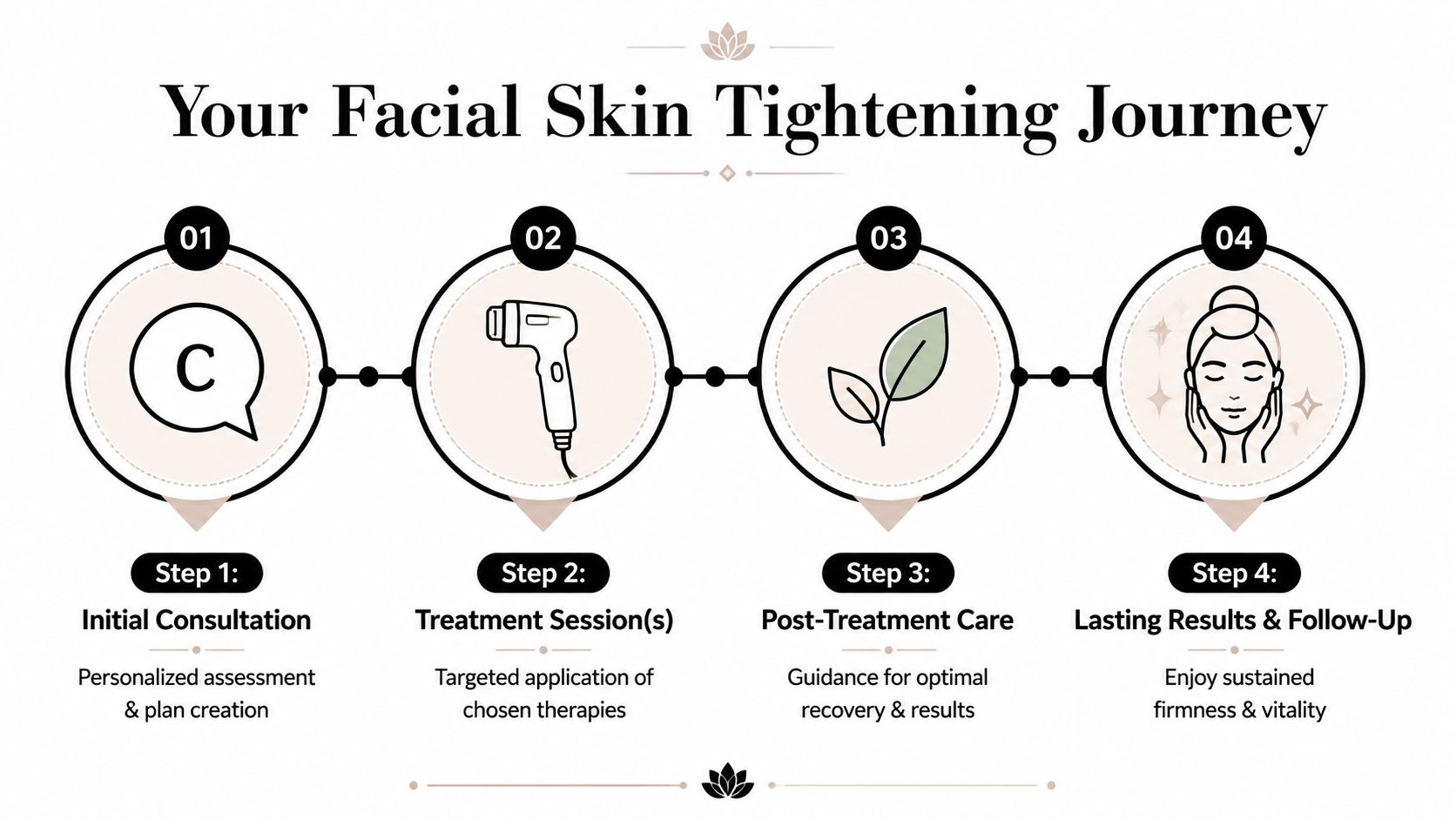
A well-run facial skin tightening plan usually feels calm and structured. There shouldn't be much mystery in it. You should know what's being treated, what the sensation is likely to be, and when results are expected.
What happens first
The consultation is where the treatment either becomes accurate or stays generic. A therapist should assess where the concern sits. Is it surface texture, dermal collagen loss, deeper laxity, or a combination?
Photos are useful here. So is looking at the face in movement, not just at rest. A static mirror view can make everything seem like “sagging”, when the actual picture is more specific.
What treatment day feels like
The sensation depends on the technology. RF usually feels warm. HIFU is often described as deeper and sharper in brief moments. Microneedling-based treatments can feel prickly or intense depending on settings and area. Fractional resurfacing tends to involve more noticeable after-effects than a standard RF facial.
Immediately after treatment, some people see mild redness or temporary puffiness. That early look isn't the final result. It's the beginning of the repair response.
What matters most after treatment: follow the aftercare you're given, protect the skin barrier, and don't judge the outcome too early.
When results show
Realistic expectations protect you from frustration. Clinical guidance on RF skin tightening notes that visible changes typically develop over 2 to 6 months, with many protocols using 3 to 6 sessions and maintenance every 6 to 12 months, as described in this overview of the RF collagen remodelling timeline.
That means a common journey looks something like this:
- Early phase: The skin may feel slightly tighter or look fresher soon after treatment.
- Middle phase: Gradual collagen remodelling starts to show as firmer-looking skin.
- Later phase: The more meaningful visual change becomes clearer over the following months.
- Maintenance: Periodic review helps preserve the result rather than waiting for the whole effect to fade.
This gradual timeline is a good sign. It usually means the skin is responding biologically, not just reacting temporarily.
Personalising Your Treatment at 3D Aesthetics
A client often arrives saying, "I want tightening," when the underlying issue is more specific. The skin may have lost collagen, the lower face may need support at a deeper structural level, or the surface may look crepey and uneven. Those problems can appear similar in the mirror, but they do not respond best to the same treatment.
That is why treatment planning starts with cause, not with a device menu.
Why assessment changes the outcome
At 3D Aesthetics Leamington Spa, the consultation includes a complimentary assessment and a full 3D scan. The point is not to make the process feel more technical. It is to build a clearer picture of what is changing in your face and where treatment is likely to help most.
A good assessment separates concerns that are easy to confuse. Collagen loss usually shows up as thinner, less springy skin. SMAS laxity tends to look more like heaviness or descent through the jawline and lower face. Surface texture issues show as roughness, lines, enlarged pores, or creasing that sits more on the skin itself than in the deeper support layers.
That distinction matters. If your main concern sits at the surface, a lift-focused treatment may leave you wondering why the skin still looks lined. If the deeper support has softened, resurfacing alone may improve texture without giving much visible lift.
Some people suit one treatment well. Others get a better result from combining approaches. A common example is someone who needs deeper support through the lower face, with separate work around the mouth where the skin is more etched and textured. Another person may do better with a staged course that focuses on gradual collagen stimulation rather than one stronger session.
This consultative approach gives people something more useful than a list of treatment names. It gives them a reasoned plan based on what their face is doing anatomically, what improvement is realistic, and which method matches that pattern best.
Frequently Asked Questions
Do facial skin tightening treatments hurt
The sensation is generally described as manageable rather than painful, but it varies by device. RF often feels warm. HIFU can feel more intense in short pulses. RF microneedling and fractional resurfacing tend to feel stronger than a hydrating facial.
Comfort also depends on the area being treated. The jawline and bony areas usually feel different from the cheeks.
What is the typical price range for these treatments
Prices vary widely depending on the technology used, the area treated, and whether you're having a single session or a course. Because treatment planning is so individual, a proper quote should come after assessment rather than from a generic online price comparison.
If you're comparing clinics, ask what's included. The treatment itself, consultation, review appointments, and aftercare support all affect value.
How long do the results last
Results aren't permanent because the skin keeps ageing. Individuals maintain outcomes better when they follow a planned review schedule rather than waiting until all visible improvement has disappeared.
This is one reason maintenance is often discussed from the start. Facial skin tightening works best as part of an ongoing skin health plan.
Are these treatments suitable for all skin types and tones
Suitability depends on the device, the settings used, your skin history, and the concern being treated. Many non-surgical options can be adapted thoughtfully, but not every treatment is right for every person.
That's why patch testing, medical history, and a detailed consultation matter. Safe treatment starts with correct selection.
If you'd like personalized advice on whether your concern is collagen loss, deeper laxity, or a surface texture issue, 3D Aesthetics Leamington Spa offers consultations that can help you choose a more precise route to firmer, healthier-looking skin.
← Back to Home