
You've just left your fat-freezing appointment. The treated area looks red, feels firm, and may sit slightly higher than the surrounding skin. Your therapist has reminded you to wear loose clothing, drink normally, and avoid unnecessary heat while the skin settles. Now you're deciding whether to inspect the area again, take a hot shower, go to the gym, or carry on with your day.
That uncertainty is normal. Fat freezing aftercare isn't about forcing the body to work faster. It's about keeping the treated skin comfortable, recognising expected reactions, and knowing when a symptom needs professional attention. This week-by-week guide explains what to do, what to avoid, and how to judge your recovery without overreacting to every change.
Table of Contents
- What the First Few Hours After Fat Freezing Really Feel Like
- Your First 48 Hours of Aftercare
- Common Side Effects and How Long They Last
- First-Week Habits That Support Recovery
- When You Will Actually See Fat Freezing Results
- Warning Signs You Should Never Ignore
- Bringing It All Together Into a Simple Aftercare Plan
What the First Few Hours After Fat Freezing Really Feel Like
As you walk out of the treatment room, the area may feel oddly unfamiliar. The skin can look flushed and slightly raised where the applicator sat, while underneath there may be numbness, firmness, or a cool, stiff sensation. Some clients describe it as feeling like a cold block beneath the surface, particularly when sensation begins returning.
Your therapist may have advised loose clothing and sensible hydration, with heat exposure avoided while the initial redness and swelling settle. The UK ACE Group guidance on cryolipolysis aftercare confirms that redness, tenderness and swelling are common immediate effects. Aching, spasms, tenderness and altered sensation can also continue for several days.
The natural reaction is to keep checking the area in the mirror. Another common impulse is to place a hot water bottle over it because the skin feels cold. Neither response helps you assess recovery accurately, and direct heat can irritate skin that has already reacted to controlled cooling.
Practical rule: Treat the area gently, observe it calmly, and follow the instructions given by the practitioner who treated you.
For the rest of the day, choose soft clothing that doesn't press across the treated zone. Eat and drink as you normally would, take ordinary activity at a comfortable pace, and arrange your journey home according to how you feel. Many people can return to normal daily activities immediately, but “no downtime” doesn't mean “no aftercare”. Comfort should guide your choices during these first hours.
Your First 48 Hours of Aftercare
The first day or two should feel organised rather than restrictive. Your skin may be tender, numb, swollen, or red, but you shouldn't need to create an elaborate recovery routine.
- Wear soft layers: Choose loose, breathable fabrics over the treated area. Avoid waistbands, seams, or clothing that rubs directly against sensitive skin.
- Wash gently: If you shower, use lukewarm water and pat the area dry. Don't scrub, massage forcefully, or apply strongly perfumed products while the skin is reactive.
- Avoid unnecessary heat: Wait until the initial redness and swelling have settled before using saunas, swimming pools or sunbeds. Avoid heating pads and very hot water over the treated area.
- Move according to comfort: Ordinary movement is usually possible, but strenuous exercise isn't a useful test of recovery. A gentle walk is more sensible than pushing through soreness.
- Watch the skin: Note whether redness, swelling, tenderness or altered sensation is settling, staying stable, or worsening.
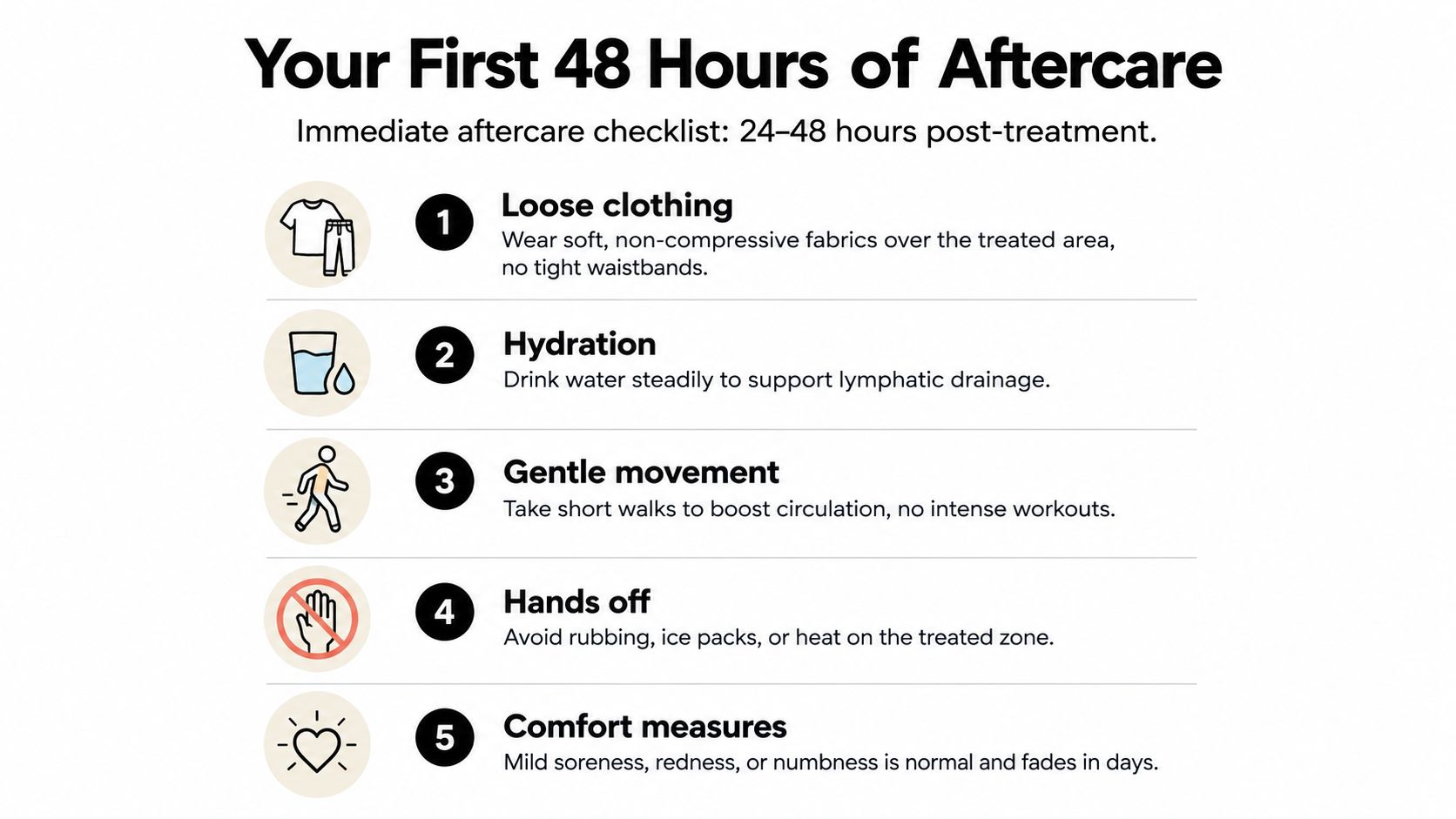
Don't apply ice directly to the skin, and don't use heat to counteract numbness. If you need comfort measures, ask your practitioner what is suitable for the treated site and your medical history rather than adding products or medication without advice.
Sleeping position rarely matters for a soft, comfortable treatment area. If lying on the site creates pressure or aching, change position or use a pillow as a gentle barrier. You should contact the clinic if pain, swelling, redness, skin colour, or sensation feels unexpectedly severe or begins moving in the wrong direction.
Common Side Effects and How Long They Last
After cryolipolysis, the skin can look and feel different before it returns towards its usual state. Redness, tenderness and swelling are recognised immediate reactions, while aching, spasms and altered sensation may continue for several days, as described in the ACE UK patient leaflet for cryolipolysis.
The important question isn't whether you notice a symptom. It's whether the symptom is stable and gradually becoming easier, or whether it is intensifying, spreading, or changing character.
| Side effect | Typical duration | When to contact your practitioner |
|---|---|---|
| Redness | Usually part of the immediate skin reaction and should settle as the area calms | Redness that becomes markedly stronger, spreads, or appears with severe pain |
| Tenderness or aching | May continue for several days | Pain that is severe, rapidly worsening, or difficult to manage |
| Swelling or firmness | May remain while the initial reaction settles | Rapidly expanding swelling, pronounced asymmetry, or increasing hardness |
| Numbness or altered sensation | Can persist after treatment and should be monitored for improvement | Sensation that worsens, is accompanied by skin damage, or doesn't begin to improve |
| Tingling, spasms or itching | Can occur as sensation changes during recovery | Persistent or escalating symptoms, especially with colour change or blistering |
| Bruising | Can follow suction and may take time to fade | Extensive, worsening, or unusually painful bruising |
Avoid comparing the treated skin with a perfectly smooth, untreated area too soon. Mild unevenness can be part of the local response, but a deepening colour change, blistering, broken skin, or severe asymmetric pain isn't something to monitor passively.
People researching body-contouring treatments often compare recovery questions with medication-related concerns. For a separate overview of what to expect with semaglutide, use a medically appropriate source and discuss personal suitability with a qualified clinician. That information shouldn't replace the aftercare instructions for cryolipolysis.
First-Week Habits That Support Recovery
The first week works best as a repeatable routine, not a test of willpower. Keep the treated area comfortable, avoid avoidable irritation, and let normal activity return in line with your symptoms.
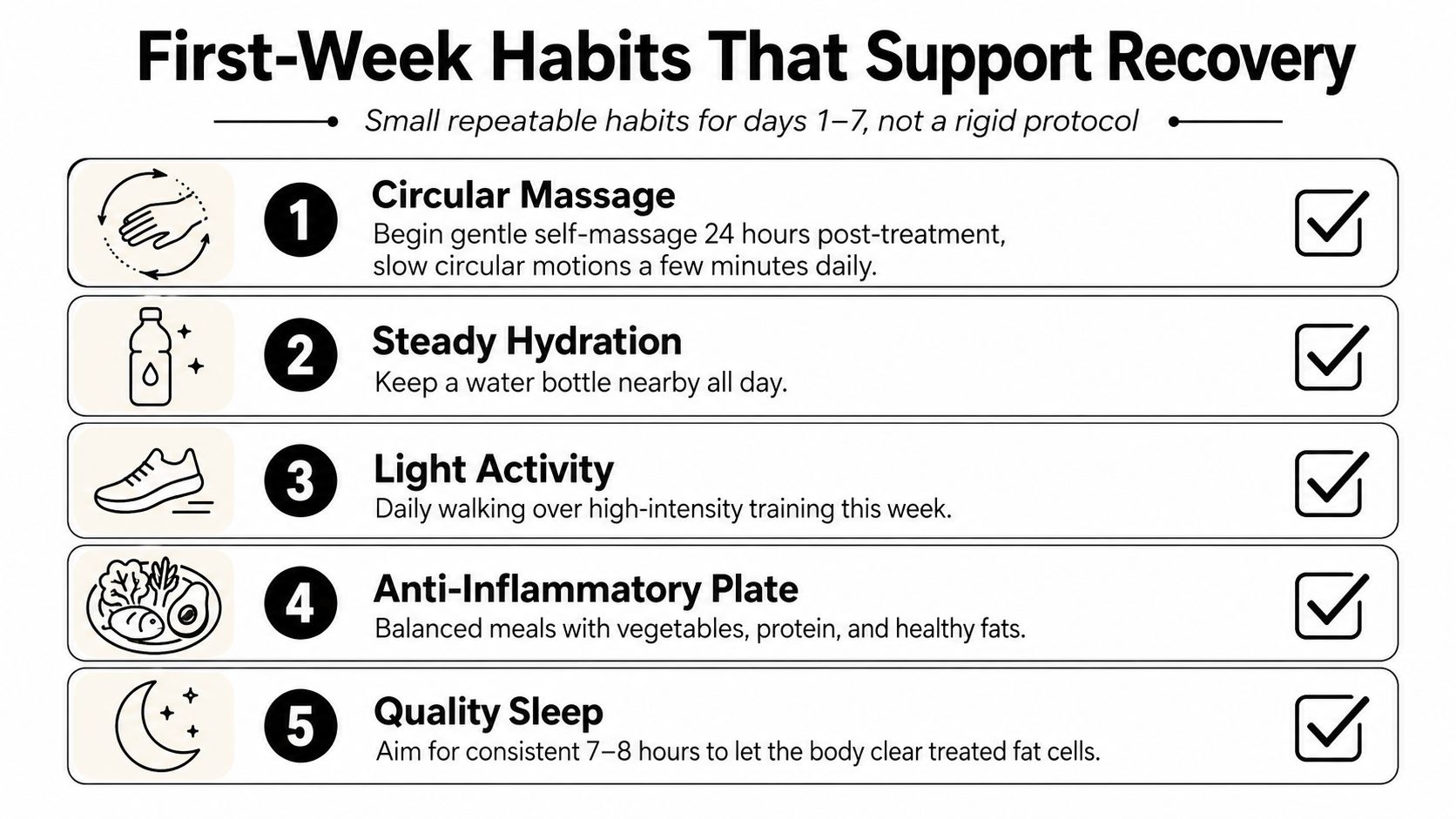
Gentle movement is usually reasonable from the first day if you feel comfortable. Walking can help you stay active without creating friction, pressure, or heat around the site. Return to more demanding exercise when tenderness allows, and postpone saunas, hot yoga, very hot baths and similar heat exposure until the initial redness and swelling have settled.
Massage needs the same restraint. Some clinics provide specific instructions, but aggressive rubbing isn't required for responsible aftercare. If your practitioner has approved gentle self-massage, use light circular movements for comfort rather than trying to force fluid or fat clearance through the tissue.
Hydration supports ordinary wellbeing, but water doesn't “flush” fat cells out of the body or guarantee faster contour changes. ACE UK notes that some practitioners advise drinking at least 2 litres of water daily, while also stating that evidence for this measure is limited. Reducing alcohol for 8–12 weeks is also included in some professional guidance, but it should be presented as a supportive habit, not a proven fat-clearing mechanism.
What works: steady routines, comfortable movement, sensible skin protection, and prompt communication when recovery looks unusual.
Choose soft, non-compressive clothing over treated flanks or the abdomen. If sleep puts pressure on the area, use a pillow to create space or adjust your position. A topical product such as a daily wellness cream may be considered only if it suits your skin and your practitioner approves it. It won't replace clinical aftercare.
When You Will Actually See Fat Freezing Results
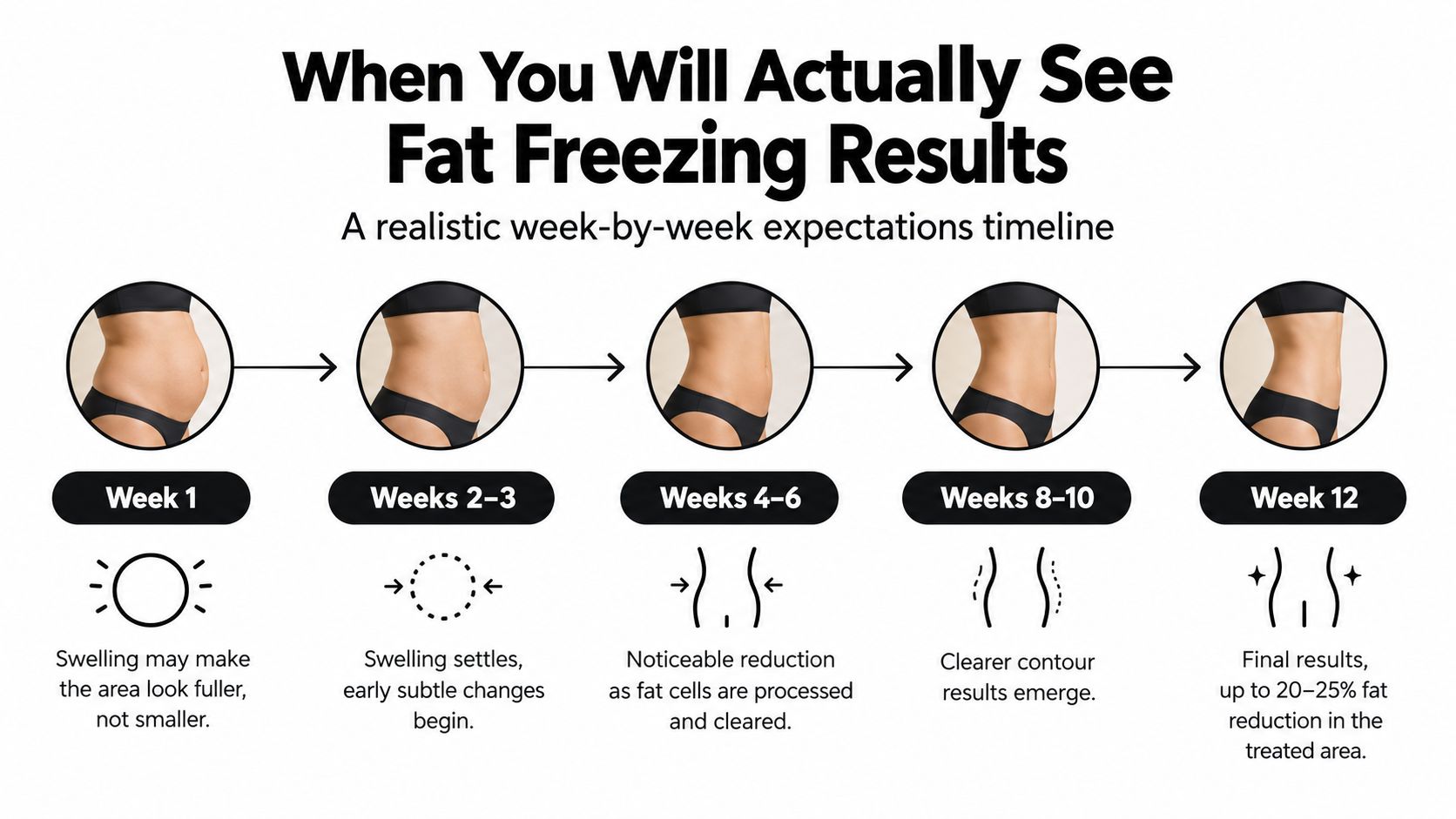
The first week can be misleading. The treated area may look fuller because of swelling and may feel firm or numb, so a daily mirror check can create unnecessary alarm. Early appearance isn't a reliable verdict on the eventual contour.
During the following weeks, the local reaction should gradually become less intrusive. You may still notice firmness, altered sensation, or tenderness before you see an obvious visual difference. Take baseline photographs before treatment, then repeat them from the same angle and under similar lighting. Clothing fit and consistent measurements can add useful context, while scales may reflect changes unrelated to the treated area.
Visible contour change develops gradually as the body processes the treated tissue. The professional leaflet referenced above describes supportive hydration, diet and exercise habits, while making clear that these should not be treated as a guaranteed way to accelerate fat-cell clearance.
The clearest assessment usually comes later, not during the first few mirror checks. Treatment outcomes can develop over 8–12 weeks, and a review arranged by your clinic can help determine whether the area is settling as expected and whether any further treatment should even be considered.
Use the same measurement method each time. A photograph taken from a different distance, a changed posture, or a different light can make small changes look larger than they are. For further context on fat-freezing results, focus on the assessment process rather than promises of an instant transformation.
Warning Signs You Should Never Ignore
Cryolipolysis is generally approached as a non-surgical treatment, but it isn't risk-free in every setting. A UK case report published in the Journal of Wound Care described frostbite after treatment in a beauty salon, with two significant areas of frostbite and substantial tissue necrosis on the patient's left flank. Medical attention wasn't sought until one week after treatment, and conservative management ultimately allowed recovery without surgical treatment. The case highlighted the hazards of unregulated providers and the need for stronger awareness of cosmetic-treatment regulation, as documented in the published UK case report.
Seek same-day advice from the treating clinic if you notice:
- Blistering or broken skin: Fluid-filled blisters, open areas, or skin breakdown need clinical assessment.
- Severe or expanding pain: Normal tenderness shouldn't become intense, progressively worse, or sharply different from the other side.
- Marked colour change: Darkening, mottling, unusual pallor, or a leathery appearance warrants prompt contact.
- Increasing hardness or swelling: Especially if the change is asymmetric, rapidly expanding, or associated with significant pain.
- Possible infection: Increasing warmth, discharge, pus, or fever requires medical attention rather than watchful waiting.
Don't wait for a planned review if these signs appear. If you can't reach the practitioner, arrange an in-person medical assessment and explain when and where the cryolipolysis treatment took place.
A properly trained, accountable provider should welcome questions about unexpected recovery. Clear device use, correct applicator placement, suitable settings, an anti-freeze membrane, written aftercare instructions and a reachable follow-up contact all matter. You can also review practical information about whether fat freezing is safe before choosing a provider.
Bringing It All Together Into a Simple Aftercare Plan
Think of recovery in three phases. The first is a calm, low-heat first week. Wear comfortable clothing, wash the area gently, keep movement easy, and avoid saunas, swimming pools and sunbeds until the initial redness and swelling have settled. Tenderness, numbness, firmness and altered sensation can be uncomfortable, but they don't automatically indicate a complication.
The second phase is quieter. Over the following weeks, keep your routine steady rather than trying to manipulate the treated area. Hydration supports general recovery, reduced alcohol can support sensible lifestyle choices, and gentle movement helps you stay comfortable and active. None of these habits should be sold as a guaranteed way to make fat disappear faster.
The third phase is assessment. Judge progress using baseline photographs, consistent tape measurements and the way clothing fits, not by inspecting the area repeatedly or relying on general body weight. Allow the treatment time to develop, then attend the review recommended by your provider so someone qualified can assess the contour and the skin response.
A simple mental model: calm first week, gradual change afterwards, immediate escalation for unusual symptoms.
Keep a short daily record during the early recovery period. Note pain, swelling, skin colour and sensory changes, and photograph the area if your practitioner has asked you to document it. This gives the clinic useful information and helps you distinguish a stable reaction from one that is clearly worsening.
The provider remains part of your aftercare plan. Before treatment, ask who you contact outside appointment hours, what symptoms require same-day advice, how the area will be reviewed, and whether baseline images will be taken. If you're comparing options for non-surgical fat removal, include aftercare access and accountability alongside the treatment itself.
Responsible care doesn't promise that every client will feel identical or that every result will appear on the same schedule. It gives you clear expectations, practical comfort measures, and an escalation route when recovery doesn't follow the expected pattern.
For fat-freezing aftercare, 3D Aesthetics Leamington Spa offers a complimentary consultation with a full 3D body scan, personalised treatment planning and follow-up measurement. Visit 3D Aesthetics Leamington Spa to discuss your goals, receive clear practitioner guidance, and plan your treatment with aftercare in mind.
← Back to Home