

Most hyperpigmentation cases need 10–16 laser sessions for the best results, according to NHS guidance. Treatment-related darkening is the most common risk, but it usually resolves within 3–6 months.
You may be looking in the mirror after months of acne, sun exposure, or hormonal changes and wondering why the marks haven't faded. A clinic may have offered laser treatment, but the promise of a clearer complexion can feel confusing when every device seems to claim something different. The sensible question isn't just whether laser works. It's whether your type of pigmentation, skin tone, and triggers make laser a safe and suitable choice.
Laser can improve unwanted pigment, but it isn't an instant eraser. Many people need a planned course, careful aftercare, topical support, and ongoing protection from the causes that made the pigmentation appear. The right treatment begins with diagnosis, not with choosing the most powerful machine.
Table of Contents
- Understanding What Hyperpigmentation Is and Why It Forms
- How Different Laser Technologies Work for Pigment Removal
- Laser Options Compared by Skin Type and Pigment Cause
- What to Expect From Your Treatment Journey
- Choosing the Right Clinic and Practitioner
- Managing Risks and Optimising Your Results
Understanding What Hyperpigmentation Is and Why It Forms
A dark patch is the visible result of extra melanin, the pigment that gives skin its colour. The skin may produce more melanin after ultraviolet exposure, inflammation, hormonal changes, or contact with certain medicines. That means two marks that look similar in a photograph can behave very differently during treatment.
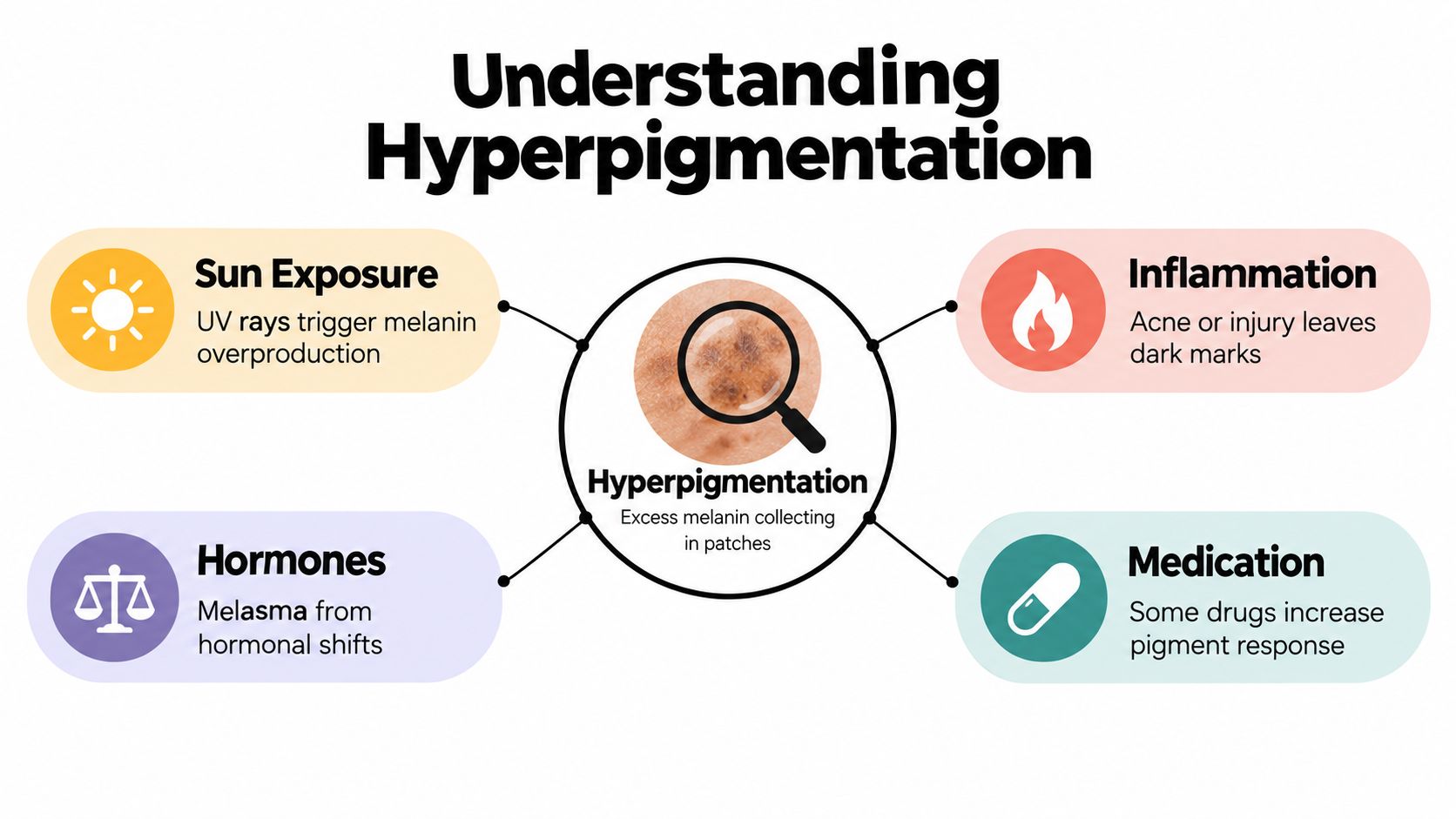
The trigger matters as much as the colour
A brown mark left after acne is usually called post-inflammatory hyperpigmentation, or PIH. The inflammation has signalled pigment-producing cells to become more active, and the mark can remain after the original spot has disappeared. Sun spots, freckles, and age-related pigmentation develop through a different process, while melasma often appears as broader, uneven patches associated with hormonal influences.
A person with acne-related marks may still be using irritating products or picking at blemishes. In that situation, treating the pigment without controlling the inflammation can lead to new marks. Likewise, laser won't prevent sun spots from returning if ultraviolet exposure continues.
Skin professionals also consider where the pigment sits. Epidermal pigment is closer to the surface and may respond more predictably to a carefully selected treatment. Dermal pigment lies deeper, and mixed pigmentation has both superficial and deeper components. Deeper pigment can require more cautious settings and may be less responsive.
Practical rule: A consultation should identify the cause and depth of pigmentation before anyone recommends a device.
Why some pigmentation responds better than other types
The Primary Care Dermatology Society guidance on facial hyperpigmentation explains that responsiveness varies between subtypes. Maturational dyschromia may respond well to laser, and the redness component of poikiloderma of Civatte may improve with pulsed-dye laser. Exogenous ochronosis requires stopping the causative cream first, while evidence for laser in melasma-like or chronic pigment remains limited.
This is why a practitioner may recommend topical preparation before laser, or may advise against treatment altogether. A more intense device isn't automatically better. If the skin is already inflamed, recently tanned, or carrying unstable pigment, extra heat can make the appearance worse.
For people comparing routines alongside professional treatment, a resource on gentle ingredients for hyperpigmentation can help explain why a supportive skincare plan matters. If your patches could be melasma rather than isolated sun spots, comparing melasma with sun spots may also help you prepare useful questions for a consultation.
How Different Laser Technologies Work for Pigment Removal
Laser treatment uses light energy that is absorbed more strongly by pigment than by nearby tissue. In simple terms, the practitioner selects a wavelength and pulse pattern that directs energy towards melanin. The treatment may heat or fragment pigment, after which the body gradually processes the remaining particles.
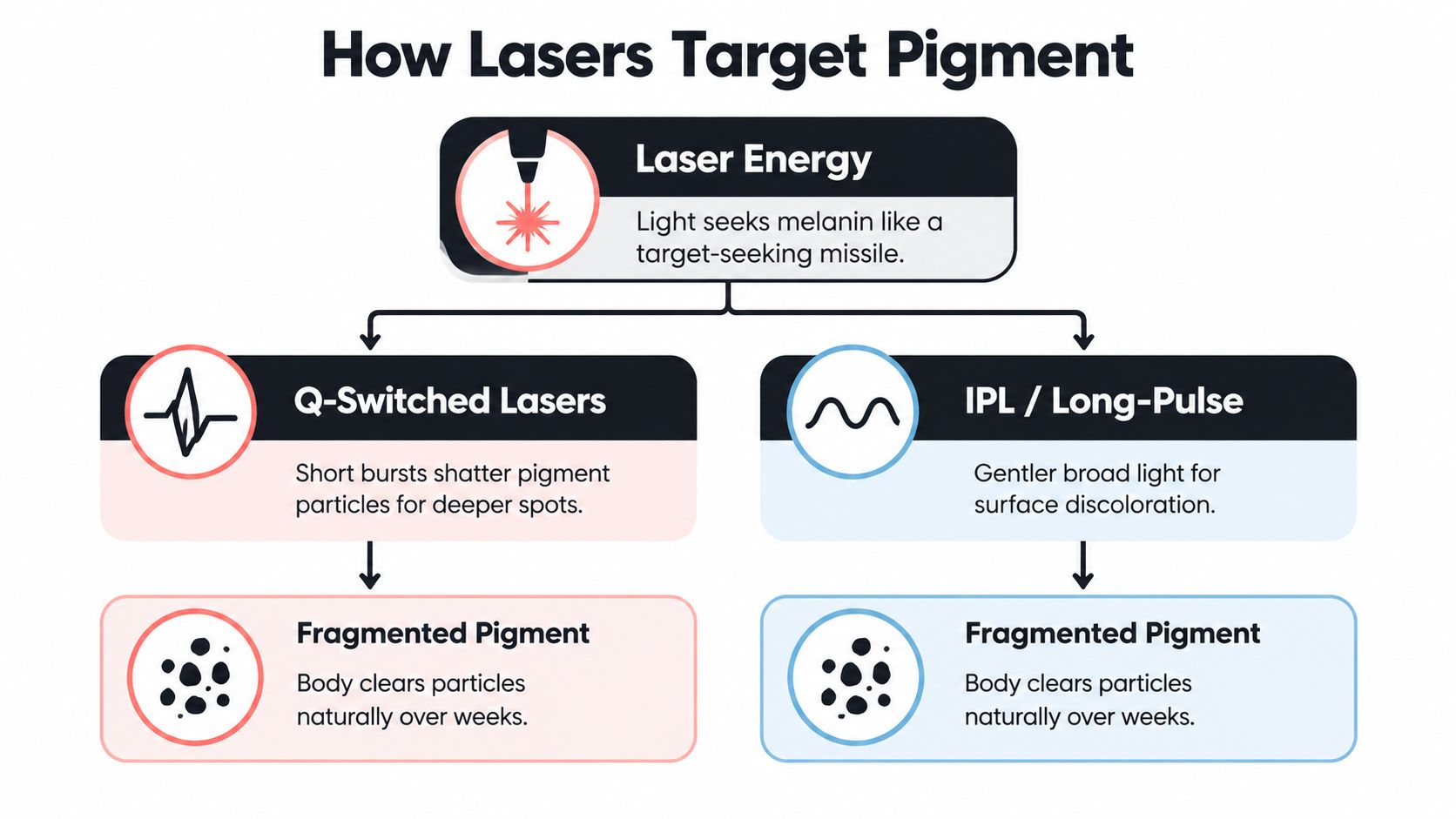
Q-switched treatment
A Q-switched laser delivers a very short, high-energy pulse. Think of pigment as a compact cluster of coloured particles. Rather than warming the entire surrounding area, the pulse aims to break that cluster into smaller fragments, which the body can clear over time.
This approach can suit selected superficial and deeper pigmented marks, but the wavelength and settings still matter. Nd:YAG is often considered when a practitioner needs a more cautious approach for certain darker or deeper pigment patterns. It isn't a universal melasma solution, and the evidence for some facial pigmentation problems is limited.
3D Nanosure is a Q-switched pigmentation treatment offered by clinics including 3D Aesthetics Leamington Spa. Before booking any Q-switched procedure, ask how the practitioner has assessed your pigment and why that wavelength is appropriate for your skin.
IPL and long-pulse light
Intense pulsed light, or IPL, isn't technically a single-wavelength laser. It delivers a broader range of light, so it can address some surface discolouration and visible redness at the same time. That broad action can be useful for selected sun-related changes, but it also means that accurate assessment is important, particularly where the skin contains more melanin overall.
Fractional lasers work differently. They create controlled microscopic treatment zones, leaving surrounding skin available to support healing. Some fractional devices are used for texture and scarring as well as pigment, but the added intensity can mean more recovery and a greater need for careful patient selection. A patient researching resurfacing may find an overview of fractional CO2 laser treatment useful, although a fractional resurfacing treatment isn't interchangeable with a pigment-specific laser.
Why one session rarely completes the process
Each session affects only a proportion of the target pigment, and the skin needs time to recover before the practitioner can reassess it. Pigment can also be distributed unevenly, with some areas sitting deeper than others. The treatment plan therefore depends on the cause, pigment depth, skin type, device, and response after each visit.
A responsible practitioner won't promise that every dark patch will disappear. They'll adjust the plan if the skin shows excessive irritation, unexpected darkening, or evidence that the original diagnosis needs reviewing.
Laser Options Compared by Skin Type and Pigment Cause
Choosing a treatment requires more than matching a label such as “pigmentation laser” to a concern. A practitioner should consider the Fitzpatrick skin type, recent sun exposure, medication, previous reactions, and whether the pigment is superficial, dermal, or mixed.
The British Medical Laser Association advises avoiding recent or very dark hyperpigmentation until it has reduced significantly. Its guidance also explains that persistent hyperpigmented skin may be treated with laser or IPL depending on the cause, and that settings may need adjustment for darker skin.
| Laser technology | Best for | Skin type suitability | Sessions needed | Risk level |
|---|---|---|---|---|
| Q-switched laser | Selected pigmented marks, including some sun spots, freckles, and superficial or deeper pigment | Can be suitable across skin tones when assessed and adjusted by a trained practitioner | A course is commonly required, and the number depends on pigment and response | Moderate, with darkening a key concern |
| Nd:YAG approach | Carefully selected facial pigment and some deeper or melasma-like concerns | Requires particular caution and individual settings, especially with darker skin | Multiple sessions may be needed, with limited evidence for some indications | Moderate to high if the diagnosis or settings are unsuitable |
| IPL | Selected surface discolouration with possible redness | More suitable when there is enough contrast between the target and surrounding skin, but not appropriate for every darker skin tone | A planned course may be advised | Moderate, with pigment changes possible |
| Fractional laser | Pigment alongside texture, scarring, or resurfacing goals | Depends heavily on device, intensity, and skin type | Usually staged rather than completed in one visit | Moderate to high because treatment is more intensive |
| Topical and combination plan | Melasma, PIH, unstable pigment, or patients needing preparation | Useful across skin tones when prescribed appropriately | Ongoing support may be needed | Lower treatment intensity, but products can still irritate |
Matching the cause to the treatment
For a distinct sun spot on otherwise stable skin, a Q-switched treatment may be considered. For redness with pigment, a different light source may be more logical. For melasma, clinicians often take a conservative route because heat and inflammation can aggravate the condition, and the pigment may have a hormonal or deeper component.
Darker skin isn't a reason to assume that laser is impossible. It is a reason to demand more careful assessment. The contrast between pigment and surrounding skin may be less obvious, and the skin can be more vulnerable to treatment-related darkening. The BMLA's UK treatment guidance is useful background for understanding why settings and risk assessment shouldn't be standardised.
A practitioner may postpone treatment if you've recently tanned, if the pigment is changing, or if you're taking a photosensitising medicine. That isn't a failure to offer treatment. It's evidence that the clinic is prioritising diagnosis and safety over a quick sale.
What to Expect From Your Treatment Journey
A realistic treatment journey starts with uncertainty being reduced. At the consultation, the practitioner should examine the pigment, discuss your medical history and skincare, check for recent tanning, and explain whether laser, topical treatment, or a combination makes sense.
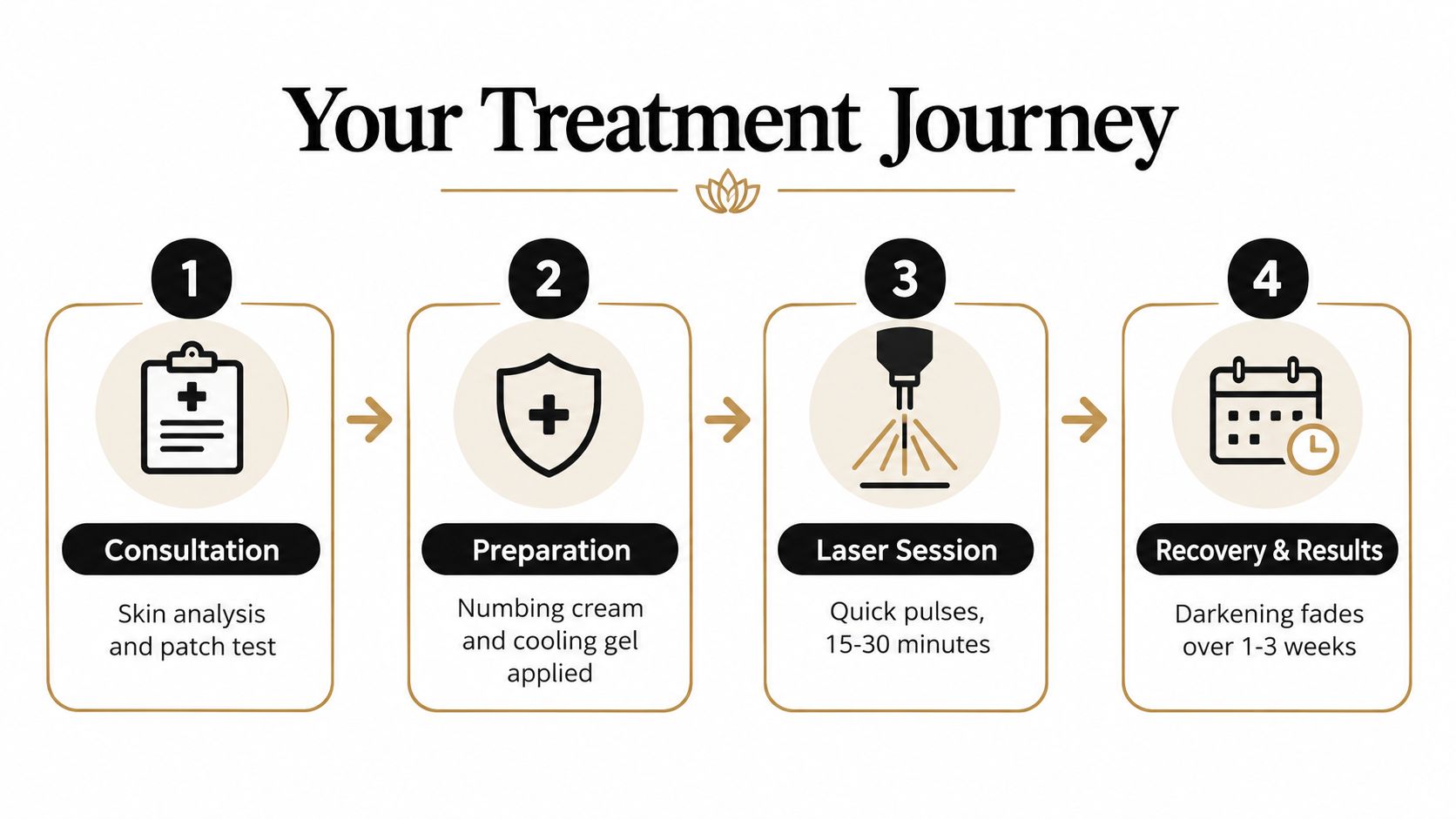
Before the first session
Some clinics use a patch test to observe how your skin responds before treating a larger area. You may be asked to stop selected irritating products and avoid deliberate tanning. Your practitioner should also tell you which medicines and skincare ingredients need discussion before treatment, rather than expecting you to identify every risk yourself.
Preparation can include cooling gel or a numbing product, depending on the area and device. The sensation varies, but patients often describe laser pulses as brief snaps or flicks. The important point is that comfort measures should be explained in advance, not improvised once treatment has started.
During and after treatment
The treated pigment may look darker immediately afterwards. That change can be alarming, but it may form part of the short-term response. The skin can also feel warm or sensitive, so your clinic should provide clear instructions about cleansing, moisturising, sun avoidance, and products to pause.
The Sandwell and West Birmingham NHS guidance on laser treatment for pigmented marks states that treatment-related hyperpigmentation is the most common risk and usually resolves within 3–6 months. A 2025 Leeds Teaching Hospitals NHS Trust patient leaflet says pigment-laser colour changes typically settle within 10–14 days, although less common cases can last several months or longer. These statements describe different aspects of recovery, so ask your practitioner what changes are expected with the specific device being used.
Why the plan may include many visits
The same NHS guidance states that laser treatment for pigmented marks commonly requires 10–16 sessions for the best results. That figure shouldn't be treated as a promise or a universal prescription. Some superficial PIH may need fewer sessions, while stubborn, extensive, or deeper pigment can require a longer plan.
Sessions are normally spaced far enough apart for the skin to recover and for the practitioner to judge the response. In practice, the plan may also include topical pigment management, trigger control, and sun protection. This is the part online adverts often underplay. Laser can remove or reduce existing pigment, but it can't stop new melanin production when the trigger remains active.
Watch this video for a general visual explanation of the treatment experience:
After each appointment, take photographs in consistent lighting if your practitioner recommends it. Gradual changes are difficult to judge from memory, and a documented record helps both of you decide whether to continue, modify, or stop the course.
Choosing the Right Clinic and Practitioner
A suitable clinic should make the consultation feel like a clinical assessment, not a sales appointment. The practitioner needs to identify what the pigmentation is before selecting a laser, because melasma, PIH, freckles, and sun spots don't carry the same treatment considerations.
Look for a practitioner who can explain their training, insurance, device, and treatment safeguards in plain language. UK professional guidance from the BMLA can help you understand why skin type, pigment depth, medication, and recent tanning affect the decision.
What a careful consultation includes
You should expect questions about:
- Your skin history: Acne, eczema, previous laser reactions, scarring, cold sores, and changes in the pigment all matter.
- Your current products: Irritating acids, retinoids, bleaching products, and fragranced treatments may need review before a session.
- Your medicines: Some medicines can increase sensitivity to light or alter healing, so bring an accurate list.
- Your skin tone and tanning: The practitioner should ask about recent sun exposure rather than judging this from appearance alone.
- Your objective: Treating one defined spot is different from trying to improve widespread uneven tone.
Ask to see before-and-after photographs of people with a similar skin tone and a comparable pigment concern. Images don't guarantee your outcome, but they can reveal whether the clinic has experience with patients whose skin behaves like yours.
A trustworthy practitioner can tell you when laser isn't the first or safest step.
Be cautious if a clinic promises complete removal in one appointment, avoids discussing post-inflammatory hyperpigmentation, or recommends the same device and settings to every client. You should receive a written plan that explains likely session stages, recovery, costs, alternatives, and what happens if the skin responds poorly.
If you're considering a Q-switched option for sun spots or uneven tone, you can review how 3D Nanosure pigmentation removal is described, then ask the clinic whether that approach matches your diagnosis. 3D Aesthetics Leamington Spa lists this treatment among its laser-based services, but the suitability decision still belongs in an individual consultation.
Managing Risks and Optimising Your Results
The most important risk to understand is temporary treatment-related darkening. The BMLA advises caution with recent or very dark hyperpigmentation, and darker skin tones may need adjusted settings. Recent sun exposure, photosensitising medicines, active inflammation, and aggressive aftercare can all complicate recovery.
Follow the clinic's instructions carefully:
- Protect the area from sunlight: Use the protection recommended by your practitioner and avoid deliberate tanning.
- Keep skincare gentle: Don't add strong exfoliants or irritating products while the skin is recovering unless instructed.
- Leave the skin alone: Picking, scratching, or removing crusts can prolong inflammation and create new marks.
- Report unexpected changes: Contact the clinic if pain, swelling, blistering, or worsening pigment concerns you.
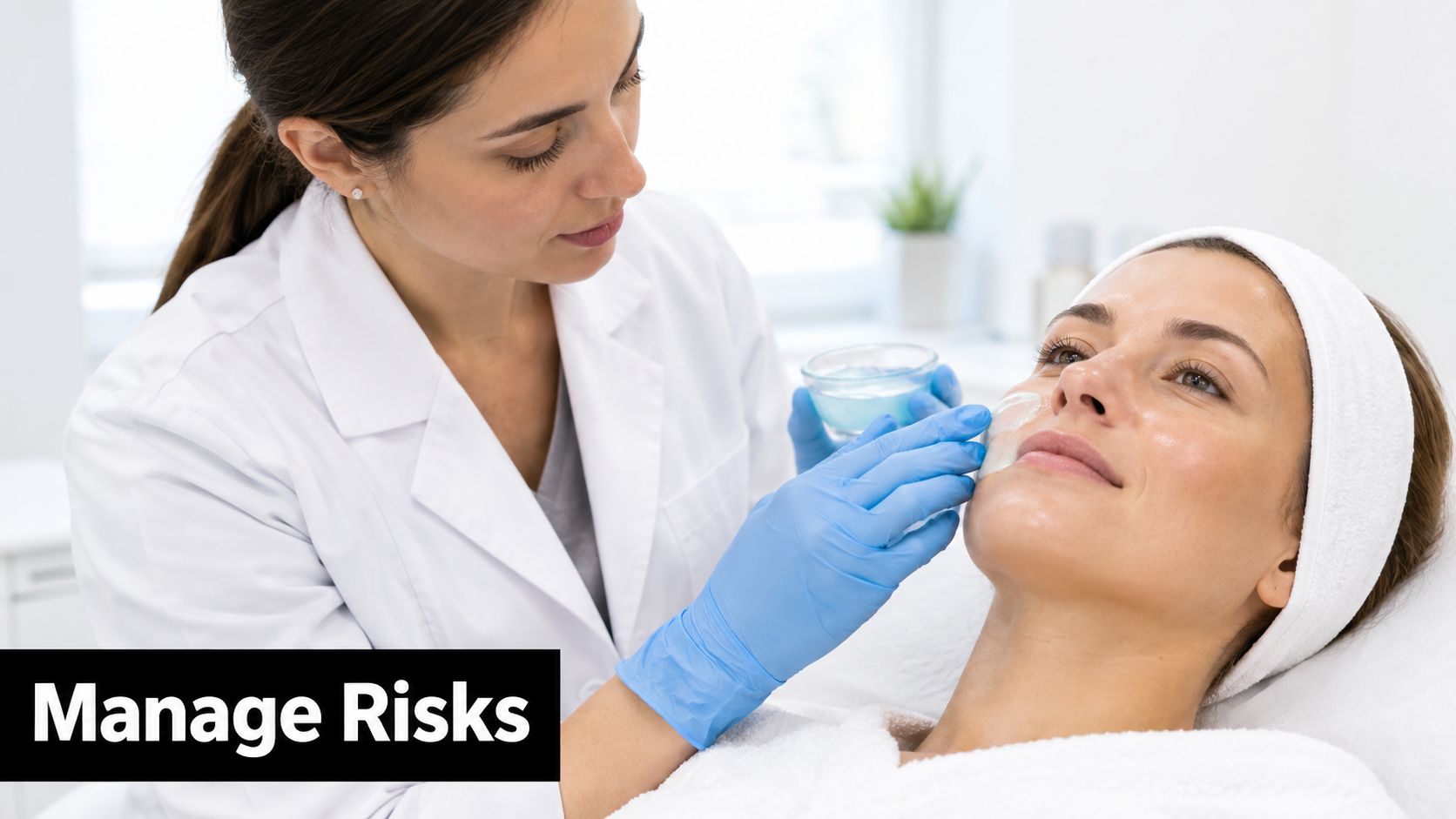
Laser works best as part of a managed plan, not as a one-time promise. If you're considering treatment in Warwickshire, 3D Aesthetics Leamington Spa offers consultations and 3D Nanosure pigmentation correction for concerns such as sun spots and uneven tone. Visit 3D Aesthetics Leamington Spa to discuss your skin, treatment options, and a realistic course with the clinic's team.
← Back to Home