
You're probably deciding between two very different routines.
One is familiar. You book a wax, let the hair grow out, put up with the pull, enjoy the smooth finish for a while, then start watching the regrowth come back and the calendar fill up again. The other asks for more planning at the start. You commit to a series of appointments, follow prep rules carefully, and think in months rather than weeks.
That's the laser hair removal vs waxing decision. It isn't just about how hair is removed on the day. It's about which maintenance cycle fits your life, your tolerance for repeat appointments, and how you want to spend your money over time.
As a practitioner, I think clients make the best choice when they stop asking only, “Which is better?” and start asking, “Which routine do I want to keep doing?” For some people, waxing still makes sense. For others, laser becomes the more practical long-term path because it's built around reduction, not constant reset.
Table of Contents
- Choosing Your Path to Smooth Skin
- The Science Behind Laser and Waxing
- Key Differences in Permanence Cost and Pain
- Is Laser or Waxing Right for You
- What to Expect Before During and After Treatment
- Your Long-Term Solution at 3D Aesthetics
- Your Hair Removal Questions Answered
Choosing Your Path to Smooth Skin
A client books a wax before a holiday, then another before a wedding, then another because regrowth has started to bother them at the gym. A year later, hair removal is still sitting in the diary every few weeks. That routine suits some people. For others, it becomes another recurring job to manage.
Waxing gives a fast result, and that matters if you want smooth skin for an event or you prefer to pay in smaller, repeat appointments. The trade-off is ongoing upkeep. You have to let the hair grow back between visits, work around skin sensitivity, and keep funding the same cycle.
Laser suits a different kind of commitment. It asks for more patience and a higher upfront spend, but the goal is to reduce how much time, money, and mental space hair removal takes up over the long term. In clinic, that often marks the main distinction. It is less about which treatment sounds better on paper, and more about which routine you are willing to live with.
Practical rule: If you are comfortable booking hair removal into your life on a repeat basis, waxing can work well. If you want to reduce the need for ongoing maintenance, laser is usually the better fit.
I often tell new clients to decide based on lifestyle before anything else. Do you want immediate smoothness, even if it keeps coming back as a standing expense? Or do you want to invest in a treatment course now so day-to-day maintenance becomes lighter later?
The useful way to decide between laser and waxing is to look beyond the treatment bed. Look at the full commitment. Your calendar. Your budget over time. Your tolerance for regrowth between appointments. Your willingness to stick to a plan now for fewer appointments later. That is where the right choice usually becomes clear.
The Science Behind Laser and Waxing
Why waxing always becomes a repeat service
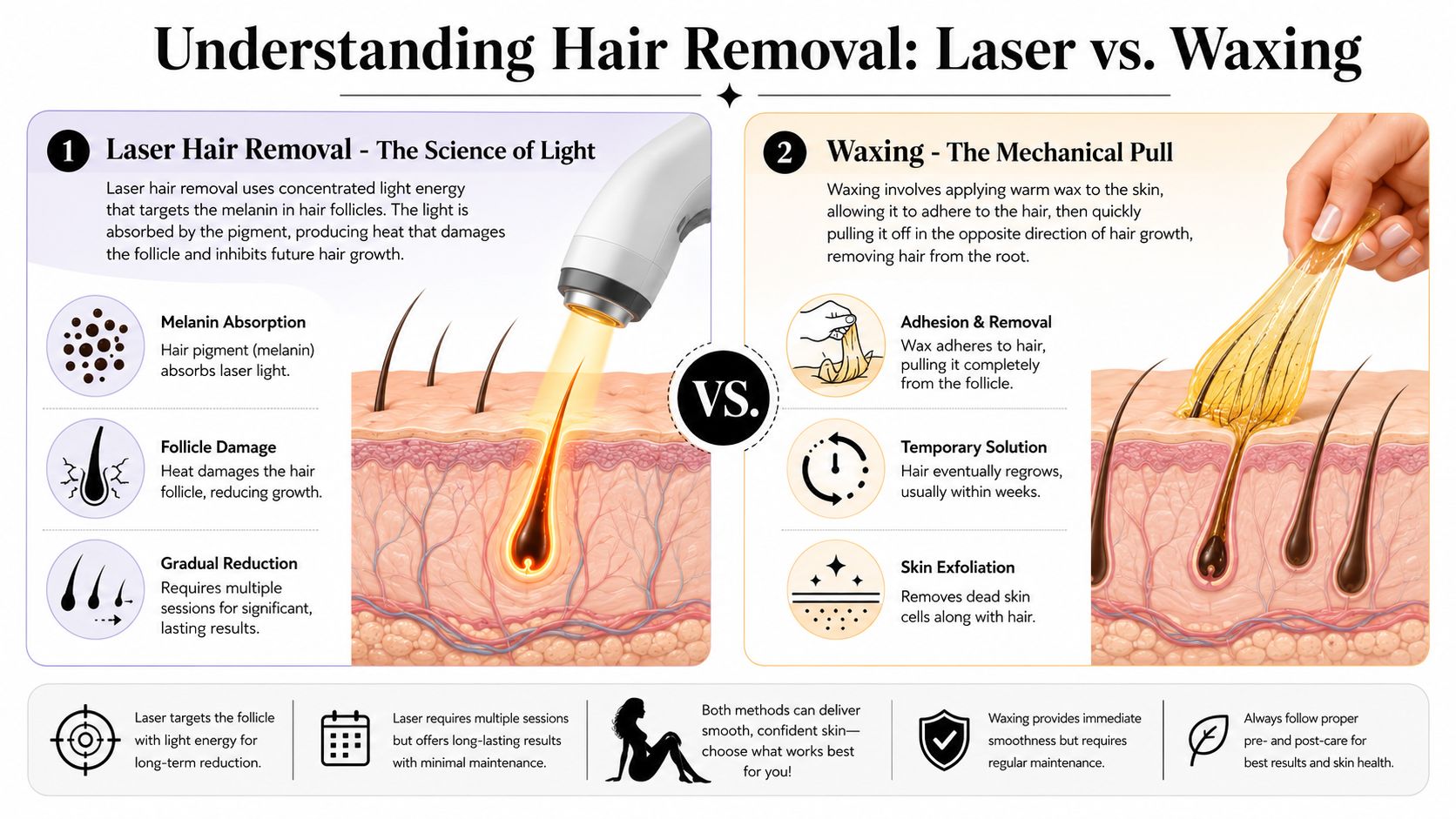
Waxing is a mechanical removal method. The wax grips the hair and pulls it out, but it doesn't switch off the follicle's ability to grow new hair. That's the core limitation.
In practical terms, you get a smooth result, but the follicle remains active. Hair returns because the growth structure is still doing its job. That's why waxing belongs in the category of temporary hair removal, even when the finish initially feels very clean.
Why laser works on a different timeline
Laser hair removal is different because it is follicle-targeting. Laser devices target pigment in the follicle and damage growth cells, which is why the method is designed for longer-term reduction rather than short-lived removal, as explained in Baylor College of Medicine's overview of laser, wax, or sugar hair removal options.
That mechanism changes everything about the treatment journey.
You don't judge laser by one appointment in the same way you might judge a wax. You judge it by the course. Hair grows in cycles, so multiple sessions are needed to catch follicles at the right stage. That's why laser is planned over time rather than treated as a one-off service.
A simple way to think about it is this:
- Waxing removes what you can see
- Laser aims to reduce what keeps coming back
Waxing works at the level of removal. Laser works at the level of reduction.
That difference also explains the prep rules. If the follicle needs to be present for the laser to target it, removing the hair from the root beforehand can interfere with treatment planning. That's why clinics often tell clients to stop waxing or plucking before starting laser, while shaving is generally acceptable.
For clients, the science matters because it answers the biggest expectation question. If you want a method that gives a smooth result now and accepts that you'll repeat it regularly, waxing does that. If you want a method designed around changing future hair growth, laser is the more strategic option.
Key Differences in Permanence Cost and Pain
Laser Hair Removal vs Waxing at a Glance
| Factor | Laser Hair Removal | Waxing |
|---|---|---|
| Main goal | Longer-term hair reduction through a treatment course | Temporary hair removal |
| How it works | Targets pigment in the follicle | Pulls hair out from the root |
| Appointment pattern | Planned series with spaced sessions | Ongoing repeat maintenance |
| Result timeline | Built for gradual reduction | Immediate smoothness |
| Regrowth pattern | Usually becomes less of a routine focus over time | Returns and requires repeat visits |
| Prep | Usually shaving is preferred before sessions | Hair needs to grow out |
| Best fit | People wanting lower long-term maintenance | People wanting a short-term option |
Permanence and the rhythm of upkeep
The difference between these two methods is often felt in one's calendar before it is felt anywhere else.
Waxing results usually last about three to six weeks, while laser sessions are usually spaced four to six weeks apart during the initial course, according to Good Housekeeping's evidence-based comparison of laser hair removal and waxing. That sounds similar at first glance, but the rhythm is not the same.
Waxing is repeated because the hair returns and the service has to be done again to restore the result. Laser is spaced because the treatment course is working through hair growth cycles with the goal of longer-term reduction.
That distinction matters if you're thinking about lifestyle rather than a single appointment. Waxing creates a loop. Laser creates a programme.
Pain feels different with each method
Clients often ask which hurts more. The honest answer is that the discomfort is different in character.
Waxing is usually one strong pull at a time. Many people find that abrupt and intense, especially on sensitive areas. Laser tends to feel more like repeated heat or a quick snapping sensation across the treatment area. Some clients prefer that because there's no need to grow the hair out and no strip-pull moment. Others still find certain zones challenging.
Pain tolerance is personal, but routine matters too. If you dislike the cycle of waiting for regrowth, then feeling every wax as a reset can become more irritating over time than the sensation itself. If you'd like a clearer sense of how treatment feels in practice, this guide on whether laser hair removal hurts can help set expectations.
Some clients choose laser not because they expect zero discomfort, but because they're tired of repeating a discomfort they already know they dislike.
Cost is really about the routine you fund
Clients often need the clearest advice on this matter.
Waxing usually feels easier to approve in the moment because each appointment is a smaller purchase. Laser usually feels heavier at the start because you're paying into a course. But the financial question isn't “Which costs less today?” It's “Which payment pattern do I want to keep living with?”
If you continue waxing, you're choosing an open-ended maintenance expense. If you choose laser, you're choosing a more concentrated upfront commitment with a defined treatment plan.
That doesn't mean laser is automatically the cheaper option for every person or every area. It means the comparison should be made over the period you realistically plan to remove hair, not over one month.
Financial lens: Waxing spreads cost across years. Laser brings more of the spend forward in exchange for a routine aimed at reducing future dependence on regular appointments.
A lot of clients make better decisions when they stop comparing one laser session to one wax. That's not an equal comparison. The better comparison is ongoing maintenance versus a course-based strategy.
Here's what usually works well in real life:
- Choose waxing if you want flexibility, don't mind regular appointments, and prefer paying little by little.
- Choose laser if you're prepared for a larger initial commitment and want to reduce the long-term burden of hair management.
- Pause before deciding if your budget only allows short-term thinking right now, because half-committing to laser often frustrates people more than waiting until they can follow the course properly.
Is Laser or Waxing Right for You
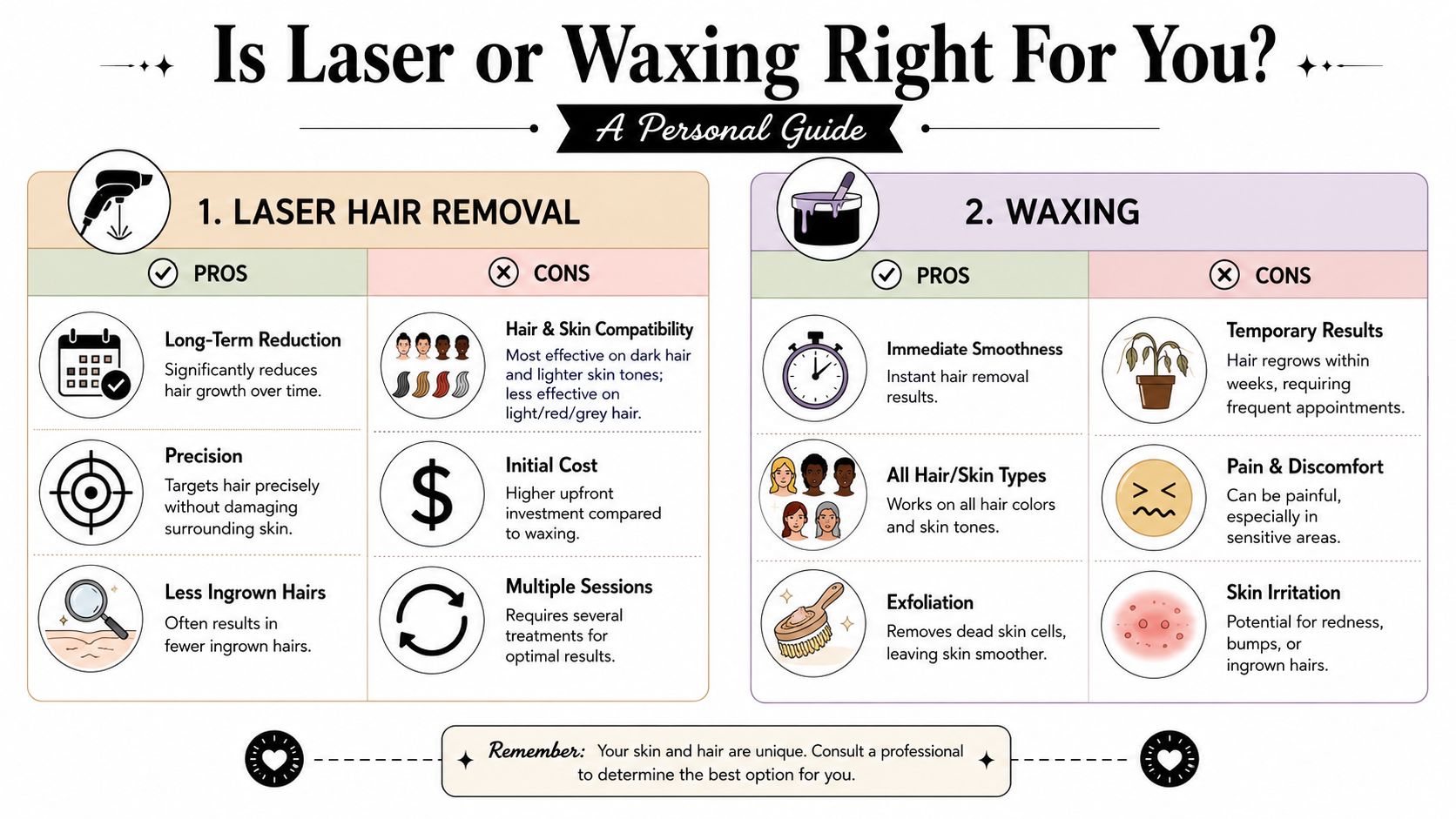
The right choice depends less on trends and more on your hair, skin, habits, and tolerance for maintenance.
Who usually prefers laser
Laser tends to suit clients who are planning ahead. They want fewer repeat bookings in the future, they're tired of organising regrowth around appointments, and they often dislike ingrown hairs or constant upkeep.
It also suits clients who are happy to follow instructions closely. Laser works best when people stick to the treatment plan, turn up at the right intervals, and avoid habits that interfere with the follicle between sessions.
This short video gives a useful visual overview before a consultation.
Who may still prefer waxing
Waxing may still be the better fit if you want an immediate result and don't want to commit to a treatment course yet. It also remains a practical option for people whose hair colour makes laser less suitable, since waxing isn't dependent on pigment targeting in the same way.
Some clients prefer the simplicity of a single maintenance appointment with no bigger plan attached. That's valid. A routine doesn't have to be wrong just because it's repetitive. It only becomes wrong when you're fed up with it and still forcing yourself through it.
Switching from waxing to laser
The transition from waxing to laser often causes confusion. Clients worry they've “ruined” their chances if they've been waxing for years. Usually, the issue is not your history. It's your prep from this point forward.
A peer-reviewed study found no statistically significant difference in laser hair reduction when areas were pre-shaved versus pre-wax epilated before treatment, with p = .44, according to the PubMed record of the study on preoperative hair removal methods before laser treatment. For clients, the practical message is simple. What matters most is following your clinic's preparation guidance consistently as you begin the course.
If you're weighing laser against another long-term option rather than waxing alone, this comparison of laser hair removal vs electrolysis is also useful.
If your main complaint is, “I'm tired of keeping this up,” that usually points more strongly towards laser than towards another temporary method.
What to Expect Before During and After Treatment
A common real-life scenario is this. You have a holiday booked, a busy month at work, and you want your hair removal routine to fit around life instead of dictating it. In such a scenario, laser and waxing start to feel very different in practice.
Before your appointment
Waxing needs enough visible regrowth for the wax to grip. That means planning around a period where the hair is noticeable. Some clients are fine with that. Others find it frustrating if they like to feel consistently smooth for the gym, weekends away, or last-minute plans.
Laser preparation is less about growing hair out and more about following the treatment plan properly. You usually prepare for a series of appointments over time, not a one-off visit, so the commitment is more calendar-based. If you are considering a course, it helps to read through a clinic's laser hair removal treatment information before booking so you know what shaving, sun exposure, and timing requirements are likely to apply.
That difference matters financially as well as practically. Waxing spreads the cost into smaller repeat appointments. Laser asks for a bigger upfront commitment, but with the aim of reducing how much time and money you keep spending later.
During the treatment
Waxing gives a quick, visible result on the day. Hair is removed section by section, and you leave with smooth skin. For clients who want an immediate finish before an event, that simplicity still appeals.
Laser feels more clinical and more planned. The area is checked, the settings are matched to the treatment area, and the session forms part of a wider course rather than a standalone fix. The result you are working toward is lower regrowth over time, not a permanent end point after one appointment.
Mindset makes a difference here. Clients who are happy with repeat upkeep often tolerate waxing well. Clients who are tired of building hair removal into every month usually cope better with laser because the routine has a longer-term purpose.
Aftercare and the practical commitment
After waxing, the main job is settling the skin and watching for sensitivity, bumps, or ingrown hairs. The treatment itself is over, but the cycle starts again fairly quickly because the hair will return and another appointment will be needed.
After laser, aftercare supports both the skin and the outcome of the course. That means following clinic advice carefully, protecting the area, and avoiding habits that interrupt the treatment plan. The discipline comes after the appointment as much as during it.
Here is the simplest way I explain it to new clients:
- Waxing suits people who are comfortable repeating the same maintenance cycle
- Laser suits people who would rather commit to a plan now for less routine upkeep later
- Both need proper aftercare if you want the skin to recover well
Be honest about your habits before you choose. If you often book treatments last minute and prefer flexibility, waxing may fit your routine better. If you want fewer repeat decisions over the long term and can stick to a schedule, laser is usually the better investment.
Your Long-Term Solution at 3D Aesthetics
If your priority is fewer repeat hair-removal decisions over time, laser usually makes more sense than waxing. The trade-off is simple. You accept a planned upfront commitment in exchange for a routine that aims to reduce how much ongoing maintenance you need.
That's why many clients move to laser only after years of waxing. They don't suddenly become interested in technology. They become tired of the lifestyle admin. The repeated booking, the regrowth window, the same discomfort, and the same spend pattern stop feeling worth it.
For readers in Warwickshire, 3D Aesthetics Leamington Spa's laser hair removal service is one local option for discussing a course-based approach and whether the clinic's 3D-Trilogyice laser hair removal device is suitable for your treatment areas and skin type.

A good consultation should leave you with a realistic plan, not a vague promise. You should understand whether laser fits your hair type, what your schedule needs to look like, how to prepare properly, and what level of maintenance may still be needed later. That kind of clarity matters more than sales language.
Your Hair Removal Questions Answered
A lot of clients reach this stage after years of fitting hair removal around holidays, work, gym sessions, and last-minute plans. The better question is often less about which method sounds better on paper, and more about which routine you are realistically willing to keep paying for and maintaining.
Can I switch from regular waxing to laser hair removal?
Yes. Many clients move from waxing to laser once they decide they want less ongoing upkeep. You do need to stop waxing, plucking, or threading before starting, because the laser needs the hair root in place to target it properly. Your clinic should give you a clear prep timeline so you know when to stop root-removal methods and when to shave instead.
Does laser hurt more than waxing on sensitive areas?
The sensation is different, and tolerance varies from person to person. Waxing is a sharp pull across the whole area at once. Laser usually feels like quick snaps with heat. In clinic, I find that some clients cope better with laser on underarms or bikini areas because there is no repeated strip removal, while others still prefer waxing because they know exactly what to expect.
Will hair ever grow back after a full laser course?
Some regrowth can still happen over time, which is why laser is described as long-term hair reduction rather than complete permanent removal. The practical difference is that hair often becomes finer, patchier, and easier to manage. For many clients, that means fewer appointments and less mental energy spent planning around regrowth.
If I only want smooth skin for now, is waxing fine?
Yes. Waxing suits short-term goals well, especially if you want immediate results for a trip, event, or season and do not want to commit to a treatment course yet. It can still be the right choice if you are happy to keep booking regular appointments as part of your routine.
What's the biggest mistake people make when choosing between laser and waxing?
They judge it by a single appointment instead of the pattern that follows. One wax versus one laser session is not the primary decision. The crucial decision is whether you want to keep funding regular temporary removal, or invest upfront in a plan designed to reduce how much maintenance your routine needs later.
If you want help deciding what fits your schedule, budget, and long-term goals, 3D Aesthetics Leamington Spa offers complimentary consultations so you can discuss your options clearly and decide whether laser is the right next step.
← Back to Home