
Up to 65% of men over 50 may have some degree of gynaecomastia, and non-surgical male body contouring can help address localised, pinchable fat without an operation. The right treatment depends on what a body scan shows, not just on where you feel least confident.
You may already know the situation well. You train consistently, your weight is reasonably stable, and your shirts fit everywhere except the lower abdomen, flanks or chest. You can improve your general fitness, but one stubborn area still affects how you see your shape in the mirror.
That frustration doesn't mean you haven't worked hard enough. Male body contouring is a shaping treatment, not a replacement for weight loss, and its value lies in refining subcutaneous fat deposits that remain after healthy habits have done their work. The consultation should therefore begin with measurement, tissue assessment and a clear discussion of what can, and cannot, change.
A modern male-focused pathway starts before the first applicator touches the skin. A three-dimensional body scan can help identify the exact distribution of fat, differences between the two sides, and whether skin laxity or chest tissue will influence the result. From there, the clinician can match the anatomy to cooling, ultrasound, radiofrequency, HIFU or shockwave treatment rather than selling a generic package.
Table of Contents
- Why Men Are Turning to Non-Surgical Contouring
- Understanding How Non-Surgical Fat Reduction Works
- Comparing the Top Treatment Options for Men
- The Importance of a 3D Body Scan Consultation
- Realistic Expectations and Treatment Results
- Choosing the Right Clinic for Male Body Contouring
- Frequently Asked Questions About Non-Surgical Contouring
Why Men Are Turning to Non-Surgical Contouring
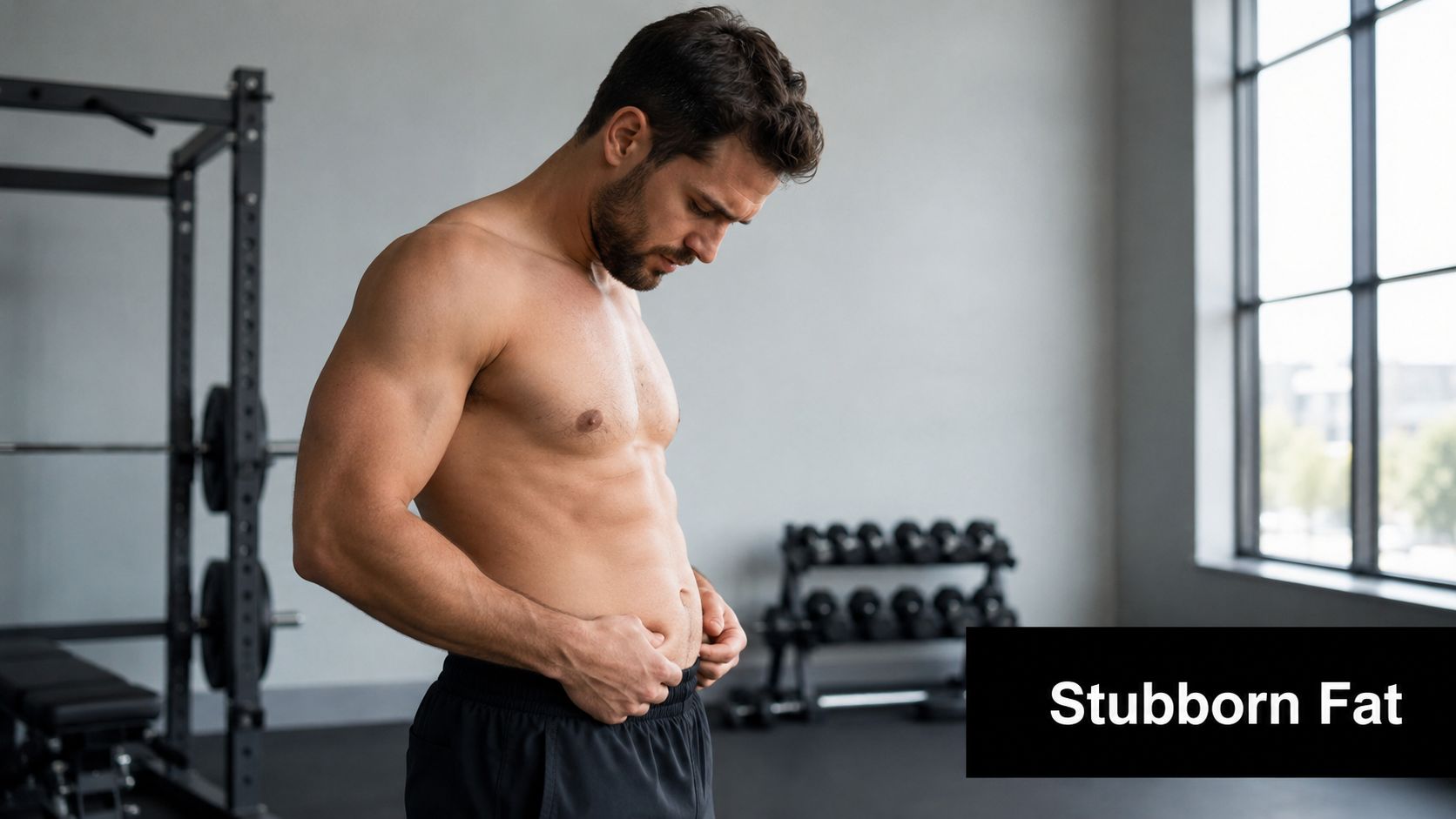
A man arrives for a scan after months of sensible eating, regular resistance training and an otherwise active routine. His lower-abdominal fold remains easy to pinch, while the rest of his body appears relatively lean. Similar concerns often occur around the flanks or beneath the chest.
A body scan gives that concern useful context before any treatment is chosen. It can show where the subcutaneous fat sits, whether both sides are similar, and whether skin laxity or chest tissue may affect the outcome. The aim is to define a realistic treatment pathway, not to sell a standard package.
Diet and exercise reduce overall stored energy, but they cannot determine which fat cells change first. Genetics, age, hormones, skin quality and the depth of the fat layer all influence the final outline. Men commonly seek help with the abdomen, flanks and chest, although chest fullness may involve glandular tissue rather than fat alone.
The chest needs a proper diagnosis
Gynaecomastia is an important medical and aesthetic reason men seek chest assessment. The British Journal of General Practice describes prevalence between 35% and 65% in males aged 50 to 69, helping explain why chest shaping is a relevant concern for older men. A fuller chest may reflect fat, glandular tissue, loose skin, or a combination of these factors.
That distinction changes the treatment plan. A fat-freezing applicator can target subcutaneous fat, but it will not remove firm glandular tissue. Examination should establish whether non-surgical reduction is suitable, or whether medical review and a different pathway are more appropriate.
Why interest is growing
Male aesthetic treatment remains a minority market, but men are discussing targeted concerns more openly. BAAPS recorded 790 male breast-reduction operations in 2011, more than double the figure recorded five years earlier. BAAPS later reported 1,799 cosmetic surgical procedures among men in 2024, representing 6.5% of all recorded procedures. Male liposuction declined by 7%, while male procedures overall fell by 1.5% from 2023, according to its 2024 cosmetic surgery trends report.
These figures do not mean every man needs treatment. They indicate greater willingness to seek advice for specific areas. The strongest candidates usually want a modest improvement in proportion and definition, with healthy habits continuing alongside treatment.
Practical rule: If the concern is a localised, soft fat pocket that you can pinch, non-surgical contouring may be worth assessing. If it feels firm, deep or associated with a breast lump, start with a clinical evaluation.
Understanding How Non-Surgical Fat Reduction Works
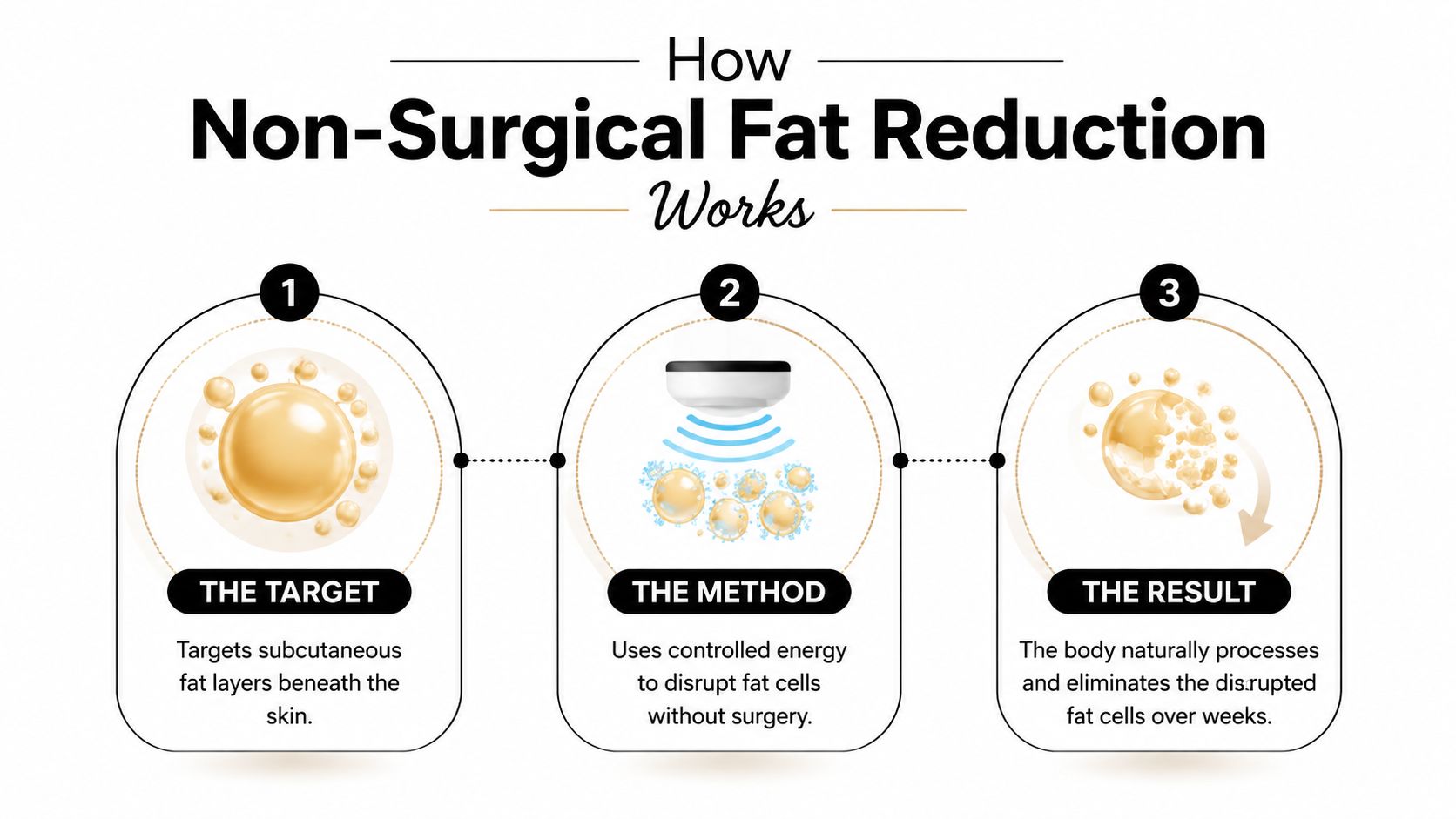
A man may arrive for a scan describing “belly fat”, yet the visible shape can reflect different tissues. Non-surgical fat reduction works beneath the skin, so the first task is identifying whether the fullness is subcutaneous fat, which an applicator can reach, or deeper visceral fat, which these treatments are not designed to treat. A body scan and hands-on assessment turn a broad concern into a more specific treatment decision.
Exercise strengthens the abdominal wall, but sit-ups do not direct the body to remove fat from the skin immediately above those muscles. Overall fat loss and localised contouring follow different processes. Contouring is intended to refine a selected area after weight and lifestyle are reasonably stable.
Controlled cooling
Cryolipolysis, commonly called fat freezing, uses controlled cooling to stress selected fat cells while protecting the surrounding skin. The body then processes the affected cells gradually, so the change develops over time rather than appearing immediately in the mirror.
A CoolSculpting UK report involving 55 patients treated on the lower abdomen reported up to a 27% reduction in fat cells at six months from baseline. The male body-sculpting guide from Mansculpt Clinic explains why this method is relevant to men. The abdomen is commonly treated, and the approach depends on pinchable subcutaneous fat rather than visceral fat. The reported figure is not a guaranteed personal result. Applicator fit, tissue thickness, treatment planning and individual biology all influence the outcome.
Other energy sources
Ultrasound cavitation uses sound energy to affect the fat layer. Radiofrequency delivers controlled heat that can support skin tightening and improve the appearance of texture. Body HIFU applies focused ultrasound energy at selected depths, while shockwave therapy uses mechanical pulses more often considered for tissue texture and cellulite-related concerns than for removing a substantial fat pocket.
The scan helps separate these goals. A man with a soft lower-abdominal bulge needs a different plan from a man whose outline is mainly affected by mild skin laxity, even if both ask for “fat reduction”. Treatment selection should follow the tissue identified, the area's shape and the degree of change the technology can reasonably provide.
The video below introduces the general treatment concept.
Comparing the Top Treatment Options for Men
The most useful comparison starts with the desired outcome. Fat freezing is primarily a fat-volume treatment, while radiofrequency and some HIFU protocols may be more appropriate when skin laxity affects the outline. Ultrasound cavitation can be considered for selected localised areas, and shockwave treatment is commonly used as part of a texture-focused plan.
No technology can compensate for a poor diagnosis. A treatment may be technically advanced yet unsuitable if the main concern is glandular chest tissue, visceral fat, significant excess skin or an expectation of surgical-level change.
| Treatment | Best for | How it works |
|---|---|---|
| Cryolipolysis, or fat freezing | Pinchable abdominal, flank or chest fat | Controlled cooling targets subcutaneous fat cells, which the body processes gradually |
| Ultrasound cavitation | Selected soft, localised fat areas | Ultrasound energy is applied to the treatment zone as part of a non-surgical fat-reduction protocol |
| Body HIFU | Localised contour refinement and selected skin-tightening needs | Focused ultrasound energy is delivered at planned tissue depths |
| Radiofrequency | Mild laxity, skin texture and tightening support | Controlled heat is applied to stimulate tissue remodelling and improve the feel or appearance of skin |
| Shockwave therapy | Cellulite-related texture and tissue quality | Mechanical acoustic pulses are used to influence the treated tissue and circulation locally |
Matching treatment to the anatomy
For a lower-abdominal fold that remains soft and stable, cryolipolysis may be a logical starting point. For a looser surface after weight change, a clinician may prioritise radiofrequency or combine approaches. For chest fullness, the examination must first separate fat from glandular enlargement.
Clinics may also combine modalities, but combination treatment should have a reason. A package that adds every available technology without identifying the target tissue is difficult to justify. The non-surgical fat removal treatment information from 3D Aesthetics Leamington Spa describes the types of body-contouring options that may be considered, but suitability still depends on an individual consultation.
What these treatments won't do
They won't create major weight loss, remove visceral fat or guarantee visible muscle definition. They also can't reliably correct substantial excess skin. Surgical liposuction remains a different category, involving incisions, anaesthesia or local anaesthetic techniques, suction and a recovery period. Choosing non-surgical treatment means accepting a gentler pathway with more gradual refinement and, often, more than one treatment session.
The Importance of a 3D Body Scan Consultation
A 3D body scan turns a vague concern into a measurable treatment question. Rather than relying only on a front-facing photograph or a quick visual estimate, the clinician can review the body's shape from multiple angles and identify asymmetry, localised fat deposits and changes in skin contour.
The consultation should follow a clear sequence:
- Discuss the concern. Explain whether the issue is the lower abdomen, flanks, chest, back or another area, and describe what you've already tried.
- Assess the tissue. The practitioner should determine whether the fullness is soft subcutaneous fat, firmer glandular tissue, loose skin or a combination.
- Complete the scan. A three-dimensional record provides a baseline for planning and later comparison.
- Set the endpoint. Agree whether the aim is a flatter chest, smoother waistline, improved proportion or better skin firmness.
- Build the protocol. The clinic can then choose the appropriate modality, applicator position, treatment area and review schedule.

Measurements improve the conversation
Men often judge progress by daily mirror checks, posture and changing light. Those variables can obscure gradual improvement. A structured body measurement tracking approach gives the clinic a more consistent way to review changes, while photographs and patient feedback add useful context.
Hormonal or body-composition factors may also deserve attention, particularly when chest changes, medication or broader physical changes are involved. For background on how a specialist may analyse body composition in the context of hormone treatment, the Pause Medical hormone therapy analysis offers useful context. It doesn't replace an in-person assessment, but it can help you understand why a body-contouring plan should consider more than a single fat measurement.
A good consultation should leave you with a realistic plan, known limitations, expected sensations, aftercare guidance and a clear reason for each recommended treatment.
Realistic Expectations and Treatment Results
Non-surgical contouring is gradual by design. The body needs time to respond to the treatment and process affected tissue, so the first appointment isn't a reveal moment. Early changes may be subtle, and the final assessment should take place after the planned biological response has had time to develop.
This is why multiple applicator cycles or sessions are often discussed. One area may need more than one treatment position, and two sides may require slightly different planning if the scan shows asymmetry. A responsible clinician will explain the pathway before treatment rather than implying that one visit can deliver a surgical result.
Shape refinement, not weight reduction
The most realistic objective is a small, localised improvement in contour. You might notice a smoother transition at the waist, less fullness beneath a shirt or a flatter appearance across part of the chest. You shouldn't expect the scales to change meaningfully or the treatment to replace nutrition, strength training and general activity.
The reported lower-abdominal result of up to 27% fat-cell reduction at six months from baseline comes from a specific CoolSculpting UK report involving 55 patients, not a promise for every treatment area or patient. It is best used to understand the delayed nature of the process, as explained in the Mansculpt Clinic guide to non-surgical body sculpting, rather than as a personal forecast.
Skin quality changes the outcome
If the skin has good elasticity, it may settle more neatly over a reduced fat layer. If laxity is the dominant issue, removing volume alone may leave the surface looking less smooth. A plain-language explanation of why loose skin occurs after loss can help you understand why skin behaviour should be discussed during consultation.
Downtime varies by technology and individual response. Non-surgical treatment generally avoids the incisions and surgical recovery associated with liposuction, but temporary tenderness, swelling, redness or altered sensation can still occur. For men whose chest concern may involve fatty tissue rather than glandular enlargement, gynecomastia treatment without surgery may be a relevant topic to discuss, provided a proper assessment confirms suitability.
Choosing the Right Clinic for Male Body Contouring
The clinic matters because treatment selection is a clinical judgement, not a device-shopping exercise. A provider should understand how male chests, abdomens and flanks differ in tissue thickness, skin behaviour and visual proportion. They should also be willing to say when a non-surgical option won't address the main problem.
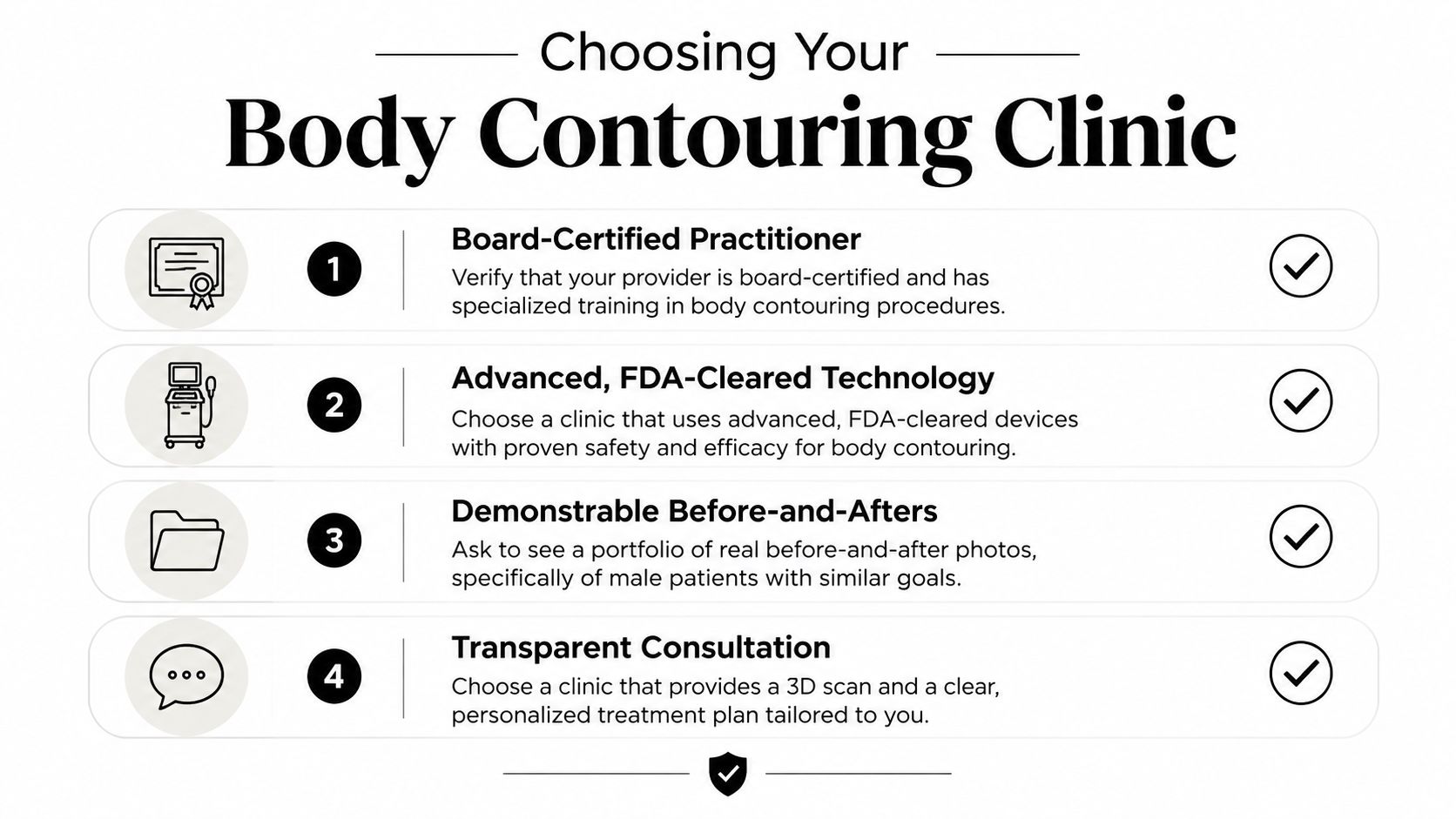
Look for a consultation that includes a proper examination, a three-dimensional baseline and a written explanation of the proposed pathway. The practitioner should identify the target tissue, explain likely limitations and describe what sensations and aftercare you may experience.
Questions worth asking
- Training and scope: Ask who performs the treatment, what training they have completed and how they assess male body-contouring cases.
- Technology and indication: Ask which device will be used, what it is intended to treat and why it suits your tissue rather than another option.
- Male results: Request to see relevant before-and-after examples, with consistent photography and realistic treatment histories.
- Measurement: Confirm how the clinic records the baseline and reviews progress, rather than relying only on subjective impressions.
- Safety and escalation: Ask what happens if the assessment identifies glandular chest tissue, a medical concern or a problem outside the clinic's scope.
A generic package can sound convenient, but it may encourage unnecessary treatment. A customized plan may involve fewer technologies, a staged approach or no treatment at all until a medical question has been resolved.
3D Aesthetics Leamington Spa is one example of a UK-registered clinic offering a complimentary consultation with a full 3D body scan, alongside options including cryolipolysis, ultrasound cavitation, 3D Powersculpt, shockwave, body HIFU and radiofrequency. The relevant point isn't the number of devices. It's whether the practitioner can connect the scan findings to a defensible treatment decision.
Frequently Asked Questions About Non-Surgical Contouring
Is male body contouring painful?
Most non-surgical treatments are designed to avoid incisions and general anaesthesia, but comfort varies by technology and treatment area. Cooling may feel intense at first, while ultrasound, radiofrequency and shockwave treatments create different sensations. The practitioner should explain the expected feeling before starting and adjust the protocol within safe limits.
How much downtime should I expect?
Non-surgical treatment usually involves less disruption than surgery, but “non-surgical” doesn't mean no after-effects. Temporary redness, tenderness, swelling or sensitivity can occur, and your clinician should tell you when to resume strenuous exercise or other activities. Plan around the response of the treated area rather than assuming you can immediately return to every routine.
Will I need more than one session?
Often, yes. Treatment may require multiple applicator positions or sessions because the aim is controlled contour refinement, not rapid, large-scale fat removal. The number and spacing should be based on the scan, the target area and how your body responds, not an automatic package.
How does it compare with liposuction?
Liposuction physically removes fat through surgery and can create a more substantial change, but it also involves a more involved procedure and recovery. Non-surgical contouring offers a less invasive alternative for suitable localised fat, with slower and generally more modest refinement. Neither option is a substitute for weight management, and neither treats every cause of chest or abdominal fullness.
Can it treat “man boobs”?
It may help when the fullness is primarily pinchable subcutaneous fat. It won't directly remove firm glandular tissue, so a chest examination is essential before booking a fat-reduction treatment. If you notice a hard lump, pain, nipple discharge or a sudden change, seek medical advice rather than treating it as a cosmetic issue.
How much does it cost?
Prices depend on the area, technology, number of applicator cycles and sessions, so a clinic shouldn't quote responsibly without assessing you. Ask for the complete pathway, including consultation, treatment, follow-up and any recommended aftercare, rather than comparing headline prices alone.
If you want a measured, male-specific assessment of stubborn abdominal or chest fat, visit 3D Aesthetics Leamington Spa to discuss a complimentary consultation and full 3D body scan. The clinic can use the scan to explore suitable options such as cryolipolysis, ultrasound cavitation, body HIFU, radiofrequency or shockwave treatment, with expectations agreed before you begin.
← Back to Home