

You've just had microneedling, looked in the mirror, and seen skin that's pink, warm, a bit tight, and not quite ready for your usual routine. That reaction catches a lot of people off guard, even when the treatment itself went smoothly. The good news is that this early stage is usually part of the normal healing response.
What matters now is what you do next. Good microneedling aftercare protects the skin while it's vulnerable, helps you avoid unnecessary irritation, and gives your treatment the best chance to deliver the smoother, brighter finish you came in for.
Table of Contents
- Your Guide to Flawless Microneedling Results
- Your First 48 Hours Post-Treatment
- The Microneedling Recovery Timeline Day by Day
- Building Your Aftercare Skincare Routine
- Activities and Products to Strictly Avoid
- Frequently Asked Questions About Microneedling
Your Guide to Flawless Microneedling Results
Most clients leave treatment feeling pleased, then get home and wonder whether the redness means they should touch nothing, put everything on, or search five different blogs for answers. That uncertainty is understandable. Microneedling creates a controlled healing response, so your skin will often look more reactive before it looks better.
If you've had a treatment such as 3D Dermaforce microneedling, the aftercare isn't an optional extra. It's part of the treatment itself. The device work starts the process, but the next few days are where you protect that progress.
What clients usually notice first
The first evening tends to bring the same comments. Skin feels flushed, mildly tender, tight when smiling, and drier than expected. Some people describe it as a light sunburn feeling. Others notice that their face looks shiny yet dehydrated at the same time.
That combination is why the best aftercare feels deliberately boring. Clean hands. Gentle products. No heat. No friction. No experiments.
Practical rule: If a product or activity could sting, overheat, clog, or rub the skin, it can wait.
What actually works
The clients who heal most comfortably usually do the simplest things well. They keep the skin calm, follow the timeline they've been given, and don't rush back into makeup, gym sessions, or active skincare because the redness has started to fade.
What doesn't work is treating post-microneedling skin as if it's “basically normal”. It isn't. For a short window, the barrier is more delicate and more reactive. Respect that window and recovery tends to be far smoother.
Your First 48 Hours Post-Treatment
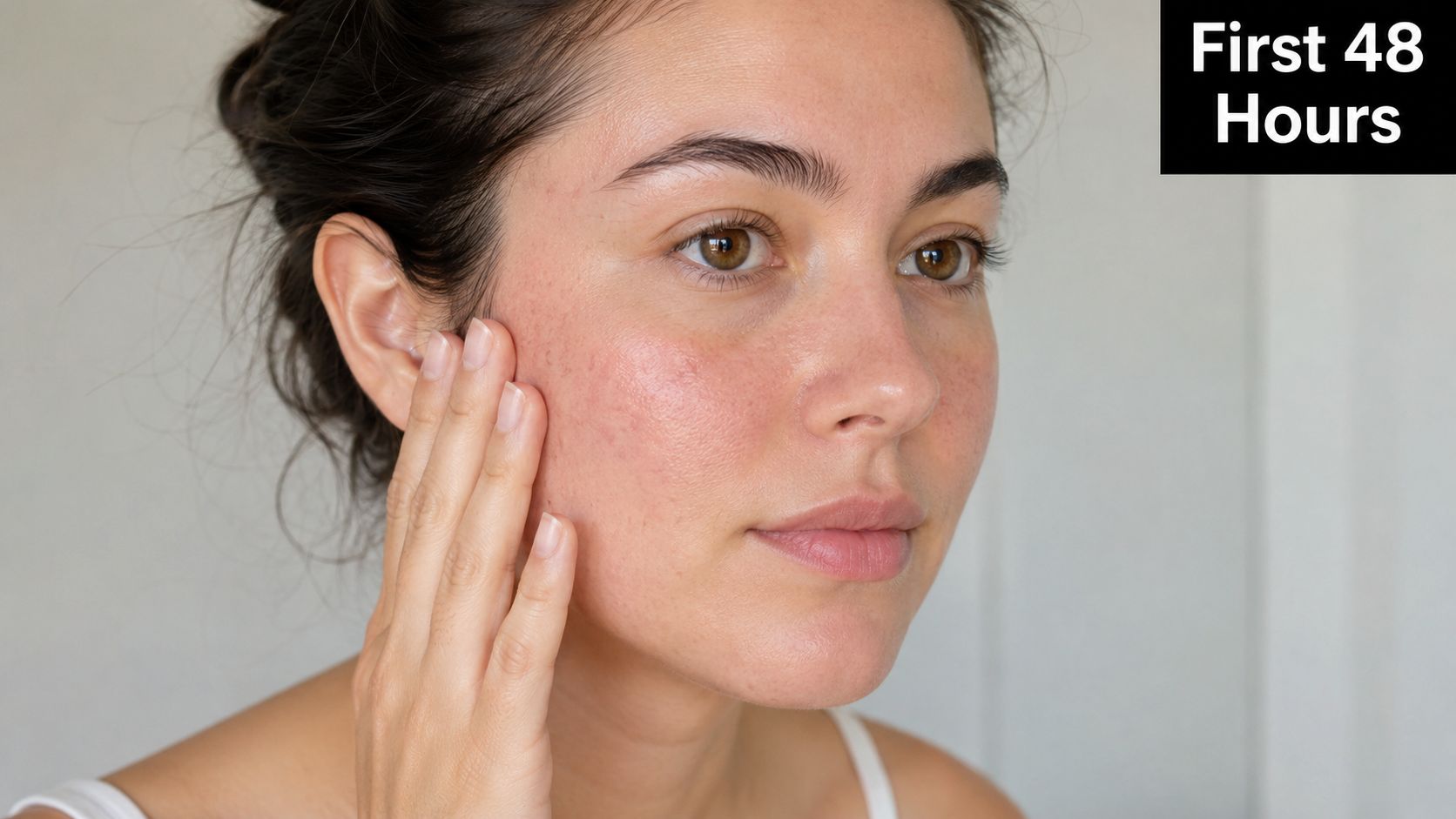
The first two days matter most. Think of them as a protected healing window where your job is to reduce heat, irritation, contamination, and unnecessary product contact.
What your skin needs straight away
In the UK, aftercare is best understood in line with NHS-style standards for minimally invasive skin treatments. Guidance referenced in these post-procedure instructions advises keeping the treated area clean and dry for the first 24 hours, avoiding makeup for 24 hours, and avoiding swimming, saunas, and strenuous exercise for at least 48 hours. That approach is about reducing infection risk and limiting irritation while the skin is freshly treated.
For the first night, less is better. Don't scrub. Don't use a flannel. Don't stand under a hot shower and let steam hit your face. If your therapist has given you a specific post-treatment product, use only that plus any aftercare instructions provided.
A useful way to think about it is this: your skin doesn't need “help” from a long routine. It needs calm conditions.
A simple first 48-hour checklist
Use this as your practical guide.
- First evening: Leave the skin alone as much as possible. Keep hands off your face unless they're freshly washed.
- Cleansing: If you've been advised to cleanse, use lukewarm water and a very gentle touch. Pat dry with a clean towel. No rubbing.
- Makeup: Skip it for the first 24 hours.
- Heat: Avoid hot showers, steam rooms, saunas, and anything that leaves your face hot or flushed.
- Exercise: Put off gym sessions, running, hot yoga, and heavy sweating for at least 48 hours.
- Sun exposure: Stay out of direct sun and be strict with sun protection when you are outdoors.
- Sleeping: Change your pillowcase and try to sleep on a clean surface without pressing your face into the pillow.
A similar principle applies across beauty treatments where fresh results need a quiet healing period. If you're someone who likes practical, behaviour-based recovery advice, these lash lift aftercare guidelines are a good example of how simple restrictions in the first day or two protect the final outcome.
After that first window, this walkthrough may help if you want a visual explanation of why those early steps matter.
Freshly treated skin usually settles faster when you resist the urge to keep checking, touching, or adding extra products.
The Microneedling Recovery Timeline Day by Day
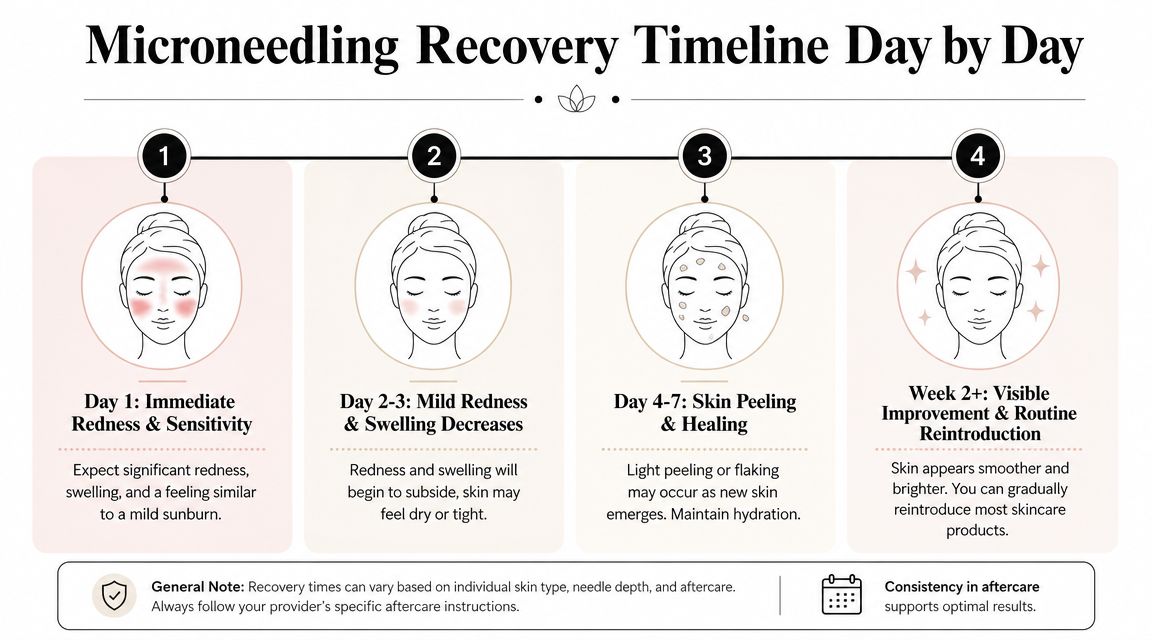
Healing is easier when you know what's normal. The need isn't for more products; it's for a clearer sense of what skin is likely to look and feel like over the next several days.
Day 1 to Day 3
Day 1 is the most obvious recovery day. Skin is commonly red, feels warm, and may feel tight when you wash your face or apply moisturiser. That doesn't automatically mean something is wrong. A review in PubMed Central describes microneedling as a collagen-induction procedure with healing responses that usually involve only mild side effects resolving within a few days, with longer collagen remodelling continuing for months and maintenance treatments often spaced every 6–12 months depending on the concern treated, as noted in this PubMed Central review of microneedling.
By Days 2 to 3, most clients notice that the heat has reduced. The skin can still feel dry, papery, or slightly rough. Some experience light flaking. The key point is not to confuse dryness with a need for exfoliation. Flaking skin should be left alone.
Here's a simple expectation guide:
| Phase | What you may notice | Best response |
|---|---|---|
| Day 1 | Redness, warmth, tightness | Keep the routine minimal and avoid heat |
| Day 2 | Less redness, lingering sensitivity | Continue gentle hydration and no actives |
| Day 3 | Dryness or light flaking | Moisturise, protect, and don't pick |
Day 4 to Week 2 and beyond
Days 4 to 7 are usually when the skin starts looking more familiar again. Redness tends to settle, the surface feels calmer, and the temptation to restart every usual product gets stronger. At this stage, clients can undo good progress. “Looks better” and “fully settled” are not always the same thing.
Many clinics advise that the skin barrier often needs about 5–7 days to settle before harsher products come back in. That's why the smartest approach is still a staged return, especially if you're prone to sensitivity.
From Week 2 onward, the visible recovery is mostly behind you, but the treatment isn't finished under the surface. Collagen remodelling continues beyond the obvious downtime, which is why ongoing UV protection still matters after the redness has gone.
If your skin feels hot, easily irritated, or just slower to settle, a calming add-on can help. Dermalux LED light therapy is one clinic option often used after skin treatments to support a calmer recovery environment.
Don't judge your result too early. The surface can settle in days, while the deeper repair response carries on well beyond that.
Building Your Aftercare Skincare Routine
This is the part where many people go wrong by doing too much too soon. A good post-treatment routine should feel restrained, not impressive.
What to use first
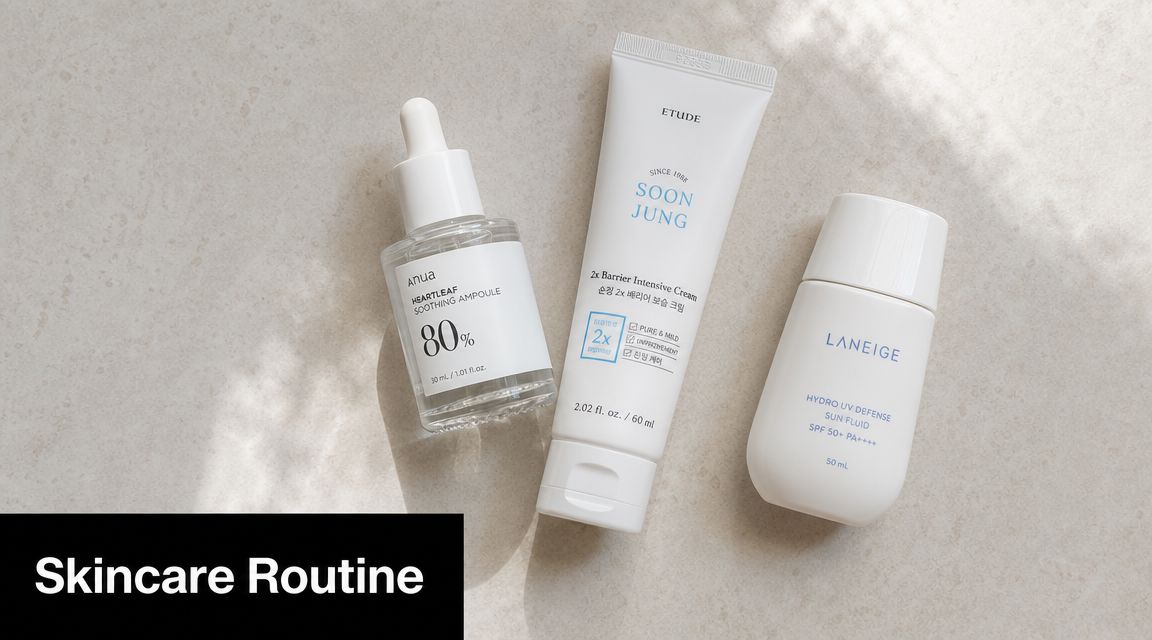
Keep the routine short and barrier-focused. The most helpful products are usually the least exciting ones.
- A gentle cleanser: Soap-free, fragrance-light or fragrance-free, and non-exfoliating.
- A hydrating serum: Hyaluronic acid is commonly well suited because it supports moisture without pushing the skin.
- A simple moisturiser: Look for barrier-supportive formulas rather than anti-ageing claims.
- A reliable sun product: Daily use matters, even in the UK.
If you're unsure what “gentle” really looks like in practice, XO Medical's sensitive skin guide gives a useful framework for choosing creams that support reactive skin rather than challenge it.
For clients working on roughness, post-acne marks, or enlarged pores, long-term texture changes come from consistency more than intensity. That's also why a staged routine matters when your wider goal is to improve skin texture.
What to pause and when to reintroduce it
The pause list matters just as much as the product list.
| Product type | Early recovery approach | Reintroduction note |
|---|---|---|
| Retinoids | Pause | Bring back slowly once skin is settled |
| AHAs and BHAs | Pause | Don't restart while any stinging or flaking remains |
| Vitamin C | Pause if it normally tingles | Reintroduce cautiously |
| Physical scrubs | Avoid | Usually one of the last things worth bringing back |
A common rule of thumb is to wait about 5–7 days before returning to active products, but that isn't the same for everyone. Guidance discussed in this microneedling aftercare guide for higher-risk pigmentation concerns notes that post-inflammatory hyperpigmentation is more common and can last longer in darker skin types. In practice, that means strict sun protection and a more conservative return to retinoids, acids, and anything that has irritated your skin before.
That's one area where generic internet advice often falls short. If your skin tends to mark after spots, friction, waxing, or previous treatments, give it a longer quiet period. Rushing actives back in just because the calendar says you can is rarely worth it.
Activities and Products to Strictly Avoid
The evening after microneedling is often when clients are tempted to test the limits. The skin looks red, feels warm, then starts to seem a bit calmer, and it is easy to assume the hard part is over. It usually is not. After 3D Dermaforce or any professional microneedling treatment, the skin barrier is still vulnerable even when the tenderness has eased.
The problems I see most often come from friction, heat, sweat, and overconfidence. Clients do not usually damage their result with one dramatic mistake. It is more often a series of small decisions: a gym session the next morning, makeup applied too soon, a hot shower, then time in the sun because the skin "looked fine."
For the first few days, avoid anything that adds heat, bacteria, irritation, or pressure to the treated area.
- Direct sun exposure: Freshly treated skin is more likely to become irritated and, in some clients, more likely to develop lingering pigmentation.
- Heavy exercise: Increased heat and sweating can aggravate redness and stinging.
- Swimming pools and hot tubs: Chlorine, prolonged soaking, and shared water are a poor combination after treatment.
- Saunas and steam rooms: These keep the skin hot and flushed when it needs a calm recovery environment.
- Touching, rubbing, or picking: Flaking is part of the process. Pulling at it can leave the skin angrier than if it had been left alone.
- Facial massage or pressure-based treatments: Leave the skin alone until it has settled properly.
A cool, clean, low-friction recovery gives the best chance of smooth healing.
Products can cause just as many setbacks as activities. Skin that normally tolerates active skincare without any trouble can react very differently after needling. That is why I tell clients to judge products by how the skin is behaving now, not by what it usually likes.
Hold off on:
- Retinoids and exfoliating acids
- Facial scrubs, cleansing brushes, and polishing powders
- Alcohol-heavy toners or astringents
- Vitamin C formulas that commonly sting
- Heavy or full-coverage makeup, especially with unclean brushes or sponges
- At-home peels, resurfacing pads, or strong treatment masks
- Hair removal creams, waxing, or shaving over irritated areas
Clinic add-ons need the same common-sense approach. Supportive treatments can help, but they do not cancel out poor aftercare. In clinic, we may pair microneedling with options such as Dermalux LED because it is commonly used to calm post-treatment skin, and HydrO2 can be useful later once the surface has settled. Timing matters. Stacking too much onto skin that is still hot and reactive is not advanced aftercare. It is just more stimulation.
If you are ever unsure, choose the gentler option and ask the clinic before trying something new. That cautious approach usually protects the result better than trying to speed recovery along.
Frequently Asked Questions About Microneedling
When should I contact the clinic
A normal recovery settles in stages. The skin may look pink, feel warm, or seem a little tight at first, then gradually calm. Contact the clinic if that pattern starts going the wrong way.
Get in touch if redness is becoming more intense instead of easing, discomfort is increasing rather than settling, or you notice unusual discharge, marked swelling, or anything that feels out of keeping with the aftercare advice you were given. I would always rather a client asks early than sits at home wondering whether something is normal.
Mild irritation can be expected. A reaction that is worsening needs checking.
When will I see the result and can anything help recovery
The visible recovery is only the first part. Redness and surface dryness usually improve before the underlying skin changes show up. Smoother texture, fresher tone, and gradual softening of concerns such as post-acne marks tend to develop over the following weeks as the skin continues its repair process.
How quickly you notice results depends on treatment depth, the area treated, your baseline skin condition, and how closely you follow aftercare. A lighter 3D Dermaforce session can settle faster than a deeper treatment plan, but deeper work may be chosen for a reason. There is always a trade-off between downtime and intensity.
Clients often ask whether anything can help recovery along. In clinic, Dermalux LED is one of the most useful supportive options because it is commonly used to calm post-treatment skin. HydrO2 can also be a good add-on, but timing matters. I usually advise booking it after the skin surface has settled, unless your therapist has specifically planned both treatments as part of the same course.
Do not feel pressured to add more treatment just because it is available. Good aftercare, patience, and the right timing usually do more for your result than trying to speed everything up.
If you'd like personalised microneedling aftercare advice based on your skin, treatment depth, and sensitivity level, book with 3D Aesthetics Leamington Spa. You'll get clear post-treatment guidance, realistic timelines, and support with complementary options such as Dermalux LED or HydrO2 when they're appropriate for your recovery.
← Back to Home