
You've booked a tattoo removal consultation because you want the ink gone, but you're worried about what might replace it. Perhaps you've searched for tattoo removal scar photographs and found everything from faint colour changes to raised, shiny skin. The uncertainty is understandable, especially when “scarring” is used to describe several very different outcomes.
A careful assessment separates true scar tissue from temporary healing changes, pigment alteration, and a faint residual tattoo shadow. The risk of permanent scarring is recognised in NHS patient information, but it's uncommon. Sandwell and West Birmingham NHS guidance puts the risk at 3 in 100 patients, or 3%, and specifically warns that disturbing blisters or scabs can increase it (NHS laser tattoo removal guidance). The more useful question, though, is not whether laser removal can scar. It's which factors increase your risk, what the healing period controls, and what skin may look like after the pigment has cleared.
Table of Contents
- What a Tattoo Removal Scar Really Means
- How Scarring Happens During and After Removal
- Who Is Most at Risk of a Tattoo Removal Scar
- Aftercare Choices That Lower the Risk
- Treatment Options If a Scar Does Develop
- Realistic Timelines and Outcomes to Expect
- When to Seek Professional Help in Leamington Spa
What a Tattoo Removal Scar Really Means
A client once came to clinic expecting the skin beneath an old tattoo to look exactly as it had before the ink was applied. After the pigment faded, she noticed a slightly lighter patch and a subtle difference in texture. She called it a scar, but examination showed no raised tissue, depression, or tethering. The main change was pigmentation, with a small amount of residual ink creating a soft “ghost” outline.
That distinction matters. A true tattoo removal scar means the deeper skin has healed with altered collagen. It may feel raised, firm, indented, shiny, or attached to the tissue beneath it. A colour change, by contrast, can look alarming while the surface remains smooth.
Three outcomes often confused
- True scarring: The skin's structure has changed. A hypertrophic scar stays raised within the treated area, while a keloid can extend beyond the original injury. An atrophic scar appears depressed or pitted.
- Pigment change: Hypopigmentation creates a lighter patch, while hyperpigmentation makes the treated skin darker. Neither necessarily changes the skin's texture.
- Residual ghosting: Faint pigment, uneven clearance, or the visual memory of the original design can remain after treatment. This isn't automatically scar tissue.
Laser systems are designed to target tattoo pigment beneath the surface rather than remove the entire outer layer of skin. UK clinical guidance describes laser removal as the safest and most effective current approach, while warning that unsuitable devices, poor training, or incorrect use can cause burns and scarring (UK clinical evidence summary).
A useful test: if the area is discoloured but feels level and supple, it may be a pigment response rather than a conventional scar.
The appearance can also change as the skin settles. Redness, swelling, crusting, or a temporary change in colour may gradually improve, whereas a firm raised line or persistent depression deserves assessment. That's why a clinic should record both colour and texture before each session, not judge progress from fading ink alone.
How Scarring Happens During and After Removal
Tattoo ink sits in the dermis, the deeper layer of skin beneath the epidermis. Pigment is held among fibroblasts and collagen, which is why a tattoo doesn't wash away as the surface renews. Laser energy breaks the ink into smaller particles, and the body's immune system clears those fragments over time.
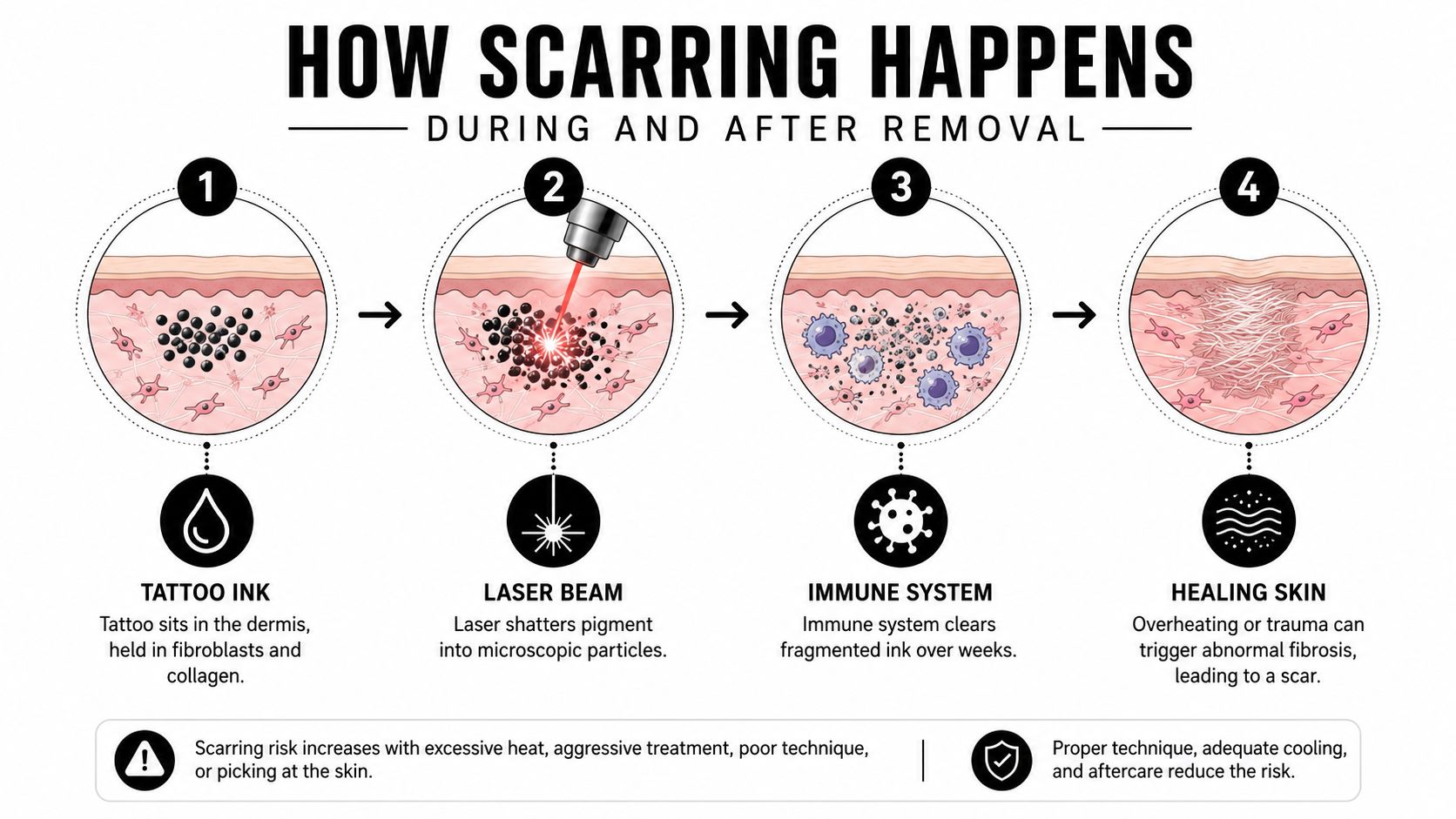
The laser's job is selective, but the treatment still creates a controlled injury response. Temporary whitening, swelling, blistering, or crusting can occur as the skin reacts. A scar develops when collagen architecture is disrupted and the healing response becomes excessive, prolonged, or repeatedly interrupted.
The three main pathways
Excessive treatment intensity is the first pathway. Energy settings that are too aggressive for the person's skin type, ink density, or treatment area can produce excessive heat and mechanical stress. NHS material warns that improper laser use can result in burns and scarring, while non-laser methods that breach the epidermis carry greater scarring concerns than quality-switched laser systems (NHS Scotland tattoo removal evidence summary).
Secondary injury is the second. A blister is part of the healing process, but popping it removes a natural protective layer. Picking a scab, scratching an itchy area, rubbing it against clothing, or allowing infection to develop can push inflammation deeper into the dermis. Sandwell and West Birmingham NHS guidance specifically states that picking, scratching, or aggravating scabs and blisters can raise the risk of scarring (NHS patient leaflet).
Unmasking existing texture is the third. A tattoo may have been applied too deeply, overworked, or healed badly. As dense colour disappears, an underlying raised or uneven area can become easier to see. The laser hasn't necessarily created that texture. It may have revealed what was already present.
For a clearer explanation of the controlled light-based process, read how picosecond lasers fade tattoos. A cautious practitioner adjusts treatment to the response of your skin rather than trying to remove the maximum amount of ink in one appointment.
The final appearance isn't decided on treatment day. Collagen continues to reorganise during the months that follow, so the clinician needs to assess the area repeatedly and pause or modify treatment if healing looks abnormal.
Who Is Most at Risk of a Tattoo Removal Scar
Risk depends on the interaction between your skin, the tattoo, the device, and what happens during healing. One factor rarely tells the whole story. A person with a history of keloid formation needs a different consultation from someone whose skin has always healed flat, even if the tattoo size is similar.
Personal factors
People who develop raised scars after surgery, piercings, or injuries may have a stronger fibrotic healing response. Tell the practitioner if a previous scar has spread beyond the original wound or remained thick and itchy. The available UK guidance doesn't provide granular scar-risk estimates for each keloid type, body site, or skin tone, so a responsible clinic should avoid pretending it can calculate your individual risk precisely.
Skin colour also affects the conversation, particularly around hypopigmentation and hyperpigmentation. Darker skin may show pigment changes more clearly or for longer, while sun-damaged skin can respond unpredictably. This doesn't mean someone should automatically avoid treatment. It means the clinician should assess skin tone, recent sun exposure, previous reactions, and suitable settings carefully.
Tattoo and treatment factors
A dense black professional tattoo may require a different strategy from a lightly applied amateur tattoo. Heavy pigment absorbs substantial laser energy, and large areas create a wider healing field. An older, faded tattoo can be deceptive because the remaining visible ink may not reveal underlying texture.
The method matters too. Laser treatment is generally preferred over acid-based products, scraping, or surgical removal because those alternatives directly damage or remove skin. Repeated treatments performed before the area has settled can also interfere with the remodelling process.
| Risk category | Specific factors | Why it raises risk |
|---|---|---|
| Skin-related | Previous keloid or hypertrophic scars, uneven healing, recent tanning | The skin may produce excess collagen or pigment after injury |
| Tattoo-related | Dense ink, large area, traumatic application, hidden texture | More energy or a larger healing field may be required |
| Procedural | Unsuitable settings, poor device selection, non-laser removal | Excessive heat or direct tissue damage can deepen injury |
| Aftercare-related | Picking, scratching, blister rupture, friction, sun exposure | Secondary inflammation can disrupt the wound bed |
The NHS leaflet from Sandwell and West Birmingham records permanent scarring at 3 in 100 patients and links increased risk to disturbed scabs and blisters (NHS tattoo removal information). That figure describes a general patient population, not your personal probability. Your consultation should therefore focus on identifying combinations of risk, rather than offering false reassurance from one number.
Aftercare Choices That Lower the Risk
The healing period is the part of the process you can control most directly. Your clinic's written instructions take priority because dressing choices can vary with the laser, the reaction, the treated site, and your medical history.
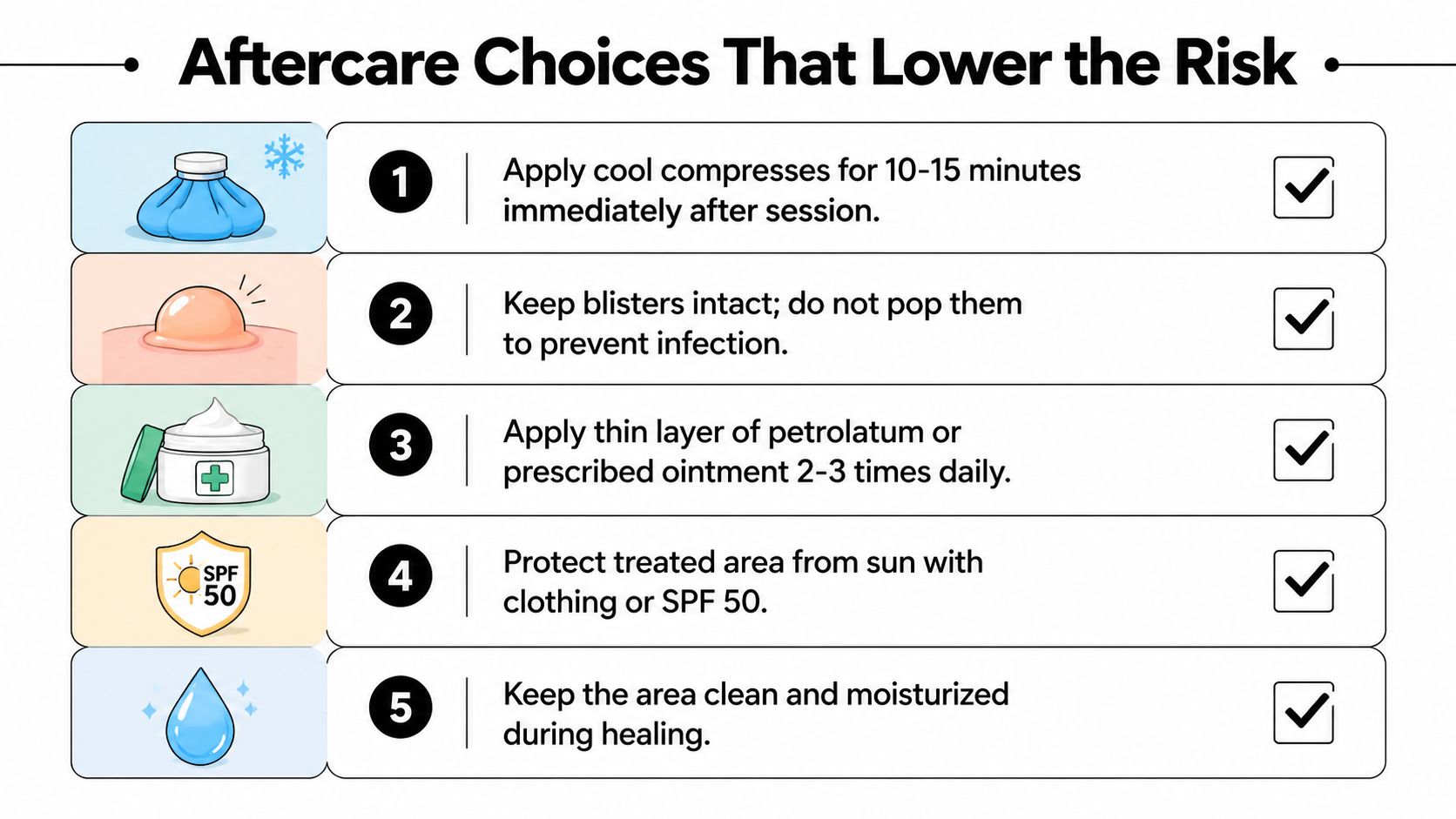
Immediately after treatment, a cool compress can ease heat and swelling. Don't place ice directly on the skin. If a blister forms, keep it intact unless a healthcare professional tells you otherwise. Clean the area gently with the product recommended by the clinic, pat it dry, and use only a thin layer of petrolatum or prescribed ointment if advised.
Protect the healing surface
Avoid picking, scratching, scrubbing, exfoliating, or trying to remove crusts. Loose, breathable clothing is preferable when the site is covered by fabric, and you should reduce rubbing from waistbands, straps, footwear, or tight sportswear. If you tend to sleep on the treated area, change position or protect it with clean, soft bedding.
Keep the area away from swimming pools, hot tubs, saunas, and activities that create heavy heat, sweat, or friction until the surface has healed and your practitioner has cleared you to return. Don't apply fragranced products, acids, retinoids, essential oils, or makeup to an open or blistered area unless the clinic specifically approves them.
Sun protection remains important after the surface closes. Cover the area with clothing where possible and follow the clinic's advice about sunscreen. UK patient guidance highlights the importance of aftercare because sun exposure and wound disruption can contribute to persistent colour change.
The simple rule: don't turn a controlled laser injury into an uncontrolled wound by rubbing, picking, or experimenting with products.
Evidence and practice aren't completely uniform on dry healing, ointments, and moisturisers. Some UK guidance favours minimal products, while other protocols recommend an ointment during the early stage. Silicone gel or sheets may help a fully closed raised scar, but they aren't a substitute for correct wound care. Vitamin E and cosmetic oils shouldn't be treated as proven scar prevention, particularly on broken skin. For general wound-care principles, you can also review this guide to microneedling aftercare, while remembering that tattoo removal has its own instructions.
Increasing pain, spreading redness, pus, fever, worsening swelling, or an open area that isn't healing should prompt contact with the treating clinic or a medical professional. Don't wait for the next scheduled laser appointment.
Treatment Options If a Scar Does Develop
Don't start scar treatment while the area is still blistered, open, infected, or actively scabbing. A clinician first needs to decide whether the problem is a true scar, pigment alteration, persistent inflammation, or residual ink. Treating the wrong outcome can prolong irritation.
Matching treatment to the scar
For a newer, closed, raised area, silicone gel or silicone sheets may soften and flatten the surface gradually. Daily sun protection can reduce contrast between the treated patch and surrounding skin. A gentle retinoid may sometimes be introduced for selected mature areas, but it shouldn't be applied to an unsettled wound and may be unsuitable for some skin types.
Microneedling uses fine needles to create controlled micro-injuries that encourage collagen remodelling. It tends to suit shallow textural irregularities more than thick, expanding keloids. Radiofrequency microneedling adds heat at a controlled depth, so it requires careful selection and conservative settings, especially where pigmentary complications are a concern.
Fractional CO₂ resurfacing is more intensive. It creates microscopic columns of thermal injury to stimulate remodelling and may help established uneven texture, but it involves more downtime and a greater need for disciplined aftercare. A practitioner may use it alone or combine it with microneedling after the tattoo removal course has settled. For an example of a scar-focused treatment approach, see Skinsation Aesthetics scar revision.
| Treatment | How it works | Best for | Typical sessions | Downtime |
|---|---|---|---|---|
| Silicone gel or sheets | Supports hydration and scar maturation | Newer, closed, raised scars | Individual plan | Minimal, if skin is intact |
| Microneedling | Stimulates controlled collagen remodelling | Shallow depressions and uneven texture | Set after assessment | Short recovery, varying by intensity |
| Radiofrequency microneedling | Combines needling with controlled heat | Selected textural scars | Individual plan | More noticeable than standard needling |
| Fractional CO₂ | Creates fractional thermal channels | Established texture change | Individual plan | Longer recovery and stricter aftercare |
| Steroid or 5-fluorouracil injections | Reduces activity in stubborn raised scar tissue | Resistant hypertrophic scars or keloids | Clinician-directed | Injection-site effects possible |
| Surgical revision | Removes or reshapes selected scar tissue | Localised scars unsuitable for other routes | Case-dependent | Surgical healing required |
Intralesional corticosteroid or 5-fluorouracil injections may be considered for persistent hypertrophic patches, usually by a clinician experienced in scar management. Surgical revision is reserved for carefully selected cases because it creates another wound and can trigger further abnormal scarring.
No treatment guarantees invisible skin. Improvement is usually gradual, and combination plans often make more sense than relying on one modality. The safest sequence is assessment, full healing, diagnosis of the scar type, and then a measured revision plan.
Realistic Timelines and Outcomes to Expect
Laser tattoo removal is a staged process, not a single erasing appointment. NHS guidance says fading or removal may require up to 12 sessions, typically spaced every eight weeks, with results varying according to tattoo size, ink type, and colour (NHS commissioning policy). Some tattoos need fewer sessions, while stubborn areas may need longer observation and additional treatment.
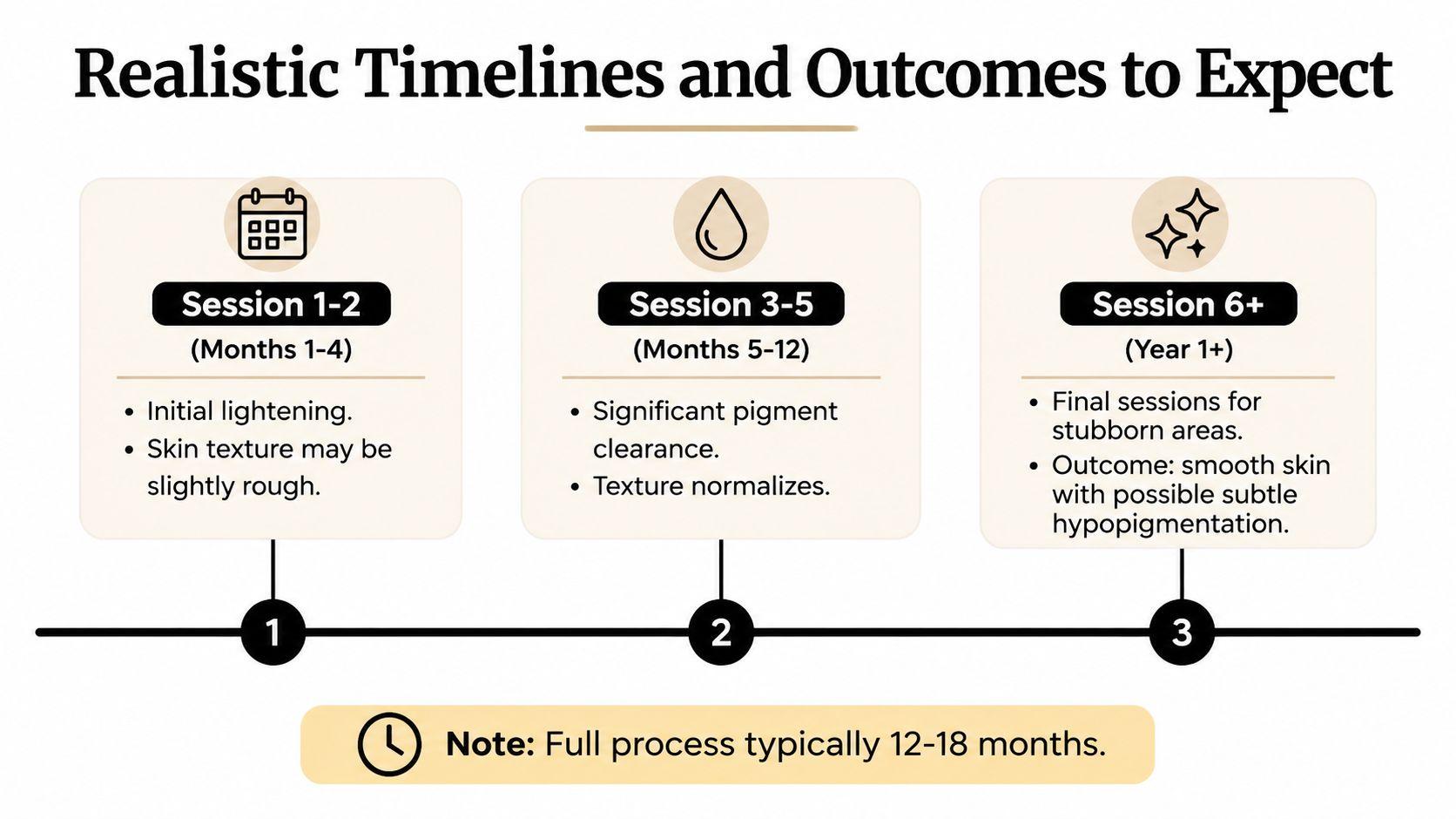
The first days after a session may bring swelling, redness, pinpoint changes, blistering, or crusting. Over the following weeks, the skin settles and the immune system continues clearing fragmented pigment. The treatment interval isn't wasted time. It allows the skin to recover and the body to process ink between sessions.
What “clearance” really means
A good result isn't only a pale tattoo. It also means the skin has a smooth surface, stable colour, and no ongoing tenderness or thickening. A faint ghost mark can reflect remaining pigment or optical contrast rather than scar tissue. Hypopigmentation may gradually improve, but some colour changes can persist.
The final texture can continue maturing for months after the last treatment. That's especially relevant if you're considering scar revision, because microneedling or fractional resurfacing should be planned around skin stability rather than impatience.
A slower course can protect the finish. Treating before the area has recovered may add inflammation without producing better clearance.
Patients often focus on how quickly the tattoo fades, but the skin's response deserves equal attention. Photographing the area under consistent lighting helps distinguish genuine textural change from ordinary differences in light, dryness, or colour. If the skin becomes increasingly raised, firm, painful, or irregular, pause treatment and request a review.
For readers comparing treatment intervals with other collagen-remodelling procedures, this information about how many microneedling sessions can provide useful general context, although tattoo removal scheduling must be individualised.
When to Seek Professional Help in Leamington Spa
Contact the treating clinic if healing looks different from the pattern you were given. A persistent raised line, thickened patch, new depression, or widening area of redness needs examination rather than online comparison. Pigment changes also deserve review, particularly if they're becoming darker, sharply lighter, or more noticeable instead of gradually settling.
Warning signs that shouldn't wait
- Possible infection: Increasing redness, swelling, pain, pus, or fever requires prompt medical advice.
- Delayed healing: Blistering, open sores, or crusting that doesn't resolve as expected should be assessed.
- Progressive texture change: A scar that becomes firmer, wider, raised, or tethered may need early intervention.
- Repeated severe reactions: Blistering or intense inflammation after every session may indicate that the protocol needs changing.
- Daily discomfort: Persistent itching, tightness, tenderness, or rubbing against clothing can justify a clinical review even if the scar appears small.
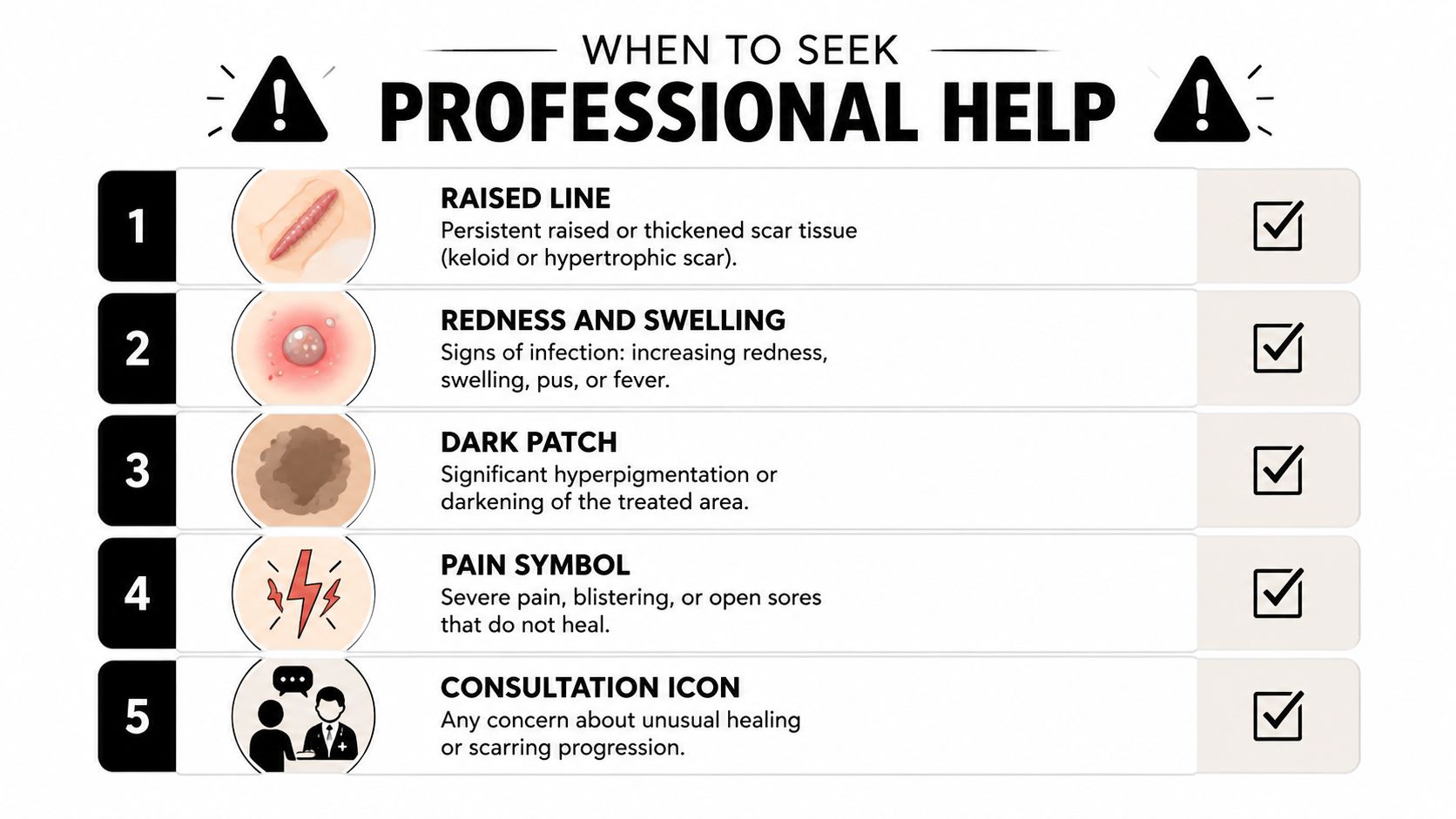
A proper consultation should include a close examination of the treated skin, a discussion of previous scars and skin reactions, and an assessment of your skin tone and tattoo characteristics. Scar mapping and photographs under consistent lighting can help track whether a change is flattening, spreading, fading, or becoming more obvious. Ask what outcome is realistic, how long revision may take, and whether further tattoo removal should pause.
In Leamington Spa, tattoo removal at 3D Aesthetics can be discussed alongside skin assessment and potential scar-improvement options such as microneedling or fractional CO₂ resurfacing. The important point isn't choosing a particular treatment before diagnosis. It's getting a plan that protects healing skin and addresses the actual problem.
Use this checklist before booking:
- Has the area remained raised, indented, painful, or unusually firm?
- Is redness spreading, or is the area producing fluid or pus?
- Has the colour change become more marked rather than settling?
- Have you experienced the same severe reaction after repeated sessions?
- Do you have a history of keloid or hypertrophic scars?
If you answer yes to any of these, arrange an in-person assessment and take photographs of the area over time. Early review can preserve more options than waiting for a mature scar to become increasingly fixed.
If you're concerned about a tattoo removal scar, book a consultation with 3D Aesthetics Leamington Spa to assess the skin, discuss a cautious laser plan, and consider suitable scar-improvement options where appropriate. Bring details of previous treatments, healing reactions, and any history of raised scarring so the team can tailor the next step safely.
← Back to Home