You may be exercising regularly, eating sensibly and still noticing a pocket around your abdomen, thighs or upper arms that refuses to follow the rest of your body. In Leamington Spa, that frustration is common among people who aren't looking for major weight loss. They want a smoother outline, firmer-looking skin or better definition in clothes, without committing to surgery or a lengthy recovery.
That's where a thoughtful approach to body contouring in Leamington Spa can help. The aim isn't to promise a new body overnight. It's to match the right technology to the actual concern, whether that means a small area of fat, loose skin after weight loss, cellulite or limited muscle definition.
This guide focuses on non-surgical options and the practical journey offered by 3D Aesthetics Leamington Spa, including its complimentary consultations and 3D body-scan approach. It won't replace a consultation or tell you which treatment you personally need. Instead, it translates the options into plain English, explains where expectations often go wrong and shows how a measured plan can make the decision less confusing.
Table of Contents
- Introduction to Body Contouring in Leamington Spa
- How Non Surgical Body Contouring Actually Works
- Body Contouring Options Available Near Leamington Spa
- Are You a Good Candidate for Body Contouring
- Your Consultation and 3D Body Scan Pathway
- Results Downtime and Safety What to Realistically Expect
- Choosing Your Next Step in Leamington Spa
Introduction to Body Contouring in Leamington Spa
You may finish a run, walk home through the Parade or leave the shops in Leamington Spa, yet still notice one area that diet and exercise have not changed. Another person may have lost weight successfully but be left with softer, less supported skin around the stomach, arms or thighs. Both may search for body contouring Leamington Spa, although their goals require different forms of assessment.
Royal Leamington Spa has a broad adult population with varied aesthetic aims. The town recorded 50,923 residents in the 2021 census, compared with 49,662 in 2011 and 45,459 in 2001, representing growth of about 11.9% over two decades according to the town's census summary. The same source records 33,927 residents aged 18 to 64 and 8,203 residents aged 65 and over.
Why the label can be misleading
“Body contouring” describes a group of treatments, not one procedure. Fat freezing and ultrasound cavitation are used for localised fat concerns. Radio frequency and body HIFU focus more on skin firmness, while shockwave treatments and muscle-toning technologies address other aspects of shape and surface appearance. Each option has a different job, so reducing a small fat pocket will not automatically tighten lax skin or create muscle definition.
The distinction becomes clearer after weight loss. Someone can have less overall volume but still want improved skin quality, smoother texture or stronger-looking definition. UK aesthetic coverage describes increasing interest in combining fat reduction, skin tightening and muscle definition as parts of one plan, particularly in the context of GLP-1 weight-loss medication as discussed in this UK aesthetic overview.
A useful starting point: identify whether your main concern is volume, skin quality, texture or definition. That answer often matters more than the treatment name.
At 3D Aesthetics Leamington Spa, a scan-led consultation can help separate these concerns before a session is recommended. The pathway should then be clear: discuss your goal, assess the area, select suitable technology, review likely sensations and track changes over time. This reframes contouring as body recomposition and skin-quality management, rather than fat removal alone.
How Non Surgical Body Contouring Actually Works
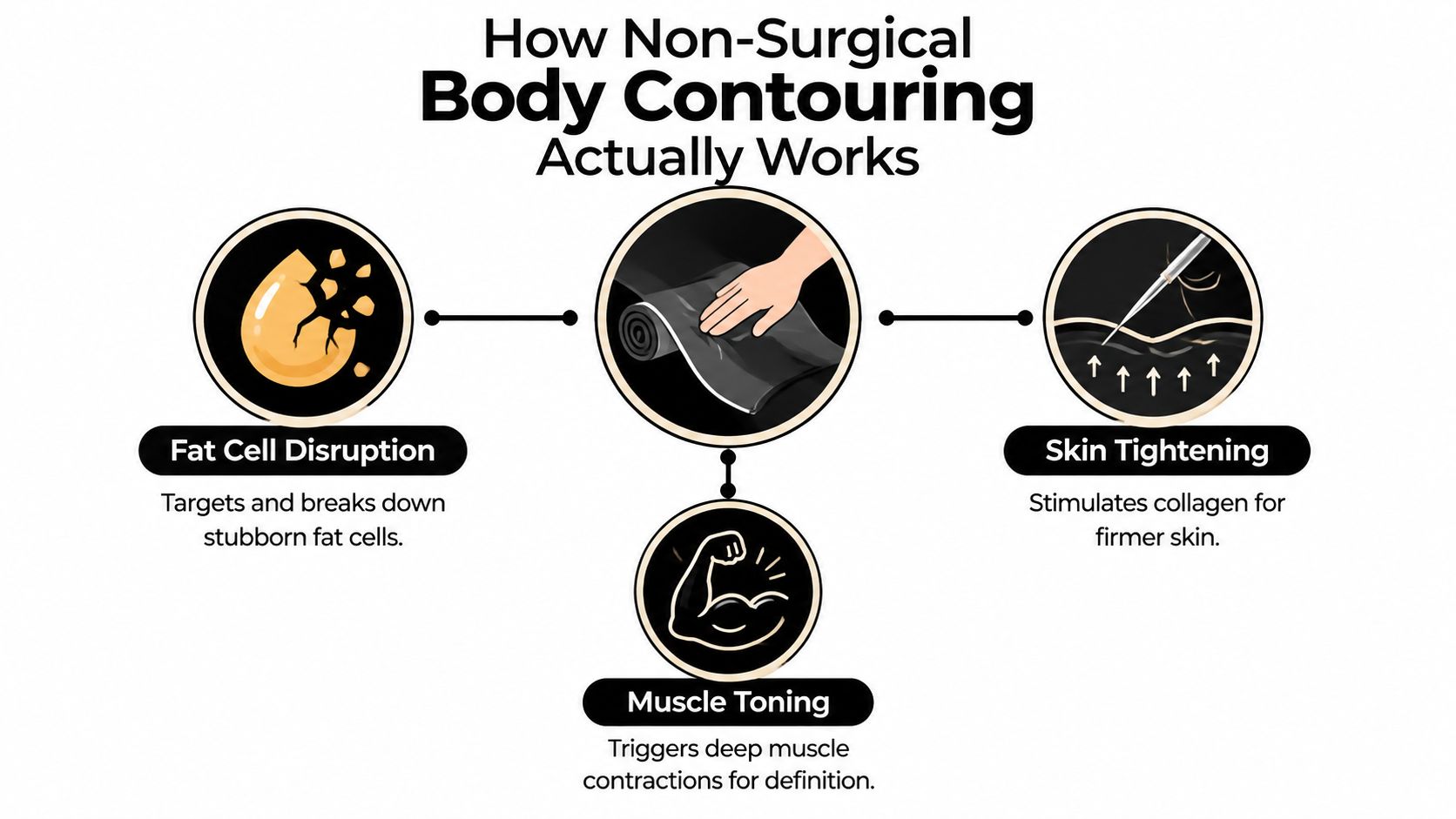
Think of your body outline like a piece of fabric. If one section has extra bulk, the fabric needs reshaping. If the fabric has lost elasticity, it needs support and tightening. If the surface is uneven, it needs smoothing. Non-surgical contouring follows a similar logic, using different forms of energy to work with different tissues.
First, identify the tissue being changed
Fat reduction focuses on localised fat cells. Cryolipolysis, commonly called fat freezing, uses controlled cooling to target fat in a selected area. Ultrasound cavitation uses sound energy as part of an inch-loss treatment approach. Neither should be confused with general weight management, because contouring is designed for specific areas rather than whole-body weight reduction.
Skin tightening addresses the fabric's elasticity. Radio frequency and body HIFU deliver energy into tissue to encourage a firmer, more supported appearance. These options may suit someone whose main concern is laxity rather than a large fat pocket.
Muscle definition takes a different route. Technologies such as 3D Powersculpt create deep muscle contractions, giving the treatment a muscle-toning role. The visual goal is definition, not a smaller measurement.
Why one treatment may not answer every concern
A person can have both a small fat pocket and looser skin. Removing volume alone may not create the appearance they want, just as tightening skin won't remove a deeper pocket of fat. That's why a practitioner may suggest a combination plan, with each treatment assigned a specific job.
Results also depend on the area, skin quality, starting point and how closely the plan matches the concern. A treatment can refine an outline, but it cannot replace a balanced approach to health, create the same change as surgery or promise major weight loss.
Use this simple mental model when comparing any option:
- Volume: Is the problem a localised fat pocket?
- Surface: Is loose or crepey skin the main issue?
- Texture: Is cellulite or uneven skin the priority?
- Definition: Would muscle toning support the result?
- Expectation: Are you seeking refinement rather than a weight-loss procedure?
If a clinic explains which tissue it's targeting and why, you're getting useful information. If every concern is described as “fat”, you may not be receiving a complete assessment.
Body Contouring Options Available Near Leamington Spa
A practical portfolio gives you several routes, but choice only helps when each option has a clear purpose. At 3D Aesthetics Leamington Spa, the body-contouring range includes fat freezing, ultrasound cavitation, 3D Powersculpt, shockwave, body HIFU and radio frequency. The clinic also provides facial and laser services, but those sit outside the body-shaping decision discussed here.
Fat freezing, or cryolipolysis, is generally considered for stubborn, localised fat in areas such as the abdomen, thighs, flanks, back or buttocks. The applicator feels cold and firm at first, followed by numbness as the area settles. It's more suitable for a defined pocket than for someone seeking broad weight reduction.
Ultrasound cavitation uses sound energy as part of an inch-loss and contouring programme. It may be considered where the goal is a subtle change in circumference or outline. The sensation is usually more like a treatment applied across the skin than a strenuous procedure, although the practitioner should explain what you'll feel in your chosen area.
3D Powersculpt is aimed at muscle engagement and definition. It can be relevant to someone who has already made progress with exercise but wants additional focus around areas such as the abdomen or buttocks. It shouldn't be described as a substitute for strength training.
Shockwave therapy is commonly selected for skin texture and cellulite concerns. Rather than focusing only on volume, it works within a broader plan for the appearance of uneven skin.
Body HIFU and radio frequency are more closely associated with tightening. HIFU directs energy deeper into selected tissue, while radio frequency uses controlled heat to support skin-quality goals. A trained therapist should decide whether one is appropriate based on skin laxity, treatment area and medical history.
| Treatment | How It Works | Best For | Common Target Areas |
|---|---|---|---|
| Fat freezing | Controlled cooling targets localised fat cells | Stubborn fat pockets | Abdomen, thighs, flanks, back and buttocks |
| Ultrasound cavitation | Sound energy supports an inch-loss approach | Circumference and contour refinement | Abdomen, waist, thighs and other selected areas |
| 3D Powersculpt | Deep contractions engage muscles | Muscle definition and toning | Abdomen and buttocks |
| Shockwave | Mechanical energy supports work on skin texture | Cellulite and uneven-looking skin | Thighs, buttocks and selected body areas |
| Body HIFU | Focused energy supports deeper tightening | Skin laxity and firmness | Abdomen, arms, thighs and other assessed areas |
| Radio frequency | Controlled heat supports collagen and skin quality | Mild laxity and cellulite appearance | Abdomen, arms, thighs and buttocks |
For a fuller description of the clinic's approach, see the non-surgical body sculpting treatment information. The most sensible choice depends on the concern being treated, not on which device sounds newest.
Are You a Good Candidate for Body Contouring
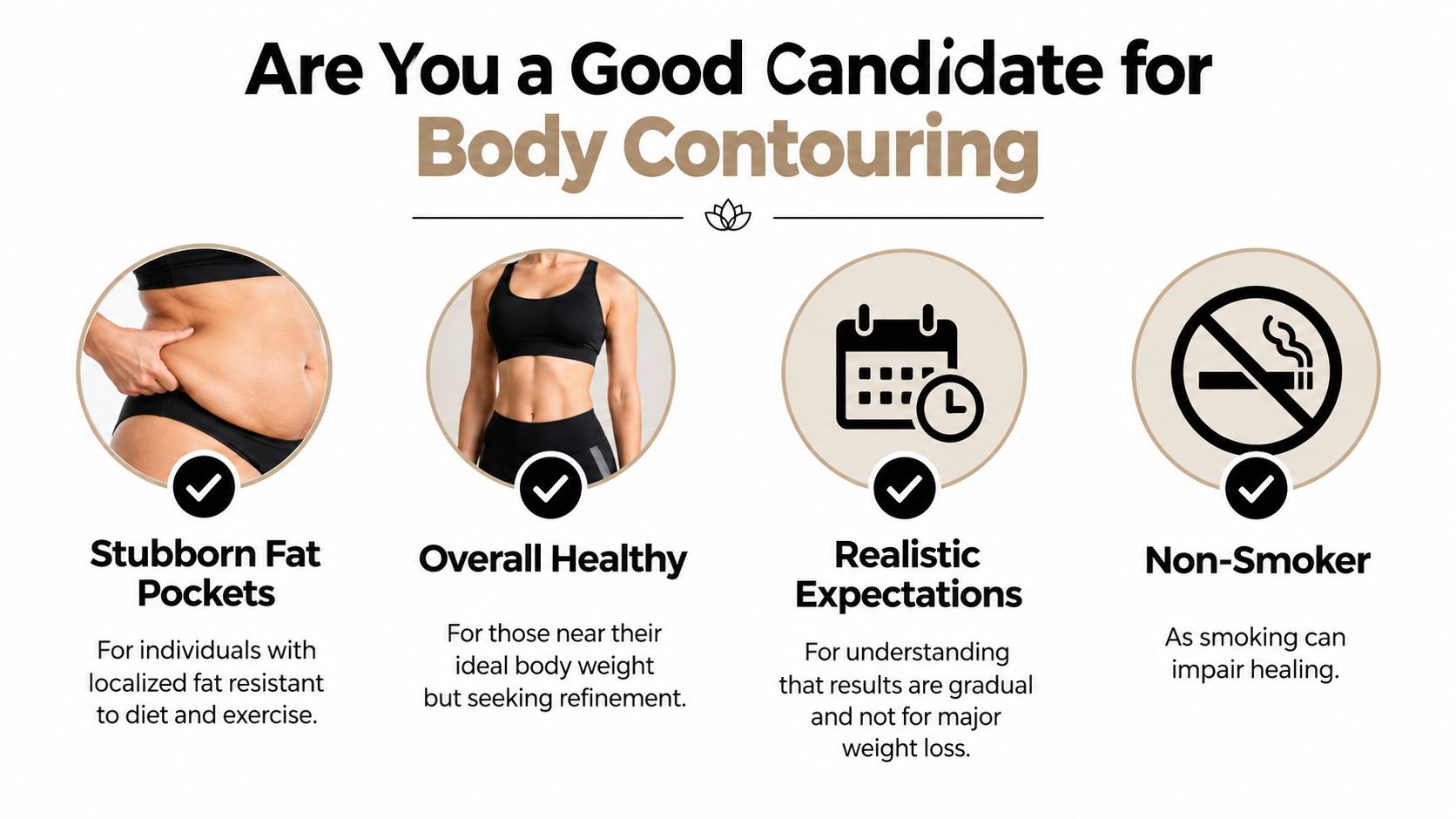
A small area can remain noticeable even when your weight and habits are stable. In that situation, body contouring may help refine shape and skin quality. It is designed for localised concerns, not significant overall weight loss, so the first question is whether the proposed treatment matches the change you want.
Match the plan to your starting point
A small, soft pocket around the abdomen or flanks may lead to a discussion about fat reduction. Loose-looking skin after weight loss points towards tightening and skin-quality management instead. Uneven texture may respond better to an approach focused on cellulite appearance or firmness than to further fat reduction.
Some people who have used GLP-1 medication have a mixed picture. Their body weight may have reduced while localised fat, softer skin or limited definition remains. Recomposition describes the more balanced goal of improving shape, firmness and definition, rather than removing more fat. This perspective is also relevant in post-weight-loss treatment planning, as noted earlier.
Men may seek abdominal shaping, flank reduction or help with contour changes associated with gynaecomastia, often called “man boobs”. During assessment, the practitioner should consider whether the area consists mainly of fat, loose skin or glandular tissue. Non-surgical treatment will not suit every presentation.
When timing matters
Results are often easier to assess when you are at, or close to, a stable target weight. Further weight change can alter the treated area, so waiting may be sensible if your body is changing substantially. You do not necessarily need to reach a particular weight before seeking advice. The plan needs to reflect the direction your body is likely to take.
If loose skin is the main concern, a tightening-led plan may be more appropriate than a fat-focused one. Very significant laxity may need a surgical opinion, since energy-based treatments can support firmness but do not remove large amounts of excess skin.
Signals that need careful assessment
A responsible consultation should cover your medical history, medication, skin condition, smoking status and goals. It should also clarify the amount of change you expect, how quickly you want it and how much gradual improvement you would accept.
Take extra care if:
- Your goal is major weight loss: body contouring does not replace medical weight management.
- Your weight is changing quickly: the final shape may be difficult to judge.
- Your expectations are immediate: changes are usually gradual and vary between people.
- You have unexplained swelling, pain or a skin condition: the cause needs assessment first.
- You're seeking surgery-level skin removal: a non-surgical plan may not provide the change you want.
A good candidate is not defined by a perfect body. They are someone whose concern matches what the treatment can realistically change, with a plan shaped around fat distribution, skin quality and overall recomposition.
Your Consultation and 3D Body Scan Pathway
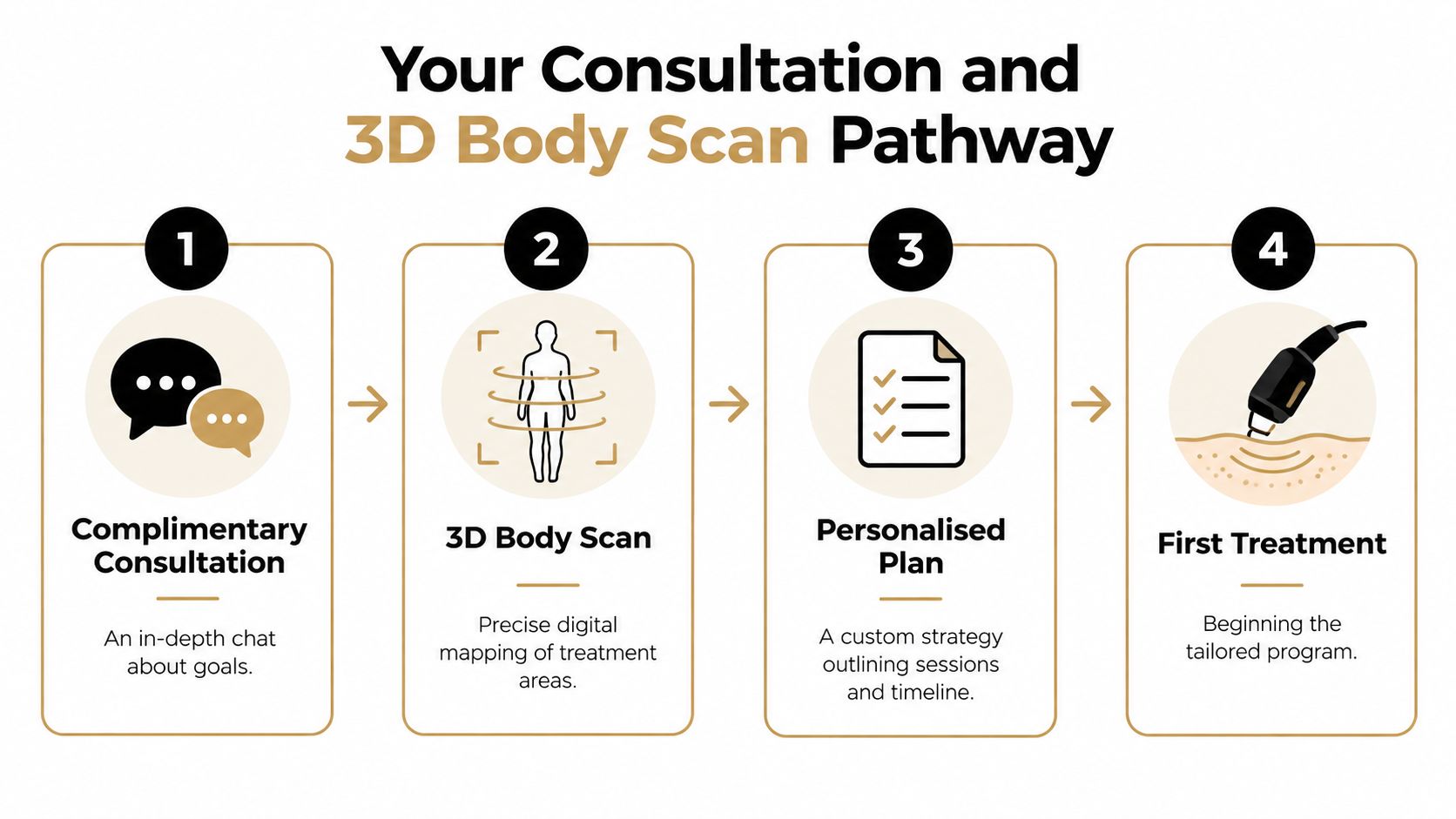
The consultation should feel like an assessment, not a device demonstration. At 3D Aesthetics Leamington Spa, the stated pathway begins with a complimentary, in-depth consultation and a full 3D body scan. That sequence gives the practitioner an opportunity to understand your goals before discussing a treatment plan.
Step one involves the conversation
You'll discuss what bothers you, how long it has been present and what kind of change would feel worthwhile. Tell the therapist whether your priority is reducing a pocket, improving firmness, smoothing cellulite or building definition. Bring a list of relevant medication and medical conditions, and be honest about previous treatments.
A useful consultation should also cover what you don't want. Some clients prefer minimal downtime, while others are prepared to follow a longer programme for a more gradual improvement. That information helps shape the recommendation.
Step two creates a baseline
A 3D scan maps the body digitally so the clinic can assess treatment areas and establish measurements before treatment. Photos and measurements can be useful because people often judge progress differently from day to day, depending on lighting, clothing, posture and bloating.
The clinic's body measurement tracking information explains the role of recording changes over time. A baseline won't guarantee a particular result, but it can make follow-up conversations more objective.
Step three turns findings into a plan
The practitioner should explain which tissue each proposed treatment targets, why it fits your concern and whether a combination is sensible. Ask how many sessions are likely to be considered, what sensations to expect, what aftercare involves and when progress will be reviewed.
You should also ask what happens if the result is limited. An honest answer may include changing the treatment focus, allowing more time for gradual changes or recommending another type of assessment.
Step four begins only after consent and checks
Before treatment, the therapist should confirm the area, review safety information and make sure you understand the process. During the session, comfort should be monitored rather than treated as an afterthought. Flexible opening times can make it easier to attend follow-ups, but convenience shouldn't replace careful assessment.
Results Downtime and Safety What to Realistically Expect
Non-surgical body contouring is a gradual process, closer to refining a silhouette than removing weight overnight. Early changes may appear before the final result settles, and the pace varies with the technology, treatment area, skin quality and whether the concern is localised fat, laxity or texture. For mixed-weight and post-weight-loss bodies, the plan may therefore involve recomposition and skin-quality management, not fat reduction alone.
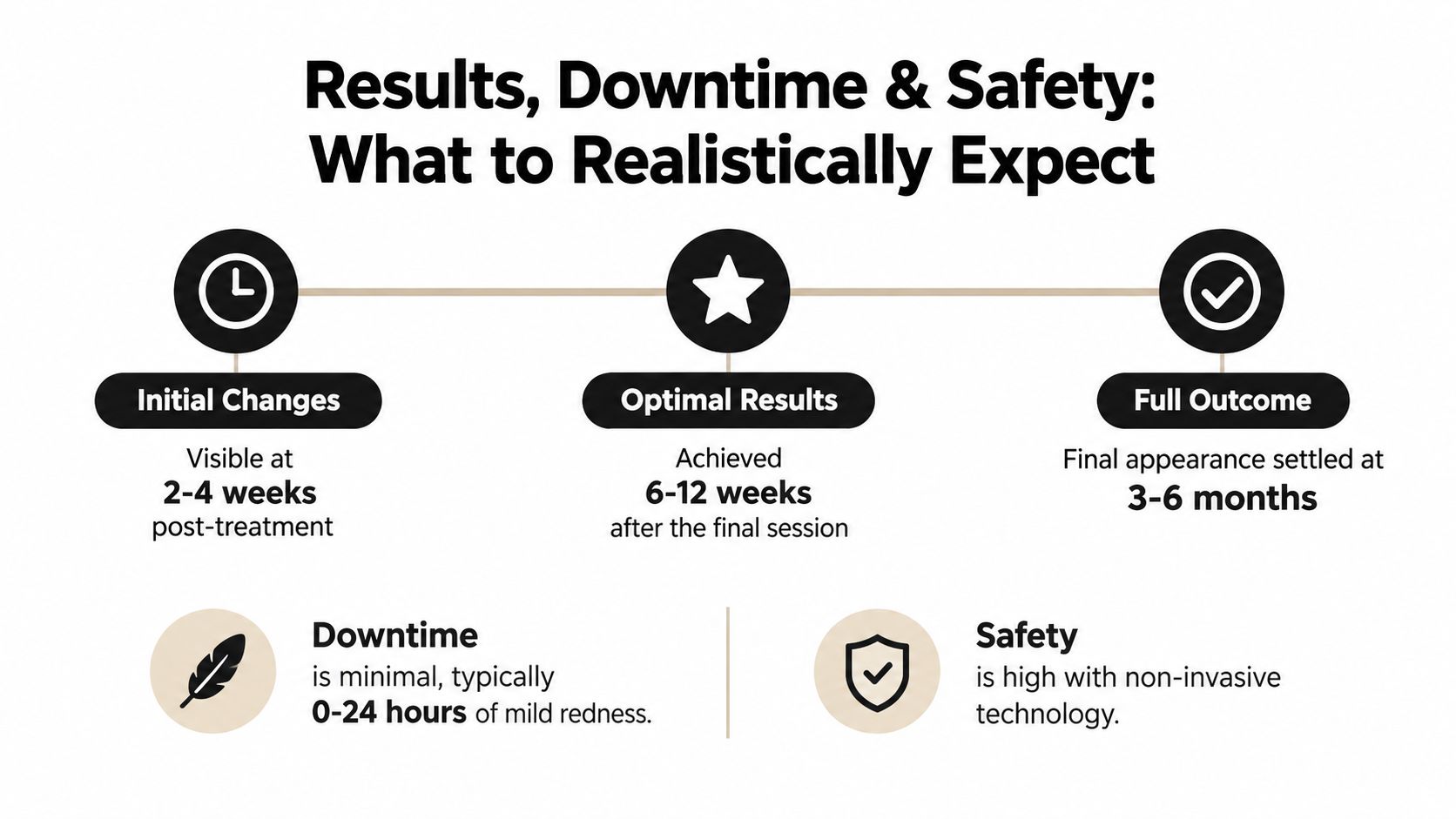
The clinic's treatment timeline gives initial changes at around two to four weeks, optimal results six to twelve weeks after the final session, and a full outcome settling over three to six months. These figures are guides, not promises. A local pathway from 3D assessment to follow-up helps place your progress in context rather than judging it from one mirror check.
What recovery may feel like
Many non-invasive treatments let you return to ordinary activities quickly. “Minimal downtime” still allows a temporary physical response, however. Cryolipolysis may cause numbness, redness, bruising or swelling, while radio frequency, HIFU and other energy-based treatments can produce warmth, sensitivity or short-lived redness.
Independent clinical coverage describes common cryolipolysis effects as generally mild and temporary, including erythema, numbness or altered sensation, bruising and oedema, while also noting less common complications such as persistent pain, dysesthesia, hyperpigmentation, motor neuropathy and paradoxical adipose hyperplasia in its review of cryolipolysis safety. These possibilities are uncommon, but they should be discussed before treatment. You can also see guidance on whether fat freezing is safe before your consultation.
A review summary covering 3,158 participants across 30 clinical trials reported that more than 80% reported favourable outcomes. Numbness, skin redness and pain were among the common short-term effects. This supports a balanced expectation: many people may be satisfied, but every procedure carries some risk.
Why results differ
Two people can have the same treatment and see different changes. Skin elasticity, the amount and distribution of localised fat, the area's anatomy, lifestyle and the number of sessions all affect the result. Someone with a small, stable pocket may see a clearer contour change than someone whose weight is still fluctuating.
Safety question to ask: “What side effects are normal for this treatment, and which symptoms mean I should contact you?”
Non-surgical care usually causes less disruption than surgery, while producing a different scale of change. If you want substantial skin removal or a major alteration in body shape, ask whether a surgical consultation fits better. If your aim is measured refinement with limited interruption to daily life, a non-surgical plan may be suitable.
Choosing Your Next Step in Leamington Spa
Start with the concern, not the machine. Before booking, write down the area you want to change and describe the desired result in ordinary language, such as “less fullness at the waist”, “firmer skin after weight loss” or “more abdominal definition”. That gives the practitioner something specific to assess.
Use these questions to make the consultation useful:
- What tissue is causing the concern? Ask whether the main issue is fat, laxity, cellulite, muscle definition or a combination.
- What can this treatment realistically change? Look for a clear explanation of likely improvement and limitations.
- How will progress be measured? A scan or consistent measurements can reduce guesswork.
- What will I feel afterwards? Ask about redness, numbness, swelling, bruising and activity restrictions.
- What happens if my goals change? Your plan should be adaptable if weight, skin quality or priorities shift.
- Who performs the treatment? Ask about therapist training, consultation procedures and safety checks.
A clinic with several technologies can offer flexibility, but that doesn't mean you need several treatments. A scan-led plan helps connect your body type and lifestyle with a sensible sequence, whether that means one focused treatment, a tightening-first approach or no treatment at all.
The wider UK market also shows why contouring deserves careful discussion. BAAPS reported 27,462 cosmetic surgical procedures in 2024, a 5% rise from 2023, with body-contouring operations including liposuction up 8%, abdominoplasty up 6%, thigh lifts up 24% and brachioplasty up 13%, as reported by the BBC's coverage of the audit. Those figures don't mean surgery is necessary. They show that people are actively seeking changes around the abdomen, thighs and arms, and need clear guidance about the difference between surgical and non-surgical routes.
You don't need to arrive with a treatment name. Arrive with an honest goal, a realistic timeframe and questions you want answered.
3D Aesthetics Leamington Spa offers complimentary consultations, full 3D body scans and non-surgical options including fat freezing, ultrasound cavitation, 3D Powersculpt, shockwave, body HIFU and radio frequency. Visit 3D Aesthetics Leamington Spa to arrange a consultation and receive measured, personalised advice for your body-contouring goals.
← Back to Home