
You've just had fat freezing, you're home in Leamington Spa, and now the treated area feels odd. Maybe it looks red, feels numb, or has that bruised, firm feeling that makes you wonder whether this is normal. In most cases, it is.
We're candid about cryolipolysis after care because vague reassurance isn't enough. You need to know what's routine, what needs a phone call, and when patience matters more than checking the mirror every few hours. At our clinic, we'd rather tell you clearly what to expect than pretend recovery is always effortless.
Table of Contents
- What Happens in the First 24 Hours After Fat Freezing
- Your Recovery Timeline Week by Week
- Activity, Clothing and Heat Exposure After Treatment
- Common Side Effects and What They Feel Like
- Real Client Scenarios From Our Clinic
- Habits and Routines That Support Your Results
- When to Contact Your Practitioner
What Happens in the First 24 Hours After Fat Freezing
Fat freezing usually allows you to get back to normal activities straight away, but the treated area often looks and feels strange for the first evening. UK aftercare guidance from the Aesthetic Complications Expert Group patient leaflet on cryolipolysis says patients can resume ordinary activities immediately, while also expecting short-term effects such as redness, pain or tenderness, bruising, swelling and altered sensation.
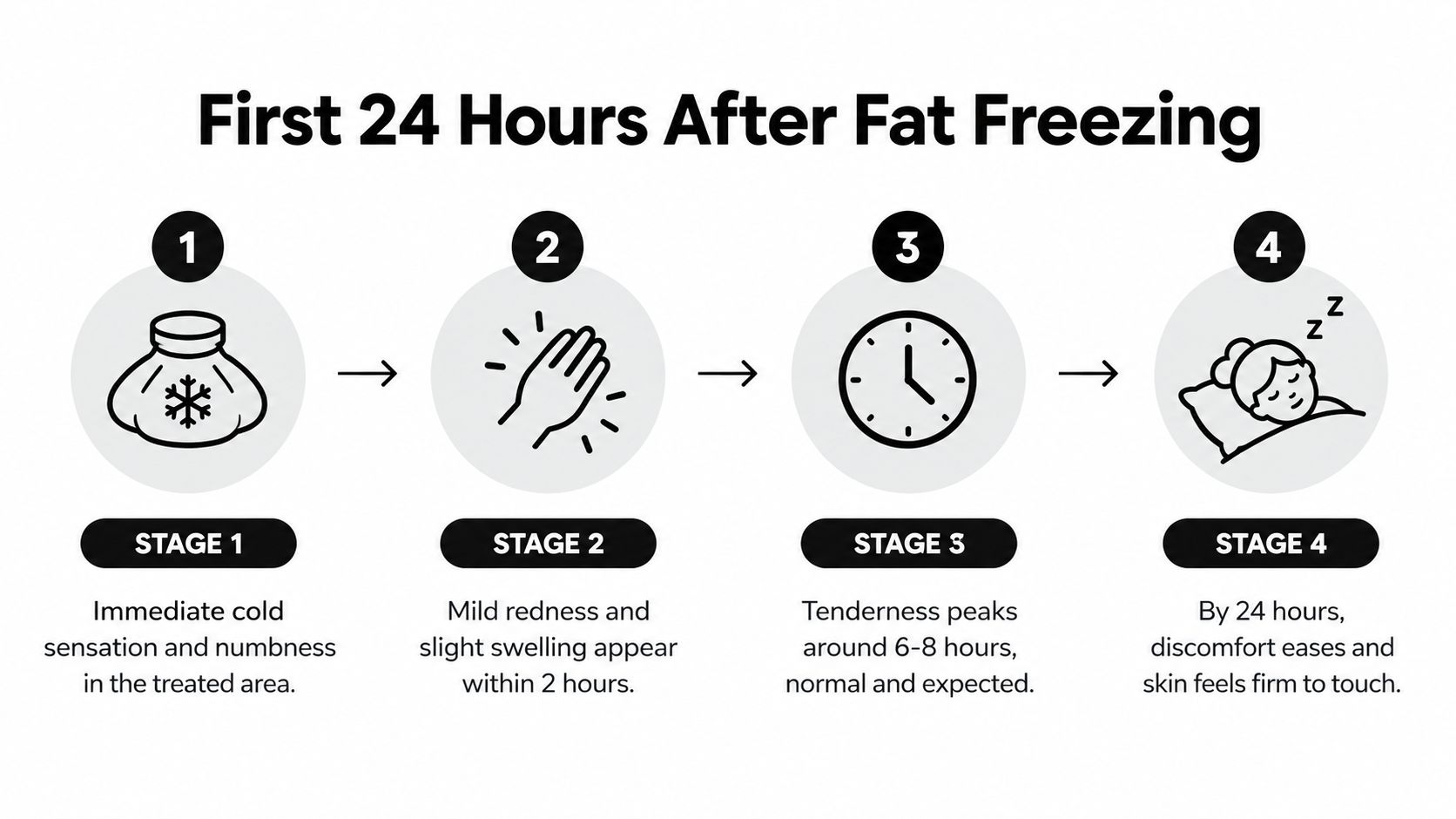
Straight after the applicator comes off, the area can look flushed and feel firm, cold and slightly numb. That's a common first reaction. Over the next few hours, that cold numb feeling can shift into tenderness, tingling, aching or brief spasms. ACE UK also notes that aching, spasms, tenderness and sensory changes can happen in the first few days, so don't panic if the area feels “not quite normal” by bedtime.
What that first evening often feels like
Most clients describe one of three things. A bruised feeling, a numb patch, or a mix of both. If we've treated the abdomen, waistline or thighs, tighter waistbands and rigid jeans usually feel irritating, so loose clothing makes more sense than anything compressive.
If you've read our guide on whether fat freezing hurts, you'll know discomfort varies from person to person. Results vary from person to person. Recovery does too.
Practical rule: If the area feels tender but is steady or easing, that's usually expected. If pain is stronger than you were told to expect, contact your practitioner.
Who should not book in the first place
Cryolipolysis isn't for everyone, and honest screening is part of safer aftercare. We turn people away if treatment doesn't make sense for them. If you have a history of cold-related reactions, a hernia in the treatment area, broken or irritated skin, reduced sensation in the area, or you're pregnant or breastfeeding, this isn't the right time to go ahead.
That matters because aftercare starts before treatment. A client who shouldn't have been treated is far more likely to have a difficult recovery than a properly screened one.
Your Recovery Timeline Week by Week
Your body may feel almost normal before the treated area looks different. Fat freezing recovery and fat freezing results follow separate timelines. Irritation often settles first, while visible contour change develops gradually. Daily mirror checks during the first few weeks tell you very little.
A clinical investigation summarised in a UK professional review of cryolipolysis evidence assessed participants at baseline, 30, 60 and 90 days, using standardised photographs, body measurements, skinfold readings and ultrasound. Use that timetable as a practical guide: day two is for checking comfort, not judging the final shape.
Week 1 to Week 2
During the first two weeks, redness, swelling, bruising, numbness and tenderness can remain noticeable. The UK review describes these effects as common and temporary. The area may feel bruised, slightly puffy, uneven to touch or unusually numb, even when recovery is progressing normally.
Use symptoms, not appearance, to decide whether you need advice.
- Days 1 to 7: Prioritise comfort, protect the skin and watch whether symptoms are easing, stable or worsening.
- Around 1 to 2 weeks: Review tenderness, numbness and any skin changes with your practitioner if they remain troublesome.
- If symptoms are worsening: Contact us rather than waiting for a routine appointment.
The ACE UK guidance supports a symptom review at around 1 to 2 weeks, followed by objective reassessment at roughly 8 to 12 weeks.
Weeks 3 to 6
By weeks three to six, many routine side effects have settled. Residual numbness or an altered sensation when clothing brushes the area can still occur. A slower-feeling recovery does not automatically indicate a problem, but persistent or worsening symptoms deserve professional review.
Visible contour change is a later measure. Our guide to fat freezing results explains that longer timeline in more detail. Judge progress over weeks, not from one morning to the next.
Discomfort can settle before contour change becomes visible. A quiet mirror at week three is not proof that treatment has failed.
Weeks 8 to 12
Weeks 8 to 12 are the right window for objective reassessment. Fresh photographs, measurements or a 3D comparison give a more reliable basis for judging the result and deciding whether further treatment is appropriate. Daily inspection cannot replace that review.
If a Warwickshire client feels impatient at week three, our advice is direct: allow the body time to respond, then assess the outcome properly at the planned review.
Activity, Clothing and Heat Exposure After Treatment
Fat freezing aftercare is mostly about not irritating tissue that's already irritated. That means being sensible with exercise, heat, sunlight, swimming and clothing in the first couple of days, then keeping your routine steady rather than extreme afterwards.
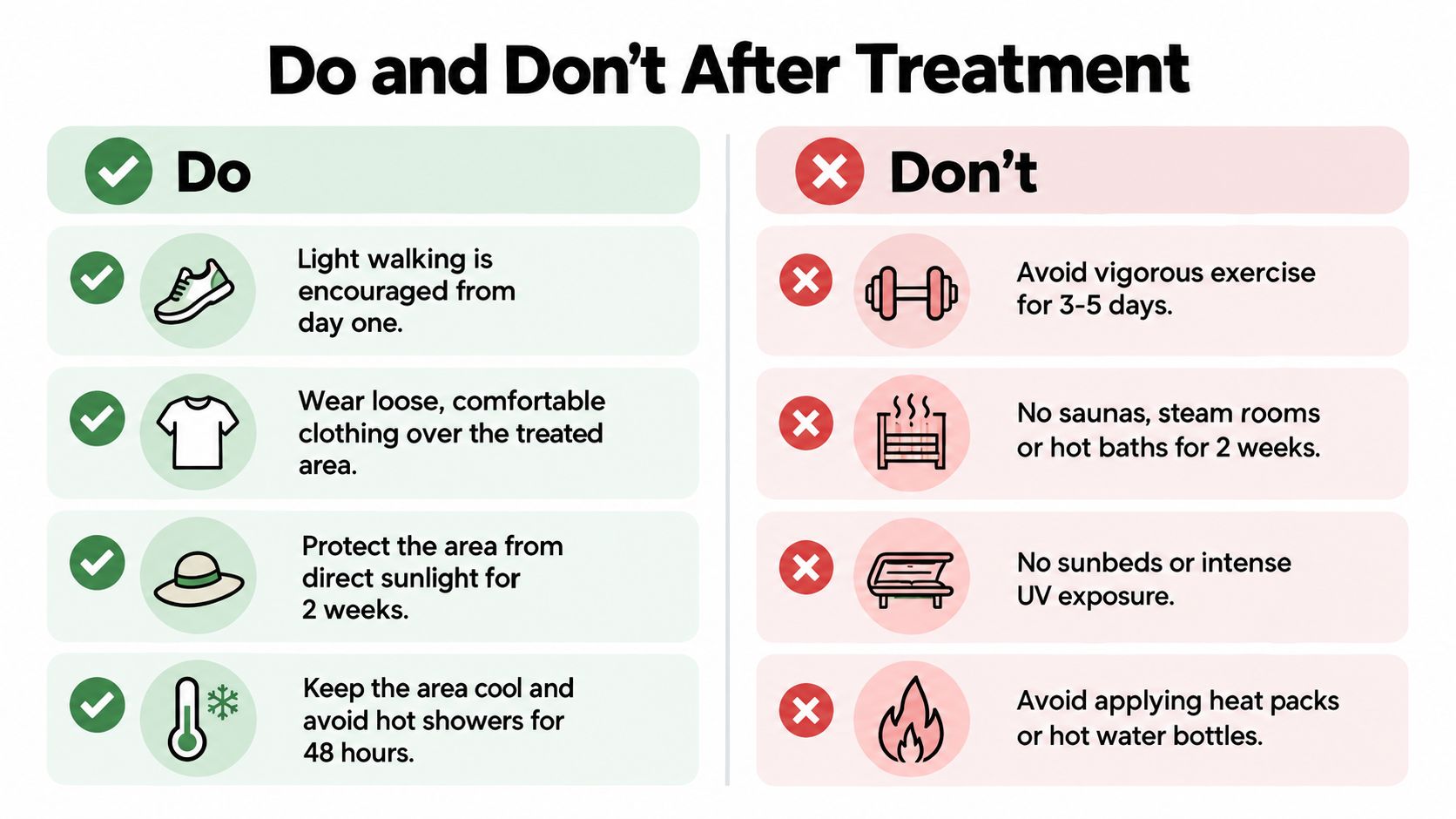
ACE UK's patient guidance says to avoid vigorous exercise, sun exposure, sunbeds and saunas for 48 hours, or longer if advised by your practitioner, and to avoid swimming pools until the initial redness and swelling have settled. The same guidance also recommends reducing alcohol for 8 to 12 weeks and maintaining lifestyle and dietary measures that support your treatment goals, as set out in the ACE UK patient leaflet PDF.
What we tell clients to do
- Wear loose clothing. Soft joggers, leggings with a gentle waistband, loose tops. Anything that digs into a sore area is a bad idea.
- Keep activity light at first. A walk is fine for the average person. Hard training when the area is sore usually just makes you more aware of it.
- Keep the area out of heat. Hot baths, saunas, sunbeds and direct sun on irritated skin are unnecessary risks.
- Wait for pools if the skin is still reactive. If redness and swelling are still obvious, leave swimming for later.
For a closer look at risk and recovery, read our page on fat freezing safety.
Here's a quick visual summary before the finer points.
What not to overthink
Hydration is sensible. A normal routine is sensible. What isn't sensible is believing every aftercare myth online. Heat-based tricks, punishing workouts and random self-treatments don't replace clinical review if something feels wrong.
A lot of people also ask about alcohol. Our view is simple. If you're trying to support body-contouring goals, reducing alcohol intake in that longer recovery period is sensible, and it aligns with the ACE UK advice above.
Common Side Effects and What They Feel Like
Cryolipolysis side effects are usually mild and temporary, but knowing their typical feel and duration makes recovery easier to judge. A 2023 review of US clinical data reported erythema at 30%, numbness at 19%, swelling at 15%, bruising at 11%, altered sensation or paraesthesia at 11%, and pain at 8%. These effects generally resolved within a few weeks. Numbness was the slower exception, occasionally lasting up to six weeks, according to the 2023 cryolipolysis adverse event review in the Journal of Cosmetic Dermatology.
What each side effect usually feels like
| Side effect | What clients often notice | Usual duration |
|---|---|---|
| Redness | Warm, flushed skin, usually most obvious early on | Temporary, generally settling within a few weeks |
| Numbness | A dull, “deadened” patch with reduced touch sensation | Usually temporary, occasionally up to six weeks |
| Swelling | Puffiness or fullness that can make the area feel larger | Generally settles within a few weeks |
| Bruising | Local soreness, especially with pressure or clothing | Usually fades within a few weeks |
| Altered sensation | Tingling, prickling, patchy sensitivity, or odd brushing | Generally temporary, resolving within a few weeks |
| Pain | Soreness or tenderness rather than severe pain | Usually temporary and short-lived |
When another treatment fits better
Suitability is decided at consultation, not in the recovery room. As covered earlier, screening addresses cold-related conditions, hernias, broken skin and reduced sensation, with the full criteria in the first 24 hours section. If your goal is better matched to another option, we will say so at the scan stage. That may include ultrasonic cavitation and its recovery profile.
The aim is localised contour improvement, not a dramatic change on the scales. Honest treatment selection protects your recovery and keeps expectations realistic.
Mild numbness, bruising and tenderness are common. Severe, escalating or clearly abnormal pain needs prompt advice from your practitioner.
Real Client Scenarios From Our Clinic
Fat freezing recovery doesn't look identical from one client to the next, and that's normal. Clients typically return to usual day-to-day activity quickly, but the details vary. Results vary from person to person.
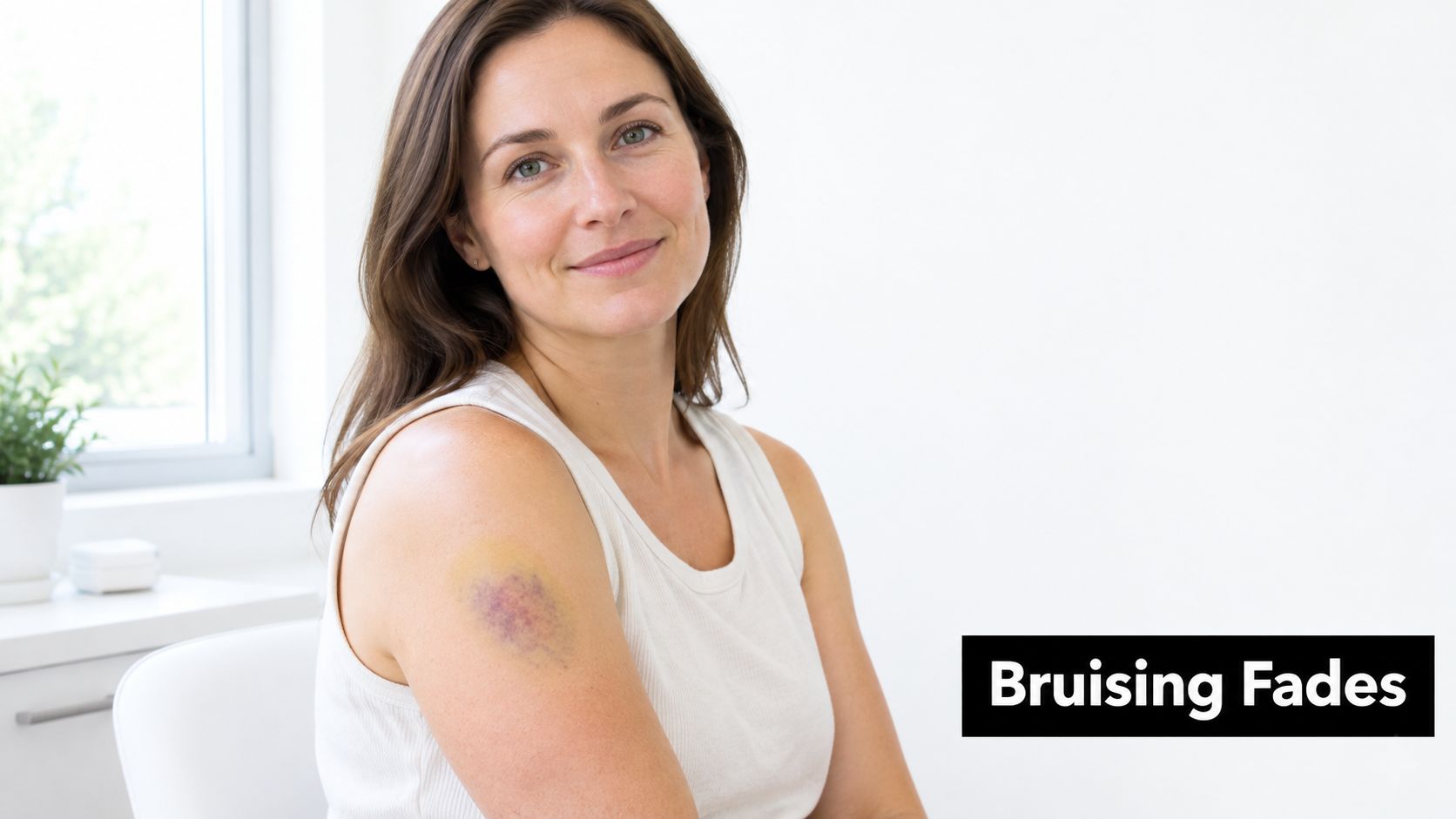
One client from Leamington Spa had a very typical course after an abdominal treatment. The area looked pink the same day, then developed mild bruising over the next few days. By around day ten, the bruising had faded enough that it was no longer bothering her, and her main comment at review was that the tenderness had gone sooner than the discolouration.
Three recoveries we see all the time
A second client from near Warwick felt almost no bruising at all, but the numbness hung around longer than she expected. That's often the side effect people find most unsettling because it feels unfamiliar, not because it's automatically dangerous. She didn't need drama or gimmicks. She needed reassurance, sensible monitoring and time.
A third client from Kenilworth felt convinced after two weeks that “nothing had changed”. That's another common one. Early recovery and visible contour change are not the same thing, so we used consistent photos and measurements at review rather than asking her to judge by memory.
- Scenario one. Bruising is the main issue, but it settles.
- Scenario two. Numbness lasts longer, yet still improves.
- Scenario three. Recovery is uneventful, but results need time.
That's why we keep saying the same thing. Most people get back to normal life quickly. What differs is how the area feels on the way there.
Habits and Routines That Support Your Results
Good aftercare habits support your result, but they don't replace the treatment itself. That distinction matters. A steady routine helps you recover sensibly and judge progress more clearly, but no amount of fads or overdoing it will force faster contour change.
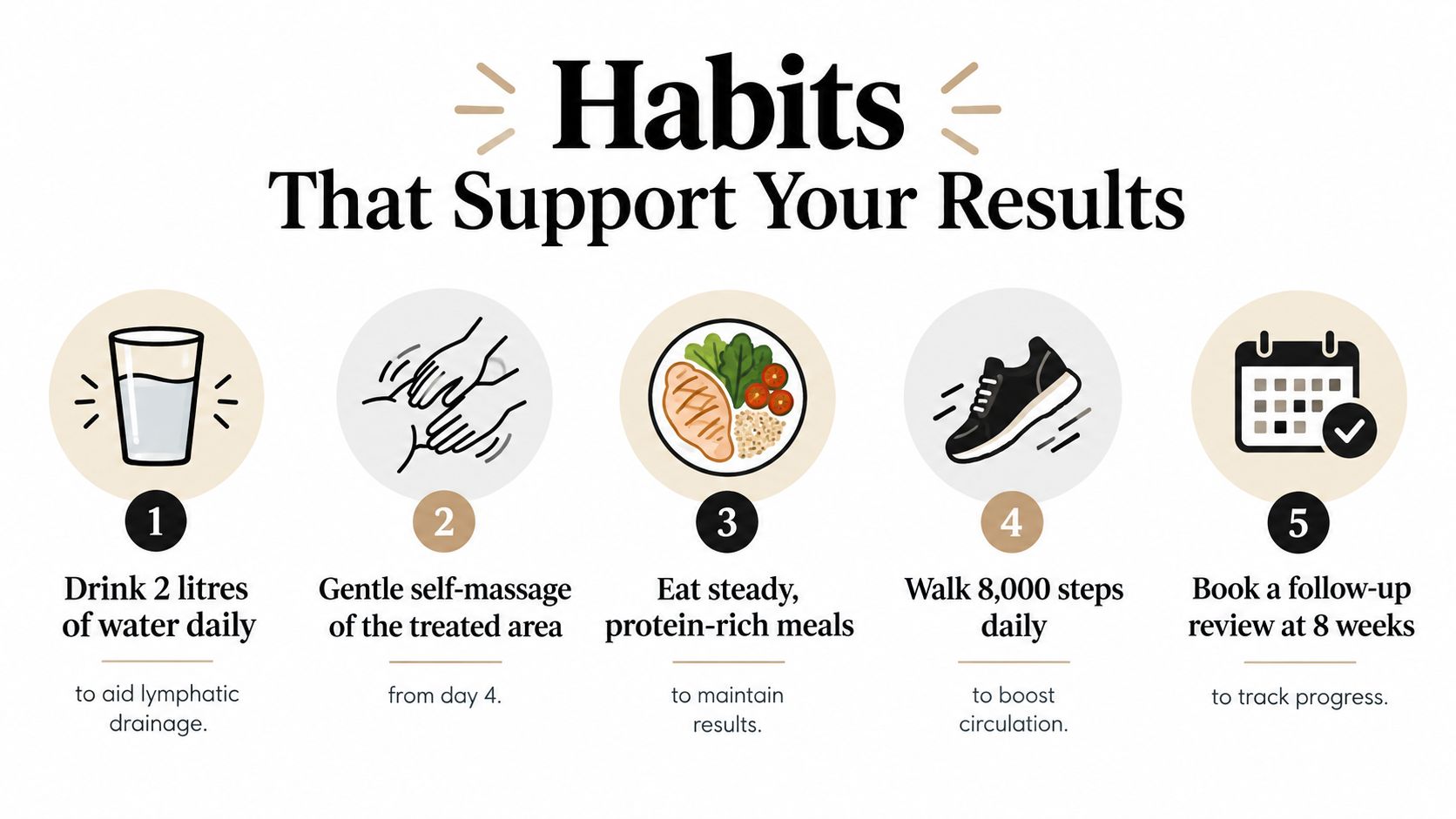
The short list we actually recommend
- Drink regularly. Hydration is basic, but useful. Don't turn it into a detox ritual.
- Move normally. Gentle walking is often more realistic than trying to “sweat out” a treatment.
- Eat steadily. Crash dieting usually makes people feel worse and judge their body shape less clearly.
- Massage only when tenderness has settled and only if advised. Comfort comes first.
- Keep weight stable. Cryolipolysis targets localised fat, not your overall relationship with the scales.
The most useful habit, in our view, is objective tracking. At 3D Aesthetics Leamington Spa, that can include a 3D body scan alongside photographs and measurements, so you're not relying on memory alone. If you're still comparing options, our prices page gives a practical starting point.
One extra resource worth saving
If you struggle more with consistency than motivation, the Pretty Progress habit guide is a sensible read. It's not a cryolipolysis guide, but it does a good job of bringing healthy routines back to basics instead of turning them into a punishing plan.
When to Contact Your Practitioner
A little redness does not tell you whether recovery is progressing well. Check the direction of your symptoms instead. Settling discomfort is generally reassuring. Pain, swelling, redness or skin changes that worsen, spread or become unusual need practitioner advice.
Follow-up matters because some concerns do not appear during the first day. Reported adverse events have included 3.12% of patients, or 87 people out of 2,785, across 16,504 treatment cycles, while paradoxical adipose hyperplasia affected 0.072% of patients, about 1 in 1,393, in real-world follow-up lasting at least three months. These figures, reported in the earlier clinical evidence review, are a reason to monitor your recovery rather than assume every problem will resolve without review.
Call us straight away if you notice any of these
- Pain that is worsening, not easing
- Blistering, frost-like skin change, or marked colour change
- Spreading redness, increasing warmth, or anything that looks infection-like
- Swelling that does not begin to settle
- A firm, enlarging, clearly defined bulge appearing weeks or months later
A new, firm enlargement weeks or months after treatment deserves particular attention. The Cleveland Clinic overview of cryolipolysis and paradoxical adipose hyperplasia explains that PAH occurs in fewer than 1% of patients and causes unexpected enlargement rather than reduction of treated fat. It is different from ordinary early swelling.
What happens if a problem needs escalating
We record your symptoms, photographs, measurements and treatment details, then arrange practitioner review. If a concern appears device-related, we document it fully and report through the MHRA Yellow Card framework where appropriate. Ask any clinic you consider whether it follows the same reporting route.
Clients in Leamington Spa, Warwick and Kenilworth should receive clear follow-up, not reassurance without examination. If you are unsure whether fat freezing suits you, book an assessment first. We will explain whether you are a suitable candidate or should wait.
If you want straightforward advice about fat freezing and recovery, visit 3D Aesthetics Leamington Spa. The clinic offers non-surgical body contouring, including cryolipolysis, with consultation-led assessments at 11 Guys Place East, Leamington Spa, Warwickshire CV32 4RG. You can call 01926 315764 to discuss your concerns.
← Back to Home