
You catch your profile in a shop window, a photo, or a video call and notice fullness beneath your chin that doesn't seem to match how you feel about the rest of your face. You want to know how to get rid of a double chin without surgery, but the useful first question isn't which treatment to book. It's what's creating the fullness.
At our clinic, we don't recommend a device before assessing whether the main factor is localised fat, loose skin, posture or anatomy. Two people can have a similar-looking profile and need different plans. Results vary from person to person, and a careful assessment is a better starting point than a promise of a particular outcome.
Table of Contents
- Why a Double Chin Is Not One Single Problem
- What Is Actually Causing the Fullness
- Lifestyle, Exercise and Posture Habits That Make a Real Difference
- Clinic-Based Non-Surgical Options We Offer in Leamington Spa
- What UK Regulation Says About Non-Surgical Chin Treatments
- What a Consultation With Us Actually Looks Like
- Realistic Timelines, Results and Your Next Step
Why a Double Chin Is Not One Single Problem
A double chin is a familiar phrase, but it doesn't describe one single cause. Fullness under the chin can reflect a local fat pad, loose skin, the shape of the jaw and neck, posture, or a mix of these factors. Ageing can also change skin firmness. Naming the dominant cause first helps us avoid recommending fat reduction when tightening or a different approach deserves more attention.
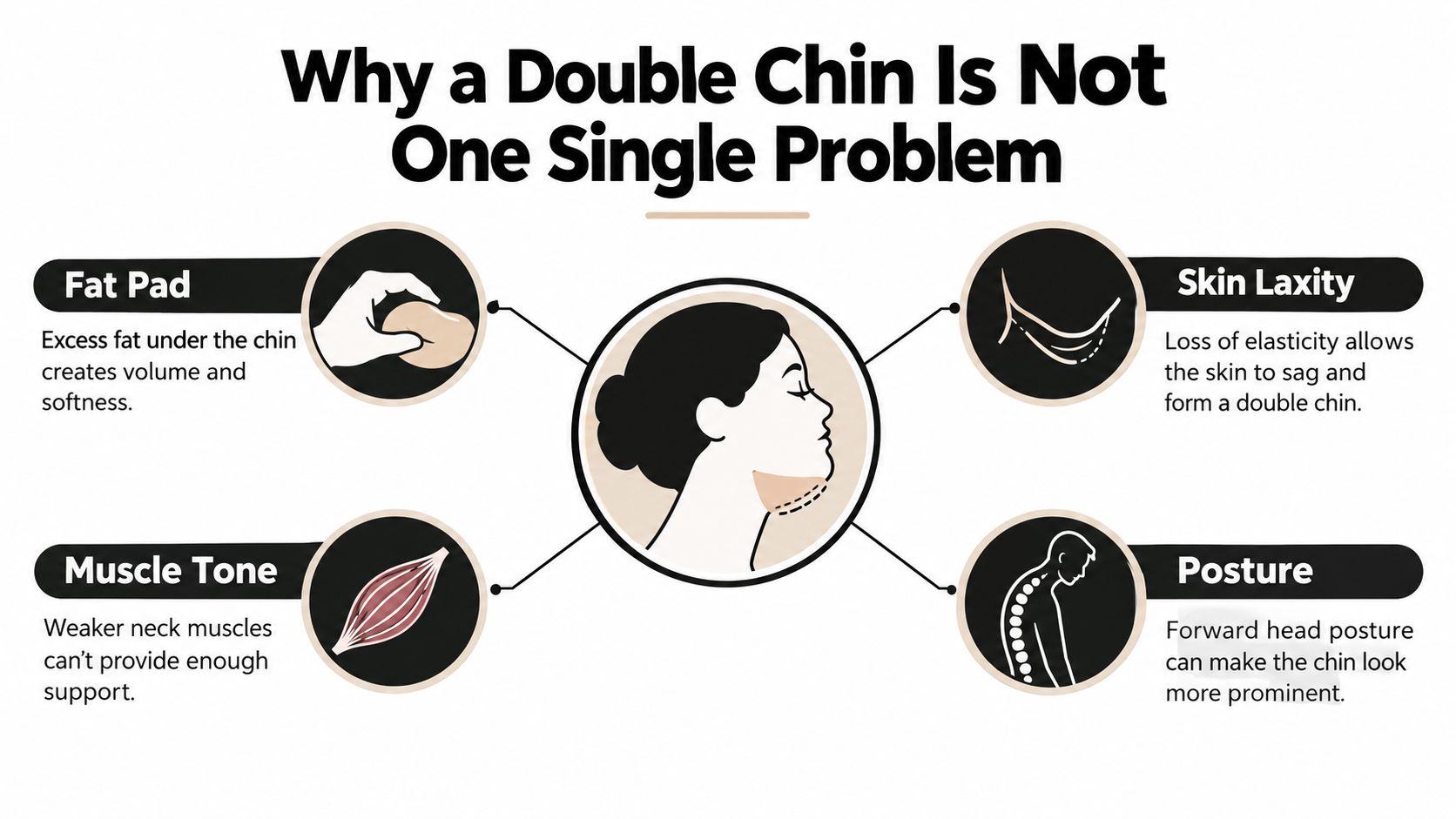
The distinction matters because fat reduction and skin tightening do different jobs. If a pinchable fat pad is the main concern, a fat-reduction approach may be considered. If loose skin is more prominent, reducing volume alone may not create a sharper-looking jawline. For some people, inherited jaw or neck anatomy shapes the profile regardless of overall weight. A qualified clinical assessment helps sort out these possibilities before treatment is discussed.
In Warwickshire, people travel into Leamington Spa for non-surgical options, but there isn't one “best” treatment for everyone. The same visible fullness can have different underlying causes, so a generic list of devices can be misleading. If you'd like an additional overview of approaches to reduce chin fullness without surgery, use it as background reading, not a substitute for a UK clinical assessment.
Our facial skin tightening options may be relevant when laxity is a key part of the concern. The point isn't to choose the most talked-about treatment. It's to understand what the treatment is meant to change, and whether that matches what you're seeing.
What Is Actually Causing the Fullness
The main possibilities are localised fat, skin laxity, posture, anatomy and age-related changes. You can use a few simple observations to think about what might be contributing, but they don't diagnose the cause. A clinician needs to assess the area before recommending treatment.
A simple starting check at home
- Pinchable fullness: Gently feel the tissue beneath your chin. A soft, localised pad may suggest a fat contribution, but the pinch test can't tell you how much of the appearance comes from fat.
- Skin movement: Look at the area as you move your head and jaw. Skin that folds or sags with movement may suggest laxity is involved. Don't pull or stretch the skin to try to predict treatment results.
- Posture: Notice whether your head sits forward when you look at a screen. A forward head position can change how the underside of the chin appears, even if excess fat isn't the main issue.
- Jaw and neck shape: Some people have inherited features of the jaw or the structures beneath it that create a fuller-looking angle. Weight change won't necessarily alter those proportions.
Ageing can also affect the picture. The NHS explains that loose skin can follow significant weight loss or ageing, and that it may not return to its previous firmness as collagen and elastin decline (NHS guidance on loose skin after weight loss and ageing). That's one reason a plan that seemed to suit someone earlier in life may need reassessing as skin quality changes.
A useful rule: Treat your observations as a starting point, not a diagnosis. The right plan depends on what an in-person assessment finds.
If the concern appears fat-led and is part of wider weight gain, lifestyle changes may be worth discussing with an appropriate health professional. If laxity or anatomy seems to dominate, a clinic assessment can help clarify what a non-surgical treatment can and can't do.
Lifestyle, Exercise and Posture Habits That Make a Real Difference
Gradual weight loss can reduce fat across the body, including beneath the chin, but it can't selectively remove fat from that area. The NHS commonly recommends reducing daily calorie intake by about 600 calories, a change associated with gradual loss of around 1–2 lb per week (NHS advice on losing weight safely). That's general guidance, not a personal prescription, so speak to a qualified health professional if you need advice suited to your health or circumstances.
Be wary of claims that chin exercises can burn fat from one precise spot. Jaw movements, neck stretches and chin tucks may help you practise posture or muscle control, but they don't target the fat beneath the chin. NHS guidance on weight management supports gradual change, not a promise that a particular facial exercise will reshape one small area.
Practical habits to try
- Review your posture: Bring your screen closer to eye level so you're not constantly leaning your head forward.
- Take screen breaks: Reset your position during the day rather than holding your head forward for long stretches.
- Practise gentle chin tucks: Draw your head back slightly while keeping your gaze level. Stop if the movement causes pain or discomfort.
- Choose sustainable routines: Regular activity and balanced eating support overall health and weight management. Our page on why regular exercise matters offers more context.
Avoid crash dieting to chase a sharper jawline. Rapid or substantial weight loss can leave loose skin, and the NHS notes that ageing and significant weight loss can affect skin firmness as collagen and elastin decline. Losing weight may reduce fat but won't tighten loose skin on demand.
In Leamington Spa, clients often ask us whether exercises alone will change the area. We see posture work and healthy routines as useful complements, not a reliable standalone fix for a distinct fat pad or laxity-led concern. If you're putting in effort at home and still feel unsure what's driving the profile, an assessment can help you decide whether to continue with lifestyle changes or consider a clinic option.
Clinic-Based Non-Surgical Options We Offer in Leamington Spa
The right clinic option depends on whether fat or laxity is the main concern. We offer cryolipolysis, HIFU, 3D Dermaforce RF microneedling, RF skin tightening and ultrasound cavitation. These treatments have different purposes, and none should be presented as a universal answer.
Cryolipolysis, or fat freezing, is intended for a localised fat pad beneath the chin. A review of cryolipolysis studies reports an ultrasound-measured reduction in treated fat thickness of approximately 2 mm, with satisfaction reported as high as 93% in the cited evidence (review of cryolipolysis for submental fullness). Those findings describe local tissue change, not total body-weight loss, and they don't predict an individual's outcome.
HIFU uses focused ultrasound energy and may be considered when lifting and tightening are part of the goal. RF skin tightening also targets laxity, while 3D Dermaforce RF microneedling is used for skin texture and mild tightening. Cavitation may be discussed when the concern includes circumference around the jawline, but a consultation needs to establish whether it fits the area and your goals.
How the options compare
| Treatment | Best for | Typical sessions | Downtime | When results show |
|---|---|---|---|---|
| Cryolipolysis | A clearly assessed, localised fat pad | Set after assessment | We'll explain the expected aftercare at consultation | Changes develop gradually as the body clears treated fat |
| HIFU | Laxity-led concerns where lifting and tightening are the focus | Set after assessment | We'll discuss likely short-term effects before treatment | Gradual change as the skin responds |
| 3D Dermaforce RF microneedling | Skin texture and mild tightening | Set after assessment | Allow for temporary skin sensitivity; we'll advise on aftercare | Gradual change after treatment |
| RF skin tightening | Skin laxity | Set after assessment | Discussed for your treatment plan | Gradual change as the skin responds |
| Ultrasound cavitation | Selected concerns involving fullness around the jawline | Set after assessment | Discussed for your treatment plan | Depends on the cause and treatment plan |
We don't assign a standard session count to every client. The right course depends on your assessment, the selected treatment and how your skin and tissue respond. We'll discuss timing and aftercare before you commit. For a general comparison of approaches to chin fat reduction options, remember that treatment availability and regulation differ between countries.
Some circumstances call for caution or a different plan. We won't proceed over an active skin condition in the area, and pregnancy means treatment needs to be postponed. HIFU also requires screening for certain metal implants. Where skin laxity is significant, energy-based tightening alone is unlikely to meet expectations, so we'll be candid rather than sell a poor fit. You can also read our comparison of HIFU and radio frequency to understand how these approaches differ.
What UK Regulation Says About Non-Surgical Chin Treatments
Non-surgical doesn't mean risk-free, and regulation matters as much as reviews. The Care Quality Commission says it doesn't regulate all cosmetic treatments, including some non-surgical procedures, and advises people to choose someone trained and qualified (CQC guidance on choosing cosmetic surgery and treatment). Don't treat a clinic's branding or social media presence as proof of competence.
The history of fat-dissolving treatments in the UK is a reminder that product claims and legal status need checking. The British Association of Dermatologists reported in 2013 on a clinical study of deoxycholic acid involving 363 adults aged 18–65 with moderate-to-severe fat beneath the chin (British Association of Dermatologists report on non-surgical chin-fat treatment). Deoxycholic acid works by disrupting fat-cell membranes so the body can clear the cellular debris. That's a medical treatment, not evidence that every product marketed as “fat-dissolving” is equivalent.
The MHRA maintains official UK medicine information and licensing records. Earlier UK regulatory warnings also highlighted concerns about unlicensed cosmetic fat-dissolving products, including inadequate controlled clinical testing for some products. For broader context about non-surgical fat removal in the UK, focus on what a treatment is, its regulatory position and who will manage your care.
Take these questions into any consultation, including ours:
- Credentials: Who will assess and perform the treatment, and what relevant training do they have?
- Insurance: Is the practitioner insured for the specific treatment being offered?
- Consent: Have the likely benefits, limits and side effects been explained in plain English?
- Screening: Have they asked about your health, medicines, skin and relevant medical history?
- Emergency arrangements: What happens if you have an unexpected reaction or complication?
- Follow-up: Who will contact you afterwards, and how will concerns be handled?
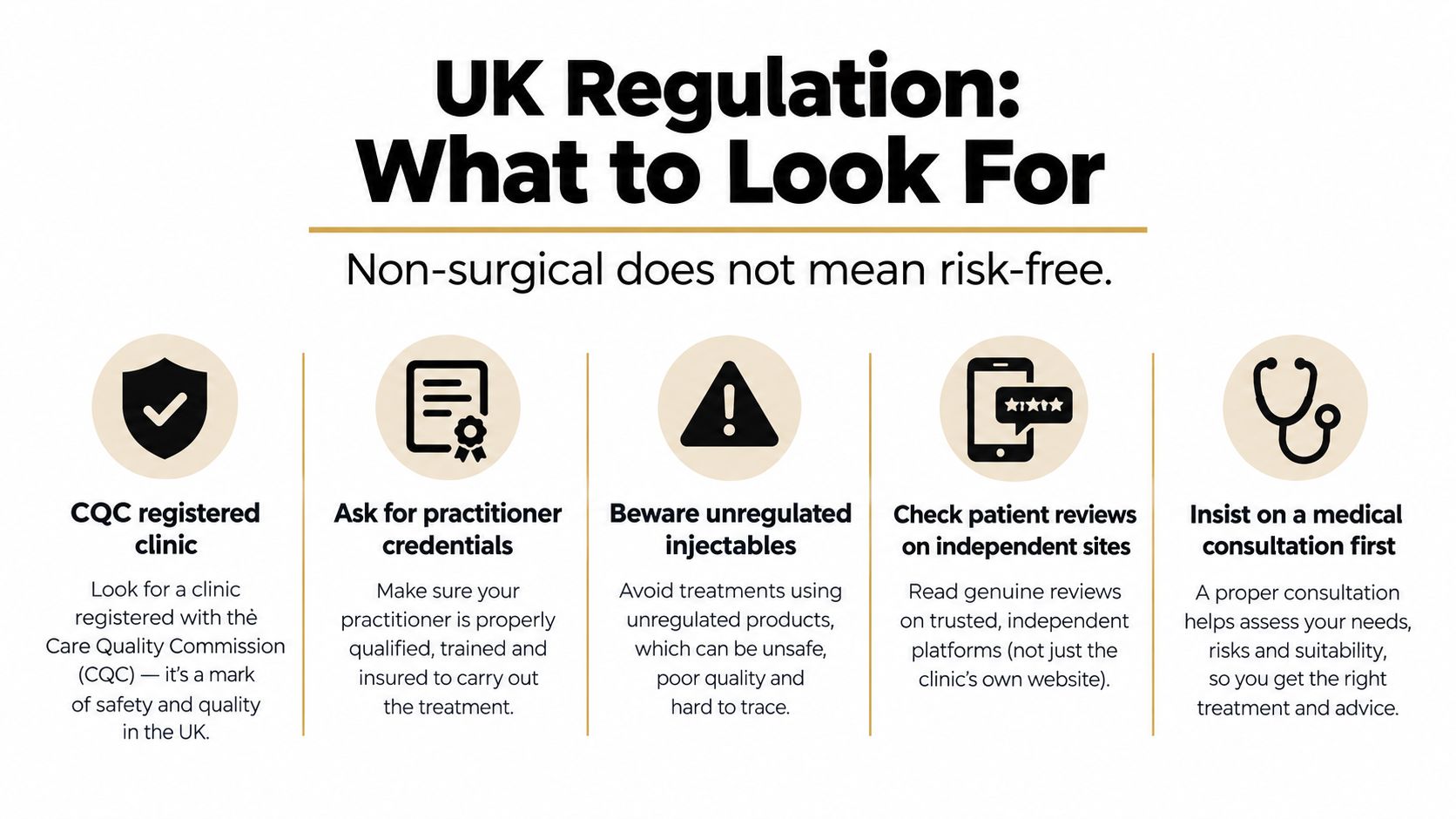
Walk away if answers are vague, if someone skips screening or consent, or if they promise a result before examining you. The safest consultation is one where you're encouraged to ask questions and given time to decide.
What a Consultation With Us Actually Looks Like
At 3D Aesthetics Leamington Spa, a consultation starts with listening, not a device recommendation. At our clinic at 11 Guys Place East, Leamington Spa, we ask what you've already tried and what bothers you about the area, in your own words. That matters because “I want less fat” and “I want my jawline to look firmer” point to different concerns.
We then assess the skin, fat distribution, laxity and jawline definition. Where relevant, we use our free AI Skin Scanner to support assessment of the skin. If weight or body composition is part of the discussion, we may use a 3D body scan to inform planning and track measurements over time.
Clients come to us from nearby Warwick and Kenilworth as well as Leamington Spa. We use the findings to explain which options may fit, what each treatment is intended to address, and what it won't change. We'll also discuss the likely course, intervals, aftercare and how we'll review progress, without promising a particular outcome.
We turn people away when the proposed treatment doesn't match the cause, when a health or skin concern makes treatment unsuitable, or when expectations can't be met responsibly. We'd rather explain that clearly than sell you a treatment that isn't right for you.
A consultation should leave you with a clear understanding of your options and enough information to make a decision. You don't need to book treatment on the day.
Realistic Timelines, Results and Your Next Step
Timelines depend on the cause and the approach, and results vary from person to person. Gradual lifestyle changes take time to show, and they can reduce overall body fat without selectively targeting the area beneath the chin. Cryolipolysis results usually develop over 6–12 weeks as the body clears treated fat cells. HIFU and RF changes can develop gradually as the skin responds, and we'll set expectations around the plan we recommend.
For the evidence overall, a systematic review and meta-analysis of 19 studies involving 1,193 people found a mean reduction in submental fat of 4.60 mm. The pooled reduction varied by modality, and the authors considered the comparative evidence inconclusive because direct head-to-head trials were lacking (systematic review and meta-analysis of submental fat treatments). The practical message is simple: don't choose a treatment on a headline measurement alone.
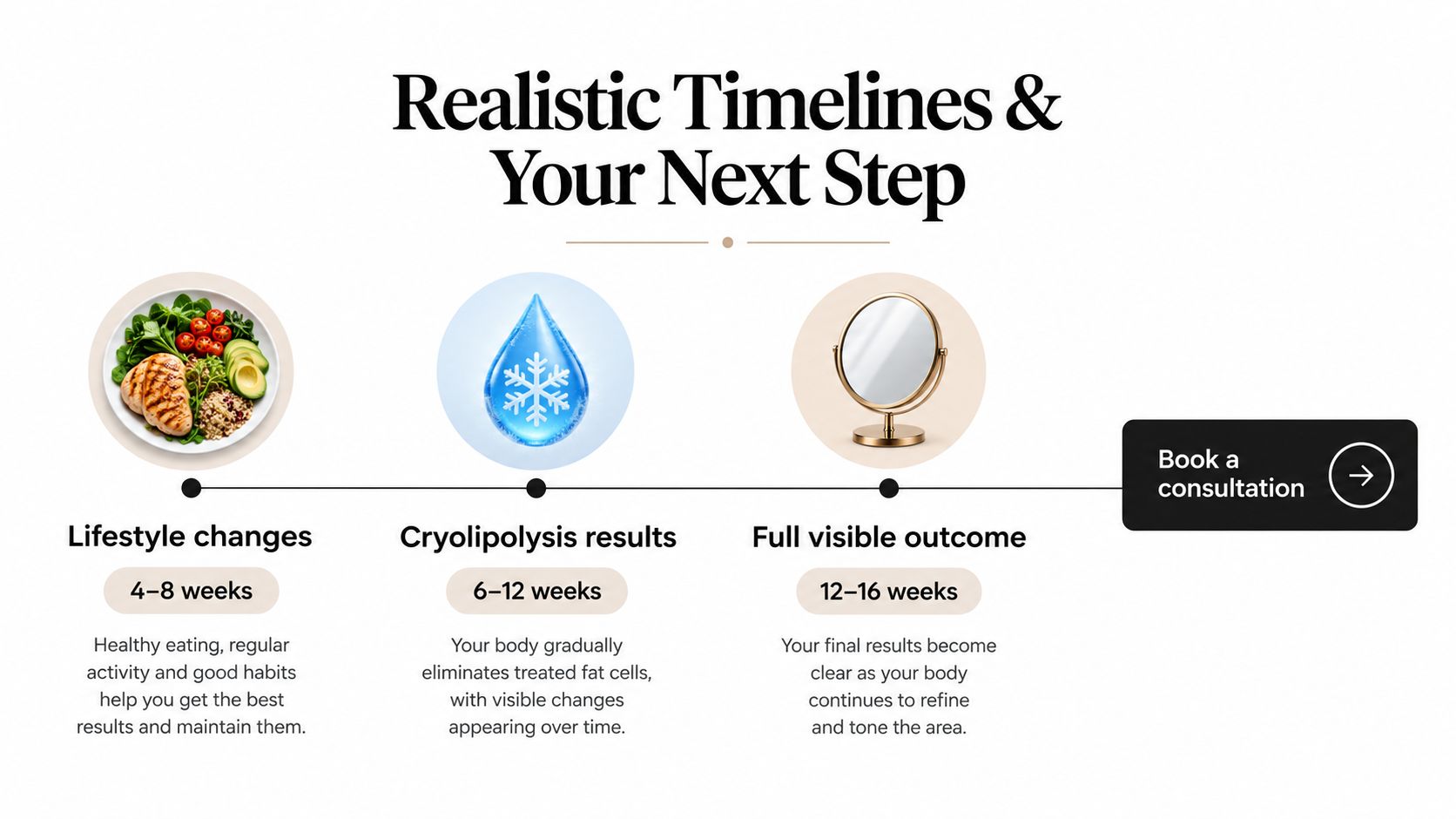
If you're unsure whether the concern is fat, laxity or anatomy, start with a conversation rather than guessing. You can book a free consultation or explore our free AI Skin Scanner before deciding what feels right.
At 3D Aesthetics Leamington Spa, we assess whether chin fullness is mainly related to fat, skin laxity or anatomy before discussing cryolipolysis, HIFU or other options we offer. Call us on 01926 315764 or visit us at 11 Guys Place East to arrange your free consultation.
← Back to Home