
You're standing in the bathroom after another hurried shave, looking at the same sore patch on your neck or the same dark hair on your back, and typing laser hair removal for men near me because you want something that feels practical, not performative. You're not looking for beauty jargon. You want to know whether it works, how many visits it takes, what the treatment is like, and whether a clinic close to home is worth trusting.
For men in Leamington Spa and nearby areas, that decision usually comes down to two things, convenience and confidence. Convenience matters because laser hair removal is a course of treatments, not a one-off appointment. Confidence matters because you're not just buying a price, you're choosing who will assess your hair, your skin, and the areas you want treated. Clinics that offer a proper consultation, a body scan, and male-specific planning make that decision much easier, especially when your goals are about the back, chest, beard line, shoulders, or neck.
If you're comparing local options, it helps to understand how the treatment works, what kind of results are realistic, and what separates a decent clinic from a rushed one. A useful starting point is tracking local SEO across locations, because the same thinking applies to clinic choice, you want a nearby service that's clear, specific, and easy to evaluate before you book. For a local example, see laser hair removal in Leamington Spa, where consultation-led planning is built into the process.
Table of Contents
- Why More Men Are Searching for Laser Hair Removal Locally
- How Laser Hair Removal Works
- Most Common Treatment Areas Men Ask For
- Sessions, Timeline, and Realistic Results
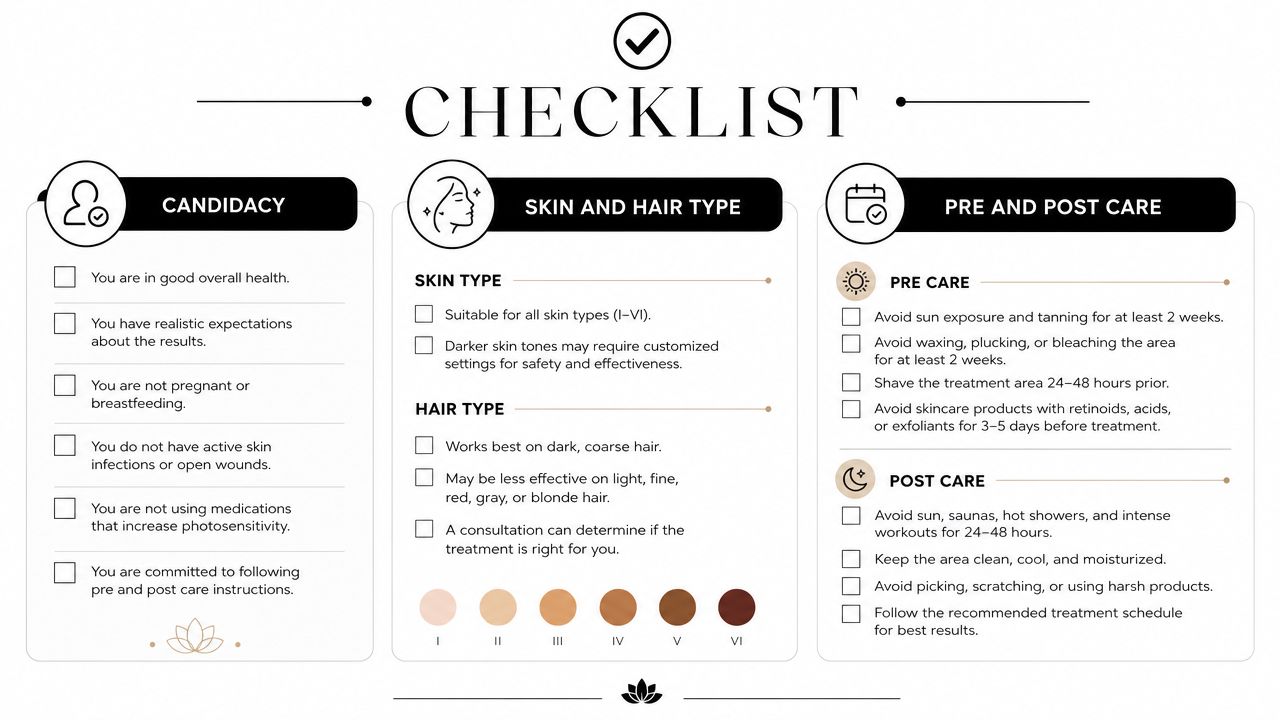
- Candidacy, Skin and Hair Type, and Pre and Post Care
- How Much Laser Hair Removal for Men Costs Near You
- Choosing a Clinic Near Home and What to Ask at Consultation
- FAQs and What to Do Next
Why More Men Are Searching for Laser Hair Removal Locally
A lot of men reach the same point. The shaving is annoying, the trimming never quite stays neat, and the search for something better starts with one practical question, where's the nearest place that treats men properly? That's why the phrase laser hair removal for men near me has become such a common starting point. It isn't vanity in the abstract, it's friction in daily life.
Convenience is only half the story
Men don't usually want a long drive for a quick consultation, and they don't want to feel like an afterthought in a clinic built only around women's leg or bikini treatments. They want someone who understands male beard lines, dense back hair, and the fact that chest or shoulder hair doesn't behave like fine peach fuzz. That's where local choice matters. A nearby clinic can make follow-up sessions easier to keep, and consistency matters because laser hair removal works as a series, not a single event.
The male market is also much more visible than it used to be. One leading UK clinic chain reported that men's bookings for laser hair removal rose by 33% year on year, with demand concentrated among men in their 20s to mid-40s and the most common areas being the full back, shoulders, chest, face, and back of the neck (telegraph.co.uk). That's useful locally because it shows this isn't a niche curiosity, it's a defined service category with clear treatment patterns.
What a local guide should help you decide
A good nearby clinic should answer three questions clearly. What area can be treated safely, how many visits are likely, and what should you expect after each session? If the answer is vague, the quote probably isn't the whole story.
For a Leamington Spa search, a consultation-led clinic such as 3D Aesthetics is relevant because it already offers permanent hair reduction alongside other face and body services, so the assessment is built around treatment planning rather than a quick phone estimate. That matters if you want your clinic to look at your skin, your hair, and your goal together instead of selling a package first and asking questions later.
Practical rule: If a clinic can't explain who laser hair removal works best for, and where your own hair fits on that spectrum, keep looking.
How Laser Hair Removal Works
Laser hair removal sounds technical, but the core idea is straightforward. The laser sends focused light energy into the hair follicle, and the pigment in the hair absorbs that energy. Heat then damages the growth cells at the base of the follicle, which is why repeated treatments can reduce regrowth over time.
The target is the follicle, not the skin surface
Selectivity is the key point. The device is set up to focus on pigment in the hair shaft rather than heating the whole area, which is why darker, coarser hair is usually easier to treat than very light or grey hair. Proper settings matter because the aim is to affect the follicle while protecting the surrounding skin.
Modern 810 nm diode laser protocols are especially relevant for men because trunk hair, like chest and back hair, is often dense and coarse. In one clinical study, this approach produced an average 80.6% hair reduction in the treated areas, with only slight redness for 24 hours and no mild to serious side effects reported in the study population (PMC). That gives a useful picture of what medically supervised treatment can achieve on male trunk areas.
Why it takes more than one session
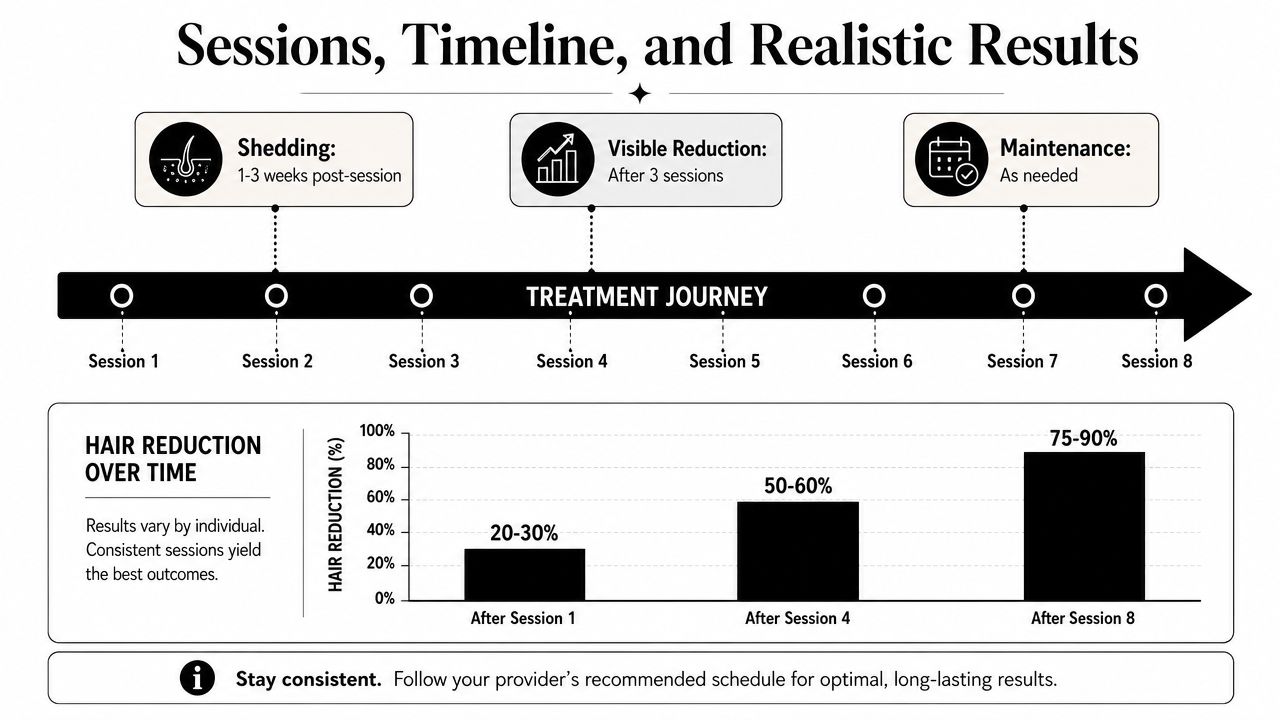
Laser only works on follicles that are in the active growth phase at the time of treatment. Hair does not grow in sync, so one appointment cannot catch every follicle at once. That is why the result is usually described as permanent reduction, not instant, total removal. Mayo Clinic says people generally need 4 to 8 sessions spaced several weeks apart, with treated hairs shedding over days to weeks and any regrowth usually coming back finer and lighter (Mayo Clinic).
For men, that staged pattern makes sense. Beard lines, chests, and backs often have denser, mixed-growth hair, so the follicle has to be caught over multiple visits. The process is closer to trimming a hedge than removing a tree. You reduce bulk first, then refine the shape, then maintain the result.
A local clinic also needs to judge whether laser is the right tool in the first place. If you want a comparison with the other main option, this guide to laser hair removal vs electrolysis sets out where each method tends to fit.
Most Common Treatment Areas Men Ask For
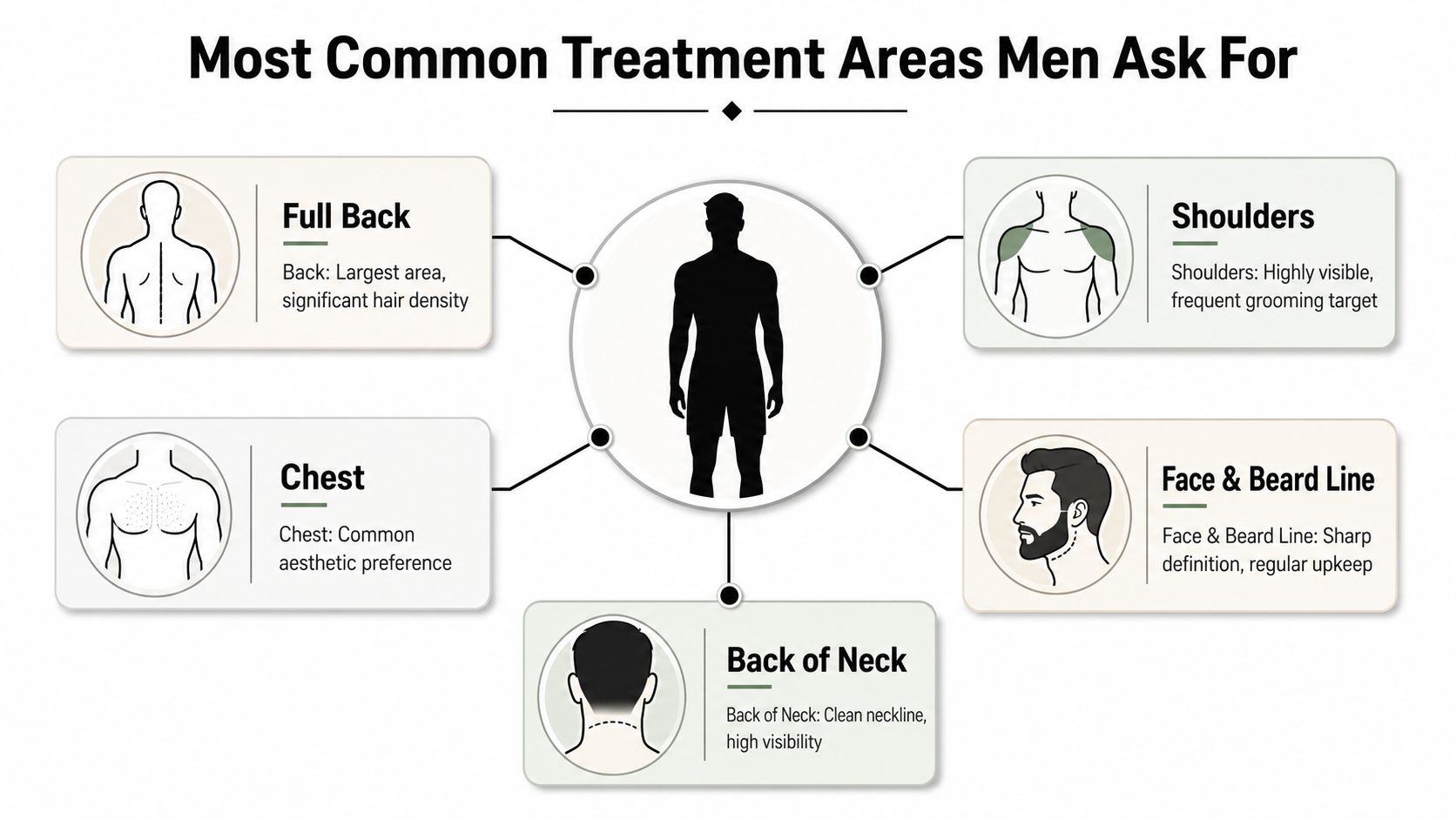
Men usually do not ask for every area in one go. They tend to start with the places that cause daily irritation, or the parts most likely to show in clothing, sports kit, or a mirror. The request list is fairly consistent, full back, shoulders, chest, face and beard line, and the back of the neck. That matches the UK booking pattern already showing where demand is concentrated (telegraph.co.uk).
Why those areas come up so often
The full back is often the biggest frustration because it is hard to manage alone and usually too dense for a quick grooming fix. Shoulders matter because hair there can look patchy under a T-shirt or gym vest. Chest requests are often about a cleaner look, but also about comfort, especially if thick hair catches on clothing or skin products.
The face and beard line need a different conversation. Many men want laser there to shape the neckline, reduce irritation, or clean up stray growth outside the beard edge, rather than remove every hair. The back of the neck is practical as well, because it shows between barber visits and can start to look untidy very quickly.
What the area tells you about the treatment
Dense, terminal hair usually means the clinic needs a proper consultation before giving a quote. A beard line, for example, behaves differently from upper-back hair because the growth pattern, skin sensitivity, and grooming goal are not the same. A good local clinic does not just ask what you want removed. It asks what result you want to keep.
That is where a clinic can map the exact zone, judge whether the hair pattern is suited to laser, and estimate the treatment course more accurately. For men who want help with facial shaping, 3D Aesthetics Leamington Spa facial hair removal is often the part of the appointment where the detail matters most, because the line between tidying and reducing can feel very personal.
Sessions, Timeline, and Realistic Results
A first session can feel like the start of a routine, rather than a one-off fix. Laser hair removal usually reduces hair in stages, because each visit targets hairs that are active at that point, while other hairs are still waiting their turn. That is why clinics usually talk about a course of treatment, not a single appointment.
Most men notice change in the same order, less stubble, easier shaving, then slower and patchier regrowth. The treated hairs do not disappear at once. They shed over days to weeks, which can look odd if you expect the skin to seem bare straight after treatment. That delay is normal, and it is similar to a lawn after trimming. The cut grass is still there for a short while before it clears away.
Treatment areas on the trunk, such as the chest or back, can show solid reduction over a course of sessions, and studies using the 810 nm diode laser have reported short-lived redness as the main after-effect (PMC). The exact outcome still depends on the person in the chair, the hair pattern, and how closely the plan matches the area being treated. A dense back, a tidier neckline, and a broader chest area do not behave in quite the same way, so the timeline can feel different from one zone to another.
Why consultation matters more than a phone quote
Two men can ask for “back laser” and need very different treatment plans. One may have coarse, dark hair with strong contrast against the skin. Another may have mixed density, lighter strands, or want general thinning rather than near-clearance. A proper consultation sorts out those differences before treatment begins.
3D Aesthetics Leamington Spa uses a complimentary consultation with a full 3D body scan to assess concerns, personalise treatment plans, and measure results over time. That matters because it gives you a baseline instead of asking you to judge progress from memory. A scan works a bit like a ruler marked on the wall, it gives the clinic and the client something fixed to compare against as the hair changes.
For men searching locally in Leamington Spa, that consultation step often decides whether a clinic feels right. It shows how the team maps the treatment area, how they talk through realistic outcomes, and whether they understand male-specific zones such as the chest, back, shoulders, and beard line. A clear plan is usually more helpful than a quick quote.
Useful expectation: You are not booking one appointment, you are starting a plan that changes as the hair thins and the skin reaction becomes clearer.
Candidacy, Skin and Hair Type, and Pre and Post Care
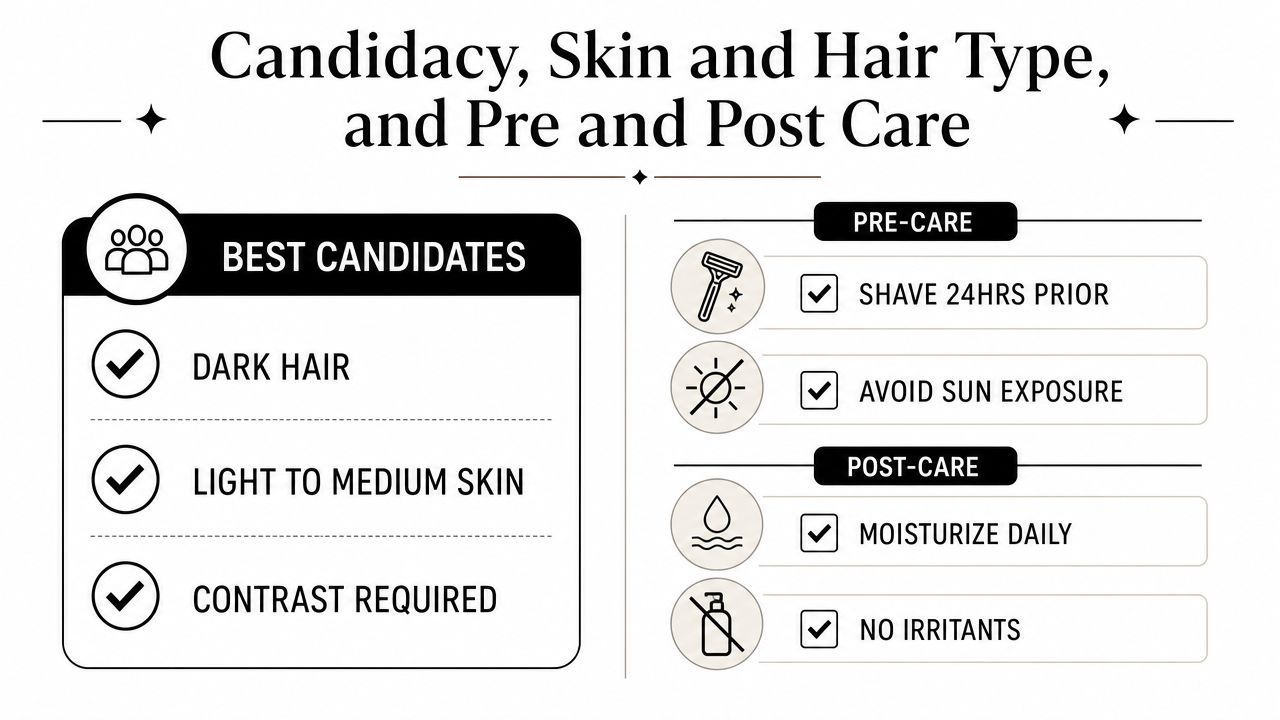
Laser hair removal works best when the laser can clearly target the hair. That usually means dark hair on light to medium skin, where there is enough contrast for the energy to be absorbed by the follicle rather than the surrounding skin. Many UK clinics explain candidacy in those terms because hair colour and skin tone matter more than gender alone.
Who tends to respond best
If you have coarse, dark hair on the chest, back, or beard line, you are usually in the most straightforward treatment group. If your hair is mixed, very light, or grey, treatment may still be possible, but the clinic should explain the limits clearly. A skilled practitioner will adjust settings for different skin tones and will not treat every client as if they have the same hair pattern.
Practical rule: The right question is not “Does laser work on men?” The better question is “Does it work on my hair, my skin, and my goal?”
That goal matters too. Some men want reduction, while others want a closer result that sits nearer to clearance. If you want the beard line softened but not removed, say that early. If you want a cleaner chest for comfort or appearance, say that as well. Clear goals give the clinic a better basis for planning treatment.
A local consultation should also help you understand what the clinic can assess, not just what it can quote. In Leamington Spa, a good first appointment should show how the team maps the area, talks through realistic outcomes, and deals with male-specific zones such as the chest, back, shoulders, and beard line. 3D Aesthetics Leamington Spa uses a complimentary consultation with a full 3D body scan to assess concerns, tailor treatment plans, and measure results over time. That gives you a fixed point of comparison, rather like a mark on a wall that lets you see how the hair changes from one visit to the next.
For men searching locally in Leamington Spa, that consultation step often decides whether a clinic feels right. It shows whether the team understands the treatment area in front of them and whether they are comfortable discussing the pattern of hair you have, not an idealised version of it. A clear plan is usually more useful than a quick quote.
Useful expectation: You are not booking one appointment, you are starting a plan that changes as the hair thins and the skin reaction becomes clearer.
What to do before and after treatment
The main pre-care rule is simple, shave, don't wax. Shaving the day of or the day before the session leaves the follicle intact, which is what the laser needs to target. Waxing or plucking removes the root structure and can work against the treatment.
After treatment, sun care matters. Mayo Clinic advises avoiding direct sun exposure for 6 weeks and using SPF 30+ daily to help reduce the risk of post-inflammatory pigmentation change. That is especially relevant for the neck, shoulders, and chest, because those areas often see more friction and daylight. Mayo Clinic
The simplest routine is this. Shave carefully, avoid waxing, protect the skin from sun, and keep the area calm between sessions. That gives the laser the best chance to do its job.
How Much Laser Hair Removal for Men Costs Near You
The price conversation gets messy when clinics quote too quickly. A sensible comparison starts with three variables, treatment area size, hair density, and what the quote includes. A smaller face or neckline session should not be compared directly with a full back treatment, because the time and device use are very different.
Reading a quote properly
A higher fee isn't automatically worse value if it includes a consultation, patch testing, and clear aftercare guidance. A low headline number can be less useful if it doesn't tell you whether the practitioner is assessing your hair and skin properly. For men, especially those treating back or chest hair, the cost depends on how many sessions are likely to be needed and whether the clinic is honest about suitability before you commit.
At 3D Aesthetics Leamington Spa, suitability and pricing are finalised in the complimentary consultation rather than over the phone. That approach reduces the risk of buying a package that doesn't fit your skin type or hair pattern.
Typical UK price ranges for common male areas
| Treatment area | Indicative price per session | Typical sessions needed |
|---|---|---|
| Face or beard line | Varies by clinic and exact zone | Several sessions |
| Back of neck | Varies by clinic and exact zone | Several sessions |
| Chest | Varies by clinic and exact zone | Several sessions |
| Shoulders | Varies by clinic and exact zone | Several sessions |
| Full back | Varies by clinic and exact zone | Several sessions |
Because no verified pricing data was provided, the safest benchmark is to compare what is included, not chase the cheapest label. Ask whether the clinic uses patch testing, whether aftercare is part of the visit, and whether you'll be assessed for skin and hair type before any package is sold.
A transparent clinic should make the financial path feel straightforward, not vague. If the quote depends on the exact zone, that's normal. If the clinic refuses to explain why, that's a warning sign.
Choosing a Clinic Near Home and What to Ask at Consultation
The best local choice usually isn't the flashiest website. It's the clinic that can explain the treatment clearly, check your suitability properly, and show you how they'll track progress. If you're comparing places near Leamington Spa, look at the person doing the treatment, the device they use, and whether they take pre-care seriously.
Questions worth asking before you book
- Who performs the treatment? Ask whether a trained therapist or clinician will carry out the session, and what experience they have with male areas like the back and beard line.
- What device are you using? Different laser platforms behave differently on thick male hair, so it's reasonable to ask what class of machine is used and why it suits your skin tone.
- Do you patch test? A patch test helps check skin response before a full treatment area is booked.
- How do you assess candidacy? You want a real look at hair colour, density, and skin type, not a quick sales script.
- What happens after the session? Ask about redness, downtime, sunscreen advice, and whether you'll get written aftercare.
If you want a clinic that combines laser hair reduction with broader body and skin treatment planning, 3D Aesthetics Leamington Spa is a relevant example because it offers a complimentary in-depth consultation, a full 3D body scan, and a warm professional team of trained therapists. It also has a wider portfolio that includes body-contouring and skin rejuvenation, which can help if you want your concerns assessed in one appointment rather than split across different places.
What a good consultation feels like
A proper consultation should feel measured, not rushed. You should leave knowing whether the treatment suits your hair pattern, how many visits might be involved, and what you need to do before and after each session. If the conversation is only about price, the clinic is missing the point.
A helpful comparison is how some booking systems now use structured intake and reminders to keep appointments organised. If that approach interests you from a service point of view, the logic behind Hyperleap AI booking solution shows why responsive scheduling matters in treatment-led clinics. For you as a client, the key question is simpler, does the clinic make it easy to move from enquiry to informed decision?
FAQs and What to Do Next
A lot of men reach the same point after reading about treatment, and the questions are usually practical. Does it hurt, is it permanent, can you train afterwards, and how soon will you notice a change? The honest answer is steady rather than dramatic. The sensation is usually manageable, results build over several sessions, and laser hair removal works best as long-term reduction rather than an instant fix, which matches the step-by-step process already covered above.
Short answers to the most common questions
Does it hurt? Most men ask this first. The feeling changes by area, with beard and neck zones often feeling sharper than the back or chest, but cooling and correct settings can make a real difference.
Can I go to the gym after? Usually yes, but treat the area gently and avoid anything that adds too much heat or friction straight away. If your clinic gives you aftercare, follow that advice for your skin and treatment area.
Will sun exposure matter? Yes. After treatment, SPF 30+ matters, and direct sun should be avoided for 6 weeks to help reduce pigmentation risk, as noted earlier.
How quickly do results show? Treated hairs shed over days to weeks, so the change comes gradually rather than at once, as noted earlier.
What happens if I still have questions before booking? Ask the clinic to talk you through the areas you want treated, the expected sensation, and the aftercare they use for men's facial and body hair. That conversation should feel clear, not like a sales pitch. A proper consultation also helps you understand whether the clinic's approach fits your skin tone, hair density, and routine, rather than relying on a quick yes or no.
The next sensible step is to stop guessing about your own suitability. Book the complimentary consultation, have the 3D body scan, ask about the specific male treatment areas you want addressed, and leave with a plan that fits your skin, hair, and schedule. If you want to see how organised booking can support that first step, the Hyperleap AI booking solution is a useful example of how treatment-led clinics can keep enquiries, reminders, and appointments easy to manage. A clear first appointment matters more than a quick price list, because it shows whether the clinic really understands what you want done.
A CTA for 3D Aesthetics Leamington Spa.