
You might be reading this after trying oils, creams, dry brushing, or body lotions that promised far more than they delivered. Your stretch marks may have faded a bit, or they may still catch your eye every time you look in the mirror, especially in bright bathroom light or summer clothes. That mix of frustration and cautious hope is very common.
Laser stretch mark treatment can help, but it helps in a very specific way. It doesn't erase stretch marks like correcting a typo on a screen. It works more like guiding damaged skin to rebuild itself gradually, with the type of laser chosen according to whether your marks are still red or purple, or have already turned white or silver.
If texture is part of what bothers you, it may also help to understand the wider picture of how to improve skin texture so stretch marks are viewed as one part of skin quality rather than an isolated flaw.
Table of Contents
- Understanding Stretch Marks and the Hope of Laser Treatment
- How Laser Energy Rebuilds Your Skin
- Who Is a Good Candidate for Laser Treatment
- Your Treatment Journey From Consultation to Results
- Realistic Results, Potential Risks, and Investment
- Comparing Laser with Microneedling, RF, and Creams
- Your Next Steps and Frequently Asked Questions
Understanding Stretch Marks and the Hope of Laser Treatment
You notice them first in bright bathroom light. A few lines across the stomach, hips, breasts, or thighs. Some still look pink or red. Others have faded to a pale, silvery white. They may all be called stretch marks, but they are not all behaving the same way, and that matters when you start looking at treatment.
Stretch marks are a structural change in the skin. The area has stretched faster than its collagen and elastin framework could adapt, so it heals as a thinner, altered strip of skin. That is why stretch marks tend to feel different from the surrounding tissue, and why moisturiser can help comfort the skin without doing much to remodel the mark itself.
The colour change gives an important clue about what stage the mark is in.
Early stretch marks, often called red, pink, or purple marks, still have more visible blood vessel activity. In practice, that means treatment often focuses partly on reducing redness and calming the contrast between the mark and the surrounding skin.
Older stretch marks, which usually look white or silvery, behave differently. The blood vessel signal has faded, so treatment shifts toward improving texture and encouraging the skin to rebuild support in an area that has become more scar-like. If you have ever wondered why one person's newer marks respond faster than another person's long-standing white lines, this is usually the reason.
That distinction gets glossed over in many guides. It should not be. Red marks and white marks often need a different treatment emphasis, and they usually improve on different timelines.
Why people often feel let down
A lot of advice online treats stretch marks like a surface problem. Hydration, oils, and body creams may help the skin feel softer, but established stretch marks sit deeper than that. The change is in the skin's framework, not just its top layer.
Laser treatment became important for exactly this reason. It gives practitioners a way to work below the surface where the meaningful change sits. For newer red marks, the goal may be to reduce visible colour so they draw less attention. For older white marks, the goal is usually slower and more structural. Smoother texture, softer edges, and better blending with the surrounding skin.
A useful way to picture it is this. A red mark is often easier to spot because of colour. A white mark is often easier to feel because of texture. Laser plans are often built around whichever of those problems is most active.
What laser treatment is really trying to do
For most clients, treatment aims to improve two things:
- Colour difference, so the stretch mark stands out less
- Texture difference, so the skin feels and looks smoother
Those goals sound simple, but they lead to a much better consultation. Instead of asking whether laser can erase stretch marks, it is more useful to ask what type of stretch marks you have, what level of improvement is realistic, and whether colour or texture is the bigger concern.
That is also why treatment plans can look different from one person to another. Someone with newer reddish marks may see earlier visual change in colour. Someone with older white marks usually needs more patience because rebuilding texture is a slower biological process. If improving the overall feel and finish of the skin is part of your goal, it can also help to understand the wider principles behind improving uneven skin texture.
The hopeful part is not the promise of perfect skin. It is that stretch marks can often be made less noticeable in a measured, realistic way when the treatment matches the stage of the mark.
How Laser Energy Rebuilds Your Skin
A new client often asks a very reasonable question at this point. If a stretch mark is a change in the skin's structure, how can light help fix it?
The answer is that laser treatment does not "fill in" a stretch mark the way makeup covers colour. It uses controlled heat to persuade the skin to remodel itself over time. That distinction matters, because it explains why red stretch marks and white stretch marks usually improve in different ways and on different timelines.
What the laser is actually doing
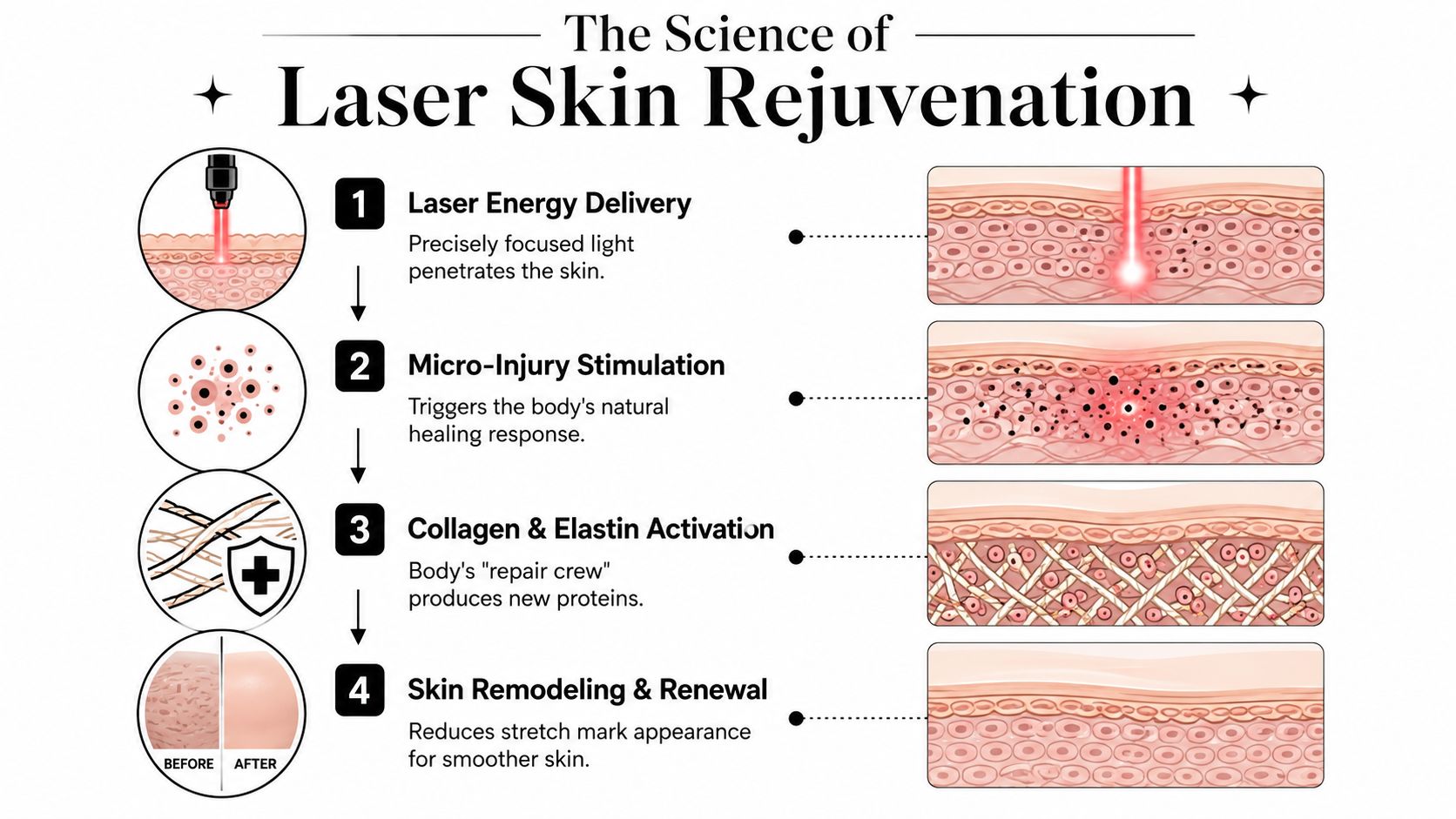
Your skin is built on a support network of collagen and elastin. Collagen gives firmness and framework. Elastin gives a degree of stretch and recoil. In a stretch mark, that network has been pulled beyond what it could comfortably tolerate, then healed in an altered pattern.
Laser energy creates tiny, controlled areas of heat within the skin. The body responds to that signal by starting a repair process. New collagen can form. Existing collagen can reorganise. Over a series of treatments, the marked skin may become smoother, less indented, and less sharply outlined.
A simple comparison helps here. If the skin surface is like a mattress cover, the deeper collagen layer is more like the padding underneath. Creams mostly affect the cover. Lasers are used because stretch marks sit deeper, in the layer that gives the skin its structure.
Why newer red marks and older white marks are treated differently
Treatment plans become more specific at this point.
Red or purple stretch marks still have visible blood vessel activity, so part of the problem is colour. White or silver stretch marks usually have much less colour activity and more established textural change. That means the laser target is different.
With newer red marks, some devices are chosen partly to calm visible redness, so early progress may show up as better colour blending before the texture changes very much.
With older white marks, the focus is usually collagen remodelling. That is a slower project. Improvement often comes in stages, with the skin gradually feeling less crepey or indented and the edges looking softer rather than disappearing.
This is why two clients can both say they had "laser for stretch marks" and still have very different treatment experiences.
Ablative and non-ablative lasers
There are two broad categories used for stretch marks.
Ablative fractional lasers, such as fractional CO2, remove microscopic columns of skin while also heating deeper tissue. They can be useful when the main goal is resurfacing a more obvious textural problem, but recovery is usually more noticeable.
Non-ablative fractional lasers, such as 1,550 nm Er:glass, send heat into the skin without removing as much of the surface layer. The aim is still collagen remodelling, but with a gentler healing pattern.
As noted earlier in the article, newer comparative research has suggested that for mature white stretch marks, non-ablative fractional treatment can offer a better balance of improvement and side effects than more aggressive resurfacing in some cases. That does not mean stronger devices are wrong. It means the right choice depends on what the mark looks like now, your skin type, and how much downtime you can realistically accept.
What this means for real results
Clients often assume that the most aggressive treatment will produce the best outcome. Skin does not work that neatly.
A better way to judge a laser plan is to ask what it is trying to improve first:
- Red marks: often treated with colour reduction as an early goal
- White marks: often treated with texture blending and collagen rebuilding as the main goal
- Deeper or older marks: usually need more sessions and more patience
- Lower-downtime plans: often improve the skin gradually rather than dramatically after one session
The practical point is simple. The best laser is the one that matches the biology of the stretch mark, not the one with the most dramatic reputation.
That is also why realistic expectations matter so much. Newer red marks may show visible change sooner because colour can settle before texture fully rebuilds. Older white marks usually ask for steadier commitment, because the skin is being encouraged to remodel tissue that has already matured into scar-like change.
Who Is a Good Candidate for Laser Treatment
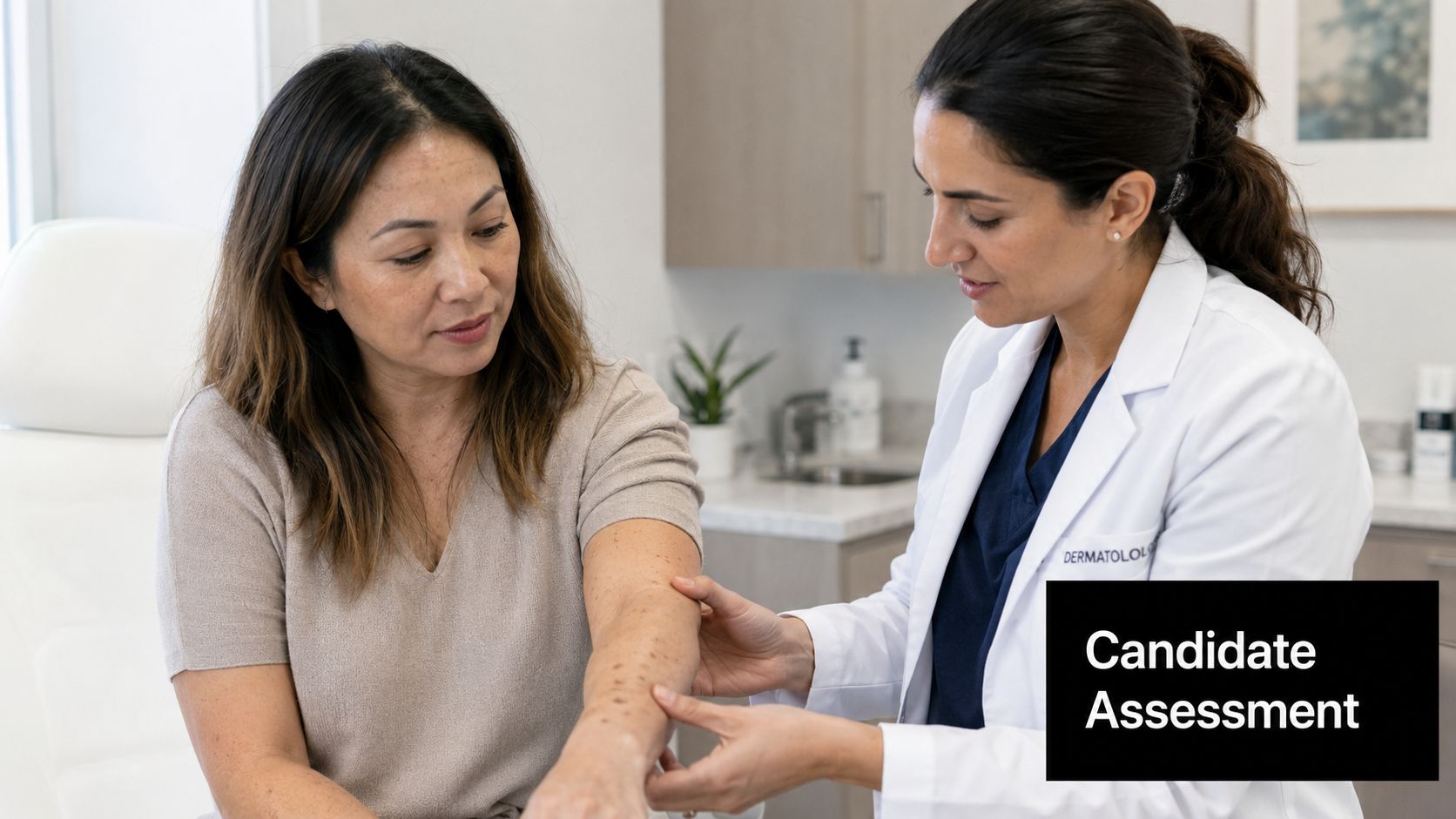
The best candidates aren't defined only by age or body area. The main question is simpler. What kind of stretch mark are we treating?
Red or purple marks
Newer stretch marks are often called striae rubrae. They still have active superficial blood vessels, which is why they look pink, red, or purple. These marks are often treated differently because the colour itself is part of the target.
Clinical guidance aimed at patients commonly notes that newer pink-red marks respond well to pulsed dye lasers, while older pale marks need fractional lasers. It also states that optimal results usually require a series of 3 to 6 sessions because red marks are treated partly through vascular targeting rather than texture correction alone (guide to stretch mark laser treatment options).
In plain language, red marks are often more responsive in terms of colour blending because there's still active vascular activity to target.
White or silver marks
Older stretch marks are known as striae albae. These are less about visible blood vessels and more about established dermal scarring and textural change.
That means treatment shifts from “calm the redness” to “rebuild the structure”. Fractional lasers are often chosen here because they focus on collagen remodelling in the dermis. White marks can still improve, but the treatment goal is usually softer texture and better blending rather than making the mark disappear.
Other factors a practitioner considers
A consultation also looks at things beyond colour:
- Skin tone: darker skin tones may need a more cautious parameter choice because pigment change is a key consideration.
- Body area: skin on the abdomen, thighs, breasts, hips, or arms doesn't all behave in exactly the same way.
- Severity: shallow, fine striae are a different challenge from broader, more textured ones.
- Expectations: if someone wants complete removal, laser may still help, but they need a realistic discussion first.
A good candidate is usually someone who understands three things. The marks can improve. The plan should match the mark type. Results come from a treatment course, not a single dramatic session.
Your Treatment Journey From Consultation to Results
You come in hoping for a clear answer. Are these marks treatable, how many sessions will it take, and when will I notice a change? A good treatment journey should answer those questions early, especially because red and white stretch marks usually follow different timelines.
The first appointment
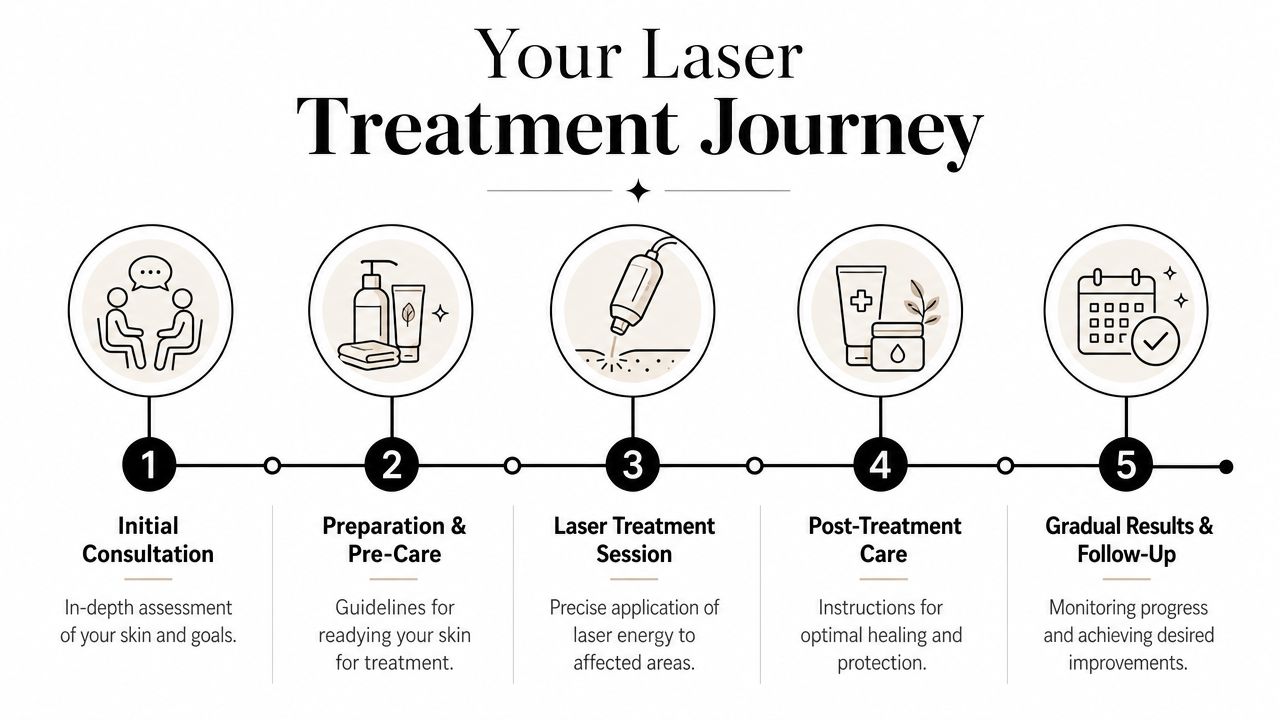
A proper consultation looks at the full story of the marks, not just whether they are present. Your practitioner should assess colour, age, texture, location, skin tone, and how your skin usually heals after irritation or injury. At 3D Aesthetics Leamington Spa, that process includes a complimentary consultation and a full 3D body scan, which helps create a baseline for later comparison.
Good photography and consistent assessment are valuable because stretch mark progress is often gradual. Red marks may show earlier changes in colour. White marks usually take longer, and the first visible shift is often texture softening rather than a dramatic visual fade.
Preparing for treatment
Preparation is usually simple. Keep the area free from irritation, avoid heavy sun exposure, and arrive with clean skin.
During the session, the laser is passed across the treatment area in a controlled pattern. Some clients describe warmth. Others notice a quick snapping or prickling sensation, a bit like tiny sparks of heat touching the skin. The exact feeling depends on the device, the body area, and how strong the settings need to be for your stretch mark type.
What happens after the session
Straight after treatment, mild redness and swelling are common. The skin can feel warm and look similar to a light sunburn. That short-term reaction is often part of the repair process the laser is trying to trigger.
Some clinics also use supportive treatments between sessions to settle the skin. For clients exploring recovery support, Dermalux LED therapy for post-treatment skin calming may be used alongside regenerative treatment plans.
The biggest mistake is checking too soon. Skin remodelling continues well after the appointment ends.
Why results take time
Laser treatment works more like a course of training than a one-off event. Each session gives the skin a controlled signal to repair and rebuild. Then the body needs time to lay down and reorganise collagen.
That timeline often feels different depending on the kind of stretch mark being treated. Newer red marks can sometimes show earlier improvement in colour because there is still visible vascular activity in the skin. Older white marks usually ask for more patience because the goal is structural remodelling, which tends to show up later and more gradually.
In practical terms, your journey often includes:
- Assessment and photos to record a true starting point
- A treatment plan based on whether the marks are red or white
- A series of sessions spaced out to allow healing and collagen remodelling
- Review appointments to compare colour blending, texture, and skin response over time
For many clients, the treatment path becomes easier once they know what kind of improvement they are tracking. With red stretch marks, you may be watching for fading redness first. With white stretch marks, you are usually watching for smoother texture and softer edges before the area starts blending better with the surrounding skin.
Realistic Results, Potential Risks, and Investment
Most clients ask the same question in different ways. “Will it work?” The honest answer is yes, it can work well, but the result is usually improvement, not total removal.
What results usually look like
Independent dermatology guidance reports that visible improvement from a laser treatment series is typically in the range of 20% to 60%, and also makes clear that complete eradication is not a realistic endpoint (independent overview of typical laser stretch mark improvement).
That range sounds broad because stretch marks vary widely. A fresh red mark on one client behaves differently from an old white mark on another. Skin tone, body area, mark depth, and healing response all influence the final outcome.
For many people, the practical win is this: the marks stop being the first thing they notice.
The main risks to understand
Most side effects are temporary and manageable. Common short-term reactions can include:
- Redness: the skin often looks flushed for a while after treatment
- Swelling: mild puffiness can happen as part of the inflammatory response
- Sensitivity: the area may feel warm, tender, or dry during early healing
More significant concerns usually revolve around pigment change or prolonged irritation. These risks are one reason consultation, patch testing where appropriate, device choice, and aftercare matter so much.
Better outcomes often come from restraint, not intensity. Treating the skin appropriately is safer than trying to force a dramatic response.
How to think about cost
Pricing is usually structured per session, and your total investment depends on the treatment plan rather than a flat universal figure. A clinic will normally consider:
| Factor | Why it changes cost |
|---|---|
| Treatment area size | Larger areas take longer and may need more passes |
| Type of stretch mark | Red and white marks may need different technology |
| Device used | Different platforms come with different treatment profiles |
| Number of sessions | Most people need a course rather than a one-off visit |
If you're comparing clinics, ask what's included in the plan. Consultation quality, imaging, aftercare guidance, and review appointments all affect value. The cheapest session isn't always the most sensible choice if the plan isn't well matched to your skin.
Comparing Laser with Microneedling, RF, and Creams
Laser isn't the only route for stretch marks, but it sits near the top of the conversation for a reason. It can address colour and texture with more precision than products applied at home.
One evidence synthesis reported that after two treatments, a laser group achieved a 70.6% reduction in stretch mark severity, compared with 47% for trichloroacetic acid peels, and the difference persisted at follow-up (evidence synthesis comparing laser with TCA peel).
Stretch mark treatment options at a glance
| Treatment | How It Works | Best For | Expected Improvement | Typical Downtime |
|---|---|---|---|---|
| Laser treatment | Uses targeted light energy to address vascular change or stimulate collagen remodelling | Red marks, white marks, and textural concerns depending on laser type | Often meaningful improvement, especially when matched to mark type | Varies by device and intensity |
| Microneedling | Creates controlled micro-injury to stimulate repair | Texture-focused plans and clients who prefer a non-laser route | Can improve appearance over a course of sessions | Usually mild to moderate |
| RF microneedling | Combines needles with heat energy for deeper remodelling | Stretch marks with some skin laxity | Can support collagen rebuilding and tightening | Usually mild to moderate |
| Topical creams | Hydrate and support the skin barrier | Early supportive care and maintenance | Limited for established dermal striae | Minimal |
| Chemical peels | Resurface the skin surface | Selected cases where surface renewal is the main goal | Can help, but laser has stronger published comparative performance | Varies |
Where each option fits
Creams still have a role. They can improve comfort, hydration, and the look of surface dryness. If you're building a home routine alongside treatment, it can also help to discover effective retinol serums so you understand where topical resurfacing ingredients fit, and where they can't replace device-based treatment.
Microneedling and RF-based treatments are often sensible alternatives when a client wants collagen stimulation without using a laser platform. They're also worth discussing when texture and mild laxity overlap.
For broader skin concerns that sit alongside stretch marks, some clients also look into sun damage skin treatment because uneven tone, texture, and body skin ageing often appear together.
Laser usually becomes the front-runner when the question is, “Which option is most likely to make a visible difference to established stretch marks?” Especially once you separate red marks from white ones, its strengths become clearer.
Your Next Steps and Frequently Asked Questions
If you're serious about improving stretch marks, the smartest next step is a proper consultation rather than another round of guesswork. You need someone to identify whether you're dealing mainly with vascular red striae, collagen-depleted white striae, or a mixture of both. That decision shapes everything that follows.
A good consultation should also document the starting point carefully, explain what kind of improvement is realistic for your skin, and map out a treatment course with enough time between sessions for the skin to respond.
Common questions
Does laser stretch mark treatment hurt
The sensation is often described as uncomfortable rather than unbearable. The feeling depends on the laser type, the body area, and your own sensitivity. Warmth, prickling, or a snapping sensation are common descriptions.
Can stretch marks on any body part be treated
Many body areas can be treated, including places where stretch marks commonly appear such as the abdomen, thighs, hips, buttocks, breasts, and arms. The exact plan still needs to account for skin thickness, texture, and healing behaviour in that area.
Are at-home devices the same as professional treatment
No. Professional systems are designed to create a controlled therapeutic response in the skin. Home-use gadgets may feel appealing because they seem convenient, but they don't replace a clinical assessment, medical-grade energy delivery, or a personalised protocol.
If your marks are bothering you, don't judge your options by social media before-and-afters alone. Judge them by whether the treatment matches the biology of your skin.
If you'd like personalized advice, book a consultation with 3D Aesthetics Leamington Spa. You'll be able to discuss whether your stretch marks are better suited to vascular or fractional laser treatment, review your skin in detail, and get a personalised plan based on your goals, skin type, and likely response over a treatment course.
← Back to Home