
You've looked in the mirror under bathroom lighting, then checked again in daylight, then taken a photo because the patches on your cheeks or forehead seem more obvious than they did a few months ago. You may already have tried brightening serums, stronger exfoliants, or whatever came up first when you searched for melasma treatment near me. In many cases, that's where the frustration starts. Melasma doesn't behave like a simple sun spot, and it rarely responds well to random trial and error.
In clinic, this is one of the most common conversations I have with new clients. They're not just asking how to fade the pigment. They want to know why it's happening, why it keeps returning, and whether local treatments can help without making their skin angrier. Those are the right questions.
Melasma needs a careful plan, not a one-size-fits-all fix. Some people need pigment suppression first. Others do well with resurfacing, microneedling, or targeted laser work. The difference often comes down to how deep the pigment sits, how reactive the skin is, and what's been tried before.
Table of Contents
- Struggling With Melasma Find Your Solution in Leamington Spa
- Understanding Melasma Causes and Common Triggers
- A Guide to Professional Melasma Treatments
- Comparing Your Melasma Treatment Options Side-by-Side
- Your Personalised Treatment Plan in Leamington Spa
- Common Questions About Managing Melasma
Struggling With Melasma Find Your Solution in Leamington Spa
A typical client story goes like this. The pigmentation began as a faint shadow above the lip or across the cheeks. At first it looked like leftover tan or a few uneven patches after summer. Then it stayed through autumn, and by the time winter arrived it was still there.
It's common for melasma to be mistaken for ordinary sun damage. That confusion matters because the wrong approach can waste months. Harsh scrubs, strong acids used too often, and heat-heavy treatments chosen without proper assessment can all stir the skin up rather than settle it down.
Melasma also tends to affect confidence in a very specific way. It's usually centred on the face, and because the borders can be patchy rather than neat, makeup doesn't always sit well over it. Clients often tell me they feel as though they look tired or older, even when their skin is otherwise healthy.
Melasma is treatable, but it responds best when you stop chasing quick fixes and start matching the treatment to the depth and trigger of the pigment.
That's why a local, practical approach matters. If you're searching for melasma treatment near me in Leamington Spa, you don't need another vague list of internet tips. You need someone to assess whether the pigment is likely to be more surface level, more diffuse, hormonally driven, or complicated by sensitivity.
There are good professional options available locally. Some are gentle and gradual. Some are more targeted. A few can be excellent in the right person and disappointing in the wrong one. The key is knowing which is which before you begin.
Understanding Melasma Causes and Common Triggers
Melasma isn't random. It appears when pigment cells become overly reactive and start producing extra melanin in specific areas. The easiest way to understand it is to think of your melanocytes as overactive pigment factories. In skin with melasma, those factories are switched on too easily and stay busy for too long.
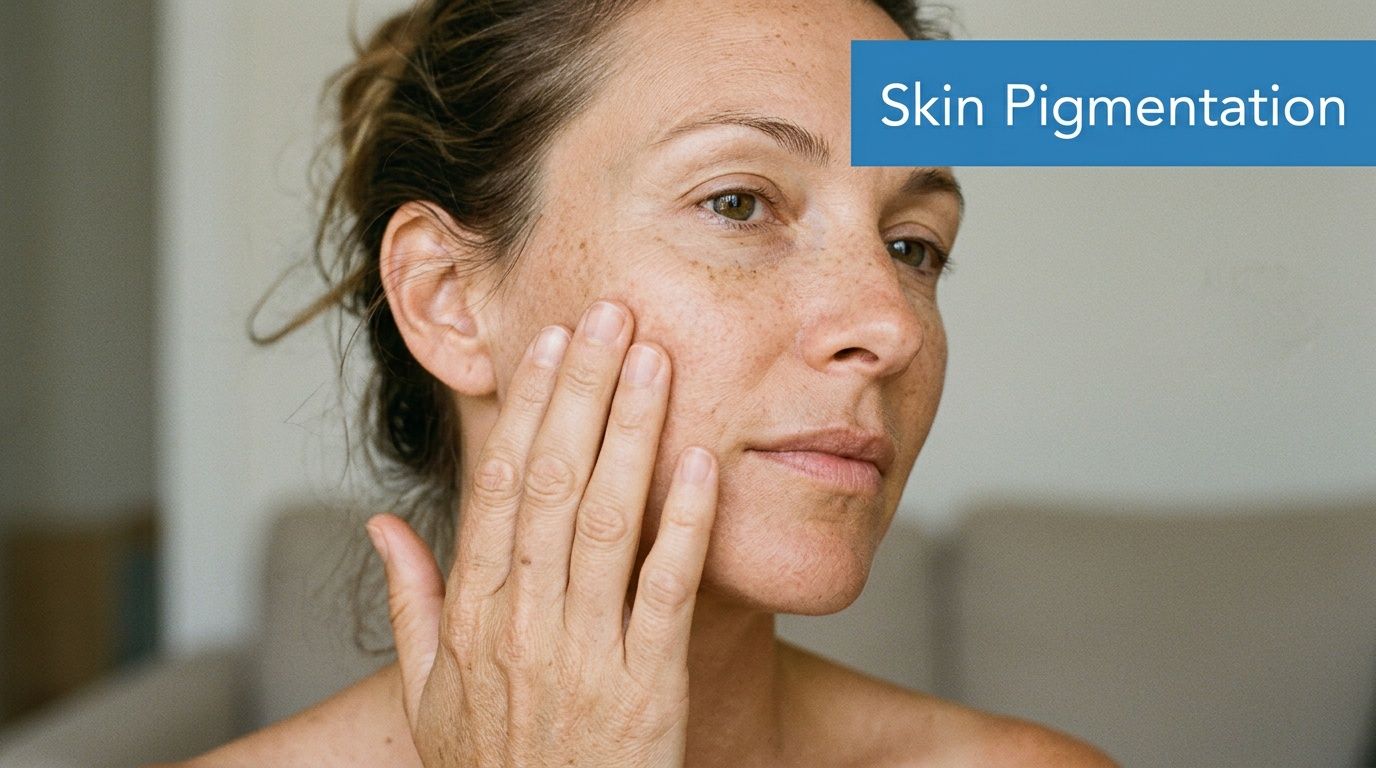
What melasma is actually doing in the skin
Unlike a single dark mark left by a spot, melasma usually forms broader areas of discolouration. It often shows up on the cheeks, forehead, upper lip, jawline, or bridge of the nose. The colour can look tan, brown, grey-brown, or a mix, depending on depth.
That depth matters. Surface pigment is often easier to improve with exfoliation, brightening ingredients, and selected peels. Deeper pigment needs more caution and usually a more structured plan. If you've been reading about treating melasma effectively in UK, you'll have noticed the same recurring theme: success depends on combining trigger control with the right treatment rather than relying on a single product.
Melasma also doesn't always stay static. It can darken with sun, flare with heat, or become more noticeable during hormonal shifts. That's why many people feel as if it improves slightly, then rebounds.
The triggers that matter most
Some triggers are common enough that I ask about them in every consultation.
- Hormones: Pregnancy, hormonal contraception, and other hormonal changes can push pigment activity higher. This is why melasma is sometimes called the mask of pregnancy, even though it isn't limited to pregnancy.
- Sun exposure: UV light is a major aggravator, but visible light and cumulative day-to-day exposure also matter. Even short, regular exposure can maintain pigment activity.
- Genetic tendency: Some skin types are more prone to developing uneven pigmentation patterns.
- Heat: Saunas, steam, hot yoga, and even repeated cooking over a hot hob can be enough to aggravate some cases.
- Skin irritation: Overusing active skincare, aggressive exfoliation, or treatments that trigger inflammation can make patches look worse.
If your pigment developed after prolonged sun exposure and you're also noticing uneven tone elsewhere, it can help to look at related options for sun damage and skin treatment. Melasma isn't identical to ordinary sun damage, but the overlap in presentation often needs careful sorting.
Practical rule: If a treatment creates too much irritation, it may fade pigment briefly but still leave the skin more reactive in the long run.
Clients often ask which trigger is the main cause. Usually, it isn't just one. Melasma behaves more like a pattern where hormones, light exposure, heat, and skin sensitivity all feed into each other.
A Guide to Professional Melasma Treatments
Professional treatment works best when it's layered properly. In practice, that means calming pigment production, choosing procedures that suit the skin's tolerance, and spacing them sensibly so you don't create rebound pigmentation.

Prescription and clinic grade topical care
Topicals are often the foundation. They help reduce pigment signalling and prepare the skin before any in-clinic procedure starts.
Common options include ingredients such as hydroquinone, tretinoin, azelaic acid, tranexamic acid, kojic acid, and other tyrosinase inhibitors. Not every client needs the same mix, and not every skin barrier can tolerate the stronger end of that list straight away.
Tretinoin deserves a separate mention because people often confuse it with retinol. If you're unsure about the difference, this guide that helps compare retinol and retin-a explains why they aren't interchangeable. In melasma care, that distinction matters because strength, tolerance, and irritation risk all affect outcomes.
What topicals do well:
- Suppress pigment activity: They help slow the overactive pigment factories.
- Support longer term control: They're useful after peels or laser, not just before.
- Improve treatment readiness: Better-prepared skin usually responds more predictably.
What topicals don't do well:
- Work instantly: Melasma changes slowly.
- Replace procedures in every case: Stubborn or deeper pigment often needs more than skincare alone.
- Suit every skin without adjustment: If the skin stings, peels excessively, or becomes inflamed, the plan needs changing.
Chemical peels for superficial pigment
Peels can be very useful when melasma sits more superficially and the skin can tolerate controlled exfoliation. The goal isn't to strip the skin. The goal is to encourage turnover, gradually lift visible pigment, and improve the penetration of supportive products.
In a good melasma plan, peels are chosen conservatively. Stronger isn't automatically better. In fact, going too aggressive is one of the most common mistakes I see in clients who've been treated elsewhere.
A typical peel appointment feels warm or tingly rather than painful. Afterwards, the skin may look flushed and then lightly dry or flaky over the next few days. For the right person, peels can brighten the overall appearance and soften patchiness. For highly reactive skin, they need careful selection and timing.
Microneedling with 3D Dermaforce
Microneedling can help when melasma sits alongside textural concerns, dullness, or a compromised skin cycle. 3D Dermaforce microneedling creates controlled micro-channels in the skin, which stimulates renewal and can improve the way active products are delivered.
This option often suits clients who want a treatment with manageable downtime and a broader skin-quality benefit. It won't be the first choice for every melasma presentation, especially if the skin is inflamed or unstable, but it can play a strong supporting role in a wider plan.
The sensation is usually tolerable, especially with appropriate preparation. Afterwards, the skin typically looks flushed, like a mild sun-exposed look, before settling.
A closer look at targeted pigmentation treatments can be useful here, especially if you're weighing energy-based options such as 3D Nanosure pigmentation removal.
For a visual overview of skin-focused treatments, this short video is a helpful starting point.
Laser options including 3D Nanosure
Laser treatment is where many people place the most hope, and sometimes the most unrealistic expectations. For melasma, laser can be excellent, but only when it's chosen with precision. The wrong laser, the wrong setting, or the wrong timing can flare pigment instead of improving it.
That's why 3D Nanosure is worth discussing properly. It's used to target pigmentation and uneven tone with controlled energy, focusing on the pigmented tissue while limiting unnecessary disruption to surrounding skin. For clients with persistent patches or mixed pigmentation concerns, it can be a strong option when performed as part of a wider plan rather than as a stand-alone quick fix.
Here's the trade-off with laser:
- What it can do well: Target stubborn pigment, improve visible clarity, and reach concerns that haven't shifted with creams alone.
- Where caution matters: Reactive skin, recent sun exposure, poor aftercare, or treating too aggressively can all increase the risk of setbacks.
- What clients need to accept: Laser doesn't switch off your tendency to form melasma. It addresses what's visible and helps reset the skin, but maintenance still matters.
One option locally is 3D Aesthetics Leamington Spa, which offers 3D Nanosure among other skin treatments. In melasma work, that sort of technology tends to perform best when paired with good pigment suppression, strict sun protection, and realistic spacing between sessions.
Comparing Your Melasma Treatment Options Side-by-Side
When clients ask which treatment is best, I usually answer with another question. Best for what kind of melasma? Surface pigment, deeper pigment, sensitive skin, busy schedule, tight budget, or a history of reactions all change the answer.
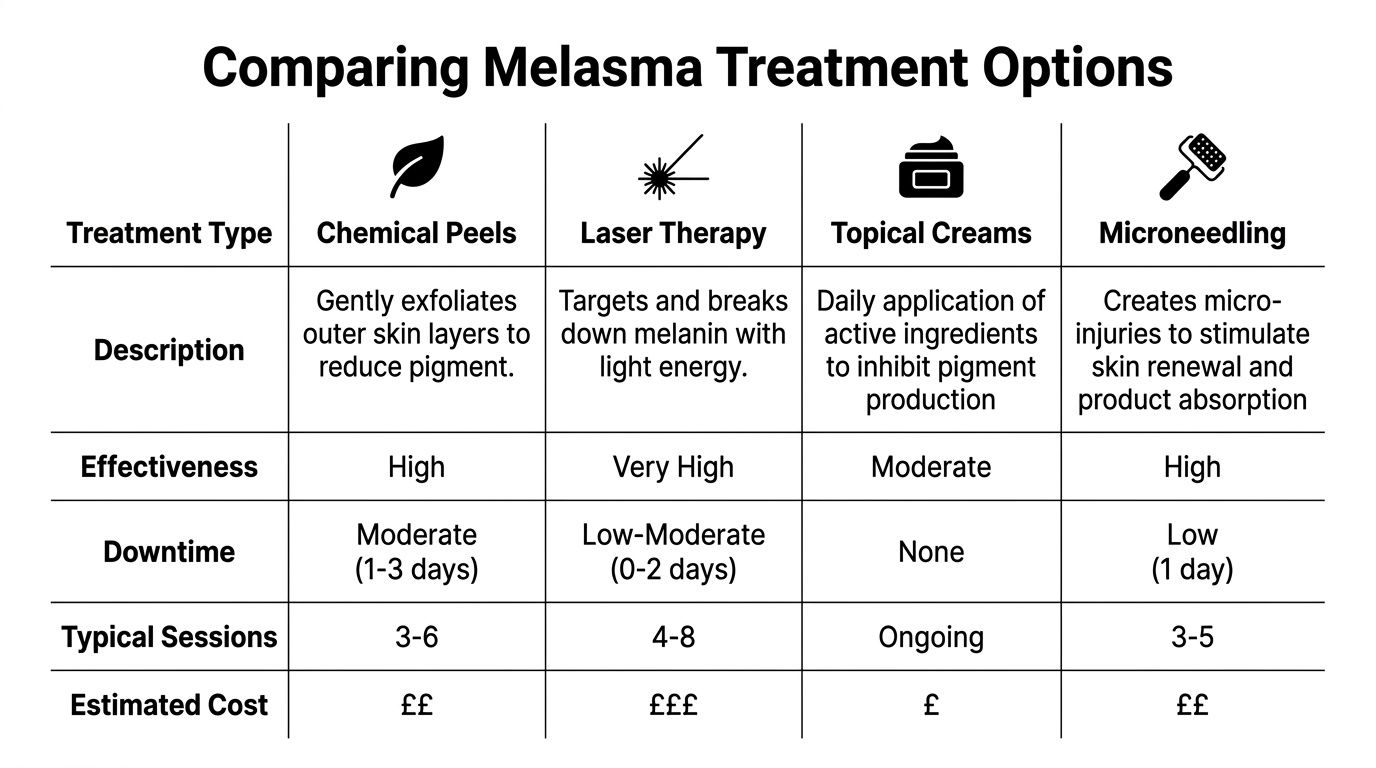
How to read the options clearly
| Treatment Type | Best For | Expected Results | Typical Downtime | Number of Sessions | Cost Guide |
|---|---|---|---|---|---|
| Topical creams | Early melasma, maintenance, pigment control | Gradual softening and prevention support | None to minimal if tolerated well | Ongoing | £ |
| Chemical peels | More superficial pigment and dull uneven tone | Brighter surface tone and improved patchiness | Light flaking or temporary redness | A course is often needed | ££ |
| Microneedling | Melasma with texture concerns or overall skin renewal goals | Progressive improvement in skin quality and tone | Short recovery with temporary redness | Usually done as a series | ££ |
| Laser therapy | Stubborn pigmentation and selected deeper concerns | More targeted clearing when carefully chosen | Varies from very light to moderate | Often completed over multiple sessions | £££ |
If you're also looking at resurfacing treatments more broadly, this page on skin resurfacing treatment helps place melasma care into the wider picture of pigment and texture correction.
The trade offs that matter in real life
Creams are the slowest option, but they're often the anchor of the whole plan. They're useful for calming pigment behaviour and maintaining progress. Where people go wrong is expecting them to fully clear established melasma quickly.
Peels can be a smart starting point if the skin is reasonably stable and the pigment is more superficial. They're often easier to fit around work and social plans than clients expect. The caution is sensitivity. If your barrier is already irritated, a peel may need to wait.
Microneedling sits in an interesting middle ground. It can support melasma improvement while also helping the skin look fresher overall. That broader benefit appeals to many clients, especially if they're not only focused on pigment.
Laser usually sounds like the strongest answer, and for some cases it is. But it asks more of the decision-making. The skin has to be assessed properly, the settings have to be right, and aftercare has to be strict. In return, it can address stubborn areas with more precision than peels or skincare alone.
The right treatment isn't the one with the biggest reputation. It's the one your skin can respond to without being pushed into more inflammation.
If you're searching for melasma treatment near me, this is what you want from a local consultation: not a standard package, but a reasoned choice based on your skin's behaviour.
Your Personalised Treatment Plan in Leamington Spa
A good melasma plan starts before the first treatment. It starts with assessment. Not a quick glance under bright lights, but a proper look at pigment pattern, likely depth, sensitivity, and whether the skin shows signs that suggest a higher risk of rebound.
Why the first scan changes the plan
The most useful first step is a complimentary skin consultation with a full 3D scan. That matters because melasma can look deceptively simple on the surface. A patch that seems mild in normal lighting may reveal broader underlying unevenness when analysed more closely.
The scan gives a clearer view of how the pigmentation is distributed and whether the concern is isolated or part of a wider skin picture. It also helps when clients have multiple issues at once, such as melasma plus post-inflammatory marks, redness, sun spots, or textural changes.
That level of assessment changes the recommendation. Someone with reactive skin and diffuse pigment may need barrier repair and topical control before anything more active. Another person may be ready for peels or targeted laser much sooner. Without the scan and clinical review, those two clients can easily be given the same plan when they shouldn't be.
What a tailored pathway usually looks like
Most personalised plans follow a sequence rather than a single appointment.
- First stage: Identify triggers, review current skincare, and stop anything that's likely to irritate the skin.
- Second stage: Build a home routine that supports pigment control and daily protection.
- Third stage: Introduce in-clinic treatments in the right order, which may mean peels first, or microneedling, or a move towards laser if the skin is suitable.
- Fourth stage: Maintain results with ongoing review, because melasma management doesn't end when the patches lighten.
Clients often want before-and-after certainty. I understand that. But melasma is one of those conditions where honest expectation setting is part of good care. Improvement is realistic. Perfection isn't a promise any responsible practitioner should make.
“We're not only treating the mark you can see. We're trying to calm the behaviour that keeps creating it.”
Aftercare is where many results are protected or lost. Daily SPF, heat awareness, sensible skincare, and timing around holidays all matter. If the skin is exposed to too much sun too soon, or if strong actives are reintroduced carelessly, the pigment can return faster than clients expect.
That's why I see the consultation and scan as the essential first step, not a formality. It's where the plan becomes specific to your skin rather than borrowed from somebody else's.
Common Questions About Managing Melasma
Will melasma come back after treatment
It can. Melasma has a strong tendency to recur because the skin remains prone to overproducing pigment when triggered. Treatment can fade existing patches and improve overall tone, but ongoing control matters. That usually means consistent SPF, sensible heat exposure, and maintenance skincare rather than assuming the issue is permanently switched off.
Is melasma treatment painful
Usually, no. Most clients describe treatments as manageable rather than painful. Peels may feel tingly or warm. Microneedling feels scratchy or prickly. Laser can feel snappy or hot in short bursts depending on the device and settings. What matters more than discomfort is choosing a treatment intensity your skin can handle safely.
Can I treat melasma at home
You can support it at home, but home care rarely does the whole job once melasma is established. Good home management includes pigment-regulating skincare, gentle cleansing, moisturising properly, and daily broad-spectrum SPF. What doesn't work well is constantly switching products, over-exfoliating, or chasing stronger actives when the skin is already irritated.
How do I stop it getting worse
Start with the triggers you can control.
- Wear SPF daily: Not only on bright summer days, but year-round.
- Reduce avoidable heat exposure: If you know your skin flushes easily, treat heat as part of the problem.
- Keep skincare calm: A stable routine beats an aggressive one.
- Get assessed early: Fresh or worsening pigmentation is easier to manage when the plan is made before the skin becomes more reactive.
If you've been repeatedly searching for melasma treatment near me, the most useful shift is this one. Stop asking which single treatment is strongest, and start asking which plan makes sense for your skin pattern, trigger profile, and tolerance.
If you want a clearer answer on what's suitable for your skin, book a consultation with 3D Aesthetics Leamington Spa. A personalised review with the complimentary 3D skin analysis can show whether your pigmentation is likely to respond better to topical control, peels, microneedling, laser, or a combination approach, so you can start with a plan that fits your skin rather than guessing.