
You're probably here because your skin doesn't look “bad”, but it doesn't look like it used to either. Maybe it's duller than before. Maybe acne scars still catch the light. Maybe your jawline feels softer, your pores look larger, or makeup sits unevenly no matter what serum you buy.
That's usually the moment people start hearing about regenerative skin treatments. Not as a quick cover-up, but as a different way of thinking about skin health. Instead of asking, “What can I put on top of this?”, the better question becomes, “What can help my skin rebuild itself better?”
That shift matters. The UK aesthetics market is projected to exceed £3.6 billion in 2026, reflecting a broader move towards evidence-led, non-surgical options that support natural skin vitality, according to UK aesthetics industry statistics. In other words, more people are choosing treatments that work with biology rather than trying to fight it.
Table of Contents
- An Introduction to Skin Regeneration
- What Exactly Are Regenerative Skin Treatments
- A Guide to Common Regenerative Modalities
- Are You a Good Candidate for These Treatments
- The Treatment Journey Results Timelines and Aftercare
- How to Choose a Safe and Effective Clinic
- The Future of Your Skin Is Regenerative
An Introduction to Skin Regeneration
Healthy-looking skin isn't just about smoothness. It's about function. Skin holds water properly, repairs itself efficiently, produces organised collagen, and maintains a stronger surface barrier when it's working well.
That's why regenerative aesthetics has changed the conversation. Older approaches often focused on hiding a problem. A stronger foundation works differently. It encourages the skin to repair, remodel, and behave more like healthier skin again.
Think about two clients with similar concerns. One is bothered by fine lines and crepey texture. The other feels frustrated by post-acne marks and uneven tone. They might not need the same treatment, but the biological goal is often similar. Support the skin's own repair process so the result looks fresher, not artificial.
Regeneration is less about “doing more” to the skin and more about giving the skin the right reason to respond.
That's also why results from these treatments usually build gradually. Skin needs time to lay down new collagen, improve hydration, calm inflammation, and reorganise damaged tissue. The process is slower than a one-day cosmetic fix, but the logic is stronger.
A regenerative approach often suits people who want:
- Natural-looking change that doesn't alter facial character
- Better texture and tone rather than surface camouflage
- A long-term plan instead of a single dramatic procedure
- Treatment combinations that address several layers of a concern
When people understand that principle, the treatments start to make more sense. Microneedling, HIFU, PRP, LED, polynucleotides, and resurfacing lasers can look unrelated on a menu. Biologically, they're all trying to influence healing, collagen, hydration, or cellular communication in different ways.
What Exactly Are Regenerative Skin Treatments
The skin is a living repair system
The easiest way to understand regenerative skin treatments is to stop thinking of skin as a flat surface.
Think of it more like a garden. The visible part is what you notice first. Texture, glow, lines, pores, scars. Underneath that is the soil, the environment that allows healthy growth. In skin, that “soil” includes collagen, elastin, hydration, blood supply, and the cells that coordinate repair.
When the garden is depleted, you can paint the fence and tidy the edges, but the plants still struggle. Regenerative treatments focus on the soil. They aim to create better conditions so the skin can function more effectively from within.
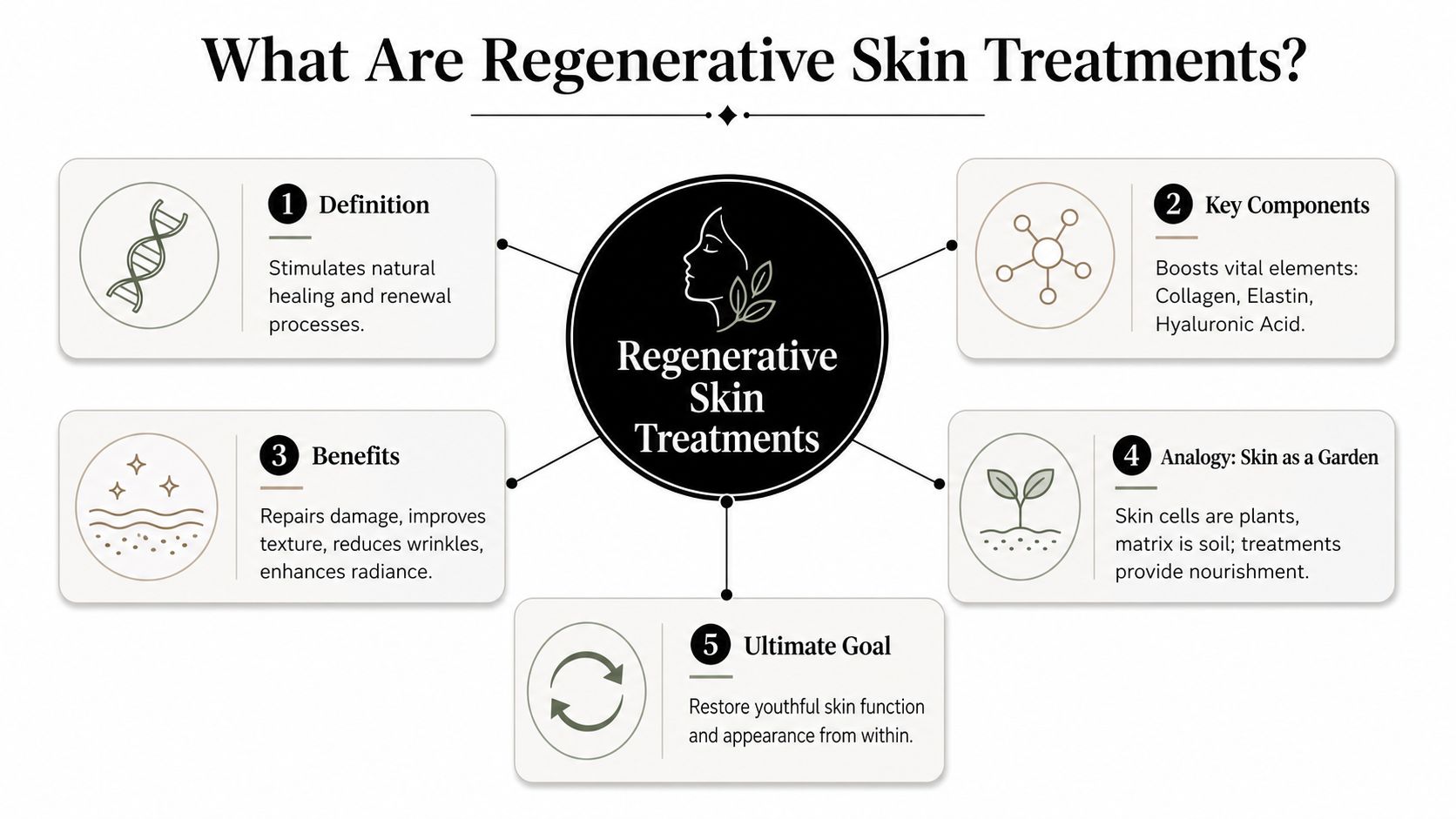
The main workers in this process are often called fibroblasts. You don't need to memorise the word. Just think of them as your skin's repair team. When they receive the right signal, they help produce collagen and elastin, which support firmness and bounce.
Some treatments create a controlled stimulus, such as tiny channels from microneedling or heat from ultrasound and radiofrequency. Others support the healing environment with biological ingredients or calming light energy. A treatment like Dermalux LED therapy is a good example of a modality often used to support recovery and overall skin function rather than force an aggressive response.
Why regeneration feels different from cosmetic cover-ups
A frequent point of confusion for many clients is their expectation that every treatment will give an instant visible change. While some regenerative treatments do give an early glow, the deeper benefit is usually delayed because tissue remodelling takes time.
Here's the practical difference:
- A cover-up approach improves appearance at the surface
- A regenerative approach tries to improve skin behaviour underneath
- A combined approach often gives the best outcome because appearance and tissue quality both matter
In the UK, injectable bio-revitalisers such as hyaluronic acid-based skin boosters have shown clinically measurable regenerative effects, including improved hydration by 20 to 25%, elasticity by 15 to 18%, and patient satisfaction between 88 and 90%, according to a systematic review of licensed UK products. The same review notes that polynucleotide-based therapies can increase skin firmness by 18 to 22% and that PRP showed overall skin quality improvement reported by 76% of UK patients.
Those numbers matter because they show regeneration isn't just a marketing word when properly selected products and protocols are used within UK guidance. It's a biological strategy with measurable skin effects.
A Guide to Common Regenerative Modalities
Not all regenerative skin treatments work the same way. That's important, because people often compare them as if they're interchangeable. They're not. The best results usually come from matching the mechanism to the problem.
Controlled micro-injury treatments
Microneedling works by creating tiny, deliberate channels in the skin. This controlled injury prompts a repair response that can help with texture, enlarged pores, superficial scarring, and overall skin quality. RF microneedling adds heat energy to that process, which can be helpful when laxity or deeper remodelling is also part of the concern.
For specific UK concerns, RF microneedling improves skin tone in 84% of patients after one session, according to advanced London treatment data for skin rejuvenation. That's useful when someone wants to know whether a treatment can produce visible movement early in a plan.
PRP often sits well beside microneedling because it supports the healing phase. Blood is drawn, processed, and the platelet-rich portion is used to encourage repair. Clients usually choose it when they want a more biological approach to texture, fine lines, and tired-looking skin.
Energy-based collagen stimulation
HIFU and fractional CO2 laser both stimulate regeneration, but in different ways.
HIFU delivers focused ultrasound energy into deeper layers. It's often chosen for skin laxity, a softening jawline, or areas where support has thinned. The skin surface usually stays intact, so the treatment path feels quite different from laser resurfacing.
Fractional CO2 is more intensive. It creates controlled columns of thermal injury to trigger resurfacing and collagen remodelling. That makes it a strong option for acne scarring, etched texture, and more advanced photo-ageing, but it usually comes with more visible downtime.
For scarring, CO2 ablative laser achieves 60 to 80% scar improvement over 3 to 5 sessions in the UK data cited above. That's a good reminder that stronger isn't always better in every case. It means the treatment has a particular role.
Biological support and recovery treatments
Some modalities don't rely on aggressive stimulation. They help the skin recover better, stay calmer, or maintain results between stronger sessions.
LED therapy fits here. It's often used when a client has redness, inflammation, healing skin, or a compromised barrier. It can also be paired with other treatments because regenerative plans work best when recovery is respected rather than ignored.
You may also see growing interest in exosome-related treatments. This area needs careful separation between lawful topical support and unlawful injectable claims. If you're researching exosome skin treatment, make sure you understand exactly what form is being offered and whether it complies with UK rules.
Practical rule: A good regenerative plan doesn't ask one treatment to do everything. It layers technologies so each one handles a different part of the job.
Regenerative Skin Treatment Comparison
| Treatment | Best For | Mechanism | Typical Downtime | Results Timeline |
|---|---|---|---|---|
| Microneedling | Texture, enlarged pores, mild scarring, fine lines | Controlled micro-injury prompts repair and collagen activity | Usually mild redness for a short recovery period | Early glow first, structural improvement develops gradually |
| RF Microneedling | Texture plus laxity, acne scars, firmer-looking skin | Microneedling plus heat-based stimulation deeper in the skin | Often more downtime than standard microneedling, but still manageable for many clients | Some early change, with continued remodelling over time |
| PRP | Dullness, fine lines, post-treatment recovery support | Platelet-rich plasma supports healing signals | Usually modest downtime depending on how it's delivered | Gradual improvement as skin quality builds |
| HIFU | Laxity, lower face softening, contour support | Focused ultrasound stimulates deeper collagen remodelling | Usually low visible downtime | Slow, progressive tightening effect |
| Fractional CO2 | Acne scarring, deeper texture, sun damage | Controlled ablative resurfacing and collagen remodelling | Higher downtime due to resurfacing | Improvement builds across healing and follow-up months |
| LED Therapy | Redness, healing support, inflammation, maintenance | Light energy supports recovery and skin function | Minimal downtime | Often used for support rather than one-off transformation |
Are You a Good Candidate for These Treatments
Some people are ideal candidates for regenerative skin treatments. Others need a more cautious plan, a different modality, or a delay until the skin is calmer. Good treatment matching matters more than enthusiasm.
The best candidates by concern
You're often a strong candidate if your concern is about quality rather than only volume. That includes uneven texture, enlarged pores, early laxity, mild to moderate scarring, dullness, fine lines, or skin that feels thinner and less resilient than it used to.
Concern-led matching usually looks something like this:
- If laxity is your main issue, deeper collagen stimulators such as HIFU or RF-based approaches may make more sense than surface-focused options.
- If acne scarring is the main frustration, microneedling, RF microneedling, or fractional CO2 may be more relevant.
- If your skin is reactive or easily inflamed, lower-intensity support treatments and careful pacing are often wiser than jumping into strong resurfacing.
- If pigmentation is part of the picture, treatment choice needs extra care, especially for darker skin tones where post-inflammatory pigmentation risk can be higher after aggressive procedures.
Age matters less than people think. Biological age of the skin is more useful than the number on your birthday. A person in their thirties with acne scarring may need more repair-focused treatment than someone older whose main issue is mild laxity.
The right question isn't “Am I too old or too young?” It's “What is my skin doing, and what signal does it need?”
When caution matters more than enthusiasm
There are also times when treatment should be postponed or adjusted.
You may need a different plan if you have active skin infection, an impaired barrier, uncontrolled inflammatory conditions, very recent intense sun exposure, or a history of poor healing. Some medications and health conditions can also affect whether skin heals predictably.
A careful consultation should ask about:
- Your medical background, including healing issues or autoimmune concerns
- Current skin activity, such as acne flare-ups, eczema, or irritation
- Pigment behaviour, especially if you mark easily after inflammation
- Lifestyle factors, because downtime, sun habits, and consistency affect outcomes
Suitability also includes mindset. Regenerative work tends to reward patients who are realistic, patient, and willing to follow aftercare properly. If someone wants one appointment and dramatic overnight change, this category often won't match expectations.
The Treatment Journey Results Timelines and Aftercare
A lot of disappointment in aesthetics comes from poor expectation setting. The treatment may be fine. The timeline is what surprises people.
What happens from consultation to healing
Most regenerative treatment plans start with assessment. The therapist looks at the visible issue, but also at the pattern behind it. Is the problem mainly surface damage, loss of support, inflammation, poor healing, or a mixture of all four?
That's why a treatment session is only one part of the process. The body still has to respond afterwards. In the first few days, the skin may feel tight, pink, warm, flaky, or temporarily rough depending on the modality. That doesn't mean it's gone wrong. It means healing has started.
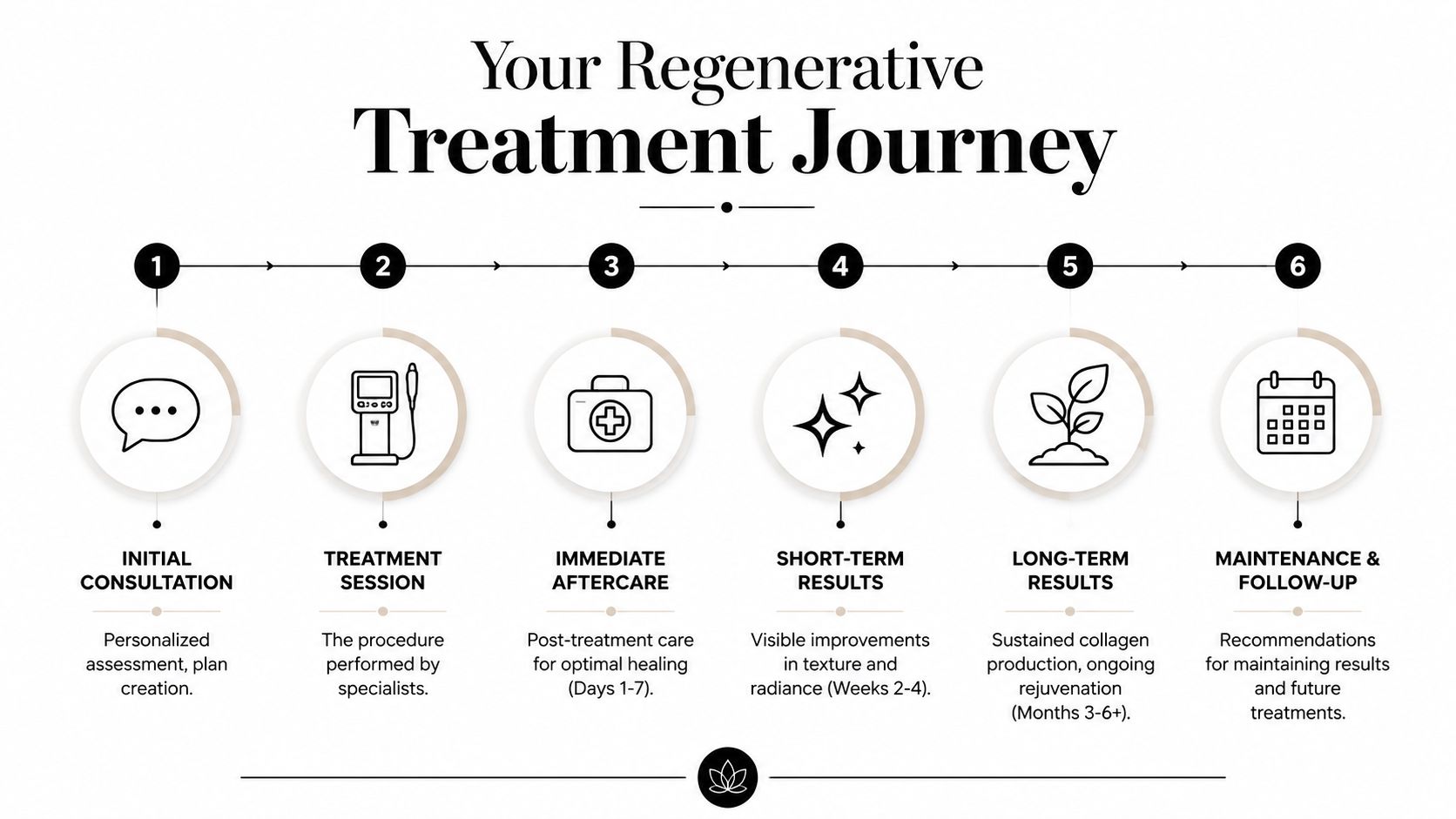
A simple way to think about the timeline:
- Early phase brings visible signs of treatment and, sometimes, an initial glow
- Middle phase is when repair activity starts translating into smoother texture or more even tone
- Later phase is where collagen remodelling becomes more apparent
For readers wanting a practical overview of surface changes and skin feel between sessions, this guide on how to improve skin texture gives a useful treatment-planning context.
Aftercare is where many people either protect their result or inadvertently sabotage it. The basics are not glamorous, but they matter. Keep the skin clean, calm, protected from sun, and away from unnecessary irritation. Don't pile on active skincare because you feel impatient.
Why maintenance is part of the plan
Regenerative aesthetics works best when people stop thinking in one-off appointments and start thinking in cycles of stimulation and recovery.
Evidence-led UK clinics commonly use an initial course of 2 to 3 sessions followed by top-ups every 6 to 12 months for treatments such as PRP, polynucleotides, and biostimulatory injectables, according to a UK regenerative aesthetics guide. That doesn't mean everyone needs the same calendar. It means maintenance is a standard part of realistic planning, not an optional extra invented after the fact.
This is often described as collagen banking. You're not chasing a perfect face. You're steadily improving the quality reserves of your skin so ageing, stress, inflammation, and sun damage have less visible impact over time.
Skin can improve in layers. First it looks calmer. Then it looks brighter. Later it often looks firmer and more refined.
The most successful clients usually do three things well:
- They stick to the interval advised, rather than waiting until everything fades
- They protect the skin between sessions, especially from UV exposure and harsh products
- They judge results over months, not days, because collagen doesn't appear on demand
How to Choose a Safe and Effective Clinic
The clinic matters as much as the treatment. The same label on a menu can mean very different things depending on who assesses you, what device they use, how transparently they discuss risk, and whether they're willing to say no when a treatment isn't appropriate.

Safety starts with what a clinic refuses to do
A trustworthy clinic doesn't just talk about innovation. It understands regulation.
One area where patients often get misled is injectable exosomes. In the UK, human-derived injectable exosomes have no marketing authorisation and are explicitly unlawful for aesthetic use under MHRA rules, as explained in this UK patient safety warning on exosome therapy. If a provider can't explain that clearly, I'd question how carefully they assess the rest of their treatment menu.
Another example is stem-cell-enriched fat grafting for scarring. It's often spoken about online as if it's established routine care. In reality, UK commentary on regenerative dermatology and stem-cell therapy describes it as investigational, with small-scale studies and limited long-term follow-up. That nuance matters.
Questions worth asking before you book
The best consultations feel calm and specific. Nobody should rush you past the risk discussion.
Ask direct questions like these:
- Who will assess me and perform the treatment? You want clarity on training and scope of practice.
- Which device or product are you using? Brand names and treatment protocols should never be vague.
- Why is this the right choice for my skin concern? The answer should match your actual issue, not a standard sales script.
- What are the downsides? A serious practitioner will talk about downtime, limitations, and the chance that another option may suit you better.
- How will progress be measured? Good clinics track outcomes with photos, structured review, or objective assessment.
A clinic that invests in clear patient education usually communicates better in every area. That's one reason broader guidance on SEO for healthcare clinics can be useful to read. It helps explain how reputable clinics present information transparently online, which makes it easier for patients to compare quality before they ever book.
Why communication matters as much as technology
Fancy equipment doesn't rescue poor judgement. A strong clinic uses technology well, but it also explains why a treatment is being chosen, what alternatives exist, and what maintenance is likely to involve.
Video can help you judge that before a consultation. The most useful clinic videos don't just show machines. They show whether the team can explain treatment logic in plain English.
If you leave a consultation feeling dazzled but confused, that's not a good sign. You should understand what problem is being treated, why that modality was selected, what the healing path looks like, and what would count as success for your skin.
The Future of Your Skin Is Regenerative
The most useful way to think about regenerative skin treatments is simple. They help the skin behave more like healthier skin again. That's why a multi-technology plan often outperforms a single treatment. One modality can stimulate, another can resurface, and another can support healing.
If you track your progress, even simple tools can help you notice changes in texture and facial detail more clearly. For at-home photo comparison, MyImageUpscaler for face enhancement can be a practical way to sharpen reference images without changing the underlying result you're reviewing.
The goal isn't to chase perfection. It's to build stronger, calmer, more resilient skin over time.
If you're ready to explore a personalised plan for firmer, clearer, healthier-looking skin, 3D Aesthetics Leamington Spa offers advanced non-surgical consultations and treatment options matched to your concerns, comfort, and long-term goals.