
You're probably here because your skin looks fine in some lights, then suddenly shows every pore, patch of shine, or rough area the moment you step near a mirror. Maybe makeup sits unevenly around your nose. Maybe your forehead gets oily by lunchtime. Maybe your skin isn't “bad”, but it never quite looks as fresh as you want it to.
That's usually when people start asking what a carbon laser facial is, and whether it's worth it.
It's often called a carbon peel or Hollywood peel, and the appeal is easy to understand. It's a non-surgical treatment used for concerns like oiliness, enlarged pores, dullness, and blemish-prone skin, with little to no downtime. If you're also trying to work out whether your skin needs treatment, better home care, or both, it can help to understand your own oil balance first. This guide to healthy skin oils is a useful primer if you're acne-prone and unsure what “oily” skin needs.
A lot of confusion comes from the name. It sounds harsh. It isn't. It sounds like it peels layers off the face. It doesn't work like a traditional acid peel. It sounds complicated. In practice, it's a very structured treatment that uses a carbon layer and a laser to clean, refine, and brighten the skin surface.
Table of Contents
- The Search for Clearer Brighter Skin
- How the Carbon Laser Facial Revitalises Skin
- The Main Benefits of a Carbon Laser Peel
- Your Treatment Experience from Start to Finish
- Is a Carbon Laser Facial the Right Choice for You
- How Carbon Facials Compare to Other Treatments
- Results Timeline and Your Consultation at 3D Aesthetics
The Search for Clearer Brighter Skin
You notice it most on an ordinary morning. Your skin is not in crisis, yet it never quite looks fresh. The pores around your nose seem more visible than you would like, makeup sits unevenly by lunchtime, and there is a shine across the T-zone that returns no matter how carefully you cleanse.
That is the point where many clients start weighing their options. They have already worked through the basics at home. Clay masks, exfoliating acids, lighter moisturisers, richer moisturisers, spot treatments, fewer products, more hydration. Some of those steps can help, but the overall picture often stays the same. The skin still looks congested, textured, or dull.
A carbon laser facial often appeals at this stage because it sits between a routine facial and stronger resurfacing treatments. It gives a more treatment-led approach without the level of downtime that puts many people off more intensive options. For someone trying to decide what to do next, that middle ground can feel reassuring.
At 3D Aesthetics, that decision is rarely about picking the trendiest name on a menu. It is about matching the treatment to the reason your skin looks unsettled in the first place. Oily congestion, uneven tone, post-breakout roughness, and loss of brightness can look similar in the mirror, but they do not always respond best to the same treatment. That is why a personalised consultation matters. It helps separate what is happening on the surface from what is driving it underneath.
A useful comparison is this. If daily skincare is your home maintenance, advanced treatments are the specialist tools. You would not use the same tool for blocked gutters, peeling paint, and a cracked tile. Skin works in much the same way. A carbon laser facial can be a strong option for surface congestion and excess oil, while other concerns may point us toward a different path. If your main goal is smoothing roughness, this guide on how to improve skin texture can help you understand that bigger picture.
It also helps to clear up one common misunderstanding. The “Hollywood peel” nickname makes the treatment sound flashy, but the reason people keep asking about it is practical. They want skin to look cleaner, smoother, and brighter without a drawn-out recovery period.
Skincare choices outside the clinic still matter as well, especially if your skin is oily or blemish-prone. Choosing products that support the skin barrier without adding unnecessary heaviness can make a real difference, and this guide to healthy skin oils is a helpful starting point for that part of the conversation.
For many clients, the primary question is not whether a carbon laser facial sounds impressive. It is whether it fits their skin, their routine, and their goals better than the other advanced options available.
How the Carbon Laser Facial Revitalises Skin
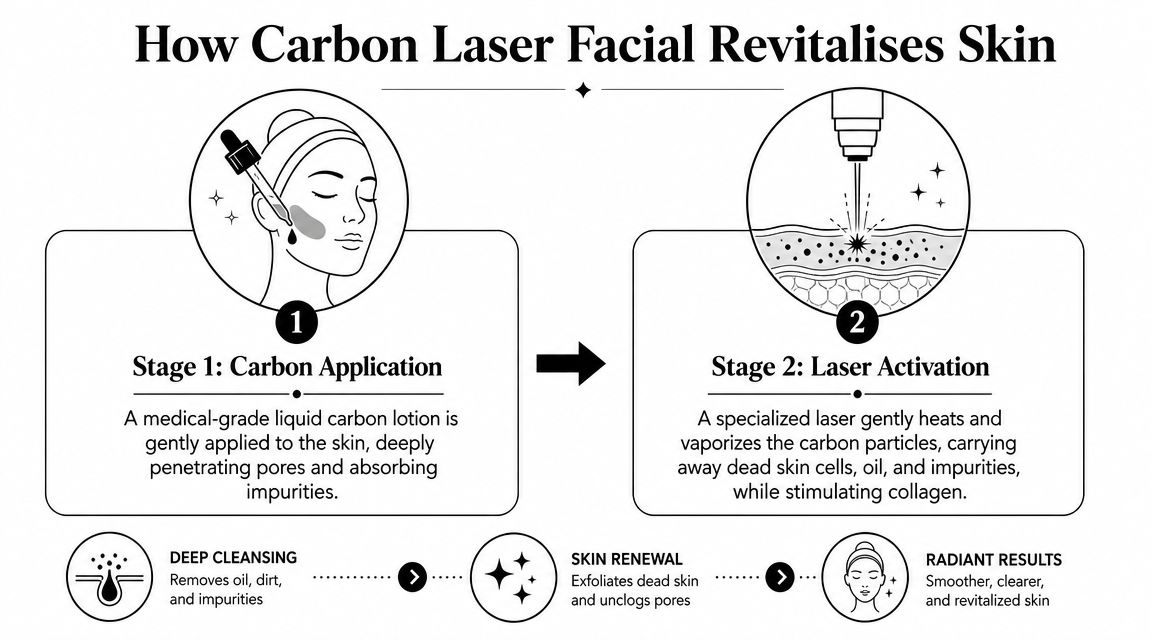
The easiest way to understand what is Carbon Laser Facial treatment is to think of it as a two-stage reset for the skin surface. One part attracts debris. The next part removes it in a very targeted way.
Stage one with the carbon layer
First, a thin carbon layer is applied over clean skin and left in place for about 10 minutes before laser treatment. Think of this carbon like a very fine dust that settles into the upper layers of oil, dead skin, and pore congestion rather than sitting on the face like an ordinary mask.
That point matters because many people hear “carbon” and assume it's just a black cream painted on for effect. It isn't there for colour. It's there because it helps the treatment target the things we want to reduce, especially excess oil and surface build-up.
A simple analogy helps. If your pores are like tiny doorways collecting daily grime, the carbon acts a bit like a dry sponge placed over those doorways. It adheres to what's on and near the skin surface, so the laser has something precise to interact with.
Stage two with the laser
Once the carbon has settled, the practitioner treats the skin with a Q-switched 1064 nm laser. The laser energy is absorbed by the carbon particles, which are then broken up and removed along with the debris attached to them. Peer-reviewed dermatology literature describes this as the modern protocol for the treatment, and in one retrospective study 100% of treated patients showed overall skin improvement on the GAIS scale, while only minor temporary erythema was reported in 6 subjects (peer-reviewed dermatology study on carbon peel protocol and outcomes).
The science sounds technical, but the practical effect is easier to grasp. The treatment gives the skin a deep, controlled exfoliating pass while also creating gentle thermal activity in the skin. That mechanism is linked to reduced sebum production and suppression of Cutibacterium acnes replication, which is why the treatment is often discussed for oily, acne-prone skin.
Practical rule: Carbon doesn't do the job on its own, and the laser doesn't work in the same way without the carbon. The treatment works because the two stages are designed to work together.
This is also why a carbon facial is often grouped with texture-focused rejuvenation treatments rather than basic pampering facials. It's targeted, device-led, and designed for visible refinement. If texture is one of your main concerns, our article on how to improve skin texture can help you place carbon facials alongside other options.
The Main Benefits of a Carbon Laser Peel
Most clients don't come in asking for a lesson in laser physics. They want to know what they might notice in the mirror. The benefits are easiest to understand in three groups.
Purification
If your skin gets greasy quickly, breaks out in the same areas, or always feels a bit clogged, this is usually the first category you care about.
A carbon laser peel is often chosen because it helps clear away the mix of oil, debris, and dead surface cells that make skin look congested. Clients with blackheads around the nose or recurrent bumps across the forehead often notice that the skin feels cleaner and less heavy afterwards.
For acne-prone skin, the appeal goes beyond “deep cleansing”. The treatment is associated with lower sebum activity and less favourable conditions for acne-causing bacteria. That doesn't make it a cure-all, but it does explain why it's often recommended when oil and breakouts sit at the centre of the problem.
Refinement
This is the category people usually describe as “my skin looks smoother” even when they can't immediately explain why.
Pores don't open and close like doors, but they can look more obvious when they're filled with oil and debris or when the surrounding skin texture is rough. By removing that surface build-up and improving the look of the skin around the pores, a carbon facial can make the complexion appear more refined.
You might also notice makeup going on more evenly. That's a practical sign that the skin surface is less rough.
- Pore appearance: Congested pores often look less prominent once the surface is cleaner.
- Texture: Areas that feel bumpy or uneven can feel smoother to the touch.
- Freshness: Dull skin often looks brighter when superficial debris is removed.
A short visual walkthrough can make the treatment easier to picture in real life.
Rejuvenation
This is the part people sometimes miss because the treatment is so often talked about as a deep-cleaning facial.
The laser stage also creates a controlled warming effect in the skin, and that's why carbon facials are often included in rejuvenation plans rather than only acne plans. The aim isn't aggressive resurfacing. It's gentler support for a smoother, brighter look and a fresher overall finish.
The best way to think about the result is not “dramatic transformation overnight” but “cleaner, clearer, more polished skin with a healthier look”.
For someone choosing between facials, that distinction matters. A carbon peel is less about heavy peeling and more about refinement, clarity, and glow.
Your Treatment Experience from Start to Finish
You book a treatment because your skin feels congested, dull, or harder to manage than it should. Then a very practical question shows up. What happens once you are in the chair?
That question matters. A treatment can sound impressive on paper and still feel like the wrong choice if you cannot picture the appointment, the sensation, or the aftercare. At 3D Aesthetics, this part starts with clarity, because choosing a carbon laser facial should feel informed, not rushed.
Before the laser begins
The appointment starts with a consultation and skin assessment. Through this, decision-making becomes much more precise. Two people can both say, "My skin looks tired and my pores look obvious," while needing completely different plans. One may be dealing mainly with oil and congestion. Another may have sensitivity, dehydration, or post-inflammatory marks that call for a different approach.
That is why we assess the skin before any treatment starts.
Your therapist cleanses the skin thoroughly to remove makeup, SPF, and daily buildup. The carbon lotion is then applied in a thin layer and left to dry. This is the stage that gives the face that temporary dark mask you may have seen online. It looks dramatic, but the experience is usually quiet and controlled. While the carbon settles, many clients realise the treatment feels far less intense than they expected.
A useful way to picture the carbon is as a temporary target layer sitting on the skin surface and within superficial oil and debris. The laser is then directed at that layer rather than randomly heating the skin.
During and after the treatment
Once the laser begins, you usually feel quick warm flicking sensations across the skin. There is also a light snapping sound as the laser interacts with the carbon. For first-time clients, that sound often creates more anticipation than the treatment itself. Once you know the noise is part of the process, it tends to feel much less intimidating.
Appointments are generally brief, and people can usually return to normal daily activities without the kind of recovery associated with stronger resurfacing treatments. That is one reason the carbon laser facial often appeals to clients who want a treatment that fits around work, errands, or social plans.
After the laser passes are finished, the skin is cleansed again and calming products are applied. Sun protection is then part of the plan straight away. Freshly treated skin is more comfortable when you keep the routine simple and protective for the next few days.
Aftercare usually includes:
- Use gentle skincare: Stick to mild cleansers and moisturisers rather than scrubs, exfoliating acids, or strong active products straight away.
- Wear SPF daily: UV exposure can irritate recently treated skin and interfere with the fresh, even look you want to maintain.
- Avoid overdoing it: Skin can feel very smooth after treatment, but that is not a cue to cleanse more often or add extra products.
Freshly treated skin responds better to support than to stimulation.
Some clients also need more than one tool in their skin plan. If the skin is prone to redness or would benefit from a calming add-on, Dermalux LED therapy for post-treatment skin support may be discussed as part of a personalised programme. That is an important part of the decision-making process at 3D Aesthetics. The right treatment is not always the newest or most talked about one. It is the one that matches your skin behaviour, your goals, and the amount of downtime you are comfortable with.
From the client side, the visit usually feels very structured. Assessment, cleanse, carbon application, laser passes, soothing finish, SPF, then home with clear aftercare.
Is a Carbon Laser Facial the Right Choice for You
This treatment can be a very good fit, but not for everyone, and that's exactly how it should be. Good aesthetic advice isn't about matching every client to the same machine. It's about matching the right skin to the right treatment.
Who usually suits it well
A carbon laser facial often suits people who feel their skin is constantly sitting in the “not terrible, not clear” category. It's useful when the main complaints involve oiliness, enlarged pores, blackheads, congestion, dullness, or uneven surface texture.
It can also appeal if you want something that feels more advanced than a standard facial but still fits around work, social plans, and everyday life. Many clients considering it aren't looking for major lifting or deep scar revision. They want skin that looks fresher, cleaner, and more refined.
You may be a strong candidate if you recognise these patterns:
- Oily T-zone: Your skin gets shiny quickly even with decent skincare.
- Visible pores: Pore appearance bothers you more than lines or laxity.
- Blemish-prone skin: You often deal with congestion or repeat breakouts.
- Dull finish: Your complexion looks flat even when it's hydrated.
When we pause or choose something else
This is the part responsible clinics never skip.
A carbon laser facial may not be suitable if you have an active skin infection, open or compromised skin, a current flare that needs medical management, or if you're using medication that makes the skin especially reactive to light-based treatment. Pregnancy is also commonly treated as a point for postponing or reconsidering elective aesthetic procedures. If someone is on Roaccutane or has recently been on it, that must be discussed properly before anything is booked.
There are also cases where the treatment is safe in principle but not the best match. If your main concern is deeper acne scarring, significant laxity, or more advanced sun damage, a different treatment path may make more sense.
The right answer isn't always “yes”. Sometimes the right answer is “not yet”, or “something else will serve you better”.
That's why a proper consultation matters. It protects your skin, your time, and your expectations.
How Carbon Facials Compare to Other Treatments
A carbon facial has a clear role, but it isn't trying to do every job. Clients often compare it with treatments aimed at lifting, resurfacing, scar revision, or more intensive collagen stimulation. The easiest way to sort the options is by asking one question first. What are you trying to change?
Treatment Comparison Carbon Facial vs Alternatives
| Treatment | Primary Goal | Downtime | Best For |
|---|---|---|---|
| Carbon Facial | Clarifying oil, pores, dullness, surface texture | Little to no downtime | Oily, congested, blemish-prone, or dull skin |
| HIFU | Tissue tightening and lifting | Minimal downtime for many clients | Jawline softness, lower-face laxity, lifting goals |
| 3D Dermaforce Microneedling | Texture remodelling and collagen support | Some visible recovery expected | Acne scarring, textural irregularity, skin renewal |
| Fractional CO2 Laser | More intensive resurfacing | More noticeable recovery | Advanced texture change, deeper resurfacing goals |
How to think about the options
If your skin feels dirty, shiny, rough, or flat, the carbon facial often makes sense because it works near the surface and focuses on refinement. It's the treatment many people choose when they want skin to look cleaner and more even without committing to a more disruptive recovery period.
If your issue is sagging rather than surface congestion, HIFU sits in a different category. It's about deeper structural support, not pore clearing. If your concern is pitted acne scarring or more established textural damage, microneedling may be the more logical route because it's often chosen for remodelling rather than polishing.
Fractional CO2 is different again. That's a more intensive resurfacing conversation. It may suit some clients very well, but it belongs to a different point on the treatment ladder.
A lot of people also get stuck on skincare ingredients at this stage. They wonder whether they should keep trying products first, especially when labels promise exfoliation, brightening, and oil control. That's a fair question, and this discussion of ALODERMA's take on ingredients is useful if you're trying to think more clearly about what topical skincare can and can't do on its own.
For concerns linked more closely to pigment and UV-related changes, a dedicated sun damage skin treatment pathway may be more appropriate than a carbon facial alone.
The choice of clinic matters. A clinic that offers several advanced options can compare them objectively instead of trying to fit every client into the same service. 3D Aesthetics Leamington Spa provides carbon facials alongside HIFU, microneedling, fractional CO2, LED therapy, and other non-surgical skin treatments, which makes it easier to build a treatment plan around the concern rather than around one machine.
Results Timeline and Your Consultation at 3D Aesthetics
Initial changes are quickly apparent. Skin often looks brighter, feels smoother, and seems cleaner shortly after treatment. That immediate “freshly polished” look is part of the appeal.
The longer-term changes are usually more about consistency. Oil control, ongoing clarity, and texture refinement tend to build through a course of treatments rather than from a single appointment. Some people benefit from occasional maintenance. Others need a broader plan because their skin concerns involve acne, pigment, scarring, or sensitivity as well as congestion.
That's why the most useful next step isn't guessing from photos online. It's having your skin assessed properly.
A personalised consultation helps answer the questions that matter most. Is your main issue really excess oil, or is it dehydration making the skin overcompensate? Are the “pores” you dislike congestion, acne scarring, or sun-related texture? Would a carbon facial be the starting point, or would another route suit you better?
Good treatment planning saves people from spending months on the wrong solution.
If you're deciding whether a carbon laser facial fits your skin goals, book a consultation with 3D Aesthetics Leamington Spa. A personalised assessment can help you choose the right path, whether that's a carbon facial or a different advanced treatment better matched to your skin.
← Back to Home